
These Stealthy Tips Make Going To The Bathroom Mid-Flight Less Of A Hassle
Imagine this: You're in midair on a transatlantic flight. The cabin lights have been dimmed, you're ready to get some shut-eye, but then, panic strikes. You need to use the bathroom. Your neighbors are asleep and you're in a window seat. Rather than disturb them, you try to climb over them only to trip and fall because you didn't tuck your personal item all the way under the seat — becoming even more embarrassed than you would have been if you had just tapped someone's shoulder and asked to scoot by. You don't want to be like one of those passengers who've gone viral for literally climbing over their neighbors to get to their seat.
Fortunately, you can avoid disrupting other passengers and the flight crew by following a few stealthy tips to avoid obstructing flight operations and passenger experience. While some are fairly obvious flight etiquette advice, others are lesser-known hacks that factor in vague airline policies, unexpected flight emergencies, and even human biology, all with the goal of causing minimal disruption on the flight.
Don't bring your phone with you
While many can relate to the act of taking a chance to scroll while going to the bathroom, there are several reasons not to do this in an airplane lavatory. First of all, it's just plain rude. If you get distracted while scrolling, you're going to hold up the line. That alone is a reason to leave the phone at your seat or in your personal item.
More importantly, people tend to forget their phones when using the bathroom and end up losing them. In that care, either someone might steal it before you notice it's missing or, in extreme circumstances, it might get mistaken for some sort of dangerous device — triggering an emergency landing and possibly confiscated by law enforcement. According to the Irish newspaper The Journal, this happened on an Istanbul-New York City flight, wherein a passenger accidentally left his phone in the bathroom. Another passenger saw it, thought it was a bomb, alerted the flight crew, and the flight has to make an emergency landing in Dublin. While no one was arrested, it was, no doubt, scary and inconvenient for the passengers.
Even if your phone doesn't trigger a terror alert, a sudden bout of turbulence — or even just carelessness — might lead you to drop it in the toilet. While some phones are too big to be flushed, the water damage can also cause your phone to stop working, so it can be an expensive accident that could put a damper on your whole trip. Not to mention, as with any bathroom, the confined space could also mean germs and even waste can easily get on your phone — and getting sick is not something any of us want to deal with on a vacation.
Sit down to 'go'
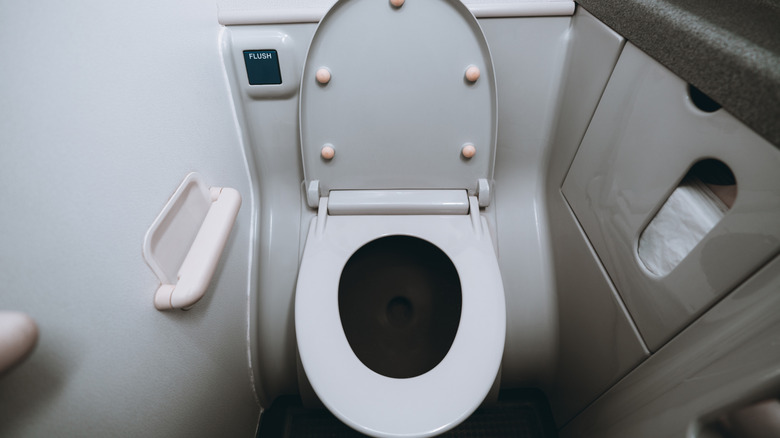
Is this TMI? Maybe. But it needs to be mentioned, because it is a major cleanliness issue on airlines and one of the top understated causes to filthy airline bathrooms. Some people recommend that men (in particular) sit down to do their business in airplane bathrooms simply as a way of avoiding big messes.
For example, if sudden turbulence strikes or the airplane makes a tight turn, there may be a good chance of the unwitting passenger accidentally missing the toilet bowl (to put it delicately), meaning that there might be a big mess on the counter, seat, or walls of the lavatory — not to mention, possibly the passenger themselves. Naturally, you wouldn't want to deal with stains, smells, or wetness for the rest of your flight. Not only will you be miserable, but so will your seat mates and probably the people in front and behind you as well. If you absolutely must stand, make sure to lift up the seat and be prepared to accept the consequences of your choice and clean up any messes.
Use the lavatory right after meals are cleared
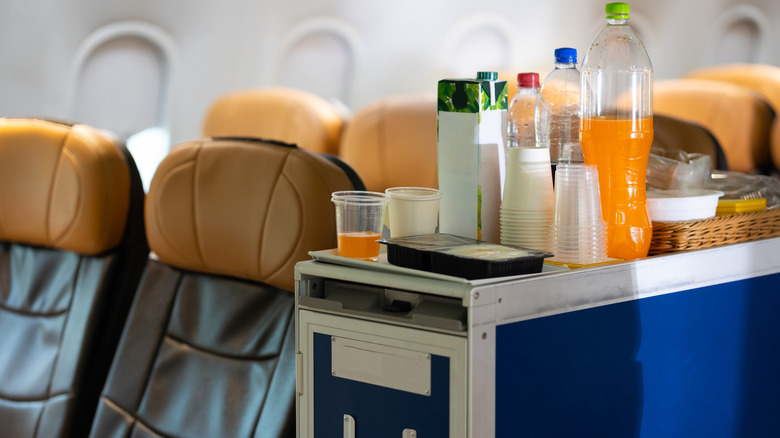
There is much debate about the best time to use the airplane lavatory, but it really depends on the length of your flight and where you are sitting. For those in middle or window seats, who cannot simply leave their seat without their aisle neighbors getting up, one of the best times on long-haul international flights is to go right after meals and drinks have been cleared.
On long-haul flights, as night kicks in, passengers eat, flight attendants pick up trash, lights are dimmed, and people go to sleep. For passengers in the middle and window seats, this is an excellent time to get out and do your business before your aisle seat neighbors fall asleep — as long as the service cart is not blocking the aisle. That way, you don't find yourself having to "stealthily" climb over them because you feel bad about waking them up.
Some passengers, including your neighbors, might take sleep aids (despite expert recommendations against the practice). Once they are asleep, they might be almost impossible to rouse. Thus, get ahead of the problem and go while your neighbor is still awake.
'Go' before takeoff, but assume the risks
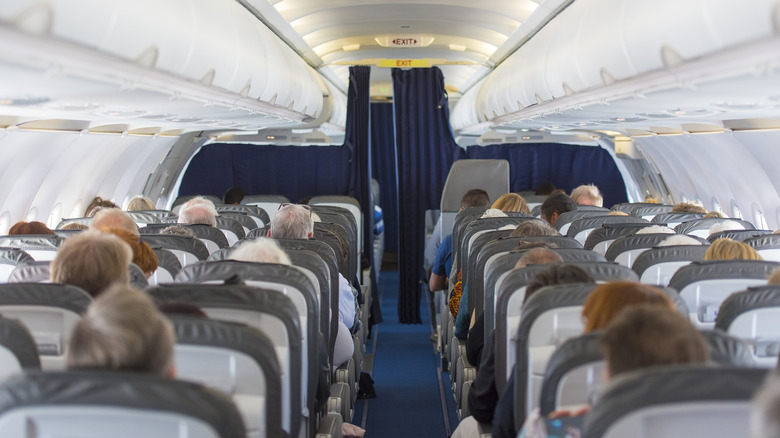
For some, airplane bathrooms are so gross that just the smell — especially the disinfectant (aka the infamous "blue juice") all made worse by the lack of airflow — can trigger nausea or worse. Others simply don't want to sit on a dirty toilet seat. If this is the case for you, it's best to go when the bathroom is clean before other passengers use it. On long-haul and international flights, that means going before takeoff. Cleanup crews sanitize them before a new batch of passengers board, meaning you won't deal with the stench of previous passengers.
However, this comes with risks. Although it might seem like the secret to getting airplane bathroom timing just right, it is not generally recommended. If you do go before takeoff, you might not be able to get back to your seat immediately. Other passengers will be in the aisle finding their own seats and stowing carry-ons, which can create inconvenient traffic jams. Furthermore, if you take too long in the bathroom, you could delay takeoff because all passengers must be seated before the plane can push back from the gate. Only go before takeoff if it's an emergency. Otherwise, go to the terminal restroom before boarding if you have time.
Don't grab headrests for leverage
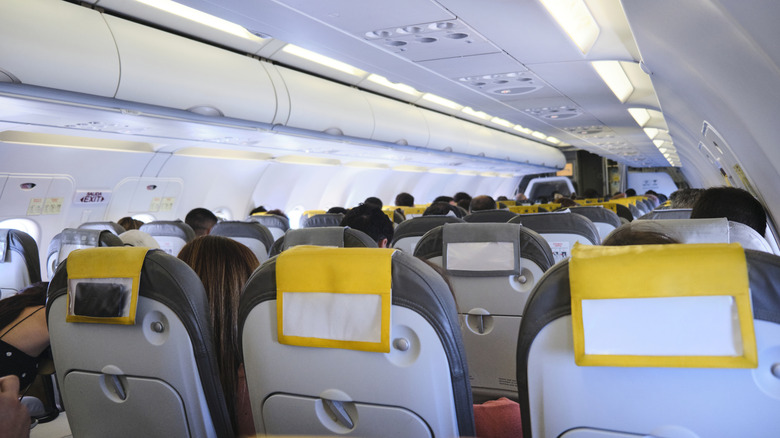
This one is really more of a pet peeve among travelers rather than a frequently-cited etiquette rule, but it's a good idea not to use the headrest of the passenger in front of you to pull yourself up, whether you are going to the restroom or just stretching your legs. This action pulls or jolts the seat and possibly disturbs the passenger in front, especially if that passenger is trying to sleep. While Redditors argued whether this is really just a pet peeve or an etiquette rule, it is pretty clear that some people find this incredibly annoying.
Travel experts interviewed in Readers' Digest also argue that respecting your neighbor's headrest is basic etiquette. While one headrest grab can be forgiven, when it happens multiple times, it can be absolutely grating for the person whose seat is being grabbed. Instead of pulling on your in-front neighbor's seat's headrest, push yourself up using your armrests, being careful not to elbow your seat mates.
Use the premium cabin lavatory if possible
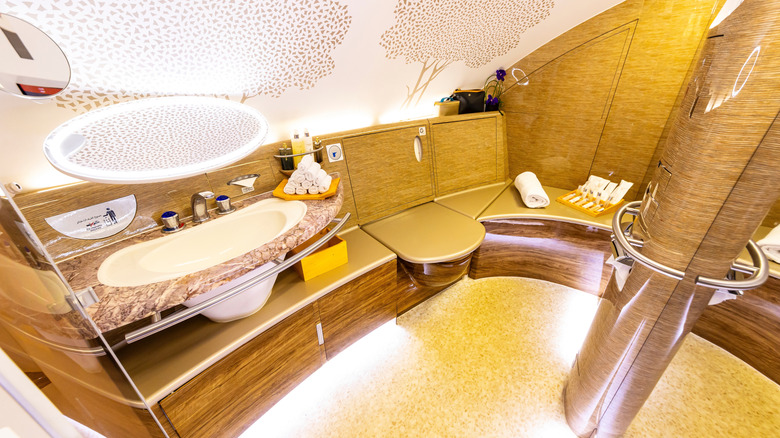
If a line has formed in the economy lavatories, you might be able to skip the line by using the bathrooms in the premium cabin. Airline policies vary, often depending on whether the flight is domestic or international, how close to the premium cabins you are seated, and on your personal circumstances.
For domestic flights, it is generally recommended to use the bathroom in your assigned cabin. But, if you are a special needs passenger or have an emergency and cannot quickly access your cabin's lavatory, flight attendants can make exceptions. Alaska Airlines, for instance, will make exceptions for special needs passengers. American, United, and JetBlue seem to function similarly. An American Airlines rep told the website Upon Arriving that while premium lavatories are only for premium passengers, the cabin crew can make case-by-case exceptions.
The rules on international flights are much stricter because first-class bathrooms are part of the costly, ultra-premium experience. On the top-end airlines like Etihad, Qatar, and Emirates, first class lavatories are often luxe private suites with home-like comforts such as private showers and heated floors. You will not be allowed access to that level of comfort without paying. The good news is that Emirates at least cleans the lavatories every 45 minutes, which, compared to U.S. domestic carriers, is basically an ultra-premium experience in itself.
Don't block the aisle
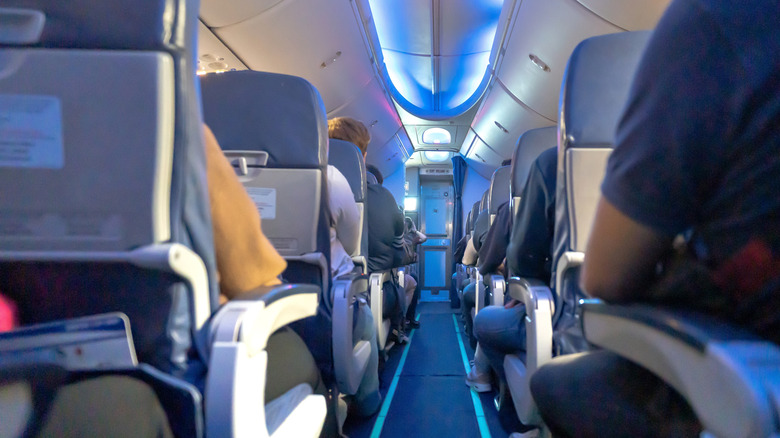
This one is standard safety, but will often clash with people's instincts. It is not uncommon for passengers to line up outside the lavatory. Other passengers' instincts are to join the line before it gets longer. While this is understandable, flight attendants don't like it passengers are better off not doing it.
Flight attendant Rich Henderson told USA Today that congregating near the bathrooms makes life more difficult for everyone because it creates a self-perpetuating cycle. People see a line and think they will have trouble getting into the bathroom. Thus, they join the line to claim their place, making it longer. Other passengers see the line get longer and decide they must join or miss their chance. Eventually the line starts to clog up the aisle, which is at best an inconvenience and at worst a safety hazard. If an emergency or turbulence occurs, this is the perfect scenario in which people can get hurt. Instead, the best place to wait is your seat, as bathroom traffic will eventually slow despite the seemingly long lines.
Remember to lock the door
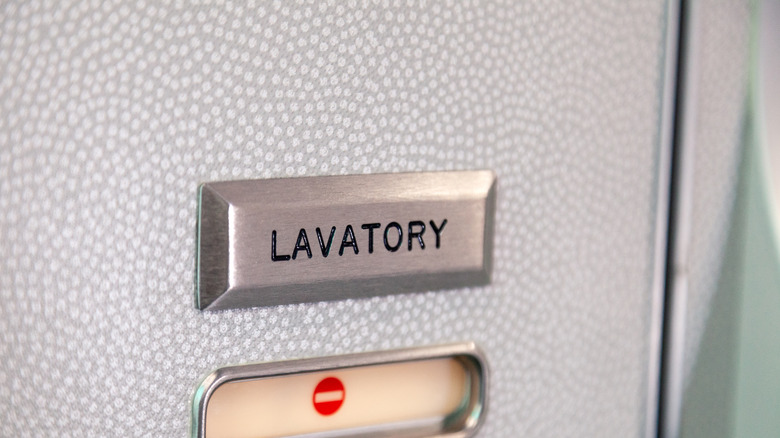
While locking the door should be the first thing passengers do upon entering an airplane lavatory, it is easy for passengers to forget to do this, creating inconveniences and safety hazards along the way. Travel company Alpine Elements told the New York Post that, according to flight attendants, forgetting to lock the bathroom door often results in lines forming at the bathrooms, which, as mentioned earlier, is a safety hazard.
Because forgetting to lock the door is becoming more common and people do not want to barge in on someone else, an unsure passenger might simply wait outside the unlocked lavatory rather than risk walking in on someone, thus beginning the self-perpetuating bathroom line cycle. This delays everyone's bathroom trip as well as clogging the aisle and creating hassles for flight attendants. The "occupied" sign, however, leaves little doubt that there is someone in there, making it a matter of privacy, courtesy, and safety. Of course, when in doubt, it's easy to just knock first to make sure no one else is in there.
Ask for coffee grounds
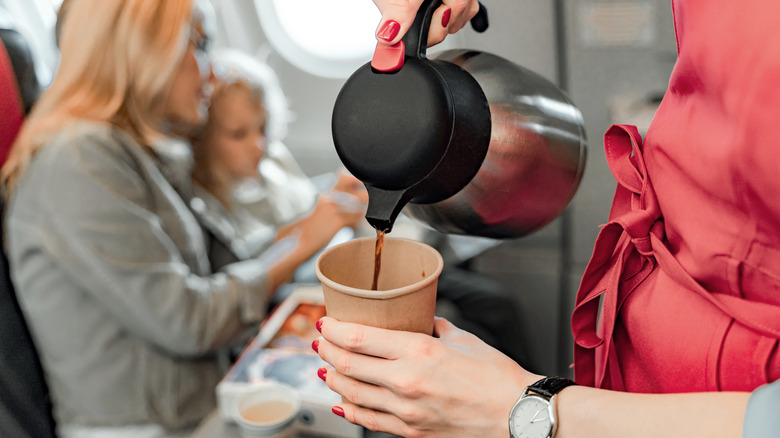
For those who do not use the lavatory before takeoff but still cannot handle the awful smell of the lavatory, there is the option of asking the flight attendants for leftover coffee grounds. Apparently, the smell of the grounds is so strong that it will mask virtually all other odors. Most passengers will probably find coffee a much more pleasant smell than your typical bathroom odors or disinfectant, making a trip to the lavatory a little more tolerable. Of course, if you have a particularly strong sense of smell, it might not be perfect — but it certainly helps.
If you're embarrassed to ask, just know that flight attendants probably get this request several times a day, so there's no need to be timid. They'll probably know exactly why you need them. If they don't, it's unlikely that they'll refuse your request and will gladly give them to you without further questioning.
Make sure your personal items are fully under the seat
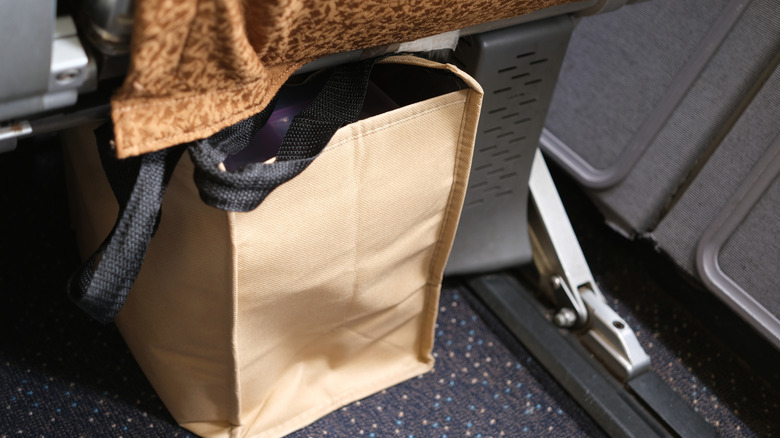
Imagine you need to go to the bathroom. You're sitting in a window seat. Your neighbors get up. You get up, and nearly fall after stepping on your personal item or tripping on a bag strap that wasn't fully tucked in under the seat. As you're about to enter the aisle, you trip over the aisle seat passenger's bag that he carelessly left in the row. If you're lucky, you haven't fallen on any other passengers or hurt yourself falling into something sharp.
This kind of stuff has happened, such as a woman who tripped over a bag sticking into the aisle on a United flight, or flight attendants pushing service carts who are injured in backwards falls after tripping on improperly stored bags. Throw in a sudden episode of turbulence and you have the risk for a serious injury.
Stories like this are why passengers must obey flight attendants when they ask you to put your personal item under the seat. Not only is it a Federal Aviation Administration (FAA) regulation to ensure a clean evacuation in case of an emergency, it also ensures you can move in and out of the row, whether to go to the bathroom or stretch your legs, without risking injury. Flight attendants, however, are busy and cannot catch every violation, which is why passengers should help them do their jobs by following their instructions.
Beware the free drinks
Air travel in itself will make you need to urinate more, as high altitude, dry air, and pressure changes cause the bladder to more urine than it would on the ground. So, while avoiding excess liquids is sometimes recommended, travelers might forget that not all liquids are created equal in this regard. Drinks containing caffeine and alcohol are more likely to make you need to go even in smaller quantities.
Alcohol and caffeine are both diuretics, meaning they inhibit vasopressin, the hormone that causes your body to retain water. In response, your body eliminates the fluid through urination. Passengers with overactive bladders or who simply don't want to go more often should avoid these substances completely. The hard part for some might be resisting the temptation of free drinks, which for premium cabin passengers is practically a given. On Air Canada, free alcoholic drinks are even served in economy.
After a few drinks, passengers will need water or other beverage to remain hydrated, which will result in many bathroom trips. If passengers choose high-sodium drinks like soda, they will make matters even worse for themselves. If you take advantage of free drinks, pace yourself. There is more than one embarrassing reason to stop drinking at airports and in midair. You don't want to get drunk and be written up by the flight crew or constantly disrupt your neighbors with frequent bathroom trips.
Keep your shoes on
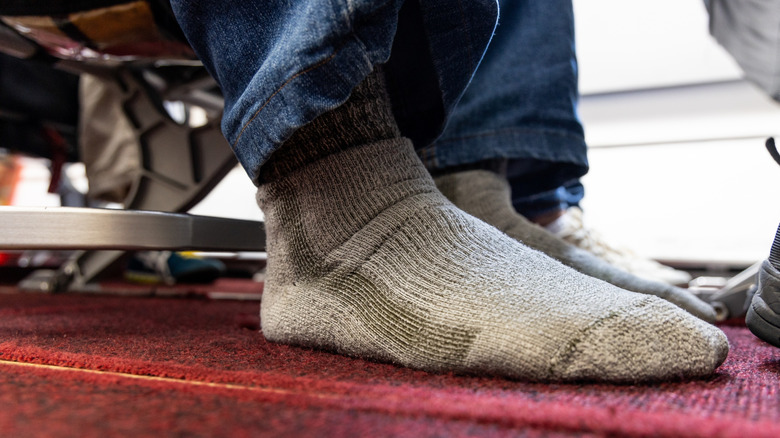
What do flight attendants think of people taking off their shoes? They generally aren't fans. On long flights, though, some passengers do it anyway for comfort. It turns out, flight attendants advise out of care, as airplane floors aren't exactly the cleanest places. Now imagine what passengers are stepping in when they go shoeless to the lavatory — the hands down the filthiest, least sanitary place on the airplane apart from the septic tank.
People stand up to do their business, toilet seats get dripped on, and turbulence can cause a mess. Sinks and toilets leak or get backed up and overflow to the point that flights have to be diverted. One Delhi-bound Air India flight was forced to return to Chicago because passengers clogged the toilet with human waste and garbage, according to the BBC.
Ask yourself whether that is the kind of environment you want to enter shoeless, where you risk possibly getting your socks covered in other people's bodily fluids for the rest of your long-haul flight. If you took your shoes off for comfort, you certainly are not going to be very comfortable in wet (probably dirty) socks. Put on the shoes, even if it takes an extra minute — assuming you're not on an airline that is banning barefoot passengers.