
10 Once-Thriving Olympic Stadiums That Now Lay Abandoned
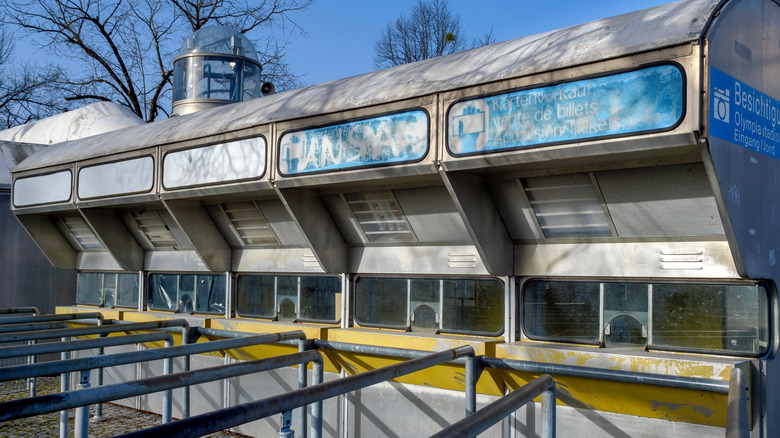
1,500 years span the gap between the last ever Olympic Games of the ancient world and their eventual rebirth in 1896. Just four years from its rebirth, Paris hosted the second-ever modern Olympiad, setting up the traditional rotation of a host city taking on responsibility for hosting the Games. The Winter Olympics began in 1924 and, in 1992, were granted their own spot in the quadrennial Olympiad calendar, placing both Games two years apart from one another in perpetuity.
To be sure, economic interests played a part in the sometimes-desperate bids cities made in their attempt to see the Olympic Games on home turf. Transport hubs needed to be built, streamlined, or modernized. Olympic villages, built to accommodate thousands of athletes and staff, became a logistical nightmare as soon as the winning bid was announced; urban beautification projects became a source of national pride.
In 2016, Brazil poured $20 billion into its Olympic dream. Back in 2008, Beijing spent double that. And post-Games, all too often, once thriving stadiums or, if not, the surrounding buildings of the Olympic Village itself, fell into ruin. In some cases, the sites were bulldozed to make way for replacement structures. In others, they remain as blights upon the skyline, scarred reminders of better days filled with thoughts of hope and glory.
Rio de Janeiro, Brazil 2016
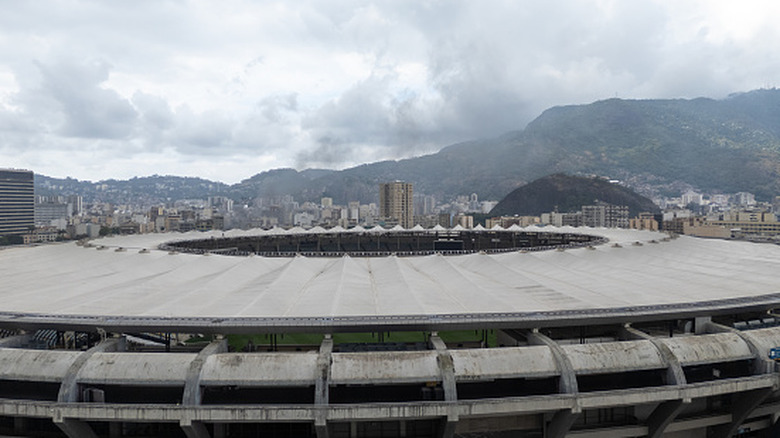
When Rio de Janeiro learned of its successful bid for the 2016 Olympic Games, a general celebration ensued. Carnival seemed to have come early as locals flocked in their tens of thousands to Copacabana Beach. A sense of renewal was in the air; Brazil as a whole had been presented with an opportunity to redefine itself. As unsuccessful candidates came to terms with their obvious disappointment worldwide, minds turned to thoughts of an Olympiad held in a tropical, if troubled, paradise.
Work started almost immediately. A site for the Olympic Village was chosen in the southwest of the city, in a neighborhood known for its sky-high condominiums, foodie culture, and fine surf. Plans were drawn up for four permanent arenas, several temporary stadiums, an aquatics center, and a brand-new velodrome in this location alone. Across the city, existing infrastructure was repurposed for the Games via major renovation projects. In total, 34 separate venues were ready to go by the time the games opened on August 5, 2016. The final bill came in at an estimated $13.1 billion.
The seven temporary facilities had their fate sealed from the get-go; by 2025, all but one of them had been dismantled. The permanent structures, however, also faced something of a slow decline. At the Maracana Stadium, windows were smashed, copper wiring was stripped from the walls, and seats were stolen from the auditorium. In 2017, power to the arena was cut due to unpaid bills reported to be in the region of $940,000. Accommodation set aside for athletes fared little better: Having failed to meet safety standards in the run-up to the Games, the city struggled to repurpose them post-Games. In 2015, The New York Times reported that less than 10% of the apartments had been sold.
Sochi, Russia 2014
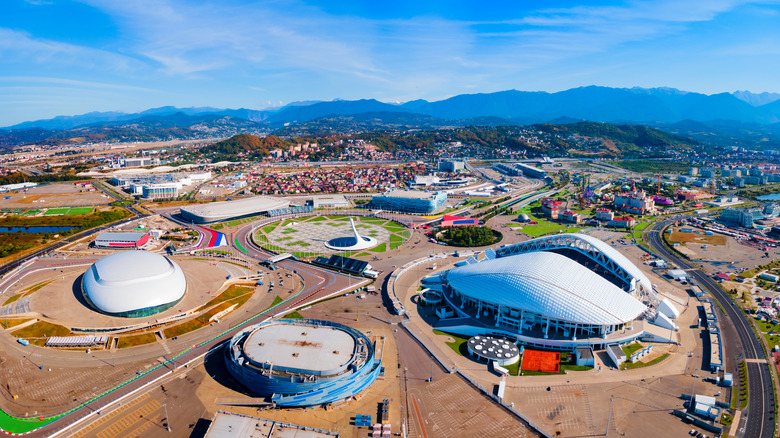
The 2014 Winter Olympics were assigned to the small summer beach resort of Sochi, located on the Black Sea coast, over 1,000 miles south of the Russian capital. The entire project was mired from the get-go with rumors of rushed construction, endemic corruption, and a salient, overriding concern: temperatures in Sochi rarely dipped below freezing, even in the heart of winter.
Accusations that things simply would not be ready in time were everywhere. Hotels built to deal with the influx were unfinished; just days before the Games were set to take place, evidence of last-minute work taking place flooded the airwaves. Sewage spilled from faucets, the main stadium skipped the final deadline for completion, and athletes found themselves trapped in bathrooms and elevators.
The final bill came in at $51 billion. Still, the Games themselves were considered something of a success. Three thousand people performed at the opening ceremony, and a further 3,500 athletes participated in the Olympic Games proper. Some three dozen records were broken, tourist numbers went up by almost a third, and audience numbers were in excess of two billion people.
Legacy-wise, however, things were just a few shades south of dire; today, almost the entirety of the Olympic Park has been abandoned. The medals podium became a thing of chipped flagstones and rust. Unfinished dormitories fell into ruin. Roads became strewn with potholes while hastily constructed steps led to dead ends. Waterways clogged with debris line streets where workers downed tools for lack of pay. Everywhere, the signs of rushed construction are writ large across the skyline, not least of all in the estimated body count itself. Dozens of workers are thought to have lost their lives in the push to get things ready for the first day of the Games.
Beijing, China, 2008
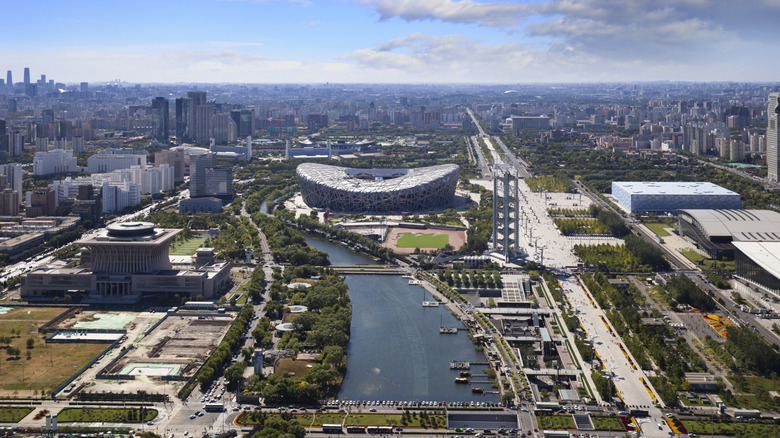
The price tag for the 2008 Beijing Olympic Games ran to $40 billion, making it the second most expensive Games in all of history. In recent years, budget-friendly ways to get around the capital city owe a debt in part to the massive infrastructure spending that took place in the early years of the 21st century. With a focus on building a legacy, however, it fell well short of the mark.
The Beijing National Stadium — known colloquially as the Bird's Nest — cost almost half a billion dollars all by itself, and took almost five years to build. With a 91,000-seat capacity, it was the obvious site for the opening ceremony and played host to a variety of events contributing to an Olympiad where no fewer than 43 world records were smashed. Indeed, such was the prestige and architectural magnificence of the arena that in the years after the Games' conclusion, the stadium found use as a venue for sports, concerts, and other events of national importance. The Bird's Nest was also given the singular honor of becoming the first and only stadium in the world to host the opening ceremonies of more than one Olympic Games — it served as the centerpiece of the 2022 Winter Games.
Elsewhere across the city, things looked rather less rosy. Signs of disrepair began to spring up almost as soon as the closing ceremony concluded. The Beach Volleyball Stadium became a sea of grass; the BMX Biking Arena fell into rust and disrepair, finding use as vegetable gardens for industrious locals. Meanwhile, the once-stunning Whitewater Kayaking Arena began to look like a scene from an abandoned amusement park. Other venues fared little better, with rusted signs, murky pools of water, and stray animals becoming an all-too-familiar sight.
Turin, Italy 2006
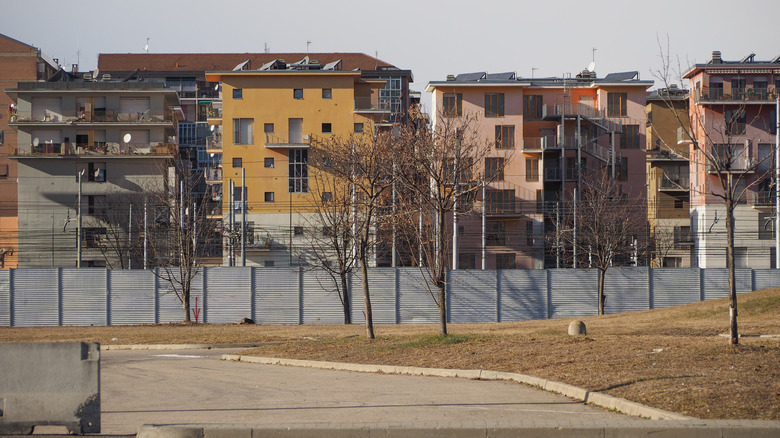
Turin's reputation as an underrated city filled with French architecture and fine cuisine is well deserved. With less footfall than Rome or Venice, the city remains a shining jewel. Visitors flock to marvel at its famous shroud, wander around the Museum of Civic Art, and indulge in the wide variety of street food on offer, which is a rival of anything else you'll find on the Italian peninsula. It was, by all accounts, a most excellent place to hold the Winter Games.
The success of the Games was never in question. The aftermath, however, faced much criticism. Italy built a sprawling village for the 2006 Winter Olympics, spent $3.8 billion, and found an audience of more than 3 billion people. No fewer than six arenas were constructed, and much of the outlying infrastructure was repurposed for use as a literal refugee camp.
The ski jumping center also stands abandoned while the sliding center — custom-built to host both luge and bobsled events — ultimately proved too expensive to maintain. Still, the main stadium is still in use: Renamed after the Games from the Palasport Olimpico to the Pala Alpitour, today it is primarily used to host concerts and is the largest arena of its kind in all of Italy.
Athens, Greece, 2004
The very first Olympic Games took place some 200 miles west of modern-day Athens in a region known for its fervent worship of Zeus. Today, little remains of the town of Olympia, although structures relating to the sporting events that took place there for the first time in 776 B.C. remain of intense archaeological value. If only the same could be said for what is left of the structures used for the 2004 Games, some 2,780 years later.
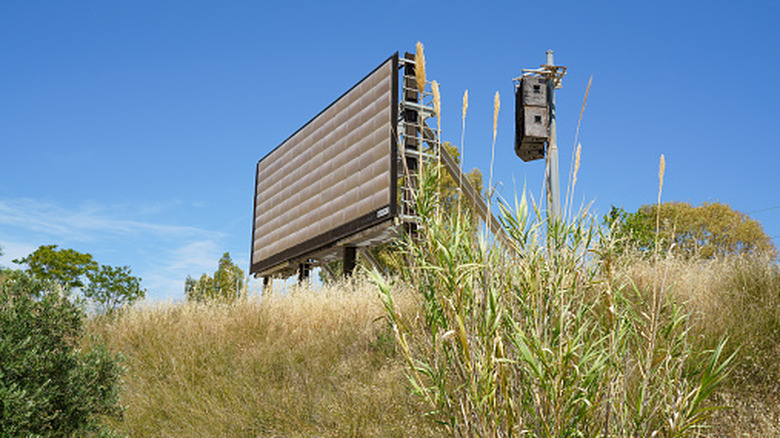
The triumphant return of the Games to the nation that spawned them was viewed by many as an opportunity for urban renewal. The list of projects beguiled: some 120 new roads were to be constructed; dozens of others were to receive a facelift, even as train networks were expanded and flood defenses modernized. In all, 22 new sports arenas were constructed alongside a brand-new marina, purpose-built media village, and enough new housing to accommodate 16,000 athletes and their teams. By the time everything was ready, the entire project had cost the city of Athens 10.5 billion dollars, almost $3 billion more than initial projections. Just 10 years later, much of what had been built fell into ruin.
The beach volleyball arena in Neo Faliro became choked with weeds. And, the wooden bleachers of the Olympic swimming pool were a mess of peeled paint and rotting timbers. The training pool became a thing of mud and debris; the hockey stadium a mess of fraying Astroturf and grime-coated seating arrangements. Across the city, once-proud buildings fell into a morass of forgotten tracks, caved-in ceilings, and rubble-strewn walkways. The Panathenaic Stadium alone seemed to thrive in the aftermath of the Games; today, it is a tourist attraction for those wanting to experience the ambience of the ancient Games brought to the modern age.
Sarajevo, Bosnia, 1984
There are times when history gets in the way of what is supposed to be an apolitical celebration of the best that humanity has to offer. Beijing hosted its Games amid the global financial crisis of 2008. Sarajevo had its spot in the limelight in 1984, less than a decade before a bitter civil war would lay waste to much of the city.
Unusually, for something so often defined by last-minute mishaps and overrun budgets, things at first went relatively smoothly for the host city. The Winter Games were preceded by dramatic snowfall, and the total spending of $141,647,000 in unadjusted dollars actually turned a profit. When all was said and done, well over half a million people showed up to watch live events, and five times that amount tuned in via live television broadcasts.
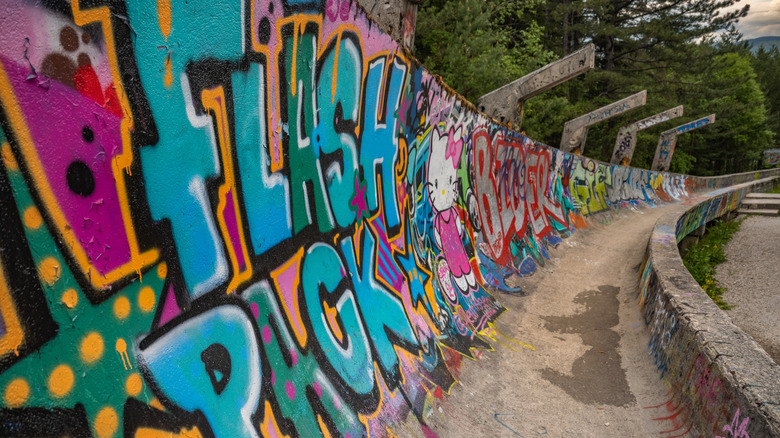
Today, despite the fact that Sarajevo is a budget-friendly, walkable paradise, few of the once-proud structures survived the war without damage. Much of the former Olympic infrastructure was used as defensive battlements: the ski jumps became minefields, and accommodation blocks were peppered with bullet holes and left to rot. As artillery fire rained down on the city, buildings were stripped of their roofs, Olympic hotels were converted into makeshift prisons, and the once-mighty bobsled track found itself converted into an artillery base. The conflict, which began in 1992 and lasted three years, ultimately claimed 100,000 lives. Still, today, the country as a whole is an underrated mountainous gem and a decidedly affordable one at that.
Moscow, the U.S.S.R., 1980
In 1980, the Soviet Union seized the opportunity to present the world with a unified vision of Russia as a modern, thriving nation capable of competing with the very best the world had to offer. No fewer than 64 countries — including the United States — boycotted the Games entirely, but that did not stop the Soviet state from going all in on construction. The watchwords of Soviet architectural design — functionality and durability — were on full display. Sadly, not even their commitment to longevity was able to escape the ravages of time.
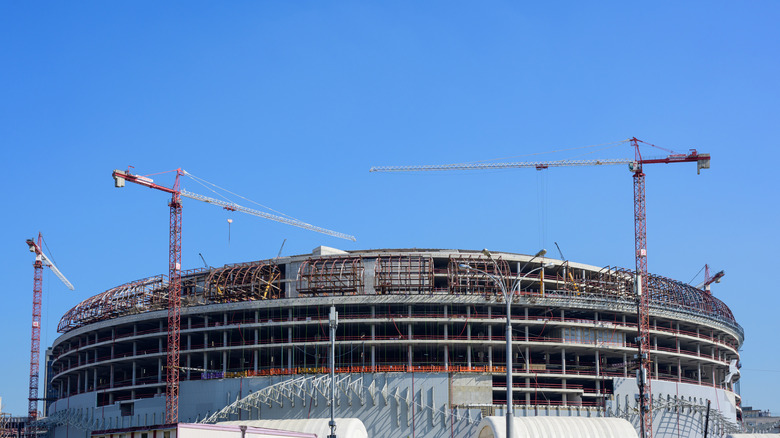
As you'd expect, the Games were designed to reflect the fragmented nature of Soviet supremacy. Many of the activities that took place during the Games were held in disparate locations far from Moscow itself. Centerpiece items such as the Linnahall Stadium, situated 639 miles away in neighboring Estonia, never managed to fulfill the promise of its design. The Olimpiyskiy Stadium also succumbed to the political upheaval that followed the dissolution of the Soviet state; in 2020, after years of decline, it was all but demolished and rebuilt from the ground up.
The Luzhniki Arena predated the Olympiad itself, but was modernized in the run-up to the Games; just two years later, the stadium collapsed, killing 66 people. It was allowed to fall into disrepair, and in 2015, it was gutted to make it ready for the 2018 World Cup. Lastly, the Krylatskoye Rowing Canal was an expansion of an existing facility and served athletes well during the Games, but funding shortages in the post-Soviet era allowed it to become run down and contaminated with unsightly algae blooms.
Montreal, Canada, 1976
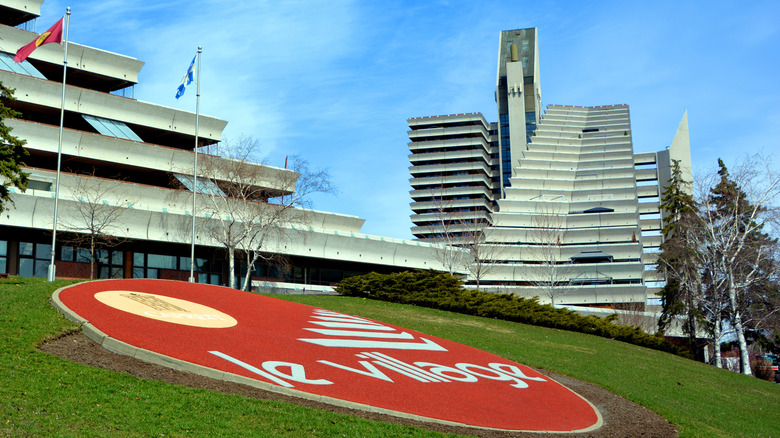
Montreal has long held a position as one of the most fascinating cities in all of North America. It boasts neighborhoods filled with chic vibes and trendy restaurants, and its cobbled streets and historic charm granted it the nickname Paris of Canada. It is a place of hiking trails, green space, Gothic Revival masterpieces, jazz festivals, and comedy showcases. And in 1976, it played host to an Olympic Games that was, in many ways, something of an unmitigated disaster.
To start, 22 African and Arab nations boycotted the Games in protest of South Africa's apartheid regime. At the same time, the centerpiece stadium — known locally as the Big O — ran massively over budget. It cost an eye-watering 4.1 billion dollars in today's money, contributing massively to a $1.5 billion post-Games debt that took three decades to pay off. The stadium managed to cling on to life for a while. Used as a baseball stadium until 2004, the stadium closed in 2024 for major renovations, with costs running into hundreds of millions of dollars.
Elsewhere, things were no less grim. To those looking down on the city from the nearby mountain as they search for city views and trails, little remains of the once-proud village. The velodrome fell into complete disrepair before it was repurposed into a biodome in 1992. The pyramid structures of the Olympic Village became a morass of corroding panels. The shooting range was abandoned, the equestrian venue failed to meet subsequent international standards, and, ultimately, the legacy of the Games remained a hangover that still lingers to this day.
Melbourne, Australia, 1956
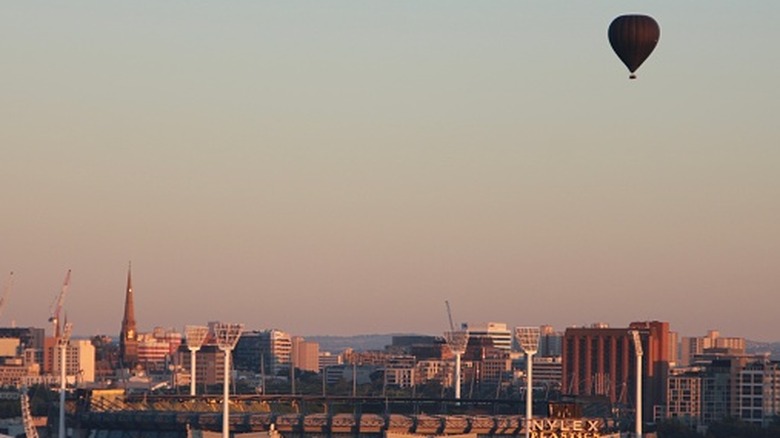
The Olympic Games have a long tradition of snubbing bids from cities located in the Southern Hemisphere. No Winter Games have ever taken place south of the equator. As far as the Summer Games go, only three Southern Hemisphere cities have ever been selected. Rio de Janeiro in 2016, Sydney in 2000, and Melbourne way back in 1956.
In recent years, Melbourne has undergone something of a transformation. In 2025, it took the crown as the world's top food destination, became one of the best places to visit in the South Pacific, and cemented its reputation as one of the most livable cities in the world. In the weeks leading up to the Games, however, things looked very different for the city on the south coast of Australia. The list of failures remains galling to this day.
The once-celebrated Olympic swimming pool was filled in, burned down, and finally found a new lease of life in a new arena. Accommodation for the visiting athletes was repurposed to ease the city's housing crisis, but soon turned into an actual slum. The once-proud Festival Hall took on the moniker Festering Hall, thanks to its hasty construction in 1955. The velodrome lasted until the early 1970s before being torn down and replaced with a car park; the Melbourne Cricket Ground survived for several decades longer, but it too was leveled to the ground in order to make way for modern facilities set to serve the 2006 Commonwealth Games.
Berlin Germany 1936
It is not without reason that the Berlin Olympics remain the most controversial Games of all time. The Nazi regime had, by 1936, consolidated power over the entire nation, and Berlin's selection as host city was a massive propaganda coup. A boycott — the first of its kind — was attempted and, again, not for the first time, ultimately failed to materialize.
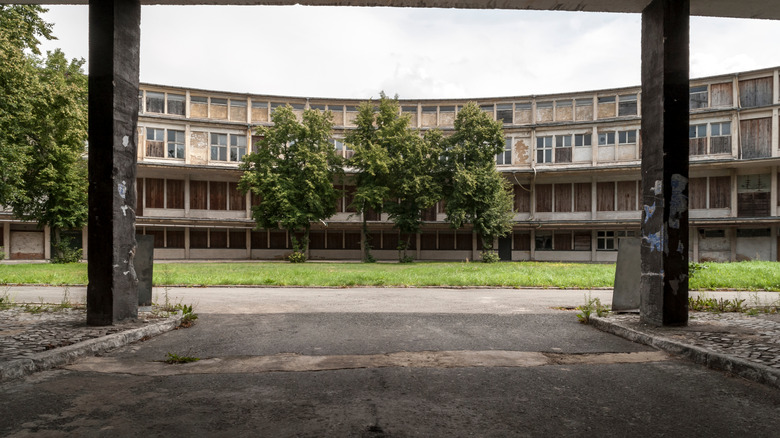
The Nazis' desire to project strength while obfuscating the militaristic outlook that lay at the core of their philosophy found expression in the infrastructure projects they embarked upon. The main stadium was state-of-the-art for its time: with a maximum capacity of 110,000 people, it was built to last, survived the war, and remains in use to this very day. Almost everything else is a ruin.
The buildings once used to house athletes have turned to rot; they are places of mold, broken windows, and half-disintegrated chimney stacks. The Hindenburg Haus — the former administrative center of the Games — lies abandoned, while the much-lauded Speisehaus der Nationen restaurant, which found use as a hospital after the Games, fell into ruin and was ultimately converted into a block of luxury apartments.
Methodology
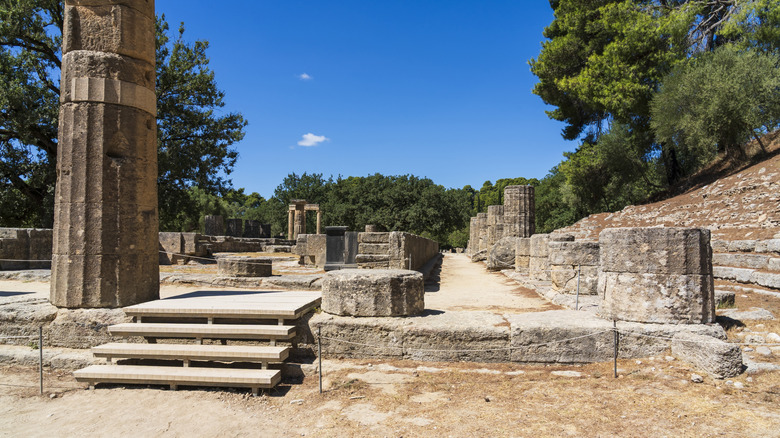
We sourced much of the material here from photographic evidence taken by enthusiasts who wanted to highlight the legacy of past Olympic glories. Still, with so much public money poured into each game, the fate of buildings and post-Game infrastructure is a matter of public record. Official Studies into Olympic legacies and finances were consulted, as were contemporaneous news accounts of what happened to some of the more controversial projects that have taken place through the years.