
9 'Hidden Gem' Destinations On Social Media That Are Actually Overrun By Crowds Of Selfie-Seeking Tourists
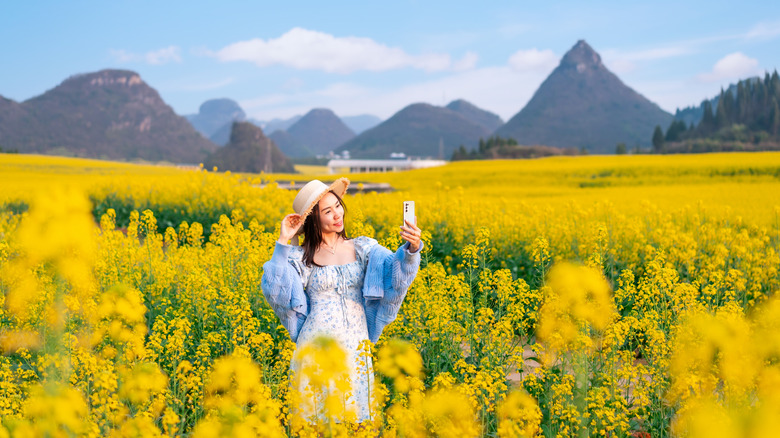
These days, when we chance upon a "hidden gem" destination on Instagram or TikTok, more often than not, it's engineered by algorithmic repetition rather than genuine obscurity. Visuals of empty canyons glowing at sunset, silent blue alleyways, storybook villages, and remote islands seemingly untouched by time — places framed as antidotes to mainstream tourist hubs; quiet, reflective, off the radar. However, by the time they go viral, they remain anything but.
What fuels this is a style of tourism shaped around images, sometimes described as "selfie tourism," where destinations are consumed less as places and more as backdrops. In Spain's Balearic Islands, authorities reportedly announced they would stop using social media influencers to promote destinations after acknowledging that selfie-driven travel was damaging environmentally sensitive areas. The influence of social media on travel behavior only reinforces this shift, as more young people are booking vacations through social media.
In his book "The World In a Selfie," Italian sociologist Marco D'Eramo examines how tourism has reconfigured cities, landscapes, and societies, frequently at the expense of local cultures and environments, arguing that even a UNESCO World Heritage status risks turning destinations into curated exhibits for visual consumption. This is not a case against travel nor a dismissal of the beauty that draws people to these places. Using examples from around the globe, the list that follows looks at how places marketed as niche adapt, and often strain when the camera calls the shots.
1. Hallstatt, Austria
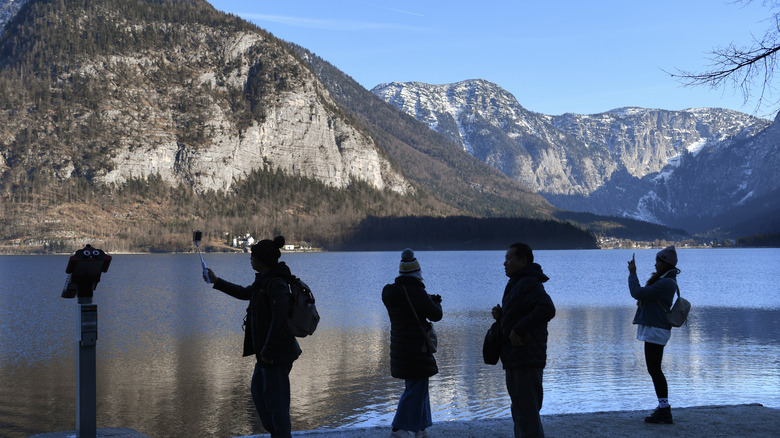
This small and exquisitely beautiful alpine lakeside village has a population of under 800. It receives an estimated 10,000 tourists per day during peak season, amounting to more than a million a year. Hallstatt's fairy-tale setting has been classic fodder for Instagram, catapulting it into a global tourism magnet, where the annual number of visitors has, on occasion, even crossed the 3 million mark. Fueling the hype are its visual echoes in the Disney hit "Frozen," in which the fictional kingdom of Arendelle is often incorrectly assumed to have been inspired by Hallstatt, and fans have been thronging the town since. In 2012, a life-size replica of Hallstatt was built in China, resulting in a surge of Chinese tourists wanting to see the original place.
The heightened global exposure brought both opportunity and strain for this UNESCO World Heritage site. Hallstatt's narrow lakeside streets and limited parking space aren't equipped to sustain heavy visitor flows. On most days during peak tourist season, the village appears to be swamped with tourists in every picturesque corner, trying to capture the perfect selfie. Most of these visitors are day-trippers who don't stay overnight or spend much locally.
Adding to the chaos are tour buses and cars that overwhelm the narrow roads, disrupting daily life as walkways clog, noise levels rise, and visitors trespass on private property in pursuit of photos. In response, residents have staged protests and authorities have introduced road closures, barriers at key viewpoints, and caps on private vehicles and tour buses. With a total area of just 29.06 square miles, Hallstatt remains breathtakingly beautiful. But its "hidden gem" vibe continues to clash with thousands converging daily for the same postcard views.
2. Lake Bled, Slovenia
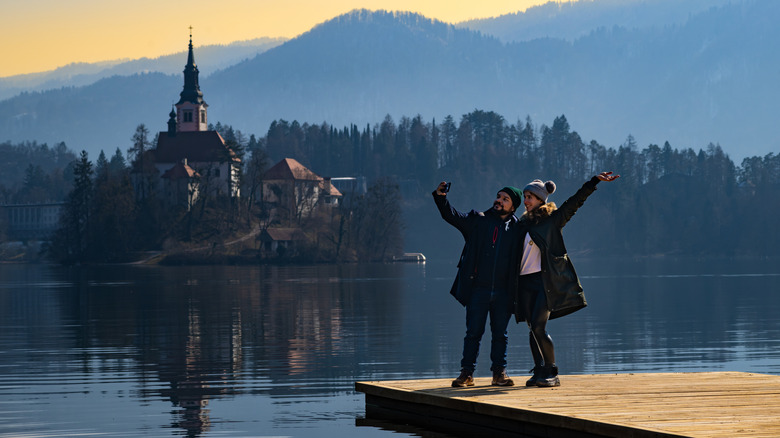
An emerald lake surrounded by mountains and crowned by a tiny church on its own island — Lake Bled's dreamy setting has made it one of Europe's most enduring travel images, as it looks like a medieval fairy tale. Slovenia has long been touted as one of "Europe's best-kept secrets," but that status gradually faded as the country started to be perceived as a must-see and a comparatively affordable destination in Central Europe. Today, Lake Bled is widely recognized as one of the continent's most visited locations.
Over the years, as the lake scaled in popularity and tourist footfalls, a noticeable crowd pattern seems to have emerged in its iconic areas. The eastern shore is often teeming with visitors, especially during peak season, putting pressure on narrow lakeside paths and roads. While tourism remains integral to Bled's economy, local hoteliers say that short-stop visitors are increasingly clogging roads and lakeside paths, deterring their loyal repeat guests who seek a calmer experience. So travelers in search of quiet are better off skipping the summer months. Winter visits, while not common, are strongly recommended too, if the idea is to soak in the stillness. The photography takes on a different character as well.
As congestion grows around Lake Bled, Lake Bohinj is quietly emerging as a worthy alternative. Having visited both, I can say from experience that while not quite a "hidden gem," Lake Bohinj does offer a far less crowded alpine-lake experience with breathtaking views enough to rival its local cousin. However, Lake Bled remains a top draw, but its once under-the-radar image now coexists with a very strong imprint of global attention.
3. Jeju Island, South Korea
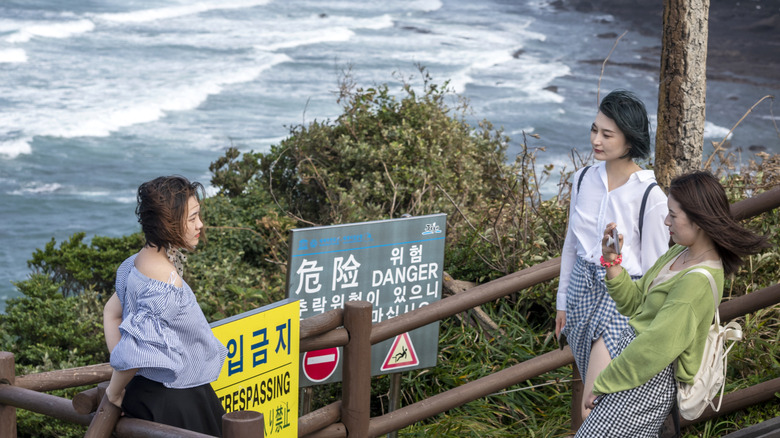
Hailed as the "Hawaii of Korea" or the "Hawaii of East Asia," Jeju Island was once a haven for domestic travelers since the 1960s. Just off the tip of South Korea's southernmost coast, the island has been shaped by volcanic activity and is known for its unique geography marked by stunning cliffs, beaches, and lush greenery, with Hallasan Mountain standing tall as its centerpiece, the highest point of South Korea. Small wonder, then, that it's often deemed South Korea's most beautiful island vacation. In recent years, Jeju Island has seen a monumental rise in international tourism, with arrivals surpassing the 1 million mark as of January this year. The Seoul to Jeju flight route was the world's busiest domestic air route in 2025, with 14.4 million seats scheduled over the year.
The boost in tourism has also been attributed to hugely popular K-dramas such as "Dynamite Kiss" and "When Life Gives You Tangerines," among others. The latter has been credited by the Jeju Provincial Government, following a spike in tourist numbers since March last year when it was released. Despite the staggering numbers, travel media still defines Jeju as a "hidden gem," even as the island continues to fight the impact of overtourism. To address the rising cases of tourist misdemeanors, last year local authorities introduced the country's first multilingual etiquette notice in Korean, English, and Chinese. The guidelines are meant to warn against infractions such as jaywalking, public drunkenness, littering, and disrespectful selfie squads. As Jeju's global allure accelerates, the challenge lies in balancing its scenery and pop-culture appeal with everyday livability for locals. For visitors, this means arriving not just with cameras charged, but with awareness and respect for the destination itself.
4. Sedona, Arizona
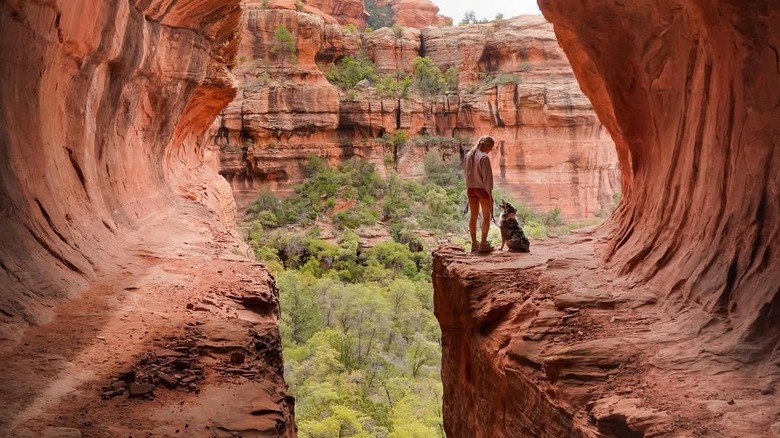
In 2023, the global luggage storage network Bounce conducted a study in which Sedona emerged as the most popular hidden gem in the United States, having received 4.7 million searches on Google that year. Sitting in northern Arizona, Sedona is defined by its striking nature, featuring towering red rock formations shaped by millions of years amid an arid desert landscape. Its dramatic geology forms the backdrop of this "New Age Capital," drawing visitors seeking spiritual healing and psychic guidance. Crystal shops and wellness spaces line the town, reinforcing its reputation as a modern spiritual enclave and contributing to its title of the world's "most mindful" escape.
However, the town, with a population of 10,000 and a daily tourist footfall of 8,000 (as of 2023), according to the Sedona Chamber of Commerce & Tourism, continues to be riddled with overtourism, resulting in antitourism messaging and pushback. Among Sedona's most promoted draws are "healing" red-rock formations, spiritual caves, and luxury spas, including one famously frequented by Gwyneth Paltrow. According to an op-ed in the San Francisco Chronicle, this New Age tourism even prompted local authorities to halt advertising the town in national travel magazines — a move aimed at slowing demand rather than accelerating it.
Public sentiment reflects a growing unease, too, as seen on forums like Reddit, where a user describes Sedona as being "sold out for a selfie." Another user, who appears to be a local, rues how they are "absolutely inundated with tourists," as the town no longer has a defined tourist season, with heavy footfall year-round. Once an actual quiet retreat, Sedona now lives the irony of being celebrated for reflection and stillness, while being slowly undone by the crowds it attracts.
5. Fjaðrárgljúfur Canyon, Iceland
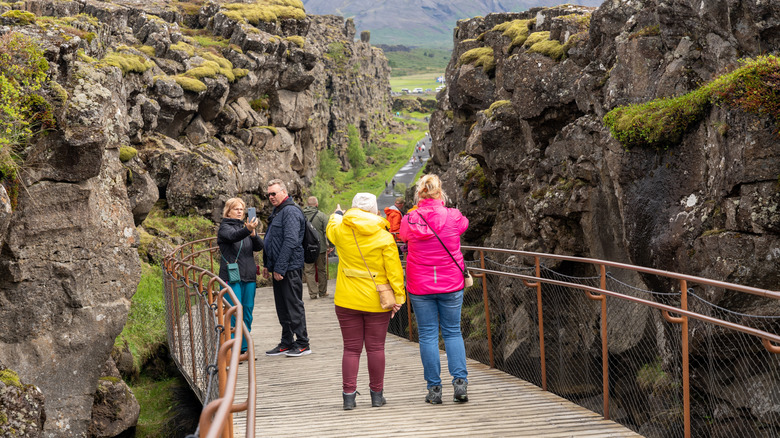
A relatively obscure canyon in southeast Iceland that long sat outside mainstream tourist radar, Fjaðrárgljúfur rocketed into international visibility after appearing in Justin Bieber's 2015 music video, "I'll Show You," drawing attention far beyond the usual. The video, which has since crossed 500 million views on YouTube, is seen as a major contributing factor behind the sudden surge in tourism in this hitherto little-known corner of Iceland. From 2016 to 2017, the number of tourists visiting the canyon nearly doubled. What were widely presumed to be "Beliebers" thronged the protected areas of Fjaðrárgljúfur to retrace their icon's footsteps in the video, where he is seen moving freely across the canyon's delicate moss-covered landscape. In 2019, the canyon was seen once again in the eighth and final season of Game of Thrones, further adding to its allure.
Fjaðrárgljúfur gorge took shape around 9,000 years ago at the end of the last Ice Age, carved through basalt rock that dates back nearly 2 million years. Its green cliffs and soft moss make the vegetation so fragile that sections of the gorge had to be fenced off to protect it from rising footfalls. In 2019, local environmental authorities closed down the canyon for the second time to ward off damage and allow it time for recovery. Since the peak of viral exposure, access to Fjaðrárgljúfur has continued to be monitored and occasionally restricted, especially when rain and snowmelt push visitors off the marked trails, leading to trampling on its green surfaces. Once an open-to-wander landscape, the canyon is now a carefully controlled site, with marked trails and periodic closures shaping how Fjaðrárgljúfur is experienced today.
6. Tourist traps in Prague

While the capital of Czechia, one of Europe's safest countries, is not a hidden gem by any stretch, in recent years a parallel narrative of "niche" corners has flourished online, offering an escape from the Old Town rush. Many of these spots have now become attractions in their own right, engineered less by history and more by social media momentum.
The John Lennon Wall, once a politically charged symbol of dissent, is now a constantly repainted backdrop for queuing selfie-seekers. With most walking tours ending at this point, this historic wall is far from being actually hidden. Another Instagram favorite is the Idiom installation at the Municipal Library, popularly known as the Infinity Book Tower. Positioned as a quiet cultural corner, this cool sculpture made of books routinely draws lines that spill into the lobby and also around the building on weekends, where waiting times stretch to 40 minutes or beyond. Even the Paternoster elevator at City Hall, once an everyday relic of bureaucratic Prague from the 19th century, freely used by locals and tourists, has been repackaged as a novelty thrill. The continuously moving, doorless, hop-on-hop-off elevator drew such intense visitor curiosity that access is now paid, turning a piece of everyday infrastructure into yet another managed attraction.
Further adding to the list is the so-called narrowest street in Prague, complete with traffic lights to regulate foot traffic. The "street" is actually a flight of stairs, originally built as a fire escape in the 15th century rather than a historic lane, and is frequently cited by guides and locals as one of Prague's manufactured hidden gems. These sights continue to funnel curious tourists in large numbers into the same spaces, while reinforcing the illusion of "offbeat."
7. Chefchaouen, Morocco
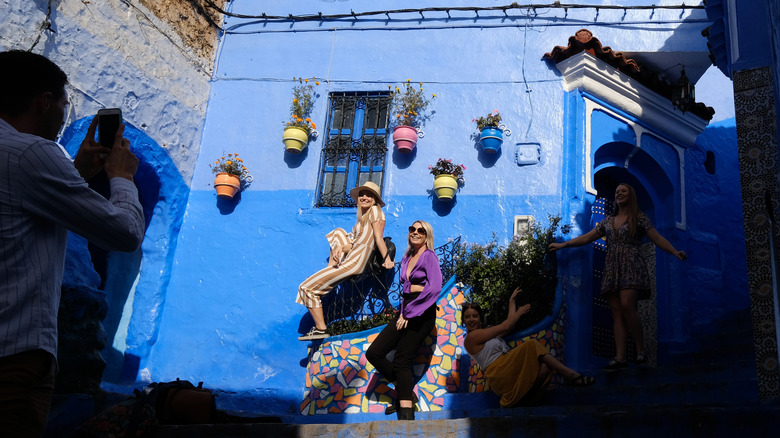
Before global Instagram fame, Chefchaouen was known mainly among niche travelers as a picturesque blue city tucked into the Rif Mountains, a quiet alternative to Morocco's major tourism hubs like Marrakech or Fes. Still referred to in travel media as one of the country's "best-kept secrets," the city today is among the most photographed locations on the planet, with 1.1 million posts on Instagram, under the hashtag #Chefchaouen. Founded in 1471 and home to more than 42,700 residents, Chefchaouen, also known as Chaouen, has long stood out as one of Morocco's most visually distinctive destinations — a hypnotic, one-of-a-kind, dreamy blue city.
The origins of the blue tradition tell different stories, depending on who you ask. One belief traces it to Jewish refugees from Europe who arrived in the early 20th century and painted the walls blue as a spiritual symbol representing the sky and heaven. Others suggest the practice dates back to the 15th century, when Jewish communities lived alongside local Moroccans and Moriscos, and used the color to evoke peace and safety within the pluralistic mountain town.
While much of Chefchaouen's Jewish population departed for Israel in 1948, the color has endured. Each spring, the local government distributes paintbrushes to residents, helping preserve the town's iconic blue façades. In recent years, the blue walls, doorways, and steps have been reimagined as photo backdrops by influencers, travel bloggers, photographers, and selfie seekers. The city has even been flagged as a cautionary tale in travel industry lists, cited as an example of a destination ruined by social media. As visitor numbers climb, the impact increasingly shows up beyond the frame in littered photo spots and diminishing privacy within a lived-in town never meant to function as an Instagram backdrop.
8. Giethoorn, Netherlands
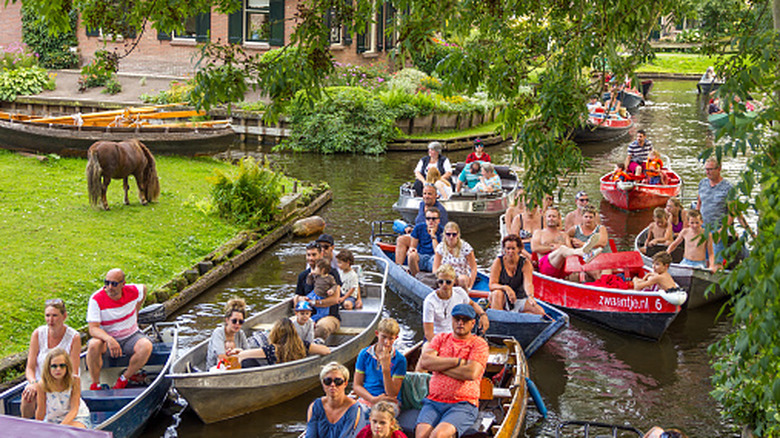
A car-free Dutch village where narrow canals replace roads and thatched-roof farmhouses sit behind wooden footbridges — Giethoorn's very description evokes a storybook escape. Located in the province of Overijssel, the village was historically shaped by peat-digging settlers in the 13th century, whose excavations gradually formed the waterways that now define it, connected by 170 small wooden bridges. For centuries, Giethoorn existed quietly, known mainly to locals and slow-travel seekers, its canal life unfolding far from Europe's mass-tourism circuits.
This, however, has seen a shift over the years. The little canal village with a population of about 2,900 and a surface area of 14.91 square miles has been on the receiving end of overtourism, thanks to strong advertising campaigns and social media. While for entrepreneurs this has been good news, it's not quite so for residents. Dutch newspaper De Stentor has reported visitor numbers reaching 30,000 on peak days. The paper also coined a controversial but telling phrase to describe the phenomenon: "Aziatische armada" (Asian Armada), referencing waves of Asian tour groups drawn by Giethoorn's fairytale visuals. Some visitors reportedly assume the village is an open-air museum rather than a lived-in community, leading to repeated invasions of private homes and resulting in a far-from-idyllic ground reality.
Giethoorn's peak tourist hours are now characterized by lines of crawling tour buses, clogged parking spaces, gridlocked canals with rental boats, and a sea of selfie sticks. Many of these visitors stay only a few hours, contributing little economically while extracting heavily from the village's fragile calm.
9. Nusa Penida, Indonesia
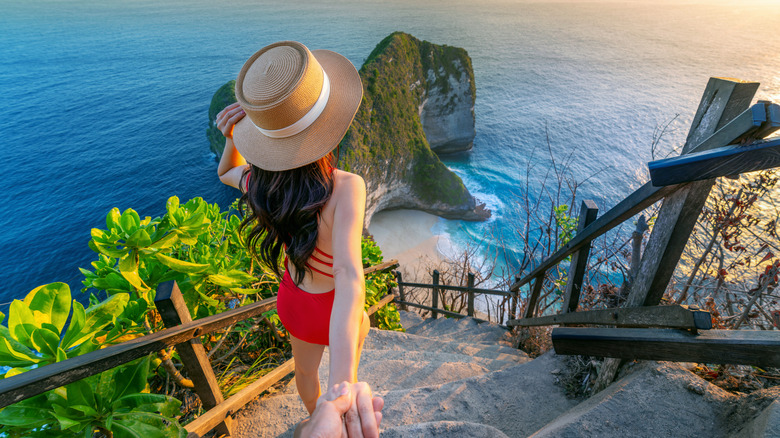
Nusa Penida was long perceived as a quieter island alternative to Bali, its rugged, largely untouched landscape of dramatic cliffs and turquoise coves promising off-the-beaten-path views. According to some travel blogs, this was true till 2016. But in later years, the island's most photographed vantage point, Kelingking Beach, a cliff formation resembling a T. rex, became a global sensation on social media, and tourists have been known to queue for up to an hour just for their turn at the perfect shot. Kelingking Beach has been ranked among the world's most beautiful beaches, while Tripadvisor users voted it the second-best beach in Asia and the 19th-best in the world.
That online visibility quickly transformed the island's identity. Aside from Kelingking Beach, Angel's Billabong and Broken Beach have also earned top social media currency, concentrating large crowds at a handful of viewpoints. The local infrastructure of narrow roads, steep paths, and limited facilities isn't robust enough to sustain peak foot traffic, leading to congestion and safety concerns and prompting official warnings about treacherous descents to certain beaches.
The rush for photogenic spots has also intersected with controversial development proposals. Plans for a 182-meter glass elevator at Kelingking Beach sparked debate over the environmental impact and integrity of the landscape, reflecting broader tensions around tourism growth and nature preservation. And while the surge in visitor figures has firmly put Nusa Penida on the map for tourists, it continues to be a harrowing experience as they press on through steep slopes and crowded edges, for that one iconic shot.
Methodology
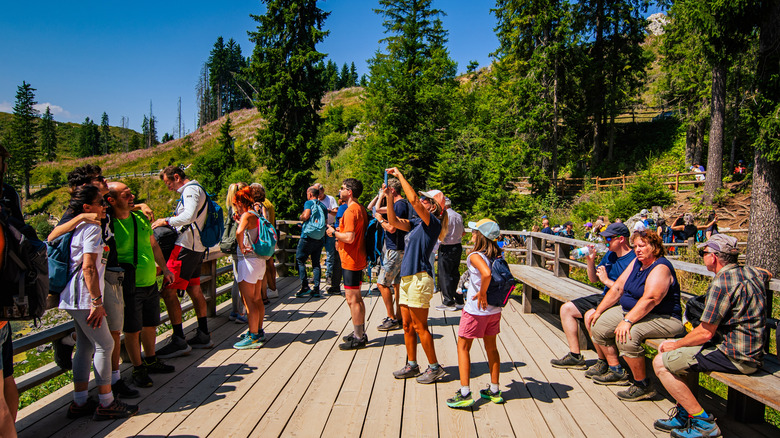
This article combines research with firsthand experiences to examine how once-overlooked destinations evolved after going viral, even as the label "hidden gem" endures. I studied travel media coverage, regional news reports, industry data, traveler reviews, social media trends, and academic papers, and drew from international publications such as The Guardian, The New York Times, BBC Travel, Condé Nast Traveler, and Travel + Leisure. I also factored in administrative responses and local pushback against overtourism, alongside my own visits to some of these places to add perspective beyond secondhand accounts.
The selected destinations span geographic and geological variety — from a strangely shaped island to a volcanic canyon to a canal-only village and a blue city, and beyond — each tracing a shift from actual obscurity to social media phenomenon. The idea is not to rank these places or discourage travel, but to underline the common pressures that emerge when destinations are marketed and consumed primarily in terms of their photographic payoff.