
Illinois' Fastest-Growing Cities In 2026, According To Data
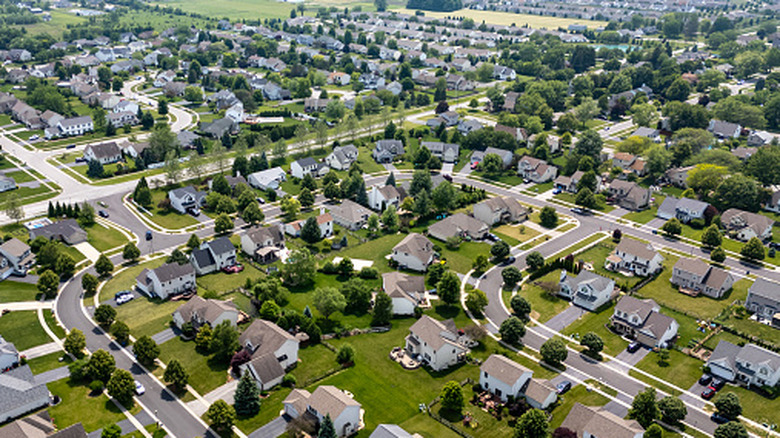
In recent years, Illinois' population has mostly been in the news for its decline. One article from Illinois Policy calculated that the state was losing about one resident every nine minutes, and U.S. Census data shows the state's population dropping off by 0.8% between 2020 and 2025. But Illinois isn't shrinking everywhere. In fact, some cities have added thousands between those same years.
Using population estimates calculated by World Population Review and backed up by U.S. Census data, we looked at Illinois' five fastest-growing cities and what's driving their expansion. These are places you may not have heard of before, but they could be on the radar as future travel destinations. Notably, most of these spots are in the outer-ring exurbs of Chicago. With U.S. Census statistics showing that Chicago's population shrank by 1% between 2020 and 2024, the growth of surrounding communities suggests a movement away from the dense capital city.
Instead, people seem to be opting for places that provide more space, better prices, and a community-centered way of life. Here are the five Illinois areas growing the most in 2026.
Wonder Lake
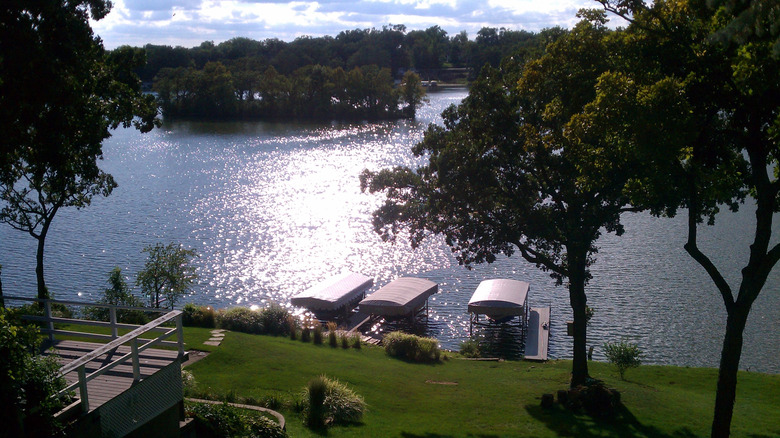
With a sharp upward population swing since 2020, Wonder Lake is the fastest-growing municipality in Illinois. World Population Review estimates its 2026 population to be just short of 6,000, with an annual growth of 5.9%. Meanwhile, the U.S. Census shows that between 2020 and 2024, the village's population surged by 33.2%.
Wonder Lake is an exurb of Chicago — close enough that you can make trips to the city in under two hours, but far enough away from the noise, bustle, and costs. According to data from Best Neighborhood, the community's housing prices are about 25% lower than the state's average. Meanwhile, monthly rent costs are a staggering 46% lower than in Chicago, per RentCafe data. Of course, prices are tied to the availability of housing. In Wonder Lake, two main developments — The Meadows of West Bay and Stonewater — have added hundreds of homes to the village. As Shaw Local reported in 2024, thousands more may be in the works.
A major perk of living in this region is access to the town's namesake lake, a beautiful natural feature that anchors the surrounding residential communities. All of the lake's beaches are private (via the Wonder Lake Master Property Owners Association), so only local homeowners get to enjoy them. However, there are some public parks available to visitors and residents alike. One notable spot is Woods Creek Park, which has maintained lawns for sports or picnics. Plus, about a 30-minute drive from the village gets you to Illinois' Chain O' Lakes State Park (not to be confused with Indiana's underrated state park of the same name).
Yorkville
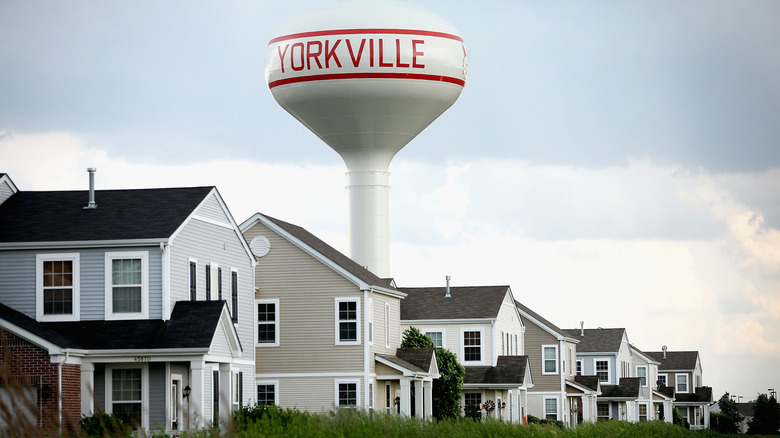
World Population Review's estimates put Yorkville's 2026 figure at just over 28,000, with 3.9% growth since 2020. Between 2020 and 2024, the U.S. Census reported around a 20% population increase. The city sits within Kendall County and is part of the Chicago Metropolitan Area. It's just over an hour's drive from downtown Chicago (depending on traffic) and under 40 minutes or so from the suburb of Naperville, which has been named the best place to live in America.
Yorkville is another outpost of the metro area that's much more affordable relative to urban Chicago. Apartments.com puts the average rent for a one-bedroom apartment here at under $1,400 — about $1,000 less than the average for Chicago. As the United City of Yorkville explains, 2016 ushered in a wave of residential construction and the creation of Anthony Place, a large affordable housing complex for seniors. Currently, U.S. Census data shows that Yorkville has a very mixed population in terms of age. Roughly a third of residents are under 18, and 11.3% are aged 65 and older.
Speaking to the Chicago Tribune, Yorkville's Mayor John Purcell highlighted some of the region's charms, saying, "It's a small town, people are really friendly and that makes a difference," adding "the riverfront has also become a real asset for us and the staff has done a tremendous job of hosting festivals and events." The river in question is the Fox River, which runs through the middle of Yorkville, and affords some lovely spots like the Bicentennial Riverfront Park. The park has a walking trail, fishing pier, playground, and boat launch. In July, it hosts the annual Yorkville River Fest, a day-long country music festival with cardboard boat races.
Volo
The third fastest-growing city in Illinois is yet another Chicago suburb — Volo, about an hour's drive from downtown. World Population Review estimates the community has just under 8,000 residents as of 2026 and a growth rate of around 3.8% since 2020. Official U.S. Census data notes a nearly 20% jump from 2020 to 2024.
As with other villages in Lake County (including Wonder Lake), Volo could be a more affordable option for renters looking to be close to the city but in a more peaceful setting. Apartments.com places the average rent for a one-bedroom in Volo at around $1,600, which is roughly a third less expensive than Chicago's average, according to RentCafe. There have also been recent developments in the area, such as a 133-unit townhouse complex reported on by the Chicago Tribune.
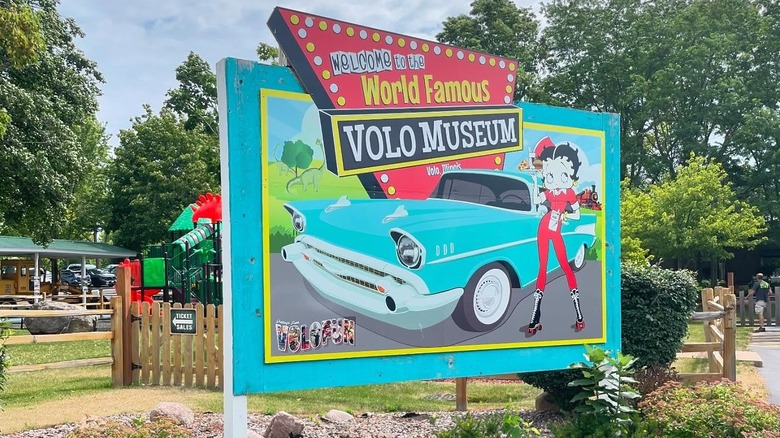
Volo offers a couple of interesting attractions that might make someone passing through want to stop longer. Most iconic of these is the Volo Auto Museum. Chicago Magazine once called it "35 acres of weirdness." Among some of its eclectic exhibits are historic Disney parade cars, a 1928 Herschell carousel, and a walk-through sideshow featuring medieval torture devices. On the same property, see the Jurassic Gardens, a separate attraction full of animatronic dinosaurs and prehistoric dioramas. For those who like to spend time outdoors, Volo benefits from its surrounding lakes and facilities like Fish Lake Beach Camping Resort. Meanwhile, a 10- to 15-minute drive north of town takes you to the Fox Chain O' Lakes, one of the top Illinois lake destinations for first-timers to learn ice fishing.
Hampshire
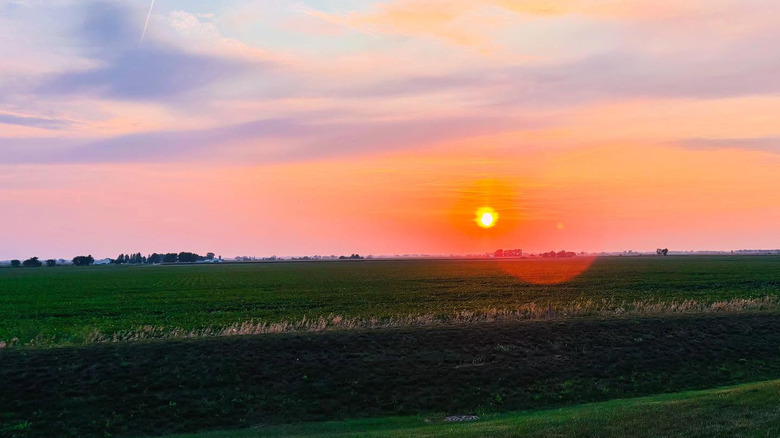
At the outer edge of the Chicago metropolitan area (but still in the city's orbit), Hampshire is an exurb that's grown around 3.3% annually, according to World Population Review's estimates. Additionally, U.S. Census data cites a population gain of 15.7% in the town from 2020 to 2024. According to The Daily Herald, Hampshire's expansion has been accompanied by zoning decisions encouraging new development. In fact, the village's total number of issued building permits tripled between 2021 and 2024. Still, this community's cost of living is higher than the national average, per Payscale. However, its housing costs are around 10% lower than those in Chicago.
One of Hampshire's appeals is that it combines a rural, agricultural character with access to Chicago's job market, which is about an hour's drive away. As one of the oldest municipalities on this list, this town was first settled in the early 1800s as a farming community. It's always been linked to Chicago, having sat along the path of a stagecoach trail from the city and later on the Chicago-Pacific Railroad Line. Despite turning more suburban, Hampshire still has a couple of farms in its domain. One such spot is Enjoy Pioneer Farm, which sells fresh eggs and seasonal produce. The town even hosts the Muirhead Farmhouse, the only structure of its kind designed by Frank Lloyd Wright.
Explore the region's agricultural roots during the outdoor market. Held every Saturday from June through October, this event features crafts, activities, and food. In August, Hampshire stages a festival called Coon Creek County Days, complete with a carnival and beer garden. Several public parks are dotted around the community, too. Bruce Ream Memorial Park is a well-rounded option for its range of facilities to keep all ages engaged, including a splash pad, playground, volleyball court, and fitness stations.
Cambria
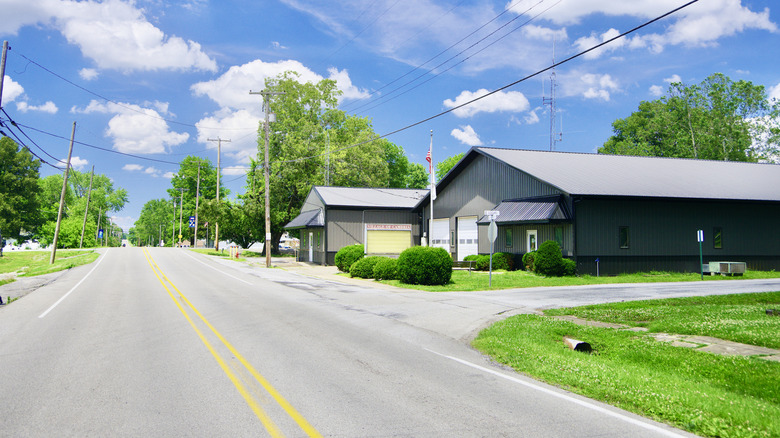
Of Illinois' fastest growing cities, Cambria is the smallest. World Population Review estimates its 2026 population to be just over 1,900, though it's grown by nearly 3.3% year over year. According to the U.S. Census, the village's population in 2020 was 1,505, which equates to a 25% growth since then. Also, unlike the other cities on this list, Cambria isn't part of the Chicago metropolitan area, but rather sits in the southern part of the state. Its closest big-city hub is St. Louis, just under a two-hour drive away.
Cambria is a more affordable option compared to the rest of the state. The cost of living is 35% lower than the Illinois average, per Salary.com, and a single person pays around $840 per month for housing. The village has also gotten some recent funding for development — it was awarded nearly $200,000 for upgrading its park in January 2026, according to a post on its Facebook page.
Those who love the outdoors also have easy access to some of the most picturesque Southern Illinois spots. It's just outside the Shawnee National Forest (about a 15-minute drive away), Illinois' scenic wilderness destination lined with idyllic trails. The Shawnee area is known for being a top Illinois wine corridor, and Cambria has its own well-rated winery, Walker's Bluff, holding 4.4 stars on Tripadvisor. Directly south of the village is Crab Orchard Lake, which has two marinas and abundant fishing opportunities.
Methodology
For this list, "city" refers to any incorporated municipality. To identify Illinois' five fastest-growing cities, we primarily referenced 2026 population estimates from World Population Review. This information was corroborated by comparing previous years' data against U.S. Census numbers. Meanwhile, research into potential factors causing each community's expansion drew on sources such as local and state news publications, cost-of-living databases, and regional tourism board websites.
Learn even more about Illinois by checking out this underrated park between Chicago and Peoria. Or, plan a road trip to these five charming Midwestern towns throughout the state.