
The Best Destinations To Hike In America If You Want To Avoid Bears, According To Experts
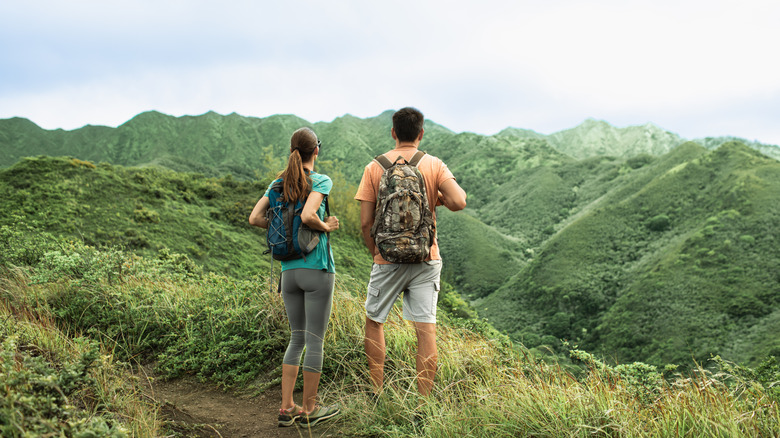
There are some pretty hefty upsides to hiking in America. For one, you get to hit some undeniably legendary trails, whether that's the soul-satisfying hike up the Half Dome in Yosemite or the Mexico-to-Canada Pacific Crest Trail. On top of that, there's real variety in the mix, with rainforest hikes up in Washington state, volcano treks in Hawaii, walking routes below the faces of glaciers in Alaska, and trails that take you from the Great Smoky Mountains all the way to the wispy beaches of the Outer Banks over in North Carolina.
But there are also downsides, one of which is surely the abundance of bears that roam the country. According to Bear Smart, an organization dedicated to helping bears and humans live side by side, there's close to a million black bears in North America today, not to mention populations of the feared grizzly in Alaska and in some northern states. The good news is that bear attacks on hikers remain rare, but every year on average, about two or three people are killed by a bear in North America, according to Biology Insights.
If you're keen to keep the risks of crossing paths with a big bear as low as possible, this guide is a great place to begin. Taking recommendations from experts in the outdoors and wildlife fields, it offers up five American destinations where your hikes are likely to go off completely bear-free. Some places listed simply do not have bears, while others have some of the lowest bear numbers in the United States. What they all share is tempting trails that should stoke the wanderlust of any outdoor adventurer.
Hawaii
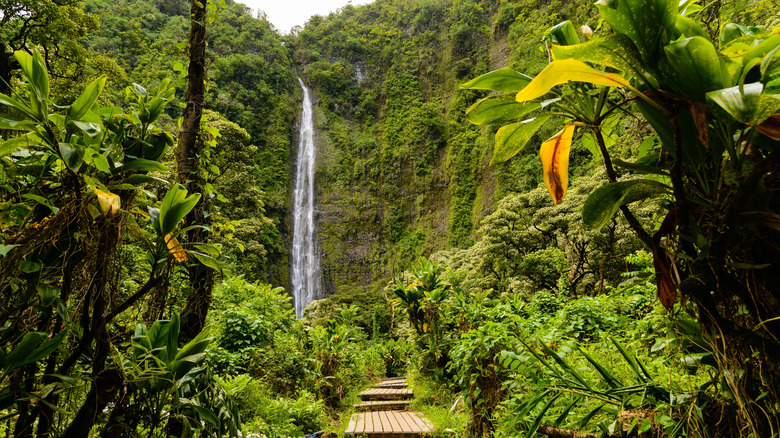
Here's something that will be music to the ears of bear-wary travelers: Hawaii ranks number one among the top American states without bears. Yep, there are zero — repeat, zero — ursine animals in the land of Aloha. It's a quirk of geography more than anything else. Not only does this surf-washed land of blazing beaches sit 2,400 miles off the West Coast, but it was also made by the eruptions of volcanos more than 70 million years ago, meaning big creatures like bears simply never got the chance to hop over and get established.
But humans aren't like bears. Humans can get on any number of daily flight connections to Honolulu or the four other major airports in the state of Hawaii. That, in turn, opens up stacks and stacks of fantastic hiking, with listed routes on offer across each of the main islands in this Pacific-licked state.
According to Noah Lang, adventure travel blogger and Hawaii local, Kauai is the best island for hiking and backpacking adventures. He specifically nods to the Weeping Wall Trail, a 6.2-mile roundtrip romp alongside the rushing Wailua River to a hidden cataract deep in the Kauai mountains. For a coastal stroll, consider the Ke Ala Hele Makalāe Path, a famous coastal trail laced with views and cultural treasures. It passes by some lovely beaches on the east coast of the island, and is even accessible to wheelchairs and bikes.
Isle Royale National Park, Michigan
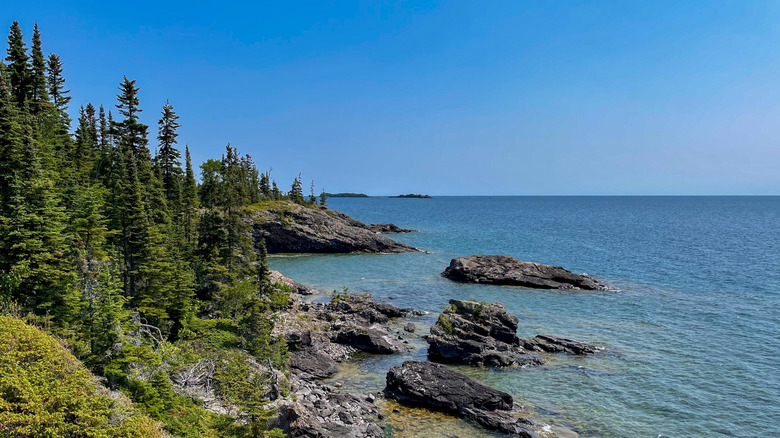
According to the National Park Service, the very fact that the Isle Royale National Park sits atop an island means that bears simply will not be a problem here. Apparently, some mammals are much more able to make the 14-mile swim from the mainland to its shores, and big, hulking, black bears — of which there are an estimated 13,000 in the state of Michigan alone — are not one of them. That doesn't mean there's absolutely no wildlife to be wary of. Packs of timber wolves are known to patrol the backcountry here, which is largely why food lockers are still in use across many of the park's campgrounds.
This bear-free wilderness certainly isn't short on plaudits. In fact, it was ranked as the best national park in the U.S. for 2024 by The Wall Street Journal, and called a "remote paradise" by National Geographic, which also pointed out that it's not really for the fly-in, fly-out visitor. People come here to immerse themselves in nature, to backpack untamed trails, and to spot beavers and moose in the wild.
The hiking is top-drawer. According to the Upper Peninsula Travel and Recreation Association, the park is a veritable mecca for trekkers with 165 miles of wilderness trails, a mix of boreal woods, swamps, and rock-ribbed coast on offer. The long-distance Greenstone Ridge path is one of the most famed. It crisscrosses the main island in the reserve, going for 43 miles down its backbone. It's best hiked in late summer and fall, when bug counts are low and the trees are changing color.
Death Valley National Park, California
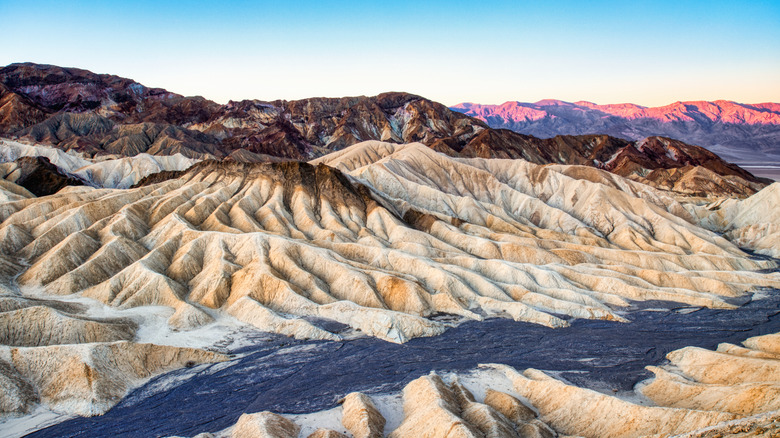
One name you might not have expected to find on this list of bear-free hiking destinations is California's own Death Valley National Park. According to World Population Review, the Golden State is the territory with the second-highest population of black bears overall, sitting behind only the great frontier that is Alaska. However, statistics can be deceiving. The Black Bear Conservation and Management Plan for California, published by the state wildlife department in 2025, shows that the actual range of bears on this part of the West Coast is largely limited to the Sierra Nevada mountains, the Coast Ranges, and northern California. One corner of the state was noticeably absent of bear life: The desert.
And that's precisely where you'll find the largest wilderness area in the Lower 48, spreading over 3 million acres between the Nevada state line and the rugged peaks of the Panamint Range. It's home to some rather unique mammal species, including coyotes and bighorn sheep. But bears don't get a single mention on the National Park Service's guide to Death Valley wildlife. Nice.
On top of that, the hiking is exceptional. You could conquer the wineglass-shaped Desolation Canyon, a bit of an under-the-radar trail that has some scrambles up to mind-blowing sunset viewing points. Or, take the advice of the worldwide hike-tracking app AllTrails, which lists the top-rated route in the park as the Mosaic Canyon Trail. It's certainly an epic challenge that explores gorgeous California canyons, taking around three hours as it hops big rock formations dashed with interesting geological strata.
South Dakota
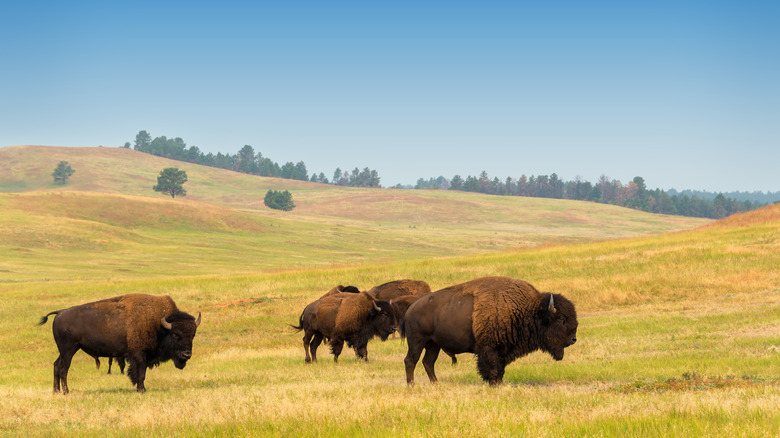
South Dakota's name comes up time and time again when you go a-looking for places that combine incredible hiking with a seeming total lack of bears. The home of Mount Rushmore is recommended to bear-dodging travelers by Backpacker Magazine, is listed among the few states without active bear populations over on Wildlife Informer, and gets a nod — along with its near brother, North Dakota — from Advnture.com for offering an apparent lack of ursine mammals and stunning badlands alike.
And those Badlands really are a highlight of the state. They sprawl over 244,000 acres of land between prairies and wind-whittled mountain buttes around an hour outside of Rapid City. Cue the Badlands National Park, where the popular North Unit has some top-rated hiking paths, including the Notch Trail, a challenging 1.5-miler that ends with sweeping views from atop a ridge.
Of course, the Badlands NP isn't the only hiking haven in South Dakota. Fringing the westernmost edge of the state, the Black Hills hide the secret Botany Canyon trail, where the forests loom high and green as the path crisscrosses a flower-rimmed creek. The official Visit the USA website, on the other hand, picks out the relatively easy hike to the Hippie Hole swimming spot in the Black Hills as a local favorite, along with the historic '76 Trail, a former miner's route that lifts walkers above the forest-filled Spearfish Canyon.
Catalina Island, California
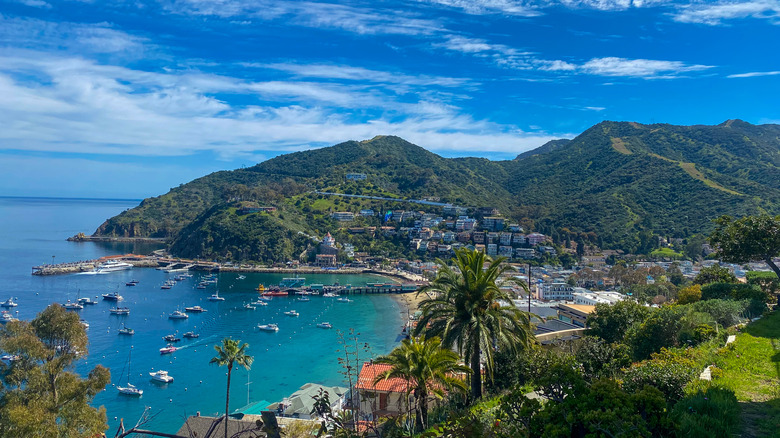
The second potentially surprising entry from a state that famously has thousands of bears, and even a giant grizzly on its official flag, is the island of Catalina. Twenty-two miles off the coast of the Golden State, surrounded by the big Pacific Ocean, this glimmering speck on the map has long been a bit of an A-lister getaway, and now offers brilliant beaches, palm-threaded shores, and some of the most celebrated seafood eateries in the region.
Hikers will have plenty to look forward to, since 88% of the backcountry of Catalina now sits within protected nature parks. The isle also hosts the 38.5-mile-long backpacking odyssey that is the Trans Catalina Trail, known simply as the TCT, which will take you on a multi-day adventure across the whole backbone of the island from east to west, over dusty, exposed ridges where sweeping views of the ocean abound.
And there's another kicker: There's not a bear to be found here. There's lots of other animal life to spot as you hike, from the whales and bottlenose dolphins that swim through the surrounding waters to the bison herds that roam the countryside. But you won't find grizzlies, black bears, or any other species of ursine mentioned over on the wildlife page of the official Catalina Island Conservancy. Nice.
Methodology
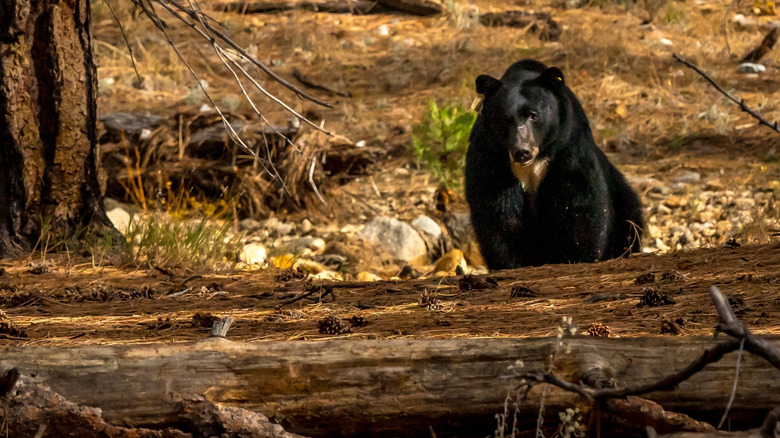
We went with the experts on this one. Every single one of our five places to hike in the USA, away from the prowling presence of bears, was picked from publications written by authority figures in the outdoors, wildlife, or adventure space.
We took those suggestions and then cross-referenced them with other datapoints and publications to ensure that they are, indeed, widely seen as bear-safe destinations. We also dug a bit deeper into each place mentioned to ensure that it's lauded for its walking, trekking routes, or outdoors opportunities, since we figured it's no good simply being low-risk for bears; our places must also offer great hiking to boot.
It's worth noting that, while some places on this list (such as Hawaii) are completely devoid of all wild bear life, others are considered to exceptionally rare sightings. That means there remains some small risk of crossing these hulking creatures on your hiking adventures, even if following this guide.