
9 Best (And Worst) Places To Watch The 2026 Eclipse In Spain, According To An Astronomer
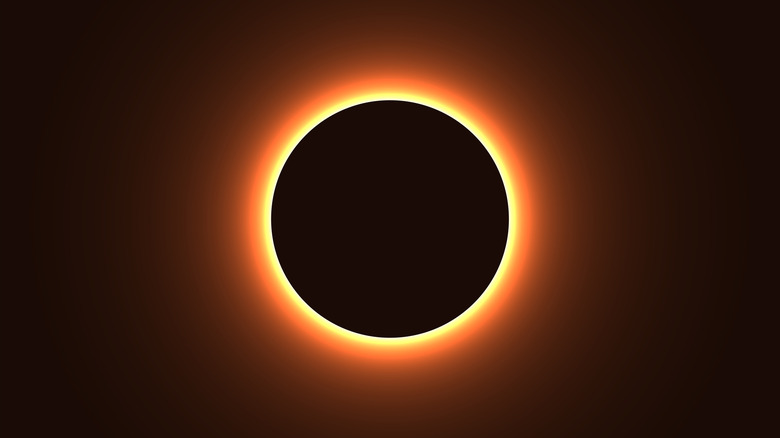
On Wednesday, August 12, 2026, a total solar eclipse will dazzle horizon-watchers in Europe. Although a partial eclipse will also be visible in Canada and Northern Africa, the path of totality will only cross three lucky countries: Greenland, Iceland, and Spain. "The biggest wrong idea about eclipses is that if you've seen a 90% eclipse, you've seen most of the show," says Dr. Doug Duncan, an astronomer on staff at the University of Colorado and the former director of the Fiske Planetarium. Duncan's passion for eclipses began when he saw one for the first time in 1970. In addition to leading many trips and excursions to witness the phenomenon since, he will also be bringing a group on a sold-out trip to Spain to witness the total solar eclipse in Zaragoza. Even if you missed your shot, tickets are still available for his 2027 eclipse trip to Gibraltar.
Islands sat down with the astronomer to glean some insights on some of the best and worst places travelers can go to experience the 2026 eclipse. Because the eclipse will take place late in the day when the sun is low on the horizon, Duncan did not recommend a trip to Greenland or Iceland. "It's a spectacular place; however, it's 90% cloudy." When it comes to eclipses, you could have everything planned out perfectly, but a cloud can still float in and ruin the day. For that reason, we've focused this list on the best and worst places along the path of totality in Spain.
Best: Zaragoza
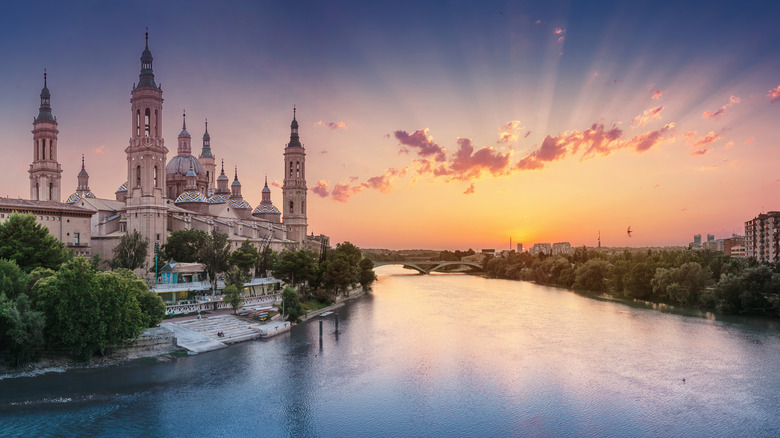
As mentioned, this is where Dr. Duncan will be watching the eclipse on August 12, 2026. Duncan told Islands that he plans all his eclipse trips three years in advance, and he chose Zaragoza because he was looking for a place where the skies were most likely to be clear on the day itself. "It reminded me of where I grew up in Southern California," he said, "It's basically semi-desert. You can just tell from looking around that there's not a lot of rainfall here."
Zaragoza is a beautiful and historic city located halfway between Madrid and Barcelona. Eclipse or no eclipse, it is a fascinating place to visit, as it was once the capital of the Kingdom of Aragon. The city is also expecting an influx of tourists and has prepared a festival that includes scientific and cultural events. Some of the most beautiful places to see the eclipse would be from Parque Grande José Antonio Labordeta, which has a high elevation and open space, or along the Ebro Riverbank. While you're in town and waiting for the big show, Duncan also recommends visiting a little-known collection at the La Seo Tapestry Museum, which he said was "probably the best collection of tapestries I've ever seen in my life." All in all, a well-rounded trip no matter when you visit.
Best: Bardenas Reales
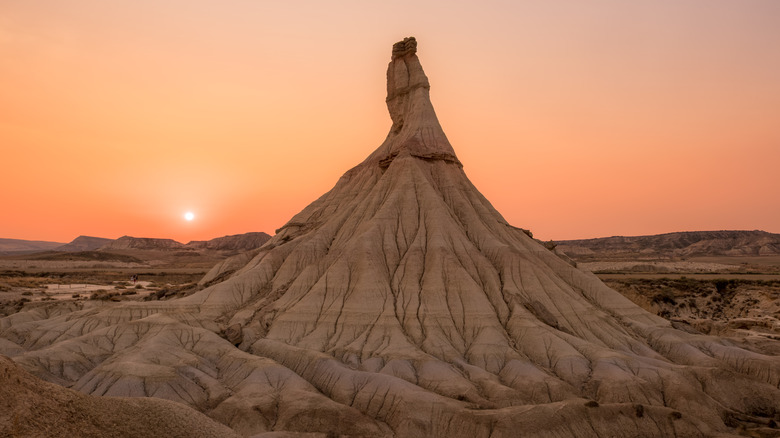
On whether or not Dr. Duncan recommends any coastal destinations, he was adamant in saying, "I would go inland where it's drier." And as it turns out, the path of totality is crossing over Bardenas Reales, the unexpected badlands of Navarre. This semi-desert landscape has surreal rock formations that will be just perfect for capturing a unique eclipse photo. There are walking trails in the park, but remember that in Spain, it will be the middle of the summer when temperatures average out at around 90 degrees Fahrenheit. Consider booking one of the park's guided trips on offer for the special day. This will be the best way to get around the challenging terrain by 4x4 or van—you can also imagine that the experienced park guides already have the best viewing spots picked out.
The nearest town, Tudela, is only a half-hour drive away from the park. While you wait for the big show — Duncan recommends arriving a day early to avoid traffic—take the time to enjoy the sights of Tudela, like the Palace of the Marquis of Sant Adrian and the Muñoz Sola Museum of Modern Art. To get to Tudela, you can take the high-speed train from Madrid, which takes about two hours. After the eclipse, consider taking a trip up to Pamplona. This is the city that hosts the annual Running of the Bulls in July. Although the event will be over by August, you can still visit the bull ring.
Best: León
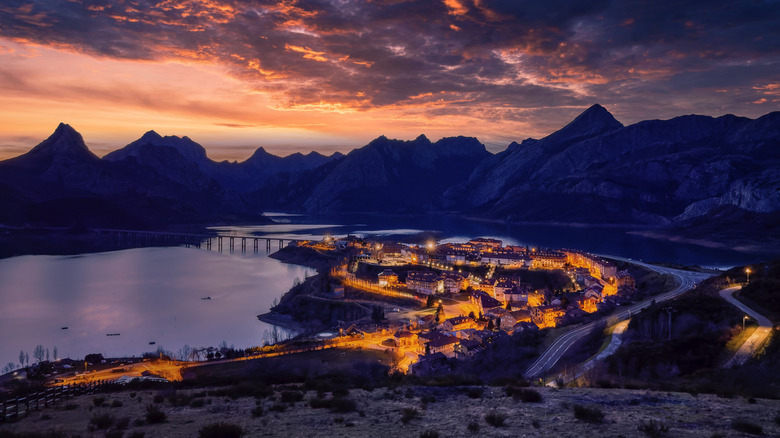
"If it were me, I would be getting my train ticket right now and head west." Not only does Dr. Duncan emphasize the importance of getting your high-speed rail tickets as soon as you can, but the very low angle of the eclipse also means your odds are better the further west you can go. "Six degrees above the horizon is not very high up," he says, adding, That's why, if you're looking for an alternative to Zaragoza, you might consider booking your ticket to the typically less rainy city of León. The city itself won't experience the full eclipse, but you will be within spitting distance of the path of totality.
If you stay in León, you'll only get 95% totality, and as Duncan tells us, "Five percent of the sun showing is as bright as 20,000 full moons. Seeing a partial eclipse is like listening to a song you enjoy on earbuds or out of your phone, and seeing a total eclipse is the live concert."
For the full total eclipse experience, you will need to travel outside the city to towns like Riaño, Cistierna, or Boñar. All three of these cities are between one and two hour's drive north of León, but wherever you decide to camp for the eclipse, make sure you have a clear view of the western horizon since the eclipse will be so low in the sky. As Duncan says, "Anything that sticks out — even just a little rolling hill — will stop you from seeing the eclipse."
Best: La Rioja
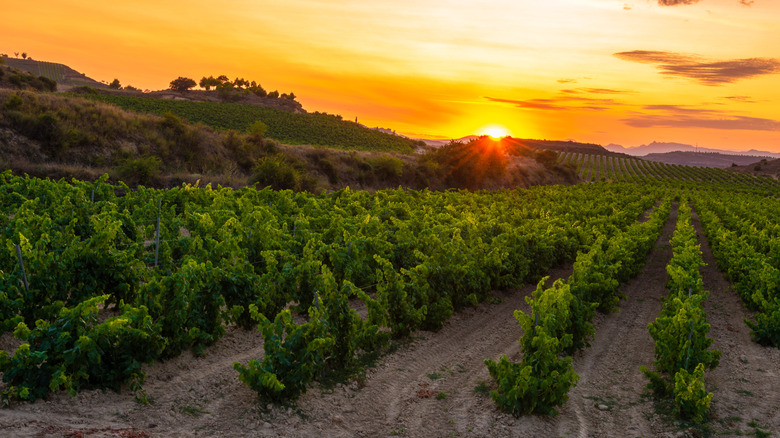
Of course, for Dr. Duncan, more goes into picking a spot for an eclipse than just sun angles and weather patterns. "I try to find places that are interesting, so that if we did get clouded out, people wouldn't go, 'Oh, it's a total loss.'" And as long as you like wine, a trip to La Rioja — one of the prime wine regions in Spain — could never be a loss.
Lucky for oenophiles, the total solar eclipse will be on full display above the many rolling vineyards of La Rioja, although you may need to get a car and explore around a bit for an unobstructed view, because there are lots of hills and mountains on the horizon. However, while you wait, you might choose to base yourself in the beautiful city of Haro, which is famous for its annual Battle of Wine every June. Or, explore the famous tapas street Calle de Laurel of Logroño and consider scouting your eclipse viewing spot along the Ebro River. Logroño is also one of the main cities on the Camino de Santiago that will experience the eclipse, along with Ponferrada and Burgos in the neighboring region of Castile and León, along the Camino Frances (part of the Camino de Santiago).
This region of Spain is less well connected by trains, and especially if you want to travel around to different wineries, it's advisable to rent a car. Try to book your reservations as far in advance as possible, because bookings will be sure to fill up when eclipse mania takes hold.
Worst: A Coruña
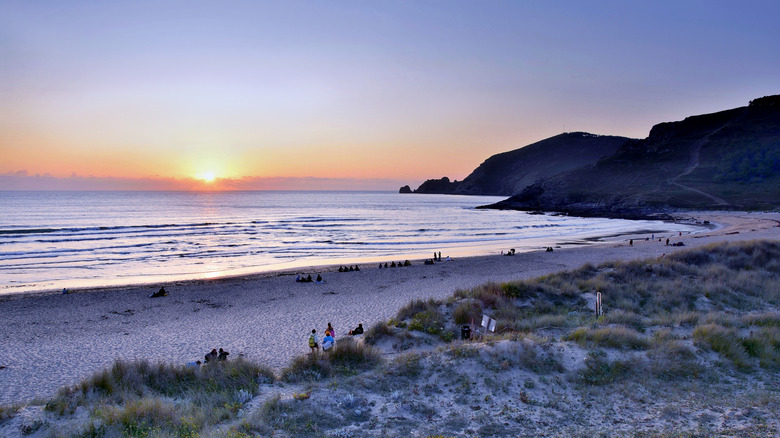
It's true that the further west you are, the higher the sun will be in the sky, but if you're going to be on the coast, Dr. Duncan points out that there will be a higher chance of clouds even by the sea. "The lower something is in the sky, the more sky the light has to go through to reach your eye," he explains, adding, "If you look tangentially, you're going through more atmosphere. So there are more places where clouds could get in your way." For this reason, anything in the magical region of Galicia, like the coastal city of A Coruña, will have a lower chance of clear skies than in a city like Zaragoza.
Of course, nothing is guaranteed, and it's totally possible that on the day of the eclipse there might be clear skies in Galicia and cloudy skies elsewhere. If you happen to be traveling through the area during the eclipse and your odds look good, you can try Orzán Beach for a totally unobstructed view or get to higher ground at the Tower Sculpture Park. A rental car in Galicia will also be useful if you want to explore the coastline and scout for viewing areas with fewer crowds. The Costa de Morte is one of the most famous roads in the area for stunning views, with or without clouds, but it's not entirely within the path of totality, so on eclipse day it will be better to drive north.
Worst: Bilbao
The Basque Country is a beautiful coastal region, and the museum-filled city of Bilbao is in the path of totality of this year's eclipse — but the geography works against it. Located in a valley, there are not many places you can go in Bilbao to get a clear view of the horizon, even if you take the funicular to Mount Artxanda. You can still enjoy the city while you wait for the eclipse, and if the weather looks good on the day of the cosmic event, try to get out of town to some optimal viewing areas around the Basque Country.
Close to the city, you can try the Mirador de San Anton in Getxo, or head to the mountains of the Urikola Sanctuary. If you do want to stay close to the ocean — so at least you can go for a swim if the clouds spoil the view — the Urdaibai Biosphere Reserve is a gorgeous area filled with beaches and hills. Laida Beach, in particular, is perfectly positioned for eclipse viewing. Dr. Duncan warns that if you plan to be driving around, traffic is a huge thing to be prepared for, so you should get to your spot early. "You do not want to be driving during the last hour before totality. That's when everybody suddenly decides to move," he told us.
Worst: Santander
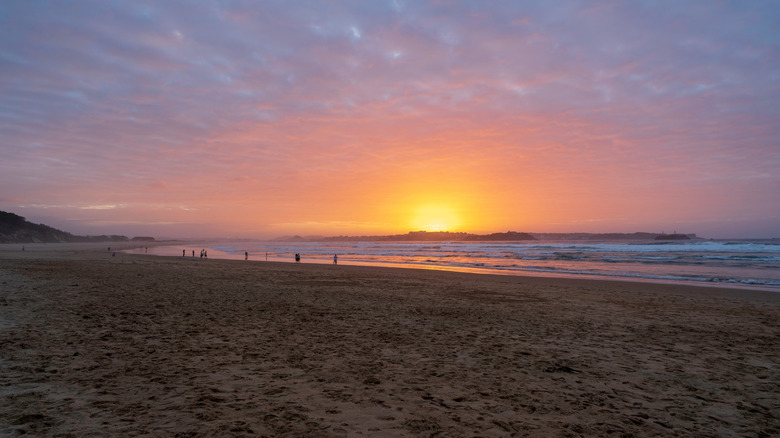
This beachside city sits on the northern coast of Spain, and while it's a lovely summer destination, and typically less cloudy than Galicia, a hazy horizon could dampen your eclipse viewing experience. Sunsets in Santander are as beautiful as the beaches, but the coast is always a risk. However, Dr. Duncan does point out that you might still be able to experience one of the more unique aspects of this sunset eclipse, depending on how thick the cloud coverage is, "When the shadow of the moon is coming toward the Earth, you actually can see a giant dark purple or indigo, like a funnel or a V-shape, coming through the sky from the sun to where you're standing."
If the weather is looking promising, you'll find Santander very busy with eclipse-seekers who are likely to gather on the beaches of Cabo Mayor. If you want to break away from it, you can travel a bit further along the coast to northern beaches like Playa de los Locos, where the cliffs allow you to gain a little bit more elevation. Or if the weather is looking really good — no clouds in sight — you can also head inland towards one of Europe's prettiest national parks, Picos de Europa, which is about a two and a half hour drive away from Santander. The higher elevation will help you get a better view, but bear in mind that if you plan to hike, the eclipse takes place at sunset, and that means potentially hiking back to your car in the dark.
Worst: Valencia
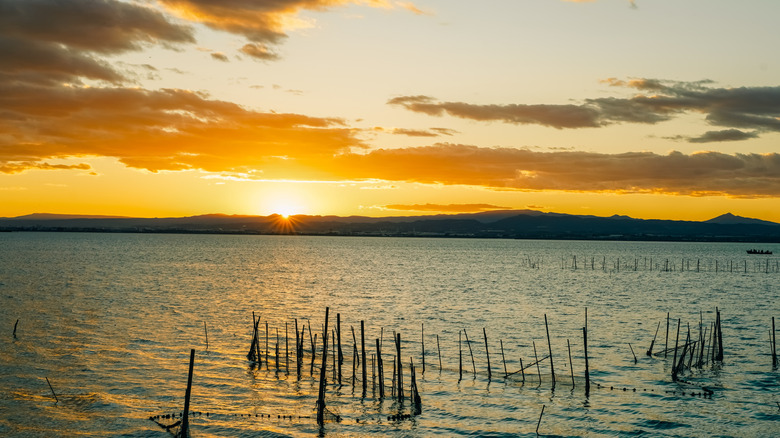
"The further east in Spain you go, the lower in the sky the sun gets," Dr. Duncan spells out the bad news for travelers who were hoping to pass the eclipse on the beaches of Valencia, one of the most underrated Spanish foodie cities. Even though the city is on the path of totality, the sun does not set over the Mediterranean, which means you'll likely have more obstacles to deal with, and the sun will be much lower in the sky when the eclipse starts than if you were to pick a spot further west. Valencia is a spectacular city, known best for being the home of paella as well as the architectural masterpiece known as the City of Arts and Sciences.
If you are planning on being in Valencia on August 12, 2026, your best bet is to get on a rooftop or find your way to the Albufera Natural Park, a beautiful nature reserve where you might have a beautiful viewing spot somewhere along the flat lagoon. You could also go inland to find higher elevation and views facing the west, such as the peak of Cullera Mountain. It's an hour's drive south of the city, so just make sure to watch the weather forecast and make sure that there will be a lower chance of clouds obstructing your view.
Worst: Balearic Islands
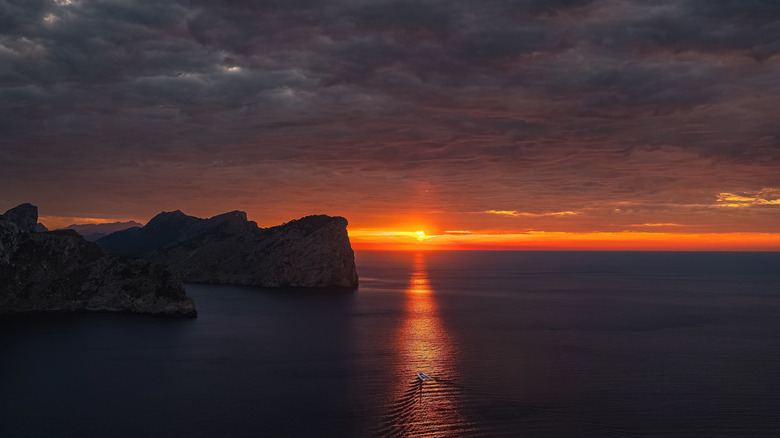
The solar eclipse will complete its spectacle over the famous Balearic Islands, comprising some of Spain's most popular beach destinations like Mallorca and Ibiza. Unlike Valencia, these islands do have western coasts over which you might be able to get a good view of the eclipse, but unfortunately, they are even further east, which is why Dr. Duncan advises against choosing them. "My tip is, sadly, don't go," he said, explaining that by the time the eclipse begins in the islands, the sun will be just barely above the horizon. "I think it's going to take quite good luck for it to be clear for them."
If you do find yourself in the Balearic Islands and you want the best odds of seeing the eclipse before the sun sets, you would have better chances hopping over to Mallorca and finding a high point in the Serra de Tramuntana Mountain range — just make sure it's facing west. One of the most anticipated viewing spots on the island is the Cap de Formentor, the northernmost point of the island, but also likely where you'll find the most traffic on the big day. Of course, being an island, there is also the possibility of seeing the eclipse from the water. "The good thing about boats is that you can move if there is some prospect of the weather being better," Duncan said.
Methodology
After gleaning advice from Dr. Doug Duncan about the best conditions for choosing an eclipse viewing site, I applied my own knowledge of Northern Spain, having traveled extensively through the country and resided here for many years, to analyze various attractive destinations along the path of totality. During the interview, we discussed many of these places in terms of how likely an eclipse would be visible given the probable weather conditions and the predetermined angle of the sun at the exact time the eclipse will begin. The interview took place many months ahead of the eclipse, and so there is no guarantee that one destination will be sunny and another will definitely be cloudy as weather conditions are unpredictable so far in advance.
While I would encourage anyone to travel to these beautiful destinations at any other time, I came to the conclusion with Dr. Duncan's advice about which would be the best and worst places to try to see the eclipse, considering the statistical likelihood that conditions would be favorable, particularly because this eclipse has two factors working against it, namely being short in duration and occurring very low on the horizon. For destinations on the path of totality with unfavorable conditions, I tried to provide optimal viewing site recommendations, but I also suggest checking out Shade Map, a resource that can help you predict whether or not you will be able to see the sun above the horizon line on August 12, 2026, at 8:30 p.m. CET.