
These Caribbean Beaches Have Stunning Reefs Just Steps From Shore (No Boat Needed)
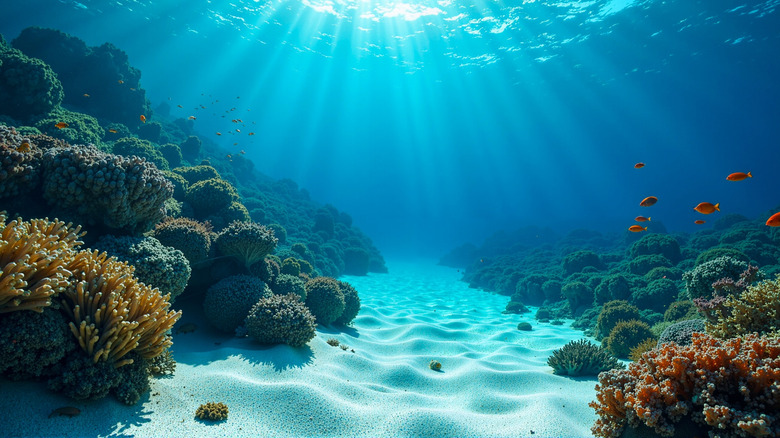
If you've already checked off some of the best bucket-list beaches across the Caribbean, it might be time to look just beyond the shoreline. The Caribbean is home to some of the world's most celebrated coral reefs, but you don't always need to book a catamaran tour or motor out to open water to see them.
While many famous snorkel sites require a boat ride offshore, a handful of Caribbean beaches offer something far more effortless: reefs you can reach straight from the sand. In these spots, you can wade in, slip on a mask, and start spotting coral gardens, tropical fish, and even sea turtles within a short swim of shore. A few destinations may require a boat to reach the island itself, but once you're there, the reef begins just steps from the beach. For travelers who want maximum underwater payoff with minimal logistics, these Caribbean beaches deliver vibrant reef snorkeling without the extra excursion.
Trunk Bay (St. John, U.S. Virgin Islands)
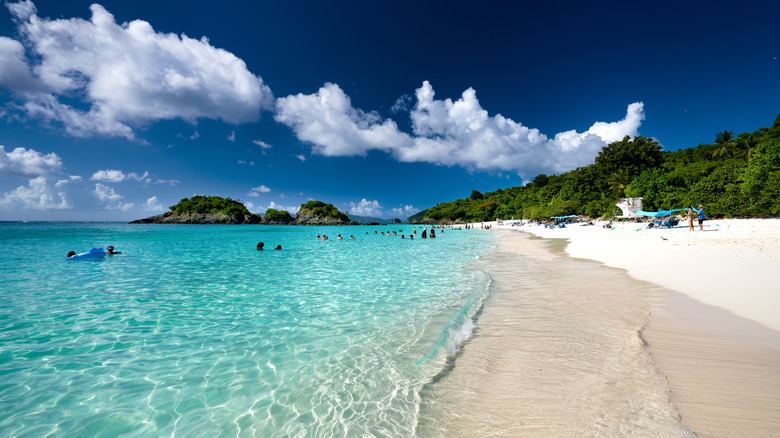
What better place to start your underwater exploration than at the beach ranked best in the world in 2024? Trunk Bay on St. John in the U.S. Virgin Islands offers a quarter mile of sandy beach that leads into beautiful turquoise waters. And the best part is, you can do plenty of snorkeling right from the beach without needing to take a boat out to sea.
Snorkeling at Trunk Bay offers something for all levels of experience. The beach lies within a protected cove, safe from the trade winds. Much of the bay is off-limits to kayaking and paddleboarding, making this the perfect place to float and relax between snorkel runs. There is an underwater snorkeling trail supporting a myriad of marine life in shallow, clear waters, with plaques to help you identify what you are seeing.
Snorkelers commonly encounter parrotfish, blue tangs, grouper, and sea fans close to shore, without the need for a boat. You may also encounter other marine life such as urchins, sea turtles, and sea anemones. There is plenty of coral along the beach reef and trail, including brain coral, Elkhorn coral, indigo blue tunicates, and more.
Half Moon Bay (Antigua and Barbuda)
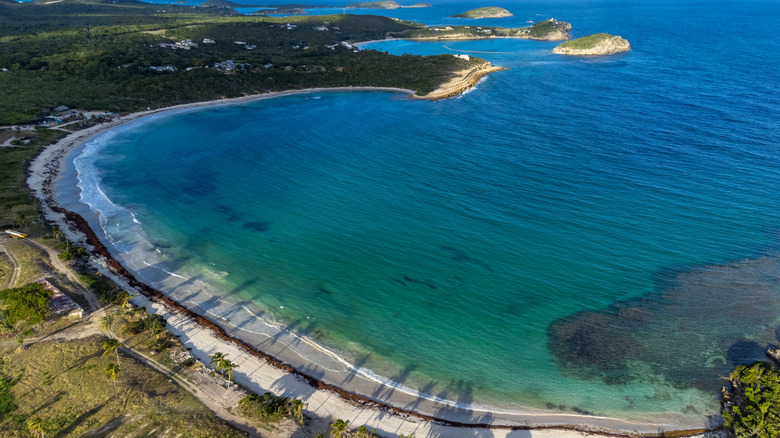
Antigua's quieter, southeastern coast is home to one of its most beautiful and secluded beaches, Half Moon Bay. This Atlantic-side enclave has a crescent-shaped beach with reefs at both rocky ends. Half Moon Bay is a quieter, more secluded beach, but you should be able to rent equipment if you do not bring your own.
Half Moon Bay offers easy snorkeling directly from shore. There is a shallow entry into the bay, and the depth change is fairly gradual. Keep to the left side of the bay, where you will find a natural barrier that helps protects swimmers and snorkelers from bigger waves.
Snorkelers will typically find different marine species, including schools of small fish scurrying around the colorful corals. Look for different reef fish, including parrotfish and blue tangs. Stingrays might be visible in shallow, sandy patches, while larger fish might be visible in deeper areas.
West Bay Beach (Roatán, Honduras)
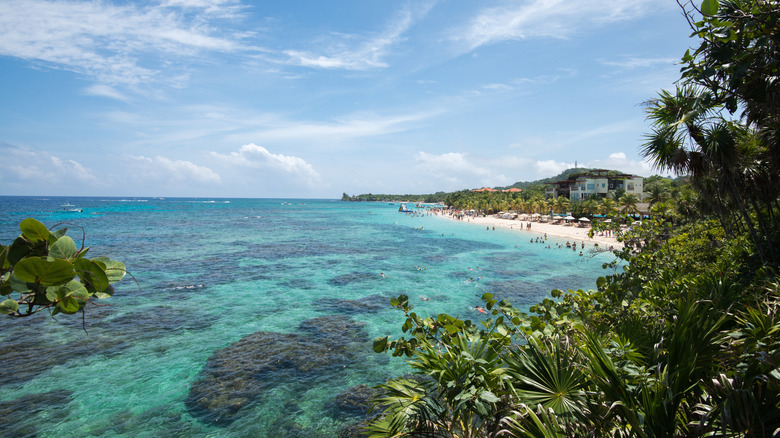
West Bay Beach is one of the most famous snorkeling sites on Roatán. The beach is known for its calm waters and proximity to the Mesoamerican Barrier Reef. West Bay Beach is also a popular spot for freediving and was the host for the individual Caribbean Cup Freediving Competition in 2017.
The nearby reef is only a short swim away, making it an ideal snorkeling spot due to abundant marine life. Once you reach the reef, you should be able to see a wide variety of colorful coral formations and tropical fish. You might even luck out and see a sea turtle or stingray. For some of the best snorkeling, check out the West Bay Wall. The cliff wall is teeming with marine life and coral formations.
West Bay Beach can get busy during peak season, especially in cruise season and later in the afternoon. Consider arriving early to beat the crowds and traffic on the way to the beach. Other things to note: There is some boat traffic in the nearby area so be cautious of your surroundings and not go too far out.
Cas Abao Beach (Curaçao)
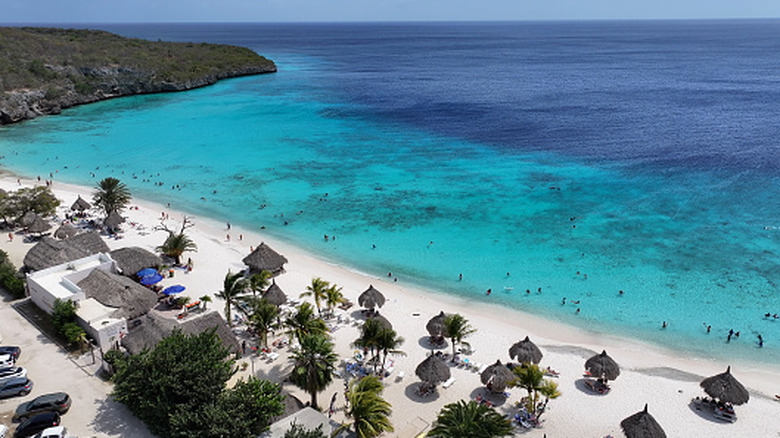
Cas Abao beach, on Curaçao's western, leeward coast, is one of the island's best snorkeling spots. The beach has been voted as one of the best beaches in the world by National Geographic, specifically for its easy, beautiful snorkeling. And with its west-facing views, the beach is also a perfect spot for an island sunset.
This area has calm water and a gentle sloping bottom with a drop off at 27 feet. Coral formations begin close to the shore, making it one of the island's top snorkeling locations. Here, you will find sea fans and coral gardens, tropical fish, sponges, and sea turtles. While not guaranteed, you might even catch a glimpse of dolphins further out. Stick to the right side of the bay for the best marine life and visibility.
Cas Abao is a private beach around 40 minutes from Willemstad. There is a small entrance fee per car to visit the beach. This fee goes towards beach maintenance and preservation. The beach access road is well-maintained, with plenty of parking, and the beach itself is easily accessible.
Carlisle Bay (Barbados)
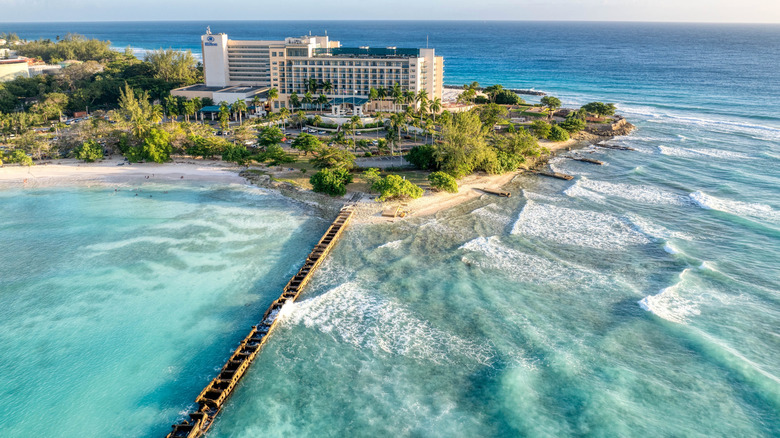
On the southwestern coast of Barbados is Carlisle Bay, one of the most popular beachfront and snorkeling locations on the island. Carlisle Bay is located in the southern part of Bridgetown, Barbados's capital, and is easily accessible from most locations in the city.
Carlisle Bay is a public, white-sand beach, but it's also a protected marine sanctuary. Just off the shore of the beach, a short swim away, are numerous shallow shipwrecks that have become artificial reefs themselves. These shipwrecks are teeming with sponges, coral, and other marine life, easily viewable in the calm, clear waters. Sometimes you may even find stingrays, damselfish, and barracuda among the wrecks. If you're diving in Carlisle Bay, you might even see cannonballs or anchors on the ocean floor.
There are more than 350 species of animals and plant life at Carlisle Bay, meaning there is no shortage of things to see on your snorkel. Sea turtles are often spotted in the area, including both green and hawksbill varieties. Visibility is generally excellent. In the nearby coral reefs, you can also expect to see ample other marine life, such as parrotfish, angelfish, and butterflyfish. For the best visibility of marine life activity, you should visit Carlisle Bay in the morning when the water is the calmest and clearest.
Smith's Reef at Turtle Cove (Providenciales, Turks and Caicos)
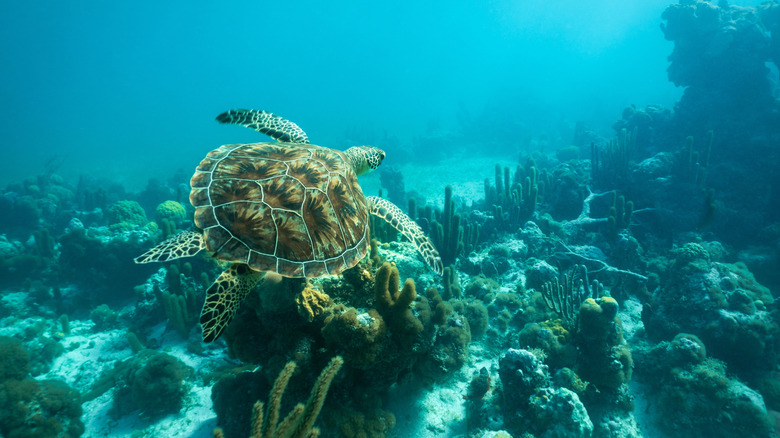
Smith's Reef at Turtle Cove is located just off the north coast of Providenciales in Turks and Caicos. You can access the beach from Turtle Cove Marina. Another hidden gem beach is the area is Four Boys Beach, which is about 30 minutes away on foot.
This spot offers outstanding snorkeling just off the shore in shallow, clear waters. Coral heads are within easy reach, and reef fish are plentiful. And in between the reefs are underwater meadows full of sea fans and beds of seagrass. It's important to note there is some watercraft traffic further out at Turtle Cove Marina, so you don't want to stray into the entry channel.
Smith's Reef has plenty of larger marine life. These include green and hawksbill turtles, spotted eagle rays, and southern brown stingrays. Not only are these larger types of marine life available, but also plentiful tropical fish swimming in the waters. These include some of the most colorful and beautiful species of tropical fish in the region, such as trumpetfish, parrotfish, French and queen angelfish, porcupine fish, and more. Look under coral ledges for moray eels, spiny lobsters, and channel crabs. There are several fish that can sting you, such as the lionfish, so never try to touch the marine life.
Cemetery Beach at Seven Mile Beach (Grand Cayman, Cayman Islands)
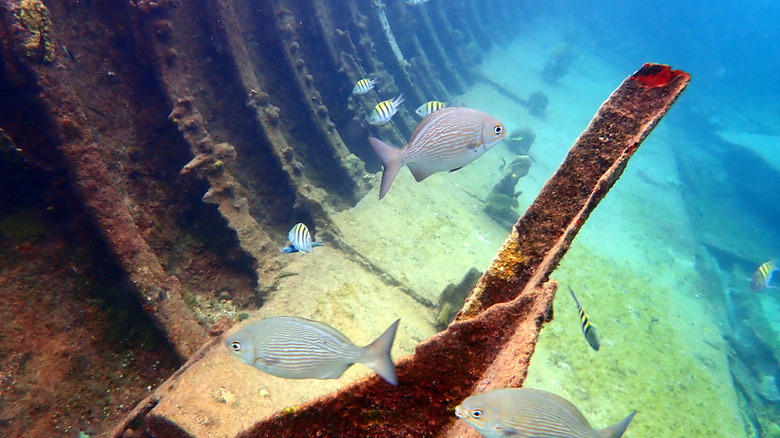
One of the most popular beaches on Grand Cayman is Seven Mile Beach. The beach is located on the western coast of Grand Cayman and is just a short ride from the airport, cruise port, or George Town. The beach is primarily sandy, with fine white sand, and the Cemetery Beach area provides access to coral patches and reef structure just a short swim from shore.
The reef is less than a 10-minute swim from the shore and has a wide variety of marine life. It's important to note there are some stronger currents in the area, so it's best suited to experienced swimmers.
There are also some shipwrecks at or near Cemetery Beach, such as the Wreck of the Gamma and the U.S.S. Kittiwake. The Wreck of the Gamma is so shallow that it's even visible from the shoreline. It's not deep enough to dive, but it's a great option for snorkeling. The U.S.S. Kittiwake was decommissioned in 1994 and ultimately transferred to the Cayman Islands where it was sunk in 2011 to create an artificial reef for snorkelers and divers.
Playa Porto Mari (Curaçao)
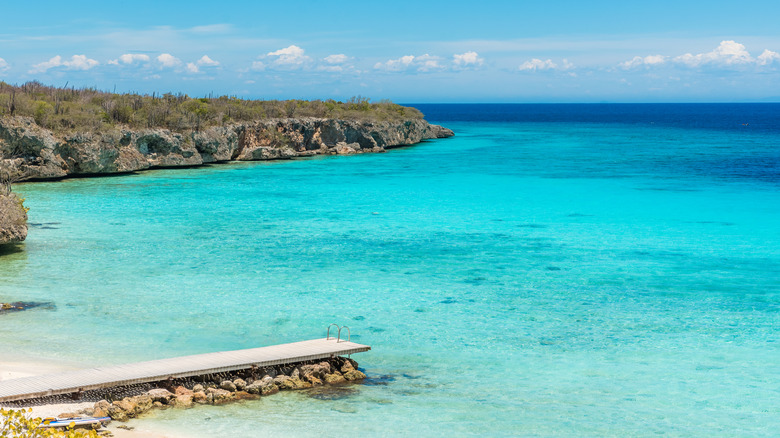
On the western shore of the island, travelers can find one of Curaçao's most famous beaches, Playa Porto Mari. The beach is about a 30-mile drive from Willemstad and puts nature at the forefront, prioritizing recovery and regeneration efforts of the coral reefs, and there are even wild pigs that roam the beach. Note that there is a $3 per person fee to access the beach.
This beach boasts double reefs accessible from either side of the sandy cove. This double reef is a bit too deep for snorkeling, but it's great for shore diving. Snorkelers can explore the cliffs along the cove as well as artificial coral reef balls close to shore, which is a consistently praised spot for shore-entry snorkeling.
Enter the water from the beach to the left of the wooden dock, and then head south to the cliff or straight out into the bay to the reef ball clusters. In either location, there will be plenty to see. Along the cliffs, sea fans and coral boast tropical fish such as trunkfish and French grunt. Along the reef ball clusters, look for staghorn coral and juvenile fish, such as blue tang and French angelfish.
Doctor's Cave Beach (Montego Bay, Jamaica)
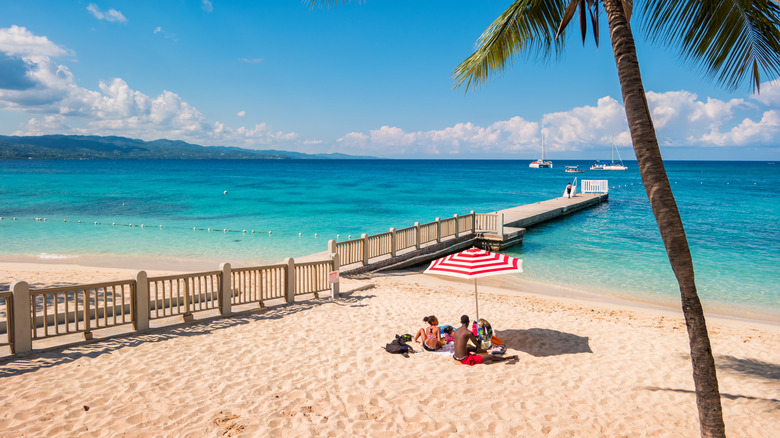
Doctor's Cave Beach was originally a small beach that was only accessible by a cave on private property. The owner, Dr. McCatty, ultimately donated it in 1906 to establish a community bathing club in Montego Bay. In the 1920s, a visiting British osteopath claimed the waters of Doctor's Cave Beach had curative powers, cementing the beach as a playground for visitors to the island. While a hurricane destroyed the original cave entrance in 1932, the beach is still considered one of the best beaches in Jamaica.
The clear and calm waters, along with vibrant reef formations, make Doctor's Cave Beach a surprisingly rewarding spot for shore snorkeling. You will find the best snorkeling along the piers on either end of the beach. Just off the shore, beneath the rope between the piers, you can find coral reefs filled with tropical fish, such as blue tangs and butterflyfish. Sometimes you might luck out and spot a stingray.
Doctor's Cave Beach is part of the Doctor's Cave Bathing Club. There is an $8 per person charge to access the beach, including bathrooms, showers, and changing rooms. You can also rent beach chairs and umbrellas, as well as snorkel equipment, for an additional fee.
Anse Chastanet (Soufrière, Saint Lucia)
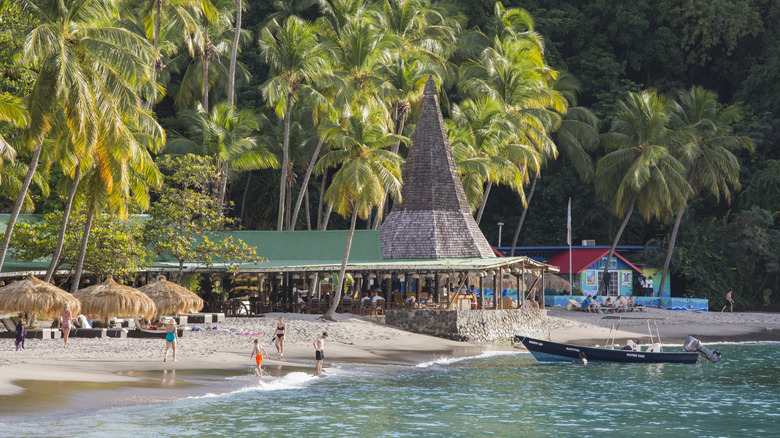
The dark, volcanic sand beach at Anse Chastanet in Saint Lucia offers shore snorkeling inside a protected marine reserve. Within Zone 1 of the reserve, you have ample opportunity to snorkel the protected area where it's calm and clear. Beach diving is also available from Anse Chastanet.
Anse Chastanet's reef is around offshore and home to a wide variety of marine life, including more than 150 species of fish. Guests at the resort have access to complimentary use of snorkel equipment. Even if you're not staying at the resort, the beach is public and accessible to everyone. You can also book trips with the dive shop to visit other neighboring reefs.
As with most snorkeling locations, you have the best chance to see the most sea life if you visit earlier in the morning, before the boat traffic arrives. The water will be clearer, and fewer people will be around exploring the area. While still impressive, Anse Chastanet's coral reefs are not in the best of health, so please respect the area and avoid further damage to the remaining corals and other features.
No Name Beach on Klein Bonaire (Bonaire)
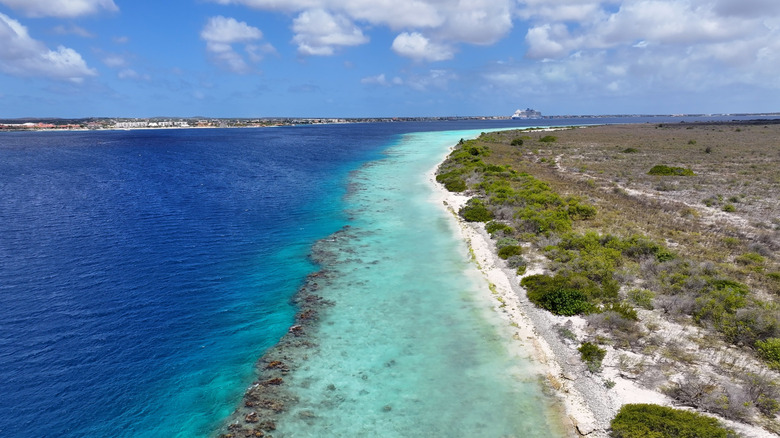
Klein Bonaire is a small island located about half a mile off the coast of Bonaire. To get to the island, you can take a water taxi, which will bring you directly to No Name Beach (Playa Neme) on the island. This sandy beach, one of the few in Bonaire, offers some of the Caribbean's most accessible reef snorkeling.
The fringing reef begins near the shore, with consistently clear water and frequent turtle sightings. Due to currents, most people opt for a drift snorkel, which you can do either with your water taxi or by walking directly into the drift from near the yellow buoy on the beach. There are shallow corals along the shore, where you can see various schools of fish, as well as sea turtles.
Note that there are no facilities on Klein Bonaire, so you should bring whatever you will need for the day with you when you depart Bonaire. This includes your snorkel gear itself. It is very important to keep an eye on the time so you do not miss the last water taxi back to Bonaire as well.
Turtle Beach at Buck Island Reef National Monument (St. Croix, U.S. Virgin Islands)
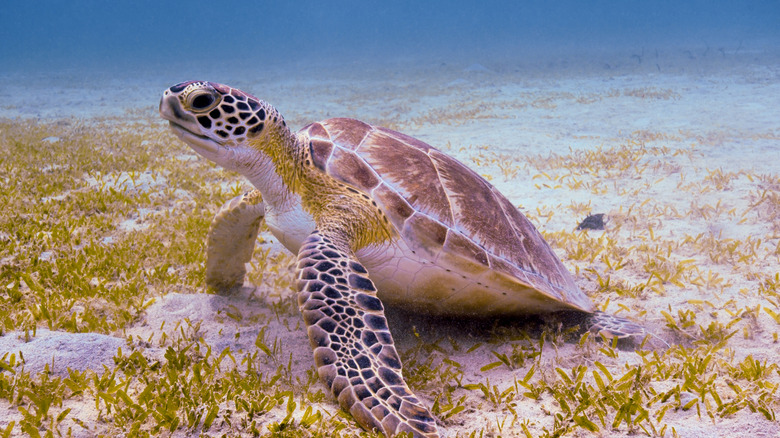
Buck Island Reef National Monument, St. Croix in the U.S. Virgin Islands, is located around 1.5 miles off the shore of St. Croix. President John F. Kennedy called Buck Island Reef National Monument "the finest marine garden in the Caribbean Sea." While the island itself is not the most impressive, the reefs surrounding it lend it this distinction.
Turtle Beach is located on the west side of the island, and it's consistently rated as one of the best snorkeling spots in the U.S. Virgin Islands. A pristine, soft, white-sand beach and sparkling aquamarine waters that invite you to walk right into the water and start snorkeling are part of the draw. The beach is also a nesting spot for sea turtles during nesting season.
To reach Buck Island, you will need to take a boat, but the shallow waters off Turtle Beach permit snorkeling straight from shore in calm conditions. There are over 250 species of fish that you can find in the Buck Island National Reef Monument, and you can follow the underwater trail located on the east side of the island as well to have more information on what you are seeing beneath the waves.
Tobacco Caye (Belize)
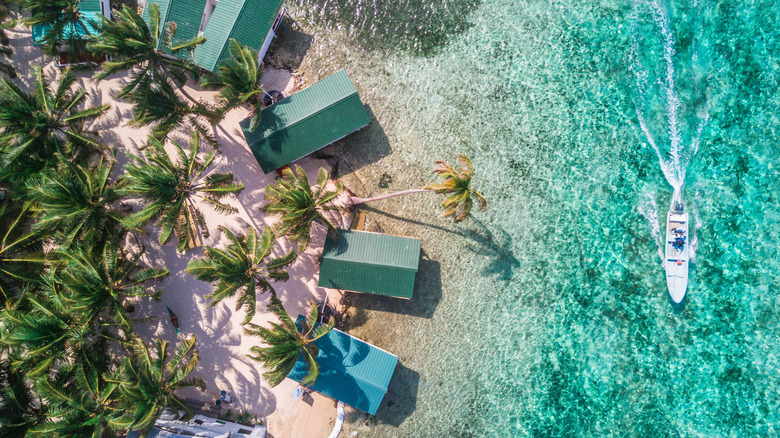
Tobacco Caye in Belize is a tiny island, ringed by a part of the UNESCO World Heritage-listed Belize Barrier Reef, and is part of the South Water Caye Marine Reserve. Visitors routinely snorkel directly off the island's sandy edge without booking a separate tour. You will need to take a boat from Dangriga on the mainland to Tobacco Caye. However, because the reef sits immediately offshore, it feels like you are stepping directly from the beach to the coral. With over-the-water bungalow accommodations, you could easily spend a few nights here.
If you don't have your own gear, you can rent snorkel gear when you're there. With gear in hand, you need only step off the beach or the docks to enter the water and explore the underwater landscape spreading out in front of you. There are corals along the reef, with schools of fish swimming in between them. The Belize Barrier Reef is home to over 500 species of fish, which means lots of interesting marine life awaits. You might also spot sea turtles, eagle rays, or dolphins in the distance.
One of the best experiences on Tobacco Caye is a night snorkel, when lobsters, squid, and octopus are more commonly active. For these experiences, it is best to consider spending a couple nights on the Caye.
Methodology
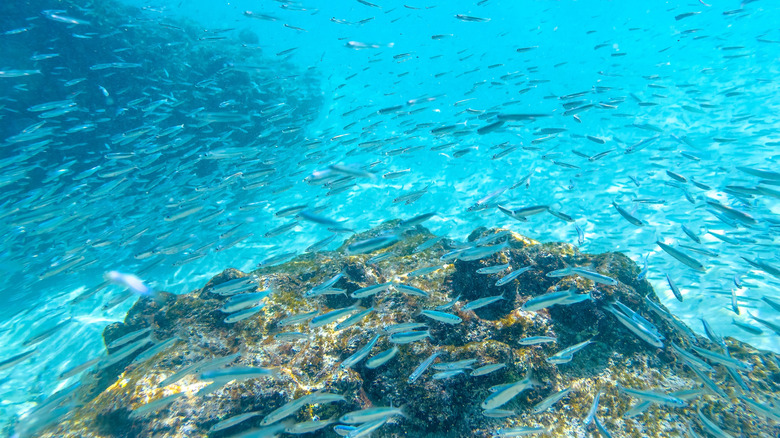
To narrow the list of Caribbean beaches, we reviewed traveler reports, marine park resources, destination tourism information, and firsthand snorkeling accounts to identify beaches consistently recognized for accessible reef conditions.
Priority was given to locations where coral formations begin within swimming distance of the sand, allowing visitors to enter directly from the beach without booking a separate boat excursion to reach the reef. In a few cases, the island itself may require boat access, but once there, visitors can snorkel straight from shore. The focus remained on places where travelers can reasonably expect vibrant marine life, clear water, and reef structure just a short swim away.
These beaches are not the only shore-snorkeling spots in the Caribbean, but they represent a range of islands and reef environments where underwater exploration starts just steps from the shoreline.