
Bathroom Mistakes Tourists Should Avoid Making When Traveling Abroad
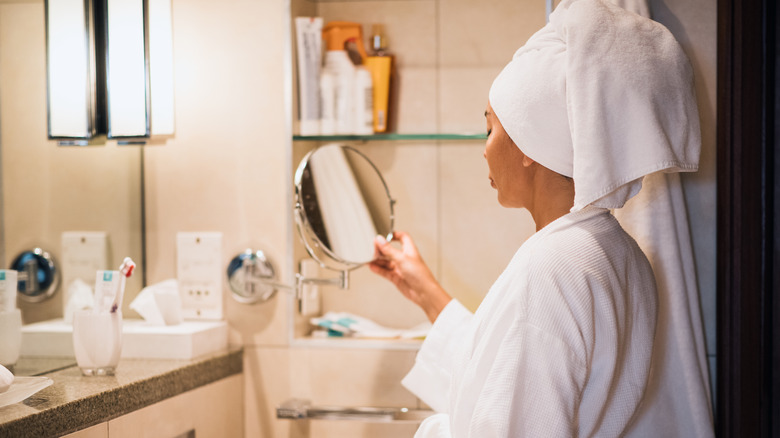
Using a toilet feels like one of those daily routines we learn early on in life and then never really think about again, but stepping into a bathroom in a foreign country can unexpectedly test that knowledge. Like most etiquette that varies from culture to culture, toilet norms aren't universal. What may seem completely ordinary at home could look different elsewhere.
It is a tricky business. From something as simple as disposing of toilet paper in the dustbin instead of in the commode to decoding high-tech flushes with more buttons than your shirt, travelers may find themselves in unfamiliar settings that they will can't avoid navigating, given the inescapable nature of bathroom breaks. Sometimes, even finding a toilet may require an uncomfortable round of charades.
Luckily, there are ways to get around these awkward situations while traveling. A little bit of preparation — whether it's knowing how to use an unfamiliar toilet, what to flush and what not to, or even what the restroom is called locally — can go a long way and spare you a fair bit of confusion when the moment arrives. Here are some common bathroom mistakes tourists make while traveling abroad, along with tips for navigating them with ease.
Standing over squat toilets
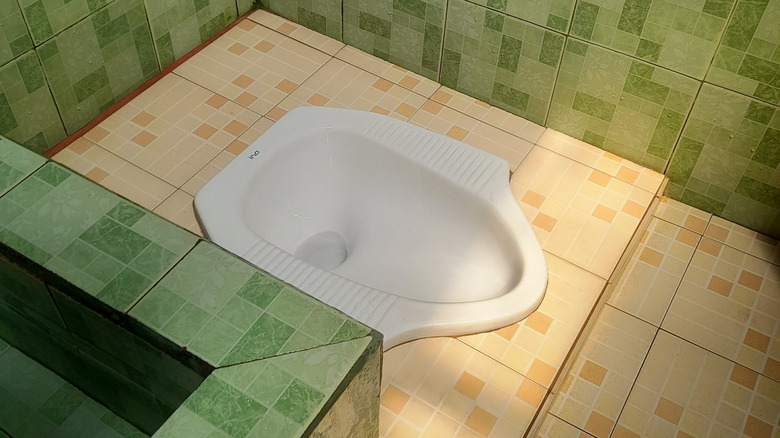
A squat toilet can be an intimidating experience for a first-timer, especially someone used to an elevated toilet bowl with reassuring comforts like a seat or a lid. But travelers would do well to adapt to this toilet design, which is still widespread across the world. From Asia to the Middle East, Africa, and parts of Europe, the squat toilet is a recurring presence, particularly in places outside major urban centers where infrastructure is less Western.
Using a squat toilet is easy enough once you get the hang of it. Embedded into the floor of the bathroom, with footrests on each side of the basin, the squat toilet requires the user to (as the name suggests) squat fully, with their rear aligned with the hole beneath them. Don't hover over the toilet awkwardly or try to sit on the edges. Just squat and maintain a comfortable balance. In case there is no bidet nearby, there will almost always be a tap with a mug or bucket attached to clean up after the business is done.
Many say that using the squat toilet — also sometimes known as the Indian toilet, deriving from the country where its use is widespread — is also better for bowel and digestive health as compared to the commode, given the posture it demands. Not to mention, it will double as a quick but solid leg workout during your travels.
Flushing toilet paper down the drain
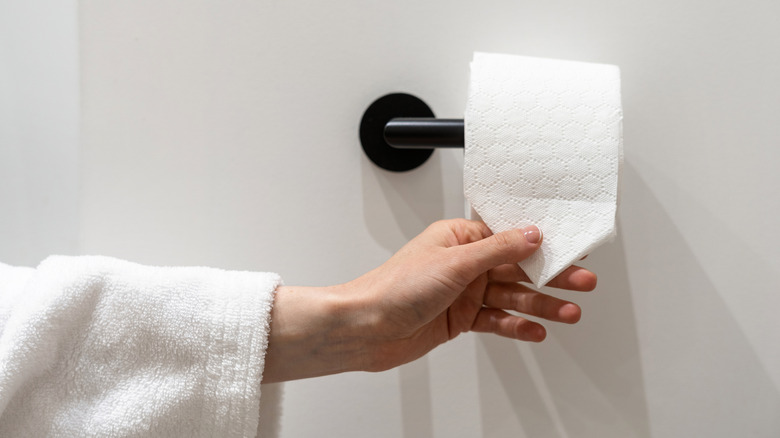
In several countries around the world, bathroom rules call for people to throw used toilet paper into waste bins rather than flushing it down the drain. It's an expectation that catches many travelers off guard, considering that across North America and parts of Europe, it's common — and even encouraged — to wipe and just drop the paper in the toilet bowl. Naked Paper calls it the "toilet paper divide," and it is very real.
This difference in bathroom cultures comes down to infrastructure. Many countries are still operating on drainage systems that are old, narrow, or simply not built to handle a continual influx of toilet paper waste. Think Greece, Turkey, parts of Asia, and South America, where you are likely to find a dustbin next to the toilet for the sole purpose of disposing such waste.
Toilet paper doesn't always break down quickly when flushed, which means it can block pipes, cause toilets to overflow, or even lead to larger plumbing issues for entire buildings. Nobody wants to be that person. If you want to avoid making an uncomfortable call to the plumber, look around for signage that indicates what the toilet paper etiquette is before getting down to business. If you find yourself in a destination where the dustbin is the norm but there is no information in the bathroom, best to play it safe and toss the paper into the bin as opposed to the bowl.
Making left-handed interactions with people
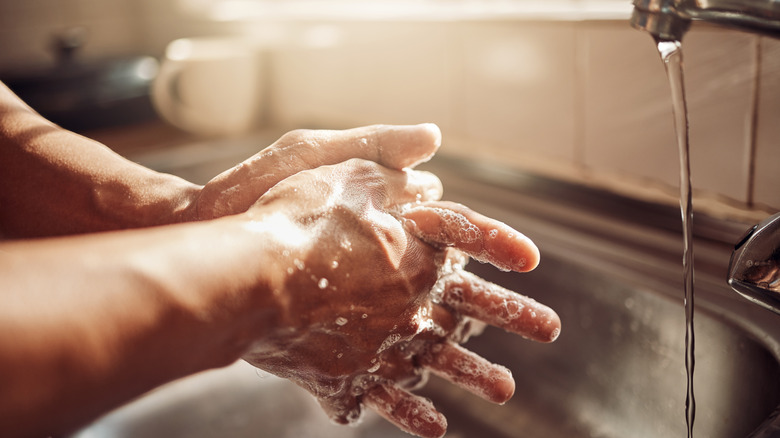
In countries where water-based hygiene is the norm, the left hand is also known as the bathroom hand. If that illustrative title doesn't already explain it, it's the hand people use — in conjunction with bidets or mugs — to clean up after doing their business. And though this bathroom ritual is followed by a thorough wash of both hands, no amount of soap can erase the notorious reputation the left hand carries.
Against that context, the right hand is traditionally considered the cleaner hand and generally takes on most, if not all, of the responsibility of social interaction. Around parts of Asia, Africa, and the Middle East where these customs are common, the right hand is thus used for eating, greeting, giving money, and performing auspicious ceremonies. For locals raised in these cultures, this distinction comes naturally. Foreign tourists, understandably, don't have that instinct and can thus find themselves in awkward, left-handed situations.
While it's not really considered an act of offense or disrespect, especially when an unknowing non-local does it, it can earn you a double-take. You might even get a possible word of advice to switch hands before proceeding with the interaction. A good way to avoid finding yourself in such sticky situations is to closely observe how locals operate and follow their lead.
Forgetting your own sanitary products
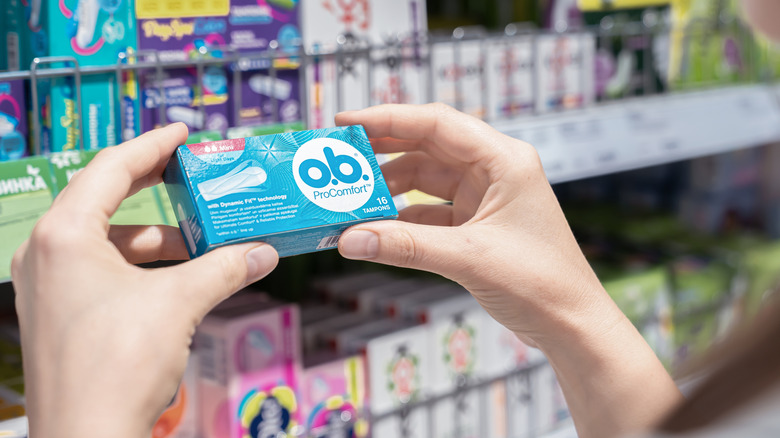
Running out of sanitary products or other toiletries while traveling is an inconvenience that many travelers don't plan for. They assume that personal hygiene items like tampons, panty liners, or menstrual cups will be as easily available in other parts of the world as they are in their own countries. Unfortunately, that is not always the case, particularly when you're traveling to smaller islands or remote villages where supplies can run short.
Even in places with well-stocked supermarkets where availability is not a problem, you may not find the same brands you are used to at home. It might seem like an insignificant issue for travelers who are more adaptable or aren't brand-conscious, but people with certain sensitivities or allergies know the price of switching to new products they haven't used before. Something as minor as a different material or fragrance in a sanitary item can cause discomfort, and experimenting on the go is not the best idea.
Carrying your own toiletry kits and personal hygiene products from home can help avoid this roadblock. And while it's understandable that it won't always be possible to stock up for the full duration of your travels, especially if you're backpacking for months or traveling long-term, it is useful to pack at least a small starter supply you can rely on until you locate pharmacies or supermarkets that carry similar options.
Not carrying petty change for public restrooms
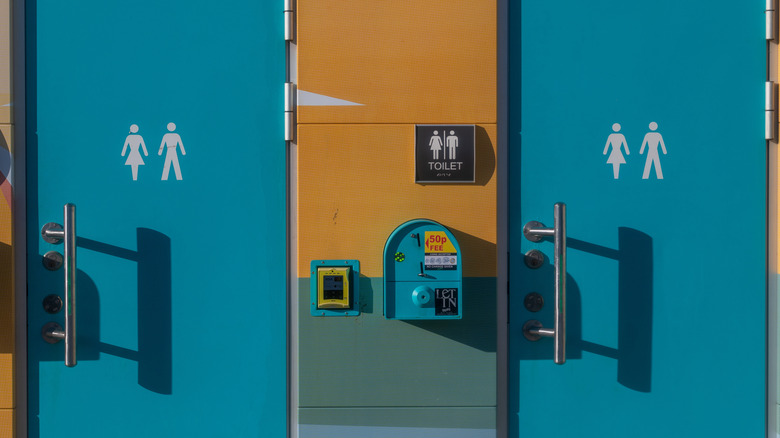
Nothing in the world comes free — even when it comes to restrooms. Across parts of Europe and Asia, using a public toilet often incurs a small fee that has to be paid at the door, either to an attendant or in a deposit box. Usually, it's a token amount that people can find lying around in their pockets as loose change, but to the unprepared, this practice can come as a surprise.
While traveling, it's always recommended to have some local currency on your person at all times, for reasons including, but not limited to, the use of public restrooms. Even in the age of digital wallets and cashless payments, small everyday transactions still rely on cash in countries across the world. And as for nature, it rarely checks to see if you have a stable Wi-Fi connection to make a payment before calling.
To avoid being caught in an embarrassing situation, it's best to keep a few coins or other small denominations handy. These restrooms are commonly found in busy spaces like bus or train stations, highway pit stops, public parks, and other tourist areas, and contributing to the pay-per-use system typically helps with their upkeep and maintenance.
Being intimidated by the bidet or using it wrong
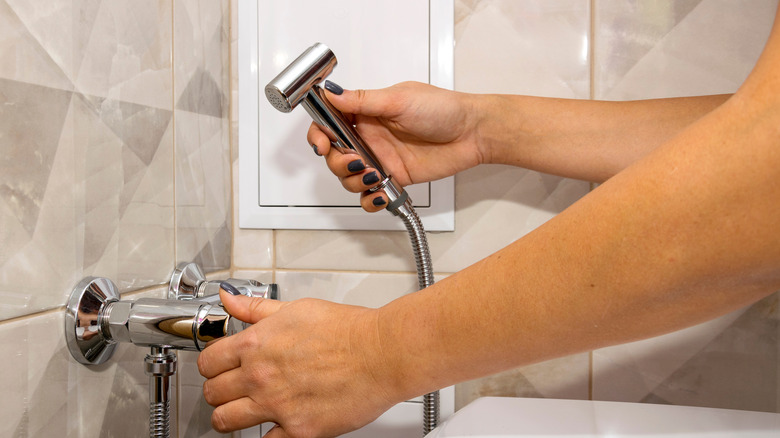
Encountering a bidet for the first time can either be a wild or a wonderful experience. Right off the bat, the contraption can confuse travelers who have only ever relied on toilet paper to clean up after doing their business. Usually suspended on the wall beside a toilet, a bidet doesn't come with an instruction manual. Often, instead of manually meddling around to find out what it does, many travelers choose to simply ignore it and stick to what they know, which is toilet paper. Some others who are brave enough to experiment might end up intimidated by a bidet's water pressure.
Both those situations are avoidable if you take a moment to understand how the bidet works. It can be a useful bit of know-how, especially for people traveling around Asia, Europe, or the Middle East. In these parts of the world, bidets are an integral part of bathroom hygiene, and you will almost always find them hanging off walls in both public restrooms and people's homes. All you have to do is remove the spray from its holder, aim the nozzle toward the area you intend to clean, and gently press the trigger to release a stream of water. Remember, practice makes perfect.
Using outdoor slippers in the bathroom
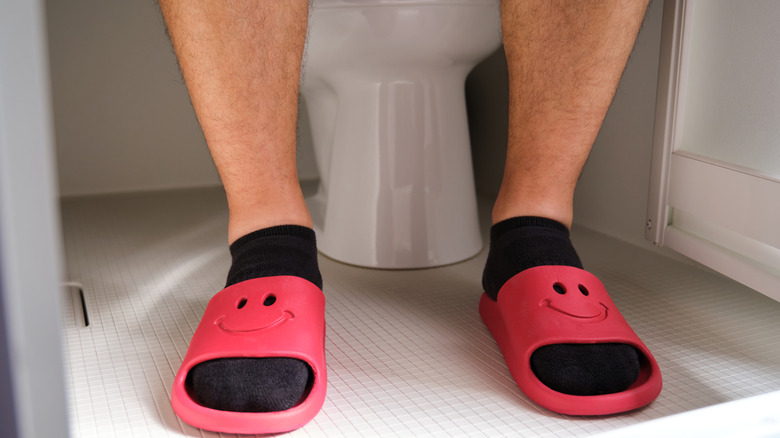
In many places across Asia, footwear rules inside the home are taken seriously. Outdoor slippers or shoes are usually removed at the entrance and replaced with indoor slippers to avoid cross-contamination. Countries like Japan and Korea take it up a notch by even dedicating a pair of slippers for the bathroom. It is common to see toilet slippers waiting for you at the door of a bathroom or sometimes inside the room.
Travelers unbeknownst to this practice may make the mistake of walking into and out of a bathroom with their regular indoor footwear — or worse, outdoor shoes. Breaching this etiquette is more than just about impropriety or impoliteness. Around Asia, it is routine for people to lounge on the floor of their homes or even eat meals in low-table settings. Keeping the floor clean is therefore an important part of everyday hygiene, and bathroom slippers help maintain it in a big way.
It's a small detail, but an important one that travelers would do well to honor, especially when visiting local homes and guesthouses. All you have to do is take a quick glance around before entering a toilet. If you see a pair of slippers waiting by the door, it's safe to assume they have been placed there for a reason. Don't forget to slip out of them when you leave.
Hitting the wrong buttons on high-tech flushes
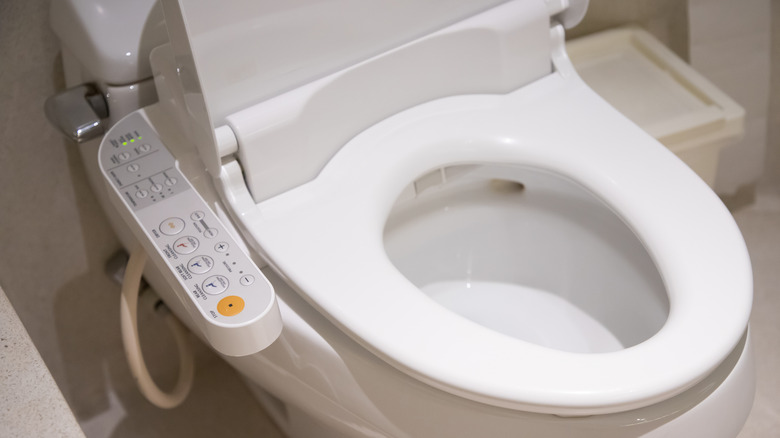
In countries that pride themselves on cutting-edge technology, even bathrooms receive constant upgrades. Japan is one of the most famous examples, with its advanced hi-tech washlets that are common across households and commercial spaces. From temperature-controlled water to adjustable bidet sprays and even sound-masking functions, Japanese toilets seem to have it all figured out. In fact, this advanced restroom design's seat-heating technology was exactly the bathroom experience that made travel guru Rick Steves fond of traveling in Japan.
Korea is another country that does smart toilets well. As a traveler in such places, it's best to educate yourself about what these complicated-looking buttons do beforehand, rather than getting overwhelmed by them when you're in a vulnerable position like sitting on the toilet. Taking a moment to scan the panel and its symbols, even if they feature a foreign language, before hitting random buttons and hoping for the best can also help. Hi-tech toilets are designed to improve hygiene and comfort, not confuse users. Once you understand the basics, these futuristic toilets can make a routine bathroom break feel luxurious.
Not carrying your own toilet roll and sanitizer
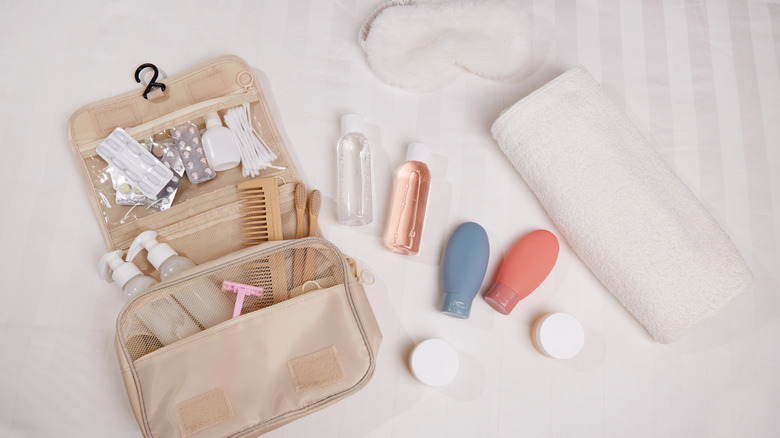
Not every bathroom everywhere comes fully stocked, and that's something many travelers learn the hard way. Public bathrooms in many parts of the world don't always provide the same amenities travelers may be used to in their home countries. While bigger establishments — like airports and hotels — will more or less have you covered during your travels with the basics, it's always a good idea to keep an emergency stock of toiletries in your bag.
A roll of toilet paper or some pocket-sized tissues can be useful to keep close while traveling. Hand sanitizer is another must-have, in case soap or clean running water isn't readily available. Being prepared for the unexpected is important, especially during long road trips and highway pit stops, or visits to smaller, remote towns where toilet essentials may be in short supply.
Having your own toilet kit and knowing that you have what you need can make using a public restroom much less stressful. The best part is that these essentials will add little to no weight to your backpack, and you'll still be able to save tons of packing space in your luggage. It's one of those hacks seasoned travelers swear by!
Being ignorant about country-wide bathroom etiquettes
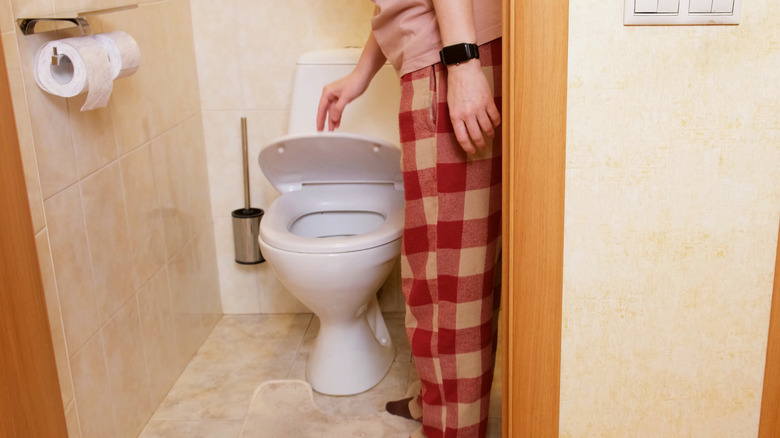
One would think that toilet training, once mastered in childhood, is not a subject we have to think about again as adults. But travel has a way of humbling us and proving that education is a lifelong process. The bathroom rules we take for granted in our own homes vary from country to country, and it's a good idea for travelers to get familiar with them before visiting a destination to avoid embarrassing mix-ups.
In Switzerland, for instance, you can get in trouble for flushing the toilet at night. Some public spaces and buildings in this country observe strict silent hours at nighttime, and any loud bathroom noises during that period might be frowned upon. Meanwhile, over in China, tradition has shaped bathroom decorum very differently in select places, where old-timey public toilets don't have doors. And in various parts of the world, some toilets feature a ledge, also known as the "poop shelf," inside the commode where your excreta lands — and it can initially disconcert even the most seasoned traveler.
But keeping an open mind when you're traveling isn't just about practicality; it's also a small but meaningful way to signal respect for the country you're visiting. Not to mention, learning to live as the locals do offers an authentic view into the culture of a place.
Not bringing yourself up to speed on toilet lingo
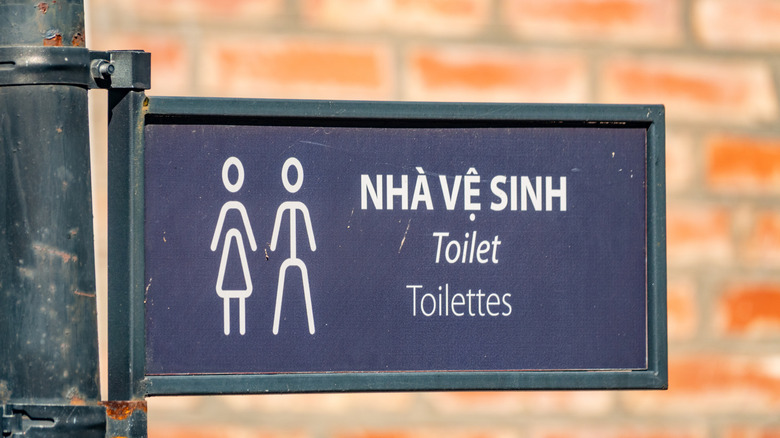
One small but significant travel skill that often gets overlooked is learning what the bathroom is actually called in the country you're visiting. Knowing the local toilet lingo can save you a lot of time (and some awkwardness) when you urgently need to find a restroom in a foreign place.
English alone has endless variations, with the toilet being called a water closet (or WC) in some places and a loo in others. In the Philippines, meanwhile, travelers will see boards pointing toward the CR or comfort room. And that's just the formal signage. In the United States, it's colloquially called the can, while Australians know it as the dunny. Regardless of geography, knowing how to ask for the bathroom is among the top phrases to learn before any vacation.
While a bit of gesturing and wild gesticulating can get you to the toilet anywhere in the world, it's always a good idea to catch up on the local lingo to simplify things and avoid a bit of unpleasant miming. Knowing the local term, or at least recognizing it when you hear it, will usually get you to your destination faster. Even if memorizing bathroom vocabulary isn't high up on your travel checklist, keeping an offline translator handy can do the trick just as well.