
Countries With No Income Tax That Are Perfect For Remote Work In Paradise

One of the few good things to come from the pandemic was the accelerated march of remote work. A truly 21st-century cultural shift, it saw millions of workers freed from the shackles of their office desk, ditching commutes for a walk downstairs or a wander to a local cafe. Upwards of 40 million took things further after realizing they could take their laptops literally anywhere with an internet connection, spurring on the rise of digital nomads.
It was only a matter of time before countries introduced incentives for these remote workers, offering specific visas with relaxed tax rules, and in many cases, no income taxes at all. These havens, many offering a sundrenched respite, are happy to take in these high-spending temporary residents — and honing in on these epic destinations is a top tip for any digital nomad. Generally, they're not taking anything from the country in the form of medical care or governmental services, and they repay the hospitality by spending their hard-earned paycheck on local businesses.
Some of these countries make it fairly easy to relocate while others do enforce a bureaucratic gauntlet everyone must run through to enjoy the benefits. Whatever one you opt for, you're setting yourself up for an epic work-life balance, where signing off and sunset sangrias on the beach can happen at as soon as your work is done. It's vital to remember that, however, just because you won't be taxed in these countries, it doesn't mean your country of citizenship won't keep doing so. The U.S. will still require you to file a tax return, regardless of where you're living — although there are ways to lighten that load.
*Disclaimer: We are not offering tax or financial advice and those seeking it should approach an experienced financial consultant or accountant.
Barbados
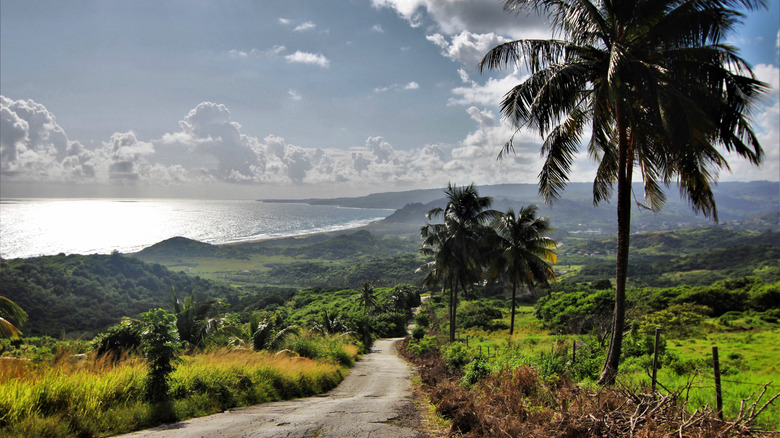
Once upon a time, Barbados was a retiree's dream. The Caribbean's most easterly island's western and southern coasts are a sun-chaser's heaven; where luxury homes, high-spec apartment complexes, and everything in between sit a stone's throw from the ever-perfect Caribbean sea. Its Eastern shores, while far less popular, are one of the 10 best places to travel in 2026, too.
Nowadays, you needn't be a retiree to enjoy life there. The island nation introduced its "Welcome Stamp" program during the pandemic to try to counter some of the tourist-income losses at the time, and has kept it ever since. It's one of the most generous programs out there, offering successful applicants a 12-month visa to live and work in Barbados, whether you're an individual or traveling with a family. Each visa is limited to one year, but you can apply again if you enjoyed your time on the island. It claims the application will be processed in just seven days, too.
It's also one of the easiest application processes. It's all facilitated online and only needs the application completed along with a passport-sized photo of everyone on the application, the biodata page of everyone, proof of relationship if applying in a family group, proof of health insurance, and evidence that you make more than $50,000 USD in a year. There is a one-time fee of $2,000 for individuals or $3,000 for a family application. You won't pay any income tax on any foreign-earned income while you're there. But, and you'll see this many times in the article, you may still have taxes to pay depending on your citizenship. You just won't be double taxed.
Costa Rica
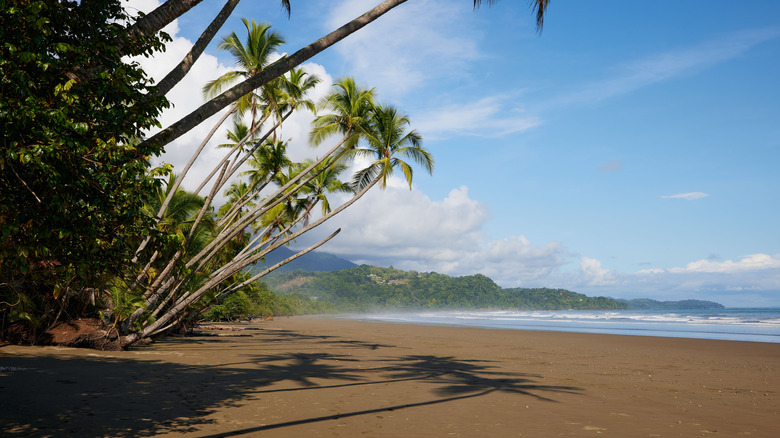
To those who haven't had the pleasure, Costa Rica represents jungle adventures and surf-strewn beaches. And while that's definitely one facet of the country, they'll be wonderfully surprised to discover it's also wonderfully modern, with the perfect infrastructure to support what many would consider the prototypical remote work lifestyle — in other words, feet in the sand while you finish up that spreadsheet for the day. As with Barbados, it's on the same time zone as the U.S., removing any logistical barriers one could have.
The Central American country opened applications for its own digital nomad visa in 2022, offering remote workers the opportunity to live and work there for a year, with the possible option of extending by another 12 months. As usual, you're not able to work for any Costa Rican business, and the income tax exemption applies solely to foreign-earned income. Your dependents are welcome under the visa, too, but you'll need to ensure they're included when you apply. Once approved, you can open a Costa Rican bank account and even have your foreign driver's license validated for use there.
The stipulations for approval are straightforward and can even be done from within the country while on a 90-day tourist visa. If you're applying as an individual, you'll need to show a minimum income of $3,000 a month, or $4,000 a month if you're applying with dependents. All of that income needs to come from outside of Costa Rica. From there, you'll need to gather a bunch of documents, the English copy and a Spanish translated copy of each, including the application, proof of the $100 payment, a copy of the passport photo page, and bank statements proving your income.
Curaçao
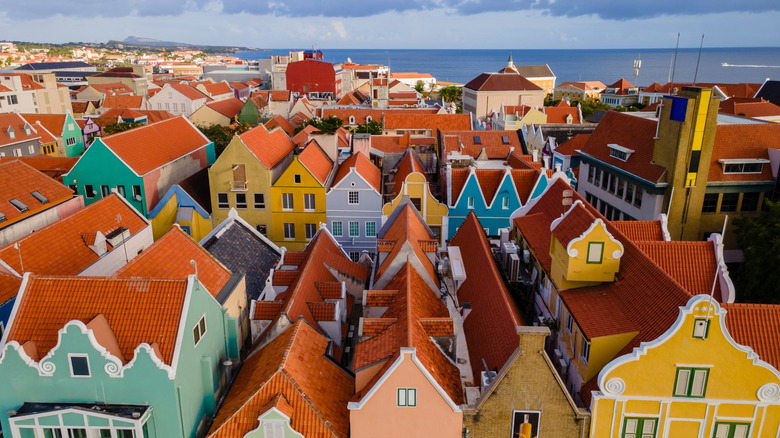
Who knew the Netherlands had beaches like this? Well, technically, it doesn't. Curacao is an autonomous constituent country, which basically means it's part of the Kingdom of the Netherlands, but operates as a self-governing entity under that umbrella. But all that's besides the point. For our purposes, it's a remarkable place to live and work, fusing the quintessential Caribbean island experience with a unique Dutch twist in the form of colonial architecture and a vibrant multicultural population. As a bonus, it's outside of the hurricane belt, so you have far less reason to worry than in other destinations.
American and Dutch citizens can already enjoy a six-month stay on arrival, within which they can work remotely (as long as none of the income originates in Curacao). But the @home in Curacao program allows remote workers, as well as investors and hibernators, to stay on six more months income tax-free, with the option to extend once more for a further six. Again, the program is simple to sign up for, and lets you enjoy the unique work-life balance offered on the island with none of the financial burdens.
The application is straightforward and fully online, and only costs about $295 per applicant — you can include your family or dependents on this program, so you'll need to pay for them, too. You'll then need to provide your passport bio page, proof of remote work, health insurance documentation, proof of accommodation, a criminal background check, and a return flight ticket confirmation. There are no listed income requirements, but some experts have suggested that around $3,000 seems to be a threshold. Make sure that all the accommodations and flights are refundable in case you're denied, and give yourself enough time to get the criminal background check back in time.
Antigua and Barbuda
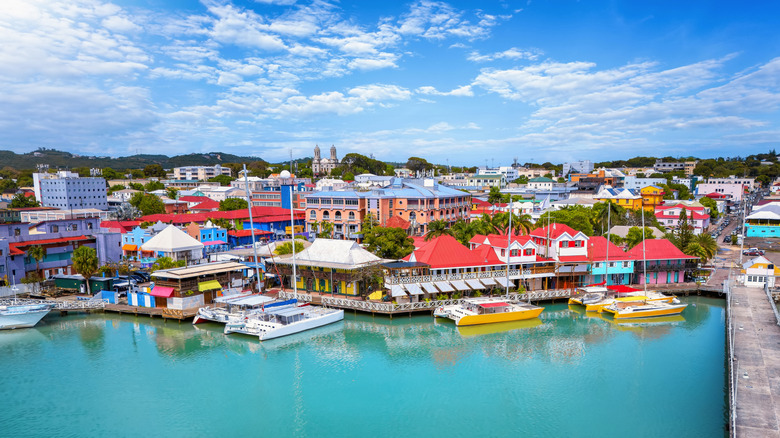
Antigua and Barbuda is one of the lesser-visited and, as such, one of the most underrated pairs of Caribbean islands. Once a British colony, the Independent Commonwealth Nation consists of the two main islands (Antigua and Barbuda, obviously) and several smaller ones. With a beach for every day, literally 365 of then between both the islands, you're spoiled for choice when it comes to relaxing in paradise. With an English-speaking population and a reputation as one of the safest islands in the Caribbean, it has set itself up as a strong and truly laid-back base for remote workers.
Its visa, while generous, is one of the more strict options for remote work in the region. It's not necessarily tougher to get, but the process is more intensive. Successful applicants can stay in the country for up to two years, with no tax on foreign income. As usual, you won't be allowed to source income from Antigua and Barbuda itself, but this should generally be a given for these types of visas. Applicants should have a verified income of at least $50,000 a year, pay a visa fee of $1,500 per person or $3,000 for a family, and provide multiple documents, including passport fees, police clearings for every applicant over the age of 16, proof of relationship, the usual copies of the applicants passport, as well as a separate passport photo.
Applicants have suggested that the visa application takes significantly longer than others to complete, but the process itself is fairly straightforward. Better yet, applications are generally returned within one to two weeks, so you won't need to wait long to know your destiny. Just make sure you meet the specifications, as the fees aren't refundable. Regardless, as a tropical remote work destination goes, it's hard to get better than Antigua and Barbuda.
The Bahamas
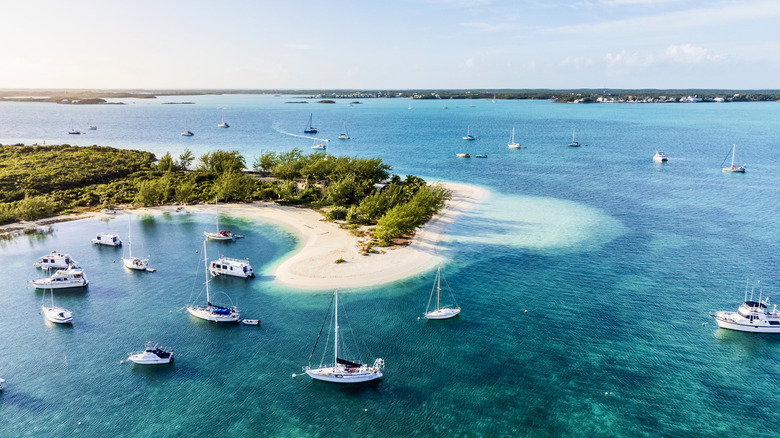
The Bahamas is the quintessential Caribbean experience: crystal-clear water, perfect beaches, stunning colonial architecture, and a rich island culture. Opting to stay here ticks every box, offering more culture than some of the more manicured islands, while still ensuring all those wonderful trappings are there and at their best. Its relative proximity to the U.S. and frequent flights also mean it's probably one of the easier options in terms of adjusting, if you're just getting started in the world of remote work.
As with many other countries in the region, like Turks and Caicos and the Cayman Islands, there's no income tax. This isn't a luxury offered solely to remote workers, but used across the board, so there are no complicated rules to jump through if you opt to stay there. To cater specifically to digital nomads, the country introduced BEATS, or the Bahamas Extended Travel Access Stay, program, allowing individuals and families to live and work on the island nation for up to a year, with the option to renew. It even markets the program to students studying online. In fairness, the Bahamas would be a pretty spectacular way to earn your degree, assuming you can peel yourself off the beach.
It's arguably the easiest application process on this list, with a $25 online process that's returned to applicants within five days, according to the official website. Then there's a fee of $1,000 required, plus an extra $500 for every dependent on the application. Interestingly, there are no listed salary requirements, but you do need to show proof of income. Cost of living is high in the Bahamas, so be prepared to show at least $4,000 to quell any concerns the immigration officer may have. Other than that, you just need a valid passport and medical insurance.
Malaysia
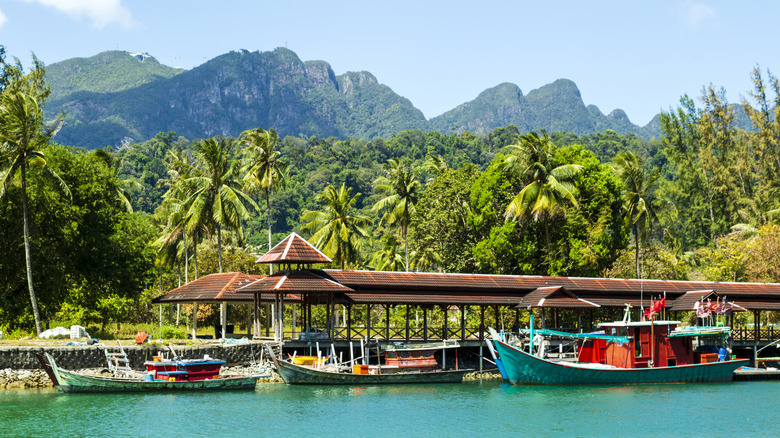
Some Southeast Asian countries have a reputation for being a little easy-going with repeat visitors maximizing their tourist passes, then doing visa runs, but that's starting to change now. Some are offering remote work visas to allow visitors to stay above and beyond their original allotment. Malaysia is one of those, offering the De Rantau Digital Nomad Pass, a generous visa option allowing remote workers to stay as long as a year with possible extensions.
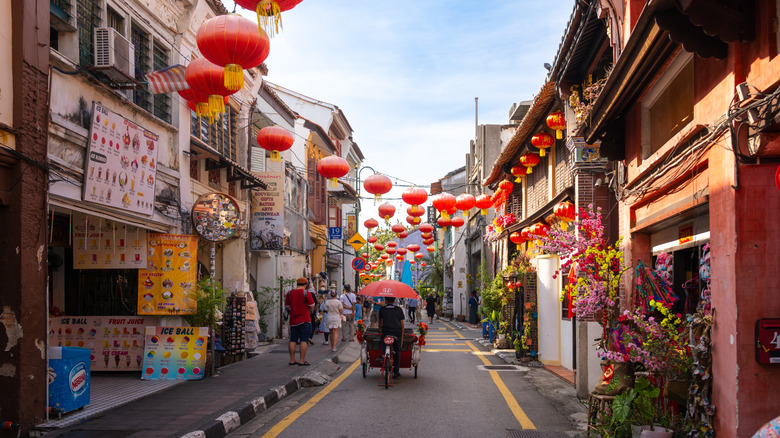
Malaysia is excellent as a digital nomad hub. Its vibrant capital, Kuala Lumpur, Malaysia's largest city and Southeast Asian melting pot, is well-equipped to deal with the tech requirements of the modern remote worker, while its numerous islands, jungles, beach towns, and historic settlements make it one of the best-rounded destinations in Asia. Most travelers already get three months on arrival, but for those hoping to stick around longer, the De Rantau Pass is the way forward. Make no mistake, the process can be convoluted and a little frustrating, but as long as you meet the specifications, you should be approved. Just be patient and over-provide on documents.
Generally, it requires applicants to identify as one of two types of remote workers: either "Tech Talent" or "non-Tech Talent." The specifics of these are too broad to list here, but you can see them on Malaysia's remote work hub. After that, you'll need to prove you have an active employment contract lasting at least three months, earn more than $24,000 or $60,000 a year, depending on your category, and have evidence of health insurance. The big difference here is that you can work with Malaysian companies, but that would remove your income tax exemption, and as we're looking for income tax-free countries, that's what you'd need to be.
Albania
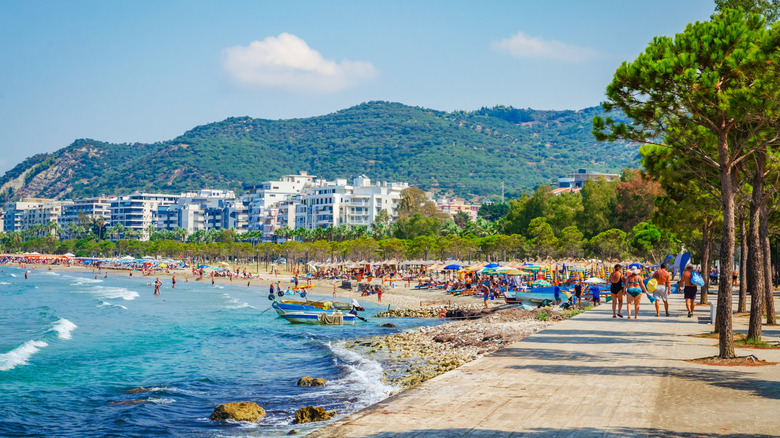
Albania is quickly turning into one of the most sought-after countries in Europe. That's partly because of its reputation as the "last true hidden gem" on the continent, but also because of its new reputation as one of the world's best digital nomad destinations. Despite its relative obscurity and developing status, its internet infrastructure is good, its accommodation options are comfortable, and its lifestyle is relaxed. The unique capital, Tirana, has more cafes per capita than anywhere else in Europe, and with costs still refreshingly low (a pint of domestic beer costs less than $3), it's the perfect place to set up shop for a while.
While most nationalities are bound by similar rules to the Schengen Rules (90 days within a 180-day period), U.S. citizens are afforded special treatment and can stay for up to a year in Albania without any prior visa arrangements. This remarkable option has made it immensely popular, especially considering there is no tax levied on income generated outside of the country. Of course, Americans are still taxed at home, regardless of whether they're actually there, but if you fall under some of the tax relief programs for Americans abroad, this is an incredible deal. Note that if you do earn money within Albania, you will become a tax resident after 183 days and will be taxed accordingly.
Albania in itself is a spectacular place to be. The beaches share the same coastline as Greece, its mountains are virtually untouched, and there's an abundance of ancient Roman and Greek ruins to explore. Plus, it situates you close to the rest of Europe, where it's much more complicated and expensive to live as a digital nomad. Quick trips abroad could be anything from Paris or London to Athens or Turkey.
Georgia (almost no income tax)

Georgia has felt like an up-and-coming destination for years, but while its popularity has soared, it retains a degree of mystery — not because of confusion with the U.S. state but because of its fairly remote location on the fringes of Europe and proximity to Russia. Digital nomads, however, discovered its charm years ago, and it's never been a better time to base yourself in its capital, Tbilisi, for some remote work — and to check out one of the world's most underrated wine regions.
Nestled in the Caucasus Mountains and straddling Asia and Europe, Tbilisi might be one of Europe's prettiest capitals. Its architecture, food, and language are the product of thousands of years of cultural give-and-take as its valuable spot on the Silk Road made it a conquest for dozens of empires. Modern Tbilisi is a forward-facing place, led by a youthful population that views itself as more European than Russian. As it battles its way to EU membership, its infrastructure has evolved alongside it, so you'll never be far from a strong internet connection in a buzzing co-working spot.
Visitors to Georgia from 90 countries enjoy up to a year visa-free, a generous proposition for many remote workers. Without changing your visa, visitors will become tax residents after six months. But if you apply for the individual entrepreneur visa (effectively a digital nomad visa), you'll only be subject to a 1% income tax. There are some stipulations to this, but on the whole, many remote workers could qualify. Is this income tax-free? No, but for everything that Georgia offers and the limited opportunities offered in Europe, 1% is a small enough price to pay to feature on this list. Please be aware that some regions of Georgia are listed Category 4: Do Not Travel by the U.S. Department of State.
Methodology
Each of the destinations listed has a digital nomad/remote work visa and the ability to work with zero income tax. In some cases, it's a complete eradication of income tax, while others have some stipulations – namely, the last three. Each entry is backed up by the individual country's remote-work visa page to ensure the most up-to-date information, and any more speculative information will be taken from immigration lawyers' sites and first-hand experiences. Everything in this piece was correct at the time of writing, but could change swiftly.