
The 10 Best Slot Canyons To Visit In Arizona
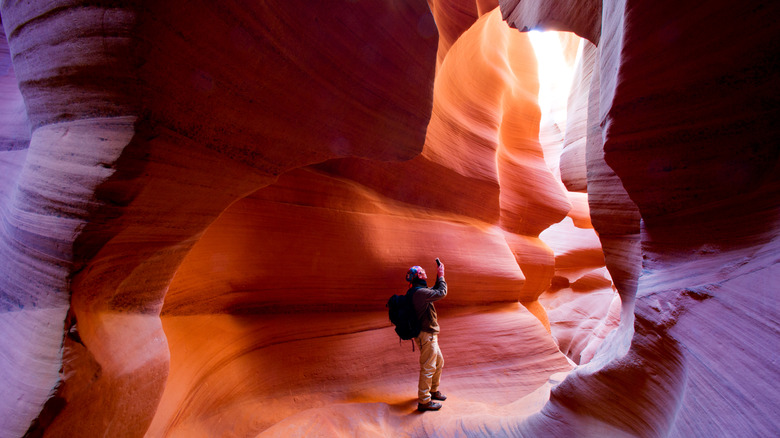
Slot canyons are one of nature's most thrilling adventure playgrounds, offering curious explorers the chance to get up close and personal with marvels of geology. Slowly carved out of the rock by flash flooding over millions of years, these slot canyons tend to be deep and slender, hence the name. There are lots of incredible slot canyons in Arizona, in particular, because the red Navajo sandstone is easily eroded. You'll find these unusual hidden canyon passageways in Utah, Nevada, California, and New Mexico too, since the underlying geology is very similar across these desert regions.
The best slot canyons in Arizona range from easily accessible gorges famous for their striking geological features, to remote ravines that take several days to explore and require overnight camps. This list will cover some of Arizona's most spectacular slot canyons, with something for all levels of hiker. Whether you want a quick stop to snap some out-of-this-world photos or fancy a more technical adventure far away from the crowds, we have something here for you.
Many slot canyons are on Navajo Nation land and can only be visited on guided tours that often need to be booked in advance. Yet if you prefer to explore independently, there are several magnificent rocky clefts where you can go it alone too. Let's dive into the mysterious, labyrinthine world of Arizona's slot canyons, and discover which are the best ones to visit and how to access them.
1. Antelope Canyon: The world's most famous slot canyon
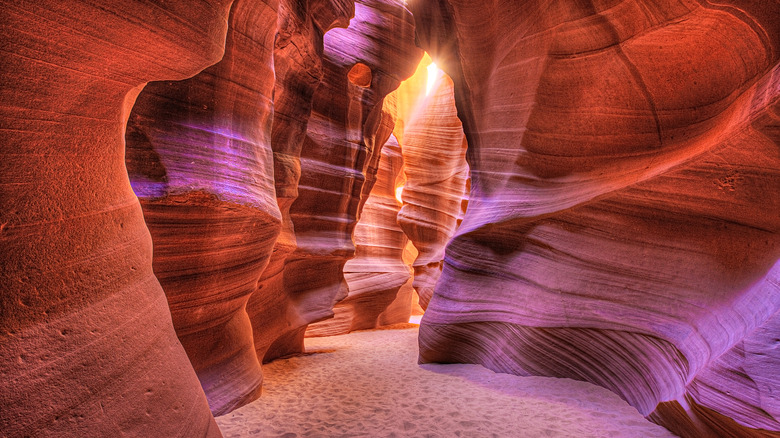
Antelope Canyon is probably the most photographed slot canyon in the world, thanks to its spectacular swirling rock walls and the shafts of light that make for incredible pictures. If you've seen jaw-dropping images of slot canyons on the internet, it's likely that they will have been taken here in Antelope Canyon.
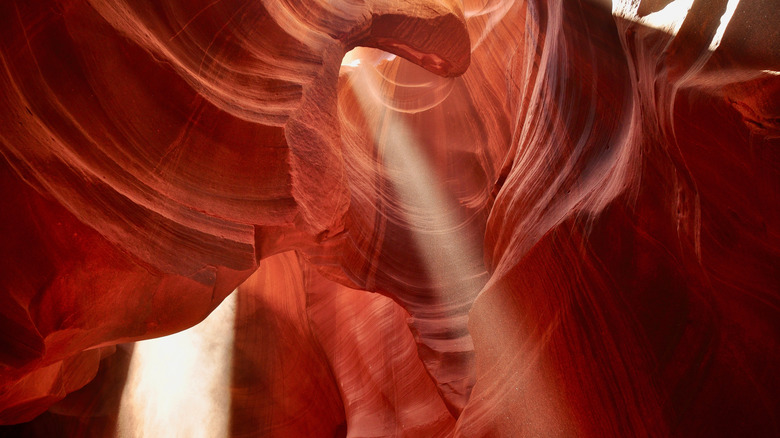
The dramatic gorge is split into two separate sections: Upper and Lower Antelope Canyon. Upper Antelope Canyon is famous for the sunbeams that penetrate the depths of the ravine between March and October. The light is generally best between 10 a.m. and 1 p.m., so go then to see the rock colors at their most vibrant. Just be aware that everyone else will be there then too. Meanwhile, Lower Antelope Canyon is known for its winding passageways and feels a bit more rugged and adventurous.
Located near Page, in Arizona, Antelope Canyon is on Navajo tribal land and has been seen as a spiritual place for centuries. As a result, the only way to visit Antelope Canyon is on a guided tour, with advance booking required, particularly at the Upper canyon where spaces sell out fast due to its popularity. Tours in Upper Antelope Canyon are about an hour and easy underfoot, while tours in Lower Antelope Canyon are one and a half hours and a little more challenging. Tripods and selfie sticks are not allowed in the canyon, so remember to leave those behind. If you don't want the adventure to end, Antelope Canyon tours can be combined with visits to Arizona's Monument Valley, which is just a two-hour drive away.
2. Spooky Canyon: A mysterious wilderness ravine
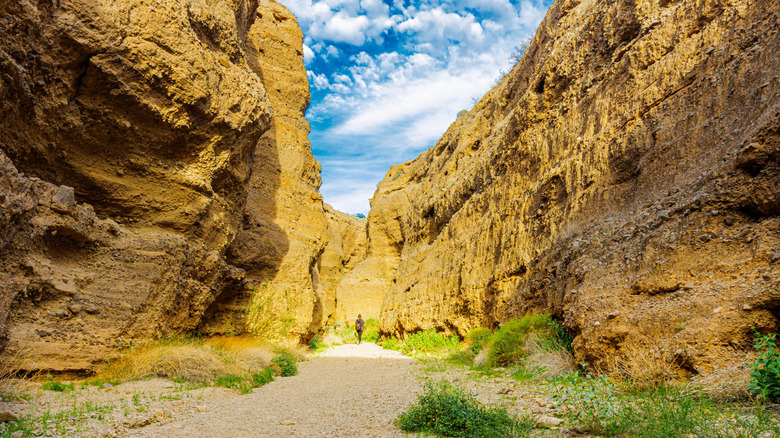
A short, family-friendly, 0.9-mile trail takes you into one of the most eerie slot canyons in Arizona. Hidden away in the Black Mountains near the Hoover Dam, this canyon has an air of mystery, with dark, twisting passageways and towering gray walls that turn orange when the sunlight hits. The low hanging rocky cliffs give the canyon an enclosed and almost claustrophobic feel, thus helping it live up to its name. Keep an eye out for otherworldly rock formations — including one that looks like an alien's head — as you venture through the ravine.
There are three side canyons that you can explore along the route, some of which require a bit of scrambling over sections of loose gravel. The third side canyon is particularly spooky, with the lack of light helping to ramp up the intrigue. On a windy day, visitors have reported hearing strange howling sounds which add to the eerie vibe of the canyon as loud gusts whoosh through natural holes in the rock walls.
Spooky Canyon is less well known than the more popular ravines inside Antelope Canyon, which means it's a much more peaceful and therefore enjoyable experience. This canyon is a great choice if you want an easy hike surrounded by spectacular geology, far from the tourist hordes.
3. Paria Canyon: An epic trek with out-of-this-world geology
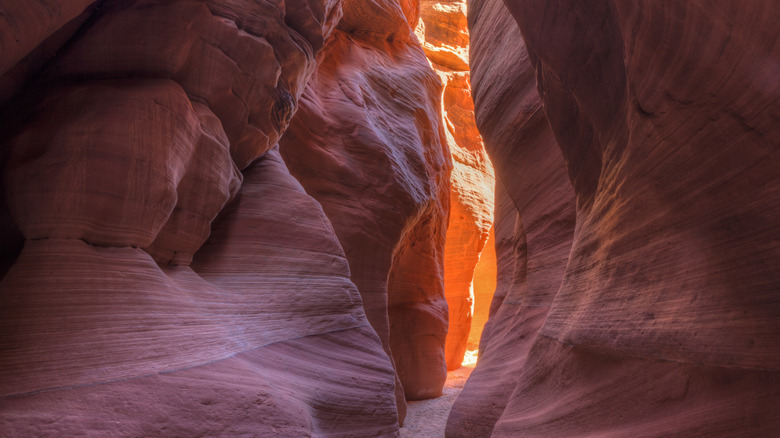
Famous for its mesmerizing geology, the remote Paria Canyon is a wonderland of colossal walls, rocky amphitheaters, and photogenic arches. Snaking for 38 miles through the Paria Canyon-Vermilion Cliffs Wilderness area, this lesser-known, fiery red slot canyon traverses the border between Arizona and Utah. One of it's tributaries, Buckskin Gulch, is one of the longest canyons in the U.S. and the whole area takes about four days to hike with overnight camps beside the river. You'll need a permit to visit Paria Canyon, and since overnight camping is limited to just 20 people per day, it's best to book this well in advance — sometimes months prior to your trip.
Since this is a one-way hike, you'll need to organize shuttle transfers between the start and end points of the route. Most hikers begin the trail at the White House Trailhead in Utah before crossing the border into Arizona and ending at Lee's Ferry, as the elevation drops along the way making the journey a little easier. The route can be strenuous, with plenty of river wading required in places, but the dramatic 2,500-foot rock walls and winding passageways are worth the effort. Keep an eye out for the desert bighorn sheep that are often seen in the area.
In the northern part of this wilderness area, and accessed from the Wire Pass Trailhead, the famous sandstone feature known as The Wave is a popular add-on to a Paria Canyon hike. The colorful swirling rock patterns are a feast for the eyes, but access is by lottery, making a visit to The Wave a rare treat for the lucky few.
4. Waterhole Canyon: A serene alternative to Antelope Canyon
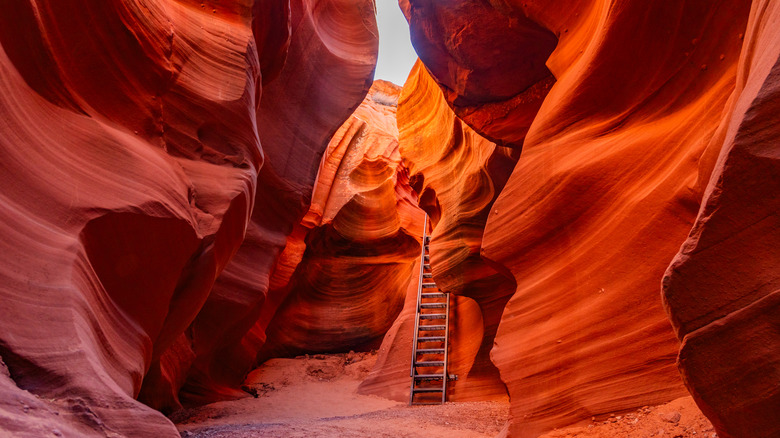
This striking sandstone beauty is one of Arizona's most underrated slot canyons. It's another less visited section of Antelope Canyon and ideal if you want to see spectacular red sandstone walls without the crowds at a more relaxed pace. Named after the rock holes that continue to retain water long after flood events, Waterhole Canyon is one of the more unusual slot canyons in Arizona.
The 2-mile canyon is split into two sections, separated by an open sand wash area. Inside the first part of the cleft, the chambers vary in shape and size, giving dramatic depth and making for enviable photos when the light is right. Further into the canyon, the smooth rock walls begin to narrow, with ladders in place to help you navigate the slimmer areas. There are a few tight sections to squeeze through, but that's all part of the adventure and there's nothing technical to worry about.
The canyon is in Navajo Nation territory so visits are only permitted as part of a guided tour with Waterhole Canyon Experience. They offer 90-minute hiking tours as well as 120-minute photography tours for those who want to spend longer framing that perfect shot — tripods are allowed on this one.
5. Cathedral Wash Canyon: An independent scrambling adventure
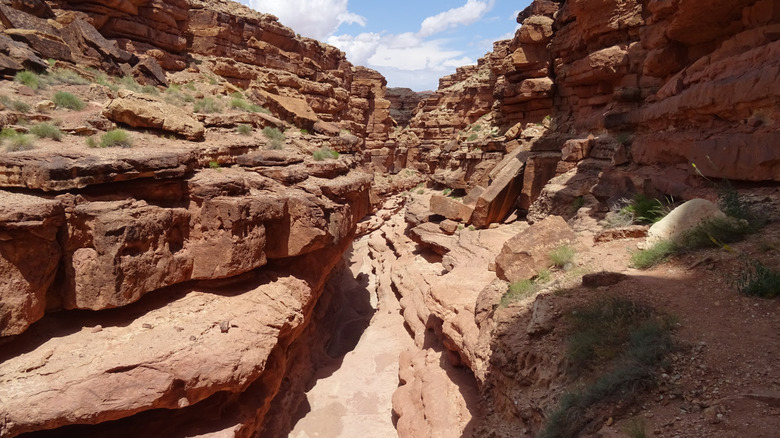
Cathedral Wash Canyon is a slightly more technical prospect as the 3-mile round trip involves a bit of scrambling and climbing, but it's accessible for anyone of reasonable fitness with a head for heights. You don't need any specialist skills, just a thirst for adventure. The red, church-like rocky walls give this dramatic canyon its name, and you can easily imagine you're in a spiritual place, totally immersed in nature.
The gully gets deeper and narrower the further into the canyon you hike, with rocky ledges to negotiate and drop-offs to watch out for as you figure out the best route. You'll need to stay alert and proceed with care as you scramble along the canyon walls. If you make it to the end of the canyon, you'll be treated to lovely views of the Colorado River, where the water runs cool and clear.
Located near Lees Ferry in the Glen Canyon National Recreation Area, Cathedral Wash Canyon can be visited without a guide since it's not on Navajo Nation land, so this is a great option if you prefer to explore independently. As the trail is more challenging than some of the better-known slot canyons, Cathedral Wash tends to be quieter, giving you plenty of time to take in and enjoy your surroundings.
6. Antelope Canyon X: A relaxed adventure away from the crowds
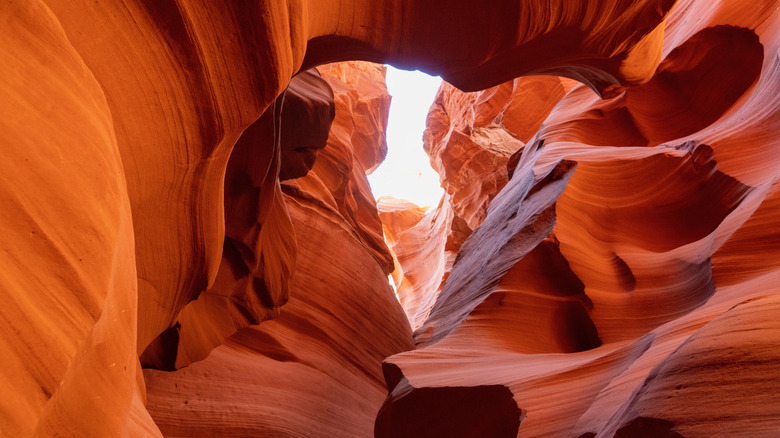
Canyon X is one of several slot canyons in Arizona that can be found within Antelope Canyon near Page. However, this part of the gorge has only been open for a few years, so it's less well known and more peaceful than the iconic Upper and Lower sections. The quirky name comes from the intersecting canyon walls forming a distinctive "X" shape overhead, giving this ravine a unique appeal.
Narrow rock corridors lead you deep into adventure, with the sculpted canyon walls looming high overhead. When sunlight penetrates the depths of the ravine around midday, the vivid orange and red sandstone inside Canyon X is stunning. This is the best time to get those show-stopping photos.
Canyon X offers a more personal experience without the crowds of Antelope Canyon, as excursions are less rushed, giving more time to take pictures without other people spoiling the shots. Of course, the canyon is on Navajo Nation land so visits are by guided tour, but you'll learn a lot more with a local guide than you would on your own — and they often give great photography tips too. Taadidiin Tours are the only operator providing access to Canyon X. Visits last around an hour and a half, and the easy hike is flat and just a mile long.
7. Cardiac Canyon: A secluded, heart-pumping mission
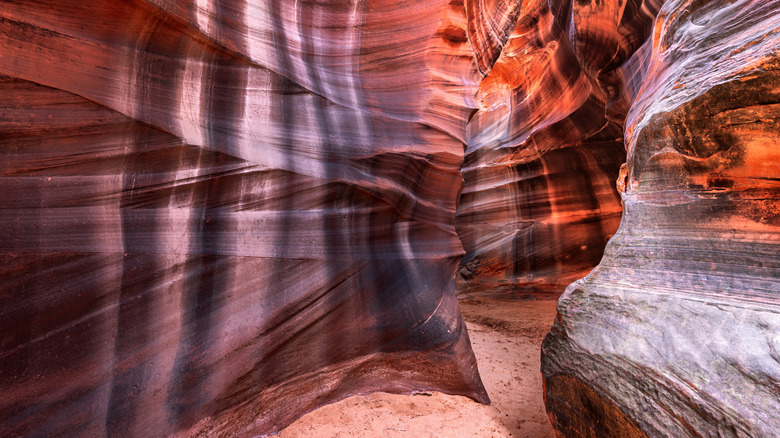
This less crowded alternative to Antelope Canyon is quiet and secluded, offering an off the beaten track experience with a fascinating human history. Several Navajo families hid in Cardiac Canyon during the 1860s to escape being sent to internment camps in New Mexico, on what was known as the "The Long Walk." Today, the canyon can only be visited on a guided tour with the aforementioned Taadidiin Tours, a company that was founded by the family who helped the Navajo take refuge here during that dark period of history.
The 2.5-mile round trip takes around four hours, passing through passageways that glow red and orange when the sunbeams enter the chasm. Deep inside the canyon, the rock walls have unusual textures and feature petroglyphs carved by Navajo people many years ago. If you want to spend longer capturing the beautiful scenes on camera, six-hour photography tours are also available. Tripods are permitted on these special excursions, which allows for sharper focus, especially when the light is low.
Cardiac Canyon gets its name from the steep hill — Cardiac Sand Dune — that you have to descend at the start of the trail. It feels even steeper when climbing back up at the end, so make sure you save a bit of energy for this heart-pumping finale.
8. Apache Trail Canyon: A hidden wilderness scramble
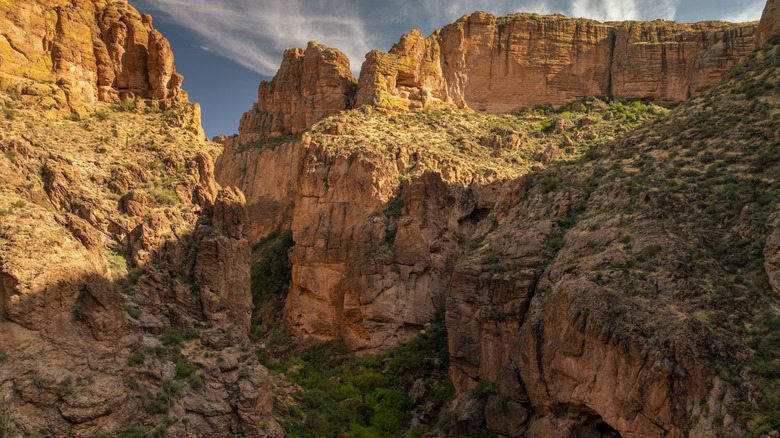
Located a few miles outside Tortilla Flat, Apache Trail Canyon is another of the lesser-known slot canyons in Arizona, which is precisely why you should visit. This 3-mile out-and-back trail takes you through a remote ravine in the Superstition Mountains along a tributary of Mesquite Creek. The slot canyon runs for about 600 feet and despite only being around 30 feet deep, the narrowness of the passageway makes it feel dramatic.
The hike is challenging in places as there's not much space between the canyon walls, so you'll need a sense of adventure to tackle this one. Along the floor of the canyon, there are often deep pools of water that you need to wade through, as well as rappelling sections if you're hiking the whole length of the slot. A bit of squeezing and scrambling is required, but there's nothing too technical. It's an exhilarating experience, away from the crowds, with shadowy tunnels and caves formed by giant fallen boulders to explore along the route. Just remember to wear sturdy shoes that you don't mind getting wet.
One of the most unusual features of this slot canyon is the presence of old car parts, which can be seen scattered around the floor of the ravine. It's a bit of a mystery as to how they got there but just adds to the unique appeal.
9. Rattlesnake Canyon: A wonderland of winding passageways
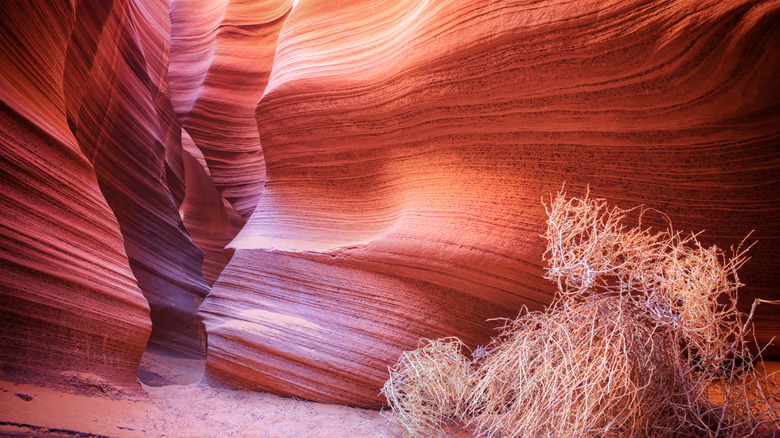
The narrow, winding passageways snaking through the desert give this Arizona slot canyon its evocative name. Rattlesnake Canyon is a visually striking ravine, with textured sandstone walls, meandering rock corridors, and rich colors that seem to be constantly changing as sunbeams sporadically burst through from above. There are natural rock arches overhead too, and plenty of light and shadow giving some welcome depth for photographers looking to capture the perfect shot.
Rattlesnake Canyon is part of the Upper Antelope Canyon system, close to Page, so visits are only possible by guided tour as this is also on Navajo Nation land. However, despite its proximity to its famous counterparts, this is another slot canyon that's under the radar of many travelers, so you'll enjoy exploring without lots of people jostling for space at key photo sites. As a result, it's a more intimate experience, and almost as beautiful as the scenes you'll see in Upper Antelope Canyon.
The one hour-long hike is challenging in places, with some narrow sections involving ladder climbs which just adds to the thrill. This is not a technical route, but the effort required gives an elevated sense of adventure and greater bragging rights afterward.
10. Owl Canyon: The wild domain of Great Horned Owls
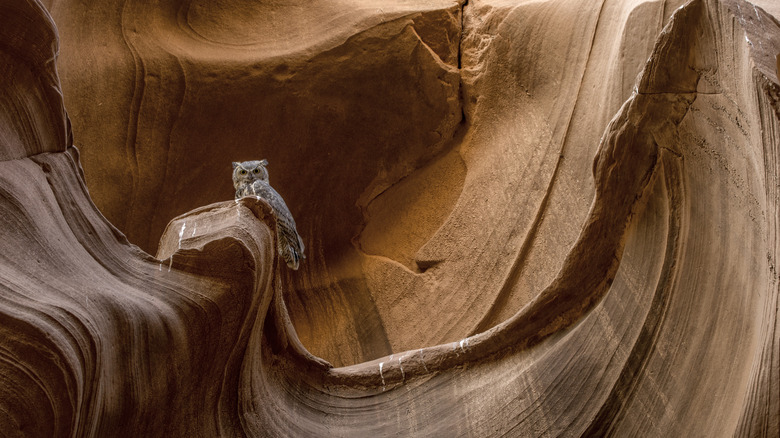
This curiously named slot canyon is known for its feathery inhabitants, and visitors often spot the resident great horned owls nesting in their natural habitat up on the high canyon walls. Although Owl Canyon isn't perhaps as geologically spectacular as some of the other slot canyons in Arizona, it's the unique appeal of the owls that makes this a must-see.
Lake Mead once covered this entire area, and it was only as water levels receded that the canyon became visible and accessible. Today, you can stroll beneath the 100-foot walls on the 2.2-mile round-trip trail, gazing up at the undulating red cliffs, and admiring the smooth sandstone formations that line the passageway. Owl Canyon is wider than many other slot canyons, which is ideal if you're not keen on confirmed spaces and makes for easier photography, especially if you spot one of the birds.
Like many other gorges in this region, Owl Canyon is part of the Antelope Canyon system, so you need to book a guided tour to visit. The good news is it's usually uncrowded here, so you can wander through this hidden gorge in peace, with a greater chance of seeing the owls up in the cliff crevices. Owl Canyon and Rattlesnake Canyon are often combined on a single tour which lasts around one hour and 45 minutes.
Methodology
The slot canyons have been ranked in order of their visual appeal, considering factors like color, size, geological features, popularity, and quality of experience. We used research from the Arizona tourism board official website as well as travel and hiking blogs to determine the best slot canyons to include on this list. We also considered visitor reviews on Tripadvisor and AllTrails when assessing the canyon access and hike difficulty. To be included on the list, the canyon had to be spectacular, and accessible to most travelers.