
Rocky Mountain Towns With Main Streets Worth Planning A Trip Around
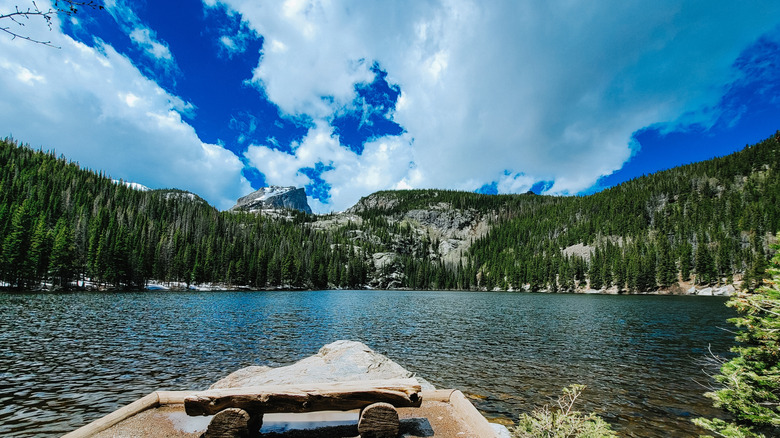
It's little secret that the Rocky Mountains are home to some of North America's most iconic landscapes, from the geysers of Yellowstone to the peaks and valleys of Banff. As a result, many of the once-sleepy Western towns situated high up in the mountains have grown into veritable destinations in their own right. Across the region, lively corridors lined with cafes, breweries, and storefronts are framed by dramatic alpine scenery.
Many of these towns began as mining settlements in the 19th century, and their preserved downtown districts still serve as the social and cultural heart of the community. Today, those same streets are where visitors browse outdoor outfitters, grab coffee before a mountain adventure, or relax at restaurants after a long day exploring nearby national parks. Whether they sit beneath towering peaks, beside historic railroads, or at the entrance to famous wilderness areas, these Rocky Mountain towns have main streets that are worth planning a trip around.
Park City, Utah
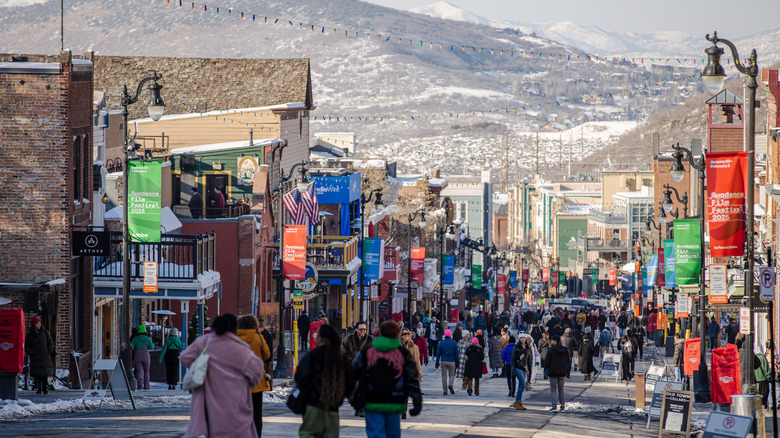
Located about 30 miles east of Utah's capital in Salt Lake City, Park City is one of America's most iconic mountain towns, backgrounded by snow-covered peaks reminiscent of the European Alps. While the town has been known as a cold-weather sports destination since the mid-1900s — lending it the nickname "winter's favorite town" — it's also grown increasingly popular as a year-round tourist town, in part due to its lively and historic downtown.
Running through the heart of the former silver mining town, Main Street meanders down a steep hillside lined by carefully preserved Victorian structures that now house a colorful array of boutiques, galleries, and bars. The town has long been known as the host of Sundance Film Festival, though the week-long event is set to move to Boulder, Colorado for future festival seasons starting in 2027. Nonetheless, Park City remains packed with all-seasons activity, from international skiing championships to summer arts festivals and even a massive outdoor dinner party that transforms all of downtown into an al fresco patio.
Restaurants range from upscale mountain cuisine to casual cafes perfect for a quick breakfast before hitting the slopes. Beloved landmarks such as the Egyptian Theatre add cultural depth to the area, while Park City Mountain Resort ski lifts ferry eager outdoorsmen up and down the mountains in the distance. With its mix of outdoor adventure, storied architecture, and lots to do downtown, it's little surprise that Park City is considered one of the most vibrant resort towns in the Rockies.
Telluride, Colorado
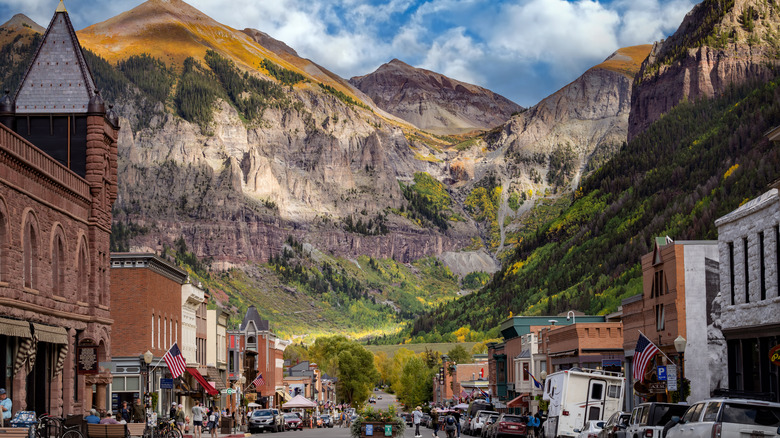
Few streets in the Rockies — or America in general, for that matter — are as visually dramatic as Colorado Avenue in Telluride. This mountain town is perfectly nestled in a box canyon in the San Juan Mountains, meaning it's surrounded on three sides by towering mountain slopes that measure between 12,000 to 14,000 feet. Down below, in the heart of the valley, what once began as a rough and tumble mining camp has blossomed into a resort town renowned for its skiing and rugged Western charm.
Despite its evolution into a sophisticated mountain destination, downtown Telluride has maintained much of its historic character — some before and after photos show shockingly little difference from when the town was first settled in the late 1800s and today. Many of the old mining-era buildings now house quaint bookstores, stylish bars, and outdoor outfitters. The buildings themselves are a colorful array of brick and pastel-painted wood, many with murals splashed across the exteriors and green awnings covering patios where diners can enjoy front-row views of Colorado's iconic Rocky Mountains.
Similar to Park City, Telluride has its own longstanding movie tradition in Telluride Film Festival, alongside 18 other festivals that light up downtown throughout the year, celebrating everything from hot air balloons to bluegrass music. During these events, Colorado Avenue transforms into a lively hub that feels much larger than a town with around 2,100 residents. But even on the quieter days, Telluride offers plenty to explore.
Breckenridge, Colorado
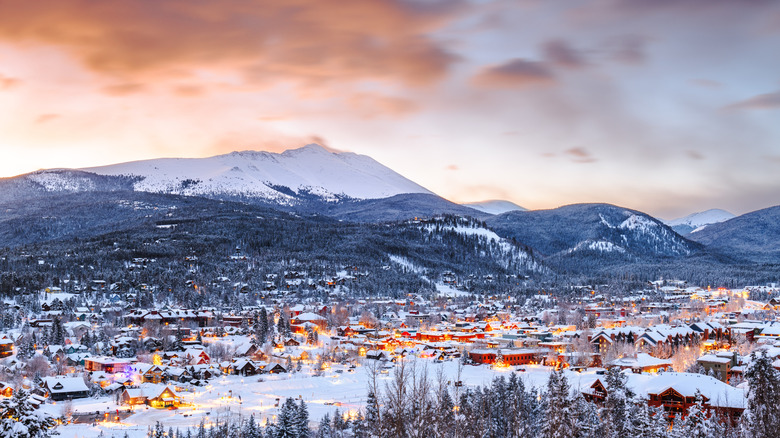
High up in the Rockies, at an elevation of about 9,600 feet, sits Breckenridge, a classic mountain town roughly 80 miles west of Denver. Like many other Rocky Mountain resort towns, Breckenridge got its start more than a century ago as a mining town amid the Pike's Peak Gold Rush. Today, many of the same buildings still line Main Street, but they now serve a much different purpose: catering to tourists and seasonal visitors.
The colorful facades feel like a playful nod to the town's history, from cafes with log cabin-esque entrances to bars with saloon-style exteriors. In between, you'll find a variety of galleries, bistros and house museums that shed light on the town's past. Many of the structures are painted in vibrant colors with pastel trim, buffered from the street by old-timey hanging signposts and leafy trees. Over the hills, mountain ridges loom in the distance. The effect is a homey, small-town feel that hearkens back to some mythical yesteryear, a simpler time when life seemed to move at a slower pace.
Come January, the town transforms into a winter wonderland of snowy sculptures when the International Snow Sculpture Championships kicks off. There's also a healthy après-ski culture, thanks to the surrounding resorts and slopes, that makes Breckenridge a prime spot to browse outdoor gear shops or dine on locally sourced mountain cuisine.
Banff, Alberta
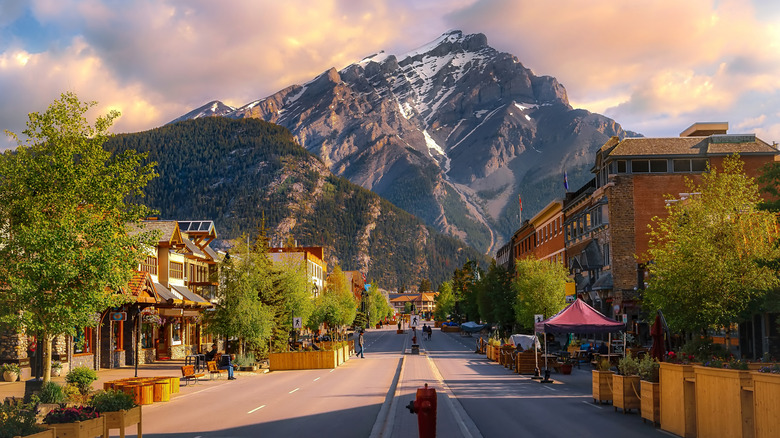
If you're willing to expand your search for the most scenic Rocky Mountain main street beyond the United States, you'll find Banff Avenue to be a top contender. Located inside Banff National Park — famously the birthplace of Canada's National Parks — the downtown corridor anchored by the formidable face of Cascade Mountain, creating what is perhaps the most recognizable view in all of the Canadian Rockies. At times, the beauty of Banff Avenue and the surrounding national park feels otherworldly, as if you've stepped into a postcard or a laptop wallpaper. But despite its international popularity, attracting more than 4 million visitors annually, Banff's 2.5-square mile downtown district retains a welcoming small-town atmosphere.
Along Banff Avenue, visitors can spend hours alone exploring the street's mix of attractions. Shops range from outdoor outfitters and souvenir shops to rustic steakhouses and bistros serving upscale Canadian fare. Stop in at the Cascade of Time Garden to take in landscaped flower beds set against the historic Parks Administration Building, or check out the Buffalo Nations Museum to learn about the town's Indigenous communities. While there's plenty of trails and ski resorts to explore close by, you might even find wildlife close to town, with herds of elk and bighorn sheep commonly passing through.
As a gateway to some of Canada's most famed landscapes, Banff Avenue naturally serves as a crossroads and gathering place for travelers. From sunrise coffee stops before a long hike to unwinding with a drink after a day on the slopes, Banff Avenue is the human heart of this wild park.
Jackson, Wyoming
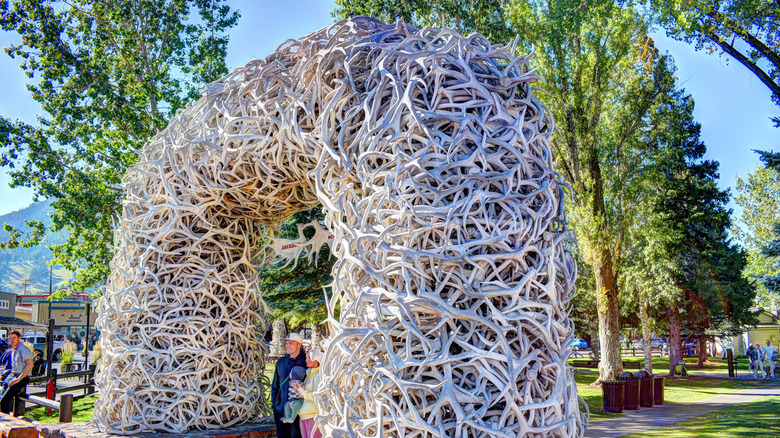
Centered on Jackson's Town Square, the downtown area of Jackson, Wyoming is among the most famous in the Rocky Mountains. The name of the town is often synonymous with Jackson Hole, which actually the 42-mile valley that Jackson is in. The square itself sits smack-dab in the middle of a lively district known for its distinct cowboy flair, anchored at each corner by decorative arches constructed from elk antlers. These massive structures are even more imposing up close, hand-made comprising more than 2,000 locally sourced antlers each. The arches, much like the surrounding saloons, are a nod to Jackson's history as a hub for trappers and ranchers. Nowadays, the town is better known as a popular base camp for travelers heading to nearby Grand Teton and Yellowstone National Parks, but it's also become an attraction in its own right.
The streets surrounding the Town Square are packed with watering holes, trading posts, and old-school general stores, bringing Jackson's history to life against the backdrop of the Grand Tetons. Galleries are also abundant here. A 2024 study from SMU DataArts, which examined public funding for the arts and demand for artistic cultural experiences, found Jackson to be one of America's most vibrant art scenes. Here, you'll find this reflected in rich showcases of Western landscapes and wildlife photography. From the town's frontier past to one of the most popular mountain destinations in the United States, the evolution of Jackson has resulted in a distinctly kitschy but lively downtown.
Ouray, Colorado
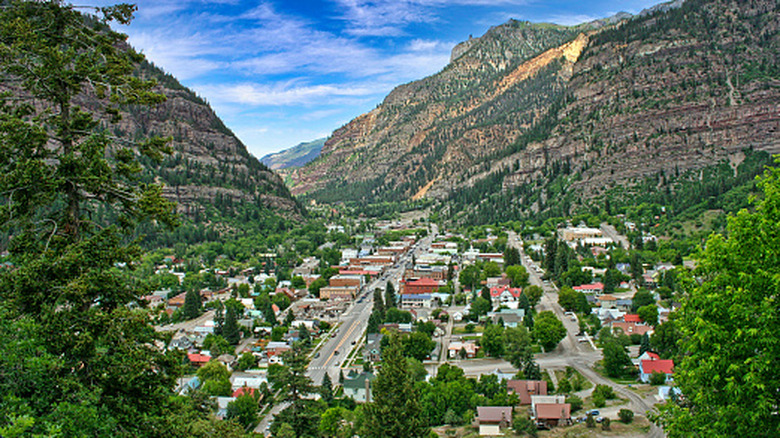
Ouray, Colorado isn't known as "America's Switzerland" for nothing. Situated at the base of the San Juan Mountains, Ouray's Main Street reflects the town's 19th-century origins as a gold and silver mining basecamp. Narrow Victorian buildings line both sides of the road, covering a downtown district that spans no more than a few blocks in length. Everywhere you turn, jagged mountain faces covered by forests of spruce and fir rise out of the hillsides, furthering the illusion that visitors have been transported to a village high up in the Swiss Alps.
For such a small town — Ouray has about 1,000 permanent residents on a good day — Ouray lacks little, with a downtown that offers plenty for solo travelers and families alike to explore. Restaurants, cafes, and outdoor gear shops cater to travelers who come to the region for hiking, scenic drives, and even ice climbing. The town even boasts its own dedicated ice park, where adventurous athletes can scale giant walls of frozen water. For those seeking a less adrenaline-pumping mountain vacation, don't worry — Ouray is also known for its hot springs.
Regardless of whether you prefer adventure or relaxation, Ouray's compact downtown has something for nearly every traveler. It's not quite as touristy or overtly quaint as some other Rocky Mountain towns, but it's exactly that humble beauty that sets it apart from the rest.
Durango, Colorado
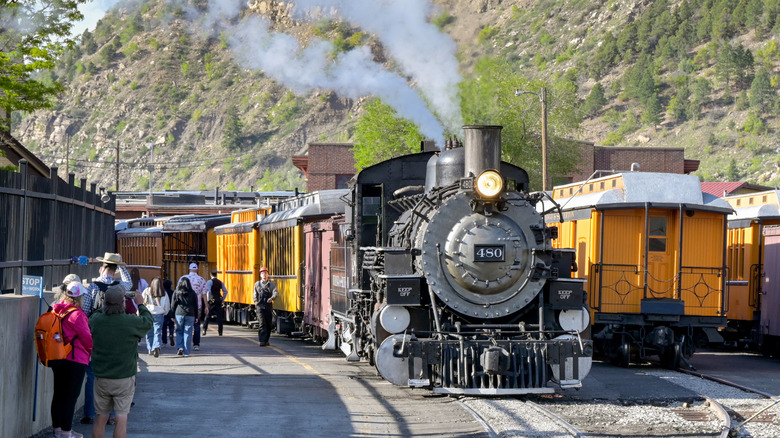
Positioned right along the southern edge of the San Juan National Forest, Durango's Main Avenue offers one of the most authentic Old West downtown districts in the Rocky Mountains. This small city was established in the late 19th century by the Denver and Rio Grande Railroad. Today, many of the very same buildings that would've greeted westward travelers as they stepped off of the train stand in the same spots today.
The railroad is so closely tied to Durango's history that you can still hop aboard the Durango and Silverton Narrow Gauge Railroad for a joyride today. The train is so popular, in fact, it won USA Today's 2025 Readers' Choice Award for the best scenic train ride in America, making it a major regional attraction that connects Durango to some of the other historic mining towns on this list, including Ouray.
The historic train station sits at the end of Main Avenue, just steps from downtown's lively shops and restaurants. Brick storefronts house taverns, breweries, and diners where mountain ridges peek out above the roofline. You can even swim, kayak, or raft in the Animas River adjacent to downtown, courtesy of local outfitters like Durango Rivertrippers. With Mesa Verde National Park roughly 35 miles west and hiking throughout the San Juan National Forest, Durango is the perfect Rocky Mountain town for folks seeking a true historic Southwestern stay.
Crested Butte, Colorado
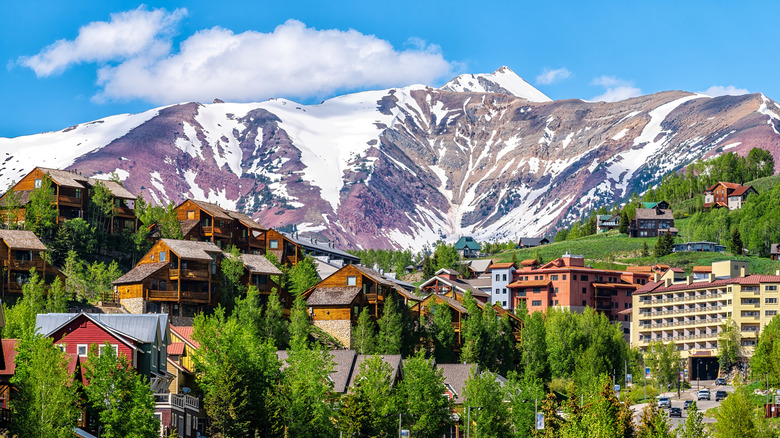
Elk Avenue in the center of Crested Butte, Colorado is thought to be one of the most colorful streets in the Rocky Mountains. Famous for its brightly painted storefronts, historic wooden buildings, and vibrant resort town atmosphere, Crested Butte actually got its start as a coal mining town. However, the town truly rose to prominence as one of the most challenging ski destinations in the nation at Crested Butte Mountain Resort, with peak elevations above 12,000 feet and a high proportion of expert terrain. While the slopes in Crested Butte aren't for the faint of heart, Elk Avenue can safely be enjoyed by the whole family.
This walkable central corridor is filled with local character, from independent galleries to local antique shops and a wealth of historic Victorian buildings adorned in a kaleidoscope of colors. While the town is most busy in the winter for reasons that are likely obvious, visit any time of year and find Crested Butte alive with festivities celebrating watersports, wildflowers, and the local arts scene. Skiing might be the sport of choice here, but mountain biking has grown increasingly popular as well, with access to some trailheads directly from downtown. Whether you come for the mountain views, the outdoor adventures, or the sheer breadth of things to eat and explore along Elk Avenue, Crested Butte is another top choice for quiet Rocky Mountain charm.
Whitefish, Montana
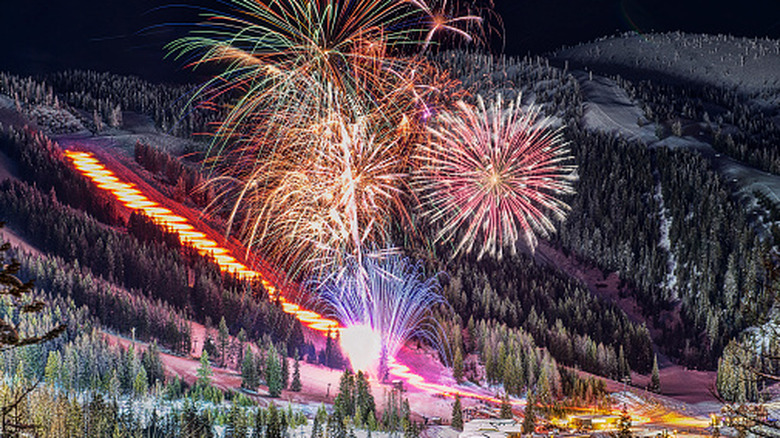
Located in Northwestern Montana, Whitefish originated as another railroad town at the height of Montana's booming timber industry, but quickly became recognized for its own natural resources. The town itself sits against Whitefish Lake and is about 25 miles from Glacier National Park, making its downtown district an obvious choice for park-goers to dine, drink, and rest in.
The community centers around the aptly-named Central Avenue, a lively main street that blends historic architecture with modern mountain-town energy. The historic storefronts, many of which date back to the early 20th century, are occupied today by bistros, art studios, and galleries, many of which call back to the town's history by using its original name, Stumptown. Other less-historic buildings still mimic the rugged mountain style of the rest of the town, many with cabin-like structures.
Though the town is popular for skiers and snowboarders due to the nearby Whitefish Mountain Resort, it's also just as fun in summer, when swimming in Whitefish Lake is literally within walking distance of downtown restaurants and shops. Regardless, after a day hiking alpine trails or skiing in the winter, Central Avenue offers the perfect place to relax, explore local shops, or enjoy dinner with views of the surrounding mountains.
Wallace, Idaho
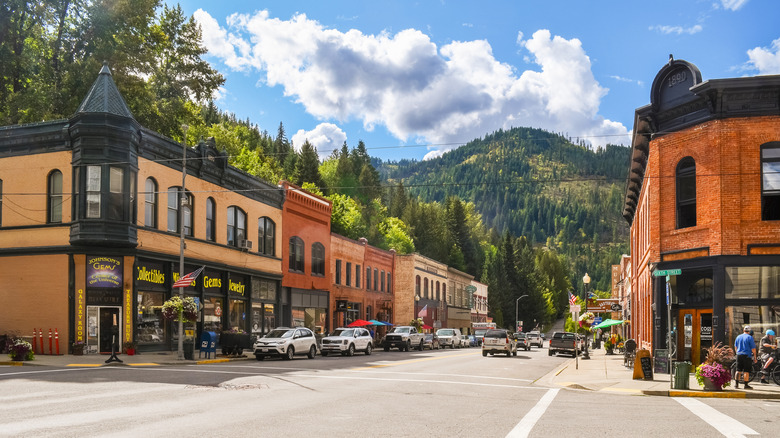
With just a glance down its central thoroughfare, it's immediately evident that Wallace has one of the most historically preserved downtowns in the Rocky Mountains. In fact, the entire downtown district is listed on the National Register of Historic Places, making it one of the most intact mining-era towns in the United States.
Step into downtown Wallace and you'll be transported to the 19th century. The town was once known as the "Silver Capital of the World," where brick Victorian buildings are framed by pine-dotted peaks at every angle. The chateau-inspired building of the Northern Pacific Railroad Depot Museum might have you wondering whether you'd been teleported to Europe, but the history it displays is distinctly Idahoan. Besides some shops and restaurants, there's more quirky sites to explore like the Oasis Bordello Museum and an official Center of the Universe marker. While it might be small in size, Wallace makes an impression on visitors with its unique character. And, surrounded by the forested mountains of Northern Idaho, the town provides a highly preserved glimpse into the Rocky Mountain mining past.
Silverton, Colorado
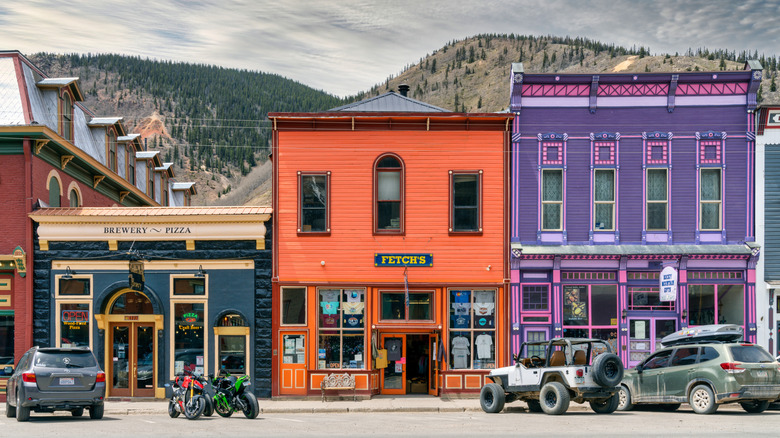
High in the San Juan Mountains and connected to Durango via the Durango and Silverton Narrow Gauge Railroad, Silverton's character can be described as equally rugged and colorful. Arguably, the town's claim to fame is Silverton Mountain, which ranks among the most intense ski areas in the United States while also claiming the title as the highest elevation ski resort in America at over 13,400 feet.
That said, its charming downtown along Greene Street is just as deserving of attention, featuring buildings painted in practically in every color of the rainbow. Adding to the atmosphere are the San Juan peaks which surround the town on all sides and the chugging locomotives along the aforementioned railroad route. Another popular way to explore the area is the Million Dollar Highway, a section of the San Juan skyway that crosses narrow switchbacks and steep mountain passes.
In some senses, Silverton is less upscale than many other destinations in the Rockies, where high-end goods often go hand-in-hand with ski resorts. Instead, this charming little community prioritizes down-to-earth dining at modest mountain cafes and genuine outdoor adventures, from hiking to backcountry skiing to off-road Jeep tours. And, after a day in the mountains, Silverton's small but mighty downtown provides exactly the relaxing change of pace many travelers come looking for.
Methodology
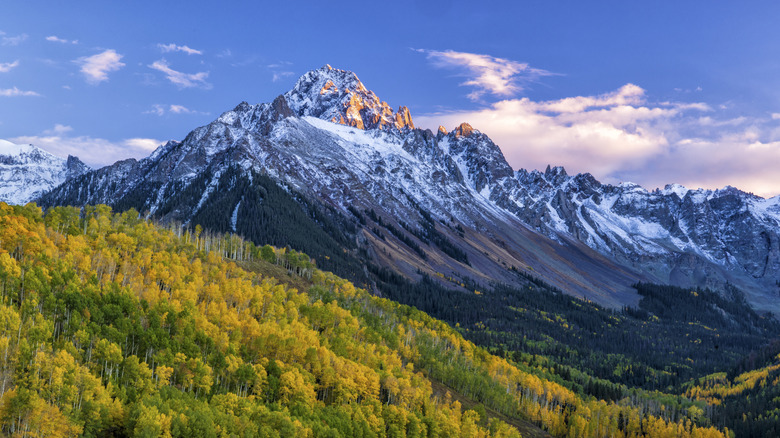
These towns were selected based on travel recommendations, tourism resources, and regional guides highlighting the best "home base" destinations in the Rocky Mountains. While the region contains many scenic mountain communities, this list focuses specifically on towns with well-defined downtown corridors with lots to do and see beyond outdoor recreation. Factors included historic architecture, walkability, and the variety of shops, restaurants, museums, and festivals. From historic mining towns to major gateways for national park exploration, these destinations are compelling enough to anchor an entire Rocky Mountain getaway.