
TSA Security Secrets Travelers Will Want To Know
We may receive a commission on purchases made from links.
Whether you're heading abroad for the first time on an international adventure or checking out a surprisingly affordable destination in the U.S., your journey will begin at a TSA checkpoint if you're flying commercially. There's simply no way around going through airport security if you want to board a flight. However, getting through security doesn't have to be as stressful as many people make it out to be. If you're someone who finds security to be one of the most anxiety-inducing parts of flying, you're in the right place. While major TSA rules and regulations are easy to find online, there are also quite a few lesser-known strategies that frequent flyers rely on to get through checkpoints more smoothly.
Here, we'll look at a selection of TSA security secrets all travelers will want to know before taking another trip. These adjustments to how you pack, move through the line, and prepare at home can make a huge difference in your overall experience at the airport. Whether you're a seasoned traveler looking to improve your routine or you're flying for the first time, understanding how the TSA screening process really works can help you feel more comfortable and confident. Long lines, changing policies about shoes and electronics, and general pressure to move quickly so you don't hold up other passengers can be overwhelming, even if you've done this song and dance before. With the right approach, however, getting through any TSA checkpoint can be less stressful than you're probably anticipating.
TSA PreCheck isn't only about speed
There's a common misconception that having TSA PreCheck is only about getting through security faster, but there's actually much more to it than that. PreCheck access is really about reducing the overall stress of the security process. While shorter lines are a benefit, the entire security experience is generally more streamlined for PreCheck travelers. These passengers are allowed to leave their belts and jackets on (though heavy winter coats may still have to be placed in a bin), and their 3-1-1 compliant liquids can remain in their luggage. While these perks might seem relatively minor, less hassle while moving through the security line can be a huge relief for anxious travelers who are nervous about flying and the entire airport process.
Another benefit that people often don't think about is that having PreCheck means you are likely to experience fewer overall interruptions while passing through security. Because PreCheck passengers are designated as low-risk, they are less likely to be pulled aside for secondary screening. Furthermore, most of these travelers are frequent flyers, so they tend to move efficiently and respectfully through the line. This translates to fewer manual bag checks, fewer potentially disruptive passengers, and a generally more pleasant overall experience. For many travelers, this consistent experience is well worth the cost of a PreCheck membership. Depending on which subscription you choose, you can expect to spend between $75 and $85 to enroll. Even if you don't fly often, the reduced hassle alone can make TSA PreCheck worth looking into.
Officers are watching for specific behaviors
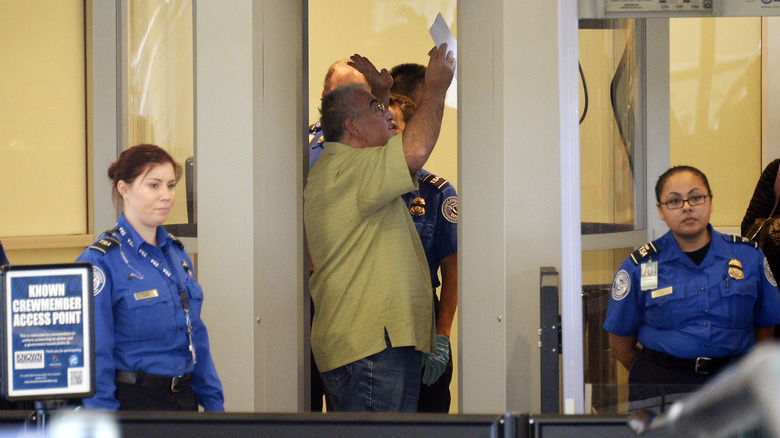
Many air travelers focus more on what they've packed than how they're acting in TSA security lines. The stress of additional luggage screening is overwhelming for some travelers, but in reality, behavior can matter just as much as what's in your bag. There are a slew of seemingly normal behaviors that TSA agents watch for like hawks. Fortunately, most of these actions are things you can work on to make sure you aren't flagged. Homeland Security's Screening of Passengers by Observation Techniques (SPOT) Program encourages TSA officers to look for things like frequent yawning, excessive blinking, jiggling one's leg, and even profuse sweating. Dressing inappropriately for the weather can be another red flag that may signal officers.
Keep in mind, though, that this doesn't mean normal travel anxiety will automatically cause you to be pulled aside. TSA agents see a lot of passengers every day, and they are trained to know what is typical nervous behavior and what deviates from the norm. When you're in the security line, the best approach is to simply stay as calm as possible, follow verbal directions, and move through the process as confidently as you can. For nervous travelers, sometimes thinking about going through airport security is worse than the experience itself! TSA agents' goal is to move people through to their gates safely and efficiently. If you require assistance during the screening process, remember agents are there to help you, not to make your travel day more difficult.
Liquids aren't always the biggest issue
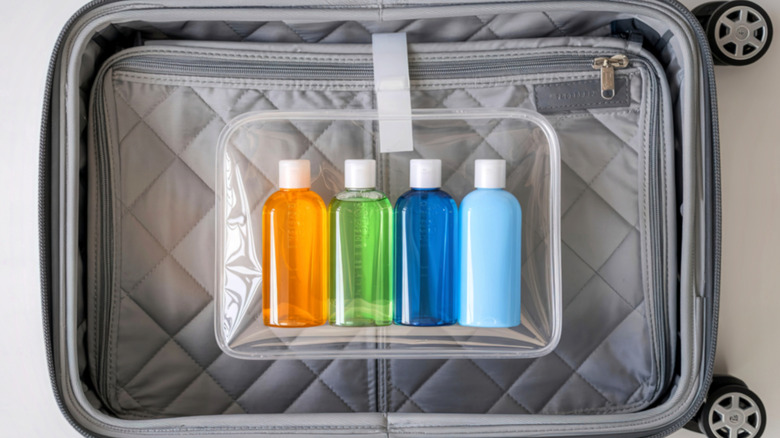
Since it was officially implemented in 2006, the TSA's 3-1-1 liquids rule has received a lot of publicity. Due to this, many travelers, especially those who are new to flying, tend to hyper-focus on making sure their shampoos, conditioners, and other liquids are properly packed in a clear plastic bag or pouch. In reality, though, cluttered, disorganized bags and electronic devices are more likely to cause security hangups than liquids are. Overpacked carry-ons and personal items like backpacks can make it challenging for screening equipment operators to clearly see the contents. If the X-ray screening process is inconclusive because your bag is too densely packed, the odds are good that it will be pulled for a manual inspection. Not only does this slow you down, but it can be stressful to repack a disorganized bag quickly post-inspection.
The key here is organization. Keep electronics easily accessible so you can remove them if needed, and place other random items, like souvenir coffee cups you've stuffed into your backpack, into a bin. Think about how items might appear on an X-ray scan, too. When my oldest daughter was a baby, she had a stuffed toy carrot that consistently looked like a knife during the TSA imaging process. We had to start putting it in the bin so it was clearly visible to avoid secondary screening! In short, liquids matter, but they're just one piece of the packing puzzle. If your bag is neatly organized and easy to scan, you're likely to get through security easily without obsessing over the 3-1-1 rule.
Your clothes matter more than you think
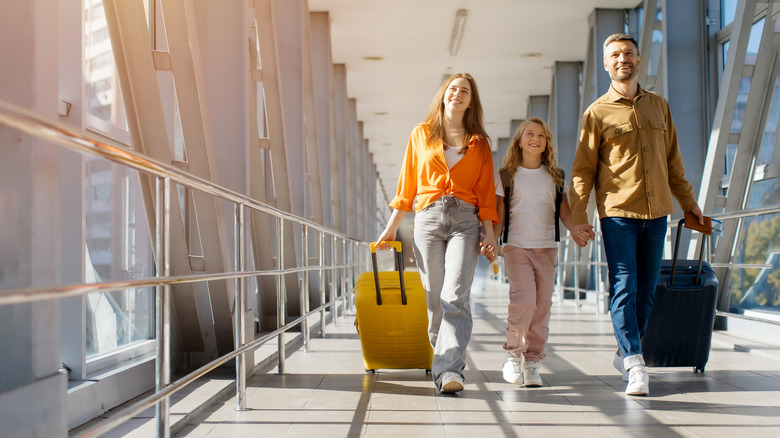
No one is saying you need to dress like a runway model when you go to the airport, but what you wear really does make a difference in the security line. Some clothing choices, for example, are immediate red flags to TSA officers. And, even though shoes are generally allowed to be worn through security now, certain styles, like heavy boots or anything with a lot of hardware, may still have to be taken off. I once had to go straight to a fandom event from the airport, so I was dressed on the plane. I was not allowed to wear Doc Marten combat boots through the line. Jackets with numerous buckles or zippers, layered outfits, bulky belts, and even chunky jewelry may also have to be removed. Sequins and sparkles can also be problematic, potentially triggering a manual patdown. This is especially good to remember during the holiday season when people tend to dress festively.
The goal shouldn't be to completely sacrifice your personal style but to dress strategically to minimize hassles at the airport. Wearing comfortable, breathable layers is a great starting point. Think bamboo t-shirts or tank tops with a light cardigan or moisture-wicking jacket on top of leggings for women or upscale joggers for men. Adding an easy-to-remove scarf can also be smart if you think you'll be chilly on the plane, but try to avoid over-accessorizing. What you wear isn't likely to make or break your airport experience, but it can definitely play a role in whether you breeze straight through security or find yourself undergoing extra screening.
Unexpected items trigger automatic bag checks
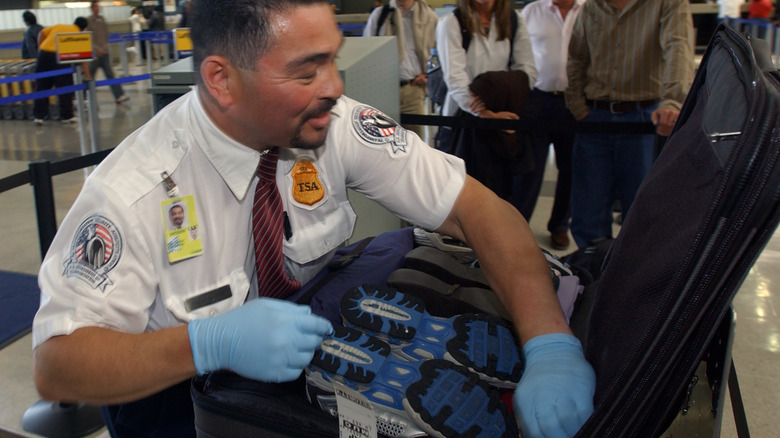
In some cases, the most unexpected items can trigger bag checks. In fact, some of the TSA's biggest adversaries are items that most travelers wouldn't even think twice about packing. Dense foods like peanut butter, cheese, and even yogurt can scan poorly in X-ray machines, so don't be surprised if they trigger a bag search, even though they're allowed. Remember, though, that peanut butter, yogurt, and other foods that can be construed as liquids are subject to standard liquid regulations. Thick objects like books can also block the machine from clearly seeing the inside of your bag, which, again, is likely to trigger secondary screening by hand. The same goes for things like leaded glass and aluminum foil, both of which can wreak havoc with screening sensors.
A final warning about packing everyday powders, such as creatine, protein powder, and baby formula: My husband and I have both faced secondary screening for these items over the years, though less frequently now that our daughters have outgrown the formula days! But be prepared if you have little ones. From travelers' perspectives, all of these everyday items are harmless. From the TSA's perspective, they have a duty to keep all passengers safe, even if a manual inspection ends up being superfluous. To avoid extra screening, consider removing the types of items detailed here and placing them in a bin. This foresight can save you from being delayed at your checkpoint.
The TSA doesn't actually want you to arrive too early
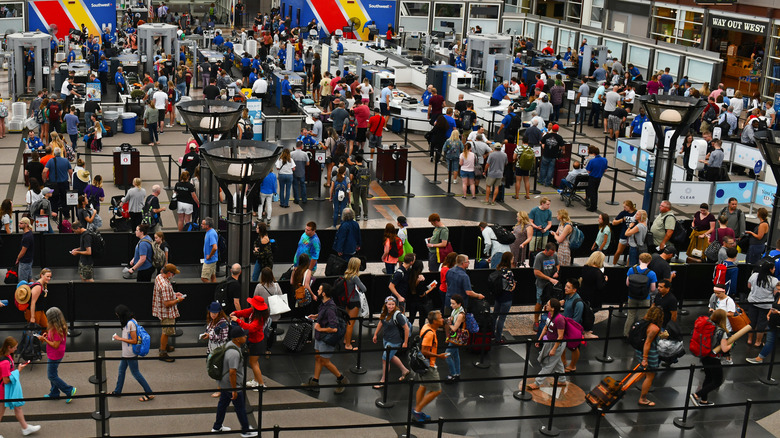
It might seem counterintuitive at first, but arriving at the airport extremely early can actually be detrimental to your (and others') travel plans. TSA officials have shared that "early bird" travelers who get in the security line more than the requisite two hours before their flights contribute to congestion, rather than helping anyone get to their gate faster. This is particularly true during peak travel times, like long weekends and major national holidays. When too many passengers get to the airport too far ahead of their recommended arrival window, it creates unnecessary crowding in security lanes that are designed to hold a specific number of passengers. If, however, flyers all arrived within their recommended windows, the expected number of people would be flowing through security throughout the day.
While this is not an entirely foolproof concept, it absolutely has merit. An excess of passengers slows down the entire security process, creating a bottleneck that impacts not only the extra early arrivals but also those who get in line at the appropriate time to make their flight. The worst-case scenario, of course, is that massive congestion could cause people to miss their boarding times entirely. While it is generally accepted that a two-hour window is enough time to get through security and to your gate before any domestic flight, you may actually require more or less time than that based on travel volume, your departure airport, and the time of day you're flying. The TSA advises checking guidance from your airport and airline before you leave your house.
Your bin order really matters
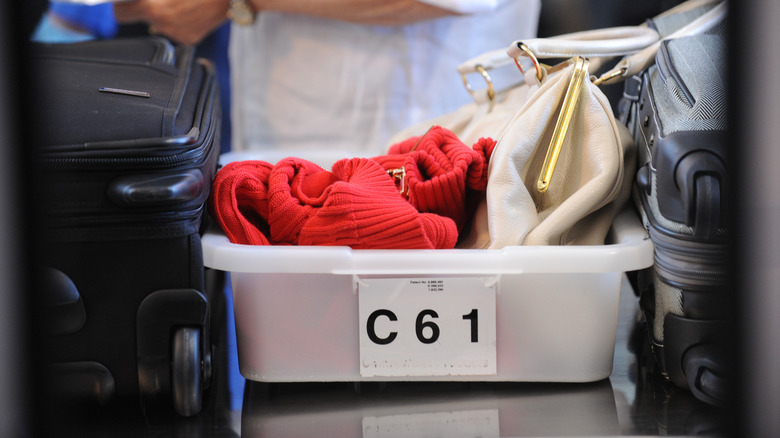
Most travelers focus on what they're putting into their TSA security bins, but don't give too much heed to the order in which they send them down the conveyor belt. Seasoned travelers know, though, that that small detail can make a big difference when you're gathering your belongings on the other side of the scanner. This is especially true during busy travel times when there's a throng of people rushing to re-pack their baggage. As one Reddit user pointed out, if you're using multiple bins, it pays to think strategically. Sending your backpack or personal item first means it will come out first, so you won't find yourself awkwardly juggling your laptop, iPad, wallet, and other items (you know you've done it). This is a simple, yet brilliant, move that will improve your security experience every time.
Commenters on the original post agree, with one person quipping: "This is a great hack. I do it too, then I stand impatiently on the other side waiting for the rest of my family." Another wrote, "I do the same as OP, it's a lot more convenient at both security and throughout the trip." Thinking about your bin order on the conveyor belt is particularly helpful at crowded checkpoints, where your subsequent bins might have gotten pushed behind other travelers' belongings. This saves you the hassle of standing with a pile of junk in your arms while you wait (especially frustrating if you're trying to handle young children or nervous companions!) This is a simple adjustment, but once you start, you'll wonder why you didn't do it sooner.
TSA agents care about efficiency above all else
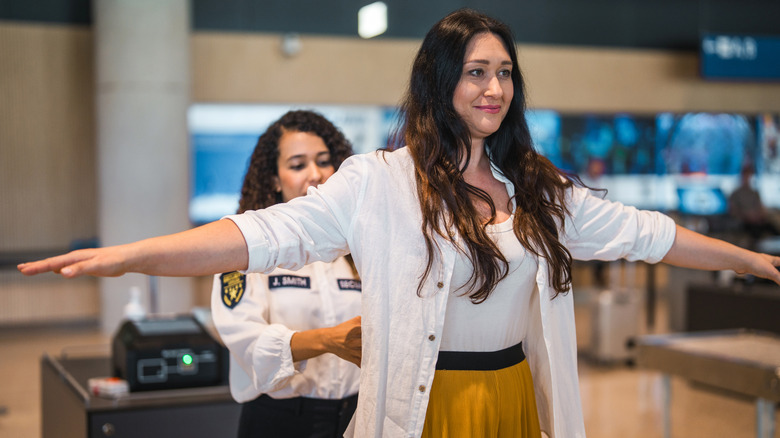
Sometimes, travelers assume that TSA agents are laser-focused on catching every small mistake, but in reality, their main goal is to keep airport security lines moving safely and productively. Across all sites, the TSA processes an incredible 2.5 million travelers per day; the smoother each line flows, the better the experience is for agents and passengers alike. This means that following verbal instructions quickly and correctly is often far more important than doing everything right on the first try. Officers know that some people are first-time flyers and that others have serious travel anxiety. If you forget to take off your belt or leave your laptop in your bag, they're used to it! These things happen all the time.
What matters is how you respond when a TSA agent directs you. Blatantly ignoring instructions, hesitating to do what the officer asks, or becoming combative in any way could trigger additional screening. Not only does this delay you from reaching your gate, but it pulls the officer away from their regular duties and leaves their lane short-staffed until you've been cleared to move onto the next stage of the screening process. TSA officers are trained for efficiency, and cooperating with them is the easiest way to help them do their jobs properly. If you want to get through the checkpoint quickly and start enjoying your trip, don't be afraid of making a mistake in the security line. Just remember to listen carefully to instructions if you do!
Pets do NOT go through X-ray machines
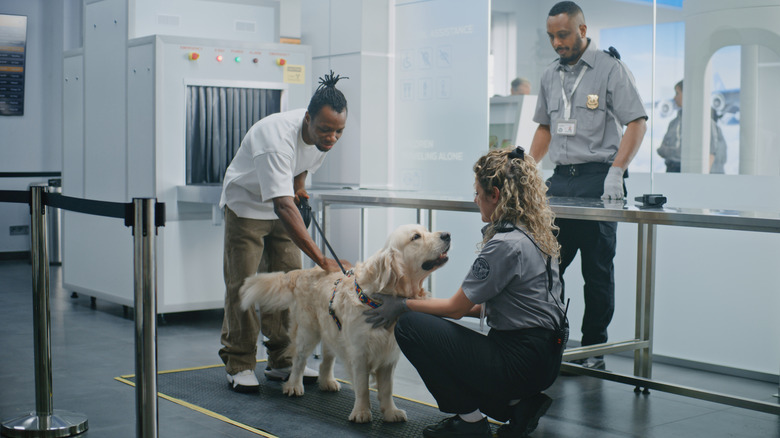
While there are a lot of things the TSA wants you to know about flying with pets, perhaps one of the most important is that animals should never go through the X-ray machine at a security checkpoint. The TSA acknowledges that people sometimes don't know what to do with their pets (or even their human children!) and occasionally place them on the conveyor belt! But furry companions should always be removed from their travel carriers before the carrier itself goes through the scanner. Instead of sending your pet through the X-ray, a TSA agent will advise you to either carry your animal through the metal detector or walk them through on a leash, depending on the size of your animal and the equipment you have with you.
Part of the confusion in this scenario comes from how quickly the security moves once you arrive at the bin and conveyor belt area. Travelers, especially if they are not used to having pets with them, sometimes place the entire carrier on the belt without even fully comprehending what they're doing. The TSA has been clear, however, that there is absolutely no need to send a pet through an X-ray machine. Remembering this can save you from a potentially major blunder next time you fly with Fido or Fluffy.
There's a lot you can do before you leave home
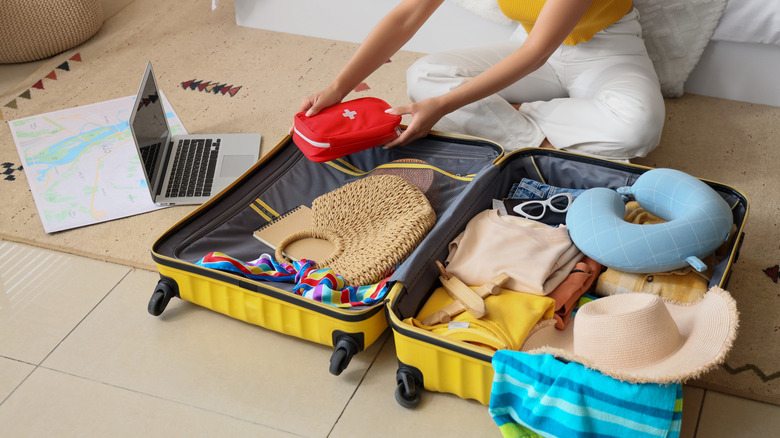
While it might seem obvious to make sure you're ready to go, many travelers fail to properly prepare for airport security before they leave home. The biggest TSA secret, as a matter of fact, is that a great experience starts well before you arrive at the airport. Seemingly small decisions, like what you wear, how you pack, and where you keep critical items, can have a huge impact on how smoothly (or not) you get to your gate. Start with easy access to important items. Keep your government-issued ID, boarding pass, and phone in an exterior bag pocket, like in this Target option (this is the travel backpack I personally use, and I love all of the pockets for organization!) Digging through your bag when you approach the TSA agent at the counter is stressful and easy to avoid.
As we mentioned earlier, your outfit also makes a big difference. Practice removing any layers neatly and quickly in front of your mirror at home. This is especially helpful if you often get nervous while you're situating your bins. Muscle memory is a great thing in this situation! The TSA even provides official pre-travel checklists to help passengers get ready. The more organized you are before you leave your residence, the more likely you are to have the TSA checkpoint experience you've always wanted.
Methodology
I used my own knowledge of flying, combined with a variety of high-authority sources and first-hand traveler tips to put together this guide. The official TSA website, CLEAR, Frommers, Fortune, The Points Guy, the Associated Press, Today, LifeHacker, and Reddit threads all played a role in compiling valuable TSA security checkpoint tips for all travelers.