
Common Clothing Mistakes To Avoid On A Trip To Ireland
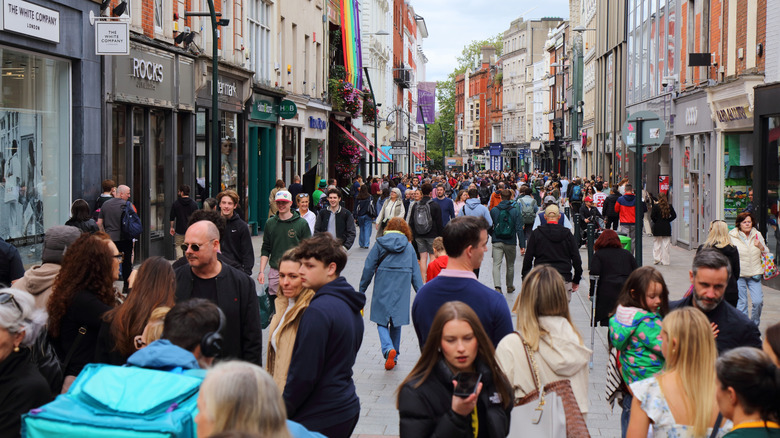
The Republic of Ireland is a land of remote escapes with scenic coastal views, of vibrant urban nightlife, and rolling fields of green that hit home with stark appeal. It is a moderate land that shares much of its weather with its closest neighbor, the United Kingdom. The weather is mercurial, and seasonal norms are more like they're scribbled on the back of napkins, not written in the iron-clad guarantee of neolithic standing stones. Knowing what to pack for any given situation is as much an art as it is a science.
Meteorologists define the climate as temperate maritime, which, in layman's terms, means it is neither particularly warm nor particularly cold. Few people take time to swim in the surrounding waters, although it has long been a hot spot for suitably attired surfers thanks to its extensive coastline and prevailing winds. Summer hikes such as a trek along the Burren Way offer some of the most breathtaking views in the world, but the assumption that the weather will behave itself finds itself debunked on a regular basis. In Dublin's pubs and clubs, people of all walks of life rub shoulders, but Dublin is increasingly a city of an urban elite, and in its upmarket corners, dress codes have begun to encroach.
There's also footwear to avoid, hats that are best left at home, and half a dozen other items of clothing that require more than a little consideration before they take up valuable luggage space. Such items vary by season, yes, although not as religiously as you might expect. Dozens of years this writer has spent both summering and wintering in the Emerald Isle have informed much of the advice below, but time has been taken to consult other experts to create as accurate a guide as possible.
Wearing the incorrect footwear
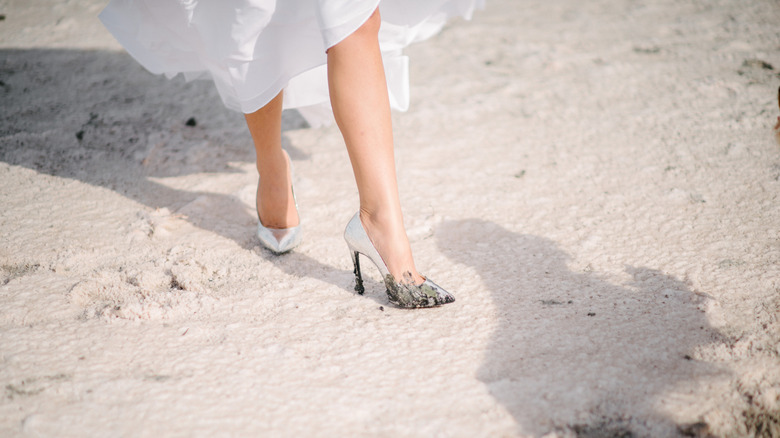
There are few packing mistakes that carry quite as much weight as bringing along inadequate footwear. Wearing sandals is one of those things you should never do in a rainforest, for example. Attempting to enter a London nightclub in a pair of sneakers is a fantastic way to waste time queuing in the rain. Heels and ice don't mix, breathable gym shoes abhor puddles, and as for Crocs, well, the less said about them, the better.
A trip to Ireland may take many different forms. For some, it's a simple city break, usually a visit to Dublin, Limerick, Galway, or Cork. Such urban explorations tend to be easy on the utilitarian nature of your shoes. Some pubs, clubs, and restaurants allow sneakers, or trainers as they call them, but there are definite exceptions to that rule, and they carry inherent dangers regardless. Although rainfall in Ireland is not particularly heavy, it shares a propensity to drizzle just as it does in the neighboring island of Britain. Rainfall is heaviest over the winter, but using the seasons as a guide is something of a fool's errand. The point is to bring comfortable shoes in general, including options that are a little "nicer" to adhere to dress codes.
In farming communities, however, Wellington boots or "wellies," are a common enough sight, but they are too bulky for most suitcases, so your best bet is to opt for waterproof shoes you don't mind getting dirty, with good traction, and are comfortable to hike long distances. Hiking trips through County Clare offer bucket-list worthy coastal views but are also full of mud and viscous peat. Shoes specifically designed for walking, hiking, and weather are not just a luxury, but a necessity.
Wearing shorts instead of trousers

The average temperature in the Republic of Ireland does, of course, fluctuate by season, but the swings are less severe than you'll find in most places. Spring temperatures clock in at around 50 degrees Fahrenheit. Summer adds around 10 degrees to that baseline. The coming of fall brings a gradual decline back down to spring levels, while over the winter, temperatures tend to hover around the high 30's or low 40's. With a relatively small landmass — the island of Ireland is roughly the same size as South Carolina — you'll find little variation in temperature year-round, but in coastal areas, the wind chill is a definite factor, especially in the West. It all points to a bias towards long trousers and warmer skirts.
It's not that shorts are any kind of taboo over in Ireland, it's just that opportunities to wander around feeling free and easy are few and far between. Ireland has a lot of coast, and there are plenty of beaches to choose from, but what is lacking are days warm enough to sit around on them. Here, the ocean is a place to walk alongside, not to swim in. Sure, you'll find charming beach towns with plenty of surf and seafood, but diving into the spray without protective clothing is something of an acquired taste to say the least. Even wandering around urban areas puts you at risk of running afoul of meteorological uncertainty. Your bright sunny morning can turn into a blustery afternoon with little or no respect for your wardrobe choices. If you are lucky enough to find yourself in the middle of what Eire takes for a heatwave, the option to purchase some shorts is always available, but, in most cases, it's a safer bet to keep your knees hidden.
Choosing bulky garments over layers

The decision to bring one big coat or jacket for those just-in-case moments is a classic packing mistake. True, if you are visiting an extreme weather location, you're going to need to think long and hard about what to bring. For those visiting temperate Ireland, however, it's more about options. First, the science of it all.
Anyone who has taken a dive into cold bodies of water can attest to the rapidity with which heat bleeds out into the surrounding water. Thermodynamics is a harsh mistress, and, although water is technically a poor conductor of heat, air is even less proficient at moving it from one place to another. Wearing layers allows you to trap air between them, and doing so provides excellent insulation. They are also definitionally modular. Too hot? Take off a layer. Too cold? Put another on. Sweating is, of course, our body's way of keeping us cool, and in less temperate climes, it can increase the risk of hypothermia.
In Ireland, however, under normal circumstances, there's little chance of your body becoming dangerously cold. True, there are 209 mountains scattered across the island, and nobody is suggesting you should attempt to climb said peaks without specialist clothing. For the most part, however, it's more about staying comfortably warm without committing the cardinal sin of attempting to pack for every conceivable situation. A light, breathable outer jacket combined with a shirt and sweater works well for most scenarios. For shoulder season excursions — or even a winter vacation — you might also want to include a thermal under layer with outer garments made of wool or fleece for that extra layer of coziness.
Leaving the waterproof jacket at home

The art of packing for a trip is as much about anticipation as it is research. The chances of the weather being anything other than hot and dry are pretty slim on a trip to a stress-free Mediterranean island for a summer vacation, for example. But those wishing to spend a winter week in one of Canada's off-beat Yellowknife neighborhoods, however, had best grasp the full meaning of the term subarctic, or their trip might be a miserable experience. And, visitors to Ireland need to understand one simple concept: The weather is a fickle beast and you're almost certainly going to get rained on.
Ireland is the seventh rainiest country in Europe, lagging only slightly behind the notoriously damp United Kingdom, though still far behind the worst offenders, Iceland and Switzerland. However, the island's impressive annual precipitation of around 50 inches tends to take the form of random showers rather than a glut of rain over a particular season. In truth, notions of immunity from such trends when planning a trip over the summer smell faintly of hubris. So yes, it's a good idea to bring a waterproof jacket.
There are, of course, some mitigating factors. To start with, the summer months, predictably enough, are the driest, and there is always a chance that your light, water-resistant breathable jacket will spend the entire vacation folded up in your suitcases. Fall is a lot wetter, and the eastern, mountainous side of the island gets much more rain than the west. It is, however, just a simple truth that extends beyond anecdote that the weather can turn on a dime, and those who come prepared for such a reality tend to have a better experience overall.
Bringing along inappropriate headwear

There was a time when hats were near-compulsory parts of a gentleman's attire, but in the modern age, they are most assuredly optional. True, the trilby all but vanished, but other forms of headwear, most notably the baseball cap, became increasingly common, especially in America. In Ireland, however, headwear is rarely worn as a fashion statement. Colder, and blessed with far less sunshine, here the simple cap offers little in the way of utilitarian value.
So, fewer sunny days means less overall cap weather, but there are a couple of other things to consider. To begin with, Ireland is a windy place. It bears the brunt of Atlantic storms, its slap bang in the path of the jet stream, and by the very nature of being an island it is in possession of a lot of exposed coast. In certain parts of the country, most notably the north, you might find as many as 50 gales happening on an annual basis, and, as most people know, gales and baseball caps — along with broad-rimmed cousins such as Stetsons, Panamas and boaters — simply do not get along.
Meanwhile, keeping yourself warm is another factor. Winter temperatures average out around the low 40s, but dips that take things below freezing are not unheard of. Throw a little wind chill into the equation and the idea of bringing along a tight fitting, wooly hat starts to sound like a genius-level move.
Choosing the wrong colors

Wearing green while visiting the Emerald Isle is not a crime, but tourists who take things too far might get a funny look or two. To be fair, the association with the color makes perfect sense. Everywhere you turn, things grow and flourish, and green was a sacred color to the Celtic people; when they arrived in Ireland sometime around 500 B.C.E., it must have seemed like a magical place, which was all well and good for most of the island's history, but things have moved on.
The problem is that what was once an association with a cultural reverence for nature has become something of a stereotype. Yes, people dress in green livery on Saint Patrick's Day, but for the rest of the year, wandering around covered in four-leaf clovers and shamrocks is frowned upon. In fact, dressing in green head to toe might even offend some locals. Meanwhile, orange becomes a problematic choice during the Saint Patrick's Day celebrations. Where green is the historical shade of rebellion in Ireland, orange represents subjugation at the hands of their ancient enemy, England. The details of the historical feud are less important that acceptance of the reality of Ireland's sectarian past. Whether you are aware of its historical significance or not, wearing orange on the March 17 sends out signals that are best avoided.
Opting for the comfort of yoga pants and flimsy workout clothes
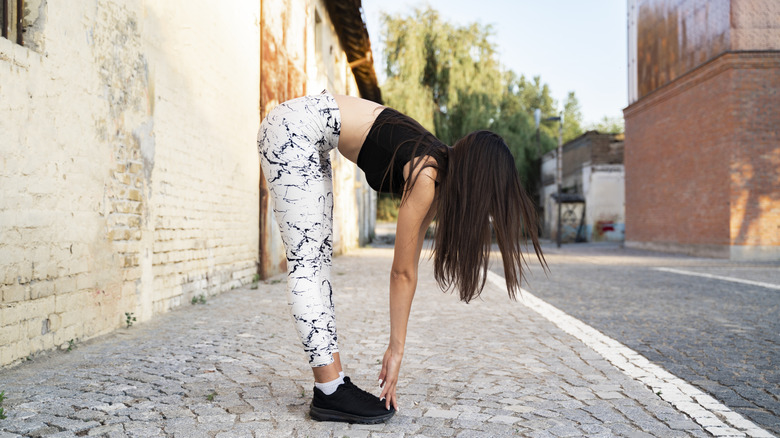
In both Ireland and the United Kingdom, yoga pants are usually called jogging pants, leggings, or, more colloquially, simply as comfy pants. It's an inaccurate descriptions since yoga pants are debatably a type of leggings, but not all leggings were made for yoga. Still, bringing a pair or two along might not have quite the same utility as they have at home. To start with, there are a couple of aforementioned issues to consider: Ireland is cold and windy, and yoga pants were not designed to keep you warm. Plus, there are dress codes to consider when planning for a night out. So, there's that. But there are a few other reasons why you might want to leave them at home.
The Irish don't really dress any differently from other Europeans who inhabit a similar climate. Yes, skimpy attire on a Friday night is common, but for most tourist activities, something loose, comfortable, and warm is a safer option. Leggings, or yoga pants, when worn, are usually worn in conjunction with a skirt to add an extra layer of protection against the cold and wind.
There's also some classism at play here. It's not as pronounced as it is in the United Kingdom, but jogging pants do carry some hidden social markers. Sweatpants are worn indoors for comfort, and you'll definitely see people jogging about in them if the mercury dips below a certain level, but they are rarely worn out in public for any other reason. Doing so is considered — rightly or wrongly — a little slovenly. You won't be driven from villages by an angry mob of incensed fashion police, but nor will you make the best impression on the locals.
Leaving smart attire at home
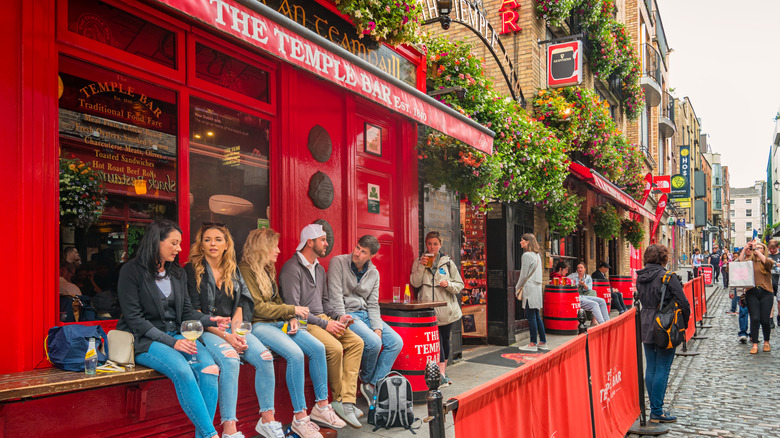
Ireland sports a population of less than 3.48 million people, and, although most of the islands consist of rolling fields, quaint villages, and little else, the rural population makes up only a third of that total. The rest of the population lives in urban areas. Out in the sticks, there is an emphasis on comfortable, practical clothing. In major cities, however, there are times when you simply must dress up.
Such notions can be overstated. The nightlife in Ireland, especially in large cities such as Dublin, is something of a relaxed affair. The capital city is packed with urban thrills and in possession of an irrepressible spirit, and as such, its adherence to the formalities of other major urban centers is less pressing. A visit to a traditional Irish pub is generally dress-code free; few people will look twice at someone wearing jeans and sneakers. Nightclubs are a different matter: You might get away with some smart sports shoes on your feet, but the chances of being turned away are very real.
It's a similar story when it comes to dining out. There are no hard and fast rules here: Most eateries will seat you at a table regardless of attire. Still, upmarket restaurants may insist on smart casual clothing at the very least, and, despite what you may have heard about Irish cuisine, the cosmopolitan nature of its urban centers is such that the foodie scene is vibrant to say the least. There are dozens of Michelin-starred places to choose from, and you might want — or perhaps even need — to look your best if you intend to try any of them out.
Wearing too light colors
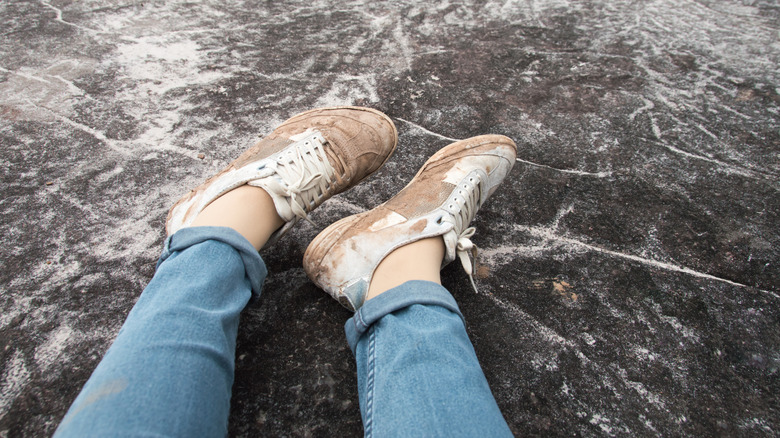
Nobody wants to spend their vacation waiting for essential travel wear to come back from the dry cleaners. Visitors to Ireland who take the time to travel down one of the world's longest defined coastal routes are liable to experience a myriad of sights along the way. Europe's western edge is a place of postcard beauty, rich in Instagram-worthy stopovers, technicolor villages, forgotten coves, and hidden valleys. And mud, lots and lots of mud. Spoiler alert: Light colors and mud do not mix well.
The lowland Atlantic blanket bogs are a precious resource indeed, and Ireland, despite its diminutive size, is in possession of close to 10% of the world's total supply. Wandering through such areas without an expert guide is a foolish thing to do, but even those who visit less visceral parts of the island should be aware of a few simple truths. Peat is sticky, and the chances that your clothes will become spattered with it after only a brief crossing hover perilously close to the 100% mark.
Indeed, the prevalence of earth-tone attire so common to the people of Ireland is no accident. Darker colors handle the terrain better; white shoes, and those snazzy cream-colored trousers that generally travel so well may take on patterns reminiscent of some of Jackson Pollock's less chromatic paintings within moments of your first cross-country hike. Urban explorers might escape the trials of trying to get a peat stain off a pair of sneakers, but other perils await, nonetheless. Puddles lurk in the shadows, and the narrow streets of ancient cities invite disaster to those who fail to take a step back whenever cars pass by on one of those prototypical showery days.
Methodology
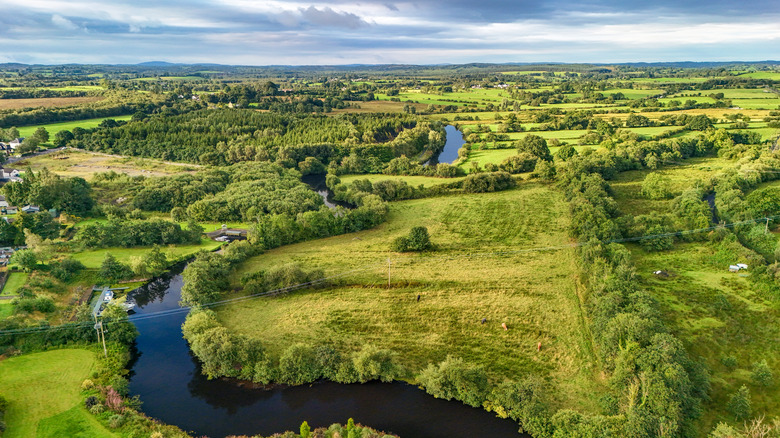
Ireland's proximity to the island of Britain and its shared history and diaspora mean that for many Brits living in the north of England, trips across the sea are a common thing. Summers spent with cousins, winters pre-loaded with Christmas excursions and fall vacations, camping in the north of the country; such experiences form the backbone of this article from the author's perspective. Still, where data of a non-anecdotal nature was required, it was taken from high-quality sources. Official meteorological sites were consulted, historical records were checked, and the occasional first-hand account of what not to wear while visiting the Emerald Isle were included for good measure.