
The World's Most Beautiful Destinations That Are Practically Sun-Free
Getting a healthy dose of sunshine can help boost your mood, just ask anyone who takes vacations in sunny places. However, traveling to hot climes can also bring drawbacks. Excessive UV exposure can cause major vacation mishaps like painful sunburn. If you're one for constant sunbathing, taking part in watersports, going on boat trips, and so on, you have to constantly slap on sunscreen and try to keep hydrated. And if you're just sipping piña coladas by the pool, who can be bothered with that?
The truth is, everyone needs sun, but we don't need it all the time. Some people even prefer to take vacations to places where there is little to no sun. And why not? There are plenty of places across the world where sunshine is rare — and some of these places are stunning. Northern Europe always springs to mind when you think of weather like this. The U.K., Scandinavia, and the Baltics are all destinations you can visit if you want to avoid the beating sun.
But there are many others around the world where you can escape the intense heat, enjoy fewer crowds, or take in a tranquil and moody atmosphere. These places offer cool weather for walking and hiking, peace among dramatic scenery, and weather like snow and fog that some people just prefer. We've looked at some of the least sunny places across the world and assessed their beauty to come up with some stunning destinations where you can have a virtually sun-free vacation. Here are 10 of the best.
Tórshavn, Faroe Islands
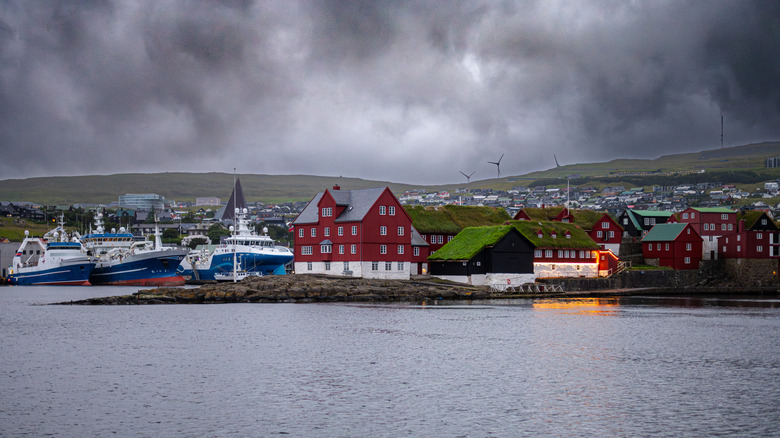
The Faroe Islands sit in the middle of the North Atlantic, and it's a place where the fog rolls in so often that the locals have at least three dozen different words for it. Tórshavn is the capital of this 18-island archipelago. It's a small city of just over 14,000, and cloud clings to its surrounding mountains and rarely lifts. The sky is a near-permanent gray — Tórshavn ranks as the world's cloudiest city. It receives just 840 hours of sunlight per year, while howling winds can reach upward of 70 mph, blasting waterfalls off cliffs and flinging them upward.
Tinganes, a small peninsula that juts into the harbor, has been the seat of the Faroese government for centuries. Its deep red wooden buildings are among the oldest in the city. In the streets behind, houses huddle together, their roofs thick with grass, walls blackened with tar, and bright framed windows catching what little light breaks through. The small, whitewashed Tórshavn Cathedral is another of the city's quaint attractions. It has stood there since 1788, while the nearby Skansin Fort was built four centuries ago to protect the islands from pirates, and its grass-thick ramparts are still home to brass cannons and a weather-beaten lighthouse.
Beyond Tórshavn, Vidarlundin Park offers woodland walks among pines and spruce, while a two-hour hike leads to Kirkjubøur, with its church dating back to the 13th century. The trail follows cairns across open meadows and boulder fields, and under the low cloud, the colors take on a deeper tone. The greens are richer, the grays softer, and up ahead are the vague outlines of mountains half lost in the mist.
Ísafjörður, Iceland
Reykjavík is the world's most northerly capital — and it's also one of the cloudiest. Iceland's largest city sees just about 1,300 hours of sunshine breaking through in an entire year — and in winter, daylight shrinks to about five hours a day. In those darker months, the Northern Lights ripple and glow across the sky. However, head closer to the Arctic Circle in the Westfjords, and the skies are darker, and those aurora nights burn even brighter.
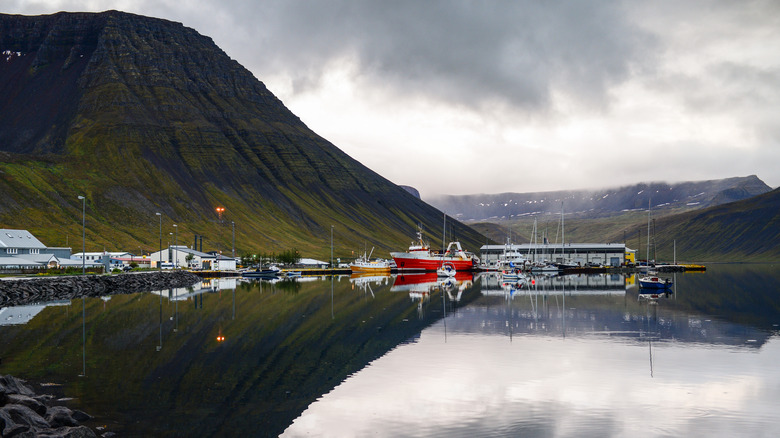
Ísafjörður, pronounced EE-sah-fyor-thur and meaning "Ice Fjord," might only be home to around 2,800 people, but it's still the most populated settlement in the Westfjords. The town is huddled on a narrow strip of land and almost walled in by steep, brown-rocked mountains on three sides. They are quite incredible to look at, but for around two months in winter, the sun struggles to rise above them, so its light never reaches town.
When the sun finally manages to creep high enough around the end of January, locals mark the occasion with pancakes and sólarkaffi, or "sun coffee." But even after this event, the skies are still overcast for most of the year, and the ground is white with snow for the most part, too. And with relentless wind, getting there isn't always easy. Sometimes, the airport is the only link to the outside world.
Lütschental, Switzerland
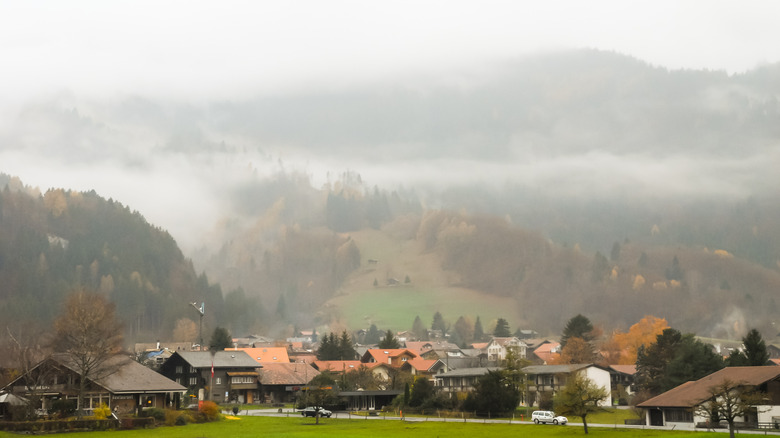
Lütschental is a tiny village of under 250 people in the Bernese Oberland. It's tucked into a valley in the Jungfrau region — the tourist heartland of the Swiss Alps, and with the Jungfrau massif rising high in the south, the winter sun cannot clear the peaks from October 21 to February 22. For four months, direct sunlight doesn't reach the village, which is one of Switzerland's longest sunless periods.
The village sits within the Jungfrau-Aletsch-Bietschhorn UNESCO World Heritage Site, and in those shadowy months, the landscape takes on a different character. Colors flatten, edges blur, and snow-loaded forests close in around the village. Timber farmhouses scatter across the white valley floor, while the dark waters of the Black Lütschine River thread through the valley. It's fed by the Upper Grindelwald Glacier and runs for about 12 miles before feeding into the turquoise waters of Lake Brienz.
The Jungfrau region also offers around 125 miles of snowshoeing trails. They wind through frozen forests and open moorland, while the peaks of Eiger and Wetterhorn loom above. There are about 215 miles of ski trails in the area, too, and cable cars run year-round. But the hiking trails don't reopen until late May, and by that point, the sun has returned.
The Highlands, Scotland
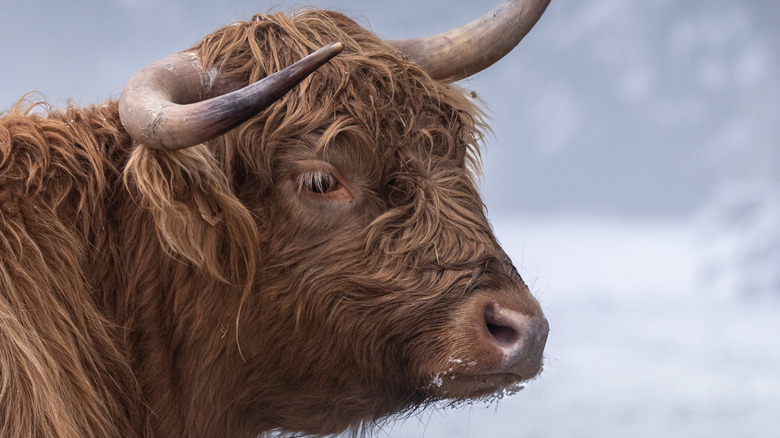
U.S. News & World Report ranks the Scottish Highlands as the best place to visit in Europe — but it's far from being a sunshine destination. The Highlands average under 1,100 hours per year thanks to warm, wet air that rolls off the Atlantic. At Cape Wrath on the far northwestern tip, just 36 minutes of sunshine were recorded in 1983 across the whole of January. In fact, across the entire region, rain falls on more than 250 days per year.
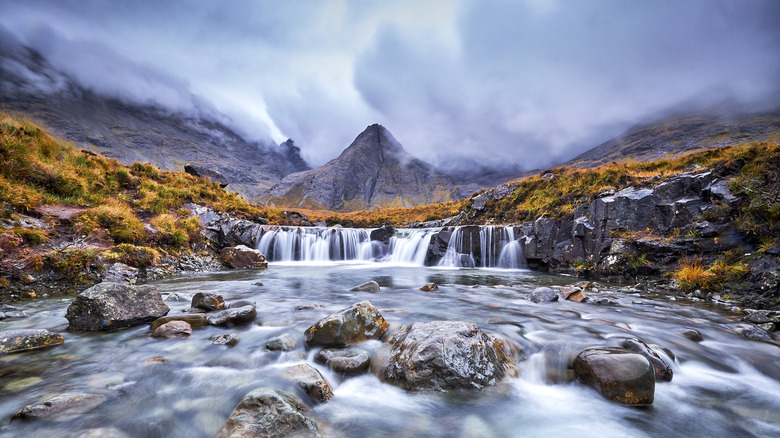
What that means at ground level is landscapes full of mood, romance, and ethereal beauty. Lochs sit dark and still beneath low skies, while heather fades to a deep, bruised purple in the flat light. The munros (mountains above 3,000 feet) disappear into the mist, and the silence — save for the distant rumbling of a waterfall or paddles gently hitting loch waters — is deafening. The Highlands of Scotland are one of the emptiest corners in Europe. You'll often have the rugged coastal drama of the Isle of Skye, the glacier-carved valley of Glencoe, or the wild plateau of the Cairngorm Mountains to yourself, and they all look their best under brooding skies.
You'll never tire of the scenery in the Highlands, but there's plenty to keep you busy when you need a change. The area is one of the best whisky destinations in Scotland and home to some of its oldest distilleries, including Dalwhinnie, Glenlivet, Oban, and Strathisla. Castles abound, and the pubs are warm and welcoming. And Ullapool, once named the U.K.'s "most beautiful" village, is the perfect base to explore — just remember to bring your waterproofs.
Belmullet, Ireland
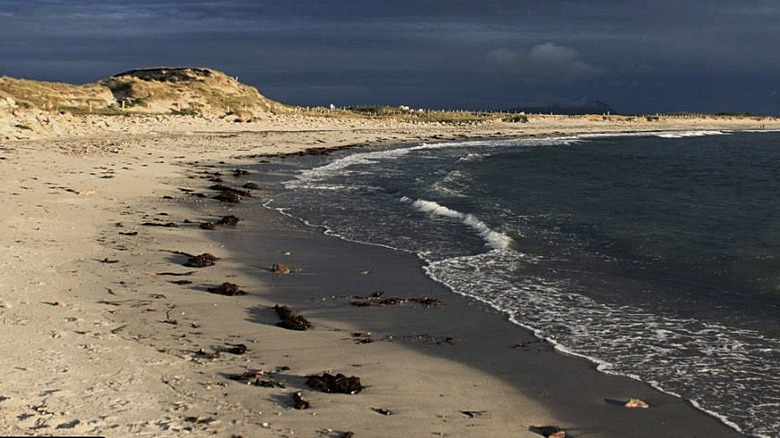
Ireland might be one of the least sunny countries on the planet, but it's also one of the most scenic. And to experience the least sunny corner of one of the least sunny countries, head to the town of Belmullet on the County Mayo coast. It frequently records the country's lowest monthly sunshine, with December 2025 a prime example when just 29 hours were logged.
But it is regarded as a remote hidden gem, and as it's a stop on the Wild Atlantic Way, you can expect dramatic scenery at every turn. Brooding clouds usually hang low over the area's endless beaches, giving the light a soft, silvery quality that contributes to this coastline's end-of-the-world mood. Surfers are drawn to the powerful swells, and six miles north of the town is the Erris Head Loop, which offers hikers a serene coastal trail full of dramatic cliffs and untamed landscapes.
Head to the west coast for boat trips to the Inishkea Islands, which bring more sandy beaches on top of turquoise water and nesting puffins. Just a short drive north to Dún na mBó, you'll find a spectacular blowhole that erupts and sprays as waves crash into the cliffs below. Further east, the dramatic headland of Benwee Head looks out toward the Stags of Broadhaven, a stunning group of jagged rock stacks that jut dramatically out of the sea. It's quite simply a place where even the dimmest days feel strangely alive.
Bogotá, Colombia
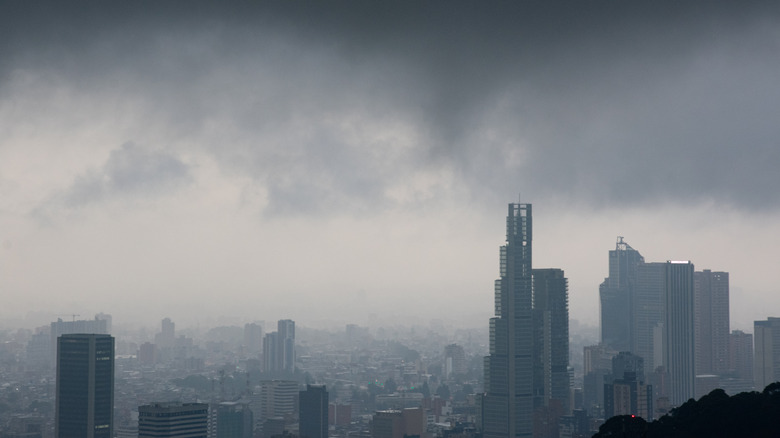
The weather in Colombia's capital, Bogotá, is so unpredictable that the city's evening news doesn't even bother with a regular forecast. Sitting on the Andean plateau at 8,660 feet, the clouds seemingly build at random, the rain may or may not drop, and the sun likely won't appear. But whatever the sky is doing, Bogotá is an underrated destination well worthy of a visit, while Colombia itself is one of South America's most affordable countries.
La Candelaria is worth the rainy weather. This is Bogotá's historic heart and cultural center. Its narrow, cobblestone streets wind between colorful colonial houses, walls bright with murals, traditional restaurants, and fascinating museums — one of which is the Museo del Oro, which holds over 34,000 pieces of pre-Columbian gold. If you prefer wandering outside in the cool air, more than 60 miles of the city's roads are closed to traffic and handed over to pedestrians and cyclists every Sunday in a tradition known as La Ciclovía. Rising above it all from the city's eastern edge is the verdant mountainside of Cerro de Monserrate. Its slopes are wrapped in cloud forest, and the views below are incredible.
However, if you're chasing a truly off-the-beaten-track, sun-free adventure in Colombia, consider the small town of Totoró, about 350 miles southwest. With just 637 hours of annual sunshine, it's the cloudiest place on Earth. It's home to the Guambiano Indigenous people and sits at just over 9,000 feet among hills that rise and fall between farmland and thick forest. Here, you can experience cultural trekking through a landscape that few visitors ever see.
Utqiaġvik (Barrow), USA
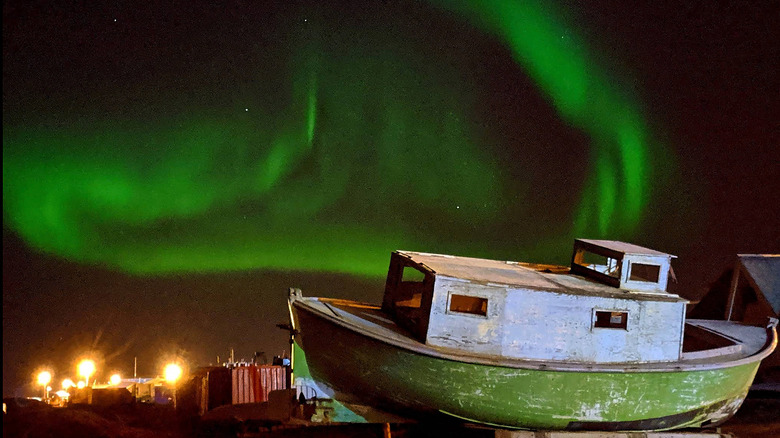
The northernmost city in the United States is Utqiaġvik. Once known as Barrow, it sits right on the edge of the Arctic Ocean in Alaska and is an overlooked destination bursting with breathtaking views. The Iñupiat people have lived off the land and sea there for about 1,000 years, and it's arguably the coldest city in the country, while the wind can also be brutal. Of all things, Utqiaġvik is a desert. Annual rainfall barely reaches five inches, while snowfall sits at about 40 inches. In terms of a sunless experience, when the big orange ball dips below the horizon on November 19, it doesn't reappear for 65 days. But this polar night is not quite the blackout it sounds like. The sky takes on rich shades of indigo and violet, while soft pink twilight colors the horizon, and the snow reflects what little light there is.
Alaska, of course, sits within the auroral oval, and the Northern Lights put on their show from August through April. In Utqiaġvik, it sweeps overhead in bright ribbons of color, shifting and folding across the vast Arctic sky. On the ground, the long nights are a time when the Iñupiat share stories and legends passed down through generations, and in February, the Kivgiq, or the Messenger Feast, draws traditional dancers, musicians, and storytellers from across Alaska and its Arctic neighbors, Canada and Greenland. If you visit Arctic Alaska during the polar night, there are a range of other activities you can take part in, including ice fishing, cross-country skiing, and snowshoeing. Just prepare for temperatures that can plunge as low as minus 50 degrees Fahrenheit.
Malabo, Equatorial Guinea
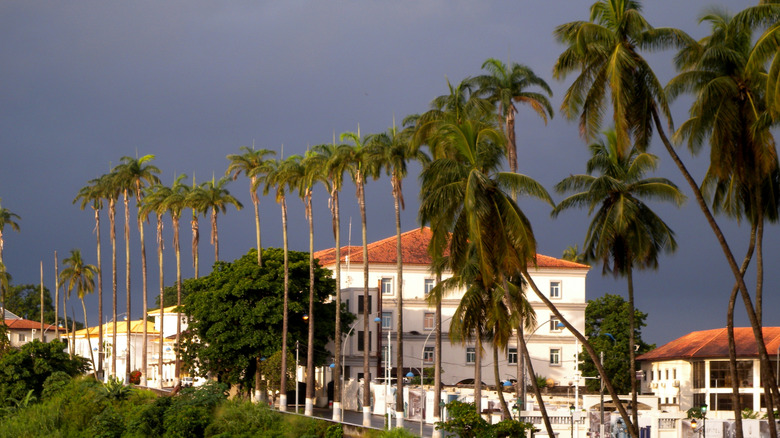
Equatorial Guinea is the only country in Africa to have Spanish as its official language, and Malabo has long served as its capital. However, in January 2026, a presidential decree officially designated Ciudad de la Paz as the new capital — perhaps because Malabo is among the most overcast cities of any country. It averages just 1,020 hours of sunshine in a year, and fog drifts in even during the drier months, while rain falls on about 319 days a year. Yet the thermometer rarely strays outside the 75 to 83 degrees Fahrenheit range, so the air is actually thick and humid as opposed to cold and gray.
The city occupies the northern shore of Bioko Island, and just under 300,000 people go about their business there at a pace similar to a small town. However, Equatorial Guinea is among the least visited countries in the world, but if you make it, you'll be one of the few to see sites like the neo-Gothic Catedral de Santa Isabel. It's named after the city's former colonial identity, and the twin 40-meter spires and stained-glass windows on display are unique in Africa.
Outside, the streets are quiet and lined with palm trees and shaded plazas, while black-sand beaches fringe the coast. The dormant volcano Pico Basilé rises high above the city at almost 9,900 feet, and you can hike or drive up through its cloud forest to the Church of Mother Bisila perched on the summit. Day trips to the southern end of the island allow you to see turtle nesting on the beaches, while the rainforests are filled with primates and tall waterfalls — and you can enjoy it all under warm, heavy skies.
Lapland, Finland
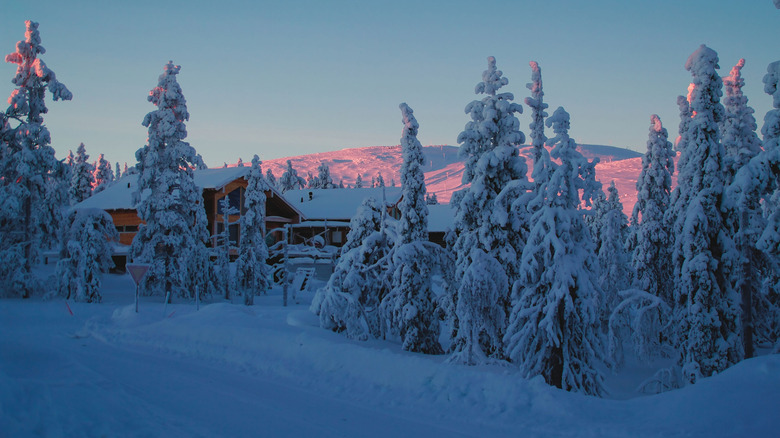
From late fall through May, Lapland lies buried under a thick white blanket of snow. At this time, the forests and frozen lakes belong to the reindeer. By late November, the polar night creeps in, and around Christmastime, it reaches every corner of this area of Finland. It's not complete darkness, though. The sun might stay below the horizon for weeks, but there is a period of dim twilight every day when the sky shifts through violets and blues. When it's at its brightest, it's not much more than a soft, glowing pink spilling across the snow below. This is a phenomenon the Finns call the "Blue Moment" — a short window when the soft light, crisp skies, and white snow culminate in a stillness that makes the landscape look like something from a frozen blue fantasy.
As you might have guessed, Lapland also falls under the belt of aurora activity. On clear nights between September and March, those lights fill the skies. According to the Indigenous Sámi people, who live across Sweden, Norway, Finland, and Russia, those flickering lights are made by a fire fox dancing across the heavens. Sámi guides can take you across those otherworldly landscapes on a reindeer sled and share more stories and traditions with you, including a haunting vocal known as "joik" that's said to summon the ancestors. You can also cross frozen lands and lakes on husky sleds and snowmobiles, but if you want the full Finnish experience, indulge in a hot sauna followed by an ice-cold plunge in frigid water.
Saint Pierre and Miquelon
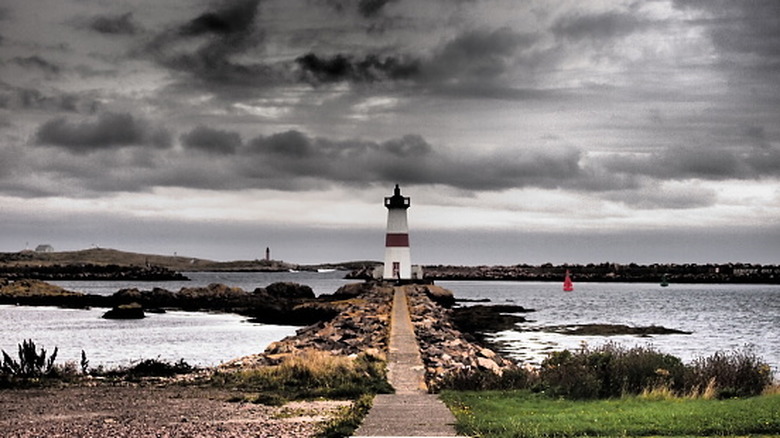
For the last remaining piece of French territory in North America, go to Saint-Pierre and Miquelon. But this is no French Riviera. It's a windswept archipelago in the North Atlantic just off the coast of Newfoundland, Canada. There, the bakeries sell fresh baguettes, the accents are straight out of Brittany, and the currency is the euro. Between the two main islands, there are barely 7,000 inhabitants — and it's the third least sunny place in the world. Rain falls in every month, and fog can roll in with little warning, grounding planes and canceling ferries for days. Even in summer, the temperature barely pushes past 68 degrees Fahrenheit.
Then there's the coastline, raw and strange, with its craggy rock giving way to bog and subarctic meadow. It's all softened and blurred by an almost perpetual mist. But if this sounds enticing rather than off-putting, you'll find plenty to do here. A 10-minute ferry ride from Saint-Pierre brings you to Île aux Marins, a tiny island where 700 fishermen once lived and worked. Nobody lives there now, but visitors can pull sea urchins from the shallows and wander the quiet island's historic sites, including the old school, church, cemetery, and fishing areas.
On Miquelon, wild horses roam free in summer, seals gather in the Grand Barachois lagoon, and around 700 shipwrecks dot the shores, victims of those treacherous rocks and thick fog. If you arrive in winter, expect heavy snow and blizzards and days that shrink to almost nothing. But that fog and gray are not seasonal — they set the scene for all 12 months of the year.
Methodology
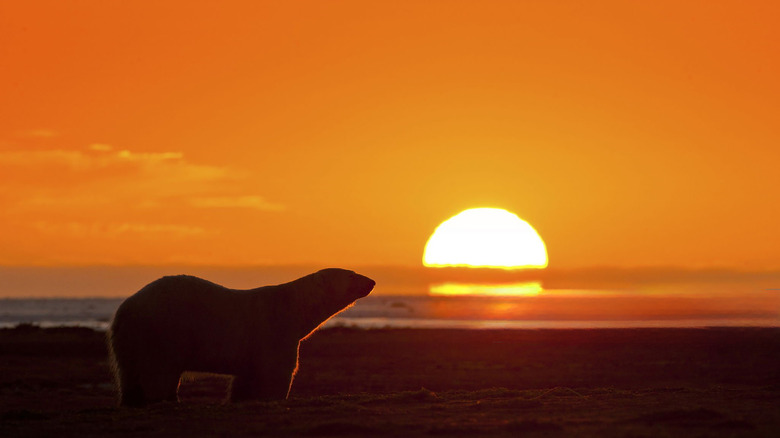
To find these destinations, we looked at the cloudiest cities in the world, as well as countries with the lowest annual sunshine hours. We sometimes looked to find the least sunny spots within those countries, but we only considered places that are thought of as beautiful. We looked to vary the destinations and also included a couple that offer a polar night experience for something a bit different.