
11 Once-Thriving Travel Destinations That Are Now Abandoned
Not all travel destinations stay that way forever. We often think of them as permanent fixtures on a map, but the reality is far more fragile. Some locations fade gradually as people's travel preferences change, leaving these once-busy destinations quieter and quieter. In other cases, the shift is not gradual. Natural disasters, political conflicts, or environmental conditions suddenly make it difficult or impossible to visit again.
What gets left behind can be disorienting. You see buildings and remnants of a previously thriving tourism destination, but its purpose has disappeared. Some of these former tourism spots are still accessible to visitors, while others exist from a distance. They offer a rare, perhaps eerie, chance to see how tourism can shift. These once-thriving travel destinations serve as a reminder that no matter how iconic a destination feels today, there is no guarantee it will still be one in years to come. Whether it's a once-popular island resort that no longer welcomes guests or a city that disappeared after a natural disaster, these abandoned areas offer a unique glimpse into past tourism.
Varosha, Cyprus
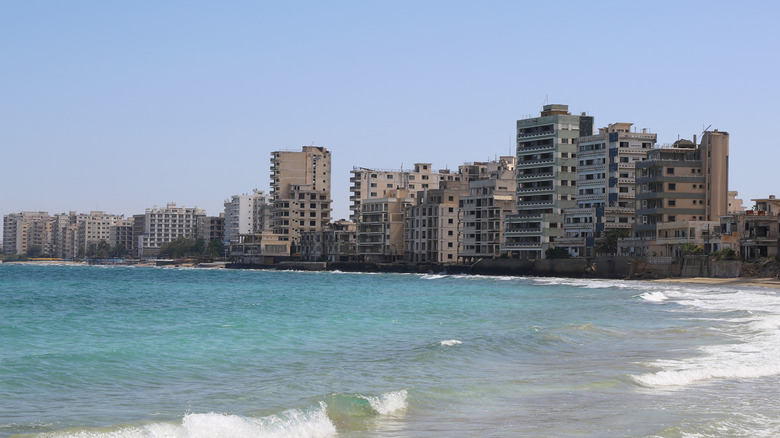
Located on the island of Cyprus, Varosha was a once-thriving Mediterranean beach resort area that is now primarily an abandoned ghost town. Decades ago, people came to Varosha for its beautiful golden-sand beaches, modern high-rise luxury hotels, and a refined resort atmosphere. It was a hub for European sun seekers. Varosha also attracted a number of high-profile travelers, including celebrities like Elizabeth Taylor and Richard Burton. It was the kind of coastal escape where travelers could spend their entire vacation.
However, everything changed in 1974, when political conflict led to an evacuation. The Turkish military invaded parts of the island over ethnic strife between Greek and Turkish Cypriots, and the area was sealed off and declared to be a Turkish militarized zone. It effectively froze Varosha in time. Hotels, stores, and entertainment venues began to deteriorate.
Today, Varosha is not 100% abandoned, but much of it remains inaccessible. A portion of the area reopened to visitors in 2020, sparking interest from travelers seeking out "dark tourism" destinations. Travelers will find guided tours, a few shops, bike rentals, and not a whole lot more. Only 3.5% of the area is open, and the town remains under military occupation. There are concerns about the area's future and whether this partial reopening of Varosha is even legal.
Salton Sea, California, United States
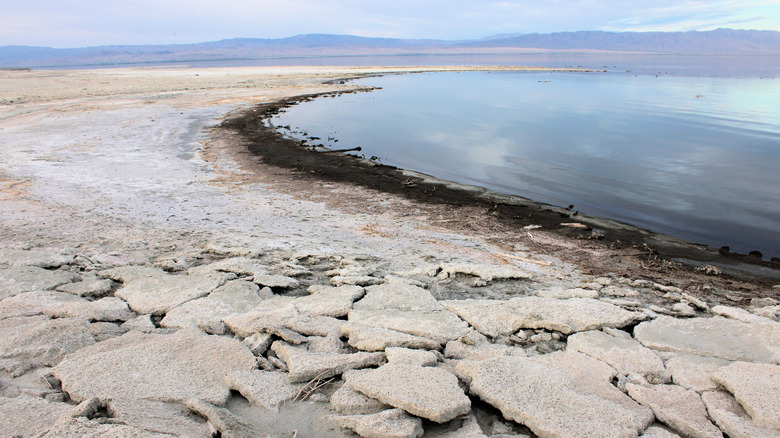
The Salton Sea began forming in 1905 after flooding along the Colorado River caused an irrigation canal breach. For the next 18 months, the river flowed through the Salton Basin, which is below sea level. During this time, the Salton Sea was promoted as a desert getaway, a place where travelers could relax along the water or go boating or fishing. Lakeside communities flourished, with luxury vacation homes and yacht clubs.
However, the growth didn't last. As there was no natural outlet, salt and pollutants gradually built up. That increased the salinity and disrupted the ecosystem, driving away both wildlife and visitors. Fish started dying off, and the shoreline developed a foul odor. As conditions around the Salton Sea worsened, tourism began to decline, leaving some surrounding communities partially abandoned.
People still make the trek to the Salton Sea for photography and apocalyptic scenery. Nearby attractions — such as the under-the-radar wildlife refuge, Sonny Bono Salton Sea National Wildlife Refuge Complex — also attract hikers and birdwatchers. However, as the sea continues to dry up, it's also creating new health risks and environmental concerns for those living in the immediate vicinity.
Plymouth, Montserrat
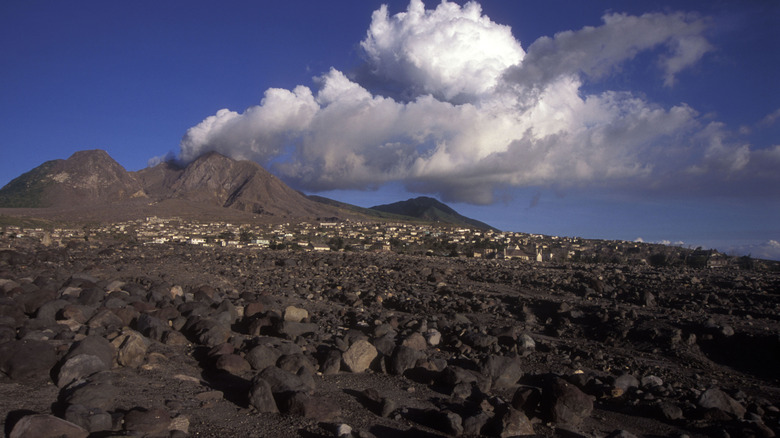
At one time, Plymouth was the capital of the Caribbean island of Montserrat and the center of activity for both residents and travelers visiting the island. During this time, the city was stocked with hotels, restaurants, shops, and access to nearby beaches, making it the place where most visitors arrived and began their trip to the nation. Travelers could easily move between the town and the island's natural attractions, using Plymouth as a base to explore the Caribbean landscape. It was a functioning coastal city that balanced everyday life with steady tourism, giving it an important role in shaping how people experienced the island.
That changed in the mid-1990s when the Soufrière Hills volcano began erupting. A series of eruptions from what had previously been thought extinct covered the area in ash, mudflows, and debris, rendering the city uninhabitable. Residents were forced to evacuate, and Plymouth was later designated part of an exclusion zone. What had once been a thriving destination was effectively abandoned, with buildings partially buried and left to deteriorate under layers of volcanic material.
Today, visitors cannot freely explore Plymouth, but you can still see it on guided tours around Montserrat. Visitors can stop at several viewpoints and see portions of the buried landscape. While it no longer functions as a travel hub, Plymouth remains one of the most striking examples of how quickly a destination can disappear.
Kupari Resort Area, Croatia
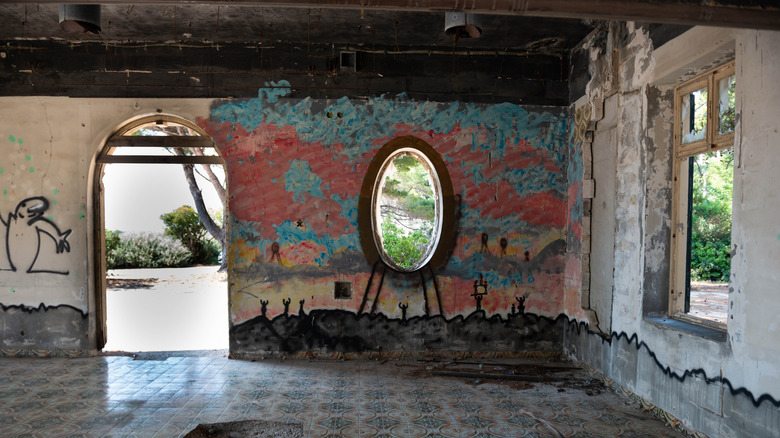
The Kupari resort area in Croatia once offered a quieter alternative to nearby Dubrovnik, with a stretch of Adriatic coastline that made it easy to understand why travelers were drawn there. At its peak, the area was known for its collection of beachfront hotels, many of which were designed to accommodate large numbers of visitors seeking a resort-style stay by the sea. Guests could spend their days moving between the beach and the hotel grounds, with everything set up to make the experience feel easy and self-contained. It had a layout that allowed travelers to arrive, settle in, and stay put for most of their trip.
That came to an end in the early 1990s during the Croatian War of Independence. The resort complex was shelled and bombed, leaving many of the buildings heavily damaged. Several hotels were left burned out or structurally unstable. What had been a functioning destination quickly turned into a line of empty buildings along the shoreline. With the scale of the destruction and the circumstances surrounding it, there was no immediate return to tourism, and the area remained largely untouched for years.
Today, Kupari is still accessible, and some travelers visit while exploring the Dubrovnik region. The beaches remain, and the setting is the same, but the hotels that once defined the destination are still sitting in various states of decay. There are ongoing plans to redevelop the area into a new resort (according to the Dubrovnik Times), and some of the old hotels have now been demolished to make way for future developments. For now, though, it remains a place where the past is still clearly visible.
Burj Al Babas, Turkey
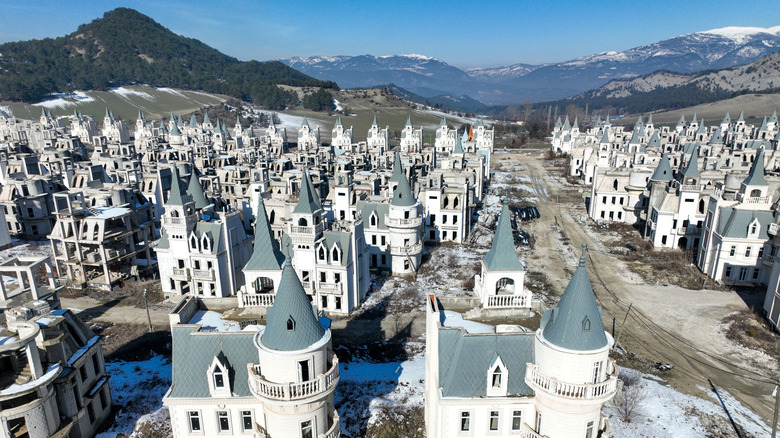
Located in northwestern Turkey, Burj Al Babas was intended to become a luxury resort-style development for international buyers seeking a second home and/or vacation retreat. The project promised spa facilities, shopping areas, and rows of castle-inspired villas, giving it a distinctive, almost theme-park-like appeal. The idea was to create a fully self-contained destination.
That vision never fully came to be. Financial troubles for both the developer and the region slowed construction, and by the late 2010s, the project had stalled. Hundreds of nearly identical villas were left unfinished or unoccupied. Without the infrastructure and ongoing investment required to support tourism or residential use, the site shifted from an ambitious resort concept to a partially abandoned landscape.
Today, Burj Al Babas is not an official tourist attraction, but travelers can still see the fairytale castles of one of Turkey's eeriest destinations. The area is fenced off, and there are guards. It's not somewhere you can go inside and wander around. However, you can stop somewhere safe near the abandoned dream. From this vantage point, the rows of empty, castle-like homes are clearly visible. It remains a point of curiosity for those interested in seeing one of Turkey's more unexpected unfinished destinations.
Elkmont Resort Town, Tennessee, United States
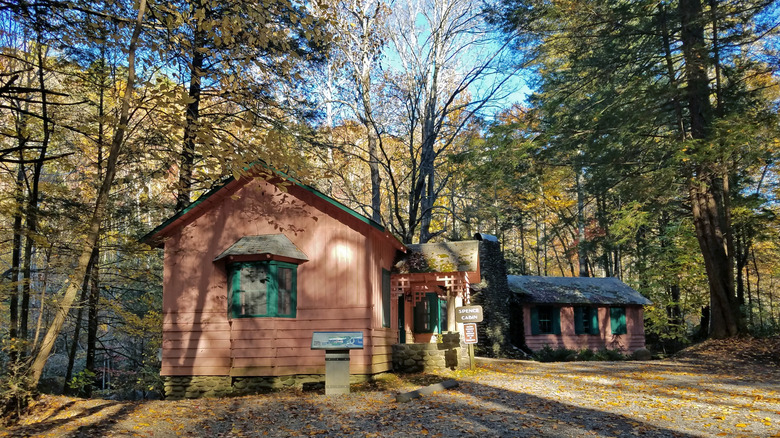
Elkmont was once a popular mountain retreat located in what is now the Great Smoky Mountains National Park. In the early 20th century, it developed into a resort community, complete with private cabins, a hotel, and essential services that enabled people to stay for extended periods. Vacationers came to fish in the nearby streams, hike through the mountains, and spend time outdoors without straying far from a comfortable home base. It had the kind of setting that drew people back year after year, earning a reputation as a reliable escape from the heat of lower elevations.
That version of Elkmont began to undergo changes when the national park was established in the 1930s. The government bought out many of the residents, including those people located within the national park boundaries. As a result, the resort community was abandoned, leaving behind cabins, cottages, and other structures that no longer served their original purpose. Without permanent residents or ongoing development, the area shifted from an active vacation destination to a preserved remnant of its past. Now, this once-thriving Smoky Mountain resort town is an eerie gem.
Located near the Elkmont Campground, the area can be accessed by road. It's often a stop for people visiting the nearby natural attractions, including hiking trails. Travelers can walk among the remaining cabins and structures while enjoying the natural wonders that draw millions of people to the national park every year.
Chacaltaya, Bolivia
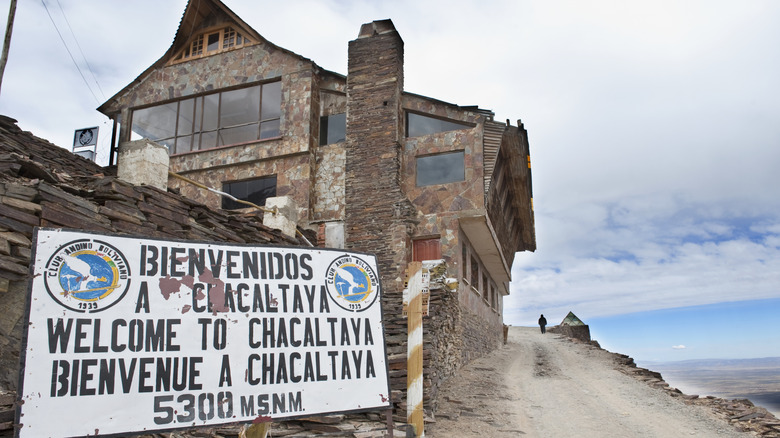
Chacaltaya, Bolivia, used to be a ski resort catering to extreme skiers seeking the experience of flying down the slopes at extreme altitude. The Chacaltaya ski resort was located high in the Andes, near the capital city of La Paz. At 17,785 feet, it is home to what was often described as the world's highest ski resort, with a small lodge and lift system that supported visitors willing to make the journey. The appeal wasn't about luxury or large-scale infrastructure. It was about the novelty and the chance to experience something that felt completely different from traditional ski destinations. For adventurous travelers, that alone made the trip worth it.
That experience depended entirely on the glacier that covered the mountain. In recent years, rising temperatures have caused the glacier to shrink and eventually disappear altogether, as reported by the BBC. Without a reliable source of snow, the resort could no longer function as a ski destination. The infrastructure remained, but its purpose was gone.
Today, Chacaltaya is still accessible as a day trip from La Paz and may be included in excursions focused on high-altitude viewpoints. There is no public transportation that serves this area. The best option is to book a tour leaving from La Paz. Remnants of the ski resort's lodge and lift system remain visible, but skiing is no longer possible. Chacaltaya continues to draw travelers who come for the views and to see firsthand how dramatically the landscape has changed. Because of the altitude, remember to give yourself a couple of days to acclimate if you're coming from the lowlands.
Grossinger's Catskills Resort, New York, United States
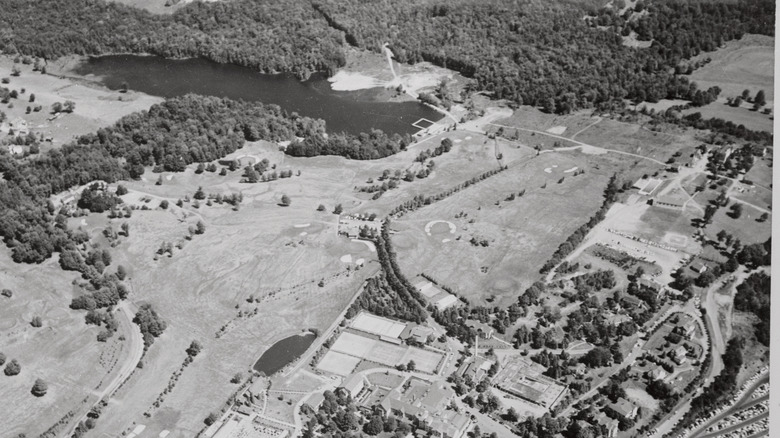
Grossinger's was once one of the most well-known resorts in New York's Catskills, part of a broader vacation region often called the "Borscht Belt." For decades, it drew visitors each summer who came for extended stays filled with dining, entertainment, and a strong social atmosphere. Guests didn't just check in for a night or two. They dug in for a full experience complete with organized activities, live performances, and time spent around pools, golf courses, and communal gathering spaces. This style of travel, centered on all-inclusive resort communities, helped define an era of American vacations and is often associated with the kind of setting that inspired films like "Dirty Dancing."
This model of travel faded into obscurity as travel habits changed. The advent of affordable air travel and the opening of borders for easier international travel led many Americans to choose destinations farther from home for their holiday travel plans. As a result, the Catskills lost its stronghold on vacationers. Resorts closed, visitor numbers declined, and Grossinger's Catskill Resort Hotel closed in 1986. What had once been a lively, self-contained destination became a collection of empty buildings and grounds overgrown with trees and weeds.
In 2022, a building at Grossinger's Resort burned to the ground in a massive fire, as reported by CBS. The long-vacant property was overgrown, which helped fuel the massive blaze. While Grossinger's Resort no longer exists, its legacy helped shape how people view the Catskills. Now, the general Catskills region is seeing an uptick in travelers again, with people interested in exploring the waterways, golf courses, and more.
Bokor Hill Station, Cambodia
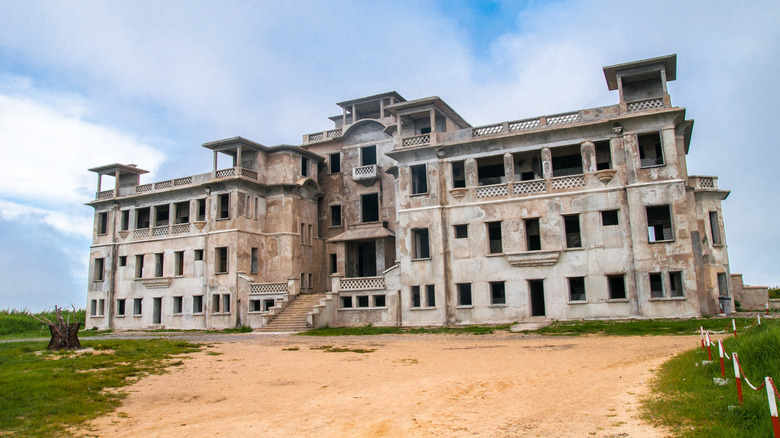
Bokor Hill Station was developed as a mountain retreat during the early 20th-century French colonial period in Cambodia. The station was designed to give visitors relief from the heat and humidity of Cambodia's lowlands. Due to its higher elevation, temperatures at the station were cooler, providing gorgeous open views and a sense of separation from life in the lowlands. Travelers came for the setting as much as the climate, with a hotel and other buildings creating a destination centered on relaxation and atmosphere. The drive up the mountain was part of the experience, gradually revealing the change in environment as visitors climbed higher.
Over time, the conditions that supported Bokor Hill's appeal became harder to maintain. The property was abandoned during World War II and again in the 1990s. In between, the Khmer Issarak moved through the area, destroying much of it. Bokor Hill Station sat vacant for over a decade, reopening as a casino hotel in 1962 while Cambodia was under King Sihanouk's rule. However, its time was short-lived, because the Khmer Rouge took control of the mountain a decade later. By 1972, they turned the buildings into military infrastructure. It remained one of their operational strongholds for two more decades. A French peacekeeping battalion returned to the area in 1993 after a UN-brokered ceasefire.
Without upkeep, the buildings on the property fell into disrepair, and the area became isolated. The main building has since been renovated, but some of the other buildings are still empty and retain their original French-colonial character. Bokor Hill is located about 26 miles from Kampot and is accessible to visitors who want to learn more about the area and explore the old buildings.
Villa Epecuén, Argentina
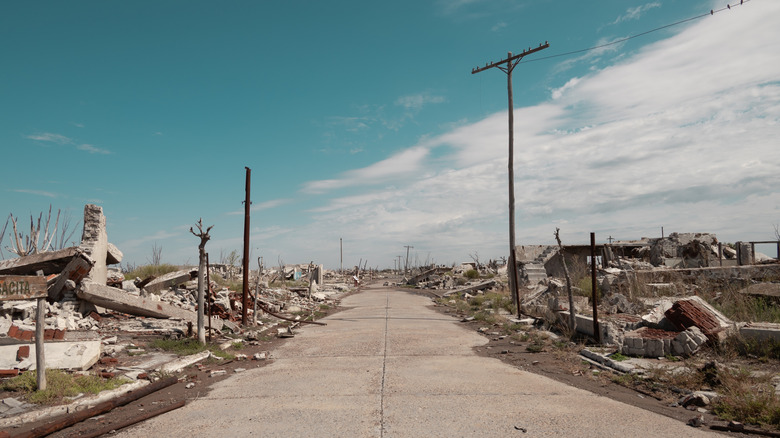
Villa Epecuén was once a thriving lakeside resort town. It was built around the mineral-rich waters of Lago Epecuén, whose high salt content was believed to have therapeutic benefits similar to those of the Dead Sea. The town grew to support the influx of visitors looking to make use of the healing waters, with hotels, guesthouses, and businesses popping up. It became a recognized tourism destination, where people would arrive for extended stays focused on rest, health, and time spent along the water.
That all changed dramatically in 1985, when a dam failure caused the lake to overflow and flood the town. Water levels continued to rise, eventually submerging Villa Epecuén entirely. For years, the town remained underwater, and its position as a destination disappeared along with it. The waters didn't fully recede until decades later, revealing skeletal remains of buildings coated in layers of salt.
Today, Argentina's once-thriving chic resort town is an eerie abandoned village. There are no plans to rebuild the area as they expect the lake's waters to rise again. Villa Epecuén is accessible to visitors who want to see the ruins firsthand. You can walk through the remains of the town, where streets, walls, and structures are still visible despite years of submersion. While it no longer offers the wellness experience it was built around, it continues to draw people interested in seeing a place destroyed by nature.
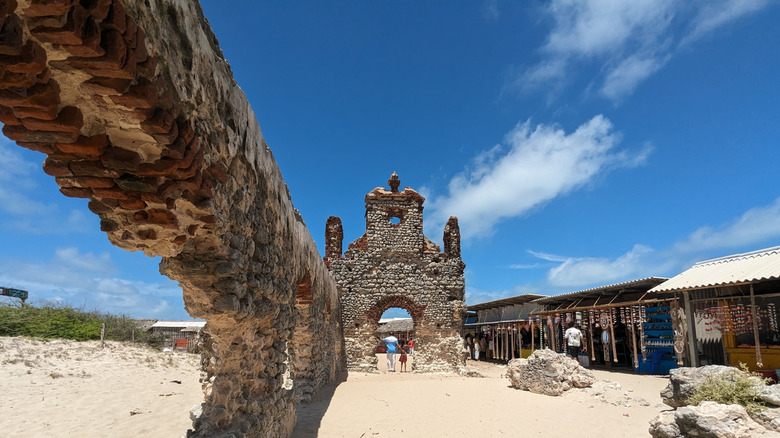
Dhanushkodi, India
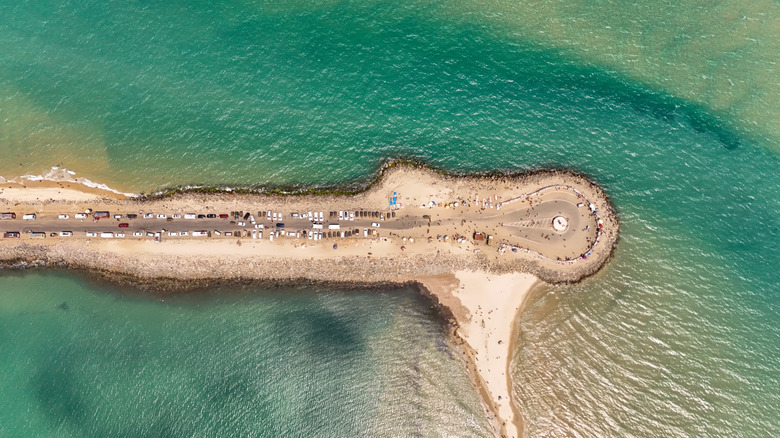
Dhanushkodi was once a busy town at the southeastern tip of Pamban Island in India. It was known for its scenic coastal setting, beautiful sunsets, and as a transit gateway between India and Sri Lanka. It also drew visitors for its beaches and proximity to the pilgrimage center of Rameswaram. The town had a location that offered multiple layers of appeal, combining religious travel, coastal scenery, and cross-border movement into a single destination.
That changed in 1964 when a powerful cyclone struck the region, destroying much of the town and the railway infrastructure that supported it. The damage was so extensive that Dhanushkodi was declared unfit for habitation, and it was never rebuilt as it once existed. What remained were fragments of buildings and a shoreline that no longer supported the kind of activity that it was once known for.
Today, Dhanushkodi is accessible to visitors who are interested in seeing the remnants of the old town. It's still an important Hindu pilgrimage site. They believe it was here that the Ramayana crossed an ancient bridge to save his wife from a demon king in modern-day Sri Lanka.
Methodolgy
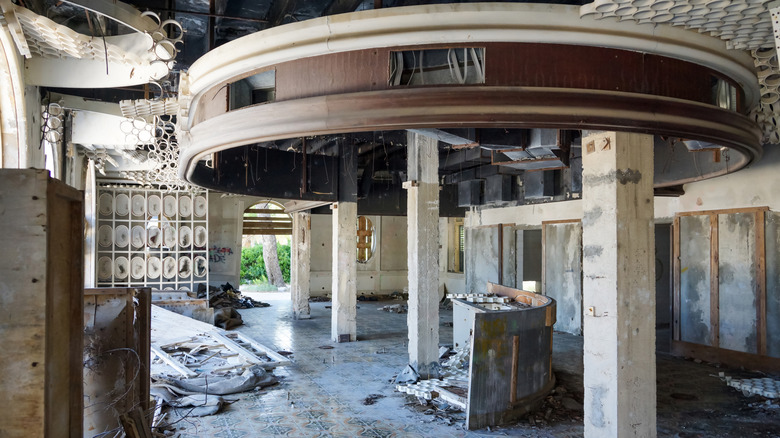
The destinations we included were selected for their documented role as former travel destinations, resort areas, or locations that supported regular visitor activity. Each of these places had a clear period during which tourism played a meaningful role. In addition to that history, we considered how each of these locations has changed over time. We placed an emphasis on destinations where the shift is still evident, allowing visitors to understand how and why their purpose as travel destinations diminished.
We also prioritized larger destinations rather than individual properties throughout. These cities, towns, and resort areas reflect places that once offered a full travel experience, rather than a single attraction. Where possible, we included locations that can still be experienced in some capacity today, providing travelers with additional context on how they have evolved.