
The World's 10 Best National Parks, According To Travelers
Yellowstone was the world's very first national park. Established in 1872, it started a movement that would eventually lead to a worldwide collection of thousands of parks. Their purpose: to safeguard irreplaceable things in nature, like rare flora, extraordinary landscapes, diverse wildlife, and fragile ecosystems. But national parks are also a resource for tourism. Visiting any of them around the world opens visitors up to unique sights and experiences that they won't get anywhere else.
Lazing on a beach, drinking cocktails, enjoying fine dining, and going on shopping sprees are wonderful vacation activities. But to many people, national parks offer so much more. Incredible waterfalls, breathtaking hiking trails, adventurous activities, and an abundance of exotic animals can all contribute to feelings of joy and connection. These reserves are powerful tools that can improve your health by encouraging exercise while you enjoy nature and step away from the stresses of daily life.
But with so many fascinating national parks across the world, it was difficult to come up with ten of the best. So we have listened to tourists, travel writers, and anyone else who explores the globe to come up with this list of ten. They offer some of the best sights and activities national parks have to offer, and all are guaranteed to inspire awe and wonder.
Plitvice Lakes National Park, Croatia
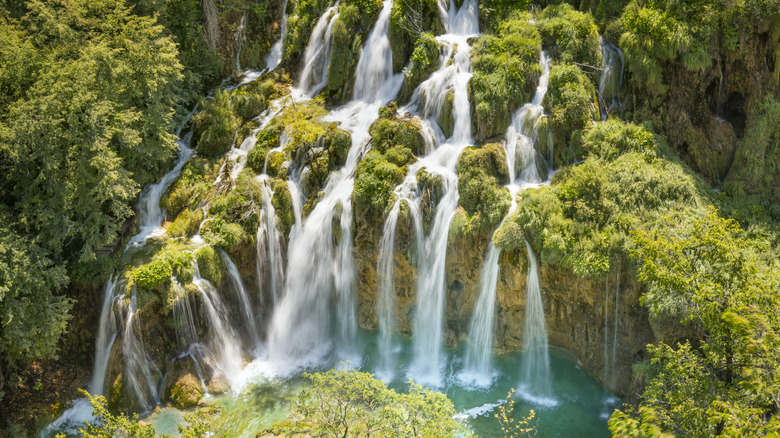
Described by travel writer Rick Steves as a "European Niagara Falls, diced and sprinkled over a heavily forested Grand Canyon," Plitvice Lakes National Park features 16 terraced lakes connected by waterfalls that spill over verdant cliffs. The largest of them is Veliki Slap. It tumbles down from almost 260 feet, and visitors can witness the spectacle up close along the carefully routed wooden boardwalks that run along the water's edge. The lakes glow in extraordinary shades of blue, green, and gray and are the result of natural limestone dams known as travertine barriers. These make this UNESCO World Heritage Site one of Europe's most stunning national parks.
Trout in the lakes have grown enormous and bold thanks to a total fishing ban. Deeper in the park are some elusive predators. Brown bears, grey wolves, lynxes, and European wildcats all hide out in the forest alongside a variety of deer, wild boar, and otters.
Hiking trails wind through the park either above or below its 92 waterfalls. These range from those gentle lakeside strolls to bigger rewards like the Mukinje-Tupi Medveđak route. It delivers staggering views across the upper lakes, while Šupljara Cave on the shores of Kaluđerovac Lake rewards a short detour with sweeping scenes of the Great Cascades. If you're feeling less energetic, you can also hop aboard a quiet electric boat and cross Kozjak Lake.
Torres del Paine National Park, Chile
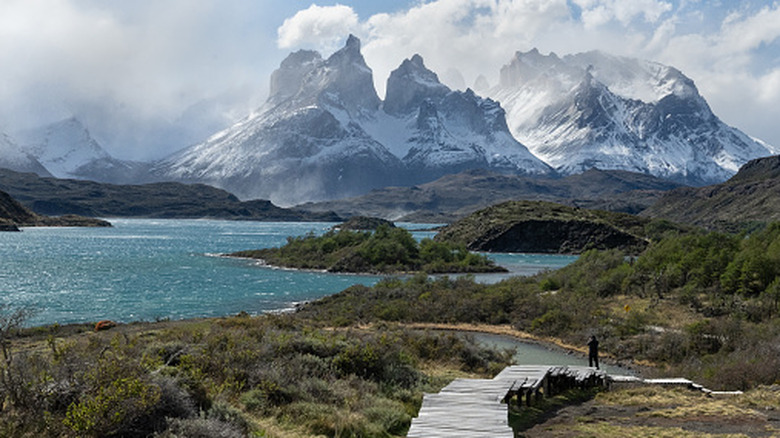
In Chile, "indomita" means untamed and unconquerable. It's a word reserved for their country's deep south, which is where you'll just happen to find Torres del Paine National Park. It was named by National Geographic as the planet's fifth most beautiful place, and one contributor on Tripadvisor simply said it's "breathtaking" before adding, "One can never get tired of the natural beauty ... It is dazzling." This UNESCO Biosphere Reserve is a landscape of soaring peaks, blue glacial lakes, evergreen forests, and ice fields that stretch for as far as the eye can see.
It takes its name from the three iconic granite towers known as Torres d'Agostini, Torres Central, and Torres Monzino. Each soars above 8,200 feet, creating a central massif quite unlike anything else on Earth. Below, guanacos and pumas roam freely across the plains, while condors circle overhead eyeing up the remains that the big cats leave behind.
You might see some of this wildlife while hiking any of the park's fantastic trails. The W Circuit, a bucket-list destination for hikers, is a five-day adventure across 45 miles of stunning peaks and hanging glaciers. Along the way, you'll see blue icebergs drifting across the lake at the bottom of the 100-foot wall of ice known as Grey Glacier. If you have more time, you can trek the O Circuit, an extended route to check out more scenery.
Kruger National Park, South Africa
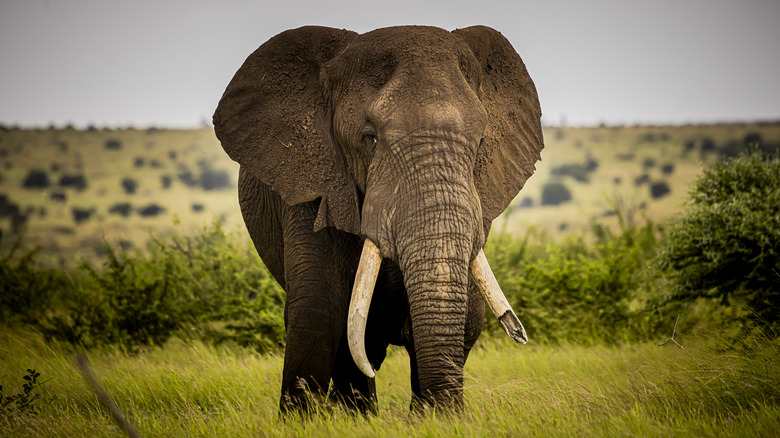
Kruger National Park draws visitors to witness the Big Five: lions, leopards, elephants, buffalo, and rhinos. However, there are 142 other mammal species in the park, including giraffe, zebra, wildebeest, cheetah, hyena, hippo, and wild dog. There are also more than 500 types of birds that make up the full African safari cast.
Game drives are at the heart of the Kruger experience. Open vehicles and expert rangers deliver close encounters with wildlife, while self-driving is also an option. One experienced Google reviewer called it an "unforgettable experience" and offered some excellent practical advice, saying, "To make the most of it, I'd recommend planning at least three days. That way you have enough time to enjoy both perspectives: one self-drive safari, where you set your own pace and explore freely, and at least one guided safari, where an experienced ranger can point out wildlife you might otherwise miss."
Guided bush walks let you experience the park's extraordinary interconnected ecosystem at ground level. And simply sitting at your camp waterhole or riverbed in the afternoon heat often brings the animals to you. When the sun goes down, a completely different world opens up. The familiar sights and sounds of daytime give way to a wild, raw nocturnal world. The darkness is only broken by distant roars and owl hoots, while the ranger's spotlight sweeps through the bush. It can be an unnerving yet exhilarating experience, and one that's recommended to those who have the mettle for it.
Galápagos National Park, Ecuador
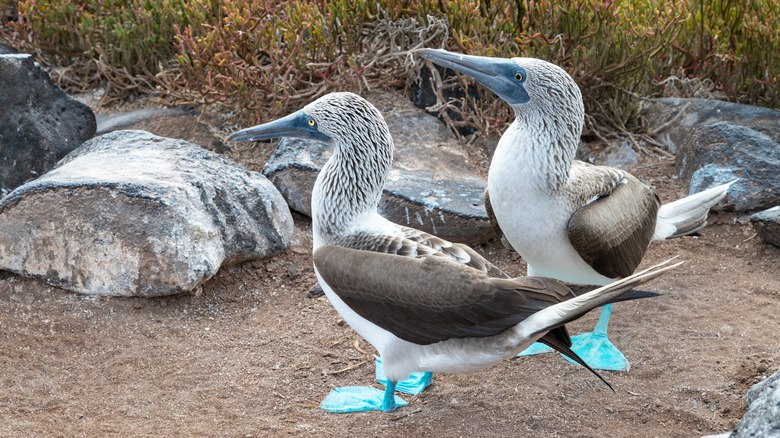
Galápagos National Park is a volcanic landscape made up of 127 islands, islets, and rocks. It's where Charles Darwin famously spent weeks making observations that would change the course of science forever. The animals populating this near-perfect family destination are mostly unique to these islands, and studying them led to the foundation of his theory of evolution by natural selection.
Among the more impressive species is the Galápagos giant tortoise, which can weigh up to almost 900 pounds. The giant tortoise is one of 36 endemic reptile species in the park. Others include the marine iguana, lava lizards, and several species of turtle. In the skies above, look out for several species of boobies along with Galápagos hawks, mockingbirds, and the finches that Darwin famously observed.
Back on the ground, the only penguin species in the Northern Hemisphere, the Galápagos penguin, ambles between the rocks. You can also see pink flamingos and flightless cormorants with their brightly colored beaks occupying ground level. Beneath the surface, snorkelers and divers can encounter any of the park's 2,909 marine species, including hammerhead and whale sharks. "Our absolute top snorkelling experience was at Los Tuneles on Isla Isabela. I highly, highly recommend it," wrote one contributor to Rick Steves' Travel Forum. On Isabela, you can also hike the Sierra Negra Trail along the rim of an active volcano with the world's second-largest crater.
Fiordland National Park, New Zealand
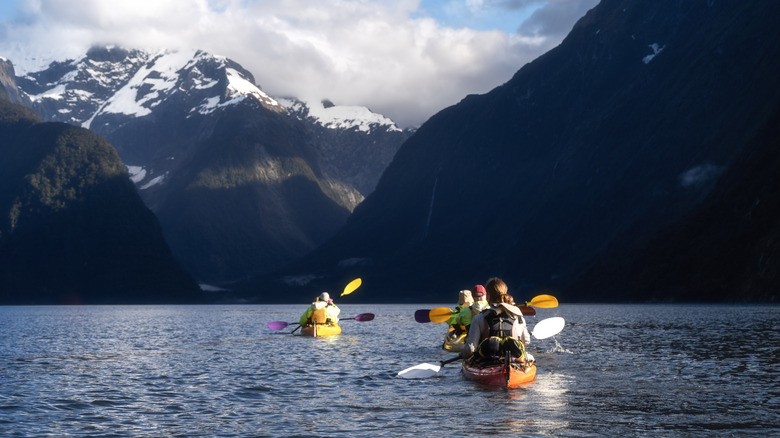
Sheer mountain faces plunging to the water, ancient forests growing on every available space, and huge waterfalls crashing into fjords. This is New Zealand's Fiordland National Park, known as Te Wāhipounamu to the indigenous Māori. The park is one of the planet's biggest. At 4,600 square miles, it's a UNESCO World Heritage Site celebrated for its breathtaking collection of fjords. The four main fjords include the remote Preservation Inlet and Dusky Sound, which have no direct road access and offer true wilderness experiences. Then there's Doubtful Sound, the deepest fjord in the park and home to aquatic life like bottlenose dolphins and fur seals.
But it was Milford Sound that Rudyard Kipling declared the "Eighth Wonder of the World." It's the iconic image of the country, a place where towering, mist-shrouded mountains seem to rise directly from the glass-still water, mirroring the gold, pink, and blue blazes of its famous sunsets. One Tripadvisor contributor suggested a way to make the experience even more incredible: "I always recommend kayaking at Milford, as you can see everything a lot closer and at a more leisurely pace."
The Milford Track is the most celebrated hiking trail in the park. It takes you over ancient glaciers, through verdant rainforests, and past thundering cascades, including Sutherland Falls, one of the world's most ethereal waterfalls. However, this trail is for experienced hikers only. For a shorter challenge, the Lake Marian Track is a four-mile ascent to an alpine lake ringed by peaks. Families and those after a gentler experience can try Key Summit, a moderate 5-mile walk through mossy rainforest with panoramic views over the surrounding mountains.
Jasper National Park, Canada
Jasper National Park is a place where you'll get a full sweep of the Milky Way overhead on a clear night. In fact, the park marks Dark Sky Month every October with the Jasper Dark Sky Festival, bringing astronomers, scientists, stargazers, and everyday travelers to the park for days of demonstrations and guided star parties. Travel writer Emily Fata captured what those cold, dark winter nights feel like in Jasper when she wrote on Wanderous Affair: "lights twinkle against snow-dusted rooftops, the Aurora Borealis arches in the sky, and the atmosphere feels almost storybook-like."
It is indeed a magical place, but winter skies and snowy ambience are just a fraction of what the park offers. The Icefields Parkway is a 144-mile drive cutting through shifting landscapes from dense forest to glacial wilderness. Along the way, you can take an ATV tour across the Athabasca Glacier, peer down through a transparent walkway high above the Sunwapta Valley, or stop at the thundering Athabasca Falls, where you'll see rainbows of light catching plumes of mist in the air.
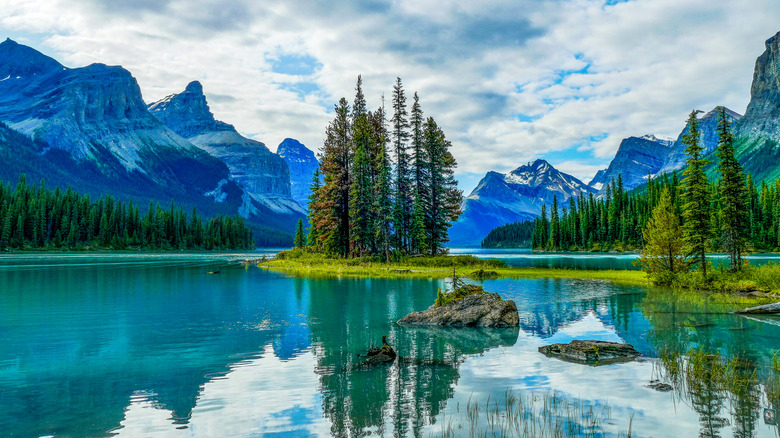
Go deeper into the park for Maligne Lake, the largest natural lake in the Canadian Rockies. Its waters shift as the light changes from turquoise to deep blue while the surrounding mountains reflect on every side. Just off its eastern shore is one of Canada's most enduring images, the tiny Spirit Island with its small cluster of dark evergreens standing like quiet sentinels against a backdrop of jagged mountains. However, in 2024, devastating wildfires burned more than 81,500 acres in the heart of the park, and some areas remain closed at the time of writing, so check the latest updates before traveling.
Sagarmatha National Park, Nepal
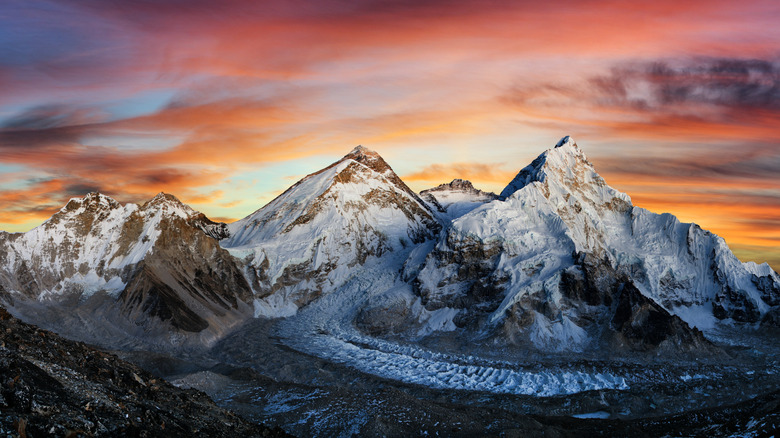
No other park on the planet offers the dramatic altitude range of Sagarmatha National Park. The terrain here begins at 9,334 feet and climbs to a staggering 29,029 feet. That's because the highest point is Mount Everest, also known as Sagarmatha, which means "Peak of Heaven." Within the park boundaries are other Himalayan titans. Cho Oyu stands at 26,864 feet, while Lhotse's peak is at 27,940 feet.
The Everest Base Camp Trek is the best hike to take in these giants. It starts in Lukla, a short flight from the capital Kathmandu. One hiker who experienced the trek said in a Google Review, "Views that will stay with me until the day I die. I've been to my share of national parks, and this is the most majestic place I have ever been. Walking among the giants, crossing blue glacial rivers, awe-inspiring swing bridges, beautiful forests!"
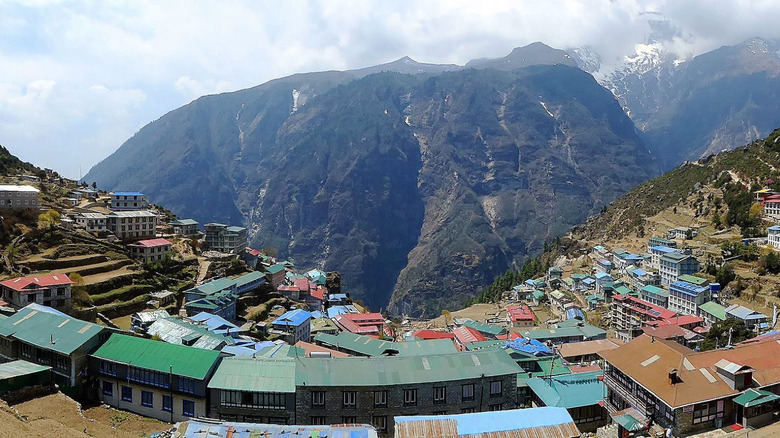
Along the hike, you'll pass through Namche Bazaar, perched on a cliffside overlooking some staggering mountain views. It's a buzz of expedition teams, traders, and trekkers from every corner of the globe, while Tengboche Monastery, further on, is one of several ancient religious sites that dot this landscape. Take a detour after Namche, and you'll discover an alpine series of the world's most beautiful lakes at Gokyo village.
Yellowstone National Park, USA
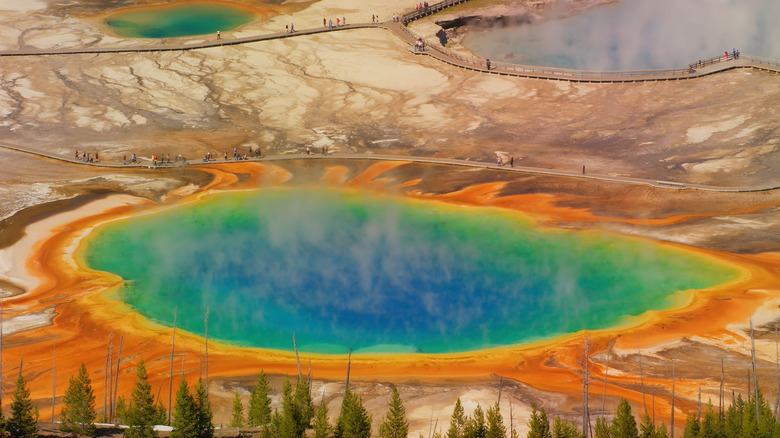
The Yellowstone Caldera is a volcanic crater that stretches for nearly 50 miles. It sits beneath one of our planet's most geothermally active places, Yellowstone National Park. In fact, the park is home to around half of all geothermal features on Earth, including more geysers than anywhere else, two-thirds of the global total, to be precise. The most famous is Old Faithful. It puts on its show around 16 or 17 times a day when it launches water up to 184 feet into the air.
Around 6.5 miles north, the Grand Prismatic Spring has to be seen to be believed. It's a vast, rainbow-colored hot spring with a deep sapphire-blue center that fades through bands of vivid turquoise and lime into a wide halo of blazing yellow, orange, and rusty red, and is another of the park's unmissable geothermal wonders.
In terms of wildlife, Yellowstone doesn't disappoint there, either. Plan to explore the park for several days and come across everything from bears, birds, and the trademark bison. As one traveler on TripAdvisor explained, "Yellowstone isn't just a national park — it feels like another world entirely. One moment you're walking past steaming geysers and boiling mud pots, and the next you're watching bison wander across the road like they own it (because they do). Every corner of the park feels different."
Guilin and Lijiang River National Park, China
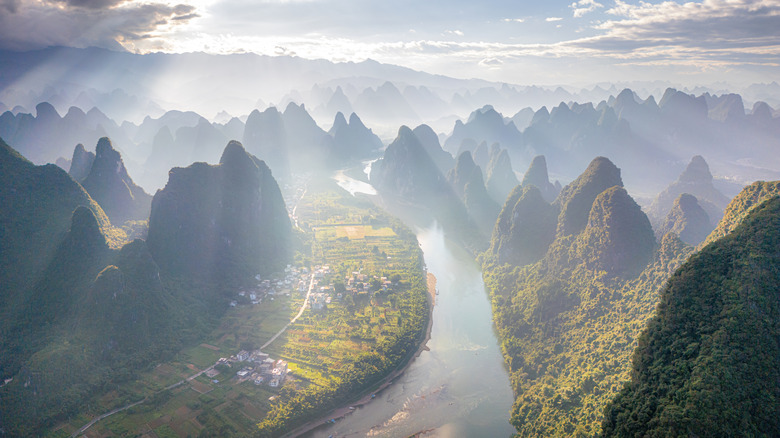
"Among all the mountains and waters, Guilin is the best" is a saying that emerged during the Song Dynasty in China hundreds of years ago. It's a sentiment that has echoed through the ages ever since. So much so that the otherworldly scenery along the Lijiang(or Li River) that runs from the city of Guilin to Yangshuo is depicted on the Chinese 20 yuan note. It winds through what can only be described as a forest of steep limestone peaks rising like sugarloaf pillars out of the valley floor, with scenery spread out like a soft, green tapestry stitched together with patchwork fields and villages.
River cruises are the most popular way to experience this fantasy world. They take in landmarks like Elephant Trunk Hill, a formation that bears an uncanny resemblance to an elephant drinking from the water, and the natural rock formations that look like horses at Nine Horses Fresco Hill. Other attractions include Reed Flute Cave, which opens into chambers that one TripAdvisor commenter described as an "incredible world of stalactites, stone pillars, and rock formations... illuminated by colorful lights that enhance their beauty." Visitors can also take part in bamboo rafting, cycling, rock climbing, and hiking, with the Yangdi-Xingping Trail offering a moderate hike across 9.5 miles, taking in stunning views of the peaks and river.
Yosemite National Park, USA
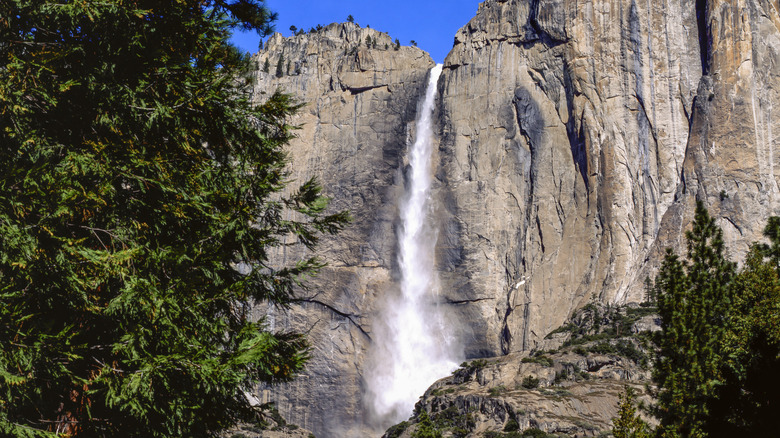
An 1864 bill signed by Abraham Lincoln protected the land that would later become Yosemite National Park. This planted a seed that would eventually grow into the American national park system, and it was an understandable move given Yosemite's dramatic landscapes. It's a land of vast granite walls shaped by millions of years of geological forces surrounding a world of dark forests, clear waters, and verdant valleys.
Those walls are so high that the Empire State Building would barely reach halfway up, including El Capitan, the highest granite monolith in the world. Its sheer vertical face attracts rock climbers from across the world. Just a couple of miles away, Yosemite Falls makes its huge three-stage descent of 2,425 feet. It's one of the world's tallest and so impressive it prompted one traveler on Tripadvisor to say, "In my opinion, much better than Niagara Falls."
Hiking is one of the park's signature activities. Half Dome is the most iconic trail. It's a highly challenging 17-mile round trip that ends with a vertiginous climb up the mountain's exposed summit using steel cables bolted into the rock. Mariposa Grove is an easier afternoon. It's home to over 500 giant and ancient sequoias, and spending some time in their presence is a humbling experience. Winter is a beautiful time to visit, when you can see them all dusted in snow. In fact, the whole park is quiet at this time, and seasonal activities like snowshoeing, skiing, and ice skating are open to all who are prepared to brave the cold.
Methodology
We scoured travel sites like National Geographic, Lonely Planet, and Conde Nast to find out what travel writers were saying. To get the opinions of regular travelers, we dug through Reddit, Facebook, travel-oriented forums, and Tripadvisor. We also leaned on the subjective opinions of the author, who has visited some of these parks. But we ensured parks across all the continents were included and that each offered a variety of activities and unique sights.