
Unwritten Rules You Should Know Before Visiting San Francisco
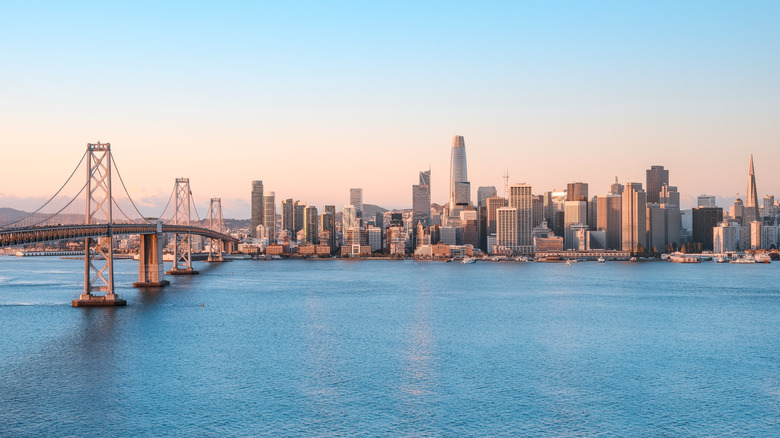
San Francisco is a place unlike any other in the world — a city brimming with icons like the Golden Gate Bridge, steep hills traversed by cable cars, the Transamerica Pyramid building, Fisherman's Wharf, Telegraph Hill's slew of wild parrots ... the list goes on. It's seen its fair share of changes over the years. It was founded by Spanish colonists in 1776 and transformed by those who flooded California during the gold rush of 1849 — hence the reason San Francisco's NFL team is named for those who caught the fever, known as the 49ers. The city defined the hippie movement and the "Summer of Love," then became a hub for tech entrepreneurs thanks to its proximity to Silicon Valley. Change as it might, San Francisco always retains its totally eclectic, lovably weird character.
When you're planning your first visit to San Francisco, there are a few things you should know right away. Firstly, it's hilly. Secondly, it's not as warm as you think it might be, at least if you're correlating California with sunshine, due to its summertime marine layer, or fog. There are sunnier spots such as Bayview, with under-the-radar trails, gardens, and eateries, but don't expect endless warm days! Also, Walk Score rates the area's public transit system excellent with a score of 77, so you should definitely use it.
Then, there are some things you might not think of — the unwritten rules that set a visit to San Francisco apart. We've relied on the author's visits to San Francisco over the years, plus numerous discussions on Reddit, articles published by the San Francisco Chronicle, KQED, and others, and local tourism sites. Below, explore 12 things to expect, which will help you pack, prepare, and thoroughly enjoy this one-of-a-kind city.
Don't call it Frisco
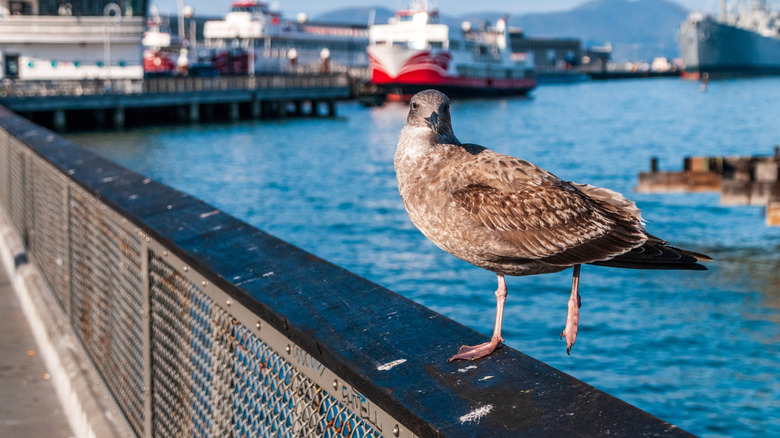
Unlike "The Big Apple" or "The Windy City" — New York City and Chicago, respectively — San Francisco has never really adopted a true nickname that most folks can agree on. It's commonly called "Frisco" or "San Fran," but locals typically don't call it either, and these abbreviations are seen as a little eye-rolly. "There's a reason we don't call New York 'Nork' when we're feeling saucy," said The Bold Italic. Frisco, in particular, "is the name we love to hate," shared Vinnee Tong of KQED. But why so much side-eye?
According to Tong, the name Frisco may have originated as far back as the 1800s, when San Francisco was a thriving port town. But even then, it was derided as a name that only outsiders — ahem, tourists — used. Even today, that's not entirely true. Some locals grew up hearing the city referred to as Frisco, particularly in working-class neighborhoods.
Although there may be no single rhyme or reason as to why some refer to it that way or not — or like it or not — it's certainly possible that using either Frisco or San Fran will elicit a response. True locals tend to just refer to it as "The City." "People who've never been here and tourists here often use Frisco and San Fran interchangeably," shared a contributor on Reddit. As an aside, another Redditor pointed out that, "'SFO' only refers to the airport, not the city."
Bring an extra layer
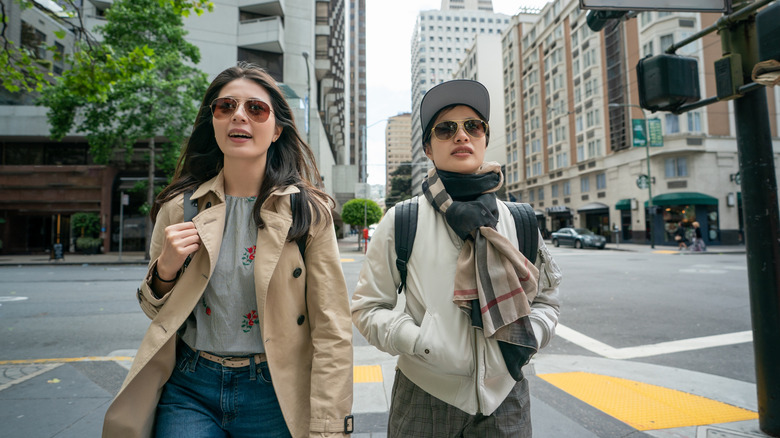
One thing San Francisco's weather is not? Predictable. It's situated within the Golden State's Mediterranean-like climate, and while that typically means arid summers and mild, wetter winters, that only really touches the surface of the city's nuanced weather patterns. San Francisco doesn't experience all four seasons, and because it's so mild, it can feel like there are only two — drier and moister. For one, there's the fog. Even in the summer, the feel outside can be cool and windy, with the wind picking up into the afternoon. "Bring a jacket," shared a Redditor. Another added, "And if you think you might not need a jacket, you need a jacket."
Locals knowingly joke that the weather seems to vary even from neighborhood to neighborhood sometimes. "Many places have some variation of, 'If you don't like the weather, wait five minutes,'" shared a local in the same Reddit discussion. "In SF, if you don't like the weather, walk five blocks." With this in mind, always plan to bring a sweater or a light extra layer to make sure you don't get stuck in the cold. It might seem like a pain if you're planning to do a lot of walking and exploring, but you'll appreciate it if you end up on a particularly blustery avenue or hill.
Nudity is technically illegal, but ...
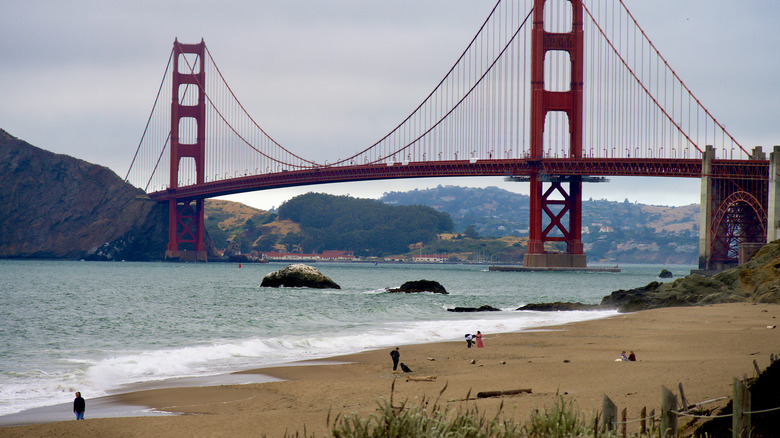
San Francisco has a long and vibrant history of clothing-free expression, from the 1960s counterculture era to swimsuit-optional beaches to events like the Bay to Breakers run with its tradition of crazy costumes and the legendary Folsom Street Fair. Even though public nudity was banned in 2012 — with the exception of permitted festivals and special events — don't be surprised if you do clock the occasional unexpected clothing-free passer-by. There are some neighborhoods, like the prominently LGBTQ+ Castro District, where you may be more likely to encounter the odd nude resident, and the authorities don't always crack down too hard.
It's almost guaranteed that you'll encounter folks in their birthday suits during Pride in June, plus events like Bay to Breakers. And if you're headed to the beach, you're likely to encounter someone who's ditched the bathing suit at spots like Marshall Beach and the north end of Baker Beach — one of the best LGBTQ+ vacation destinations in America — both of which are legally clothing optional.
BART etiquette is helpful to know in advance
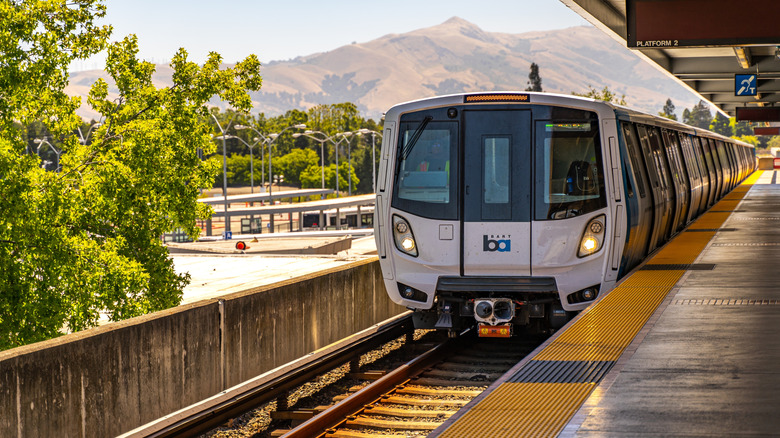
The Bay Area Rapid Transit, or BART, is a popular public transport system connecting to other cities like Oakland and northern San Jose. It consists of five main lines — Orange, Red, Blue, Green, and Yellow — plus a little leg to Oakland International Airport. Most lines run between about 5 a.m. and 1 a.m., depending on where you're headed. And they also run about every 20 minutes, so you never have to wait too long for a train.
The Yellow and Red lines connect to San Francisco International Airport (SFO), one of America's most highly rated airports in 2026, making it easy — and cost-effective — to get into the city. You might just want to be prepared for crowds if you travel during rush hour, according to a regular commuter in the Rick Steves Travel Forum. And fares are distance-based, but to give you an idea, a one-way ride from SFO to the 24th Mission Street stop is $11.60 as of this writing, which is a big savings compared to a typical Uber or taxi ride. You can use a Clipper Card — more on that in a bit — or simply tap your contactless card (virtual or plastic) at any of the gates, and the fare will be automatically deducted based on your journey.
Locals on Reddit suggest always looking at the seat before sitting to make sure it's clean, and that goes for all forms of public transportation, including the city's extensive Muni system of buses, light rail, and trams, including cable cars. San Francisco — like all large cities — has its fair share of characters, so it's also usually good practice to keep to yourself. Keep your valuables close to you and out of reach of pickpockets, and use discretion if you're approached by panhandlers.
Get a Clipper Card and put it to good use
Public transportation networks throughout San Francisco and the Bay Area accept contactless bank cards through a program called Tap and Ride. If you tap using your normal debit or credit card — no matter if it's the physical plastic card or a virtual version — you'll automatically be charged the full standard adult fare. There's also a program called the Clipper Card, which is designed specifically for public transit throughout the city. This can be used as a physical card, which you can keep in your real-world wallet and tap at entrance stations or on buses. Clipper Cards can be purchased online and sent to your home address, which is useful if you have a little time before your trip, but you can also purchase them in person at any BART station or Walgreens in the Bay Area, plus a number of other retailers.
There's also the option to add a virtual Clipper Card to the Apple or Google Wallet on your phone and use the Clipper app to plan your trip and manage your preloaded balance. Using a Clipper Card is the only way to take advantage of discounted youth, senior, and disabled rider fares. And the cards are good on all Bay Area public transit systems, including the iconic cable cars!
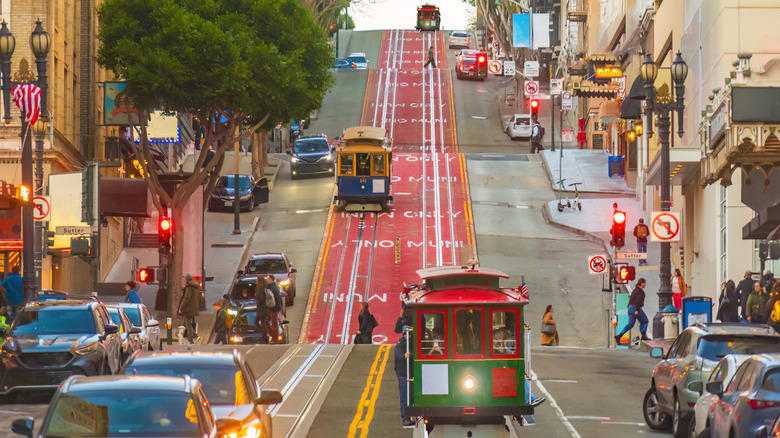
While San Francisco's historic cable cars are seen as an activity that mostly tourists take advantage of — although locals do use them sometimes for commutes — you definitely should take a ride on one at least once. Fair warning: They can occasionally get crowded. There are two styles of cable cars that still serve the city, and they even have National Landmark status. Board at the beginning or end of the route, known as turntables, or look for brown-and-white signs, which mark stops.
Jaywalking isn't super common
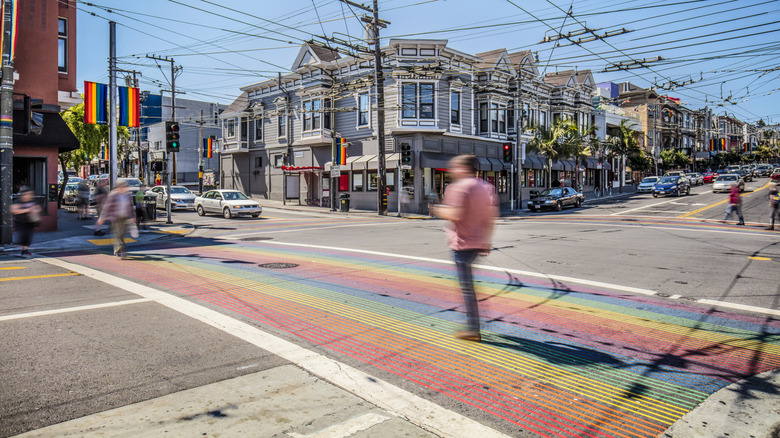
When visiting New York, one of the best transportation tips to blend in like a local is to not be afraid to jaywalk, even though it's technically against the law — as it is in a lot of places. The same doesn't necessarily happen as much in San Francisco, or at least not in such a widespread way. Some Redditors chalk that up to a more laid-back West Coast approach to, well, everything, but it's also not as if jaywalking never happens. It's just that people do it less frequently, and those who do are typically locals who have a good understanding of traffic light timing and motorists' behavior in town.
"A surprisingly large amount of the population does not jaywalk when there's zero visible traffic," shared a contributor on Reddit. Another suggests that more people used to jaywalk, but over the past few decades, it seems like fewer do. As a visitor, it's a good idea to abide by pedestrian signals at intersections and adhere to crosswalks, especially if you're headed to really busy areas downtown. The San Francisco Municipal Transportation Agency (SFMTA) has been actively improving its pedestrian signals throughout the city to make crossing easier and more accessible, which comes in handy in more complex intersections that involve tram tracks and bike lanes.
Don't leave items visible in your car
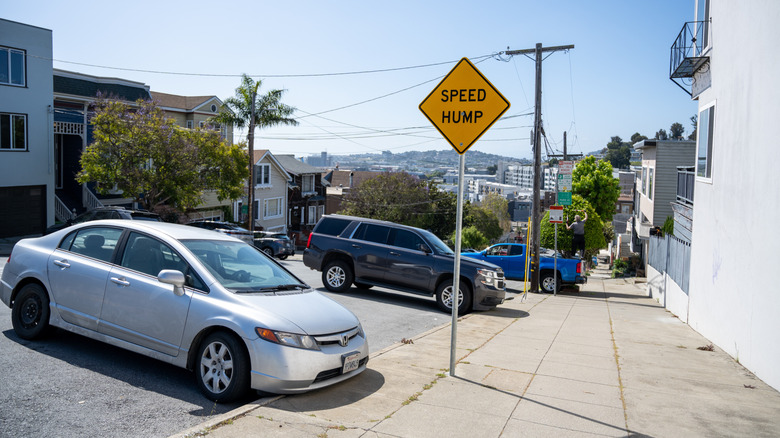
While it's always good practice to keep valuables out of sight when parking your car, or better yet, take them with you, San Francisco sees so many car break-ins that locals have a name for the shattered glass from vehicle windows: "San Francisco diamonds." That's because even though cars are locked, it doesn't stop thieves from smashing windows to get to what's inside. Back in 2017, there were more than 30,000 car break-ins, and it even prompted the San Francisco Chronicle to launch a nearly real-time "S.F. Car Break-In Tracker" in 2018. Since then, numbers have steadily declined, likely due to enhanced surveillance measures, but the city still sees an outsize number of break-ins compared to anywhere else in California.
Within the city, the highest concentration of break-ins happens downtown. There are a lot of people — and therefore cars — in this region, plus more tourists to target. To minimize the chance you'll ever experience a break-in, don't leave anything visible inside your vehicle at all. Whether you're driving your own car or renting one, make sure to keep all valuables totally out of sight.
The fog may or may not be referred to as Karl
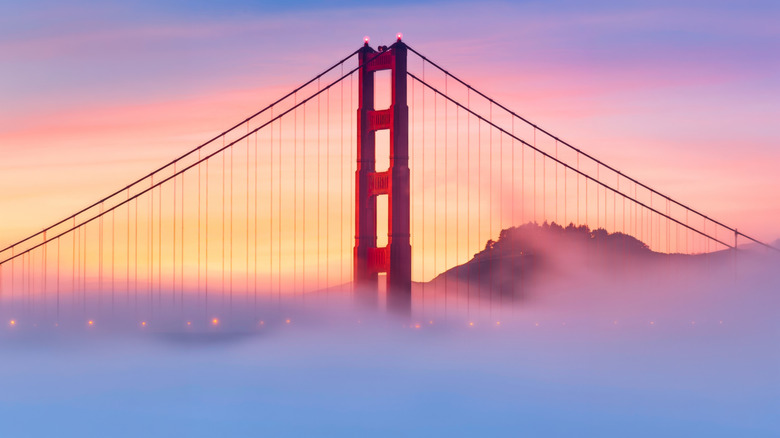
In 2010, a popular social media account called "Karl the Fog" emerged on Twitter — it's still on Instagram and TikTok — run by an anonymous resident who posts weather updates and playfully irreverent observations of the city. The name "Karl" is inspired by the lonely, misunderstood giant in the 2003 film "Big Fish," and as the social media account took off, so did the personified references to San Francisco's famous fog. But what is this fog all about, anyway?
Summers in the Bay Area bring what's known as a marine layer. This is caused by warm and cool air interacting in a phenomenon known as temperature inversion. This is most common between June and August, which is why it's often referred to as "June Gloom," but even winter brings something known as tule fog, which crosses into the Central Valley and can persist between November and March. It's something to keep in mind for those escaping San Francisco on a winter road-tripping adventure.
While a lot of younger, internet-savvy people playfully refer to the city's fog as Karl, not everyone will. "Born and raised in SF," shared one Redditor. "No one I know that grew up here calls it Karl. I don't mind it personally, but it is absolutely a transplant tech thing that came about in the last 15 years or so." Whether you choose to refer to it as Karl or not is up to you!
Biking is a big deal
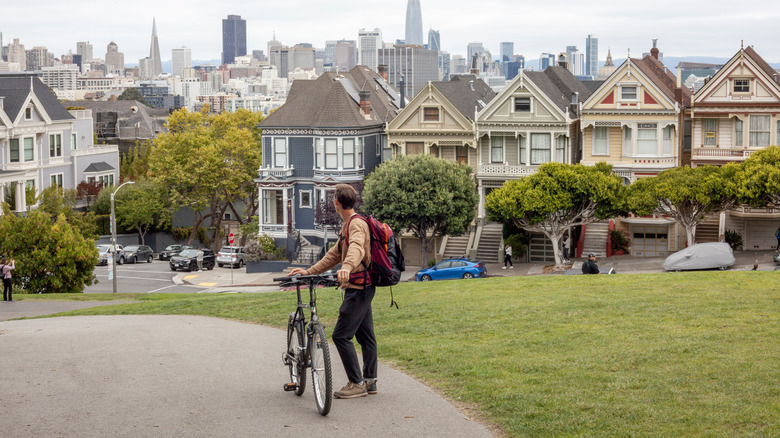
San Francisco has actively been expanding its bike-friendly network of paths and road lanes, and despite the hills, bicycling is very popular for residents. It's also something that, at least in terms of traffic, has seen some willy-nilly rule-following. "You will be halfway through a crosswalk and a cyclist will fly through the crosswalk missing you by a couple of feet," shared a Redditor. "I get that speeding back up takes effort, but come on." That's why in 2026, the city initiated a crackdown on bikes — not so much the bikes themselves but the riders who don't follow the rules of the road. Per the new program rolled out to make sure cyclists are following the rules, police officers on bikes may issue you a citation if you fail to stop at a red light.
In addition to independently operated bike rental shops, San Francisco has a pretty extensive bikeshare program, and tourists find these useful for one-off biking excursions. There are hundreds of stations and thousands of bikes, so you can start and end virtually anywhere. Just remember to go with the flow of traffic, keep to bike lanes where applicable, adhere to traffic signals, and ideally, wear a helmet.
The city rolls up its sidewalks relatively early
Bars and clubs in San Francisco close at 2 a.m. and legally can't start serving again until 6 a.m., unlike in New York City, for example. There, bars tend to stay open until 4 a.m., and there's more of a 24-hour vibe with other spots to hang out at and parties to keep the nightlife going even longer. While a bill in the works will allow San Francisco clubs and bars in busier hospitality areas to stay open for a couple of hours longer, it's still the rule that last call comes within a half-hour or so before 2 a.m. If you play your cards right and ask the right bouncer, you may be able to find an "after-hours" party that continues past the wee hours, although these are technically illicit, so it's all by word of mouth.
Another thing that makes late-night hangs a little difficult in San Francisco is that the BART also doesn't run between about 1 and 5 a.m. Muni, however, does operate a special all-night timetable called the Owl Service, which is a bit more limited than daytime routes but still fills the gap with rides about every 30 minutes.
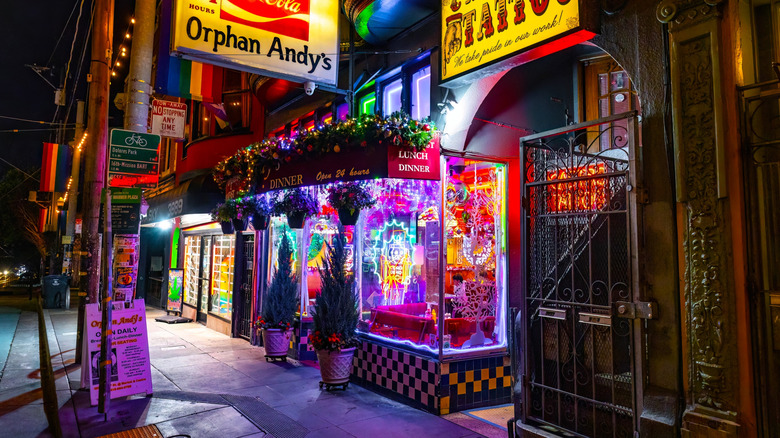
Bars and clubs aren't the only things that close up relatively early. Lots of coffee shops also stop serving by mid-afternoon. Fortunately, there are some speckled around that are open at least until a few hours after the business day is done, and some quite late. If you're looking for a 24-hour hangout option, check out the legendary Orphan Andy's diner in The Castro, or grab a doughy delicacy from Happy Donuts in Dolores Heights.
Find — but don't feed — the city's iconic parrots
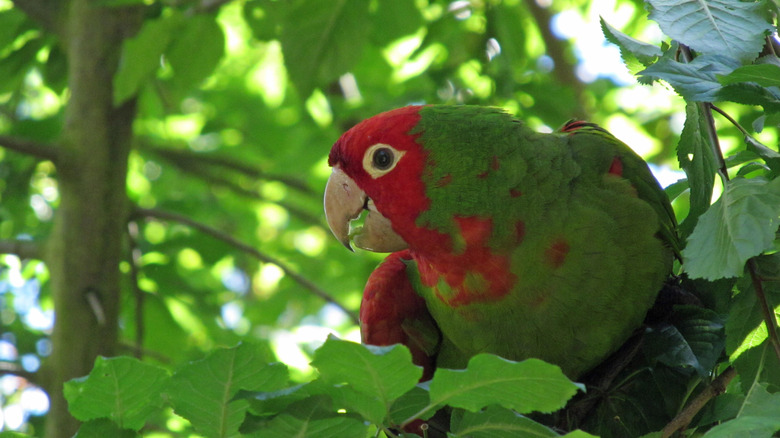
Wild parrots, namely cherry-headed conures — which are also known as red-masked parakeets — have made a home in San Francisco for about four decades. They've really thrived in this temperate climate, in a city where there are lots of trees and parks to flit about, and there was even a documentary released in 2003 with the apt title "The Wild Parrots of Telegraph Hill," which celebrated these unique urban denizens. And although they're often associated with Telegraph Hill, home to America's "third most-loved building," they hang out in other parts of the city, too, such as the Presidio, Lafayette Park, Sutro Hill, Dolores, and other neighborhoods, according to suggestions on Reddit.
"Their sound is unique, at least in this city, and once you learn to hear it you might find that you hear them all over the place," shared a local on Reddit who enjoys seeing them at her door. The only caveat is that, even though they might eye you up for some yummy nibbles, you shouldn't feed the birds. That's in order to protect them and keep them wild. It's actually technically against the law to do so because the city would like to keep these feathered critters wild and self-sufficient. That said, organizations like Mickaboo help to give rescued birds forever homes, so if you're nearby and have a safe spot for a companion bird, you can adopt!