
The Most Underrated Lake Destinations In The Southwest In 2026
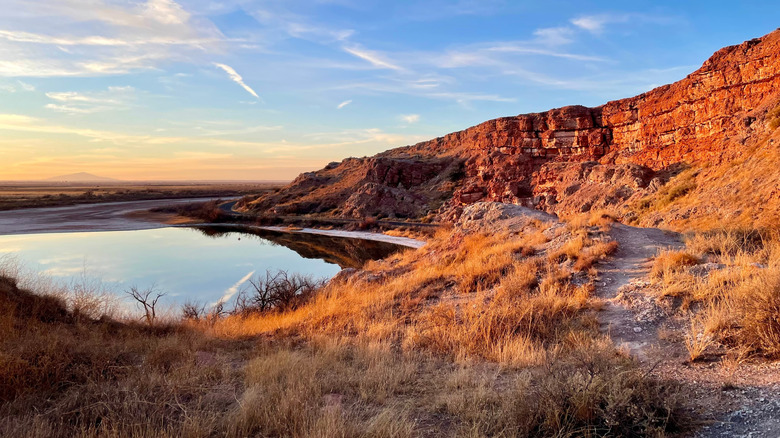
Although the American Southwest often evokes visions of cactus-specked deserts and rugged mountains, it's also home to some stunning lakes. Most of these are human-made, typically by damming rivers to control water supplies or produce power. The Colorado River, for example, is sometimes referred to as the "hardest working river in the West" because it's been engineered to store upwards of 60 million acre-feet of water. You'll find Lake Powell, Lake Mead, Lake Mohave, and Lake Havasu, all of which are popular recreation spots — although there are also plenty of places to scope out shores with warm waters and fewer crowds.
If you're looking for something slightly off the beaten path, there are also plenty of other unique lake destinations around the Southwest. This region is generally defined as Arizona and New Mexico, plus nearby sections of their neighboring states: southeastern California, Nevada, Utah, western Colorado, and the western portions of Oklahoma and Texas. Its definitions are a bit fuzzy around the edges, and sometimes it depends on who you ask. But for the sake of this list, we've included lakes across most of these states. We're also defining "underrated" as lakes that may require a little more effort to reach and aren't necessarily visited on a national level like some of their larger counterparts.
In addition to the author's own experiences traveling around the region, we've consulted state and local tourism sites, reviews on Google and Tripadvisor, and official governmental and environmental organizations' sites such as NPS.gov and USFS.gov. From desert oases to alpine tarns, discover 12 fantastic lake destinations to check out across the Southwest.
Apache Lake (Arizona)
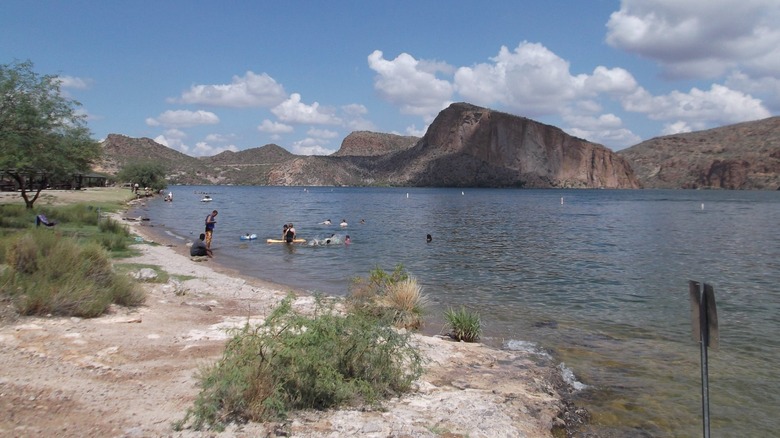
About a century ago, the Horse Mesa Dam was constructed along Arizona's Salt River in Tonto National Forest. It created a reservoir amid rocky canyon walls and hills called Apache Lake, with stunning desert scenery around the water. It's a spectacular spot to put in the boat and wet a line for largemouth and smallmouth bass, rainbow trout, walleye, and more. And while it takes a little maneuvering to get to the lake, as there's an 11-mile segment of Arizona State Route 88 that's unpaved, the drive is wonderfully scenic. It takes about two hours to reach downtown Phoenix, and make sure to stop for a photo from elevated viewpoints on turnouts along Highway 88.
Apache Lake's primary draw, aside from water recreation, is the Apache Lake Marina & Resort, which offers three ways to stay: hotel-style lodge accommodations, RV parking, and tent camping right on the lakeshore. If you bring your own boat, you can rent a slip at the marina, but the resort also offers pontoons, kayaks, or paddleboards for rent. You can also get a little more in tune with nature at the national forest's more rustic campground at Burnt Corral Recreation Site, which features 82 sites. And Apache Lake is also adjacent to the larger Theodore Roosevelt Lake to the northeast, separated by the aptly named Roosevelt Dam, which is also worth exploring for island camping and boating.
Woods Canyon Lake (Arizona)
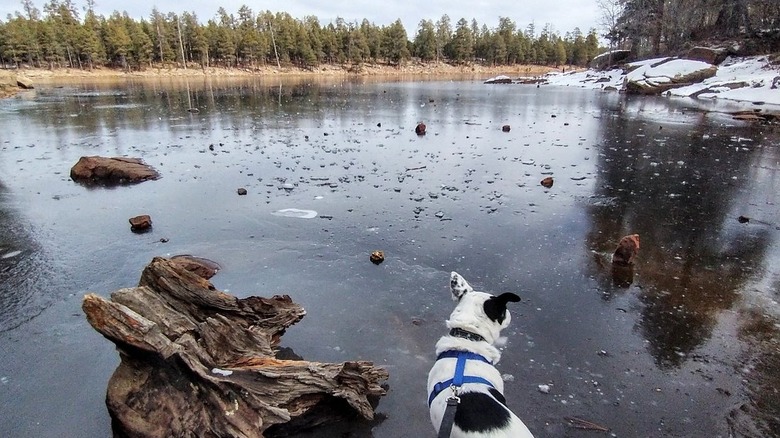
Woods Canyon Lake is a small recreation area located a little more than two hours northeast of Phoenix, although it doesn't involve slower gravel road driving like Apache Lake. So, even though it's farther away, it takes just about the same amount of time to reach. It's truly a haven for nature lovers in Apache-Sitgreaves National Forest, especially if you need to cool off a bit from the lower desert's sweltering summers. Its 7,600-foot elevation along the Mogollon Rim is often a whopping 30 degrees cooler than the city.
Head out for a bike ride, hike, or OHV drive on Woods Canyon Lake's network of trails, paddle along the wild shoreline, and fish. Take your pick from a couple of rustic campgrounds nestled amid picturesque ponderosa pines, such as Aspen Campground, with nearly 140 sites, and Spillway Campground, which is smaller and closer to the lake. To make both a day trip and a longer stay more convenient, the charmingly rustic Woods Canyon Lake Store is typically open between April and October, and along with essentials like tackle and snacks, you can even rent a range of both motorized and non-motorized boats.
Patagonia Lake (Arizona)
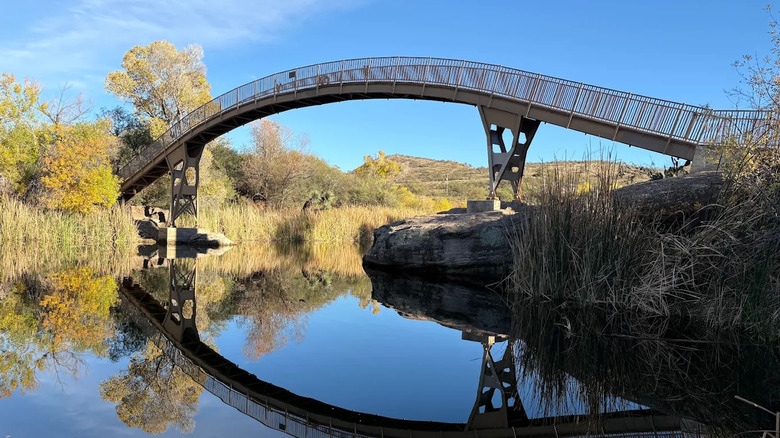
About an hour-and-a-half south of Tucson is a unique state park, which is arguably America's best winter getaway destination thanks to its year-round warmth. We're definitely talking desert vibes here, which is why the gorgeous Patagonia Lake is such a treat. Tucked within the Sonoita Creek State Natural Area, this park offers great swimming on a small beach — ideal for families — boating, paddling, hikes, and more. Grab your binoculars to spot hummingbirds, canyon towhees, Inca doves, and more. And pitch a tent, park the camper trailer, or even boat into one of more than 100 developed campsites. Every site has a picnic table and a fire ring, and some have a ramada for shade. Except for only two, all sites also have electricity, which is a boon for RVers.
Nature walks are a Patagonia Lake specialty, especially within the broader surrounding natural area. You'll find a visitor center for the state park right on the lakeshore, and 13 miles to the northeast, you'll also find the Patagonia-Sonoita Creek Preserve Visitor Center, where you can learn much more about the area's ecology and incredible biodiversity. Head out on the Sonoita Creek Trail, an easy route at 2.7 miles out and back, to take in great views of the hills, water, and especially local wildlife.
Eagle Nest Lake (New Mexico)
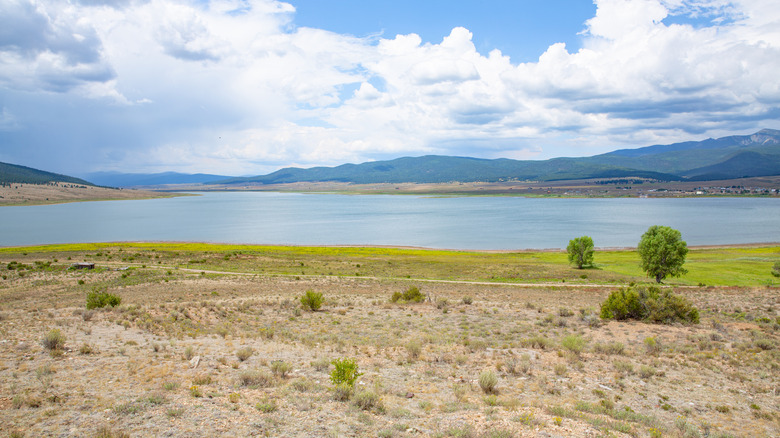
Amid the beautiful Sangre de Cristo Mountains of northern New Mexico, Eagle Nest Lake is a 2,400-acre fishing oasis. A state park encompasses its northern shore, and it's conveniently located along the beautiful Enchanted Circle Scenic Byway that encircles New Mexico's highest peak, Wheeler Peak. At 8,200 feet in elevation, Eagle Nest Lake provides a cool respite from the heat of the lower desert, but this lake doesn't have the woodsiness that we might associate with mountain lakes. You'll find wide-open vistas that are ideal for wildlife-watching, and it's a favorite for fishing. The state stocks Eagle Nest Lake with rainbow trout, "but it's the kokanee salmon and northern pike that keep anglers coming back," says Pat of the New Mexico Outdoor Sport Guide.
Camping is a treat at Eagle Nest Lake, especially if you like a tranquil setting. There's a neighborhood nearby, so you'll see some houses, but the view across the water to the wilder eastern shore is uninterrupted. That said, even though lakeside camping in the park itself is a great option here, there's also a highly rated spot called Eagle Nest Cabins, which hosts RVs, too. If you plan to pitch a tent or park the rig in the park, reserve ahead of time between May and October, or grab a site on a first-come, first-served basis between mid-March and the end of April.
Bottomless Lakes (New Mexico)
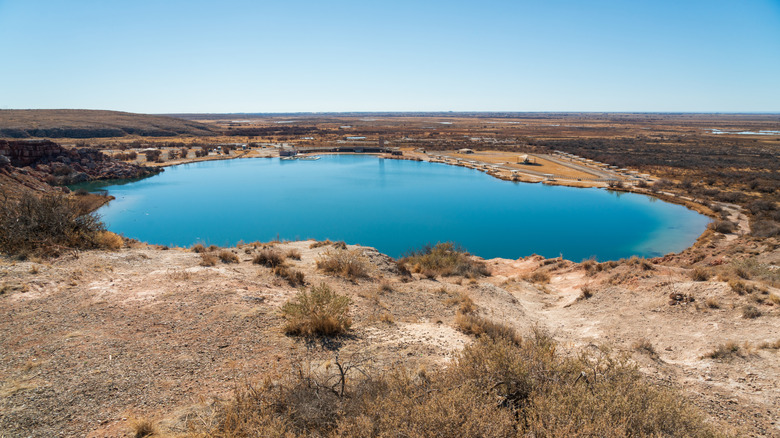
Just a 15-minute drive southeast of Roswell, Bottomless Lakes State Park preserves a landscape dotted with sparkling spring-fed lakes that makes a unique destination for a getaway. Rather than one continuous body of water, the park technically comprises a series of eight lakes that are actually giant sinkholes.
The rock composition of this area is limestone, which is porous and can dissolve as water flows through it over many thousands of years. As the ground collapsed, it filled up with water and transformed into a very interesting network of little lakes. Ranging from 17 to 90 feet deep, they're a joy to paddle around, fish and swim in, and even scuba dive. Stop into the interpretive center to learn more about what's also New Mexico's very first state park, and stroll along the 0.5-mile Wetlands Trail boardwalk, where you can dip into blinds and observe local wildlife.
Lea Lake is the largest and most popular spot in the park, located in the southernmost area. Fishing isn't allowed here, but you can head to Devil's Inkwell or Pasture Lake, just to the north, where rainbow trout are stocked between March and November. The largest campground is also situated around Lea Lake, where 32 sites offer a serene campground experience — with hookups. Toward the middle of the park, there are also three very small, first-come, first-served campsites near Devil's Inkwell and Pasture Lake.
Caballo Lake (New Mexico)
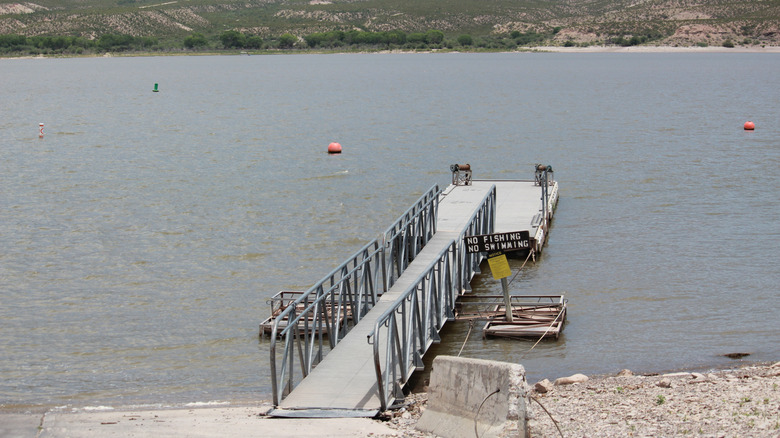
Set in the Caballo Mountains of New Mexico, Caballo Lake State Park is a gorgeous, underrated spot for camping, kayaking, hiking, and much more. It's right off Interstate 25, making it very straightforward to get to, and it's also just 2.5 hours south of Albuquerque, which is a gateway to the equally lovely Elephant Butte Reservoir. What these places have in common is that they're recreational bodies of water along the Rio Grande, and Caballo Lake offers tranquility, great fishing, and stunning canyon views.
Camping is a go-to at this state park, where 170 sites are distributed across the Riverside, Stallion, Appaloosa, and Palomino campgrounds. Additionally, there's primitive camping on the lakeshore and at boat-in sites for an even more serene escape. Many sites in the four main campgrounds have hookups for RVs, and if you have your boat along, there are two docks and one ramp. For the days when all you crave is a cool-down in the water, Caballo Lake is also ideal for cruising around on jet skis, water skiing, kayaking, and everything in between. Also, horseback riding is a great activity here, with three corrals and two tack rooms, plus adjacent camping and designated trails.
Lake Meredith (Texas)
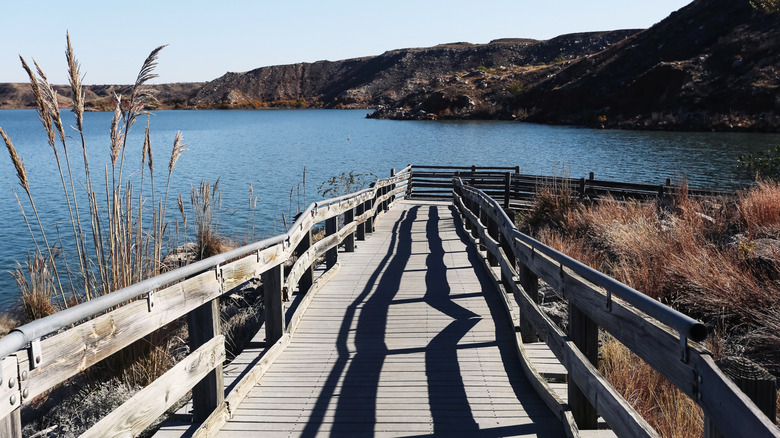
For a Texas Panhandle gem of a reservoir that offers a whopping 11 campgrounds and fishing opportunities galore, head to Lake Meredith National Recreation Area. Located about 35 miles north of Amarillo, it's a glistening oasis spanning just shy of 45,000 acres amid the rugged, western High Plains region, where grasslands begin to feel a bit more like desert. Hikers will delight at numerous trails that head along the lakeshore and into the hills, traversing a range of geological formations and habitats and affording some spectacular views. And on the eastern side of the lake, stop at Alibates Flint Quarries National Monument for a peek into the very distant past, when Ice Age mammoth hunters sourced the easily-chipped stones to make tools and left their literal mark on boulders with fascinating carved petroglyphs.
During specific times of the year, determined in collaboration with Texas Parks and Wildlife, Lake Meredith NRA opens up hunting seasons for white-tailed and mule deer, rabbit, coyote, and more. If bagging game isn't really your cup of tea, though, head over for the fishing, which is ideal from a boat or numerous spots onshore. Plenty of species are here for the catching, from largemouth and smallmouth bass to white crappie and walleye — the latter of which is the primary fish in these waters thanks to a stocking program. And when you're ready to head to camp — get ready for it — the vast majority of sites are totally free. There are 10 RV sites with hookups at the Sanford-Yake Campground, which charge a fee and are by reservation. But if you don't need hookups or you prefer to pitch the tent, you can do so without paying a penny.
Lake Pueblo (Colorado)
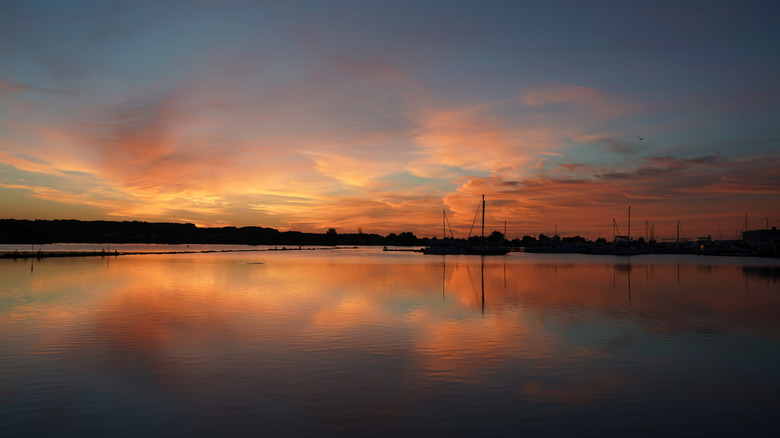
In southwest Colorado, fittingly located right next to the city of Pueblo, Lake Pueblo State Park is a haven for outdoor lovers who can't get enough of camping, fishing, boating, hiking, and more. Take in magnificent Rocky Mountain peaks in the distance, including Pikes Peak to the north, and take advantage of more than 4,600 acres of water. There are two boat ramps, both with six launch lanes, so you can enter from either the northern or southern edge of the lake, but to make it even easier to launch any watercraft you bring, there are also two full-service marinas. For fun without all of the equipment, though, you'll find plenty of opportunities for swimming, SUP boarding, and fishing, including underwater spearfishing for specific species.
Landlubbers will also find plenty to explore on miles of trails, including the Pueblo Reservoir Trail, which skirts the northern shore. The southern shore is where exploration gets really interesting, with a crisscrossing network of several multiuse routes also ideal for mountain biking, like the Outer and Inner Limits Trail, the Voodoo Loop, and numerous connectors. Horseback riding is also a wonderful option, as horses are allowed on many unpaved trails. And when it comes time to relax, there are more than 400 campsites to choose from, at least two-thirds of which have electrical hookups.
Vallecito Reservoir (Colorado)
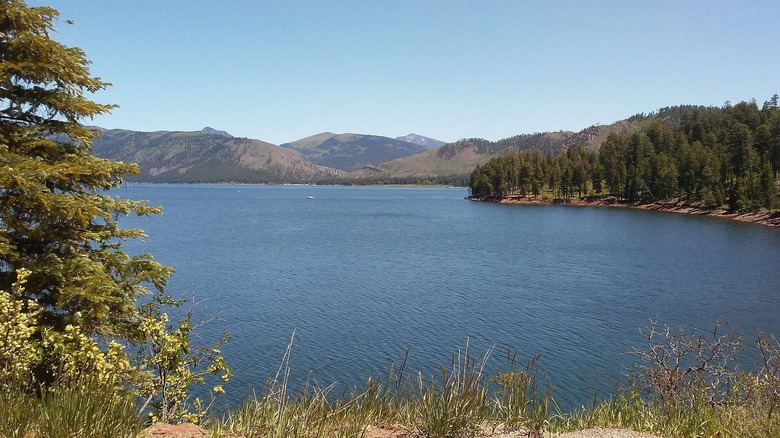
Located about 20 miles northeast of Durango, Vallecito Reservoir is often referred to as a lake, but it's not to be confused with the smaller, remote northern tarn called Vallecito Lake that's tucked in the mountains about 40 miles north (as the crow flies). The reservoir is nestled amid the San Juan Mountains and ringed with trees, making it ideal for bringing the camera along on a hike, heading out in the kayak, or camping at the sylvan Vallecito Campground. Eighty sites are all shaded, although fewer than half of these are reservable, and some sit along a gurgling creek. The U.S. Forest Service advises that these can fill up very quickly, so it's a good idea to plan if you have your heart set on waterfront.
If camping isn't quite your style but lakeside accommodation definitely is, head to Pine River Lodge, where dozens of cabins of various sizes offer the kind of invitingly rustic atmosphere we crave when experiencing nature — with a few more of the comforts of home. On the north end of the lake, head to The Weminuche Woodfire Grill for crowd-pleasing favorites, from Colorado-themed burgers to custom pizzas. Then, when you're ready to grab some staples or snacks, pop into Rocky Mountain General Store and Meats.
Angel Lake (Nevada)
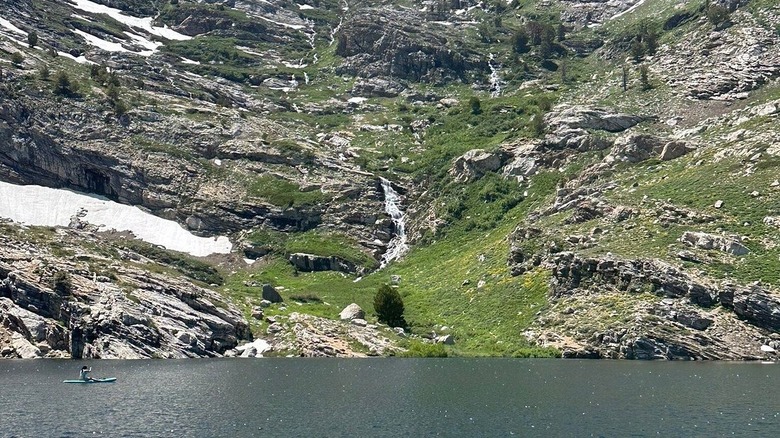
Believe it or not, Angel Lake is one of three naturally occurring lakes on this list; the rest are all reservoirs. This one takes us to the slightly fuzzy boundary of the Southwest for a stop in northeastern Nevada, but we were determined to get an underrated gem in the state on this list. Angel Lake is a small yet stunning tarn in the East Humboldt Range, 12 miles southwest of Interstate 80 at Wells, a nostalgia-packed Western getaway. Tucked away at 8,400 feet high in the mountains, the little oasis feels a world away from the desert vibe below.
Angel Lake is reachable via a beautiful scenic drive described fittingly as the Angel Lake Scenic Byway, otherwise known as State Route 231. Motorized boats aren't allowed, so this spot is ideal for relaxing amid the sounds of nature, whether you drive up for the day with your canoe or SUP board or pitch a tent at one of its 18 developed campsites. If you bring a fishing rod along, try your luck for rainbow, tiger, or brook trout. After the snow has melted through the spring, the fishing tends to be the best through the late summer and into October. Other wildlife sightings aren't out of the ordinary either, with the chance to see bighorn sheep, mule deer, mountain goats, and more.
Navajo Lake (Utah)
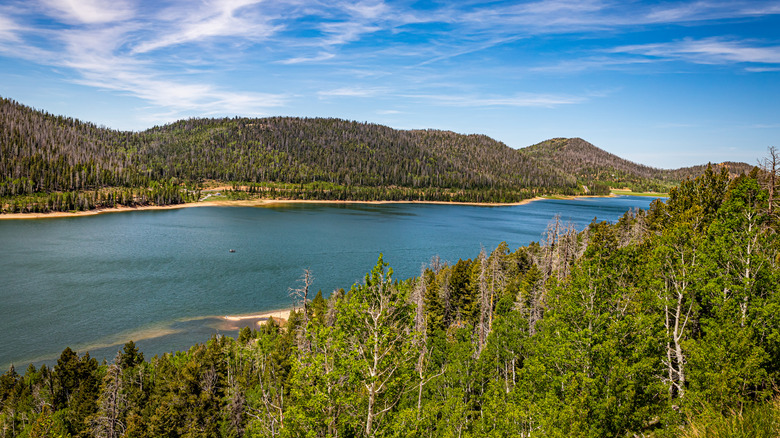
We can thank some long-ago volcanic activity for Utah's Navajo Lake, which was created when a lava flow dammed up its valley. It was augmented a bit with a large levee at one end, but the rest of the shoreline is stunningly natural. Surrounded by beautiful, tree-crested mountains, it's a lovely escape that's ideal for camping, posting up at a resort, boating, fishing, and hiking in Dixie National Forest. Both Spruces and Navajo Lake Campgrounds are managed by the U.S. Forest Service and offer lovely, rustic sites with views of the water. Te-Ah Campground is located just to the west of the lake, nestled in the trees along Forest Road 053.
From any of the campgrounds, head out on the Virgin River Rim Trail, from which you can see the glowing heights of Zion National Park in the distance. The Virgin River is the very same that cuts through to create Zion Canyon, and you can follow it for 32 miles on foot or by bike, and at about 9,000 feet in elevation, it's a great summertime retreat. And if you'd rather crash in a place with more creature comforts at the end of a day well spent outdoors, check into Navajo Lake Lodge with its true log cabin vibes. Boat rentals are also available, whether you're in the mood for a relaxing spin in a pontoon or a motorboat for fishing. You can also rent a slip for your own.
Fish Lake (Utah)
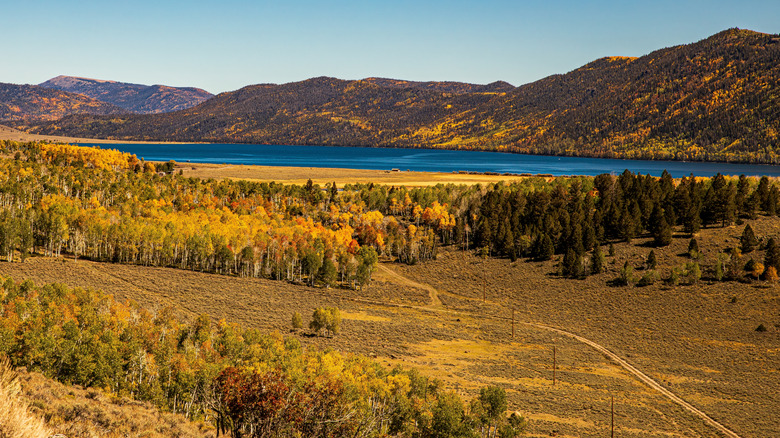
Here's a fun quiz you can ask of your friends or family: What's the largest living organism on Earth? Look no further than Pando, a colossal aspen tree clone that sits at the southern end of Fish Lake in Utah. Spreading over 100 acres and consisting of more than 40,000 trees, it's actually all the same tree! And as if it couldn't be any more interesting, it's thought to have become established at the end of the Ice Age.
Pando is just one of the great reasons to put this gorgeous natural lake on your list. Get the boat in the water at either Lakeside Marina or Bowery Haven Marina, and fish for several different types of trout, perch, and kokanee salmon. There are a total of six scenic campgrounds to choose from, including an equestrian campground, plus a couple of seasonal lakeside resorts. Bowery Haven Resort features a small motel, cabins, and an RV park, plus a charming pavilion that's available for rent for gatherings. Then there's Fish Lake Lodge, which also operates Lakeside Resort, with cabin rentals and motel-style rooms. Both are pretty rustic, and there's no cell service or Wi-Fi, so it's ideal for a true nature escape.