
Stop Cramming Your RV Cabinets: 12 Smarter Ways To Store Essentials Without All The Clutter

We may receive a commission on purchases made from links.
RVs are designed to be compact — and so are the storage spaces inside. Whether you're heading to the family campground resort with a Class A motorhome or heading out on a stunning and storied road trip route in a small trailer, space is always at a premium. Fortunately, there are numerous tricks and hacks to make even the smallest spaces efficient and aesthetically pleasing.
RV storage options typically consist of a lot of cabinets and drawers. Like at home, they're typically centered around the kitchen and the sleeping area, but they're also installed practically anywhere that they can fit. I currently tow a 16-foot trailer, and the "bedroom" area hardly has any storage at all. Instead, it's all concentrated at the front of the camper, near the bathroom and the door, so I've had to get creative with my storage solutions in the past. It takes a lot of effort to keep your RV tidy, but it can be really rewarding when things find their place and are optimized for the way we travel.
Of course, RV layouts vary, and a lot of the cabinets and drawers are pretty basic. But needing to do a little bit of customization is probably a good thing. As you get used to staying in your RV and figuring out your routine, you'll likely find things to change or add. That's where the 12 easy — and often very affordable — tips below come in. I'm drawing on my own experience as an RVer who has taken both short and extended trips. We've also referenced numerous blogs, YouTube channels, discussions on Reddit, product reviews, and more to share some of the most useful tips for optimizing your storage. You may even want to apply one or two of these at home.
Embrace magnets
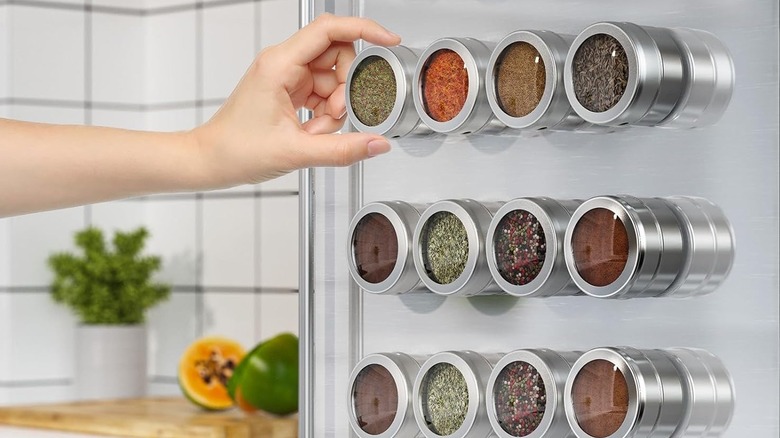
Magnets are the unsung heroes of any kitchen. We usually associate them with souvenirs that can be popped onto the front of the fridge, providing handy contact for photos or grocery lists. And when it comes to RVs, magnets can be a real game-changer. One popular organizational strategy is the use of magnetic spice tins, which sometimes come with a metal plate that's designed to be attached to the wall. They can also be used to collect any small things — think hair ties, lightweight jewelry, paperclips, and rubber bands — so, with that in mind, they're not limited to use in the kitchen.
When it comes to cool and craft ideas to maximize your RV's bathroom space, a magnetic strip in the bathroom can help to keep small metal objects such as tweezers, small scissors, nail clippers, and other personal care items within easy reach. Other similar options include magnetic knife holders in the kitchen. They're typically designed to have an extra strong hold, but you still may want to put the blades away while on the move. You can also use magnetic clips or hooks, which come in handy for holding utensils, brushes, potholders, mesh bags — you name it. I've found that some small magnetic hooks stuck to the side of the oven hood make great storage for utensils I use there all the time, like spatulas and tongs.
Take advantage of the sides and undersides of cabinets
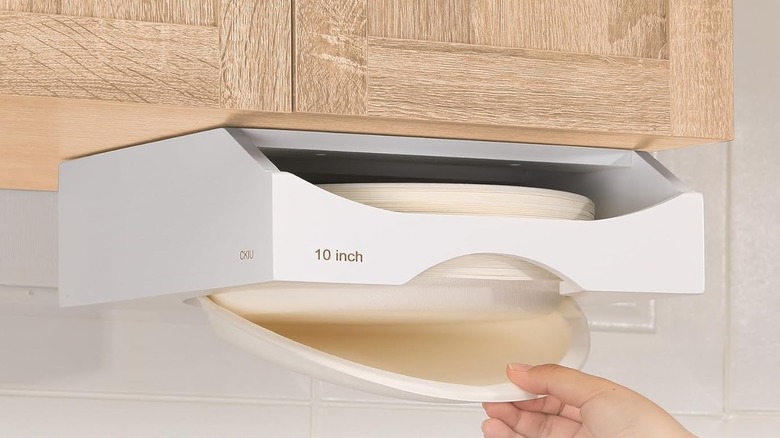
While the space under cabinets is limited, if you have storage that overhangs your RV's dinette or the kitchen area — use it. This is a great place for paper towel holders and hooks. You can either install something directly underneath the cabinet, such as a paper plate dispenser that is fairly flush with the bottom of the unit, or you can install a towel rod on the wall, for example, from which you can drape towels or dangle items from hooks. Just make sure you're not blocking any light from existing fixtures.
Another area not to be overlooked when maximizing cabinet space are the sides or ends of a unit. One needs to do a bit of observation here, and perhaps some measuring to make sure that you're not installing baskets or hooks that stick out too far since this can become a hazard. That said, if you have the space or are planning to install something relatively flush, such as a magnetic strip with clips or a shallow document holder, it may help you make better use of space you hadn't previously considered.
Use clear bins for storage
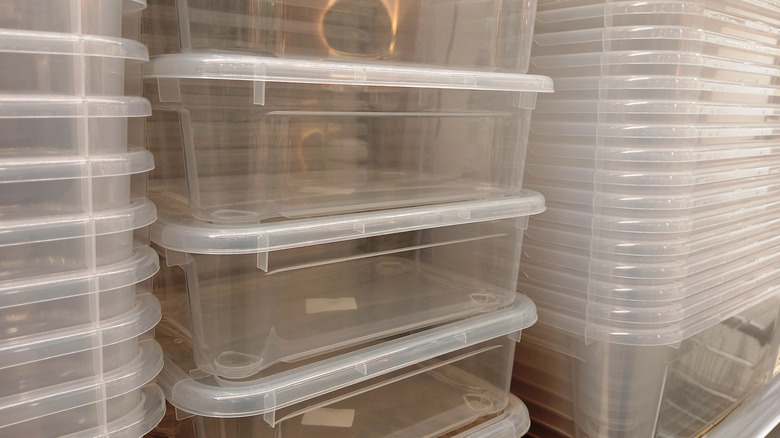
RV cabinets come in all shapes and sizes. In larger motorhomes and trailers, they can resemble the style and size you have at home, but in smaller vehicles, they're often compact. Because the shapes vary so much and they can be built in unusual dimensions, it's a great idea to use clear plastic bins for storing everything from cleaning supplies to food — even your socks and underwear. These have built-in handles that make them easy to grab, plus they're sturdy and large enough to fit a few bottles, some plates stored on-end, or a lot of small items.
Plastic storage is a popular choice for RVers because a consideration for many is keeping the weight of the whole thing relatively light — not to mention that a bump in the road could send dishes crashing. If things are contained, you can better control what shifts around during travel. One hack for keeping your RV belongings secure and organized is cutting pool noodles down to size to fill in any free space, as suggested by TikTok creator @thewildsasquatches. But it's also really useful to utilize stackable containers for storage, whether it's common pantry items or leftovers in the fridge. Approaching your cabinets like a kind of modular system will make sure you're not underutilizing the space.
Don't waste open space inside cabinets
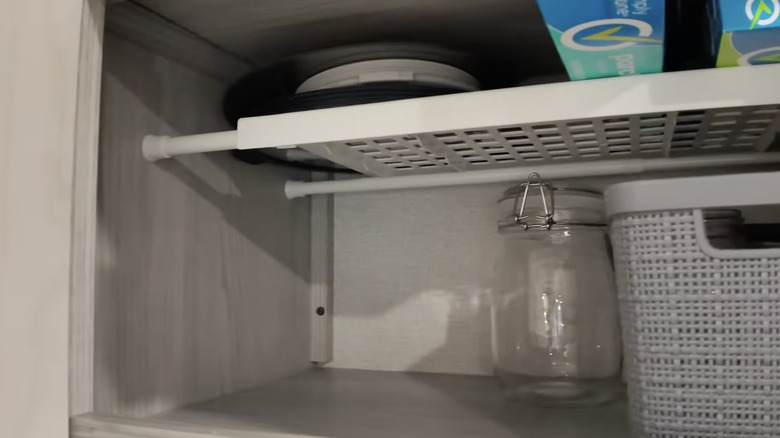
Unless you're customizing a van or trailer build yourself, cabinets typically come in the manufacturer's configuration, and they may need some tweaking to make them optimal for your needs. We typically pop things in a storage space and don't worry too much about any room that's left on top or in front, but in an RV, even this empty area can be put to use. Don't waste it! If you have cabinets that are deep enough, consider a caddy.
The simple Kaddy Cabinet Rack from AP Products is a good example of a small, simple wire design that can be installed inside of the door to hold dish brushes, sponges, and other things you want to easily access but wouldn't mind hiding away when not in use. These can also be suspended over the tops of doors without the need for screws or permanent installation techniques. Ashley Mann of RV Inspiration also suggests adding cork board and tacks to the inside of cabinets to hold relatively flat objects, such as cooking utensils.
Other options include installing different kinds of shelves. YouTuber Leigh Ann of Making My Abode On the Road shares a fun trick using short tension rods topped with a small metal shelf topper (more on shelves a little later). Don't be afraid to tackle DIY solutions for the utensils you use and the space you have available. For example, Mann also shares how a fellow RVer installed a small cluster of hooks at the top of a cabinet to hold measuring cups.
Install sliding racks for low, deep, or hard-to-reach storage spaces
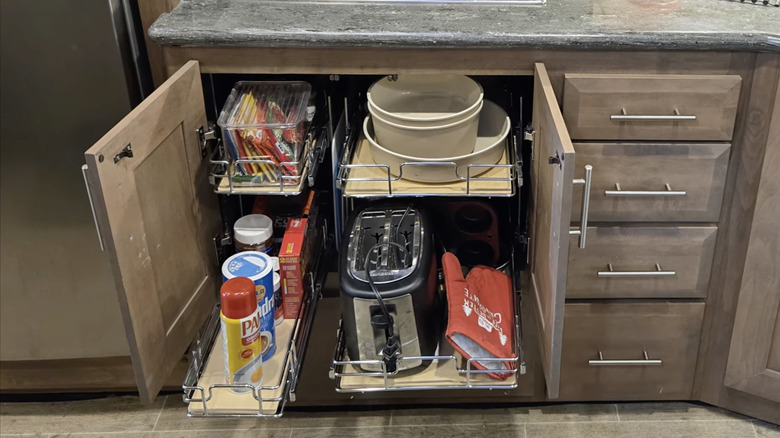
Sometimes cabinet doors or drawers are really low in and RV. Or they may be very deep, making even those at a more accessible height hard to use efficiently. Where very low or tucked-away cabinets and drawers may not be used as often at home — my bottom drawers in the kitchen are full of spare lids, backup coffee maker gadgets, and who knows what else — in an RV, every square inch counts. Access them all easily by installing a sliding rack or two, depending on the type of space you have.
Pull-out racks come in different configurations and numerous dimensions, so you'll have to do your research to find the solution for your vehicle. RV cabinets aren't typically standardized; large motorhomes may have cabinetry that's very similar in size to a home kitchen's, while a smaller trailer or van may have custom-size units or unique shapes. Make sure to measure the space carefully before ordering a rack to make sure that it fits. Single pull-out organizers are great for small, horizontal openings, and two-tier organizers are ideal for larger spaces.
Keep drawers organized with trays
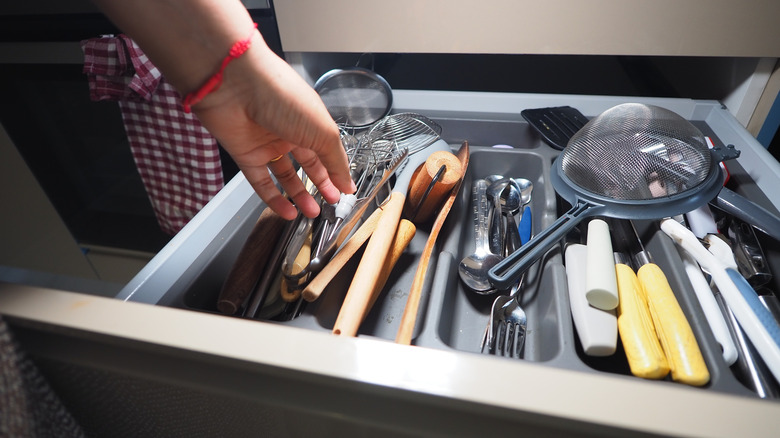
While we're on the topic of pull-out organizers, which are essentially sliding trays, let's also not forget about the drawers. To help keep items organized and separated, use basic flatware organizers to keep utensils, spare batteries, tools, pens and pencils, and any other small items in their place. I particularly like bamboo, not only because it looks nice and is relatively lightweight for a wooden object, but bamboo — actually an incredibly versatile grass — is naturally resistant to bacteria and very sustainable. I particularly love this expandable kitchen drawer organizer that can fit a drawer as narrow as 13 inches and expand up to 19.6 inches wide. Flexibility is always a plus.
Remember to keep the depth and height of the drawers in mind, too. You can use extra space behind or around the tray for whatever will fit, and if the drawer is tall enough, you may be able to stack two trays. That's another reason the bamboo trays come in handy, because they're blocky and fairly stackable. You may want to try using a transparent organizer on the top, which will help you keep track of the things below so they don't go out-of-sight, out-of-mind.
Go vertical
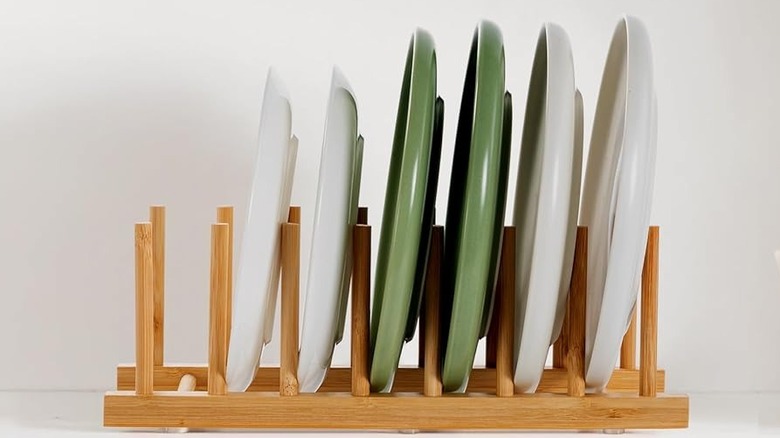
A lot of what we use in the kitchen is flat — cookie sheets, muffin tins, pot lids, plates — but it can be a hassle trying to sift through metal trays and other objects when they're stacked awkwardly on top of one another. Maximize both space and accessibility by storing things vertically. We already mentioned bins, which can be used for storing flat objects on end and containing them neatly, but there are a couple of other ideas to consider, too.
A wooden or metal plate organizer works well for keeping things separated, and they come in a variety of sizes and materials. Another option is to install vertical tray dividers, which function more like little walls inside the cabinet to keep things from falling over. These are particularly nice, both visually and practically, because they are pretty sturdy and things don't end up hanging on pegs or open bars. If you're worried about the actual storage device moving around, tack it down with some Command strips. Don't discount the small stuff, either. If you use mason jars for storage or have other spare lids floating around, a bamboo vertical lid holder keeps them tidy and easy to grab.
Add extra shelves
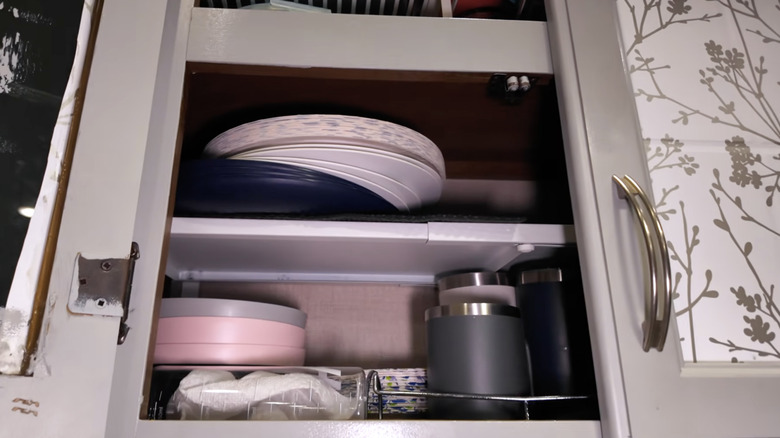
Everyone's needs are different, and sometimes too much space in a cabinet isn't helpful. Installing a shelf, whether permanent or stackable, will maximize efficiency and how much you can store. Popular options include metal organizer racks, which are often coated with plastic to make them a bit slip-resistant. You can also get handy with hanging shelves or document trays that you can fix directly into the unit, like screwing one to the underside of an existing shelf, for example.
Tension rod shelves — made from a series of rods that are connected to create a surface — are easily expandable to fit the desired space. Or, you can install permanent under-desk storage, which is a solution that works equally well inside or on the underside of the cabinets. Of course, you can also build a pantry out of taller cabinets by installing more permanent shelving.
Maximize empty space above other objects by adding adjustable hanging holders, which essentially hook onto the edge of a shelf. The adjustable element is useful to make sure they can grip any size shelf snugly. IKEA's Lack shelf is also a versatile, minimal, wall-mounted nightstand alternative that can be used in many ways.
Make use of the space under the bed
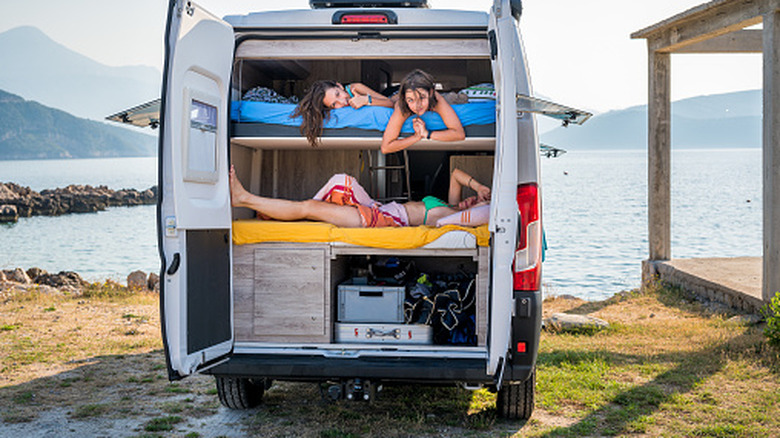
Every RV is designed differently, and beds are no exception. Some are Murphy-style while others are permanent. If there's space beneath them that's out of the way, take advantage of it. Use this room to store bedding or other items you don't need to access every day. Van-lifers, in particular, know the value of under-bed storage and are always thinking about road trip security tips for when you can't leave valuables at home. Creative storage solutions are important!
Beds are often installed quite high to accommodate what many van travelers refer to as the "garage" in the back. But it also means additional storage in the interior. Even if you don't have a van, it's a tip worth considering. Utilizing any under-bed space you may have relieves your other cabinets of items that aren't needed every day. Building storage units under the bed, including cabinet doors and pull-out organizers, is a great way to maximize space and find room for bulkier items.
Get savvy with tension rods
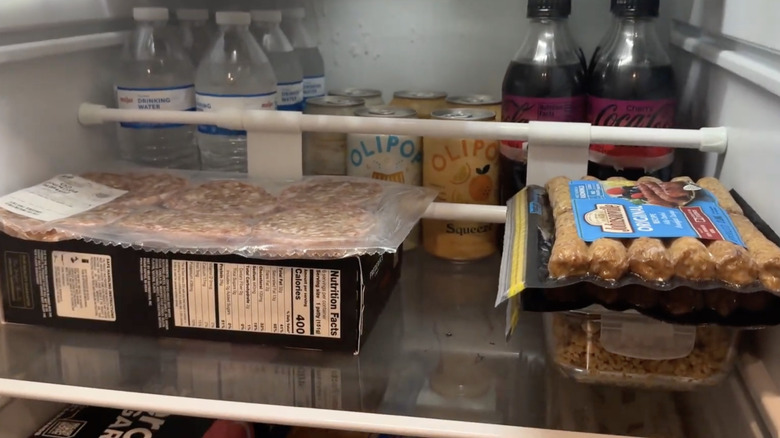
We've mentioned tension rods a couple of times already, but now it's their turn for the spotlight. These affordable items can be used for a variety of purposes, from a kitchen utensil rod to a temporary towel-drying area that can be taken down when you're done with it. You can also purchase an adjustable shelf organizer, which utilizes a series of connected tension rods and can be installed very easily at any height within the space. An article on RV Travel makes an excellent point, however, that you'll want to make sure your RV walls — or the insides of cabinets — are strong enough to sustain the pressure the rods will exert. No one wants a hole in their wall. One commenter added that an adhesive curtain rod holder may help to disperse the pressure.
Another thing that RVers know all too well is that everything inside the vehicle is bound to move around when you're on the go. Cabinets have to be packed full or well-organized with containers so that things don't shift around too much — or worse, break. A tension rod comes in handy for keeping things steady when the cabinet isn't full. The same goes for things in the fridge. A basic tension rod or two will do just fine for small fridges, but you can also purchase non-slip stabilizer rods designed specifically for this purpose. With four points of contact, they're a bit more stable than a single rod.
Hooks are your friends
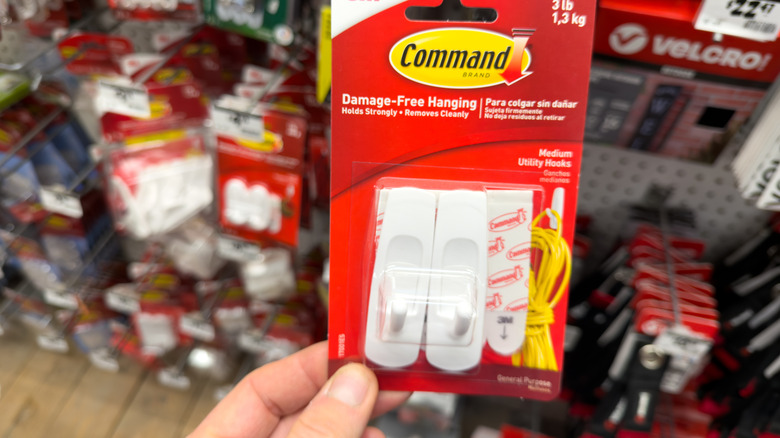
Hooks are an RVer's hidden weapon. They come in a myriad of types. There are removable-yet-strong Command brand hooks — which come in virtually endless sizes and styles and are total game-changers for RV camping — as well as permanent coat hooks with two to three prongs that can be installed directly onto doors and cabinets. You may also want to maximize space on the back of your bathroom door with an over-the-door hook system. Companies like Camco specifically make these for RV doors, which are thinner than the ones in your home.
Larger hooks may come in handy when installed on the front of a drawer or cabinet for holding a dish towel, reusable produce bags, or anything else you can think of. A series of small hooks works great for storing individual cooking utensils, dish-washing supplies, or potholders, or things you need to grab on your way in and out of the door (think: keys, a pair of gloves, or a headlamp). Not only do these items stay accessible, it's a great use of end-of-cabinet space.
Like with tension rods, it's important to keep your RV's materials in mind if you're planning to screw anything directly into the walls, but adhesive options are great for this reason. That said, over an extended period of time, the "removable" aspect of Command hooks and similar items will depend on what the camper's surfaces are made of. Temperature fluctuations and age will also affect this. I have a paper-like veneer over some of the paneling in my camper, for example, and after a couple of years, even a Command hook is bound to remove that finish.
Use a hanging closet organizer in large cabinets
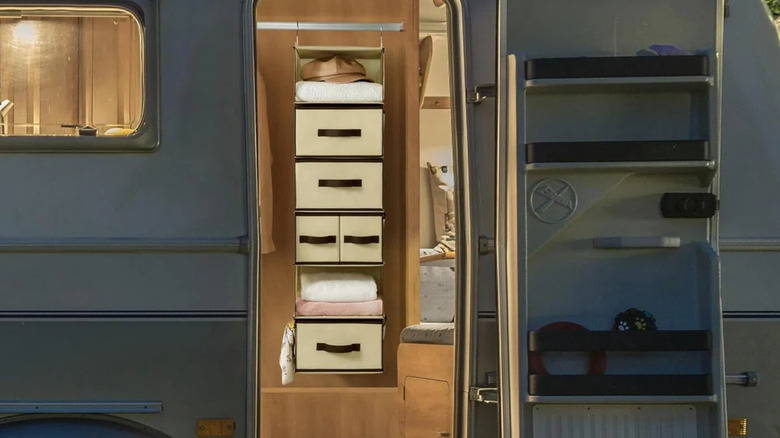
Many RVs come standard with at least one version of a pantry- or wardrobe-style tall cabinet that is ideal for storing taller items. I have one that has two doors, which open up into a relatively wide, deep space. It's located on the opposite end of the camper from the bed, but I still use it to store clothes. It also holds bulky items like folded towels, extension cords, other electrical gear, and cleaning supplies. Depending on the layout of your camper, you may install shelves to break up the space permanently. But if you prefer a bit of flexibility, a hanging closet organizer or two makes a world of difference.
Aside from its potential to be used to store anything — not just clothes — one of the best features of a hanging organizer is that its compartments can be used either fully open or stuffed with pull-out storage containers or soft drawers. These are ideal for storing smaller objects, from personal care items and socks to snacks or clean dishcloths. I have a couple of clear storage bins nestled into the compartments of mine. They're lightweight, I can see what's in there, and they keep items contained so that things don't slip out and fly all around the cabinet while the camper is in motion. Plus, closet organizers come in a wide variety of lengths and widths. A hanging shoe organizer, for example, may come in handy for storing anything from pantry staples to electronic cables.