
Common Clothing Mistakes To Avoid On A Trip To Asia

Packing is something of a competitive sport. While seasoned travelers can usually blend into the background, amateur packers tend to stick out like sore thumbs on the tourist trail. That holds true in Asia, a vast and wildly diverse continent that challenges travelers in practical, cultural, and occasionally emotional ways. But even the best packers, privy to these game-changing, space-saving packing hacks, can see a holiday ruined by throwing the wrong clothes in their suitcase.
From the frozen plains of Mongolia to the sweltering streets of Vietnam, through the westernized beach clubs of Bali, and the futuristic skylines of China, packing for Asia is no simple task. Every corner of the continent comes with its own climate, customs, and expectations, and after spending almost five years traveling and living across the region, I know firsthand how easy it is to get it wrong.
To help, I've put together a list of some of the most common clothing mistakes I see tourists make (including several I've made myself). Avoid them, and your trip should go a whole lot smoother from the moment you land to the day you head home.
Assuming the whole continent is tropical
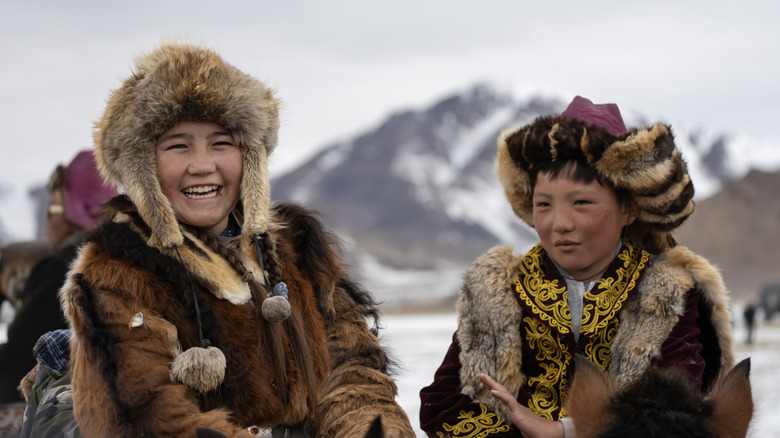
Technically speaking, this is a mistake travelers make long before they even dig out their suitcase. Thankfully, it's one that can be rectified with a quick Google search or check of your weather app. Put bluntly, we can be a little broad in our geographical sweeps, painting the entire continent under the meteorological hallmarks of a single Southeastern corner.
To be clear, Asia technically runs from east of the Aegean Sea, encompassing everything from the Gulf States to Japan, and encompassing India, Pakistan, Kazakhstan, Mongolia, China, Vietnam, and dozens more. Just within the countries listed, you'll find rainforests, arid deserts, alpine valleys, megacities, and tropical islands. Packing lists vary drastically, so it's imperative to dig into the conditions on the ground where and when you'll be there. The differences can be drastic: South Korea is scorching hot in the summer, but plunges to freezing temperatures in the Winter. Other places like Thailand and Malaysia keep fairly steady heat and humidity throughout the year, but just have rainy seasons.
Even some places you'd assume were predictable can be surprising. Hong Kong, a city long regarded as a sweat box, actually has pleasantly cool temperatures in January, and you might not want to be caught without a second layer or even a sweater at night. Regardless, don't assume you know the weather. Look at the seasons you'll be there, and pack accordingly. It's the best way to avoid excessive over- or under-packing, and stops you being caught out on arrival.
Dressing for Instagram instead of humidity

In fairness, this advice should apply to any destination. But particularly in Asia, dressing for the photo you want, instead of the weather you should have, is a big mistake. It's understandable: some of the continent's most famous destinations are begging to be photographed, whether you're on a rooftop bar in Bangkok, a lantern-lit street in Hanoi, or matching the vibrant colors in a temple in Laos. The issue is that the social media posts you're hoping to emulate don't show the sweat patches, dehydration, and exhaustion that come from dressing poorly for the heat.
In Southeast Asia, South Asia, and many parts of the Middle East, the humidity is utterly relentless. You can step outside looking fresh, but feel like you've stepped into a sauna just a few minutes later. Hair puffs up, makeup runs, sweat marks appear, and your frustration rises. There's a good chance you'll be heading back to your apartment by midday to change, or at best, hiding in malls and cafes to cool off.
Lightweight, breathable fabric is your friend in these climates: think linen, cotton, bamboo or even merino wool. Those polyester shirts are going to be a nightmare so maybe leave those at home. I live in Kuala Lumpur and deal with it every day. While I do try to look my best, I learned to style with light fabrics like linen, and only wear thicker clothes when I know I'll be working inside most of the day. Any other times? I'm going for comfort, and assuming I'll be sweating profusely soon.
Not considering your shoes
Asia can be unpredictable. Some of its cities have exploded in size in recent years, and, in many cases, the infrastructure hasn't caught up with that development. One minute you're strolling down a perfectly paved sidewalk, before it disappears, and you're hopping off a 3-foot curb into a drainage ditch at the side of a busy road. My own 10-minute commute takes me through a hyper-modern subway station, a luxury mall, a building site, and the occasional knee-deep floor — and that's not an exaggeration.
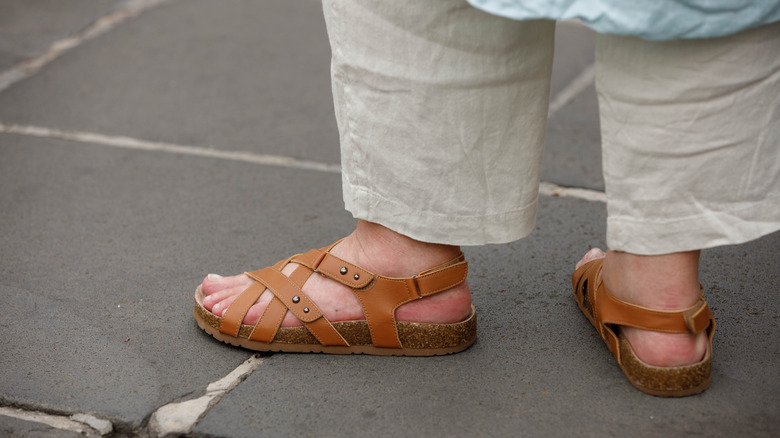
Opting to bring fashion-first footwear is a big mistake in many Asian countries, especially bulky or impractical heels, cheap flip-flops, or bright-white tennis shoes. Flip-flops are super common with backpackers or beach-goers who have flocked from the islands to the big cities, assuming they'll still be acceptable. But try running around Bangkok, Jakarta, or Delhi on a night out in what is effectively bare feet — it's more dangerous than anything. It also singles you out further as a tourist.
Opt for comfortable walking shoes or supportive sandals. Similar to the rest of your clothes, you want breathable and light, with the ability to slip them on and off, which is a huge benefit on days when you're temple hopping or visiting a local home. Generally, the more unknown the territory, the more support you want. Your feet will take a beating with all the walking you're doing — don't make it any worse.
Forgetting clothes to wear in religious or sacred sites

One of the highlights of any first visit to Asia is the abundance of remarkable sacred sites dotted around the continent. From extravagant mosques in Kuala Lumpur to ancient Chinese temples in Beijing and everything in between, the traditions, architecture, and atmospheres on display are some of the most captivating things you'll encounter.
But if places like the incense-laced pagodas of Japan are new territory for you, you may be unaware of the clothing protocols for many of the sites. While customs vary from religion to religion and site to site, most sacred places in Asia require a degree of modesty from their visitors. As a good rule of thumb, assume both men and women will need to at least cover their knees and shoulders. Stricter rules, like in mosques, may require more coverage for females, like head coverings or longer dresses all the way to the ankle. Angkor Wat, in Cambodia, for example, recommends covering at least to the knees and shoulders as a sign of respect, but won't enforce the rules unless you intend to visit the inner chambers. The Sheikh Zayed Grand Mosque in Abu Dhabi, on the other hand, requires women to wear full-length abayas and headscarves to enter, and men to wear long trousers. While not always as strictly enforced, this is also a mistake to avoid in Europe's churches and mosques, too.
Many of the sites will have places to rent or buy the necessary clothing, which means you'll need cash on hand and be prepared to get hot and stuffy with another layer in what could be an extremely hot country. My own partner has made this mistake, needing to don a full-length covering with a headscarf in 100-degree weather — she didn't last long. Plan ahead and wear clothes that can get you in, and invest in a cheap scarf or sarong you can use.
Dressing like a tourist

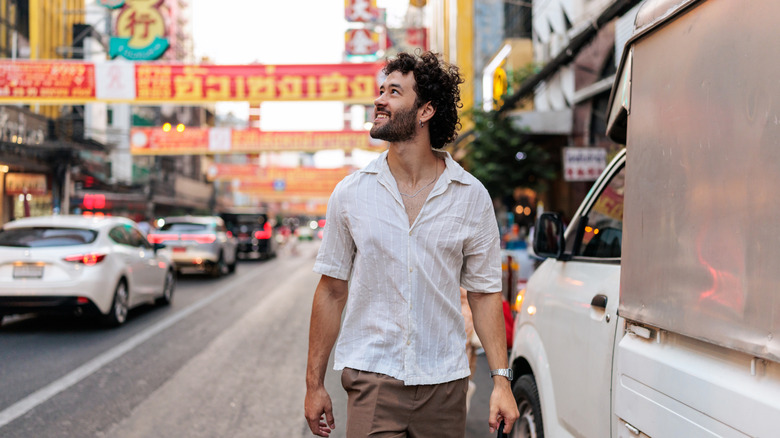
Many people in the West have a bad habit of trying to look as foreign as possible when travelling. The beach shorts and flowery shirts come out, the unforgivable "I love X-place" t-shirts make occasional appearances, and we develop a strange affinity for bucket hats — in short, things we'd never wear even on the warmest days in our home countries.
While it's an amusing stereotype, there's a good chance it's impacting your trip more than you think. American and European tourists stand out at the best of times, but highlighting yourself further puts you at a higher risk of petty theft or scams, and makes you a prime target for pushy vendors looking to take advantage of tourist naivety. Even if you don't come up against any of that, day-to-day interactions might be slightly frostier if you're an obvious tourist. Of course, this isn't a guarantee, but it's worth considering your wardrobe when you're out and about. Interestingly, athleisure wear instantly singles you out as an American tourist, too, so reconsider those leggings.
Dressing more low-key, or closer to how the locals do, can help make you a little less noticeable. You'd be surprised how well it works. I often walk down a major street food center in Kuala Lumpur in jeans and a dark t-shirt, watching tourists in the traditional get-up be hassled and goaded into restaurants while I slip past with minimal friction. I've never been mugged either...but I'm 6-foot-4 with a beard and tattoos, so take that observation with a pinch of salt.
Forgetting a rain jacket in the monsoon season (or anywhere tropical)
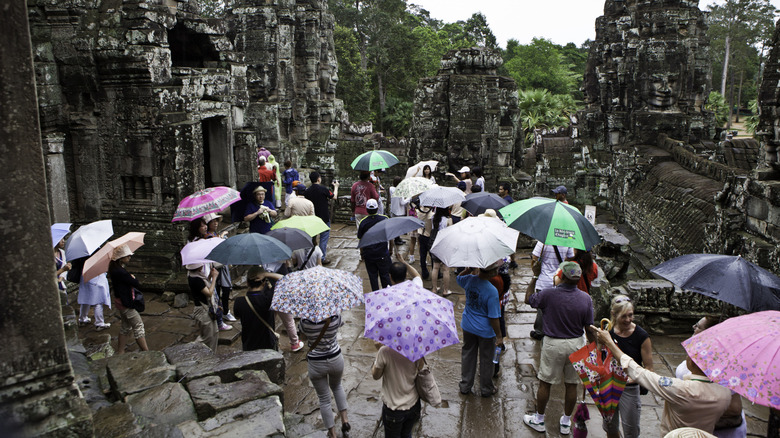
A tropical downpour in Asia is spectacular, often exciting, and often equally devastating. A significant portion of the continent goes through some variation of a wet season, with the more tropical climes of Southeast Asia and Southern India facing incredible downpours on an almost daily basis. These seasons don't always match up with seasons in the U.S. or Europe — in fact, different coasts of the same country can have completely different weather patterns, so it can be a little complicated to plan ahead.
Many tourists assume the monsoon season is a constant downpour. In reality, they're typically characterized by aggressive bursts of late afternoon rainfall. Knowing that, it's not a wild idea to suggest that the wet season might actually be the best time to visit many countries, like Thailand. Whatever time of the year you're visiting, it's a good idea to throw a lightweight rain jacket or umbrella in your suitcase for these unexpected storms. This is especially true if you're moving around the country. Your city stay in Bangkok, for example, might be hot and dry in November, but switching to the beach in Koh Samui will see you enter the wet season.
Despite living in a city that's hit by epic thunderstorms almost like clockwork, I'm caught out at least once or twice a month. I'm then faced with the decision to wait it out, hop in a taxi that takes an hour because of the weather and traffic, or run for it, completely drenching myself in the process. Throwing that jacket in your day bag is the difference between returning to your hotel to change and continuing your day as planned.
Picking the wrong day bag
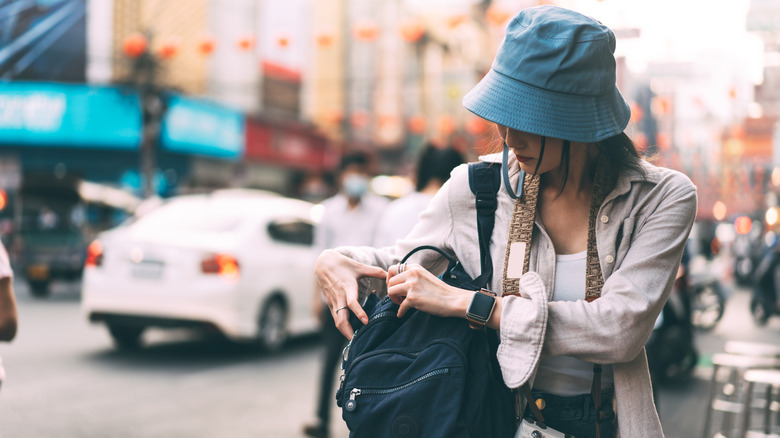
To avoid using any broad strokes, no town, city, or country is perfect. Petty theft can happen anywhere — alright, it's very unlikely to happen somewhere like Dubai — and taking basic precautions should be second nature to any traveler. Yet many tourists make terrible judgment calls when it comes to the bags they're using.
You need your essentials on your daily adventures, but throwing them in a designer bag slung over your shoulder is problematic for a few reasons. First, if it's a designer, it's drawing attention. If there's anyone in the area looking for a target, they're going for the person with the Louis Vuitton bag. Secondly, if it's dangling off your shoulder, it may as well be on a plate for a thief. Some areas, like Bali, are notorious for their motorbike bag-snatches, and those almost always target easy-to-snatch bags like that. Even if it's not a high-end purse, loose shoulder options are always a bit of a risk. That risk is doubled if there's no zipper or closing mechanism, as thieves only need to slip a hand inside.
Instead, opt for a conspicuous bag that sits tighter to the body. Sling bags and fanny packs have made a huge comeback for this reason. Some can hold a surprising amount of gear and come with magnetic clips for your keys, RFID blocking features, and heavy-duty zippers that are a nuisance for criminal fingers to pry open. Backpacks are still a great option, too, as long as they're not easy to get into. While you're at it, try Rick Steves easy bag tip that could save you from pockpocketing, too.
Wearing too much white
I don't care how smooth you think you are with your street food eating technique; you're not immune to rogue splashes and slurps. While your spills back West might be a New York dog's relish or a rogue dribble of pesto from a sandwich in Florence, in Asia, you'll be navigating a bowl of Pho on a tiny plastic chair on a busy Saigon street, or awkwardly slurping the broth from a Xio Ling Bao in a scorching night market in Shanghai — there are a lot of variables, and wearing white is asking for a mess.
The risks don't stop at food, though. Dusty roads, poor air quality, and even something as unexpected as the water quality when washing your clothes can all have a big impact on your whites. These factors obviously aren't catch-alls in every country in Asia, but many will have significantly different circumstances from what you're used to.
I eat a lot of street food in Kuala Lumpur, and while I'm now much better at staying clean, my Saturday morning curry laksa is enough of a threat that you won't find me wearing white at all. It would also be see-through if I wore it outside, thanks to my sweat. One of the biggest shifts in my whites that I noticed was in Bangkok, where I spent hours during the week on the back of motorbikes, getting exhaust fumes pummeled into the fabric. Over time, many of my brightest clothes started to take on a dull, dingy look, and I gave up trying to keep them so.
Forgetting your light layers
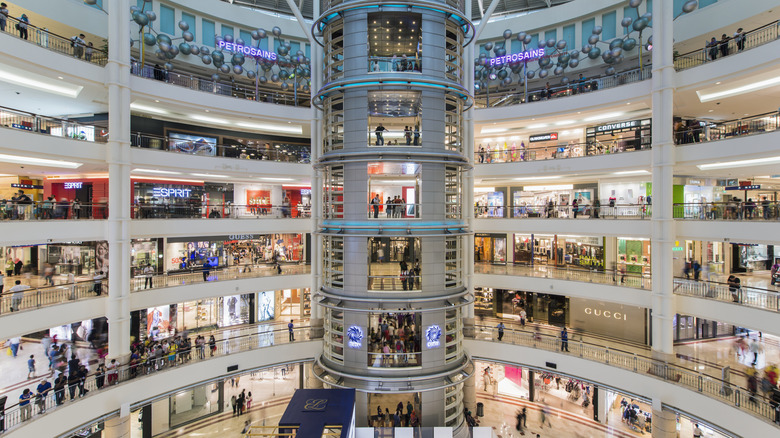
Before you pass off Asia's malls as too boring for your cultural curiosity, you need to understand how much of a role these mega shopping centers play in the lives of modern Asians. First, the sheer size of them is hard to grasp, and worth checking out in the flesh. Second, there's AC — try exploring Singapore, Bangkok, Manila, or Shenzhen for hours without seeking a little respite. And thirdly, their food courts are extraordinary and a great place to sample what locals eat when they're out and about.
But it's the air conditioning point that we're zeroing in on. Your first mall trip will probably be fine. You'll be seeking some relief from the heat and humidity, and enjoy the chill for a while. But when you realize you're heading back, and maybe haven't been out exploring, you're going to regret not having a light layer to throw on while you explore the place. It's quite possible that a restaurant you've been recommended will be located in one, too. You'll forget you're in a shopping hub while you're eating, but it's probably running on the same AC the rest of the place is.
And those light layers can help in other situations, too. The UAE, while roasting during the day, can drop considerably at night, and an extra layer can help dull the little shiver. Even in Malaysia, with its brutal humidity, I've found myself caught out when visiting the higher altitudes of the Cameron Highlands or Genting, where nights can be a little brisk. This mistake won't make or break your trip, but it's handy to remember, especially if you'll be there a while.
Not considering your destination
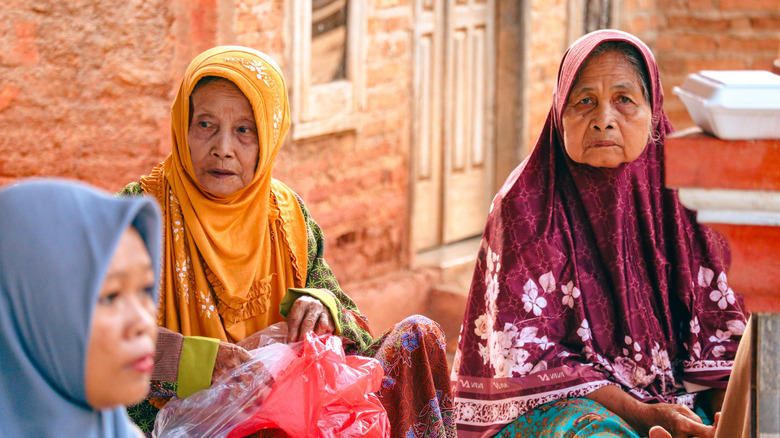
Not considering your destination is an issue on many levels. Cultural nuances are complex, and few locals will expect you to grasp every detail of their customs, but doing a little research before visiting to make sure what you're wearing isn't inappropriate or worse, outright offensive, should be the bare minimum in terms of effort.
At the inappropriate level, you'll find too many tourists fresh from Bali or Koh Pha Ngan, hitting the streets of Bangkok in swimshorts, flip-flops, and even bikini tops or shirtless for the boys. Just because it's hot doesn't mean the dress code stays the same as the party town you just left. Show the locals some respect and dress appropriately. At the other end of the spectrum, Malaysia has distinct regions where Islam is more strictly observed. In Kuala Lumpur, you can wear pretty much what you want, within reason, but head to Terengganu or one of these under-the-radar Malaysian islands, and wearing a short skirt or going topless might make some locals a little uncomfortable — although they are still super understanding.
Again, it can be hard to keep track of the cultural norms in every region you visit, especially if you're moving around a lot, but thinking ahead and having clothes that work in any situation is always a good idea. And if you're still not totally sure, it's always best to err on the side of conservative, just in case.