
10 Old-Growth Forests That Have Been Around Longer Than America Itself
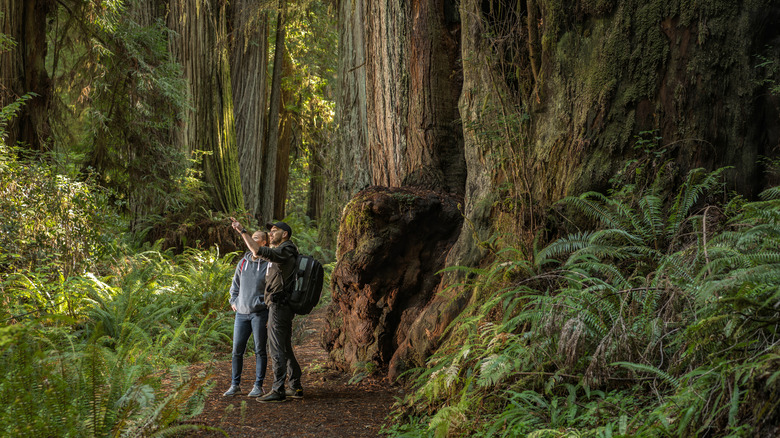
Old-growth forests have been left to mature undisturbed for centuries. They are defined by trees that are three, four, or even 500 years old, sometimes even more. Their multi-layered canopies are deep, complex ecosystems that younger forests simply cannot replicate. Before the European settlers arrived, the land now known as the United States was covered in almost 1 billion acres of trees. However, since 1600, the vast majority has been cleared. Of the country's modest cover today, only around 7% is old-growth. Therefore, visiting any of America's ancient forests should be seen as a privilege. But which of them were around before the U.S became a country?
There is no single definitive list of America's oldest stands of trees. So we drew on multiple sources, including the National Park Service and the U.S. Forest Service, on top of state tourism and conservation groups, to come up with this list. Every one of them includes trees with documented ages predating 1776. We then whittled the list down to 10, prioritizing their historical significance, ecological uniqueness, and visitor appeal. So here are 10 of the most fascinating old-growth forests that were thriving long before America became a thing.
Tongass National Forest, Alaska
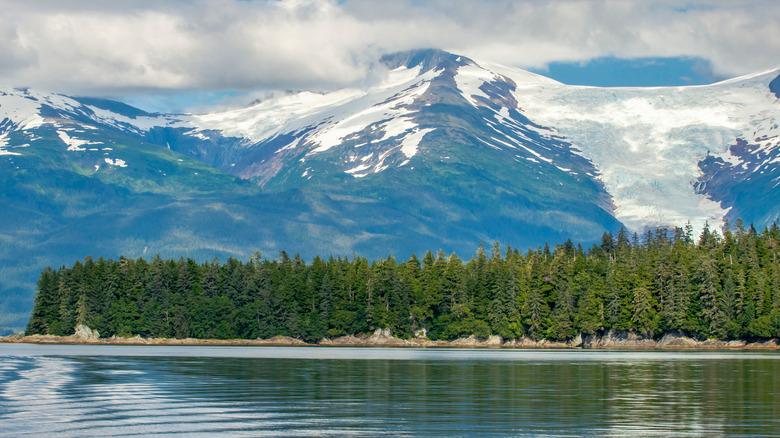
It's the size that makes the Tongass National Forest stand out. It swallows more than four-fifths of Southeast Alaska, and at almost 17 million acres, it's bigger than West Virginia. Crossing from its southern tip to its northern edge is a 500-mile journey, and given that the forest covers thousands of islands, fjords, and inlets, there's also about 11,000 miles of coastline. Therefore, Tongass isn't a forest you simply visit. It's one you disappear into.
The trees that fill Tongass are much older than the country they belong to. Some individual specimens have been rooted in this soil for up to a millennium. That's long before Columbus was even born. Among the oldest are the western hemlock, red and yellow cedar, and Sitka spruce. With some of them growing taller than 200 feet, these species also tower above everything else here. Up above, the Tongass skies are home to more bald eagles than anywhere on earth. At ground level, brown bears and wolves share the forest floor with Sitka blacktail deer and mountain goats.
There are around 700 miles of hiking trails, the primary way to explore this roadless wilderness. The West Glacier Trail to Mendenhall Glacier is widely regarded as one of the forest's finest hikes. It's a rugged and difficult 3.5-mile route that winds its way through groves of those ancient trees and ends at a rocky outcrop overlooking what appears to be an ocean of ice. However, Tongass is under threat. Logging dating as far back as the 1940s has claimed around half of the forest's oldest and largest trees, and the pressure to log more has never really stopped.
Albright Grove, Great Smoky Mountains National Park, Tennessee
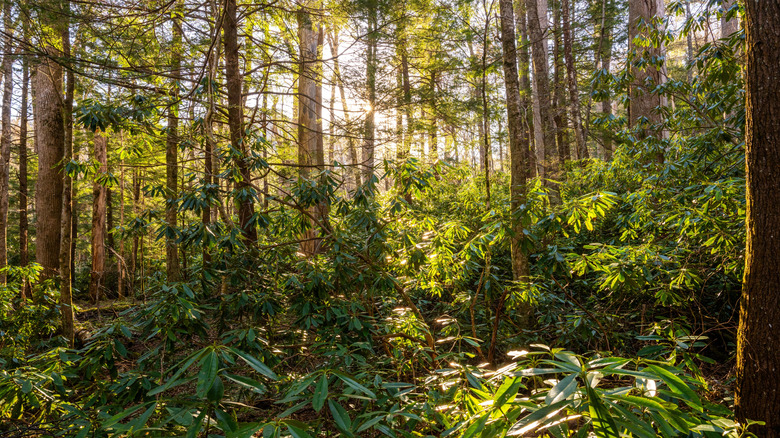
When loggers swept through the Great Smoky Mountains in the early 20th century, they left almost nothing standing. However, the Albright Grove — sitting high up where lumber companies couldn't get it — survived. Many of the trees in this old-growth forest have now had 500 years undisturbed, and they grow to a scale that feels out of place in Tennessee — more like the size and density you would expect in a tropical rainforest. One tulip poplar here has a circumference of around 25 feet and once stood as tall as 135 feet before lightning trimmed it down. The silverbells, with their bark a mosaic of slate gray and copper, also reach a scale you would not expect. Even the dead trees here, stripped bare by time, stand like sculptures. Fraser magnolias, buckeye, yellow birch, basswood, beech, and sugar maple fill the spaces between the giants.
Underfoot, violets, trillium, wild mint, and trout lily push through a carpet of moss and fern that climbs the roots of those trees. When winter arrives, the bare canopy allows snow to settle on the hemlock branches. Bears get ready to den in the hollow trunks, and the forest settles into a deep, cold quiet. In spring, the ground erupts in wildflowers, and songbirds fill the canopy with color. This is the best time of year to visit Albright Grove. However, you need to prepare for a seven-mile round-trip hike of moderate difficulty from the Maddron Bald Trailhead. Parking is limited, so get there early, and camping is available at the nearby Cosby Campground.
Hoh Rainforest, Olympic National Park, Washington
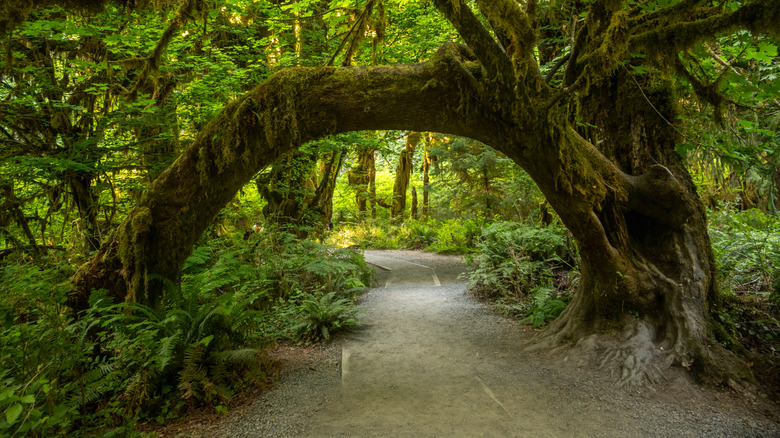
The Hoh Rainforest in Olympic National Park is thought of as one of the most intact temperate rainforests not only in the U.S. but also in the entire Northern Hemisphere. It's an ethereal Washington gem with lush views beyond belief and an ecosystem that has been evolving uninterrupted for thousands of years — and it gets wet here. In fact, between 12 and 14 feet fall every year, with the majority of downpours occurring between October and April. That rain has been feeding the forest's Sitka spruce, western red cedar, Douglas fir, and western hemlock, with some gulping it down for around half a millennium. That's a lot of time to grow, and some have managed to reach as high as 200 feet. And when one of them finally falls, it becomes a nursery log. This means they feed a new generation of trees that will stand sentinel in the forest centuries from now.
Ferns and moss blanket almost every surface in Hoh. The moss is an epiphyte, which means it clings to its host without harming it, pulling all it needs from the rain and air. The Hall of Mosses is a good place to see it. It's an easy 0.8-mile loop through draped maples and towering evergreens. If you seek more of a challenge, the Hoh River Trail pushes for 17 miles into the backcountry and ends at Mount Olympus base camp. Along the trail, you might catch sight of Roosevelt elk. The park is home to the largest unmanaged herd of its kind, and come September and October, you'll hear the males bugling their mating calls across the valley. Take care and retain a respectful distance if you see them. These are wild animals, and you shouldn't get too close.
Heart's Content Recreation Area, Allegheny National Forest, Pennsylvania
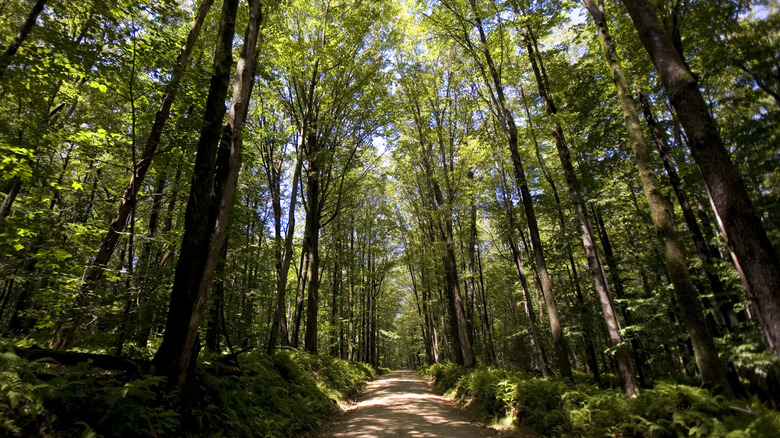
During the mid-1800s, logging companies were stripping Pennsylvania of almost every tree they could. But an unusual decision by the Wheeler and Dusenbury Lumber Company spared 20 acres that were passed into the care of the Forest Service in 1922. By 1977, the Heart's Content National Scenic Area in the Allegheny National Forest became a National Natural Landmark. Today, it's one of the last places in the state where you can stand small among towering white pine, eastern hemlock, and American beech trees. They were already getting old when the country was still young, with some now estimated to be as mature as 400 years old, and their canopies push as high as 140 feet overhead.
The Munsee Lenape people were accustomed to the land here long before the loggers arrived. What they knew then is still here. Sort of. Younger trees now push through the gaps left by fallen giants, and beech bark scale, an invasive insect that opens trees to a fatal fungal infection, is taking its toll on the American beech. Furthermore, deer have stripped the understory bare, leaving little but a carpet of hay-scented fern, which is not to their taste.
What the forest will look like in another century from now is anyone's guess. For the moment, visitors can still enjoy this beautiful old-growth forest on hikes like the easy one-mile Interpretive Trail, which winds its way through this scenic area. But if you seek something wilder, the 8,663-acre Hickory Creek Wilderness is a 12-mile loop through the forest's rolling terrain. Trails are intentionally left rough and barely marked to preserve a feeling of true wilderness, so make sure you are well prepared.
Adirondack State Park, New York
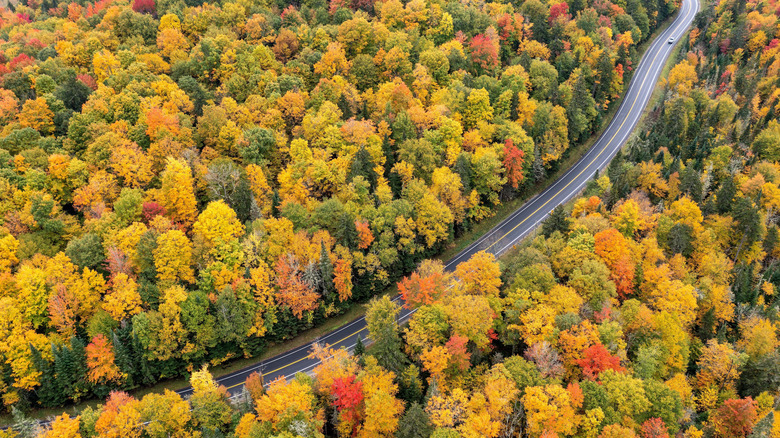
For more than a century, it was actually assumed that the Adirondacks had been more or less logged bare. A handful of ancient stands were known to have survived, and that was considered it. Then researchers began to take a closer look. Forest scientists from Harvard have now identified up to 440,000 acres of old-growth forest growing seemingly unnoticed. Like other forests in this article, those acres survived because they grew on terrain too steep and remote for loggers to reach.
The oldest trees in Adirondack State Park have been around for more than 500 years, while in the Eastern High Peaks, researchers found at least five species with trees older than three centuries. Eastern hemlock and red spruce rank as the most mature, with sugar maple and yellow birch not far behind. Some of them are huge, too, growing five feet wide in some cases, with canopies pushing 130 feet above.
The park itself is massive. In fact, it's America's largest state park outside of Alaska. No protected wilderness in the lower 48 covers more ground than the 6 million acres on offer here. It makes Yellowstone, Yosemite, and the Great Smokies look small — and we're talking combined here. Bears, moose, and dozens of other mammal species call this park home, and there are more than 2,000 miles of hiking trails and even a 100-mile canoe route winding their way through the park for you to explore.
Cathedral State Park, West Virginia
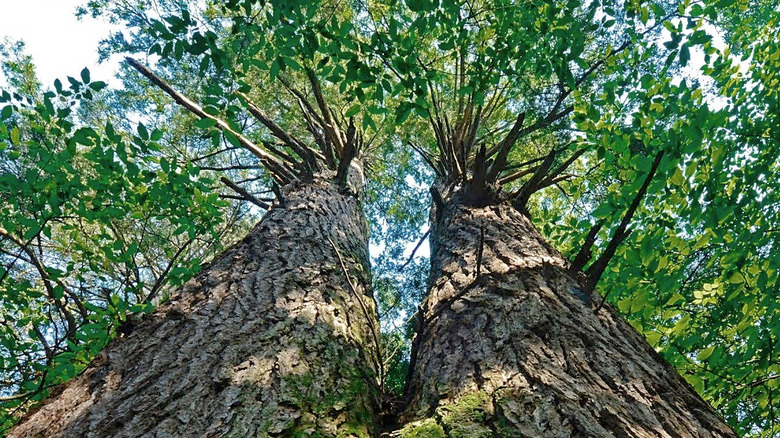
It was neither a marketing team nor a park planner that named Cathedral State Park. The trees themselves basically made no other name fit. Hemlocks up to 500 years old rise with trunks as straight as marble columns and a canopy so dense it turns midday into twilight. It's a cathedral in everything but stone and one of West Virginia's most underrated state parks. But it nearly didn't survive. In fact, Cathedral was destined to suffer the same fate as many other forests in the country until a man named Brandon Haas bought it in 1922. He then sold it to the state of West Virginia on the condition that it would never be cut down.
That decision ensured Cathedral became one of the few remaining patches of old-growth hemlock in the Appalachian highlands today. The oldest of them has stood for half a millennium. It reaches 123 feet, with a base spanning 20 feet. The hemlocks here share the ground with dozens of other species, including black cherry and yellow birch. The forest floor also supports an extraordinary range of ferns, wildflowers, and vascular flora, including rhododendrons that crowd the understory.
You can enjoy this 133-acre park on its six miles of trails. Among them is one that traces Rhine Creek through the heart of the forest. It doesn't take long to complete, which is just as well, as Cathedral State Park is for day trips only. This means there's no camping available. But nearby state parks, Canaan Valley and Blackwater Falls, offer pitches for those wanting to stay in the area longer.
Burnwood Old-Growth Forest, New River Gorge National Park and Preserve, West Virginia
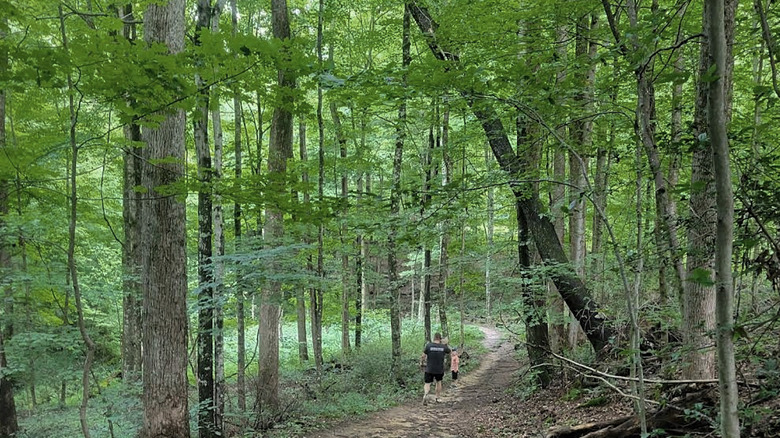
The newest national park in the USA just so happens to hold some of the country's oldest trees. New River Gorge National Park was established in 2020, and it preserves over 70,000 acres of West Virginia wilderness along the New River, which is, ironically, one of the world's oldest. Hidden within the acreage along the Burnwood Trails is a 12-acre patch of old growth that has stood the test of time.
One reason why the Burnwood Old-Growth Forest never fell to the logger's ax is the Laing family, who owned this tract and never let it go. This was despite the mining and timber interests that were busy clearing everything else around it at the time. As a result, some trees here date back to the 1670s, the oldest being a black gum that's just 19 inches in diameter despite being at least 350 years old.
Other ancient species in this forest include towering hemlocks, broad-canopied beech, crimson-tinged maples, and no less than four species of oak. There are at least 32 species of trees in total, way more than anyone can expect to see in a 12-acre forest. Centuries of winds have bent and contorted the upper branches into shapes that younger trees can never achieve, and a thick canopy ensures the grove is up to 15 degrees cooler than the outside world. Even in summer, the shafts of light breaking through don't raise temperatures in the forest too high, and it's a great time to visit.
Chattahoochee National Forest, Georgia
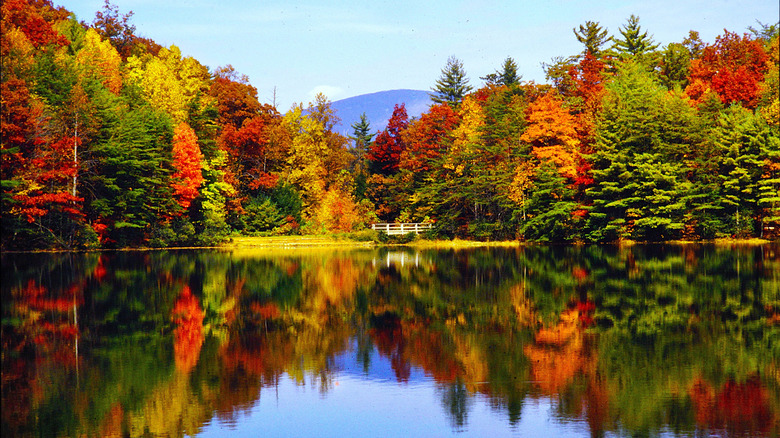
Every year, thousands of hikers make their way to Springer Mountain to take their first steps on the 2,197.9-mile-long Appalachian Trail. While many are aware that the 729-foot Amicalola Falls marks the trailhead, few realize they are also starting their hike in an old-growth forest. Spanning more than 750,000 acres, Chattahoochee National Forest is one of the eastern United States' great forests. It's bordered by the Cherokee, Nantahala, and Sumter national forests, which together form an almost unbroken expanse of protected land across four states.
The walk to Maine is, of course, extremely long. Most people who attempt it need at least four months to do so. And only around 20% of people who set out to do just that actually make it. Fortunately, if you just want to admire the trees, this north Georgia mountain forest is close enough to Atlanta for a day trip. You'll find large tulip poplars, among which is the famous Gennett Poplar, a tree deliberately spared from the ax of the lumber company that once owned this land. Its trunk measures 18 feet at the base, and its crown clears 100 feet overhead. Other trees have been standing here for more than three centuries and were already getting old when Atlanta was nothing more than a simple railway junction.
Another ancient tulip watches over the precise spot where the Chattahoochee River begins. This is the river that supplies drinking water to millions of people downstream in Atlanta. The forest it shelters is dense with rhododendrons and rare wildflowers like rattlesnake plantain and mountain camellia, while black bears can be found moving through the canopy year-round. In spring, the branches are alive with migratory songbirds, adding color and song to this scenic recreational paradise.
Porcupine Mountains Wilderness State Park, Michigan
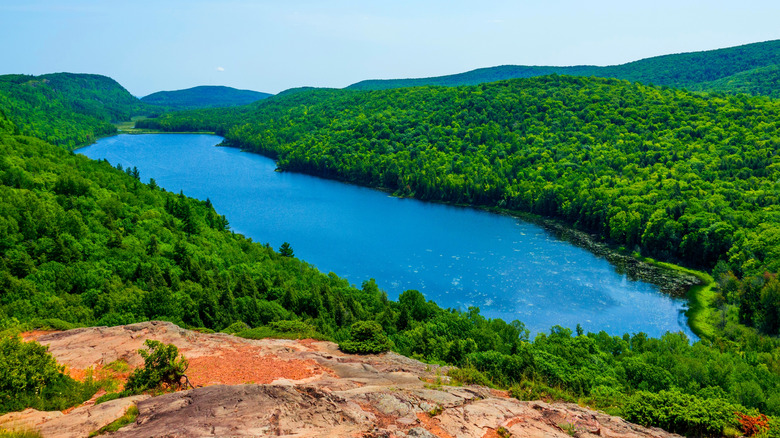
Formed by lava flows almost 2 billion years ago, the Porcupine Mountains are among the oldest on Earth. Once jagged and as high as the Rockies, they were worn down by time and glaciers into the forested ridges that now loom over Lake Superior. "The Porkies," as they are endearingly referred to, protect 35,000 acres of virgin northern hardwood forest, and USA Today readers rank the Porcupine Mountains Wilderness State Park as one of the ten best in the country to visit in 2026. It was the Ojibwa who named these mountains "Kag-wadjiw," or "place of the crouching porcupine." The outline of the peaks at dusk reminded them of the woodland creature, an animal which is still frequently seen throughout the park. Gray wolves, bears, moose, and pine martens also inhabit the forest, and in spring, the hemlock canopy fills with the songs of Blackburnian and black-throated green warblers.
Those hemlocks have stood leaning over the banks of the Presque Isle River that winds its way through the park for around 350 years. Beneath them, wild sarsaparilla and bluebead lily push their way through the deep shade of the forest floor, while yellow birches have grown to a scale so large that their familiar papery bark is lost in the sheer size of their trunks. Above it all, an ancient basalt escarpment drops down to Lake of the Clouds — a long, still lake with blue waters, kayaking, and fishing. Winter brings lake-effect snowfall, sometimes as much as 250 inches, and transforms the park into one of the Midwest's best cross-country skiing destinations, while there are over 90 miles of hiking trails to explore at other times of the year.
Jedediah Smith Redwoods State Park, California
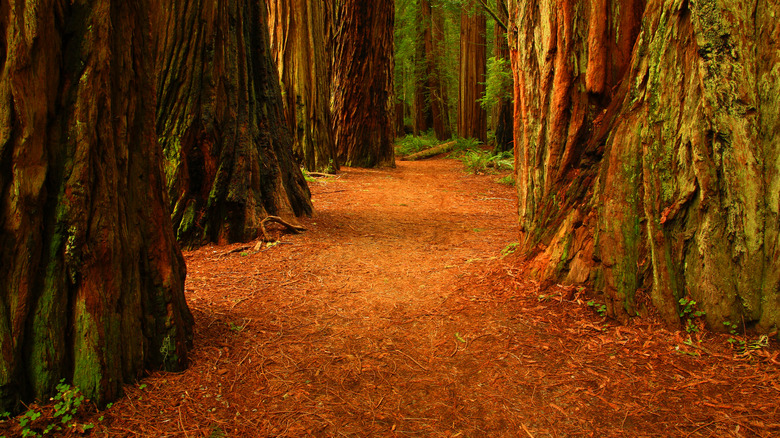
Jedediah Smith Redwoods State Park is home to 7% of the last remaining old-growth redwoods on the planet. Coast redwoods are enormous, and within this 10,000-acre park in northwestern California, you'll find the biggest one on Earth. Hail Storm is a neck-craning 321 feet tall and almost 25 feet wide. In terms of the world's biggest trees, it's only topped by three sequoias, and they are all in California, too. In terms of age, not many trees can top the redwood. There's one in the park that's more than 2,500 years old — that's older than the Roman Empire, never mind the USA. But how do they live so long? One secret to their survival is an ability to regenerate after a wildfire. Their bark can also resist insects and rot, making them virtually indestructible in the tree world.
Stout Grove offers one of the finest old-growth experiences on Earth. It's a flat, hushed expanse of giant redwoods where afternoon light slants through the canopy and falls in shafts across the fern-covered ground. A short walk away, the Grove of Titans is home to some of those largest living things. Push on less than a mile, and you'll be at Howland Hill Road. This is an underrated California road through otherworldly scenery and is a fascinating drive. If you plan to stay a night or two, the Jedediah Smith Campground is the only one in the park where you'll be surrounded by these old-growth giants.