
10 Boomer Travel Habits That Younger Generations Hate (And For Good Reason)

Generational divides are nothing new. The previous generations' war cry of "back in my day..." has been a permanent fixture of the cultural conversation for years, with millennials (born 1981-1996) as guilty as their Generation X (born 1965-1980) and baby boomer (born 1946-1964) elders of romanticizing their own virtues. It won't be long until Generation Z (born 1997-2010, although this generation is young enough that its end year is not yet definite, as generations typically aren't fully defined until the cohort reaches adulthood) starts berating their successors, Generation Alpha (loosely considered as being born after 2010 for now), for their own habits.
But when it comes to travel, millennials, Gen Z, and even a significant portion of Gen X are united in their disdain for boomer tendencies. To the younger crowd, boomer habits represent everything that was wrong with the sudden propagation of global travel: mass market tours, surface-level cultural dealings, and a refusal to adapt to modern times.
It's not that the younger generations think they have it perfect — according to SkyScanner, younger travelers admit the most guilt about some travel behaviors compared to just 7% of boomers, speaking to a broader issue of self-awareness — but there's just something about the way they go about their adventures that rubs the young-uns up the wrong way. With that said, it's vital for us to remember that this doesn't apply to every single boomer. Many are considerate travelers, with brilliant views on the world, respect for the cultures they experience, and an adventurous spirit.
Embracing technology

At the top of the list is the refusal of some baby boomers to fully accept technology when they travel. While younger groups have grown with tech, often maximizing it to ease travel days, many boomers seem reluctant to part with their older techniques.
We all know the situation well. You arrive at the airport, check in online via the airline's app, boarding pass on your phone, and bag tag printed at the DIY-kiosk, only to find yourself stuck behind an older couple sorting their way through an inexplicably large binder to find a giant print-out of their booking page (10 pages of T+Cs included, of course). Similar situations occur at the hotel check-in, tour meet-up points, and even restaurants. In the modern world, you can strut up almost anywhere with nothing but your phone and a passport and be ready to go, yet there's a distinct hesitance in the boomer demographic, with only 28% (via GlobalTravelTech) using their smartphones to book travel and just three in 10 using any AI features.
That's not to say they're completely averse to technology. According to AARP, 89% of travelers over 50 use technology in some form during the travel process, but it seems limited primarily to websites as opposed to specialist apps. Some allude to being overwhelmed by the sheer volume of tools available, a fair response, considering a single day's travel for a millennial could feature any number of airline, e-Sim, hotel, VPN, travel aggregator, ride-hailing, translator, and map apps. But while millennials and Gen Z see that as immensely convenient, boomers see information overload.
Resisting independent travel

Boomers' travel habits were largely shaped by when they were born. The '50s and '60s marked the true dawn of modern travel, with the arrival of long-distance commercial flights. Until then, only the wealthy had the privilege of exploring the world, while the rest were confined to local beach trips or anywhere within driving range. But when the commercial jetliner became commonplace, the planet opened up, and the travel industry responded by building packages for a newly middle and working class who were, understandably, nervous and naive about what it involved.
Those packages set the standard for what travel was. Travel agents took away grunt work and research, booked over the phone, and sent them on their way. Buses turned up and herded them to hotels and attractions. Old habits die hard. Younger travelers have moved away from this model (although McKinsey & Company is noting an interesting swing back towards it), placing higher value on independent exploration, booking last-minute, skipping agents, and digging into off-the-beaten-track destinations, while boomers still prefer the travel option of a group tour. Above and beyond it being habit, though, boomers simply value the hands-off experience and often aren't as physically capable as their younger counterparts.
Whatever the reasons, the reluctance of many boomers to veer from their path is a frustration to younger travelers. To boomers, it may feel constricting and impossible to scratch below the cultural surface of a destination. The concept of backpacking and European summers embodies the younger approach, while the lack of control can feel intimidating for a boomer. They want to know where they're going, how they're getting there, and when they're leaving. And if it's all paid for before they go, that's even better.
Overpacking large suitcases

Minimalism has become something of a bragging point for many younger travelers. From backpackers boasting in hostels about the 30-litre backpack they've lived out of for six months to Euro-trippers on a two-week carry-on only vacation, less is more. Our fellow travelers from the baby boomer generation have a far different perspective: more is definitely more.
There are many reasons for this. Above all, baggage can be expensive, and, simply put, boomers have a larger operating budget than millennials. But perspectives have also shifted. Boomers have a tendency to value comfort over mobility, operating with a just-in-case mentality, by adding excessive clothing choices in case an accident happens, bringing their own hairdryers instead of using the hotel's, and turning their bags' compartments into miniature pharmacies. The overpacking can be a nuisance at the check-in counter, but even once they're on the plane, it can continue. One traveler on Reddit noted their frustration, saying, "Every time I have to fly, I see multiple Boomers putting way over the limit-sized bags in the cargo bins that take up the space of at least two normal carry-on size bags."
There's an undertone of selfishness that comes into play with the luggage, too. Another traveler on the same thread said, "They bring hand luggage suitcases, stuffed full to the brim, and put their large backpacks/handbags with them above their seats. Me and hubby have boarded to no space for our hand luggage a couple times, staff do nothing, and we've had to put our hand luggage under our seats." Combine these habits with the fact that some boomers seem to expect their kids or younger travelers to carry their suitcases on their trips, and you've got a recipe for intergenerational disaster.
Avoiding eco-friendly options
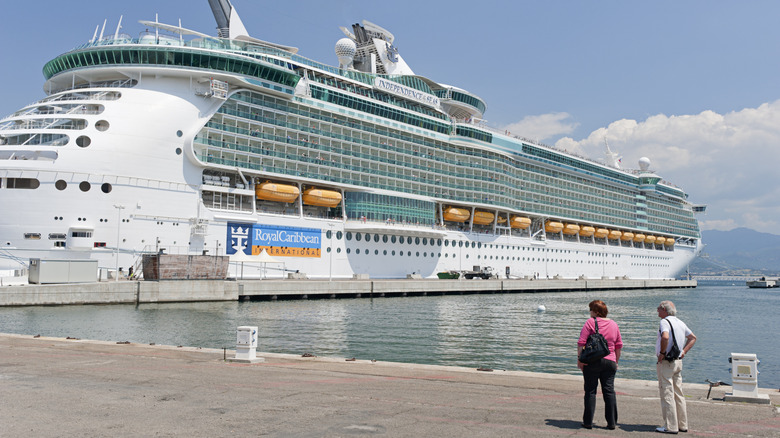
Sustainability is one of the biggest divides between younger travelers and boomers. Millennials and Gen Z increasingly prioritize rail travel, reusable products, eco-hotels, and reducing overtourism, while boomers are often stereotyped as caring more about comfort and convenience than environmental impact. That generational gap has become especially visible around cruises, excessive luggage, and resistance to changing old habits simply because they're worse for the planet.
That's not just a feeling, either; according to OAG, millennial and Gen Z travelers are considerably more intentional about their impact on the world when compared to boomers (although cost still plays the biggest role in any travel choice across the board). Still, despite Gen Z regularly coming out as the most sustainability-centered demographic from an intention standpoint, a study published in the Journal of Sustainable Tourism suggests boomers often perform better when it comes to action, although this is usually tied to money, too. Regardless, younger travelers often see the lack of care as selfishness, especially when paired with complaints about greener policies or sustainable tourism restrictions in heavily visited destinations.
That stereotype is reinforced online with a Reddit user making their feelings clear, saying, "Boomers are far less likely to care about the really bad environmental impacts of cruises." Boomers and Gen Z do make up almost 50% of the market according to Emergency Assistance Plus, but millennials are slowly taking over the cruise market, helping to force some changes in how they operate.
Complaining about local customs

Boomers' perceived flippancy toward other cultures can be a huge point of contention with the younger generations. Millennials and Gen Z grew up in a more connected and diverse world, and find the casual dismissal of other traditions offensive.
One of the more typical examples is those with little regard for other languages. One Reddit traveler mentioned his mother, whom they described as "one of those 'just speak English louder and slower' Americans while traveling." Other times, it's despair at systems not working the same as they do back home. Many get frustrated with restaurant service in Europe, feeling the slower style — not fueled by tipping — is inferior, and often tip aggressively in the hopes of changing the attitude. Tipping in itself has generational boundaries, with the older generations being frustrated with the modern tipping culture but doing it continually anyway, while younger Americans are tipping far less. Even remarkably small differences can dominate boomers' impressions of a place, like this Redditor's in-laws, who visited several European countries. "They came back, and the only thing that stuck in their heads about Europe was that drinks don't just automatically come with ice," they said.
Of course, it's not always easy to know what to do in any given scenario, and cultural faux pas are normal even with younger travelers. Most people won't take immediate offense to someone messing up, but where things get messy is when there's a reluctance to adapt. The "this isn't how we do it in our country" mentality is the hallmark of a bad traveler, and, rightly or wrongly, it's something millennials and Gen Z associate with boomers.
Not ditching rigid itineraries

Younger travelers tend to value flexibility, spontaneity, and exploration over all else. It's hard to blame them — they've been brought up in a world where travel is more accessible, more accepted as part of life, and in many cases is associated with discovering their independence. Boomers grew up with travel as an exciting luxury, but a journey into the unknown is much safer when done on a preplanned itinerary. Tied to the stats mentioned earlier that suggest they prefer a more hands-off approach, the travel ideologies of the younger and older generations can clash when traveling together.
While there's nothing inherently wrong with having a well-planned trip, when boomers travel with their younger counterparts, millennials often feel like their own vacation has turned into an admin crash course, where they're expected to have every meal, journey, ticket, and transfer planned well in advance. This is annoying for those who need to deal with it, and also frustrating on an emotional level, as it removes some of the enjoyment of discovering a place on your own. An evening wander around Paris is a delight, and you could find yourself stumbling into your own little gem of a restaurant or uncovering an arrondissement you knew nothing about. But feeling obligated to plan well ahead for your boomer parents takes away some of that magic.
The hands-off but strictly designed method goes further sometimes, with some even passing off the financials until a later date. On Reddit, one traveler mentioned their in-laws told him he "should just pay for their tickets/food and bill them later, since 'it's easier' (for them)." They said, "They expect everyone under 40 to book accommodations, schedule transport, purchase train tickets, translate menus/signs/shopkeepers, schedule day trips, carry their cheap broken luggage up and down stairs, have water/advil/silverware/hand sanitizer ready for them on demand, and make grocery runs". While this seems like an extreme example, many seemed to relate in the replies.
Taking the same trip over and over

Have you ever been sitting in a restaurant at a resort when the older couple next to you gets greeted like old friends? That's probably because they are. There's a big world out there, and millennials and Gen Z don't think boomers are doing enough to see it, opting to repeat their trips over and over again instead of trying new destinations. While broader trends suggest it's growing across multiple age groups, it's definitely something more associated with boomers — much to the chagrin of their children.
On average, boomers travel domestically more, with just 36% of them (via Brittany Ferries) opting for international travel, with many of those only heading as far as the Caribbean and Mexico — hotbeds for beach trips, the type of vacations Boomers prefer. Again, while it's hard to prove, this can probably be tied back to boomers' early travel experiences, where it was less about seeing the world and more about relaxation and escape from day-to-day life. In the U.K, this is often embodied by the habitual Southern Spain crowd, who visit Magaluf, Marbella, and other cities, stay in the same hotels, and only eat at British-owned pubs. To a growing number of young people, this isn't as attractive. In the U.S, people point towards Floridian resort towns or Myrtle Beach, where places like Margaritaville are a focal point.
Some young travelers are almost aggressively frustrated by it, with one Redditor mocking his boomer family members, saying, "We're all going to Tacky Tourist Landing to browse for several tedious hours, followed by dinner at 4:30 at Big Bob's Crabs and Cholesterol Grill. What do you mean you would rather see the beach and unique features of the locale, instead of looking at the same tacky rubbish we have back home?"
Prioritizing convenience over experience

Everyone is a different kind of traveler, but there's no doubt that younger tourists tend to drift more towards more immersive or experiential trips compared to their boomer counterparts, who prefer comfort, convenience, and familiarity. This can take shape in a number of ways, from older travelers preferring resort holidays with everything done for them, to avoiding cultural experiences in favor of home comforts.
The market for tourists not willing to get out of their comfort zone is sizeable, with at least 35% of boomers (via Air Asia) prioritizing convenience over anything else. Even in Rome, longtime sticklers for serving traditional food, the American-style chicken alfredo now makes regular appearances in tourist trap restaurants. Even within the States, some are reluctant to branch out, with one Reddit post explaining that their travel partners "only eat at Applebees" because they think "you could get robbed or food poisoning from any unknown local restaurant."
A lot of these attitudes tie in well with the previous section, as those who tend to repeat their travels are looking for comfort and familiarity as opposed to new things. Even when resorts put on cultural experiences, it's always through the lens of a well-paying customer, and often viewed from a well-laden dinner table instead of the place it would happen for real. The frustration is fair. If you're not interested in experiencing another place in its truest form, why bother going in the first place? According to Kantar, boomers are far less likely to broaden their experiences; 77% say they'll only visit one country per trip, while almost 50% of Gen Z and millennials want to experience multiple.
The lack of self-awareness and talking loudly in public

There's a stereotype of American tourists that you don't need to look when they enter a restaurant. While it's not everyone, boomers have a reputation for talking extremely loudly in public. While other generations and nationalities have mastered the art of quiet conversation, it's not uncommon to hear a group of older Americans' entire conversation from across the room. In fact, 64% of Europeans (via Upgraded Points) think Americans are too loud — although that's not just older Americans, so maybe millennials and Gen Z should listen up, too.
Part of this is generational. Younger travelers grew up with stronger social expectations around headphones, public etiquette, and shared spaces, especially when it comes to hostels, airports, and public transport systems. Boomers, meanwhile, have garnered a reputation for not fully grasping how disruptive they can be abroad. Again, this ties in with cultural norms, too. Many countries in Europe, for example, frown upon the loudness heavily, while in China, it's nothing out of the ordinary to have someone blaring a video on their phone in the booth next to you. Playing phones out loud is a wildly common boomer airplane habit, too, and United Airlines has even brought in rules that could see guilty parties thrown off the plane.
Even flight attendants label boomers as a nuisance, with one complaining on Reddit: "They get on the plane with nothing to entertain themselves because they expect those old drop-down TV screens, they expect main cabin to receive meals and blankets, and get upset at me when I explain their two-hour flight isn't going to be served dinner. None of them seem to own headphones, so the ones that know how to use their devices well enough to load a movie will try to just blare it out loud into the cabin." It even stretches to physical acts on planes, with some Redditors mentioning them "grabbing the back of every aisle seat as they get up and mosey around."
Not adapting to change
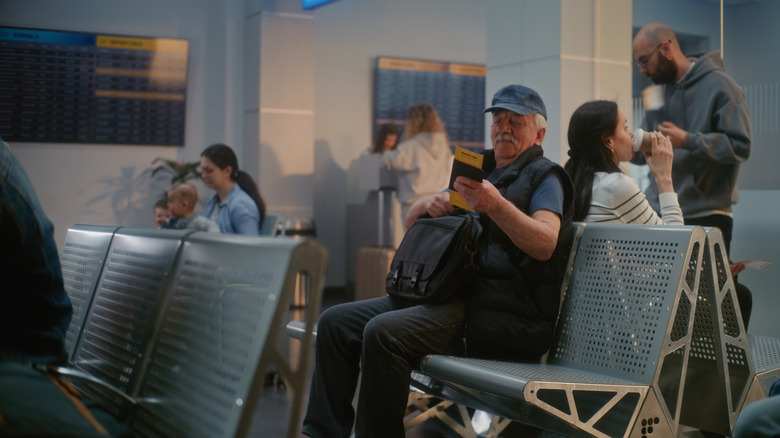
Travel goes wrong. Even in the most regimented itinerary, flights are delayed, language barriers arise, and mistakes happen. You'd think being older might lend some patience and adaptability, but, unfortunately, millennials and Gen Z view boomers as being painfully bad at adapting to travel adversity. Linking many of the issues mentioned before, like their desire for rigid itineraries and aversion to discomfort, boomers are stereotyped as being disproportionately frustrated whenever things don't work exactly as they do at home. It's this mindset that Rick Steves calls one of the biggest vacation obstacles.
To younger travelers, the stress of their parents' or fellow travelers' reactions can compound an already tense situation. Instead of dealing with a rebooking or embracing the unpredictability and shifting plans, they're often left to micromanage the boomer's emotions as well. Overreactions to a steak being cooked rarer than they're used to or a missed train connection feeling like the end of the world are things younger travelers may just brush off, but that's not the case for all boomers.
One Reddit user described traveling with boomers who became visibly irritated by simple things like different vending machines, with his mother-in-law dramatically eventually giving up on buying a bottle of water because she didn't want to count the Japanese coins. The same woman refused to change her watch to Japan time, relying solely on the kids to keep her on time.