
Unexpected Things American Tourists Notice About Europe During Their First Visit

I moved to the United States from Scotland for college when I was just 18. Fresh-faced and ready to take on the world, I arrived in North Carolina and spent the next decade of my life learning all of this country's little (or large) quirks. After a while, I got them used to them, whether that was indulging in a giant soda cup, driving a gas-guzzling car, or the comparatively odd taste of the bread (seriously, you've got to speak to someone about that). In some ways, I admit, I became a little Americanized.
But when I took my American partner on her first Europe trip to see my home country plus the delights of France and Italy, I was reminded of the stark cultural differences. Watching her be baffled by the ins-and-outs of my family's daily life, or navigating as simple a process as ordering a drink at a bar, was amazing, placing every unexpected thing in center stage, and allowing me to enjoy home in a new way.
It's something almost every American goes through on their first trip to Europe. In general, both sides of the Atlantic are similar enough that culture shock doesn't take hold too aggressively. You expect the language barrier. You prepare for the weather. You've mentally and emotionally prepared to be denied a free refill or judged for your fashion sense. Trust me, Europeans always notice American tourists' traits and act accordingly, so removing the shock can go a long way to helping you enjoy your trip to the fullest. If you're reading this before your first trip, consider it part of your preliminary studies. If you've already been, maybe you'll notice something new that you didn't before.
Europeans walk everywhere
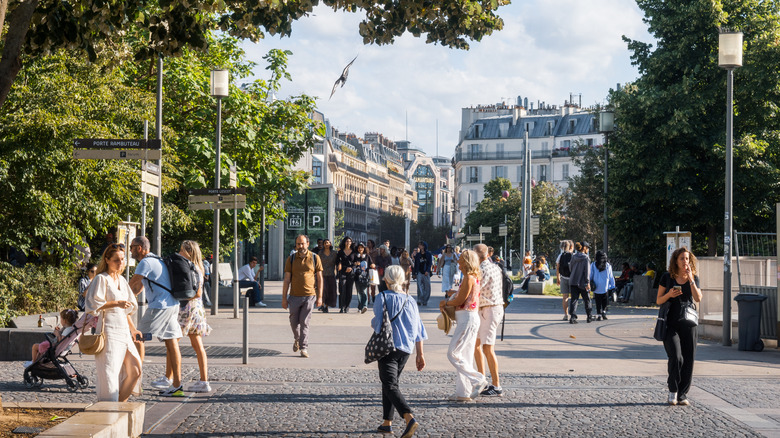
Hitting the streets of Paris or London is a drastically different trip from the beaches of Cancún. Europe's cities are famously walkable, and the shift from a walk up your driveway to a 5-mile trek around Rome can be physically and mentally draining for many Americans on their first trip. Throw in some cobblestones to test their ankle strength, and you've got a whole new challenge.
It's not your fault the U.S. wasn't built for pedestrians. It expanded too rapidly and with the automobile too much at the front of mind, and, barring a few good exceptions, its cities are built like highway-connected urban islands. Europe, on the other hand, has grown slowly over the centuries, with most of its towns and cities stretching out via easy-to-walk streets and well-built footpaths. There's a reason it's home to some of the most walkable cities in the world. Our corner shops are a staple of daily life instead of supermarkets, so grabbing a bottle of milk or bread every other day usually requires a quick walk to the end of the road. Infrastructure is built with pedestrians in mind, something that I felt deeply while living in Wilmington, North Carolina. Despite living a mile from the beach, I couldn't walk there without crossing three major roads and walking most of it without a path. Back home in Scotland, I have over 42,000 miles of designated footpaths to walk.
According to a 2023 study published in Sustainability, Americans only walk for 12% of their overall trips outside the home. In the U.K, that number soars to 26%, with France, Germany, Finland, and Norway not far behind. The same study pointed out that pedestrian deaths in the U.S. are far higher, too, which is possibly linked to the poor walking infrastructure in many U.S. cities. Generally, this winds up being a pleasant shock for American tourists — just don't forget your walking shoes.
Restaurant service feels slower
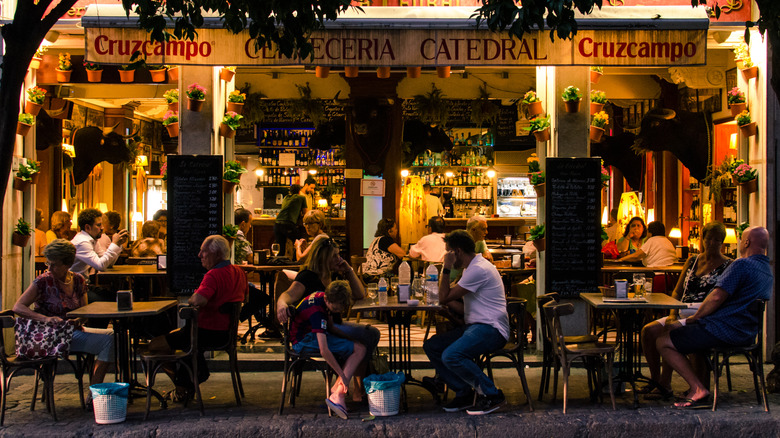
While some Americans might embrace pedestrian life, the change in restaurant service styles is often a more unpleasant shock. It's something I struggled with going the opposite way: being ushered quickly into a restaurant and being subsequently bombarded by a server's constant check-ins, refills, and having my appetizer and entrée thrown on the table at the same time. If I was in and out of a restaurant in over an hour, the service was slow.
In Europe, we take things down a notch, and it rubs some Americans the wrong way. Servers aren't chasing tips the same way American servers have to, so there's less urgency. In Paris, for example, it's quite common for a server to wait up to 10 minutes or more to approach if you haven't already called them over. At the other end of service, it's perfectly acceptable to hang around for a while, order a few more drinks or coffee, and chat with your companions. In the U.S., there's often a feeling of "when you're done, you're done, now leave." Initially, my partner struggled with this, getting antsy or annoyed when a server seemed ambivalent. After years of traveling the world with me, she's now more anxious sitting in a U.S. restaurant, where there seems to be a constant timer running.
It's vital to remember that this isn't poor service: It's culture. The French and the Italians revere mealtimes and expect them to be long, drawn-out affairs. The Brits, like me, love to chat, while the Germans just love practicality. If we need something, we ask for it; we don't want to be interrupted every few minutes. Take a breath, don't get frustrated, and ride the local wave. You'll be eating like a European before you know it.
Free refills are rare

I made this mistake when I first arrived back in the U.K. I sat down at a restaurant, ordered a Coke, then another, and one more before we headed home. The bill arrives, and I've just been charged £10 for my soda. My brain refreshed itself, then remembered that I wasn't in the U.S., the Land of the Free Refills, anymore.
This is a common gripe for American travelers to Europe, and it's understandable when you've spent your life having your non-alcoholic drink magically refilled without even asking. But across Europe, you'll only find a tiny handful of places that allow it. In my childhood, Pizza Hut (unsurprisingly, an American chain) was the only place you could get refills, and today, only a couple more like Five Guys and Nando's have been added to that list. Even then, new health-related laws mean they only allow refills on no-calorie or low-calorie drinks, like Coke Zero. France went in a similar direction and banned refills on sugary drinks.
It's not the only drinks-centric difference that throws tourists off, though. Europeans don't use nearly as much ice as their American counterparts, or as large cups. American small and large fast food cups are a whopping 89% larger than the British version, according to food YouTuber Joe Avella. Even when it comes to healthier quirks, Europeans see the American habit of drinking too much water as a dead giveaway that they're a tourist. As for the ice, we think it dilutes the drink too much, numbs your taste buds, and gives the business the opportunity to give us less of the drink. See, there's method to the madness.
Hotel rooms are much smaller
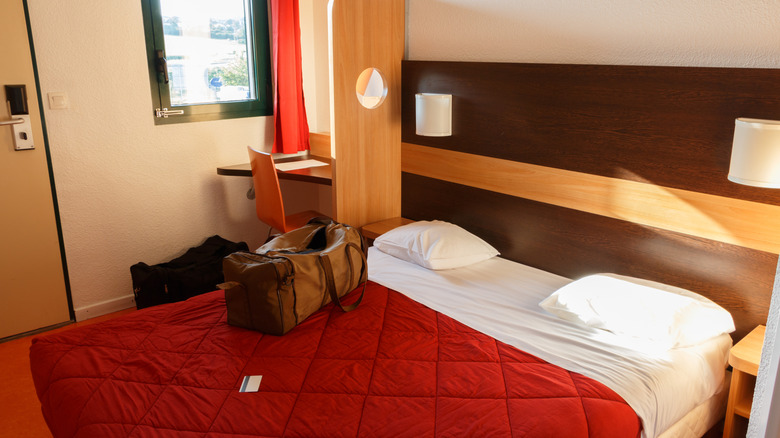
This one I can understand being frustrating. When you're used to even cheap American motels being pretty spacious, a European hotel can seem a little claustrophobic. Anyone who's visited an old hotel in France, Italy, or Germany has had the pleasure of navigating up a tight staircase (or one of those claustrophobically small elevators) before negotiating it across a hotel room with barely enough room to sit.
This is simply down to history. A lot of those old hotels weren't always hotels. And even those that have always been so are often a few hundred years old or squeezed in between a limited amount of space. Buildings in cities that stretch as far back through time as these do aren't bound by modern spatial preferences, and that can be frustrating, especially if you're staying for a longer time. There's not much I can tell you to ease that angst — I would love bigger rooms, too, but unless we're willing to fork out more for the stay, we get what we get.
The best way to get past it is to focus on the charm. You're staying in what is likely a historic building, and the hotel's more beautiful features go hand-in-hand with the quirkier or impractical ones. Anyway, you should be out and about from the second you arrive. As long as there's a bed, you've got everything you need.
Air conditioning isn't guaranteed
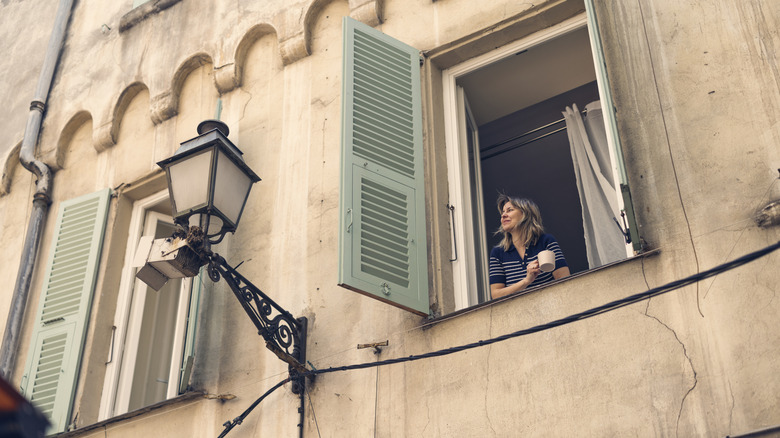
I grew up in Scotland, where 70 degrees Fahrenheit is viewed as a hot day. And while British heatwaves are scientifically proven to be worse than anywhere else (don't try to argue until you've experienced it), we have so few of them that air conditioning just isn't worth installing. It's a similar story in other European countries; we just have a cultural preference for just opening the window. If you still feel a bit stumped, Rick Steves has a few expert tips for dealing with the European heat like a local.
This, obviously, is the complete opposite of the American way. AC units blast year-round in most buildings, adding, according to a paper published in the Journal of Environmental Economics and Management, 36% to the average American household's energy bill. It's no wonder that Americans often stumble sweatily through their first European summer trip. Combine that with the smaller hotel rooms, the apparent aversion to ice, and the fact that they've probably not walked this much in years, and you've got a serious recipe for a ruined trip. It can be a hard thing to move past, especially as temperatures seem to be climbing more and more these days all over the world. For instance, at the end of May 2026, London hit almost 95 degrees — which is extremely rare.
But that's not to say no hotels have air conditioning. There's a growing number of stays investing in AC, partly to quell the concerns of their American guests and also because the temperatures are just getting too high for the traditional coping mechanisms to deal with it. Whenever booking, check through your hotel's amenity list. Almost any hotel that boasts AC should have it listed on its website and usually on any travel aggregator like Booking.com — although I'd still double-check the hotel website to be safe. Oh, and use another one of Rick Steves' tips for helping American tourists to think in Celsius — it'll smooth the transition.
Public transport is incredibly easy
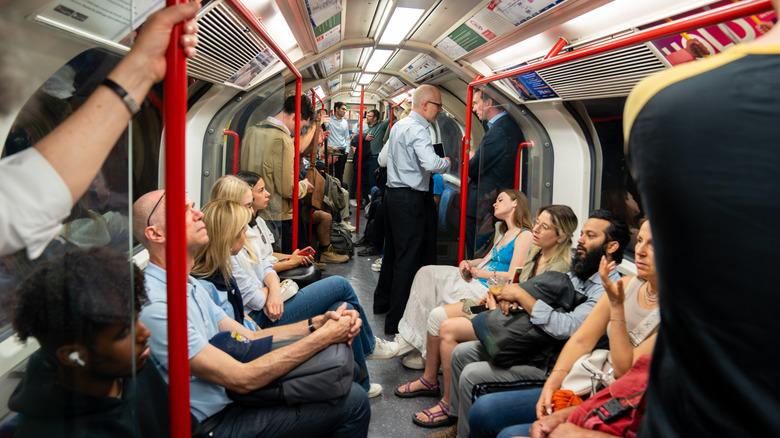
For some reason, even if Americans arrive fully aware that they'll be walking more than usual, they sometimes opt to grab taxis or Ubers for any longer distances. Often, this is a waste of time and money, as they're unaware that the continent's public transport system is one of the most comprehensive on the planet — and usually pretty easy to work out.
Obviously, there are exceptions to the rule, but almost every major city in Europe boasts strong transport infrastructure. London's underground system, The Tube, is one of the largest in the world and zips you to almost every corner of the city with ease, wth its iconic red buses filling in the gaps. Paris has a similar setup, along with the efficient U-Bahn and S-Bahn system in Germany. Even as far out as Sofia, in Bulgaria, you'll find one of the most modern and advanced systems. It doesn't stop for inner-city travel either. While in the U.S., you may feel obligated to fly anywhere beyond a few hours' drive, the trains in Europe connect the entire continent — you can even take the train under the English Channel, from London to Paris, Amsterdam, Brussels, Lille, or Rotterdam. Many cities even have excellent tram and bus connections.
The transport system forms an immense web across the continent, making things simple and more comfortable than flying in many cases. While it might feel overwhelming to begin with, take some time to familiarize yourself with any route maps, work out the station nearest to your accommodation, and get out there. It'll save you a ton of money on taxis, too. Once you're comfortable with it all, check out these breathtaking European train trips to take in the fall.
People dress less casually

It's pretty well known that Americans dress casually, but to Europeans... a little too casually. I remember arriving on campus and being baffled by the number of people walking to class in pajamas or sweatpants, and a little later on in my time, the phenomenon of people out and about wearing "athleisure wear." I was often asked if I had a special event because I was so dressed up, yet I was wearing jeans and a T-shirt.
This is not the case in Europe. It's not that we dress to the nines every day, but we do make an effort if we're leaving the house. This scales upwards to big events like weddings, too. I've generally found that weddings in Europe have an unspoken fancier dress code, even for small gatherings, while American ones can be far less formal — though this is not a catch-all observation. But if you're out and about in the city and find yourself feeling a little underdressed, or maybe even getting a few side eyes, it may well be your clothing choice.
I get it. Throwing on a pair of leggings to explore Barcelona might seem sensible, but it will make you stick out like a sore thumb, which does have some potentially darker consequences. Tourists are the natural target for pickpockets and other criminals, and when it's easy to pick you out as an American in a crowd, there's a target painted on your back. But honestly, while throwing on a more put-together outfit might seem like more effort, you'll feel a little more part of the place.
Stores close much earlier than you might expect

This varies greatly depending on the country you're in, but in general, Europe winds down far earlier than the United States. Many Americans are used to the convenience of 24-hour pharmacies, late-night grocery stores, and supermarkets that stay open until midnight — even some malls don't close until 10 p.m. But across much of Europe, that simply isn't the norm. In smaller towns, especially, stores might close by 6 p.m., be shut entirely on Sundays, or pause for long lunch breaks in the afternoon. Arrive in Spain, desperate for groceries at 2 p.m., and you might find the entire neighborhood deserted, as many are off having their siesta.
A lot of this comes down to labor laws and cultural priorities. Many European countries place stricter regulations on retail opening hours, partly to protect workers and partly because there's less expectation that life should revolve around constant convenience and work. Germany is particularly famous for this, with many shops closing completely on Sundays, and tourists regularly find themselves wandering around train stations looking for the only open convenience store in the city. In France and Italy, independent businesses often still dominate daily life, and family-run shops aren't interested in staying open until midnight just because you fancy a baguette at 10 p.m.
It can feel inconvenient at first, especially when you're used to spontaneous shopping trips or grabbing dinner ingredients late in the evening. But eventually, you'll adapt to the rhythm. You'll start heading to dinner for later service, you'll knock out any shopping in the afternoon, and you'll remember to buy stuff in advance if you need it in your room. We tend to shop a little more intentionally, and I promise, the refreshingly relaxed pace of things might be a wake-up call for you.
Short and long distances mean very different things
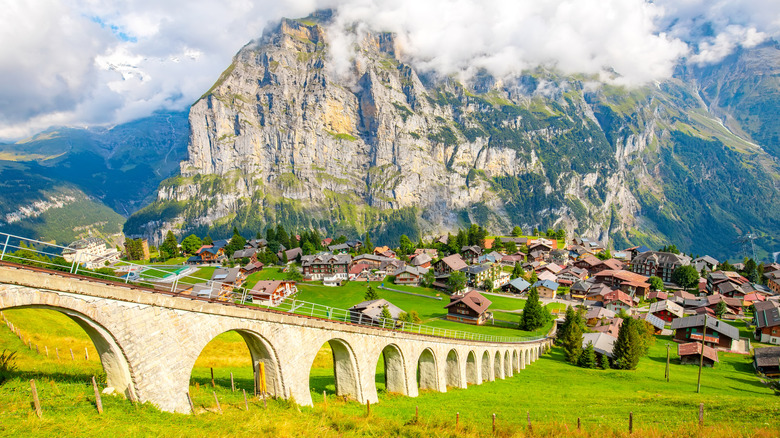
I lived on the West Coast of Scotland as a kid. If my family decided they wanted to visit Edinburgh, it was a full-day affair — up early, leaving late, and doing as much as we could because it felt like a long trip for us. It was 80 miles and took 90 minutes whether we used the train or the car. Years later, in North Carolina, I commuted 85 miles twice a day like it was nothing. When I started dating my girlfriend, her family would drive 90 minutes to the mall, or an hour for a lunch date. Distance perception was completely different.
This discrepancy can both throw American tourists off, and wind up as a superpower. To grasp the difference in scale, driving across the United States along the I-40 between Los Angeles and Wilmington, North Carolina covers 2,601 miles. To cover almost the same distance in Europe, you'd need to drive from my hometown in Scotland to Istanbul, passing through nine countries, hearing at least eight different languages, and experiencing vastly different cultures along the way. It's those shifts that can throw Americans off. While they might look at the distance between Paris and Rome (about the same as NYC to Atlanta), and think little of the trip, it often feels further because of the cultural shifts taking place as they go.
With that said, some take it in their stride and knock off European cities like they're doing a weekend trip in the northeast — and that will throw Europeans off. The mental preparation my friends would need to plan a four-hour drive, Americans would barely blink at. You might get recommendations to avoid this type of hop-around trip, and I do agree from an experiential standpoint.