
9 Once Thriving Appalachian Towns That Regressed Into Eerie, Abandoned Beauties
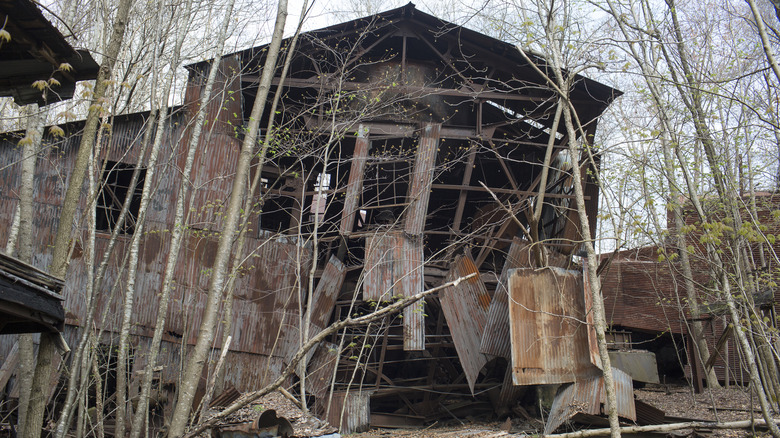
Thousands of years before European settlers ventured into Appalachia – which spans parts of 13 states across the eastern U.S. from New York down to Mississippi — the Cherokee nation and other Indigenous peoples enjoyed the mountains' rich resources. Beginning in the 19th century, these resources drew industrialists seeking fortune. Rich deposits of coal attracted mining operators who would establish company towns with homes and services for their miners. The plentiful timber would inspire logging outfits to do the same. Many of the towns prospered. And when their fortunes waned, they somehow adapted. Others weren't so fortunate. As times changed, they decayed into eerie, abandoned towns.
The national parks were one of Appalachia's most significant changes. The Great Smoky Mountains National Park, New River Gorge National Park, Pisgah National Forest, and others sprang up in the 19th century with the goal of conserving the parts of the mountains under their control. Sometimes this meant the end of a town. Other times, a town had already been abandoned and came to be part of a park later. Regardless of the reason, many of these abandoned towns can be found in our national parks. Others are scattered around other states within Appalachia, no longer thriving but showing signs that they once existed.
Some sit in eerie ruins inspiring ghost stories that draw visitors looking to satiate their paranormal cravings. Others are more preserved, but uncannily silent and perfect for history buffs looking to explore history in a more curated way. One burning ghost town in Pennsylvania's section of Appalachia has been on fire for decades! Regardless of which you visit, you'll find they each have fascinating background stories, as we consulted historical sources, news reports, and national park records to help compile this list. We also made sure each town is worth visiting. Tourism websites helped with this in some cases.
Lost Cove (North Carolina)
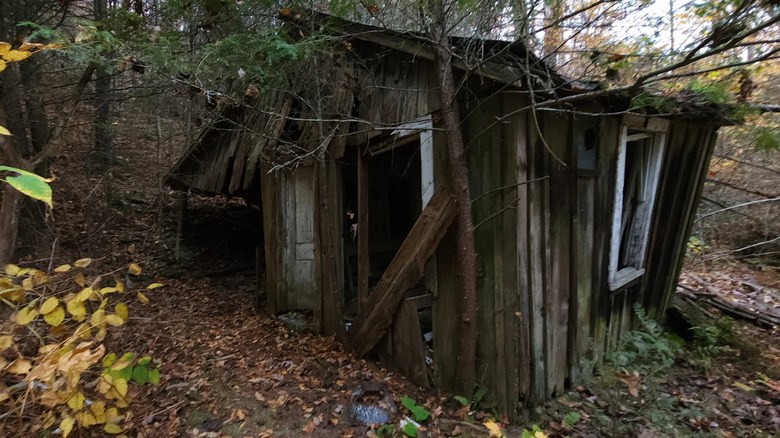
Lost Cove's name aptly described the town long before it lost its residents. Founded by Civil War soldiers in the remote Yancey County, on North Carolina's and Tennessee's border, it's believed residents chose the name to reflect its seclusion. In fact, the town was so distant that it never got electricity while it existed from approximately 1865 to 1957. Yet, Lost Cove flourished. Residents developed a thriving farming industry on soil watered by the town's many springs. The construction of a railroad in the 1900s prompted some to build sawmills that provided employment. And the plenteous water spurred a prosperous moonshining industry. By the 1950s, Lost Cove had homes, barns, a church that was also the school, and more.
Then things unraveled. The logging industry declined, freight trains replaced the passenger trains, and the region's school districts consolidated, leaving Lost Cove without a school. Residents had little employment and no transportation — a tragedy since the kids now needed to leave for school. By 1958, the last family had left. But Lost Cove's ruins still stand, preserving their memories for hikers who make the trip to see the town. The few intact homes are held up by trees or have been almost completely swallowed by the forest. A creative mind could easily imagine them inhabited by mythical forest creatures who've repurposed the homes for their use.
There are also the concrete steps from the old church, stone walls, a lonely chimney, and house foundations, engulfed in a stillness that some visitors call eerie. You'll even see a 1930s pickup truck, covered by moss and looking out of place. Like in yesteryear, getting to the abandoned town and its mossy trails will take effort. Budget around two hours on the Lost Cove Trail inside Pisgah National Forest.
Elkmont (Tennessee)
One of the secret spots inside the Great Smoky Mountains National Park is Elkmont, a forgotten town with a history of reinvention. The area began as a small farming settlement along the banks of the Little River. Then, in 1901, Henry B. Townsend bought 86,000 acres of its timberland for logging. To further his plans, he established the Little River Lumber Company and the Little River Railroad. By 1907, employment opportunities had drawn settlers into the area and it was being called Elkmont. It had transformed into a logging town with homes for the workers, a hotel, stores, and more.
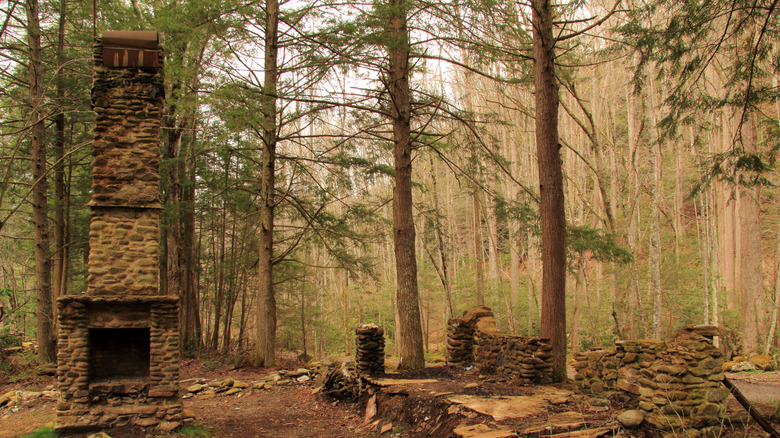
In 1910, wealthy families who'd been visiting Elkmont for its cool summers began building holiday homes in town. Cottages were built along a lane called Daisy Town while more extravagant homes sat in areas known as Millionaire Row and Society Hill. Soon the train was carrying vacationers instead of logs and Elkmont became a bonafide resort town! But the birth of the Great Smoky Mountains National Park in 1934 would signal its end. Residents either sold to the park, or were given leases that ended by 1992. After 1992, Elkmont stood empty and forgotten. Today, 19 restored vacation homes and the spooky remnants of others attract lovers of history and ghost encounters.
To see the ruins, take the Little River Trail, where chimneys left over from former homes are said to be haunted by the spirit of the house by some visitors. Other eerie sights, like stone steps without a house and home foundations with no walls, emerge along the trail. History enthusiasts will want to head to Daisy Town's restored homes to see how the wealthy vacationed back then. Paranormal investigators report ghost encounters at the miniature Dollhouse and a few other homes, so prepare for spooks!
Kaymoor (West Virgina)
West Virginia's New River Gorge National Park & Preserve is home to a few abandoned towns that show what 19th and 20th-century mining life was like. Kaymoor is a fine example. The boomtown thrived between 1899 and the 1960s, under various mining operators. The first owners, Low Moor Iron Company, opened the coal mines as a source of fuel for their iron furnaces in Low County, Virginia. The need for housing and services for the miners would birth Kaymoor and its tripartite division. Kaymoor One (also known as Kaymoor Bottom) had housing, churches, schools, a store, and a mining plant. Kaymoor Two (Kaymoor Top) had housing and a store. The coal seam and the mining operations were sandwiched between the two.
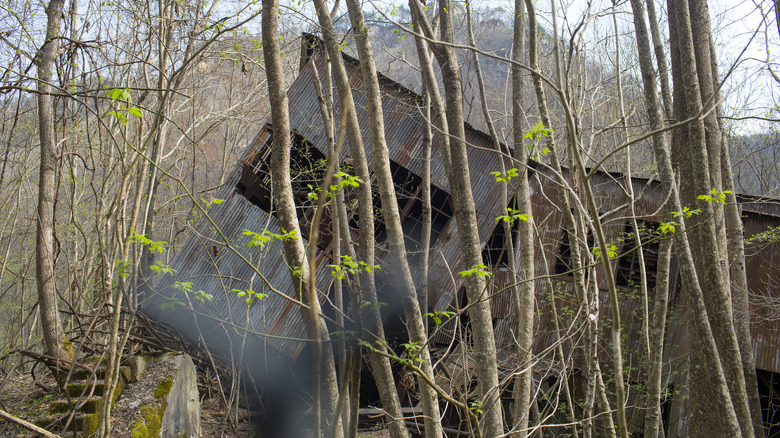
In its heyday, Kaymoor had a movie theater, baseball field, tennis courts, and holiday celebrations. It was sold to new owners in 1925 and again in 1963. But by 1965, all the coal had been depleted, so residents began leaving. When it came under the national park's ownership in the 1980s, only Kaymoor One remained. Today, its abandoned structures exist in a remote area that visitors only recommend for physically fit hikers. This cannot be overstated. Part of the hike to get to Kaymoor One contains 821 stairs that one visitor on Tripadvisor only suggests for those who: "are there for a good stairs workout or ... are crazy enough to do it."
If you take the hike, expect to be greeted by ruins covered with creepy-looking vines and trees. Rusted machinery, hollowed-out buildings, and rickety structures with ominously dark interiors further the spooky vibes. One rusted building leans to the side as if about to fall at any moment. To visit, take Kaymoor Miners Trail inside the park.
Thurmond (West Virginia)
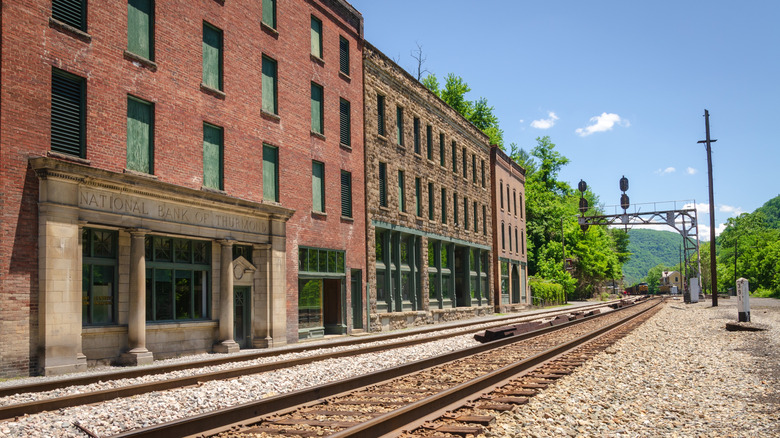
The abandoned towns in the New River Gorge National Park are mostly mining towns. Thurmond, a once thriving railroad town is an exception. Established in the 1880s next to the Chesapeake and Ohio Railroad, the town was perfectly positioned to be a transportation hub for the region. The coal mining operators in the nearby towns used Thurmond's freight station to transport their coal around the nation; merchants and visitors used it to get into town. Many of these visitors were pleasure-seekers on side trips from Dunglen, a nearby town known for gambling and saloons. Others, including business travelers, also visited.
Soon, restaurants, banks, hotels, a movie theater, and other attractions popped up. But by the 20th century, two fires, the Great Depression, a growing preference for cars over railway travel, and the railroad's switch to diesel (Thurmond specialized in steam) decimated travel into the town. Businesses and residents, dependent on revenue from the train, left as the town died. You can see some of Thurmond's original buildings today, thanks to restoration efforts by the national park and five residents who help with upkeep. The old train depot, which is now the visitor center, is a good place to start as it's a treasure trove of historical exhibits on Thurmond's past.
History buffs will enjoy seeing the old banks, the post office, and more. The two commercial buildings, the Mankin-Cox Building and the Goodman-Kincaid Building, will be the highlights for those interested in learning about what services were common in the 1900s. While Thurmond's buildings may not lie in ruins, visitors report a general eeriness that adds to their appeal. You can tour Thurmond independently, or join one of the free guided tours offered daily at 11 a.m. from the Visitor Center during warmer months.
Proctor (North Carolina)
Some towns are booming one day, then sink into oblivion the next. That was the case for Proctor, a once thriving North Carolina town in the Hazel Creek area of the Great Smoky Mountains National Park. Proctor largely sits underwater, with just a small part surviving. Before submersion, it was a flourishing town. According to historian Lee Woods, it had a logging plant that "provided jobs for everybody" (via ABC News 13). There was also a theater, a post office, homes, churches, and more. Then the Pearl Harbor attack happened and triggered a series of events that changed the town forever.
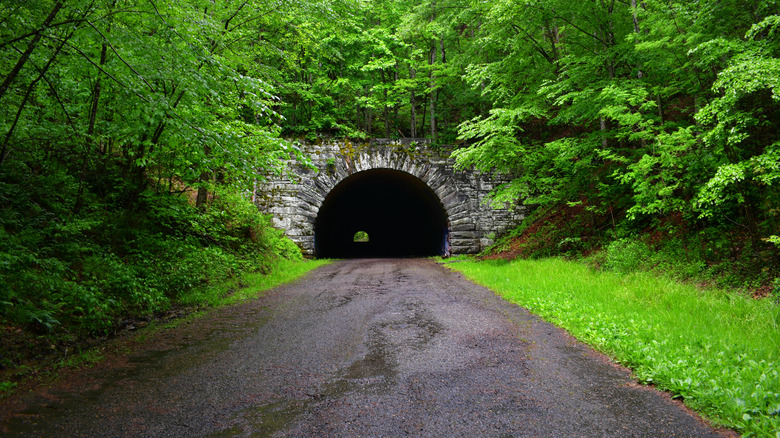
After the U.S. entered World War II, a dam to provide hydropower for wartime manufacturing and nuclear plants was erected. This created Lake Fontana, which began to fill in 1944. Filling the lake would ultimately flood Proctor. The town's 1,200 families were evacuated and promised a road back to visit the town's cemeteries, where many of them had loved ones buried. That road, called the Road to Nowhere, was never completed, and today it ends in a dark tunnel surrounded by weeds. Paranormal enthusiasts will want to see the road, supposedly one of the U.S.'s most haunted because of claims that ghosts of former residents roam it.
If you're into spooky adventures, you'll find more to enjoy — or scare the bejeezus out of you! Ghosthunters claim to have encountered a ghost around the still intact Calhoun House. And ruins of homes and graves sit hauntingly still inside the arms of nature. To visit, the easiest route is by boat from Fontana Village Marina to Hazel Creek, then a 30-minute (around half a mile) hike to Proctor. To see The Road to Nowhere, take Lakeshore Drive inside the Great Smoky Mountains National Park.
Henry Mill Village Historic District (North Carolina)
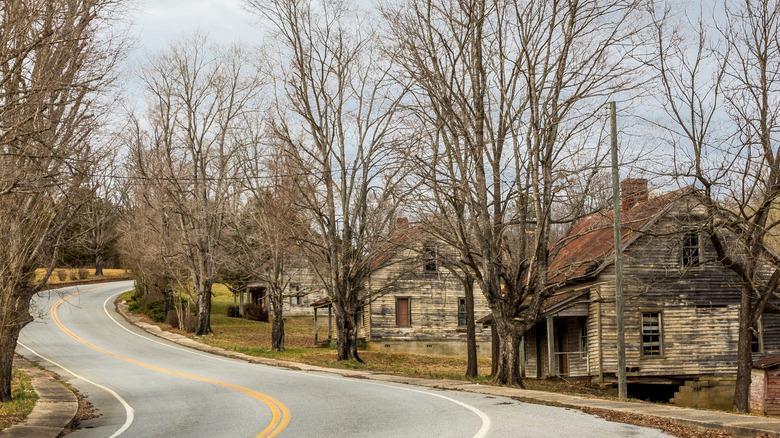
Some abandoned towns are so decayed that only peeks of their former glory remain. Henry River Mill Village Historic District is not one of these towns. Though dilapidated, many of the abandoned buildings stand intact, painting a beautiful image of a typical mill village of the 20th century. In 1905, the Henry River Manufacturing Company was started with a three-storey mill that was central to their cotton yarn business. Along with the mill, 35 homes for workers and a boarding house were built. Necessities were provided by a post office, fire department, a dam, and a company store.
The village flourished for more than half a century. But fortunes would change when foreign competition decimated the textile industry. Another challenge came in 1977 when a fire completely destroyed the mill. Residents began leaving the town. By the 1980s, the town stood abandoned (some former residents suggest that the last residents may have been living there until the end of the 1990s or early 2000s). If you visit today, some of the original 35 homes still stand, many with broken windows that allow you to peek at the decayed insides. You'll also see the dam and company store.
The store and the rest of town may look familiar. The town was the dystopian setting for District 12 of the blockbuster Hunger Games movie, with the company store re-imagined as Mellark's Bakery! In fact, many visitors go to tour the village for the chance to walk in Katniss' (played by Jennifer Lawrence) footsteps. But be careful as you walk around. Rumors have it that ghosts and a phantom lantern wander the streets. At the time of this writing, a visit costs $20 and includes a guided historical tour. Paranormal tours are around $35.
Centralia (Pennsylvania)
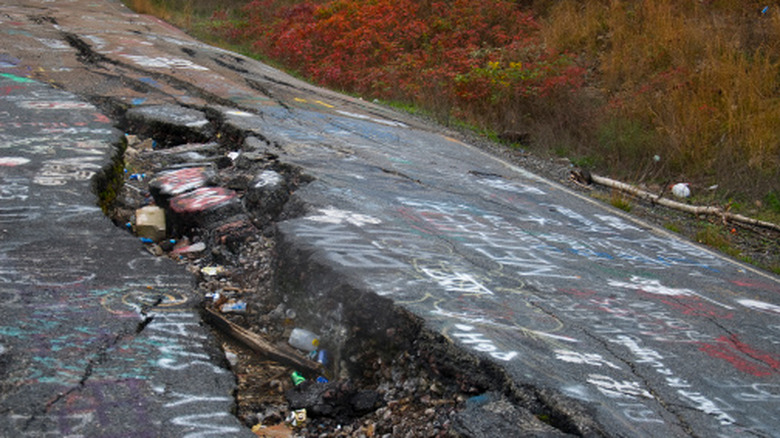
Centralia is a ghost town for all intents and purposes. Nestled in Appalachia's anthracite coal region in northeastern Pennsylvania, the town still has five residents who were allowed to stay after a legal battle in the early 2000s. You may be wondering why they had to fight to stay. See, Centralia has been on fire for more than 60 years, causing the government to declare it uninhabitable. But back in 1866, when the Locust Mountain Coal and Iron Company founded the town it was far from unlivable. It developed to have 14 coal mines and thousands of workers by 1890. Theaters, 27 saloons, five hotels, churches, a bank, and numerous stores made life enjoyable.
The town faced many challenges, but it wasn't abandoned until 1962 when the city decided to clean the landfill next to Odd Fellows Cemetery. When the landfill was set on fire, some escaped into the underground mines and couldn't be stopped. Soon, toxic fumes and fires seeped from cracks in the ground. In 1983, the government paid for residents' relocation, and by 1992, the town was condemned. Today, visitors go to see the real-life Silent Hill (the movie is reportedly based on Centralia!) or to experience one of America's creepiest towns.
The beauty of the town lies in its haunting, apocalyptic scenes. Dreary wastelands, piles of trash, and cracked streets that lead nowhere give the impression you've entered no man's land. The buildings worth seeing are a few small cemeteries, the larger Odd Fellows Cemetery, and the Assumption of the Blessed Virgin Mary Ukrainian Greek-Catholic Church. While there isn't much to see, those who know Centralia's history consider its vast emptiness haunting. One visitor on Reddit called the cemetery "really creepy." You can take PA-61 or PA-64 to get there.
Mortimer (North Carolina)
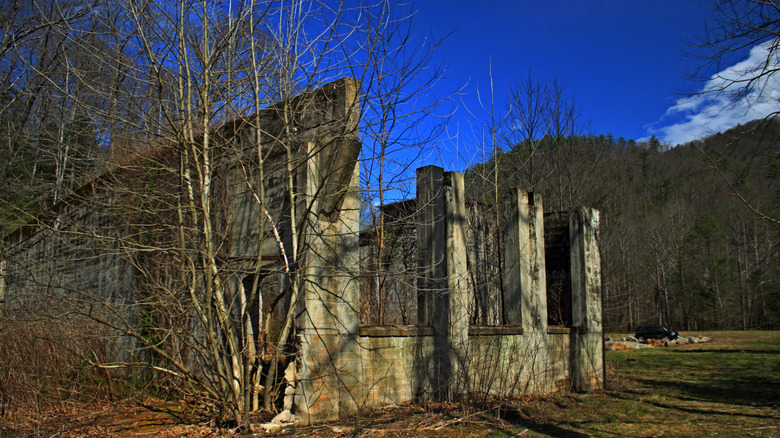
The Appalachian town of Mortimer is like a scrappy fighter that doesn't give up. Tucked into the Pisgah National Forest, the ghost town is a history-filled gem, thanks to its tumultuous past. In 1904, Ritter Lumber Company established Mortimer as a logging town due to its plentiful timberland. By 1906, when the town was incorporated, there were homes, a railroad, a hotel, the company store, a theater, and more. One of the town's establishments, Laurel Inn, was even visited by Teddy Roosevelt, according to rumors. But Mortimer met multiple disasters that challenged its resolve to remain standing.
In 1916, a fire burned through much of the timberland. This was followed by a flood that destroyed parts of the logging operations and caused Ritter Lumber Company to close its doors. Mortimer recovered when United Mills Company opened a cotton mill in 1922, and the Civilian Conservative Corps (CCC) set up a camp to aid forest replenishment. A coastal hurricane in 1940 interrupted Mortimer's progress, causing a river to flood and devastate the town. The railroad and CCC camp left. Families also deserted the town. Today, you'll find historical signs marking where the Ritter Lumber Company and CCC camp stood. The intact CCC building is, however, still standing. Hike in further and you'll also find crumbling ruins with trees for its roof.
The prominent ruins are the leftovers of the United Mills Company. Instead of people, for its inhabitants, it has trees covering every inch of its floor. As you explore, you'll notice an uncanny stillness, the graffiti left behind by visitors the only signs of human activity inside concrete walls without windows. You can reach Mortimer through Pisgah National Forest's Mortimer Campground (site of the old CCC camp).
Yellow Dog Village (Pennsylvania)
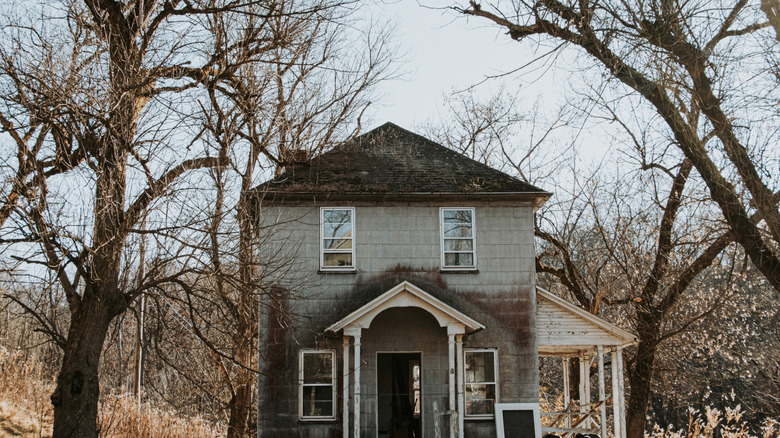
You may conjure heartwarming images of a homey village named for a family pet upon seeing the name Yellow Dog Village. But the village is named for something far less stirring. In the 1900s, miners working for the Pittsburgh Limestone Corporation were asked to sign contracts agreeing they wouldn't form unions. These contracts, called yellow dog contracts, included the construction of a community in Armstrong County in the Appalachian section of Pennsylvania. The town made it easy for workers to be near the mines and was built between 1910 and 1920 with homes for them to enjoy.
The community thrived until the 1950s, when the mines closed. But residents stayed on and found work elsewhere. A fatal blow came in 2009 when water samples revealed high levels of contamination, forcing residents to leave for health reasons. By 2010, the last family had left. Some families left behind objects like wedding albums, canned foods, couches, and other furniture. Subsequent owners of the village did little to renovate, leaving the homes largely untouched. If you visit today, they sit like time capsules with piles of the former residents' possessions sitting on crumbling floors.
Exploring the dilapidated structures and their messy objects is creepy in the way silent crumbling towns usually are. But visitors enjoy the architecture and the opportunity to peek into the past. The town shares space with a farm, so a visit is punctuated by goats, chickens, and other farm animals. Keep this in mind as you plan your visit if animal smells and droppings bother you. In fact, many visitors recommend wearing closed shoes and long pants because of the droppings. At the time of this writing, visits are 4 hours long and cost $50 for private self-guided tours and $33 for public tours.