
12 Places To Visit In Egypt After The Pyramids
Egypt is the stuff of travel dreams. In fact, there are some who believe the desert nation is the spiritual home of tourism, with travelers flocking to the banks of the Nile for well over a thousand years to take in what is widely regarded as the most impressive archaeological treasure trove the world has ever seen. But even within that crowded landscape of attractions, one destination stands out above the rest: The Great Pyramids of Giza.
It's not hard to see why. The Great Pyramids, at around 4,500 years old, are arguably the most iconic and recognizable architectural structures on earth. Exploding from the sun-drenched skyline of Giza, a sprawling suburb of Cairo, they are the epicenter of almost every Egyptian itinerary. But while they are the nucleus of Egypt's tourist landscape, they can cast a shadow on the country's other attractions — attractions that most other countries would build an entire tourism campaign around.
Getting out from under that shadow is the key to a truly incredible Egypt trip. Whether that means getting to grips with the modern country, stepping into unfathomably empty structures in lesser-known corners, or uncovering everything that made the Great Pyramids possible, here are 12 places to visit in Egypt after you've been to Giza. It should be noted that some areas of Egypt are, as of this writing, under Level 4 travel advisories. While we have avoided listing such places here, you should always consult the current U.S. travel advisory recommendations for Egypt before booking your tickets.
Saqqara and Dahshur
Most tourists hit Giza immediately upon arrival in Egypt. They pour into the Great Pyramid compound by the thousands, along with an army of peddlers, see what they can, get frustrated, then leave. Some may look south and see more pyramids in the distance. It's not a mirage. It's Saqqara and Dahshur, Egypt's most overlooked destinations and possibly its greatest.
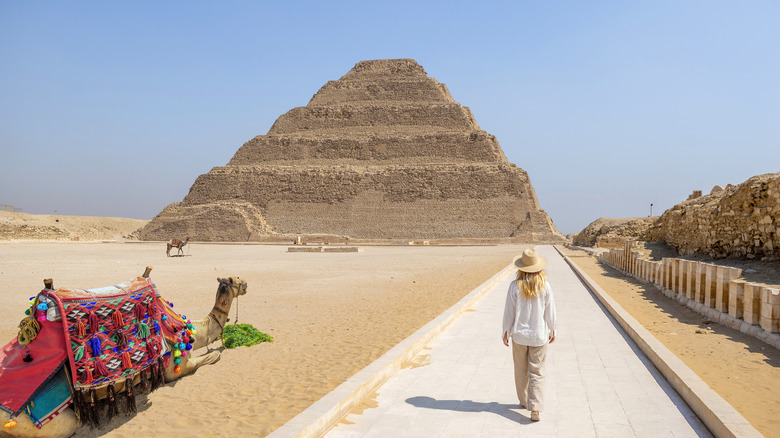
Part of the ancient necropolis of Memphis, the two neighboring sites are around 15 miles from the Great Pyramids and offer a look into what came before the more famous structures. In Saqqara, you'll find the Step Pyramid of Djoser, the oldest true and fully completed pyramid in Egypt. While much smaller than the Great Pyramids, the Step Pyramid is a wonder in its own right, and with a fraction of the tourists hanging around, it's yours to explore in your own time. Equally impressive is the nearby Serapeum, an immense underground complex that boasts unfathomably large sarcophagi, which it's assumed housed sacrificial bulls. Again, it's not uncommon to have the chambers to yourself.
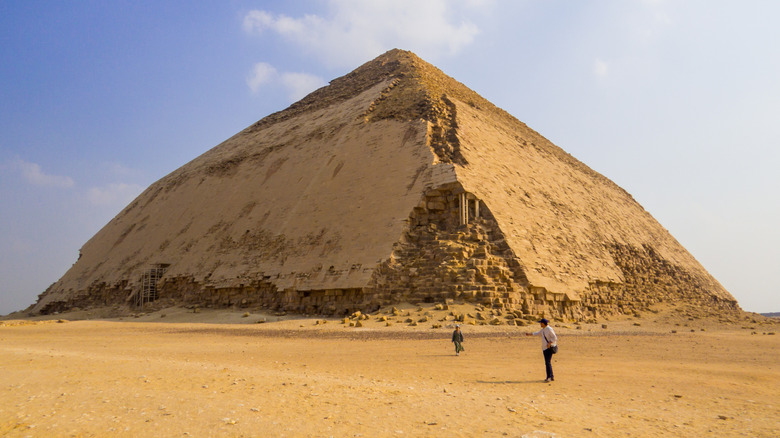
The nearby site of Dahshur is equally exciting. Once home to seven pyramids, only two are still safe to enter, while others have eroded away completely. One of these, the Bent Pyramid, is particularly interesting, as it represents a failed in-between stage between Djoser's Step Pyramid and the straight sides of those in the Giza complex. Its collapsed sides give it the odd "bent" shape. The other, the Red Pyramid, is the next step, and was the first successful attempt at the new style — it's actually taller than the third of the Great Pyramids. Skipping Saqqara and Dahshur isn't just missing out on a quieter pyramid experience; it's omitting an enormous chunk of Egypt's spectacular history. If you want to avoid Giza's crowd and experience some even older pyramids, head here.
Historic Cairo
One of the saddest things about many Egypt itineraries is that they're packaged tours that hop quickly between all the sites. Many arrive in Cairo, hit the pyramids, and jump on a ferry or plane to visit Luxor without even stepping foot inside the real Cairo. This is even more true now as the old Egyptian Museum has been overshadowed by the vast new complex in Giza. But Cairo, one of the largest cities in Africa, is an unbelievable place; a chaotic sprawl with vibrant architecture, brilliant food, and welcoming locals.
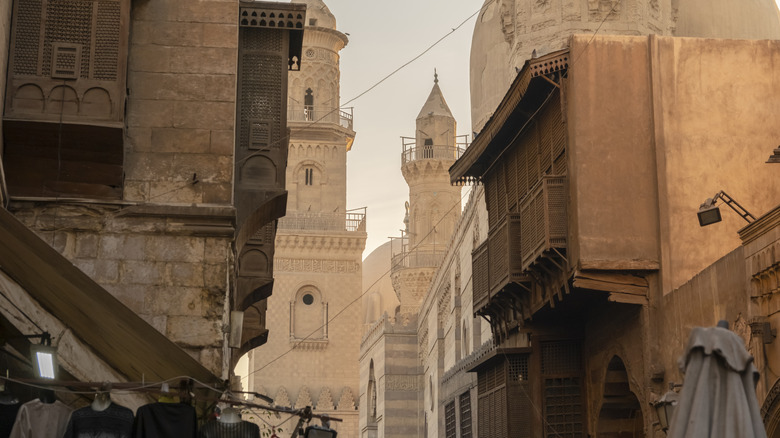
Its historic old town spans the Coptic origins of the city, through its Islamic citadel that reaches back to the 10th century. Al-Muizz Street is often considered one of the greatest open-air museums in the Islamic world, while the famous market in Egypt, the Khan el-Khalili bazaar, remains one of the region's most iconic marketplaces. Walking through the neighborhood reveals layers of Fatimid, Mamluk, Ottoman, and modern Egyptian history all woven together. Also, despite the old Egyptian Museum losing some of its prime artefacts, it's still a spectacularly nostalgic museum to check out.
Once you've had your fill of history, just set out and explore. It's a surprisingly walkable city, and locals are wonderfully receptive once you leave the tourist center. When the sun goes down, the place becomes truly lively, and you'll find countless cafes and tearooms set in stunning courtyards, or just grab some shawarma at a roadside joint. Sunset boat rides down the Nile might sound a bit touristy, too, but it's a special way to take in the beautiful city. Don't skip Cairo: give Egypt's brilliant capital the time it deserves.
Karnak Temple Complex
Many visitors arrive in Luxor expecting the pyramids to remain the highlight of their Egyptian adventure. Then they visit Karnak. The sheer scale of this temple complex can be difficult to comprehend until you stand inside it, giving the impressive feeling of truly standing inside an Egyptian city (even if it's not really a city).
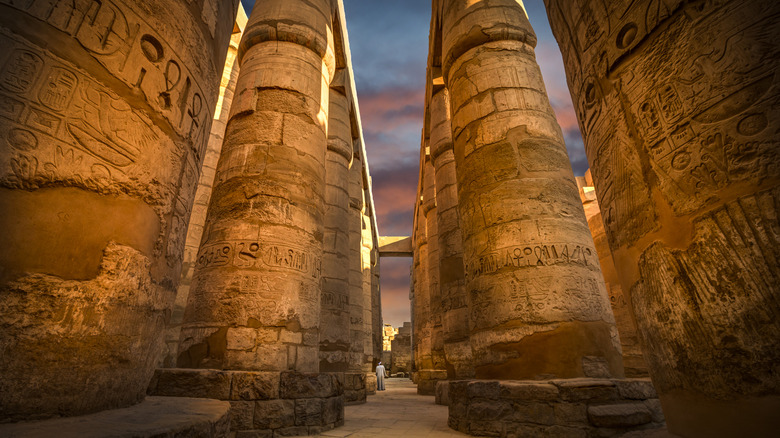
The complex was slowly expanded for the better part of two millennia, creating what became the largest religious center in ancient Egypt. The site was dedicated primarily to Amun-Ra, one of the most important gods in the Egyptian pantheon, but it has multiple other deities celebrated within its walls. The most famous feature is the Great Hypostyle Hall; its towering sandstone columns create one of the most impressive architectural spaces anywhere in the world. Even on busy days, the hall is so large it's easy to get photos that look like you're the only one there.
Karnak is found on Luxor's East Bank and can take several hours to explore. Early morning visits generally provide cooler temperatures and smaller crowds, but it remains impressive at any time of day. Hiring a guide is a strong choice, as the sheer volume of information can be hard to take in by yourself.
Luxor Temple
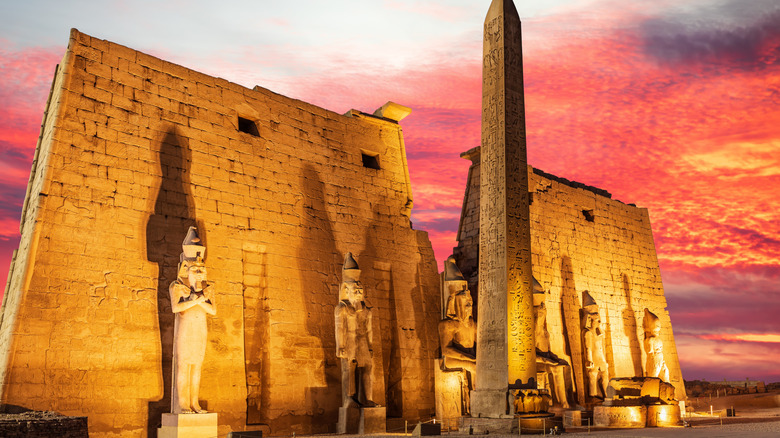
Just a short distance from Karnak sits another of Egypt's great temples, Luxor Temple. It's often overshadowed by its larger neighbor, but its unique location nestled inside the modern Luxor gives it an atmospheric edge that can make it tourists' favorite spot — seriously, there's a McDonald's across the road.
Construction began during the reign of Amenhotep III and was later expanded by Ramesses II and others. The temple played a central role in the annual Opet Festival, when statues of the gods were transported between Karnak and Luxor along the Avenue of Sphinxes — which you can still walk along. Today, visitors can admire massive statues, elegant colonnades, and remarkably preserved carvings that provide insight into the religious life of ancient Thebes. The highlights, though, are the monumental statues guarding the front of the temple.
While it can be enjoyed at any time of the day, it's particularly beautiful at sunset and after dark, when excellent lighting transforms it into one of Egypt's most photogenic landmarks. While it's still a big site, it's dwarfed by Karnak, so you could get away with exploring this one by yourself — just read up a little before you go.
Valley of the Kings
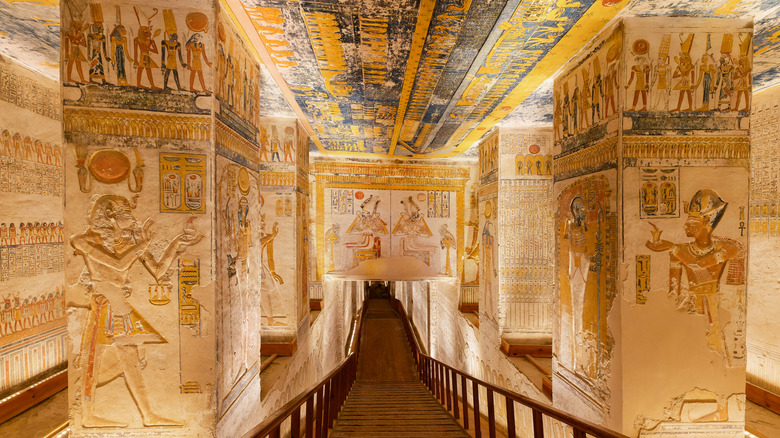
The pyramids served as royal tombs in Egypt's Old Kingdom, but later pharaohs, after moving south to Luxor in Upper Egypt (sounds confusing, but it's true), took a different approach to protecting their final resting places. Hidden among the barren, sandy hills west of Luxor, the Valley of the Kings became the burial ground of Egypt's rulers for centuries, and today it remains one of the most famous archaeological sites in the world — partly owing to one particular boy-king.
More than 60 tombs have been discovered here, including that of the young Tutankhamun, whose resting place became a global phenomenon in 1922. The famous treasures are located in the Grand Egyptian Museum in Cairo, Egypt's colossus of an attraction, but King Tut himself is still lying on display inside his tomb. Despite Tut's fame, it's many of the others that really capture the imagination. Most of the main chambers were looted centuries ago, but the remaining decorations are nothing short of extraordinary. The Ramesses V and VI tombs are in the running to be the most beautiful, thanks to the scale of the structures and the spectacular ceiling artwork that features the Book of the Heavens, as well as the Seti I tomb, which focused on the Books of the Night and Day.
The general admission ticket gets you access to 10 of the tombs (some may be closed on the day if work is going on), and you can purchase tickets for Ramesses V and VI, Tutankhamun, and Seti I, individually. They can be pricy, but it's worth it, and means there's a good chance you'll have them to yourself.
Temple of Hatshepsut
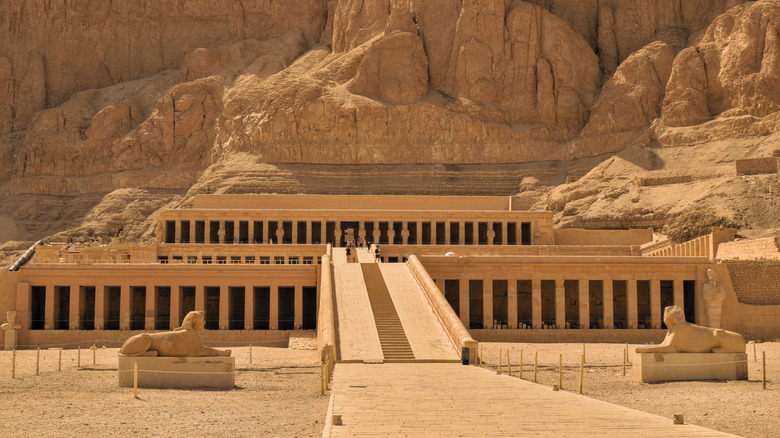
Not too far from the Valley of the Kings is the Temple of Hatshepsut. Built into dramatic limestone cliffs, the temple is one of Egypt's most visually striking monuments — almost modern-looking in its terraced design when compared to some of the other iconic spots. It's a fitting monument and final resting place for one of Egypt's greatest rulers.
Hatshepsut ruled as pharaoh during the 18th Dynasty and oversaw a period of prosperity and stability during her reign — the longest of any female ruler in Egyptian history. Visitors can still see reliefs depicting her famous trading expedition to the mysterious Land of Punt (somewhere roughly within the Horn of Africa, today), along with scenes emphasizing her relationship with the gods. The architecture itself remains remarkably distinctive and unlike anything else in Egypt, which makes it so memorable for those who explore it.
The temple is usually visited as part of a tour of Luxor's West Bank, but it's one that is often dropped by those with time constraints. Luxor has so much to offer that most tourists prioritize Karnak Temple, Luxor Temple, and the Valley of the Kings — primarily because of Tutankhamun — passing Hatshepsut's tomb over, which is an immense shame.
Medinet Habu
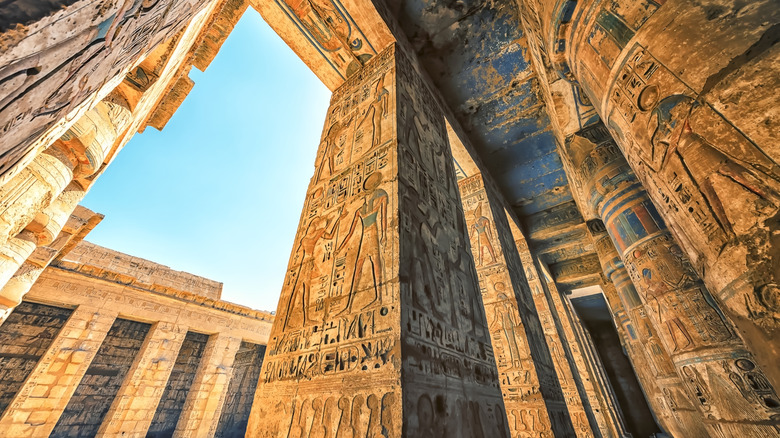
There are overlooked monuments, and then there's Medinet Habu. Another spot on Luxor's West Bank, the exceptionally well-preserved temple sits quietly at the side of the road in a residential estate. While there are a few tour buses that stop by every so often, the bulk of its visitors are either local or lucky tourists who happened to pick a guesthouse or small hotel nearby. It epitomizes the depth of Egyptian history: a site so well kept and huge in presence that would be the crown jewel in another country's tourism arsenal is just part of the scenery in Luxor.
It was originally built by Ramesses III and operated as his mortuary temple. The walls are remarkably well preserved and covered in detailed reliefs depicting great military victories, religious ceremonies, and daily life in Ancient Egypt. There are even some areas of the temple where the paint has been preserved, giving visitors an idea of how colorful many of these places were before time stripped them of their vibrance.
It's not a huge site, so it doesn't need more than an hour or two to explore, but it should be added to any exploration of the West Bank. There's an excellent, family-run restaurant called Café & Restaurant Maratonga straight across the road, so this would be a great place to walk off a delicious lunch.
Temple of Horus at Edfu
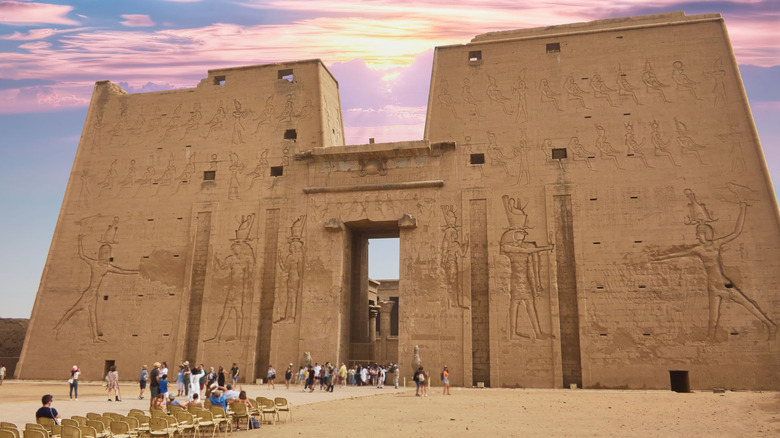
Most of the sites in Egypt have been reconstructed to some degree. The Temple of Horus at Edfu is one of the few exceptions and, as one of the best, if not the best, preserved temples in the country, is a remarkable place to explore. Just walking through the gargantuan gateway is enough to blow most tourists' minds.
As it was built during the Ptolemaic Era, it's one of the "newer" sites on the list. But that still puts it at over 2,000 years old and lends insight into the final years of Ancient Egypt's power. Dedicated to the falcon-headed god Horus, the temple features enormous pylons like those seen in Karnak, massive courtyards, and amazingly well-preserved reliefs throughout. Upon its discovery, it was buried in 12 meters (nearly 40 feet) of sand and debris, which is why it has remained so intact when others have crumbled.
Edfu isn't as simple to get to for the average tourist. Sitting between Luxor and Aswan, it's usually visited by tourists who have set sail on a Nile Cruise. These multi-day voyages stop at unique places that those who fly or get the train may miss out on. The downside to this is that bad timing means you may wind up in the temple at the same time as one of the large ships.
Kom Ombo Temple
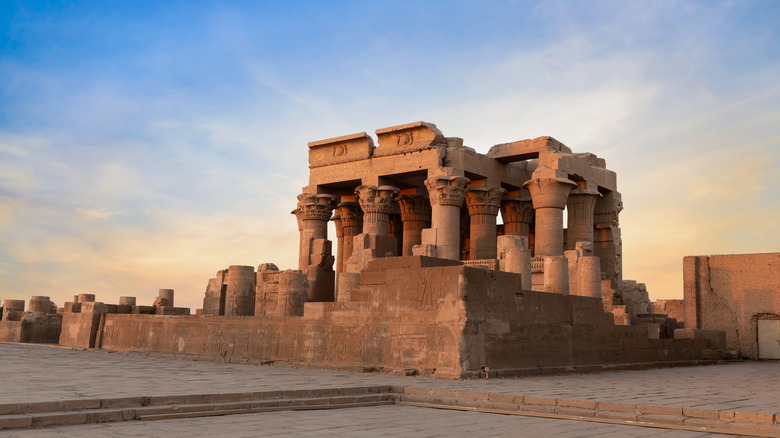
Kom Ombo might not be the most spectacular of the temples and monuments featured on this list, but it goes down in many travelers' favorites because of how odd it is. Perched on a bend of the Nile between Luxor and Aswan, the site stands out because it was dedicated to two gods instead of one. It has an interesting symmetrical layout that reflects the dual purpose, splitting it in equal parts and giving it a character unlike any other major temple in the country.
One side of the complex honors Horus the Elder, or Har Wer (a different version of the Horus worshipped at Edfu ... it's complicated), while the other was dedicated to Sobek, the crocodile god (very cool). You can see the dual dedication throughout the architecture. But what might stick in your mind more is its association with crocodile worship. There's a small museum just next door to the ruins that displays the remains of dozens of mummified crocodiles that were discovered inside the ruins, while many carvings depict the animals that once thrived along this stretch of the Nile.
Like Edfu, Kom Ombo is usually visited by cruise passengers traveling between Luxor and Aswan. Its position right on the banks of the river makes it a special visit closer to sunset, but you'll likely be bound by whatever schedule your cruise is on. It won't rival some of the other sites on scale, but it's one of the more unique stops on any Egyptian trip.
Abu Simbel
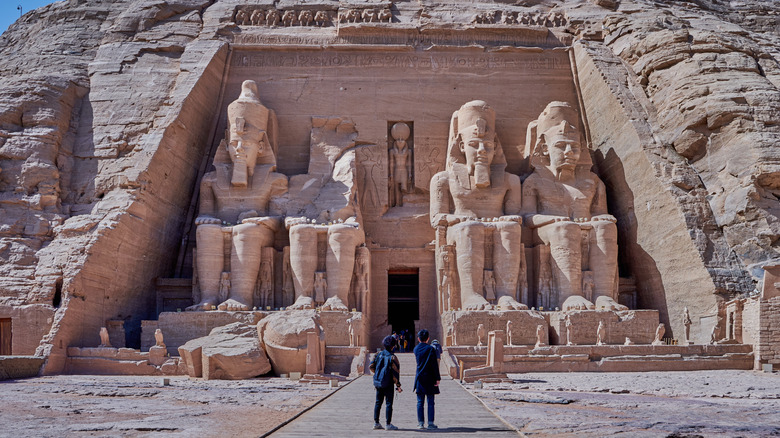
If there is one monument outside Giza that consistently leaves visitors speechless, it is Abu Simbel. Located near Egypt's southern border, beyond even Aswan, the site is dominated by four colossal statues of Ramesses II carved directly into a mountainside. Their sheer scale is enough to justify the journey on its own.
Constructed during the reign of Ramesses II to showcase his power and achievements, visitors find chambers decorated with reliefs depicting military victories and religious scenes. Amazingly, Abu Simbel was threatened by rising water following the construction of the Aswan High Dam. In what has to be one of the most remarkable engineering projects of the 20th century, the entire complex was carefully cut apart and reassembled on higher ground to save it from destruction.
Abu Simbel requires some commitment. Most tourists visit it as a day-trip from Aswan, but it takes around three and a half hours to get there by car or 45 minutes by air. With many tourists finishing their trip in Aswan, the final push might feel a little beyond them. But those who visit rarely regret it. In case you miss it, though, there's a unique replica of the temple near Los Angeles.
Alexandria
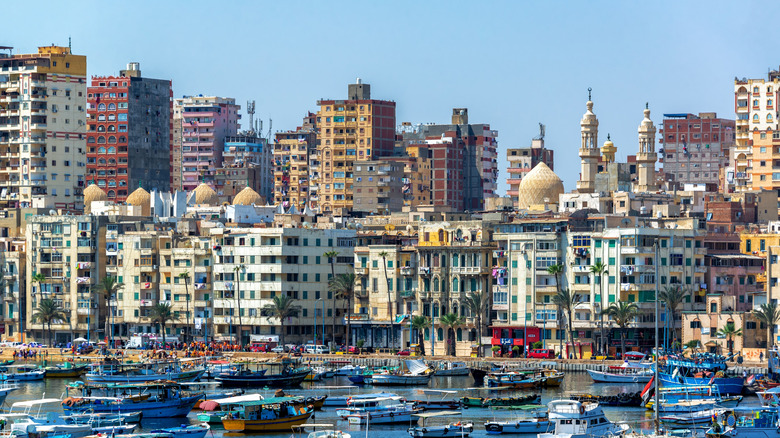
Alexandria takes things in a very different direction from the rest of this list. Most tourists associate Egypt solely with deserts and ancient temples, but Alexandria, Egypt's "Mediterranean jewel," showcases a unique atmosphere, blending centuries of cultural give and take to produce a melting pot of Greek, Roman, Egyptian, Mediterranean, and modern influences.
Founded by Alexander the Great, Alexandria was one of the most important cities of the ancient world. Sadly, the famous Lighthouse of Alexandria and Great Library haven't stood the test of time, but the city still contains impressive historical attractions. Visitors can explore the Catacombs of Kom el Shoqafa, the Citadel of Qaitbay, and the modern Bibliotheca Alexandrina, which pays tribute to the legendary library that once stood there. It's also a charming place to hang out for a day or two.
Alexandria can be visited as a day trip from Cairo, but spending a night allows more time to appreciate the overlooked city. The seafood restaurants, coffee houses, and Mediterranean setting are a welcome contrast to Egypt's archaeological sites — it can get heavy spending a trip darting between them.
Zamalek
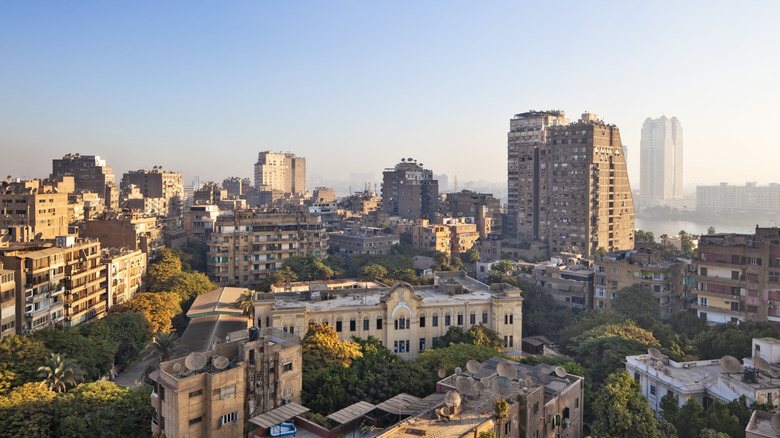
Many tourists only see Cairo through the lens of its historic attractions. But spending time in Zamalek offers a glimpse into a very different side of the city. Located on Gezira Island in the Nile, the leafy neighborhood is considered one of Cairo's most pleasant and livable districts. It's a welcome break from the intensity that first-time visitors sometimes associate with the city — although it definitely still has some chaotic energy.
It's known for its tree-lined streets, wonderful architecture, art galleries, embassies, and thriving dining scene. Old villas meet modern cafes, boutique hotels, and cultural venues. You won't find any ancient monuments, but you will see how some Cairo locals live their lives.
It works well as a base for travelers who want easy access to Cairo's attractions while retreating to a calmer environment at the end of the day. The restaurants, bars, and coffee shops are among the city's best, and walking through the neighborhood can ground you more than the hectic nature of the country's attractions. For many repeat visitors, Zamalek becomes one of their favorite parts of Cairo.