
10 Once-Thriving US Military Bases That Now Lay Eerily Abandoned
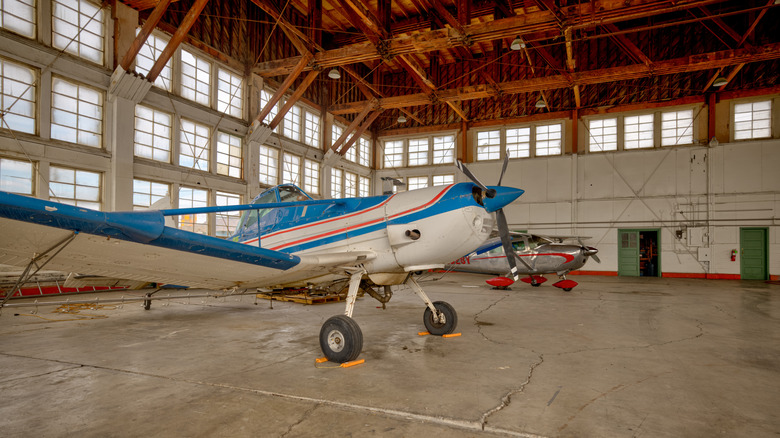
Across the United States, decommissioned military bases serve as reminders of chapters of American history that have long since passed. From Maine's scenic Fort McClary, under two hours from Boston, to Washington state's Fort Casey, a deactivated military base turned state park, these sites are fascinating not only for history buffs but for all Americans. Today, some of these abandoned military bases feature empty barracks, ruins of hangars and other buildings, and, sometimes, the distinctly creepy feeling that you're not completely alone.
Some of these sites have been converted into state parks or national parks, while others serve as the origin of various conspiracy theories and urban legends. Whether you're a military history enthusiast or an urban explorer, you'll enjoy this list of 10 once-thriving U.S. military bases that now lie eerily abandoned.
To put together this guide, we used official military websites and the National Park Service websites for all of these locations, including Camp Hero, Wendover Airfield, Chanute, Fort Ord, the Nike Missile Site, and Fort Tilden. We also obtained information from Atlas Obscura, Roadtrippers.com, Time Out, Exploration America, Roadside America, and Art of Abandonment to discover specifics about these abandoned locations.
Camp Hero (New York)
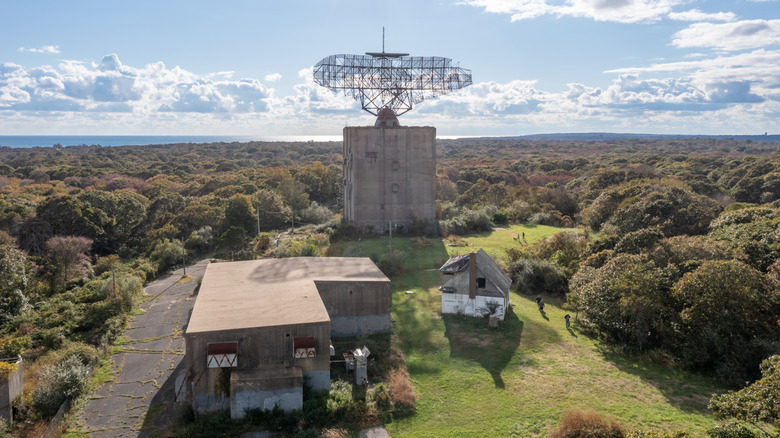
Of all the former military bases on this list, Camp Hero is the one that has the most pop culture cred. Located in Montauk, Long Island, this creepy compound is better known for its links to all sorts of conspiracy theories than for its extensive military history, which spans from the Revolutionary War through World War II. Camp Hero's "Montauk Project," a purported secret government experiment involving mind control, time travel, and other paranormal activities, even served as major inspiration for the Duffer Brothers' hit "Stranger Things" series.
There are also rumors that this site, with all its laboratories and research facilities, had ties to Nikola Tesla. While there is no direct evidence that these tales are true, believers cannot be deterred. Most recently in its military life, Camp Hero was a Coastal Defense Installation in the decade after World War II. Then, in the 1950s, it served as a key radar station throughout the Cold War. In 1958, the base's famous 126-foot-tall radar was built. It still stands today and is one of the most recognizable military features on this site. To disguise Camp Hero's military use, some structures here were intentionally designed to look like a typical fishing village, complete with a "church," "cottages," and a "bowling alley," a move that actually adds to the eerie feeling the abandoned base has today.
Officially closed in 1981, Montauk's mysterious spot is among the once-thriving military bases that have been transformed into state parks. In addition to being a haven for paranormal investigators and conspiracy theorists, Camp Hero State Park offers horseback riding, fishing, and hiking trails with exceptional Atlantic views.
Wendover Airfield (Utah)

For history lovers, few abandoned military bases in the world possess the combination of historical significance and accessibility that Wendover Airfield offers. Located on the Utah-Nevada border, this was one of the most important military installations of the 20th century. During World War II, Wendover was deeply connected to the Manhattan Project. This remote airfield served as the training location for the 509th Composite Group, the clandestine military unit tasked with dropping the first atomic bombs on Hiroshima and Nagasaki in August 1945. Wendover also housed the Enola Gay, the B-29 bomber that carried the atomic bomb dropped on Hiroshima. Although it has not been an active military base since 1976, Wendover Historic Airfield has been turned into a living museum where guests can walk in the footsteps of some of World War II's most important soldiers.
Today, visitors can tour the 50,000-square-foot B-29 hangar that served as the Enola Gay's "home" ahead of its historic Pacific flight. Additional ongoing restoration projects at Wendover include the facility's administration building, dining hall, and nurses' quarters. Among the structures that have already been completed are a section of barracks, the officers' club, and the Norden Bombsight storage building. Unlike many of the decommissioned bases on this list, Wendover Airfield is incredibly well-preserved, specifically for public viewing.
The eeriness factor here comes in when one considers the historical weight of what occurred on these grounds. It is next to impossible to walk through Wendover Historic Airfield without feeling chills at the mere thought of the mission that was planned and executed within the walls of these buildings.
Chanute Air Force Base (Illinois)
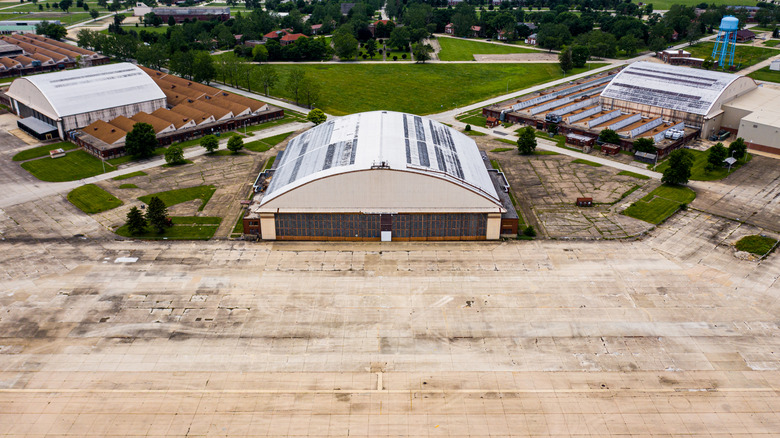
Chanute Air Force Base was established in 1917 in a bid to ramp up aviation operations during World War I. This particular facility was "ground zero," so to speak, for the Air Corps mechanic division between 1922 and 1938, as well as serving as a training base for Air Force pilots and civilian USAF employees. Chanute reached its peak, however, during World War II. During this era, the installation in Rantoul, Illinois, functioned as a small city, housing 25,000 military personnel in 1943. The base was notably larger than the town itself, and was even the site of a 500,000-square-foot classroom building called White Hall — this was the biggest pre-Pentagon military building on U.S. soil. The base was decommissioned in 1993.
Today, there are many remnants of this once-bustling military community on the site of the base. Photographers, like the team at Art of Abandonment, have captured incredible images of the decaying structures around Chanute Air Force Base. The interiors of the buildings here rather resemble a petrified asylum on a post-apocalyptic movie set, with peeling paint, rusted railings, and tattered posters that once served to motivate pupils.
Ownership of the base was fully transferred from the United States Air Force to the village of Rantoul in 2023, though both military officials and the Environmental Protection Agency remain involved in certain cleanup endeavors, like the safe disposal of a Minuteman II missile shell. Currently, Rantoul residents and visitors can visit converted areas of Chanute, including a golf course, airport, and residential neighborhoods.
Fort Ord (California)
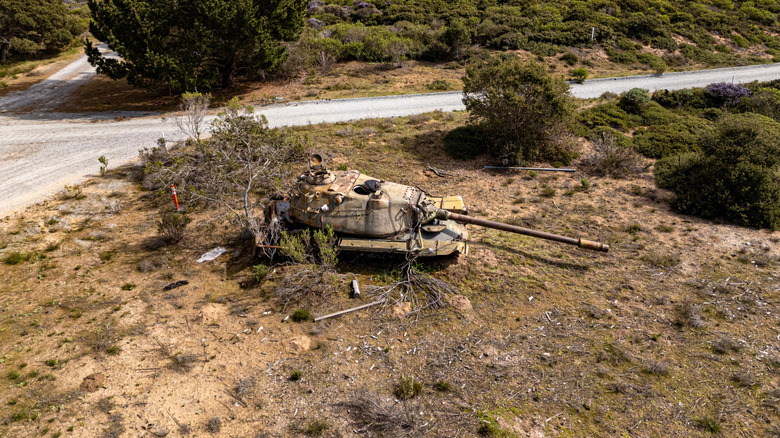
Fort Ord, near Monterey, California, is among the largest decommissioned military bases in the United States. This former Army post was a critical training and staging center during both the Korean War and the Vietnam War. In 1991, authorities recommended the shutdown of Fort Ord, but the closure was not completed until 1994. Decades of heavy military use had left the site toxic, and following a massive cleanup effort, it was reimagined as Fort Ord National Monument.
The reinvention of Fort Ord as a peaceful escape with stunning scenery did not erase its military past, though. Much of its history remains visible today, including some original Army buildings. That said, they have fallen into decay, with peeling paint and crumbling walls. The contrast between Fort Ord's gorgeous natural landscape and the military ruins is what makes this site particularly eerie, with Challenger Tom at GribbleNation referring to the former base as a "ghost town."
Obviously, Fort Ord is a great destination for anyone fascinated by America's military past, but it's also an excellent spot to enjoy the California coastline. Runners and walkers can take advantage of former infantry marching paths, and there is a particularly popular biking and hiking trail here, too.
Fort Tilden (New York)
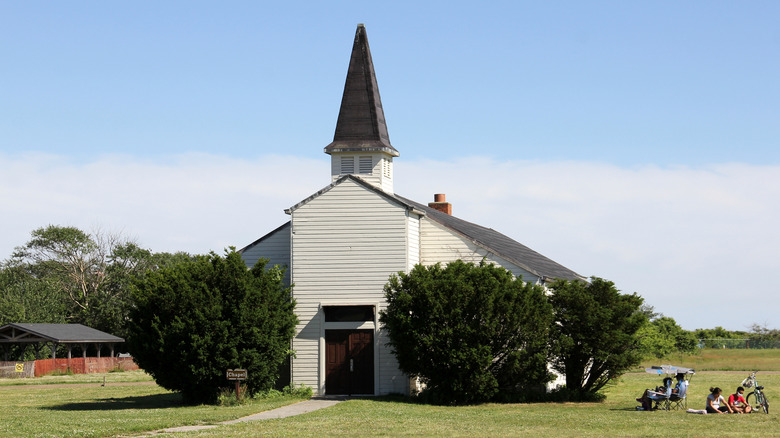
Fort Tilden is a fascinating former military base, largely because of its rather unexpected location. If you didn't grow up in New York City, you might be shocked to learn that there's an abandoned military site with a secluded beach, hiking trails, and great views of the iconic Manhattan skyline. Today, Fort Tilden is part of the Gateway National Recreation Area, which also includes Sandy Hook and Staten Island, but it was a coastal defense site from 1917 until 1974.
Though this location's defense history dates to the War of 1812, Fort Tilden played a role in World War I, World War II, and the Cold War during its officially commissioned era. Today, the site where Fort Tilden once operated still includes a number of military structures, including an observation deck situated on a former battery. The arts also play a role here today, with both a theater and an arts center available to the public.
Visitors who go a bit off the beaten path can experience the eerie side of Fort Tilden. The decrepit T-9 building and several batteries have been heavily graffiti-ed, making them a dream for urban-explorer photographers. Other structures, like an ammunition storage facility, are crumbling and obscured by foliage, giving them an otherworldly appearance, almost like they belong on a hidden Rebel base in "Star Wars."
Nike Missile Site SF-88 (California)
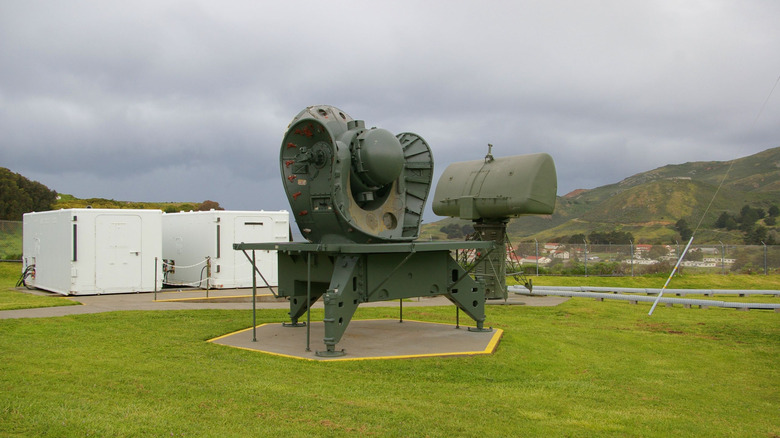
Located within Golden Gate National Recreation Area, America's most visited National Park Site, lies an incredibly eerie remnant of the Cold War. Nike Missile Site SF-88 was originally part of a nationwide network of missile installations intended to protect the American people from potential Soviet hydrogen bomb attacks. Of the approximately 300 missile sites that were built in 30 states, the SF-88 location is the best-preserved.
Visitors who come to this location can see missile launch areas (from a distance), underground chambers, the acid fueling facility, and much more in a stark reminder of the fearful culture that defined the Cold War age. Akin to Wendover, this site is particularly eerie because of the weight of the history that took place here.
The field team at Roadside America toured the SF-88 area, noting that "colossal cost of unused defense systems such as Nike might seem like a huge waste," since the USSR never actually attacked. Nonetheless, this site and others remind the American people of how the Cold War forever changed the appearance of some of the nation's most scenic areas.
Jefferson Proving Ground (Indiana)
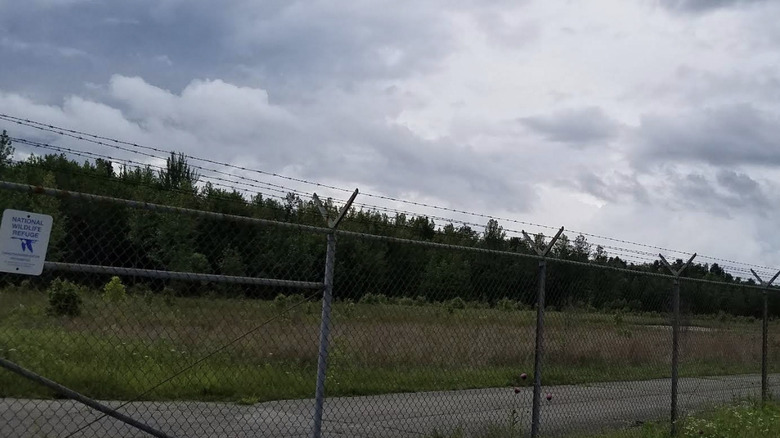
Near historic Madison, an underrated small-town gem with riverfront charm in southeastern Indiana, sits Jefferson Proving Ground (JPG). This is one of the most unusual former military sites in the Midwest. From 1941 until 1995, this was among the nation's largest weapons-testing facilities, where an astounding 23 million test rounds were fired. Today, although the site has been largely decommissioned, the Indiana National Guard maintains a presence with a shooting range and sometimes uses the Proving Ground for training exercises.
Visitors who enter the facility's grounds by car can spot creepy-looking abandoned military structures, including former munitions testing facilities. While certain areas of the JPG are restricted, there are public roads in the Big Oaks National Wildlife Refuge area and some private homes. Someone on Reddit noted that they've even explored on foot: "I've walked in those buildings many times. Tons of furniture, random papers, office equipment etc."
Adding to the eerie vibes, people who grew up in the area recall on Reddit loud explosions and a generally unsettling feeling at times. In my personal life, my grandparents were from Madison, and I have visited JPG on many occasions, so I can attest to the ghostly feeling of the military remnants.
Adak Naval Air Station (Alaska)
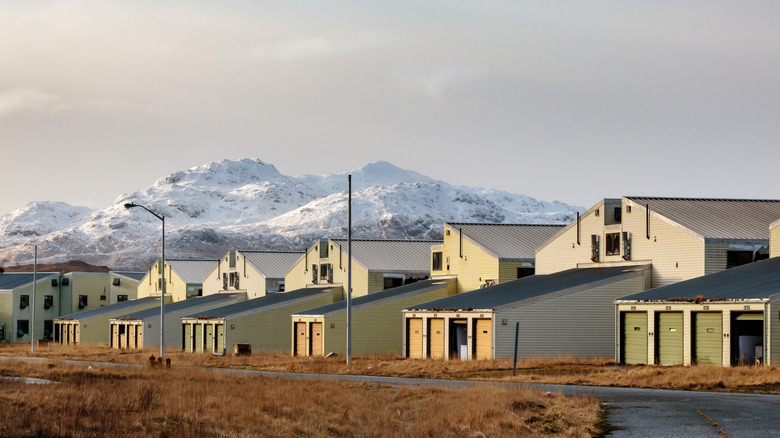
Adak is easily the most remote former-military outpost on this list. Located in the Aleutian Islands, over 1,200 miles from Anchorage, this former base is actually closer to Russia than the contiguous United States. This base is unique in that it has made the rounds in the U.S. military. It was first used by the Army Air Corps during World War II — with a massive population of 90,000 at its largest — then operated under Air Force command until it was handed over to the Navy circa 1950.
Because Adak is so far away from any sort of civilization, it became a complete community for the military personnel and their families who were stationed here. There was a public school, a chapel, and, of course, homes for those who resided at this remote base. Today, many of these structures are still standing, getting increasingly weathered with each passing year.
This gives the entire base an eerie, ghostlike feel. The chapel, for example, almost looks like the setting for a horror film, while the officers' quarters have an otherworldly feel as they sit in the midst of the stark Alaskan tundra. If you plan to visit Adak, you're in for quite an adventure. In an April 2026 article, Alaska Explored's Paul Taggart explained that, weather permitting, "There is one way to get to Adak commercially, and it's an Alaska Airlines 737 that flies twice a week from Anchorage." Lodging is also limited here, but there are a couple of inns available.
Fort Stevens Military Reservation (Oregon)
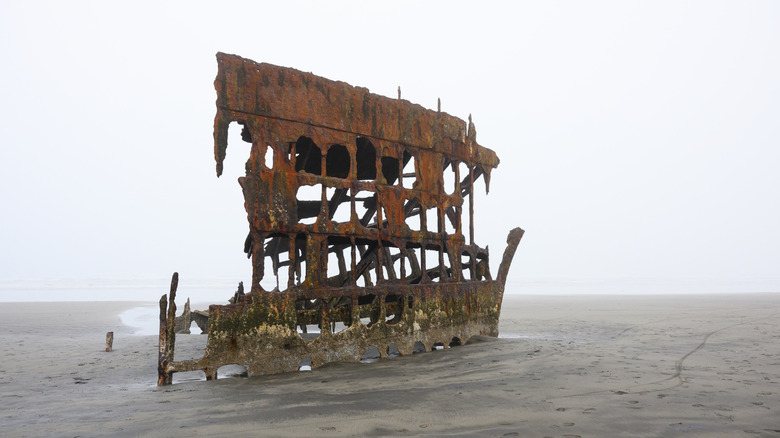
Oregon's Fort Stevens Military Reservation holds an important place in American military history. Located along the Columbia River, a key U.S. waterway, Fort Stevens was originally utilized to secure the Columbia from Confederate attacks during the Civil War. Then, although it did not play a role in World War I, Fort Stevens saw combat during World War II when Japanese forces fired on the site in 1942. The base was officially closed in 1947.
Today, the former military reservation has been renamed Fort Stevens State Park. Visitors can enjoy a wide array of activities, from camping to picnicking to hiking to biking to swimming in the freshwater lake. Amid the gorgeous natural scenery here, though, lie eerie remnants of the property's military past. Explorers can check out bunkers, old artillery buildings, and other structures that have fallen into decay.
Perhaps the most ghostly thing at Fort Stevens, though, is the 1906 Peter Iredale shipwreck. The skeletal-looking remains of this steel ship can be found on the beach and are accessible to the public when the tide is out. There's also an on-site military museum with rotating exhibits connected to the base's history.
Fort Worden (Washington)
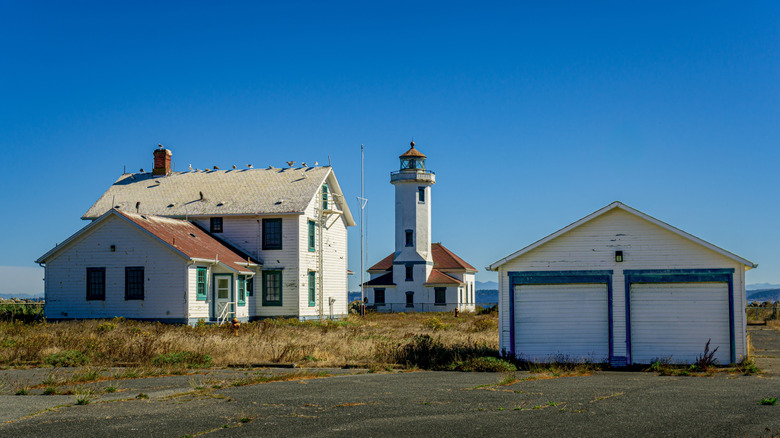
Construction on Fort Worden began in 1898 on Washington state's Olympic Peninsula near Puget Sound. For decades, Fort Worden was one-third of the U.S. Army's "Triangle of Fire," a trio of forts designed to secure the Pacific Coast. In a fascinating twist, none of the heavy artillery guns installed here were ever used, and the fort was fully decommissioned in 1953.
Today, Fort Worden Historical State Park is a popular destination for concertgoers, festival attendees, art lovers, outdoor enthusiasts, and military history buffs. People flock here for events year-round. Although this is a popular arts and culture site, there are also plenty of eerie buildings left over from its Army days.
While some of the remaining buildings here are objectively decrepit and clearly abandoned, others have been restored to their original glory. The commanding officer's quarters, for instance, now function as a Victorian-era museum. While it is lovely, it is also eerie in the way that only turn-of-the-century relics can be. One almost expects to see a ghostly specter appear at any moment.