
America's 13 National Parks You Didn't Realize Were UNESCO Heritage Sites
When we think of UNESCO World Heritage sites, ancient treasures like Stonehenge or the iconic Acropolis in Greece may be the first things to pop into our minds. But there are also plenty of UNESCO-honored places in the United States too, and the U.S. has a lot to do with the organization's spectacular list of global properties than you might think. It was through the nation's founding of the world's first national park — Yellowstone — in 1872 that set a new standard for preserving places of astonishing natural and cultural significance. A century later, the U.S. was also the first to ratify the World Heritage Convention, which tended to the need for international cooperation to protect and preserve cultural and natural treasures.
Out of the 1,248 sites officially recognized as of 2026, UNESCO honors 26 in the U.S. on its list of World Heritage Sites — and half of those are national parks. From the Grand Canyon's more than 2 billion years of geological history to Mesa Verde's incredible Ancestral Puebloan cliff dwellings, there's a phenomenal range of dramatic landscapes, biodiversity, Indigenous heritage, and more to discover.
We based this list on official National Park Service resources and the UNESCO World Heritage Sites list. We've drawn on the author's experience visiting many of these parks as well as resources shared on relevant national park and regional tourism websites. Whether you're already planning to head to one of these destinations or you're dreaming of a bucket list itinerary, get ready to discover some of the most jaw-dropping places in the country.
Carlsbad Caverns National Park (New Mexico)
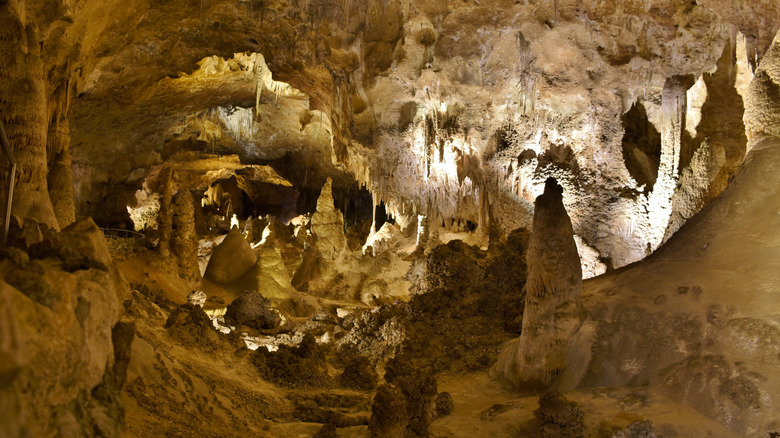
Caves come in all shapes and sizes, but the ones at Carlsbad Caverns in southern New Mexico are like something out of an adventure movie. This huge complex consists of at least 120 caves, but they are so vast and so numerous that they have yet to be fully explored. Some of the features that qualify it as a UNESCO World Heritage Site aren't even necessarily accessible to the public. That's the case with Lechuguilla Cave, which is one of the 10 longest caves in the world at more than 140 miles. Since it's still being mapped, but it's only open to researchers. That said, even Lechuguilla's largest space can't equal the monumental scale of the "Big Room," which sits in the adjacent cavern. That one is open to the public, and it's a real treat at more than 30 miles long, with areas developed for the general public.
Take a self-guided wander along the fairly flat Big Room Trail, which stretches 1.25 miles, or take a dramatic plunge down the switchback-laden Natural Entrance Trail, which is the same length as the other but descends 750 feet. It connects to the starting point of the other so you don't have to go both ways. Other caves can be explored on what the park aptly terms "guided adventure tours."
Everglades National Park (Florida)
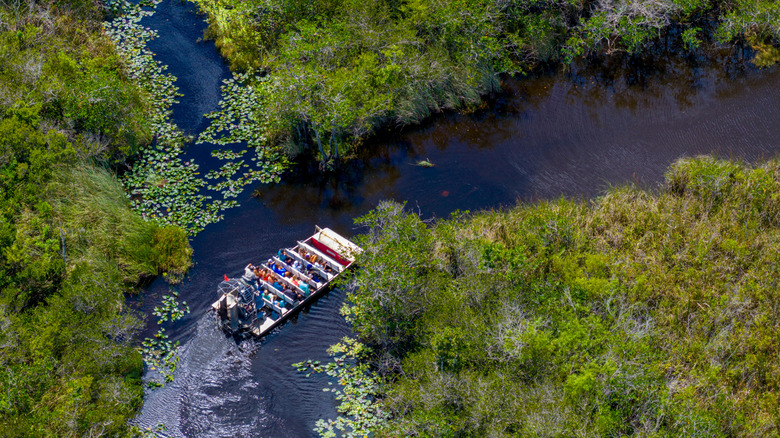
Comprising a whopping 1.5-million-acre area of southern Florida, Everglade National Park is a unique subtropical environment and the the largest of its kind in North America, making it worthy of a UNESCO designation. Its biodiversity is astonishing with more than 2,000 species of plants and animals, including being part of the only region on the planet where alligators and crocodiles live side-by-side. It's also home to manatees, flamingos, and even black bears. The sheer scale of the ecosystems, which include both freshwater and saltwater marshes, mangrove forests, pine hammocks, and vast swathes of seagrasses, are reason enough to appreciate the role the landscape plays for wildlife.
There are four visitor centers around the park from which you can join ranger-led tours to learn about astronomy, wetlands, birds, and much more. Hop on a narrated adventure from Shark Valley Tram Tours, take an airboat ride, or hop aboard a backcountry boat cruise. If you want to extend your explorations, Big Cypress National Preserve, which spans over 729,000 acres, borders the national park to the north.
Glacier National Park (Montana)
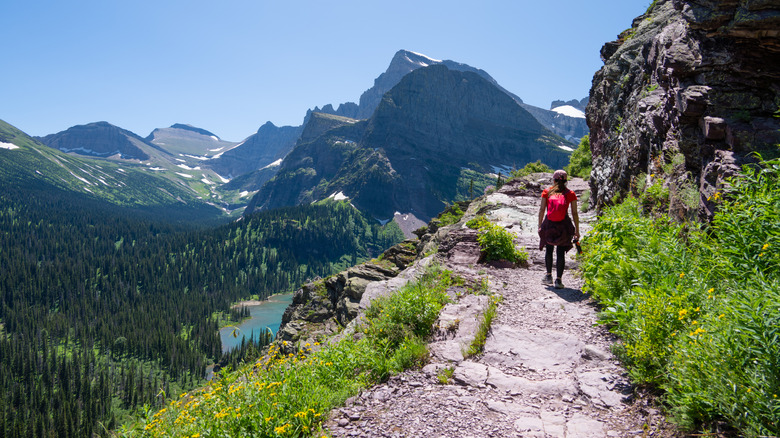
Glacier National Park is one of the nation's most beautiful parks — and that's saying a lot. It spans more than 1,500 square miles of Rocky Mountain terrain and contains more than 760 lakes, 563 streams, and 175 mountains, the tallest of which (Mount Cleveland) soars to 10,448 feet. The park is so rarefied and stunning that it's sometimes referred to as "the crown of the continent," as it is also located along the continental divide. Along with Waterton Lakes National Park in Canada, it's designated a joint UNESCO site in the form of the Waterton-Glacier International Peace Park, putting the ultimate stamp on its impressive pedigree.
Glacier National Park boasts more than 700 hiking trails, many of which are in the backcountry but also several of which are easily accessed directly from the iconic Going-to-the-Sun Road, a 51-mile scenic byway that connects the east and west ends of the park by way of immanently picturesque vistas. Melding nature and history, two backcountry chalets offer an exciting overnight experience, and half a dozen other accommodation options include campgrounds, historic lodges, hotels, and cabins.
Grand Canyon National Park (Arizona)
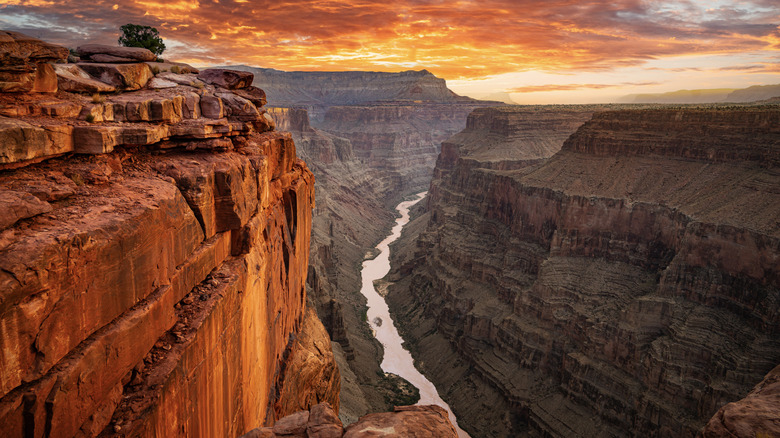
If you're ever trying to remember how the Grand Canyon was formed, think "D-U-D-E," short for Deposition, Uplift, Down-cutting, and Erosion. These phenomena describe the way the massive gorge, which averages about a mile deep, began with ancient rock formations, or deposits, that were then uplifted by huge tectonic shifts over tens of millions of years and later carved by the Colorado River over the course of 5 to 6 million years — and counting. All in all, nearly 2 billion years of geological history are visible on the rocks, and UNESCO considers it "the most spectacular gorge in the world."
The most popular area to visit in the Grand Canyon is the South Rim, which is easily accessible by car and even train from Williams, a hidden gem gateway town with Route 66 charm. Geology buffs will enjoy a wander along the paved Trail of Time, which stretches exactly 2.83 miles and traces 1 million years of the canyon's geology per every meter. It connects to Grand Canyon Village, which brims with historic buildings, gift shops, lodging, eateries, and more. If you're up for a bit more adventure, head to the North Rim, which is quieter but more remote. A large wildfire destroyed the historic lodge and other infrastructure there in the summer of 2025, but the area reopened in May 2026.
Great Smoky Mountains National Park (North Carolina and Tennessee)
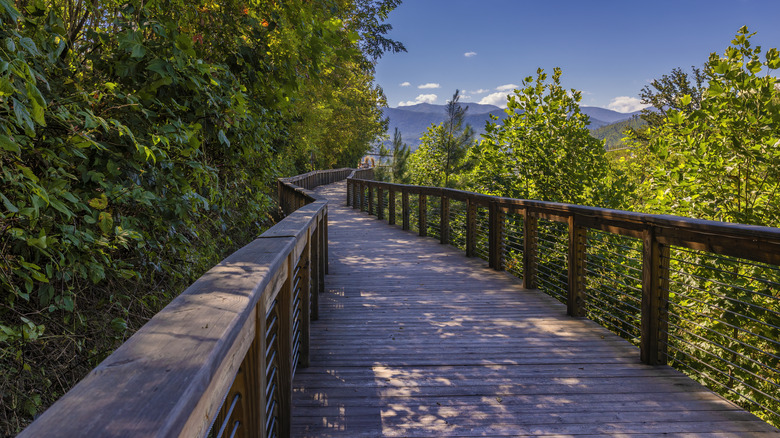
The most-visited national park in the country, Great Smoky Mountains National Park is home to more than 3,500 species of plants, including 130 naturally-occurring tree species. The ancient, protected ecosystem is also recognized by UNESCO for its abundant range of wildlife, including possibly the most kinds of salamanders found in any one place in the world. And then, of course, as its name suggests, there are the beautiful Appalachian Mountains with their stunning vistas ideal for hiking and scenic drives.
The park covers a little more than 800 square miles, and the boundary encompasses about an equal area of both of North Carolina and Tennessee. In the latter, you can enjoy the busy tourist gateway of Gatlinburg (and nearby Pigeon Forge) if you like hotel stays, family entertainment, and lots of dining options directly outside the park. But if you prefer a less crowded, quieter approach, head to Townsend, Tennessee, or Cherokee, North Carolina, packed with Smokies charm and handicraft shopping. Cades Cove is a beautiful area for a drive or a scenic bike ride, and Kuwohi and Newfound Gap are popular destinations for great views of the mountains from high overlooks.
Hawai'i Volcanoes National Park (Hawai'i)
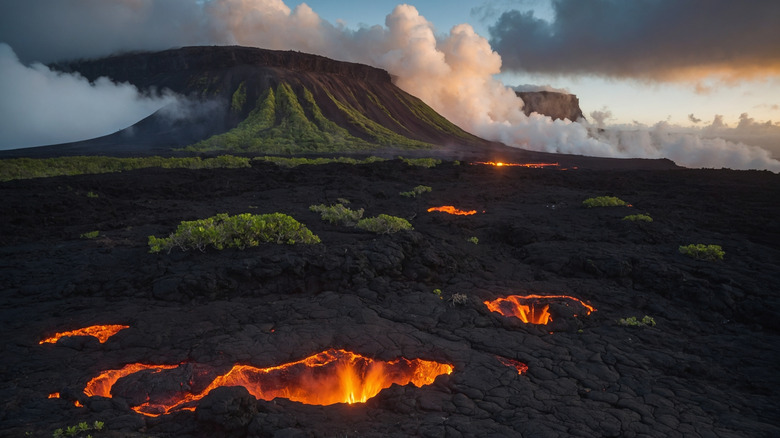
Some parks are characterized by their incredible geology, and while slow changes continue to happen, Hawai'i Volcanoes National Park is a rare place where you can see the landscape changing shape literally by the second. Hawaii's Big Island contains two of the most active volcanoes in the world, Kīlauea and Mauna Loa, which are among the most active on the planet. UNESCO deems it a site of incredible geological and ecological significance, and the best part is that visitors are able to watch the eruptions in real time.
The park has trails and drives, such as the beautiful Crater Rim Drive Tour, that are well outside of where the lava flows, and they link a number of viewing points. Make sure to stop at Uēkahuna and the Kīlauea Overlook, among others, for spectacular views of the crater and caldera. The park also hides a one-of-a-kind camping experience in a eucalyptus forest at the fittingly-named Volcano House, a historic inn with guest rooms, cabins, and campsites that's situated right at the edge of Kīlauea.
Mesa Verde National Park (Colorado)
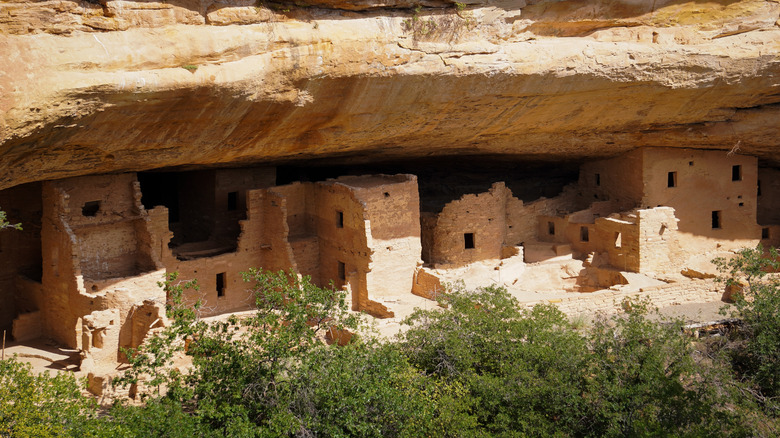
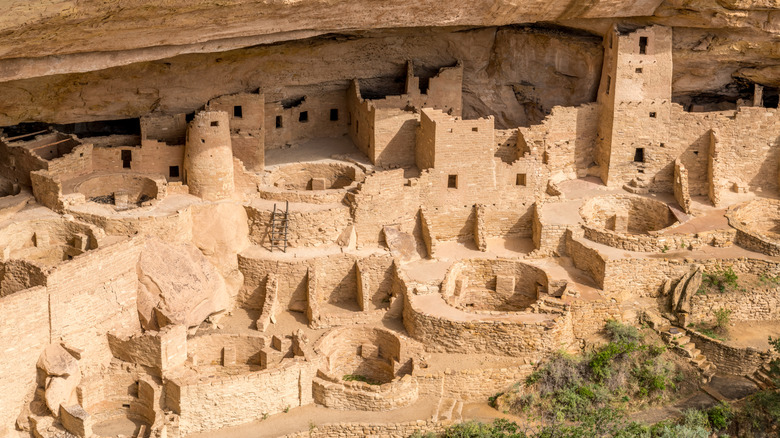
A breathtaking landscape in southwestern Colorado, Mesa Verde National Park encompasses a truly unique history. People traversed this area for thousands of years, turning to agriculture on the area's expanse of fertile land — hence the name, which means "green mesa." But it's also the phenomenal stone cliff dwellings of the early Indigenous Ancestral Puebloans, ranging in date from the 6th to the 12th century, that have an undeniable magic about them. As a World Heritage Site, it's the concentration of these structures that's the real treat, not to mention their scale.
Cliff dwelling tours are one of the most memorable ways to experience a visit to the park, although they can also be seen from numerous trails and overlooks. Cliff Palace is the most well-known and the largest — not just in the park, but also on the continent — and a 45-minute tour gets you up-close and personal. Just be ready to climb some ladders like its more than 100 residents would have done around 800 years ago.
Other popular tours include Balcony House, Long House, Step House, and others, some of which head into the backcountry. For those who prefer to explore Mesa Verde on their own, there's a handful of self-guided routes, which lead you to cliff-top ruins like the Far View Sites Complex, as well as sites along the Badger House Trail, and more. Keep in mind some places are not open year-round, have specific opening hours, and access can be subject to whether a ranger is on site.
Olympic National Park (Washington)
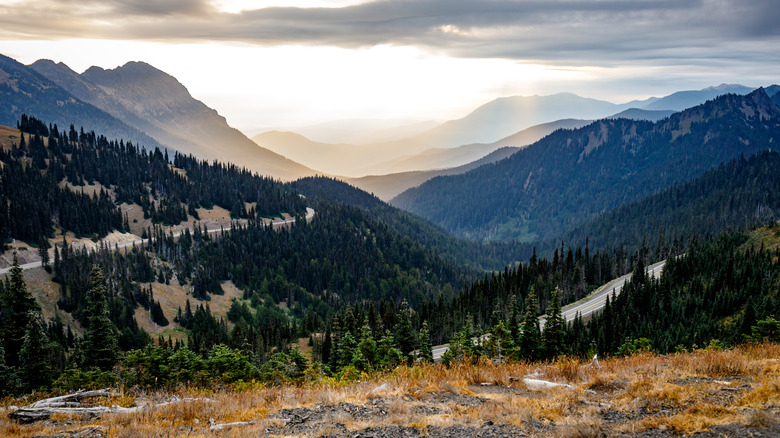
A wide variety of landscapes and ecosystems thrive in Olympic National Park, from mountains to coastline to old growth forests. It's vast, geologically varied, and remarkably biodiverse, all of which add up to a UNESCO World Heritage designation. The park boasts 10 watersheds, and it's also the lowest latitude region in the world where glaciers occur at lower than about 3,280 feet in elevation. Considering it also has a thriving temperate rainforest on top of all that, this park really has a lot going on! At nearly 1 million acres and more than 70 miles of mostly-unspoiled coastline, there's virtually endless scenery and, one could say, an ecosystem for every mood.
Olympic National Park's main visitor center is located in Port Angeles, on its northern edge, which also happens to be one of the best small beach towns in America. In the summer, ranger-led programs are a wonderful way to learn more about the geology and ecology of the park, as well as the night sky. There are also numerous ways to enjoy the outdoors, from day hikes and backcountry treks to tidepooling and wildlife spotting. Post up at one of four attractive lodges located within the park or pitch the tent at one of more than a dozen campgrounds.
Redwood National and State Parks (California)
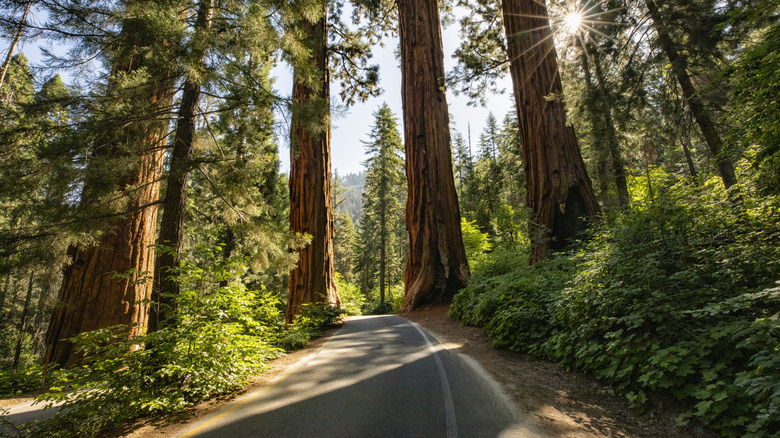
Redwoods are immense, old, and cherished trees, and the coastal variety that were spared from logging in northern California are among the largest and oldest in the world, earning Redwood National and State Parks a place on UNESCO's World Heritage list. The network consists of three separate state parks — Prairie Creek, Del Norte Coast, and Jedediah Smith Redwoods State Parks — that were first established in the 1920s and maintained their autonomy when the national park was then established in 1968.
The redwoods are beautiful to drive through, especially on byways like the Newton B. Drury Scenic Parkway and the Coastal Drive loop. You'll find a great combination of Pacific coastline and fern-filled towering groves to explore, with numerous trails through areas like Lady Bird Johnson Grove, the Grove of Titans, and more. Or perhaps you fancy a paddle? Head to the Jedediah Smith Day Use Area for a scenic ranger-led kayak tour on the Smith River. And when you're ready to call it a night, settle in at one of four developed campgrounds or head to one of seven backcountry sites for a truly immersive experience.
Yellowstone National Park (Wyoming, Montana, and Idaho)
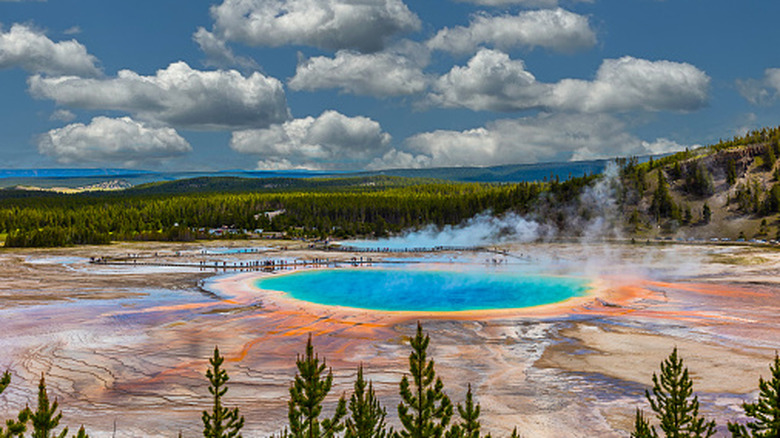
Yellowstone National Park is a unique landscape of hydrothermal features — half of all that exist on the entire planet, according to UNESCO — due to its giant volcano. It's still very active, but there hasn't been any major volcanic eruptions for around 70,000 years. Yet its famous geysers, hot springs, fumaroles, and mudpots are all testament to its simmering activity, including hundreds, if not thousands, of little earthquakes every year.
The park, which sits mostly in Wyoming but has Idaho to thank for about 1% of its area and Montana for another 3%, is also fantastically wild. Wolves, bison, grizzly bears, mountain goats, and much more roam its nearly 3,500 square miles. For one of the most iconic stops, don't miss Old Faithful, the world's most famous geyser and one of at least 150 peers in a 1-square-mile area known as the Upper Geyser Basin. Walk around on the boardwalks, and check projected eruption times at the visitor center. You should also visit the dramatic Lower Geyser Basin, which is the largest thermal area in the park. Between them is the Midway Geyser Basin, where you'll find Grand Prismatic Spring — arguably one of the most spectacular pools in the park with its namesake rainbow of hues.
Yosemite National Park (California)
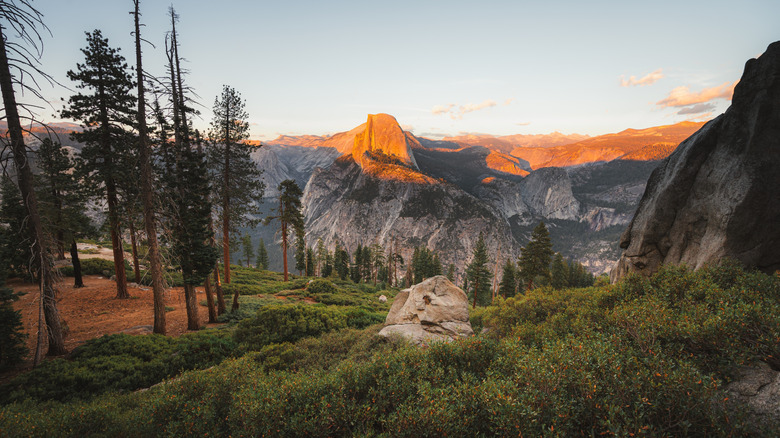
Yosemite National Park, perched in the High Sierras, was made world-famous through the 19th-century explorations of John Muir, who also lobbied for the creation of the national park in his role as president of the Sierra Club. Its primary draw is the Yosemite Valley, in addition to others, that were dramatically carved by glaciers to create enormously lofty walls of granite. It earned a spot on the UNESCO World Heritage list for these so-called "hanging" valleys with their often incredibly tall waterfalls, dramatic domes, lakes, and more.
Yosemite Valley, home to natural landmarks like El Capitan, Half Dome, and Yosemite Falls, is a major hub, especially for first-time visitors. Another must-see is on the southern end of the park, known as Mariposa Grove, where ancient sequoias tower overhead and you can participate in a very California activity: walking straight through the trunk of a giant tree (the California Tunnel Tree). Yosemite Valley and Mariposa Grove can also be the busiest areas of the park, so if you prefer fewer crowds, head out on the trails early in the morning or check out less busy spots like Hetch Hetchy Valley in the north and the seasonal Tioga Road, which heads through a more remote high pass on the eastern side of the park.
Mammoth Cave National Park (Kentucky)
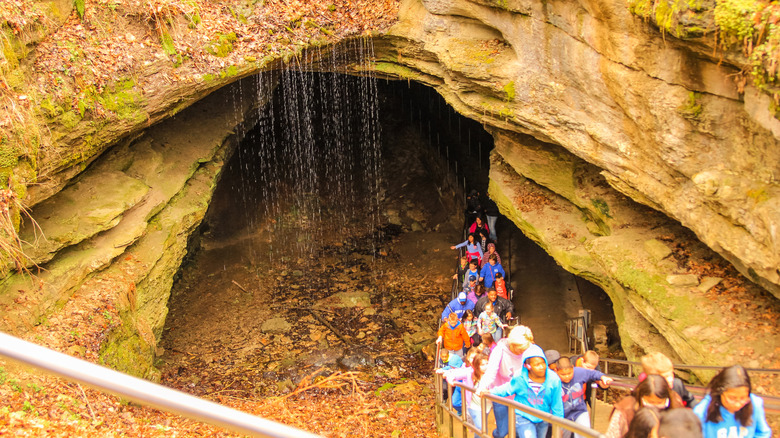
When you can boast the world's longest known cave system, it's a good bet that UNESCO will take notice. Mammoth Cave National Park truly does center around a subterranean network of the most colossal scale at 426 mapped miles, and they're still exploring. Indigenous Americans are thought to have entered the cave around 5,000 years ago, and it officially became recognized as the largest underground system when, in 1972, cavers realized another very long cave network one ridge over was actually connected, making it one in the same. Mammoth Cave also has one of the most robust and varied ecosystems for cave-dwelling flora and fauna, home to more than 130 species.
Cave tours are a highlight of the visit to this national park, but booking a tour ticket is required before you can marvel at this wonder. There are plenty of guided tours as well as a self-guided option, but availability is also not always guaranteed. The park advises to reserve tickets well in advance to avoid disappointment. Tours are typically offered from mid-May to early October.
There is also plenty to do on the surface, though, with the rustic-modern Lodge at Mammoth Cave offering comfy accommodations and a large gift shop, and there is also camping at three campgrounds. Plus, the Green and Nolan Rivers are also ideal for a scenic paddle.
Wrangell-St. Elias and Glacier Bay National Parks (Alaska)
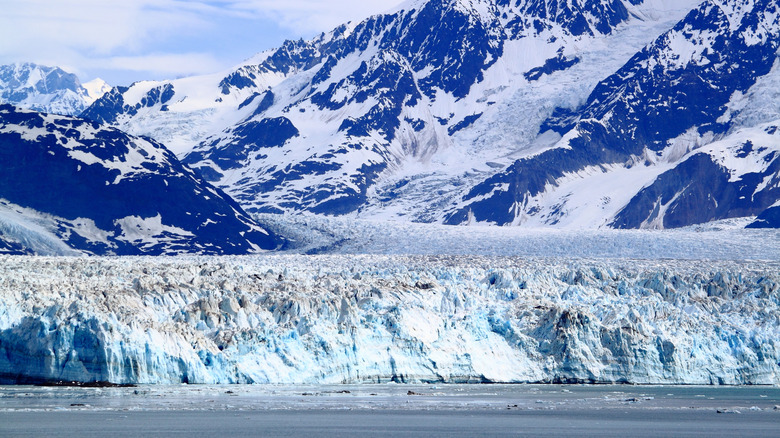
Wrangell-St. Elias and Glacier Bay National Parks & Preserves form a joint UNESCO World Heritage Site, along with two Canadian treasures: Kluane National Park & Reserve and Tatshenshini-Alsek Provincial Park. Wrangell-St. Elias is America's largest national park at more than 13 million acres, and Glacier Bay has more than 3 million acres. All told, the area contains the largest non-polar ice field in the world, and it's home to animals that thrive in northern climes, such as grizzlies, caribou, sea lions, killer whales, and more.
It's not an exaggeration to say the area is utterly massive, and in Wrangell-St. Elias alone, there are five areas with visitor services that can take up to a day to get between by either driving or flying. You'll want to plan ahead to figure out where you'd like to explore and how to get there, and there are virtually endless options for hikes, wildlife viewing, mountaineering, and more. Glacier Bay's glacial coastline is also ideal for exploring by boat, and a stay in the historic Glacier Bay Lodge is a memorable way to feel totally immersed. While there aren't any developed campgrounds within the boundary of Wrangell-St. Elias, there are also options in surrounding areas. Otherwise, pack the tent in your rucksack and head out on a backpacking adventure!