
What Visiting Las Vegas Was Really Like In The '70s
The Las Vegas we know today is a city of mega-resorts, millions of visitors, and price tags that would make anyone who had visited 50 years ago squirm. Walk down the Strip now, and you'll find restaurants with world-class chefs, hotel suites running into tens of thousands of dollars, and security systems that monitor chip movements across casino floors. It's slick, it's corporate, and it's impressively efficient. But it wasn't always this way.
The world's best city for nightlife in 2025 began life as little more than a railroad stop in the middle of the Nevada desert. While there were widespread laws against gambling in the U.S. in the early 20th century, Nevada became the only state with legal casinos in 1931, transforming Vegas almost overnight. It was the Mafia who saw the opportunity well before Wall Street did. For decades, organized crime ruled, building casinos, running showrooms, and deciding who got comped and who didn't.
But by the time the '70s arrived, the mob's vice-like grip was already showing signs of cracking. Corporations were buying in, federal prosecutors were swooping in, and the city that was once run entirely on cash and connections began its slow transformation. The mob-run version of Vegas held its ground for the remainder of the decade, but by the early 1980s, it had mostly been run out of town. We've consulted firsthand accounts from visitors, as well as newspaper archives and specialist publications, to capture what it must have felt like to visit Las Vegas during this era. Here is what we discovered.
It was a much smaller, quieter city
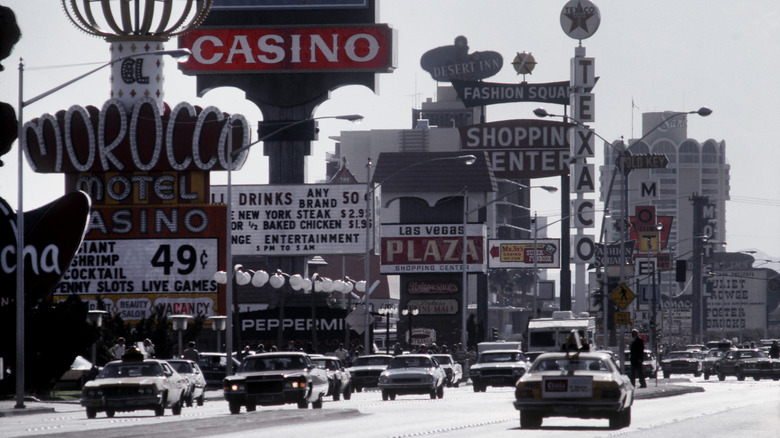
Driving into Las Vegas at night back in the 1970s was a much different experience from today. "I remember driving into the valley, and it was entirely dark but for the twinkling lights of a relatively small town. Felt like we were coming in for a night flight landing; it was that dark," was how one visitor described it on Reddit. "The pace was slow and relaxed... it felt like a collection of roadside attractions rather than a city full of tourists," wrote another on Quora.
The casinos were small. Small enough to explore in a single evening, unlike today's mega-resorts. The whole experience was more personal in a way that's hard to imagine nowadays. Dealers knew your name, and bar staff remembered your drink preference. A spare seat at a blackjack table was always available, restaurants took walk-ins, and you rarely had to book a hotel in advance. Yet, for all its small-city charm, Vegas was already pulling in 15 million visitors a year by 1972.
The Strip was a charming, laid-back stretch back then. People drifted by on roller skates wearing bell-bottoms, soaking in the warm desert evenings as the neon flickered on around them. It was Fremont Street that was the soul of the city. Affectionately known as the "Glitter Gulch," it was packed with glowing signs promising legendary performances, cheap food, and big wins. It was quietly buzzing, even before you set foot inside a casino. Vegas was and always has been one long, ongoing party. It's just that in the '70s, it was an unhurried one.
The Mafia still ran the show
Vegas was still largely controlled by the Mafia in the '70s. Mobsters from Chicago held the most sway, but their representation was far from exclusive. More than two dozen Mafia families had stakes in the city — but despite this presence, the ground was shifting beneath their feet. Howard Hughes began buying up casinos in 1967. He used his unmatched financial power to bypass the standard background checks required of casino owners — the mob had used frontmen to evade them. That same year, the Nevada Legislature passed the Corporate Gaming Act. This opened the door to legitimate corporate ownership in the city. Then, in 1970, Congress passed the RICO Act — a law that, for the first time, allowed federal prosecutors to target entire criminal organizations rather than just individual crimes. The clock was ticking on mob rule.
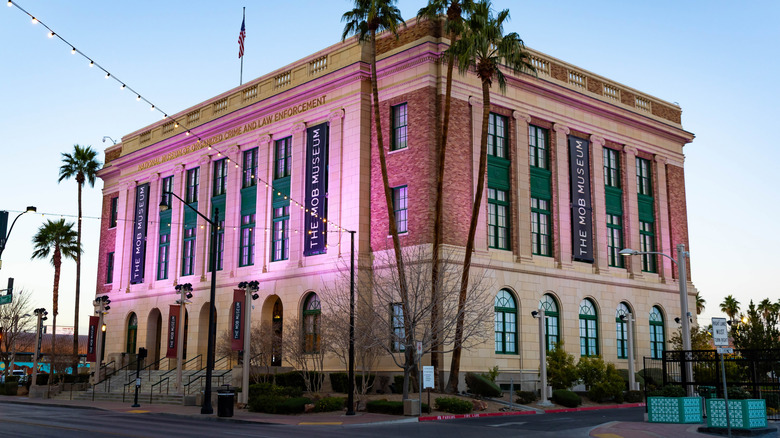
Chicago's response was to send Tony Spilotro, an enforcer tasked with protecting what remained of that Mafia's rackets. He ran them from a jewelry and gift shop in the Circus Circus, a busy casino where throngs of tourists would have been casually gambling. Nowadays, it offers an affordable, family-friendly experience – quite the change from the '70s! Frank "Lefty" Rosenthal, on whom the movie "Casino" is based, kept the Stardust and Fremont cash flowing back to Mafia bosses. And it all happened in plain sight, or at least close enough. For visitors, it wasn't completely obvious, yet you could somehow feel it. There were the high rollers with unexplained wealth, men wearing ridiculously expensive suits who knew everyone, and a sense that the casino floor operated in accordance with rules nobody had ever written down. Today, visitors can get a feel for those times by visiting The Mob Museum in the downtown area.
The casinos were tired — but change was afoot
Vegas may well have been booming, but you wouldn't have known it looking around at the start of the decade. It was showing its age. Worn-out casinos and budget dining, while much of the entertainment was provided by stars who were beginning to lose their sparkle. However, they each still had their own identity. At the Sands, the spirit of the Rat Pack lived on. This contrasted sharply with places like the Stardust, which was doing its best to feel like a futuristic vision. No two places felt quite the same on the Strip. The soul was definitely there, but it badly needed investment, especially as Vegas was growing faster than any other metropolitan area in the country in 1972.
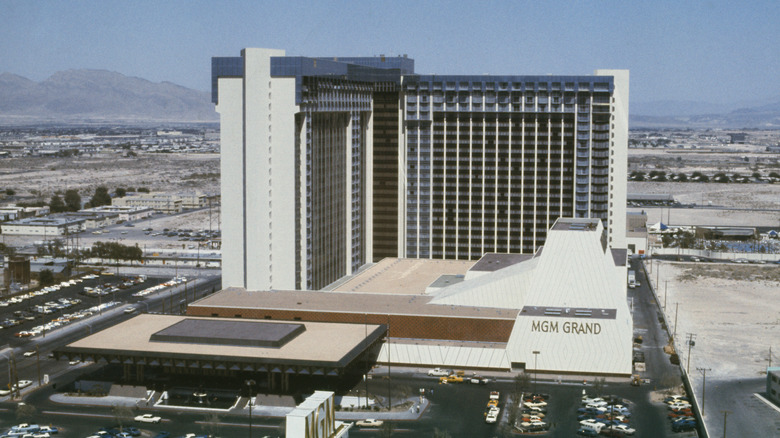
By 1973, changes were afoot. The original MGM Grand threw open its doors as the world's largest hotel and casino. Dean Martin himself was onstage for the opening night. This was the statement of intent Vegas needed. In 1976, the "Entertainment Capital of the World" finally got a real jolt. Atlantic City legalized gambling, and Vegas finally had some proper competition. The money started moving. Caesars underwent considerable renovation, the Desert Inn spent $50 million on a facelift, the Riviera another $50 million, and the Flamingo $30 million. For the late 70s, it was an extraordinary amount of investment — and that was before you factored in what the Hilton and Tropicana were doing. Las Vegas had begun rebuilding itself from the ground up — and it was just getting started.
The entertainment was unlike anywhere else
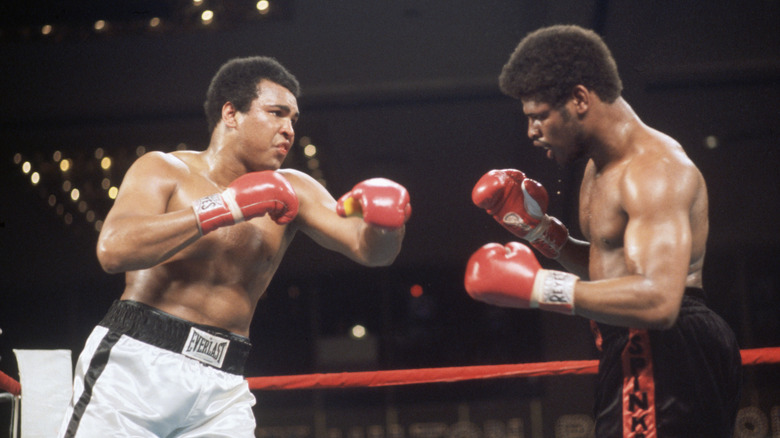
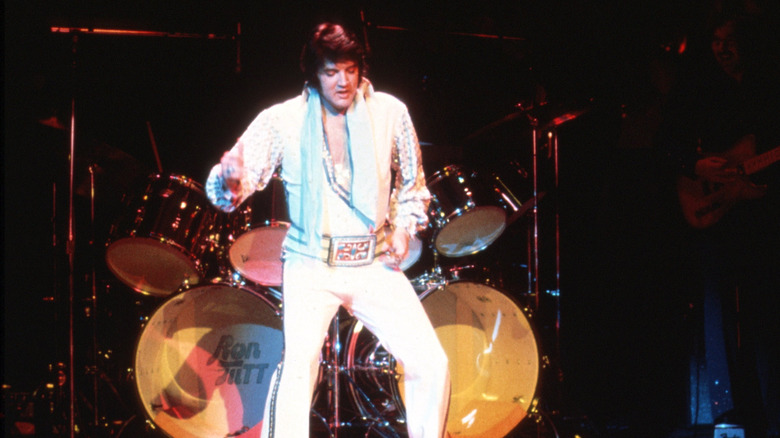
At the beginning of the decade, many of the biggest stars of the Rat Pack era had either retired or passed. But as that chapter was closing, Vegas was busy writing a bigger one. Elvis had already taken up residency at the International Hotel in 1969. The 2,000-seat showroom he performed in kept selling out over the next eight years. The Folies Bergère brought European glamour to the Nevada desert. It showcased dozens of performers in elaborate costumes backed by live orchestras and intricate dance numbers.
At the Tropicana, Siegfried & Roy took the spectacle to dazzling new heights in 1973, blending illusion, white tigers, and grand theatrical flair that would make them legends. Between shows, the lines between regular visitor and celebrity were indistinguishable. Stars like Tom Jones could be seen standing right next to anyone at the tables, while parties at the Riviera doubled as an unscripted celebrity who's who. Elsewhere, Atomic Liquors, a bar you can still visit today, would see mobsters and movie stars drinking side by side in the dim light.
At the Stardust, topless revues and world championship boxing shared the same stage. The Las Vegas Convention Center then took the fight even further. In 1973, Muhammad Ali returned to the city for the first time in eight years. In 1975, he stepped into the ring once more and knocked out Ron Lyle in the eleventh round in front of more than 6,500 roaring spectators, but 1978 saw him lose his title at the Hilton Sports Pavilion. It was a stunning fight, in which Leon Spinks broke the world record for winning the world heavyweight title with the fewest fights.
Lounge acts were still a highlight
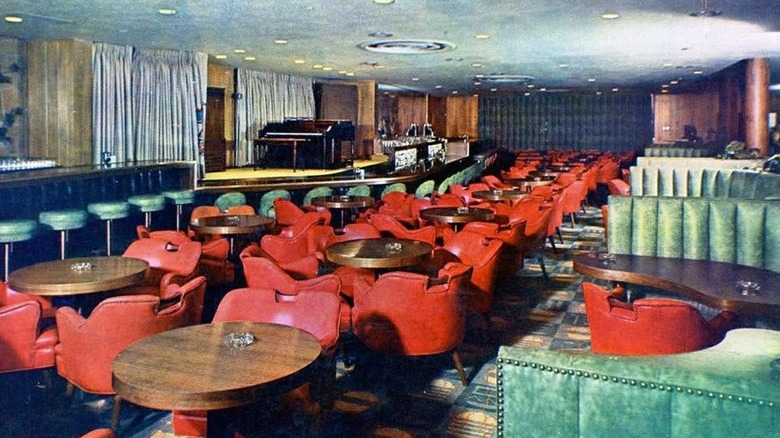
In the 1950s and '60s, the lounges comfortably held their own against the main showrooms. The headliners might have drawn in the bigger crowds, but the lounges ran into the night, packing in a few hundred people for the cost of a two-drink minimum. They provided a platform for legendary acts like Louis Prima to make their name. The spirit of the lounges hadn't faded by the seventies. One Redditor recalled: "I saw Kenny Rogers singing in one of the hotel lounges. No admission, just free lounge entertainment. It was when he was just starting his solo career, and a few months later, he had a number one hit with '"Lucille.'"
Established stars were keeping the culture alive, too. Down at the Casbar Lounge at the Sahara, Sonny and Cher performed, while Charo's guitar and flirtatious "cuchi-cuchi" catchphrase kept audiences coming back year after year. The music was played around the clock, and musicians often bounced from one lounge to another, wandering next door for a drink only to find themselves pulled up on stage by an old friend mid-set.
However, the intimacy didn't survive the decade. Once corporate ownership started to take hold midway through the seventies, the focus turned to profit margins. In turn, the personal connection between performer and crowd slowly faded.
It was incredibly cheap
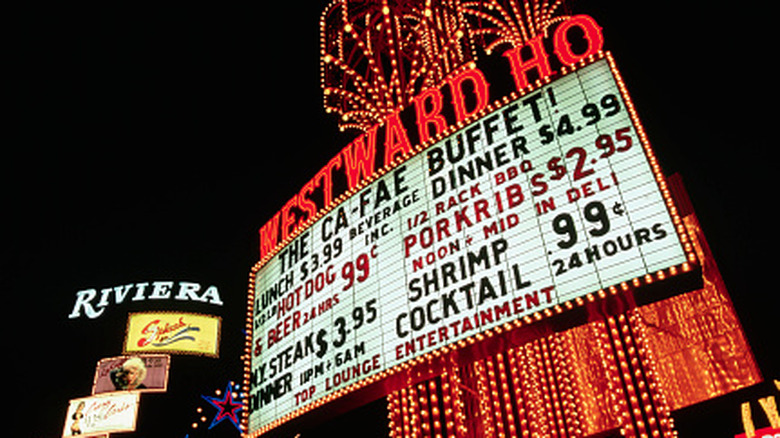
For most of the 20th century, the business model behind Vegas was simple. The casino floor earned the money. Gambling accounted for around three-quarters of revenue — everything else was little more than a way of keeping everyone playing. Hotel rooms, dinners, drinks, even tickets to the show — you could have it all for cheap, provided you spent enough time at the tables. "Every coffee shop had 'specials' on which the casino lost money, but they got the customers in the door," explained one Vegas resident on Quora.
One contributor took another trip down memory lane on Reddit, saying, "1979, had a $19 room at the Hacienda, 99¢ breakfast at the Stardust, 25¢ craps at Slots-A-Fun, cheap golf at the Dunes GC in summer." Another recalled on Curbside Classic how they would "play blackjack at small storefront casinos located in places like the Hot Dog House with hand minimums at 25 cents, just to 'loosen up' before we'd go big-time at the hotel casinos playing at the $2 tables."
But it was several years before then that things had already started to shift. Corporations were beginning to move into properties in order to compete with the mob. "When the syndicate ran the town, you didn't pay high prices for anything. They took it out of the gambling. But when the corporations took over, they wanted to make a profit out of everything—the food, the entertainment," was how one disgruntled barman put it in a 1972 New York Times article. The modern strip now runs on the opposite logic. Gambling makes up just a quarter of what the big resorts earn — you can even have fun without stepping foot in a casino nowadays.
You could eat like royalty
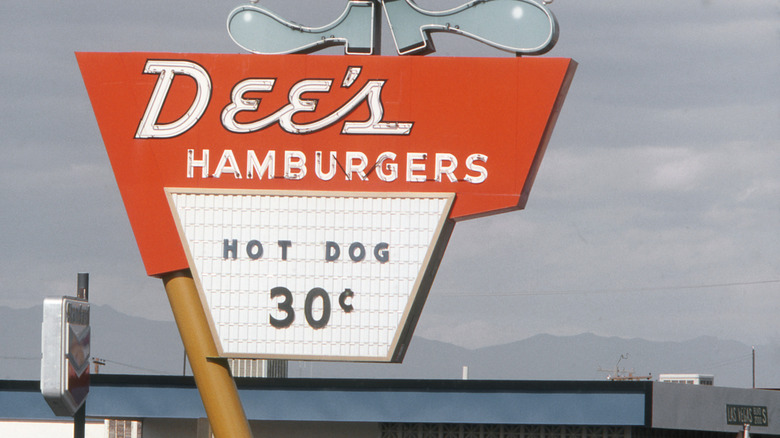
Long before the '70s arrived, cheap food was already a concept in the City of Sin. At El Rancho Vegas, a window called the Chuck Wagon had been serving up $1 all-you-can-eat buffets since 1946. And you could eat as much as you wanted before sunrise. Once the seventies rolled in, that loss-leader thinking soon spread, and the legendary 99-cent breakfast buffet was born. You could get as many trips back to the trays as you wanted with no time limit, and some tourists treated it as an all-afternoon feast. There was a twist, however. Slot machines lined up alongside the queues to ensure patrons kept gambling, and visitors were chowing down between slot pulls.
But it wasn't just the crazy value that kept hungry gamblers coming back; it was the quality. Even after midnight, you could get a full plate of steak and eggs with a coffee chaser for a few bucks. Surf-and-turf feasts didn't require reservations, and less than $10 would score you a full sirloin and an entire lobster tail. The 99-cent shrimp cocktail was another deal to become a Vegas institution, while carving stations ran from late morning until evening, turning out fresh slices of prime rib no matter when you showed up. Mornings brought brunch with free-flow champagne. It was often served alongside things like crab leg platters or sumptuous pastries. Even the evening feasts were scheduled alongside theater curtain times. Thankfully, the city is still renowned for those mouth-watering buffets, but you'll need to look pretty hard to find one for as cheap as a dollar.
It was like visiting a city you already knew
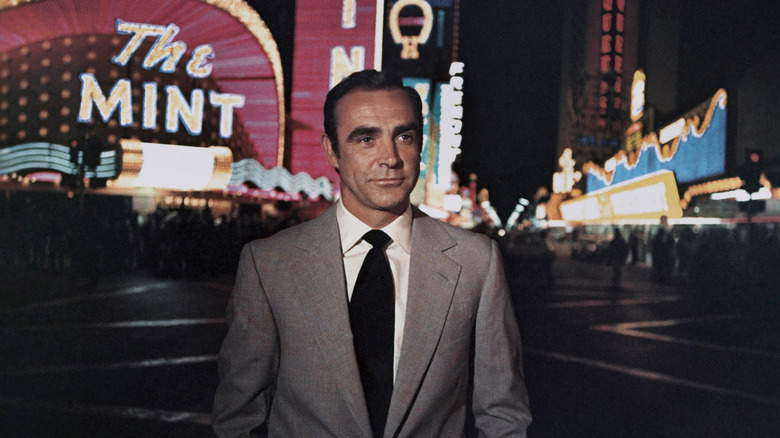
Las Vegas built its pop culture image throughout the 1960s. The Rat Pack made the city the coolest place in the States in "Ocean's Eleven." Then, Elvis brought the city to a new generation in "Viva Las Vegas," and his residency at the International Hotel started in 1969. This was a move that all but confirmed the city's status as the "Entertainment Capital of the World." Throughout the '70s, a new wave of film, TV, and even literature would add an entirely different dimension to the consciousness of even more Americans — and people from all over the rest of the world, too.
In 1971, James Bond tore through Fremont Street in a Ford Mustang Mach 1 in "Diamonds Are Forever," with half the Las Vegas Police Department in pursuit. That same year, Hunter S. Thompson arrived on a magazine assignment and never quite left in spirit. His novel "Fear and Loathing in Las Vegas" painted the city as a gaudy, drug-soaked monument to American excess. Also that year, Merv Griffin began broadcasting his daytime talk show from Caesars Palace into living rooms across the country. And the following year, a record-breaking audience tuned in to watch the Vegas-set TV horror movie "The Night Stalker."
Then there was "The Godfather." In 1972, the Tropicana was the set for Michael Corleone's Las Vegas casino, and in '74, "The Godfather Part II" returned to the same hotel. As such, the Tropicana became one of the most recognizable buildings in America. By the time private detective Dan Tanna was cruising the Strip in "Vega$" on ABC in 1978, the city was already a place visitors were familiar with before they'd even set foot in it.
There was a darker side to the glitz and glamour
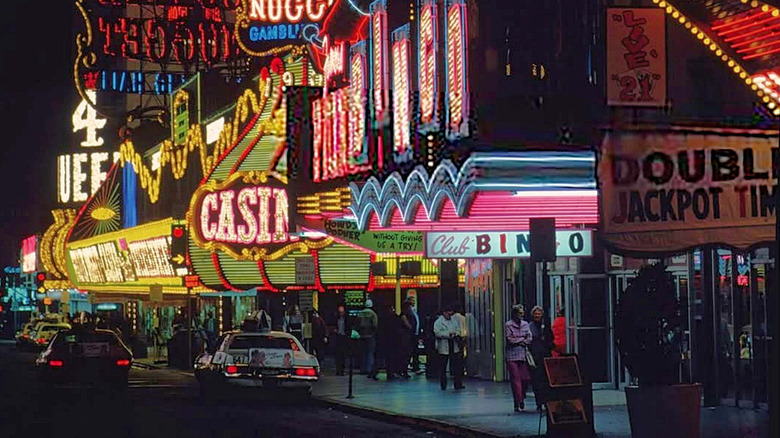
But beneath the neon lights, there was the reality of Sin City. The stretch between the Strip and Downtown had earned itself the nickname "Drunk Alley," and for good reason. One former resident described it as "a total freak show," with pimps and sex workers a constant presence. The sex trade dated back to the era of Bugsy Siegel and was maintained in a discreet and controlled environment. Access was through the house because the escorts were a part of the casino networks. But that system began cracking even before the seventies arrived. This was when Howard Hughes started pouring corporate money into the city. The rapid expansion that followed meant thousands of new hospitality personnel arrived — and they knew nothing of the unwritten rules that the mob had in place. The carefully managed order soon started to unravel.
By 1975, the city's Yellow Pages told the story plainly. There were pages of explicit service ads that left little to the imagination. By the late '70s, the stretch between the Sahara and the Riviera had become something of an ordeal. Propositions were relentless, and one Redditor recalled, "Hookers lined the streets. Some were scary aggressive." The corner of Flamingo and the Strip had become so overrun that there are stories of streetwalkers directing traffic. Drugs were also rife in the city, and it was as discreet as the sex industry in some places. A performer at Caesars recalls on Reddit that the private clubs were places where "there'd be cocaine BOWLS on the tables" before concluding, "Yeah, it was a scene, maaan."
Some of the gambling was serious business
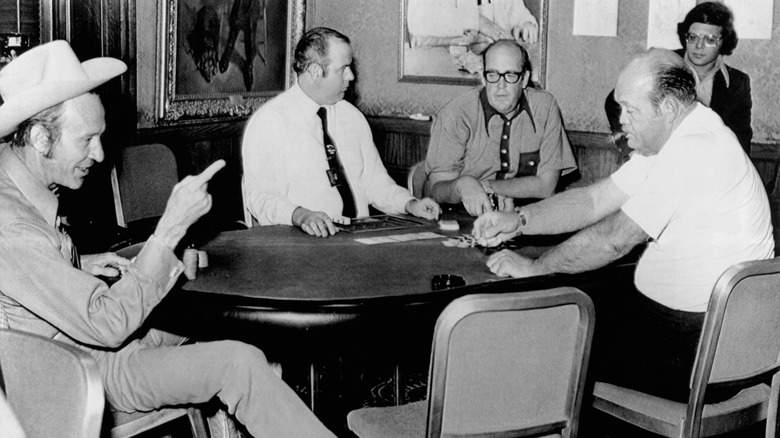
Most visitors gambling in Las Vegas might have been placing fairly modest stakes, a few dollars in the slots, or a minimum bet at a table. Everyone felt like a player, but behind their coin-clattering flurries, a different kind of gambling was taking place. In 1970, seven of the world's best poker players walked into Binion's Horseshoe and changed the game forever. They played a no-limit hold 'em cash game, and when it ended, they voted on who they thought was the best player. Johnny Moss was chosen. And with that, the World Series of Poker (WSOP) was born — although nobody quite realized it yet.
Some of the same players who helped found the World Series were also sitting in private cash games at the Dunes in the mid-'70s. These were games that made even the WSOP look modest in comparison. It was unlike anything tourists chasing slots spitting out silver dollars and laying down $10 stakes could imagine. Billy Baxter, a high-stakes gambler who landed in Vegas in 1975, told World Poker Tour about a game between casino owners Sid Wyman and Major Riddle. They were sitting across from each other with blinds of $1,000 and $2,000. "This is in the seventies. Their own money! This is giant money compared to the stakes today." The men they were playing against included Doyle Brunson – a man called the Godfather of Poker — and Chip Reese, a player who was considered without an equal when it came to cash games.