
9 Once-Thriving Mining Towns That Have Transformed Into Something Completely Different
We may receive a commission on purchases made from links.
Mining towns throughout North America were once lively hubs where people from all walks of life converged. When silver, gold, copper, and coal mining booms faded in each area, these towns faced uncertain futures. Some disappeared entirely or decayed into ghost towns. In fact, there are many abandoned Gold Rush towns you can still visit today. Others, though, successfully reinvented themselves as luxury ski resorts, UNESCO World Heritage sites, and popular tourist destinations that travelers still flock to today. Here, we'll visit nine once-thriving mining towns that have transformed into something completely different.
To compile this guide, we used a variety of high-authority sources, including official tourism websites like Visit Utah, DawsonCity.ca, Visit Arizona, Visit Carson City, and SouthwestMT.com. We also turned to UNESCO, Colorado Public Radio, Aspen Journalism, the Colorado Virtual Library, the Utah government's History to Go site, USA Today, and the Jerome Historical Society. Blogs like Travel Backland and the Maritime Explorer, as well as social media posts on Tripadvisor and Facebook, also provided firsthand experiences from these locations. Additionally, we turned to official restaurant and hotel websites for details about those establishments.
Aspen, Colorado
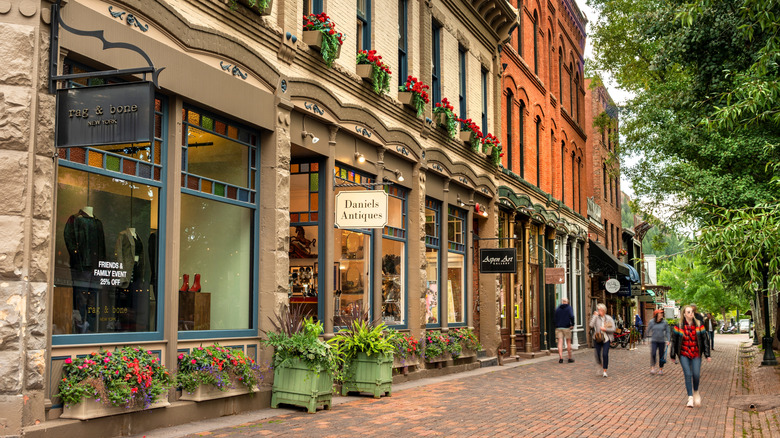
Today, Aspen is one of the most exclusive (and most costly) places to visit. Celebrities, billionaires, and skiing enthusiasts flock here for the incredible slopes, designer boutiques, Michelin-star restaurants, and, frankly, to see and be seen. Cooper Avenue alone is home to Ralph Lauren, Gorsuch, Brunello Cucinelli, and more. Since this became a true ski town with the arrival of its first lift in the 1940s, everyone from Lucille Ball to Cary Grant to Andy Warhol to Goldie Hawn and Kurt Russell to Paris Hilton has fallen in love with Aspen's luxe lifestyle.
Decades before it became one of America's most glamorous mountain towns, though, Aspen was a major silver mining hub. Founded in the late 1800s, Aspen rapidly expanded as prospectors staked their claims. Like many mining towns, though, the bust came almost overnight. In 1893, the United States government stopped buying silver for coins, and prices for the precious metal plunged. From then until the development of Lift 1 in 1947, Aspen existed in what locals refer to as "The Quiet Years." Modern visitors can still see bits and pieces of Aspen's mining heritage amid all of the glitz and glamour in America's most expensive travel destination.
Historic mining-era buildings can still be found along the main drag in Aspen. The iconic Hotel Jerome, for instance, has been hosting guests since 1889 and was even named the top resort in Colorado in 2024. Meanwhile, several Victorian-era homes have been converted to gourmet restaurants. Perhaps the best known of these is Matsuhisa Aspen, an Asian-inspired spot founded by the chef behind the Nobu restaurants. Clark's Oyster Bar is another popular option in a historic building. The Aspen Historical Society also offers a glimpse into the town's silver-mining past with its Holden/Marolt Mining & Ranching Museum.
Park City, Utah, USA
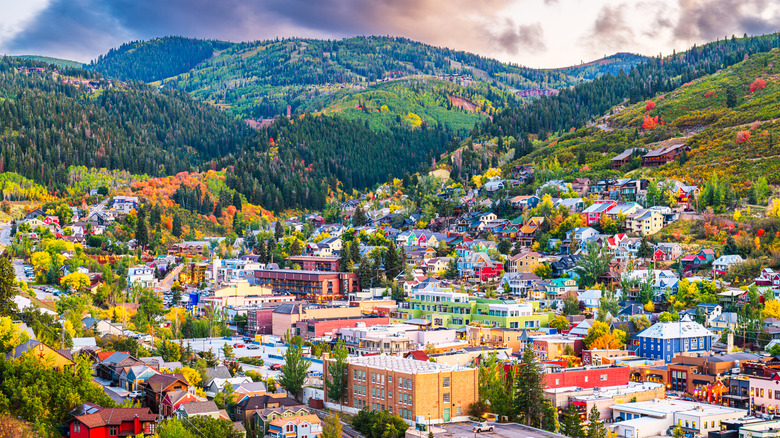
Today, Park City is a major skiing and arts destination, but its story began with silver, not white gold (snow, for those unfamiliar with the nickname!) The first silver lode here was discovered in 1869, and by the decade's end, Park City was a mining boomtown. Mining operations here flourished until about World War I. Although some Park City mines limped along until mid-century, the town was effectively abandoned by the 1950s. Although the area became a destination for serious skiers in the 1930s, it wasn't until money arrived from a major federal redevelopment loan in the '60s that Park City was transformed into the resort town people know and love today.
Less expensive and over-the-top than Aspen, this Utah destination draws visitors for the skiing and artistic culture. Park City served as the host city for the 2002 Winter Olympics, putting it on the global radar. It also hosts the Sundance Film Festival, which has drawn throngs of filmmakers, actors, and movie lovers since 1978. Today, popular spots include Deer Valley Resort for exceptional powder and accommodations. Check out The Bridge Cafe & Grill or Umbrella Bar for après-ski. For art lovers, Red Flower Studios offers glass-blowing lessons, and there is a whole host of galleries to peruse.
Though it may be known as 'Winter's Favorite Town,' summer in Park City also offers numerous activities, some of which celebrate the town's mining history. Hiking to the decaying site of the Silver King Mill is one great option. One Google reviewer said "the abandoned mining buildings were incredible," while another wrote, "This was a great piece of history and intrigued us to learn more about it." Park City tourists can also see mine carts and other memorabilia all year at the Park City Museum.
Dawson City, Yukon, Canada
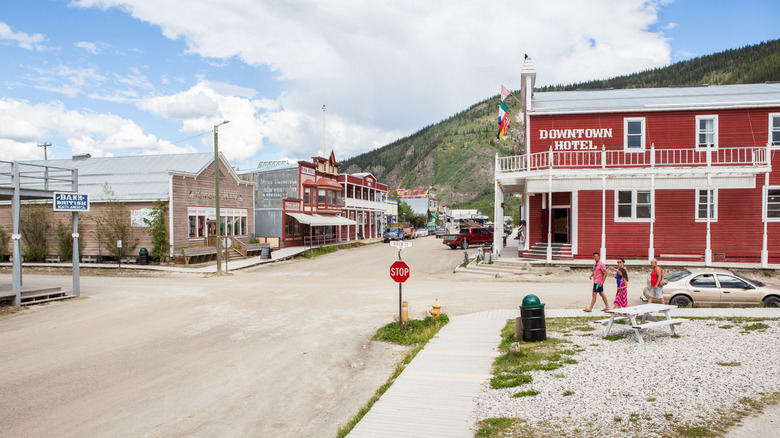
Few existing towns embody the spirit of the Gold Rush like Canada's Dawson City still does. Located about six hours northwest of the Yukon's capital, Whitehorse — another town brimming with Gold Rush history — Dawson City exploded when gold was discovered in a Klondike River tributary in 1896. By the next year, word of the discovery reached the mainland United States, and tens of thousands of prospectors arrived in Dawson City in droves, bringing with them shopkeepers, saloon owners, and other entrepreneurs who wanted to capitalize on the region's newfound wealth.
In 1899, however, a prospector struck it rich in Nome, Alaska, leading to a mass exodus from Dawson City. However, Dawson City didn't just fade away like many mining communities. Over the years, city officials embraced their Gold Rush past, transforming Dawson City from an abandoned settlement into something of a living museum that celebrates the Yukon's rich (literally!) history. Modern visitors can enjoy fully restored buildings like the Palace Grand Theatre, which offers tours from May through September.
Visitors can also immerse themselves in the life of a prospector by staying at The Downtown Hotel, which is themed to transport guests to the Gold Rush era. One of the wildest things to do at the on-site bar here is to become a member of the "Sourtoe Cocktail Club." This unique experience involves taking a shot containing a mummified human toe! While you don't have to swallow the toe, your lips must touch it to complete the challenge. Dawson City visitors can also enjoy less grotesque activities, like gold panning at an actual Gold Rush claim site and checking out the Dawson City Museum.
Jerome, Arizona, USA
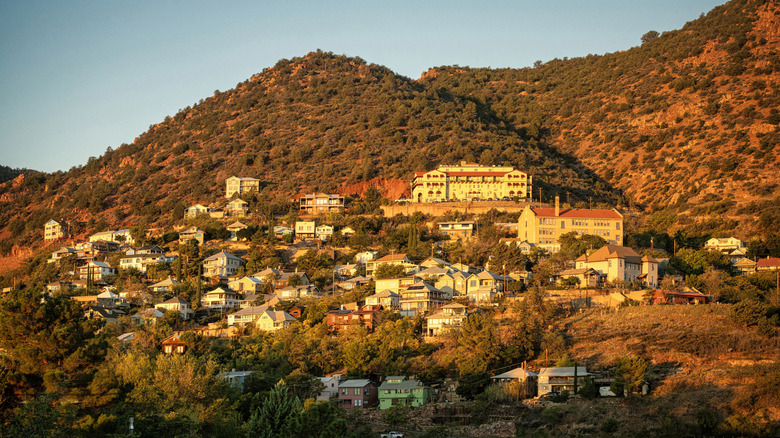
In 1876, copper was discovered in Jerome, and it promptly became a mining boomtown. By the 1920s, the population swelled to more than 15,000, and Jerome was deemed one of Arizona's major population centers. During its copper-mining heyday, this rough-around-the-edges community was known as "The Wickedest Town in the West," a testament to its rowdy saloon culture, gambling halls, and red-light district. The mines here operated for decades, eventually closing for good in 1953. Jerome's population and infrastructure declined rapidly, but those who stayed behind rallied, leaning into their town's wild past.
Rather than demolish derelict buildings or shy away from its colorful history, Jerome proudly became one of the nation's most famous ghost towns. Many buildings here, including the old House of Joy brothel, are still drawing giddy tourists. As one Facebook user quipped, "it just provides a different kind of joy than it did back in the old mining days." The town's weathered mining remnants have made it popular with people who enjoy haunted history. Visitors come specifically to experience the spooky vibes of this preserved ghost-town atmosphere.
In fact, there are multiple ghost tour operators in this former mining town, including Jerome Ghost Tours and Lizzie Borden Ghost Tours. Additionally, the Jerome Grand Hotel is famous in paranormal circles. One Reddit user who stayed here experienced "the loudest echoing weeping cry of a woman in one of the rooms." Others on Reddit and YouTube have experienced phenomena related to the hotel's hospital past, including spectral patients, including women in distress from childbirth. For those not interested in hauntings, Jerome is also a picturesque haven for artists, with over a dozen art galleries.
Virginia City, Nevada, USA
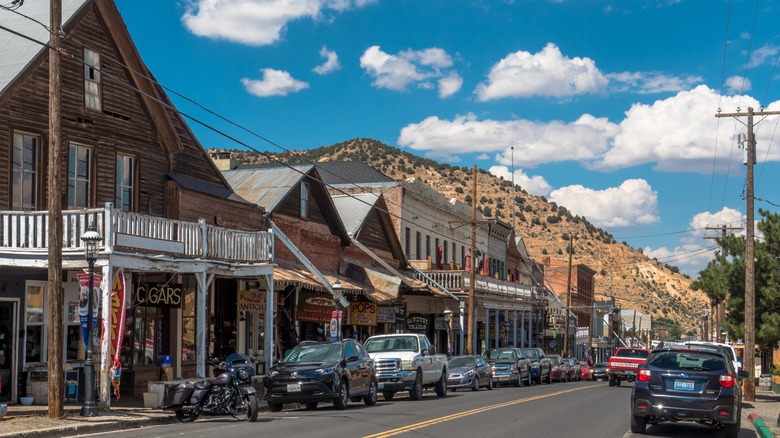
Virginia City became one of America's wealthiest mining towns in a flash thanks to the 1859 discovery of the legendary Comstock Lode. This silver deposit is still drawing tourists today, with one Tripadvisor reviewer calling the local monument about it a "Fun experience for all ages, not to mention the educational factor." Both silver and gold were mined here over the years, and the city's silver, in particular, is credited with playing a role in the North's Civil War victory. The Comstock Lode would be valued at about $10 billion in 2026, and that wealth aided the Union's economy immeasurably during the war.
Mining operations had dwindled in Virginia City by 1890, and just a decade later, the mining community was effectively a ghost town. Today, though, Virginia City has reinvented itself as a well-preserved historical community. Here, you're immediately transported to the Wild West. The business district looks more like a movie set than a real town, and you can peruse shops with names like Old Red Garter and Rustic Rope 'n Treasures. There are also 13 old-fashioned saloons here, where you'll swear Billy the Kid could walk through the door at any moment. The Bucket of Blood Saloon is one great watering hole, where locals and passers-through have been coming since 1876.
Hotels in Virginia City also immerse visitors in the town's legendary mining days. Established in 1861, the Gold Hill Hotel is the Silver State's oldest hotel. This property has a storied history and was even frequently visited by the iconic American author Mark Twain. The Sugarloaf Mountain Motel is another historic option, located in an 1878 boarding house. Sugarloaf guests are within easy walking distance of William Randolph Hearst's Mackay Mansion and paranormal excursions at the Washoe Club Saloon. The past truly comes alive in Virginia City, making it one of the most unique destinations on this list.
Bisbee, Arizona, USA
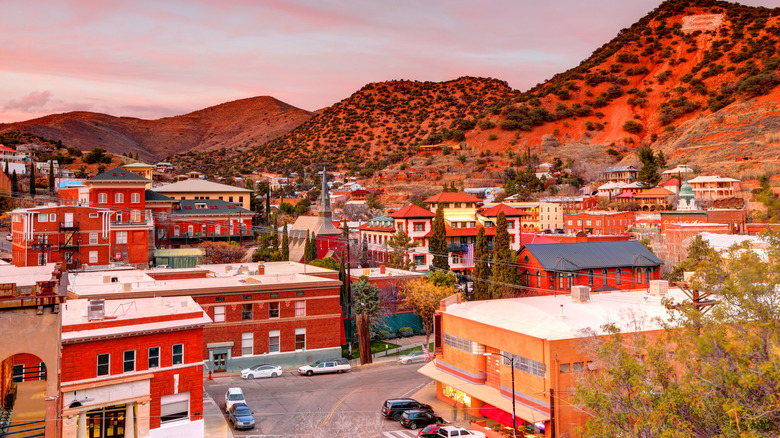
In contrast to most of the mining towns in this guide, Bisbee's good fortune continued well into the 20th century. This southeastern Arizona mountain town was a major producer of copper, manganese, zinc, and other minerals until 1975. The community's resources made it so prosperous that it was even dubbed "The Queen of the Copper Camps." As with all of the mining settlements featured here, though, its heyday eventually ended, and Bisbee was faced with the question of what it should become next.
The answer, as it turned out, was reinventing itself as one of Arizona's most colorful artistic communities. Today, Bisbee has been voted Arizona's best downtown, boasting bright murals and public art, numerous art galleries, over a dozen coffee shops, an independent music and book store, quirky clothing boutiques, and even a local brewery. For dining, Thuy's Noodle Shop is an unexpected gem. This unassuming pho restaurant has built a bit of a cult following. Meanwhile, Cafe Roka was opened by a Bisbee transplant who fell in love with this town and has poured his heart and soul into the revolving menu at this upscale joint.
And yet, even with its ultra-cool facade, Bisbee has never forgotten the industry that built it. The Copper Queen Mine Tour is still the town's signature draw. During this immersive experience, participants put on hard hats, board an underground mine train, and descend into the copper mine with a guide. The Bisbee Mining & Historical Museum, which is affiliated with the Smithsonian, also offers an in-depth look at the town's legendary past.
Guanajuato, Mexico
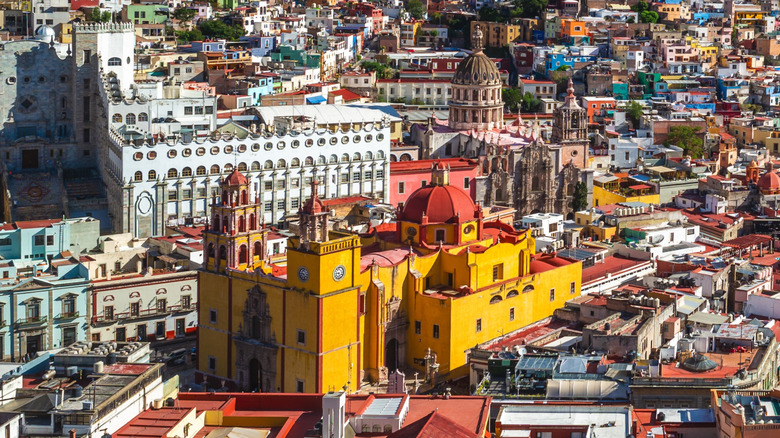
Now, we go south of the border to Guanajuato, a central Mexican city where gold and silver abounded in the 16th century. The presence of these precious metals made Guanajuato one of the Spanish Empire's wealthiest strongholds. Although mining operations here ended by 1928, the city's immense wealth played a major role in its architecture and overall design. Rather than fading into obscurity, Guanajuato has become a cultural destination for travelers and history lovers from around the world.
One of the city's major draws is its beautifully preserved historic center, which has been recognized as a UNESCO World Heritage Site. Around every corner, travelers will find elaborate Baroque architecture, brightly painted residences, lively plazas, and local shops and restaurants to explore. Among the best local spots to eat are Los Huacales for an amazing authentic Mexican breakfast and La Cochi Loka for street tacos filled with ultra-tender, orange-marinated pork. For shopping, Mercado Hidalgo is a great option. This market, which has more than 80 vendors selling everything from handmade crafts to clothes to food, has been serving Guanajuato since 1955.
Mining is also still very much part of the culture here. Various mine tours allow travelers to experience both operational and defunct mining operations. Some even include tours of ornate haciendas that were once home to rich mining barons. And, for those who enjoy the spookier side of life, the "Mummies, Mines, and Tunnels" tour takes visitors deep underground into a network of pathways below the city, as well as to the Museum of Mummies and other historic sites.
Butte, Montana, USA
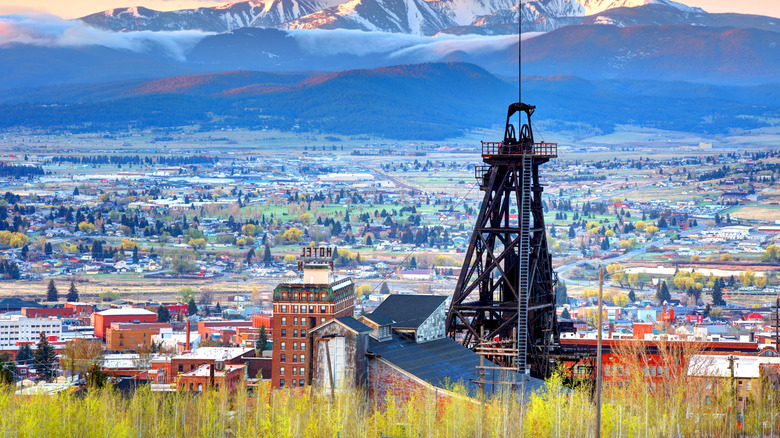
By the late 1800s, Butte had earned the nickname "The Richest Hill on Earth" thanks to the local copper-mining industry. Butte's massive copper deposits played a huge role in electrifying America, supplying the metal that was required for conductors in everything from lamps to telephones. The Gilded Age in Butte was just that, with Copper Kings like Marcus Daly and William Clark battling for wealth and status in the biggest city west of the Mississippi River at the time.
Mining was the major industry in Butte until World War II ended, with operations largely winding down by 1983 when one of the area's most powerful mines closed. Although Butte's modern population is significantly lower than it was at its turn-of-the-century peak, the city has reinvented itself as a serious destination for history and culture. One of the city's most popular sites is the Berkeley Pit, a former open-pit copper mine now a major tourist attraction. Visitors can also enjoy the World Museum of Mining, where one exhibit is a full-scale replica of a mining settlement! The Copper King Mansion is another draw for history enthusiasts, especially those interested in William Clark's legacy.
Mining history is only part of what makes modern Butte great, though. It's also known for several large annual festivals, including one of the nation's premier St. Patrick's Day celebrations, which pays homage to the Irishmen who worked the mines here in the 19th and early 20th centuries. The Montana Folk Festival, which features more than 200 acts, is another draw. It's particularly popular because it offers free entry, which is a rarity for music festivals.
Telluride, Colorado, USA
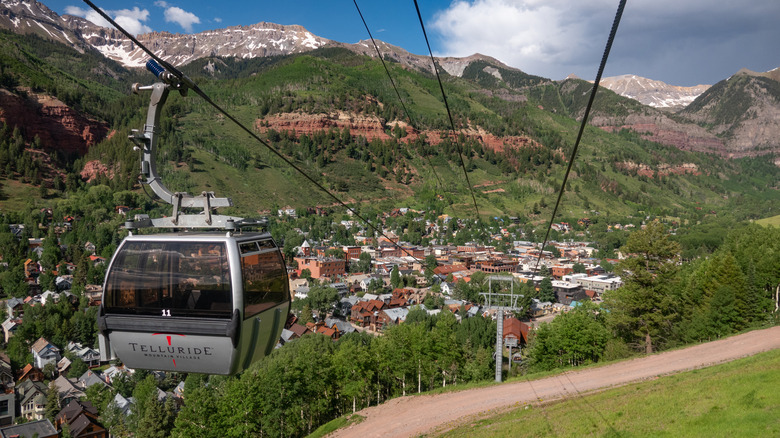
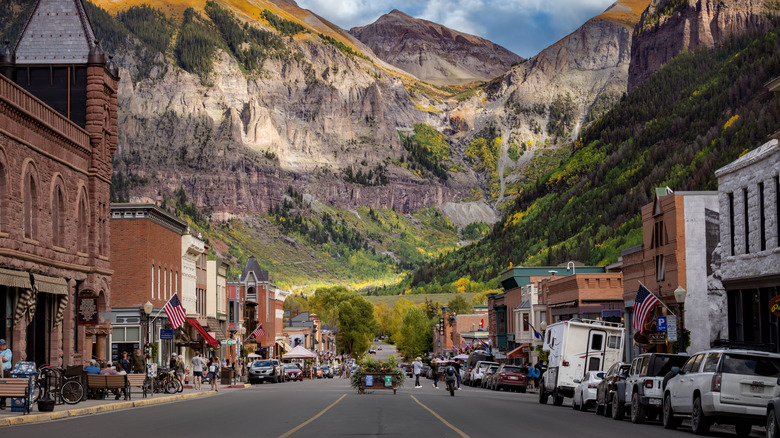
Known for its spectacular location at the bottom of a Colorado box canyon, Telluride — originally called Columbia — was once a raucous 19th-century mine town. Although it is perhaps best known for the veins of quartz, silver, and other minerals discovered in 1875, gold was found here as early as 1873. The fact that Telluride wasn't reliant on a single ore helped the town's mining industry survive the 1893 silver crash. Mining remained a key industry here for another five decades, finally coming to an end in the 1950s.
Modern-day Telluride has become an international destination for outdoor enthusiasts of all kinds year-round. Although it is widely known for its skiing and snowboarding, summertime brings mountain biking, gorgeous hiking trails, and a variety of festivals, including the Telluride Plein Air fest and the Telluride Jazz Festival. One of Telluride's best-known features is its free gondola system, which takes passengers on a scenic 12-minute journey to nearby Mountain Village.
Although it has become a nature-and-culture destination, Telluride still pays tribute to the industry that shaped it over a century ago. The local Historical Museum has exhibits that specifically celebrate mining culture, while the abandoned Lewis Mine ruins are an excellent hiking destination, especially in spring and summer when the weather is nice.