
The Longest And Best Coastal Walks In The World
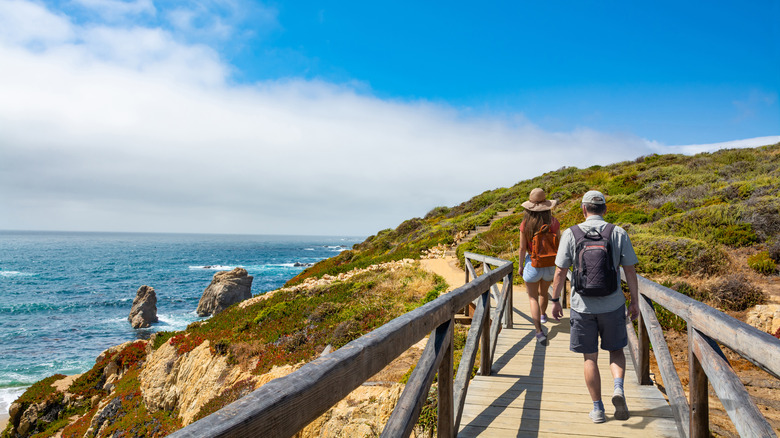
The idea of spending a vacation walking along a set route as a raison d'etre by itself is, perhaps, older than you think. During the Middle Ages, pilgrims would cross continents in search of absolution. In 1891, the social pioneer Thomas Arthur Leonard began organizing structured treks across the lands surrounding England's largest and most beautiful lake. As the 20th century shifted into high gear, the amount of time devoted to leisure increased, and by the time the Second World War was in the rearview mirror, trips overseas with the sole intention of taking an extended constitutional became increasingly common.
There are many kinds of hiking trips out there, but the coastal walk is the gold standard. With views of the ocean and a relative absence of man-made obstructions, walking around national peripheries rarely fails to deliver. Which is not to say such treks are the exclusive province of dedicated hiking enthusiasts. Many of the longest coastal routes out there can be handled in sections, used as just one more activity to add to a more eclectic itinerary. Few trips to Nice are complete without a stroll down the Promenade des Anglais, but the 4.5-mile-long promenade hardly represents all the city has to offer.
Selecting some of the longest paths out there, however, is only part of the equation here. Size matters, yes, but so does the quality of the experience. The GR34 in France is 1,242 miles long, and it's lovely. I've walked some of it. But is it as compelling as the West Coast Trail in Canada? The answer to that is necessarily subjective, but an answer is required, nevertheless. Listed below, based on a mix of personal experience and in-depth research, is a selection of coastal routes that offer a balance between length and desirability.
Milford Track (New Zealand)
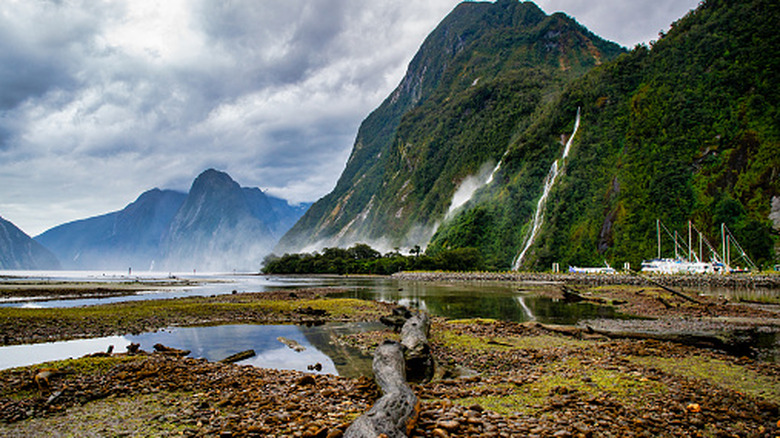
There are several ways to spend 10 days in New Zealand, and setting aside time to get up close and personal with its untamed wilderness is up there with the best. The Fiordland National Park sits on the west coast of New Zealand's South Island, just a couple of minutes away from the town of Te Anau. Famed for its stunning fjords carved by glaciers, it is home to the world-famous mirror lakes and is flanked by the majestic Earl Mountains. It is against this background that the Milford Track makes its mark upon the landscape.
The route itself is more of a walk to the coast or, more specifically, towards one of the island's most beautiful fjords. At over 33 miles long, it takes most people four days to complete. Unusually, it is unidirectional; the trail begins with a chartered boat ride across Lake Te Anau and ends at Sandfly Point, a spit of land near the mouth of the Arthur River. Along the way, there is much to see and do.
The terrain varies from ancient forest to hard-on-the-thigh mountainous terrain. There are fields of ice to admire, dense moorland, and stunning sections that look out over rivers, lakes, and fjords alike. Accommodation at either end is plentiful, but along the way are several well-equipped huts that can be booked ahead of time. Even so, preparation is key. The trail can be demanding, and weather forecasts need to be checked regularly. Visitors should also take time to learn New Zealand's Land and Safety Code to ensure that the trip is as safe as it is eventful.
West Coast Trail (Canada)
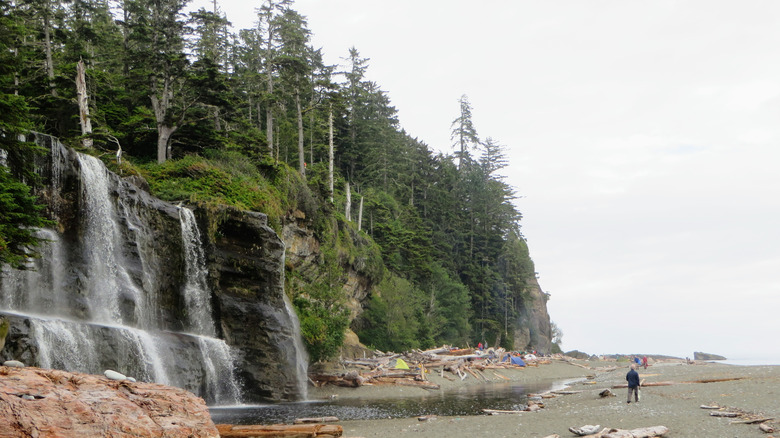
The West Coast Trail, found along British Columbia's Pacific Rim National Park, is named simply enough to require little introduction. Yes, the hike takes you along the west coast of one of Canada's most beautiful landscapes, Vancouver Island. Indeed, the island is a draw all by itself, meaning that those interested in taking the hike but who wish to refrain from the entire 47-mile stretch are well served.
First up, for those who fell into the assumption trap: The city of Vancouver is not on the island. To get to Canada's wild west coast island, you need to take a ferry or a seaplane. The side closest to the city is a hub of activity in its own right, with whale watching in Victoria's Inner Harbor high on most people's to-do lists. The western side, however, is hardly lacking in entertainment either. The seaside town of Tofino is a 4.5-hour drive from Victoria, and, like much of the western portion of the island, it is a place of dreamy adventures, filled with lush rainforest, surf, and trails. The National Park lies at its feet, and it's here that the trail properly begins.
Not that it is for the faint-hearted. There are flowing rivers to contend with and a ladder system that can tire out the hardiest of hikers, especially when coupled with Vancouver's notoriously fickle weather. Still, those who persevere are treated to some rare sights indeed. There are campsites along the way, ominous shipwrecks to admire, paddling routes to navigate, and some spectacular waterfalls. You need a permit to make the journey, and there are bears, so you need to know your safety protocols before you set out.
Sentiero Azzurro (Italy)
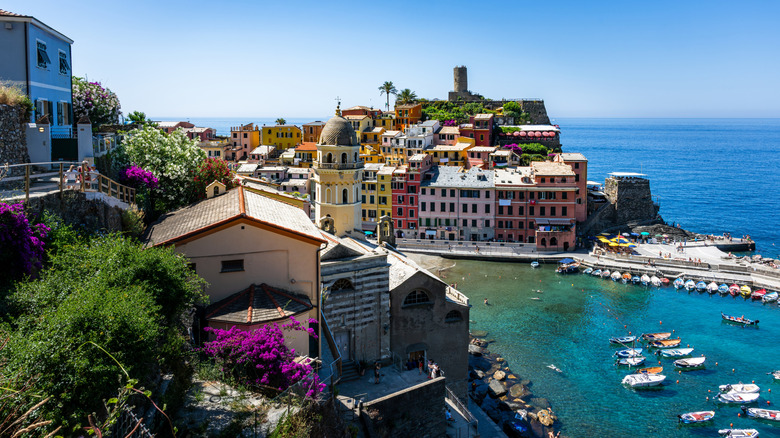
Italy is a place of walkable beach towns, the fifth most visited country in the world, and as far as coastal hikes go, good news: Italy has close to 5,000 miles of it. Choosing the best route then is no mean feat, but one section stands out from all the others. The Sentiero Azzurro, or Blue Path, can be completed in around eight hours. But it's only one of 48 such trails scattered across the Cinque Terre National Park, which offers around 75 miles of hikable real estate; so, you know, longest, best, and all that good stuff.
The whole park is nestled in the heart of the Italian Riviera, and you'll find the Blue Path woven between five villages that have withstood the trials of the ages. Monterosso is the most accessible of them, and it is from here that people can begin their journey along the most famous and beautiful part of the trek. From there, you can access all five villages; all are exquisite, but Corniglia is a particular delight.
Still, the fun does not stop there; most of the other trails require a little more effort to complete, but none veer too far from elegant bases of operation such as the towns of Vernazza, Manarola, and Levanto. Completing each different section usually takes a couple of days, but the National Park within which they all rest offers more hiking opportunities than you could ever hope to complete in a single stay.
Cape to Cape Track (Australia)
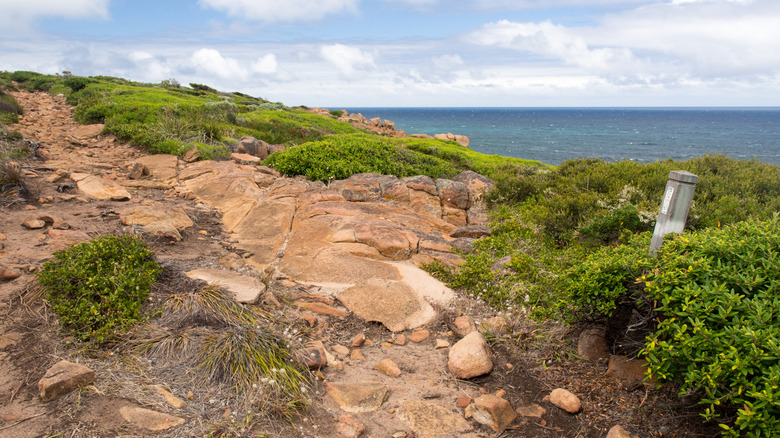
Western Australia is one of those overlooked places that deserves way more attention than it receives. For Europeans, it's often used as a jumping-off point for a wider exploration of the continent: Qantas offers non-stop flights from London to Perth for those who can endure the 17-hour journey. But in truth, the western half of Australia offers many reasons to hang around before heading over to Sydney and beyond, and the Margaret River wine country and its cape-to-cape hiking experience is certainly one of them.
It's a three-hour drive to get down there from Perth, but upon arrival, you are treated to rolling hills reminiscent of Welsh dales, with incredible beaches, and a rarer-than-you-think genuine Mediterranean climate. Hence the wine. Margaret River is where the locals — which I once counted myself one of — head to unwind, and, as a consequence, accommodation is plentiful, and crowds are more than manageable even during high season. Activities abound, ranging from near-obligatory wine-tasting tours to cave exploration, surfing, whale-watching trips, and, of course, some rather excellent hiking trails.
Chief among them is the cape-to-cape route. The capes in question are the Cape Naturaliste to the north and Cape Leeuwin to the south. Sandwiched in the 84-mile hike, you'll find the Leeuwin-Naturaliste National Park, the ancestral home of the Wardandi people, still a heavily forested area blessed with fine surf, incredible beaches, and unbelievably picturesque cliffside walks. Completion time runs to around seven days, and you might want to go as part of a guided tour so there's someone around to help you avoid Australia's most dangerous wildlife. Thankfully, there's no need to tackle the whole thing in one go; pit stops and camping points along the way abound.
Fishermen's Trail (Portugal)
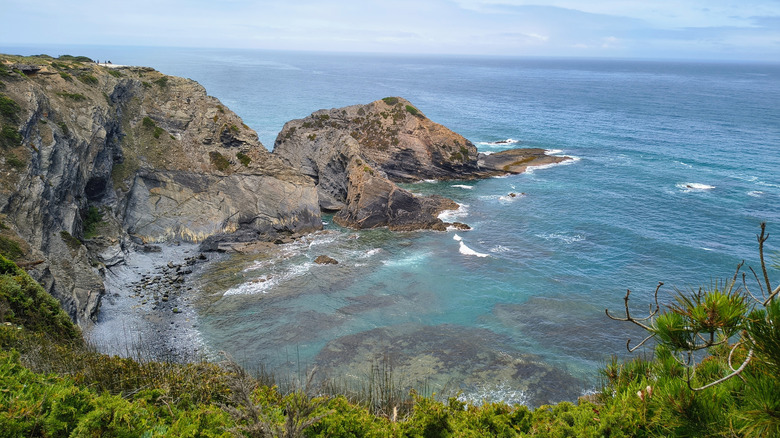
The Fisherman's Trail is a 143-mile-long, eight-day excursion that links traditional Portuguese fishing villages, with terrain alternating between rugged cliffside walks, stretches of sandy beaches, and the occasional inland track. The hike begins at Porto Covo (not to be confused with the city of Porto, which is a four-hour drive to the north), and ends at Lagos.
Along the way, you'll be treated to some of the very best that Portugal has to offer. There are quaint harbors flanked by oversized dunes, shimmering rivers of silver, and craggy coves that time seems to have forgotten. The plains of the Vila Nova de Milfontes are alive with exotic fauna. At the village of Zambujeira do Mar, you can relax against the backdrop of incredible ocean views and rest your feet while enjoying the delights of world-class wineries. At Aljezur, you can stop to sample the wares of a local market that basks in the shade of a 10th-century Moorish castle.
The trek, whether taken in one go or tackled in sections, is one of the most peaceful routes out there. Indeed, at the end of the journey, as you look out from the cape towards the Americas and the vast expanse of the Atlantic before you, the sense of achievement is worth every stone in the shoe you gathered along the way.
Pembrokeshire Coast Path, Wales
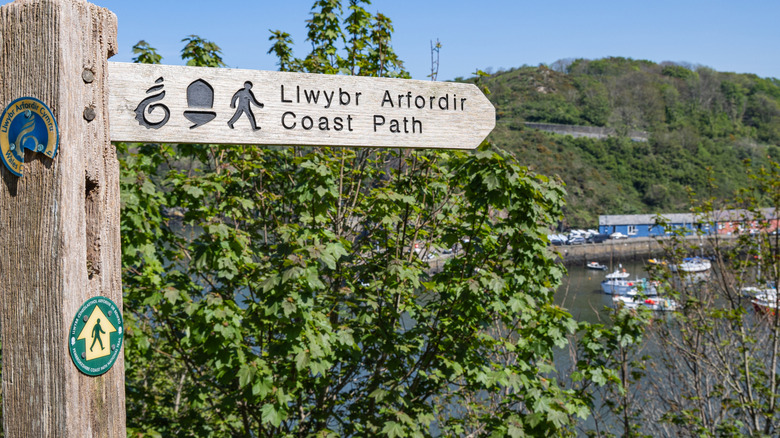
Wales is another often overlooked and underestimated location. From the Welsh 'Island of Love' with its breathtaking views and impressive dunes, to the majestic peaks of Snowdonia National Park, Wales is a historic land with one of the world's densest concentrations of castles. And the 186-mile-long Pembrokeshire Coast Path is a great way to take in more than a few of them.
The official starting point is listed as St Dogmaels, a small village on the Teifi estuary, less than 2 miles from the gorgeous town of Cardigan. From there, the path makes its way, in digestible sections, around the entire periphery of the country towards Amroth on the south coast. Along the way, it passes through a rich and varied tapestry of terrain, ancient forts, and Instagram-worthy moments. There are, of course, urban areas to navigate, but between them you will find magnificent bays, rolling hills, and fields of wildflowers.
Of the aforementioned castles, several guard the way, including Pembroke Castle itself, the former residence of Henry Tudor before he took the throne in 1485 and became Henry VII. You'll also get a chance to visit the Cathedral of Saint David's, a site that has been much visited by pilgrims over its 1500-year history. There are high and low tides to navigate, with some sections only navigable at certain times of the day; planning is a crucial part of this journey, and a Google Street View tour is available for those who like to know what they are getting themselves into. Accommodation is abundant; Wales has some of the best camping around, and it's a popular vacation hub for many Brits who enjoy the serene valleys and temperate climate as much as anyone else.
Jeju Olle Trail (South Korea)
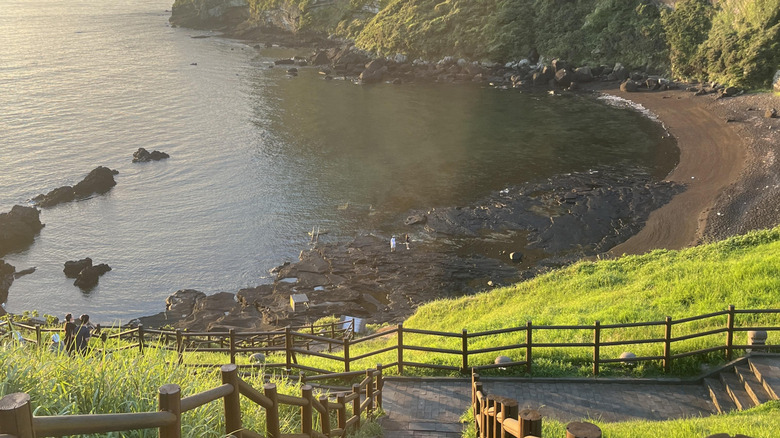
When people think of South Korea, they often think of its urban spaces, which are among the world's most connected. Cities like Seoul and Busan offer travelers a plethora of things to do. The vibrancy of these places is a big part of why Korean culture hits well above its weight on the global stage. There is, however, another side to the country altogether. Take Jeju Island, for example. A mesmerizing and beautiful destination in its own right, it's also home to the 272-mile Jeju Olle Trail, which circles an active volcano.
The easiest way to get to the island is simply to fly, although arriving by ferry can be an experience in and of itself; it's slower, yes, but sometimes that's no bad thing. Once there, visitors are treated to the sight of South Korea's highest peak, fringed with pristine beaches and dotted with citrus groves, hot springs, and dramatic waterfalls. There are few better ways to take in all that is on offer there than the Jeju Olle Trail.
The hike is a complete circuit of the oval-shaped island, so there is no defined starting point. Indeed, there are 27 recognized routes to choose from, most of which have their own dedicated information center. Those wishing to make the whole trek simply need to choose a jumping-off point and go; there's a certificate for those who complete the circuit. Those who lack time or stamina need to be more judicious in their approach. Potential highlights include a stopover at Jagunae Port to watch the sunrise, guided walks, a cooler, forested stretches, and a must-see sit-down at the spirit cleansing Cheonjiyeon Falls.
Lycian Way (Turkey)
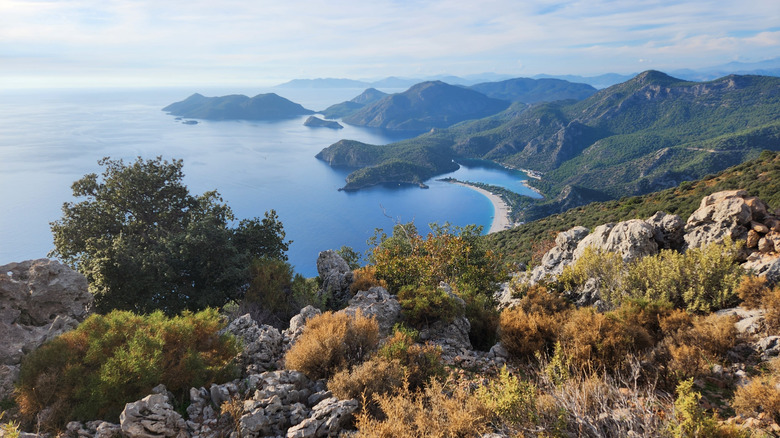
Few tackle the Lycian Way's 25- to 30-day trek in one go, but the ancient trail offers so much along the way that even a short section is an adventure in itself. The route gets its name from the Tekke Peninsula, a broad stretch of land on Turkey's southwest coast that was once known as Lycia. Ancient Roman roads trace out much of the path, which in turn rewards visitors with exquisite views of the sea, with distant mountains, historical landmarks, quaint villages, and other points of interest.
The path can be tackled in either direction, but the resort town of Ölüdeniz, some 500 miles to the south of Istanbul, is the traditional jumping-off point. From there, it's a mere three to four week trek to the city of Konyaaltı. Along the way, you'll encounter ancient tombs carved into rock, stretches of shaded pine forest, and countless villages more than happy to demonstrate Turkish hospitality to weary pilgrims. You can head east through the unspoiled beauty of Turkey's aptly named Butterfly Valley, and follow trade routes of deep antiquity with Mount Babadağ at your shoulder. There are beachfront sunsets to admire, a sunken city to pause at, and the chance to test your limits against altitude hiking.
Oh, and if your legs can handle the climb, you can marvel at the Fires of the Chimera. Here, flames rise from cracks in the foundations of the mountains, creating natural, ever-burning campfires. It's a surreal place to visit, and as Instagram-worthy as things get.
Michinoku Coastal Trail (Japan)
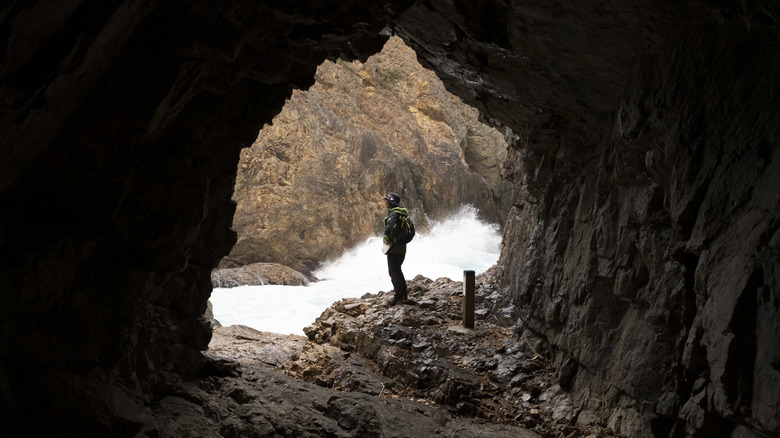
Tohoku is a region of Japan well known to me, as I lived there for close to half a decade. It's one of those pro-tip recommendations I offer to anyone making their way over to the land of the rising sun. Visit Tokyo, sure. Stop by Kyoto to watch the Sakura bloom? Absolutely. Just don't ignore the north. The area's historical name, Michinoku — the end of the road — may once have been an accurate description in the eyes of the cultural elites of Tokyo and Kyoto to the south. Today, however, few things could be further from the truth.
The region is alive with hot springs, active and inactive volcanoes, and stretches of wilderness that teem with local fauna. The trail begins in Soma City in my old residence of Fukushima and makes its way along the east coast to Hachinohe City, a place of festivals, rich cultural heritage, and fine seafood. There are over 600 miles of trail to explore between these two points in a region that is almost completely overlooked by foreign tourists. Guided tours are available and are recommended for those attempting the full walk, but tackling shorter sections on your own or as part of a small group is a great way to round off your Japanese excursion.
King Charles III England Coast Path (United Kingdom)
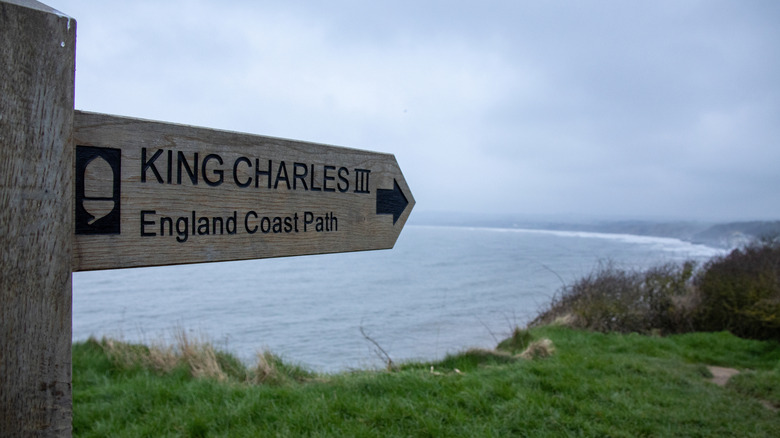
The longest coastal path in the world is also the newest. In March of 2026, King Charles III officially opened the footpath, which will eventually take hikers around the entire length of England. At a staggering 2,689 miles long, it took 18 years to construct and is still only 80% finished; there's a gap along the Welsh border. Those who wish to really push themselves, however, can add the Pembrokeshire Coastal Path (see above) to their itinerary, adding another 186 miles to the trip. Assuming their footwear can take the extra pressure, that is.
Attempting to list everything you can experience along the way would be a fool's game. The trail can take you past the White Cliffs of Dover, and fossil lovers can tick items off their bucket list alongside the Jurassic Coast. There are the Norfolk broads to navigate, rentable lighthouses to spend time in, the holy island of Lindisfarne to explore or a trip to Whitby Abbey a site familiar to fans of Bram Stoker's Dracula. Section after section reveals hidden treasure upon hidden treasure. And, in the unlikely event that you run out of places to visit, the trail serves as a gateway to Scotland and yet more hiking adventures beyond.