
Unwritten Rules You Should Know Before Visiting Zion National Park
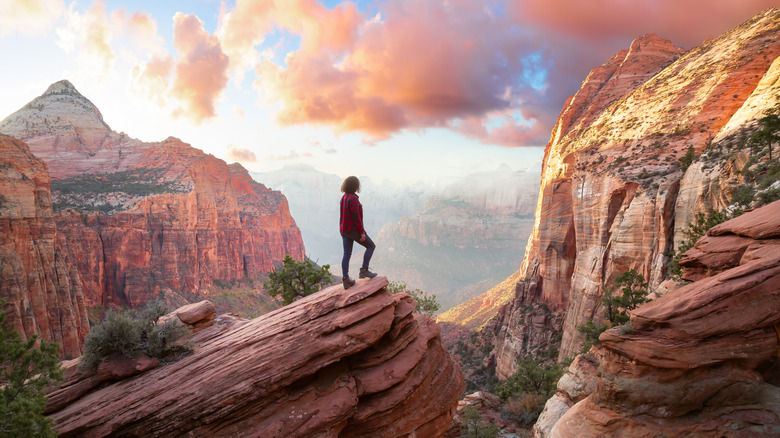
If you're driving through southern Utah, such as on State Route 59 just south of the small but adventurous city of Hurricane, the gleaming peaks of Zion Canyon look truly otherworldly amid the red rock desert. Its unique setting at the junction of the vast Colorado Plateau, the nearby Rocky Mountains, and the Mojave Desert is matched by its soaring sandstone cliffs and narrow, verdant valley fed by the Virgin River. Nothing can quite prepare you for your first visit — it's an experience that somehow feels intimate and vast at the same time. That sense of wonder has inspired visitors to the canyon since time immemorial and is certainly one of the reasons it continues to be one of the U.S.' most popular national parks.
Zion National Park is beautiful, rugged, and unforgettable. But there are some important things to keep in mind to make your visit both enjoyable and safe, especially when it comes to common pitfalls for first-time visitors or those who aren't accustomed to spending time in the desert. No one wants pitfalls to turn into something much worse, and deaths do occasionally occur in Zion. And while the National Park Service publishes official rules and guidelines, such as prohibiting drones — that's the case in all national parks — or Leave No Trace principles, there are plenty of tried-and-true tips and tricks that will help you get the most out of your experience.
In addition to official National Park Service resources, we've compiled this list based on the author's experiences visiting Zion National Park, expert blogs, local outfitters' advice, and regional tourism sites. From flash floods and arid heat to cliffs and overcrowding, there's plenty to be aware of. Read on for 14 unwritten rules you should know before heading to Zion.
Wear appropriate footwear for canyon hikes
Zion National Park centers around its namesake canyon — which was actually known as Mukuntuweap until the National Park Service changed the name to Zion in 1918, inspired by a 19th-century Mormon settler's description of what he saw. The park actually spans more than 230 square miles of broad plateaus, mountains, and deep canyons. Other than the verdant valley floor, it's a lot of rocks. And because walking is one of the best ways to get around, sturdy footwear is a must. Not all hikes in Zion are created equal, though, and the ideal footwear choice depends on where you plan to go.
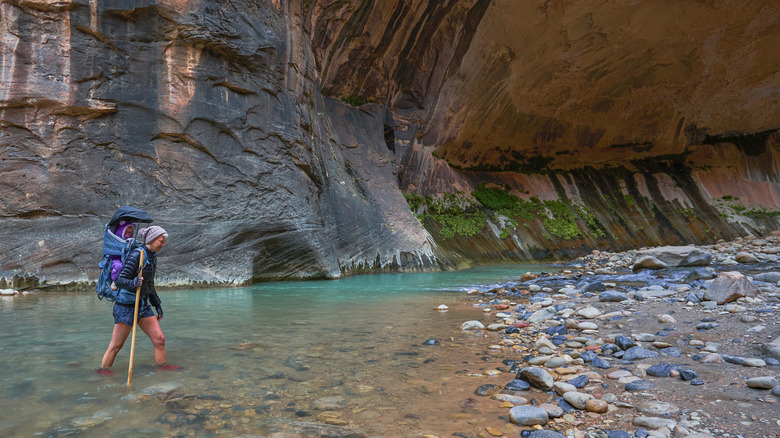
Angels Landing is one of the park's most legendary hikes, and it's gotten so busy that a permit is always required (more on that in a bit). Up steep switchbacks, along a narrow, dry, high-elevation path, this trek is ideal with lightweight, breathable shoes that have good traction, such as a trail runner or hiking shoe — not a mountaineering boot. If you're heading into the Narrows, though, you'll be wading through water much of the time on uneven, rocky surfaces. Here, a solid boot — paired with neoprene socks — is a good call. You can purchase one yourself or rent from an outfitter like Zion Guru. You can even be fitted for and pick up your equipment the afternoon prior to your hike and get up-to-date advice about conditions.
Get acquainted with the park shuttle system
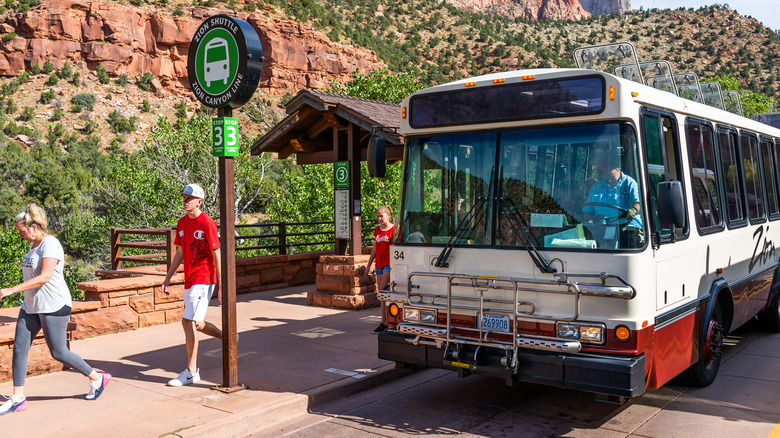
Before you arrive, get the lay of the land in terms of, well, simply how to get around. There are big differences between the peak and offseason in the park, most notably if you want to head deep into Zion Canyon. There's a shuttle system along the route during the busiest times of the year, with clearly marked stops connecting with the artsy gateway town of Springdale, the visitor center, and the entire Zion Canyon Scenic Drive. This route branches off the park's main thoroughfare, Zion-Mount Carmel Highway (State Route 9), and during the shuttle season, personal vehicles aren't permitted on it.
To avoid parking hassles, you may even want to park your car in Springdale and take the shuttle into the park. Between mid-May and the end of November, be prepared to take the shuttle to all the major stops like Court of the Patriarchs and Zion Lodge. There's also a special holiday service that begins the day after Christmas and runs through January 2, so don't assume that just because it's not summer, the shuttles aren't running.
Don't miss Kolob Canyons
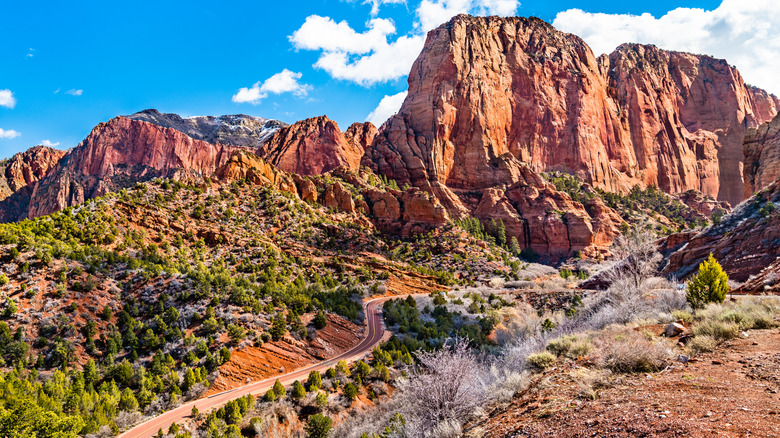
Kolob Canyons is Zion's uncrowded "other" entrance for breathtaking views, an underrated part of the national park that takes about an hour to reach from the Springdale area. Its visitor center is located just off Interstate 15, so it's ideal if you're passing through en route to St. George, for example, and want to check out the park but don't have a lot of time. Red rock cliffs that can reach up to 2,000 feet high create a stunning backdrop for photography, hiking, and wildlife spotting.
Drive along the 5-mile Kolob Canyons Road for a picturesque, easy way to take in the view, or use this area as a jumping-off point for an adventurous journey into the wilderness along the Hop Valley Trail, which stretches 15 miles out and back and offers spectacular views of natural rock arches. Another popular trail in the area is the Timber Creek Overlook Trail, which rings in at a much more accessible 1.2 miles round trip for remarkable panoramic views of Kolob and the Pine Valley Mountains.
Get permits before hitting the trail
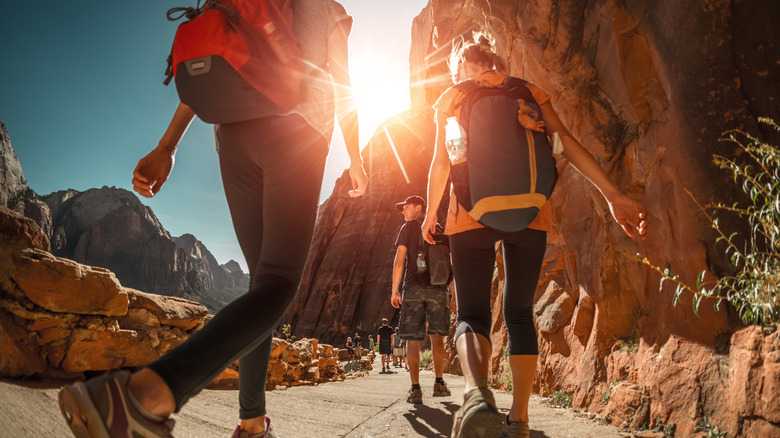
Along with being one of the nation's most popular parks, which means millions of visitors each year, there are some restrictions in place to ensure everyone's safety. The park's most famous hike, Angels Landing, currently requires a permit no matter what time of year or day you hike. Other hikes and experiences, such as the 16-mile Narrows overnight trip, canyoneering treks, and overnight backcountry excursions also require permits reserved in advance. And it's important to stay abreast of when you need to apply and be prepared for the possibility that you may not get a spot, as it's always competitive.
Homing in on Angels Landing as a prime example of the permit process at Zion, a lottery system issues permits for three-month periods throughout the year, with an application deadline of about six weeks prior to that period starting. You're able to select up to seven days and times that you prefer to hike, ranked by preference. If you want to try your luck when you've already arrived, you can also apply for the day-before lottery as long as you register by 3 p.m. Mountain time. Results are issued the same day you apply, so if you're successful, you'll know when to head out the next day.
Practice caution in the Virgin River
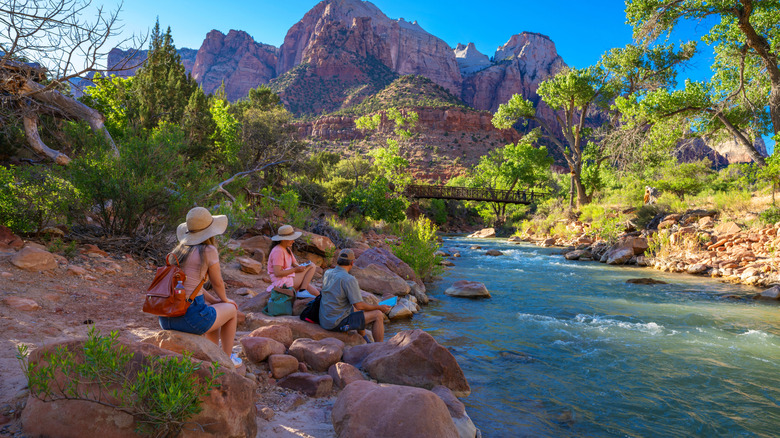
Cyanobacteria are naturally occurring organisms in water, but sometimes, when temperatures are warm and water is low or not very active, they can develop into toxic blooms or mats. And while they are also often referred to as blue-green algae, they can actually be brownish or gray, and they can present in different ways. The blooms sit on top of the water in many places, such as lakes and canals, but "here in Zion, cyanobacteria grow in mats," says Zion Scientist-in-the-Park Samantha Peña.
Even if the water looks clear, toxins could still be present, so the park actively monitors the presence of cyanobacteria in the North Fork of the Virgin River, plus North Creek and La Verkin Creek, which are tributaries. Zion advises visitors not to swim in or drink from the river. Coming in contact with the cyanobacteria can lead to skin irritation and other symptoms, and ingesting them may lead to neurological and internal issues that set in very quickly and can even lead to death. Dogs are particularly susceptible. To be safe instead of sorry, it's a good idea to keep pets and children out of the water altogether. Boiling water will not get rid of cyanobacteria or its toxins, so only drink water where there is definitely no sign of algae.
Know when to reserve your campsite
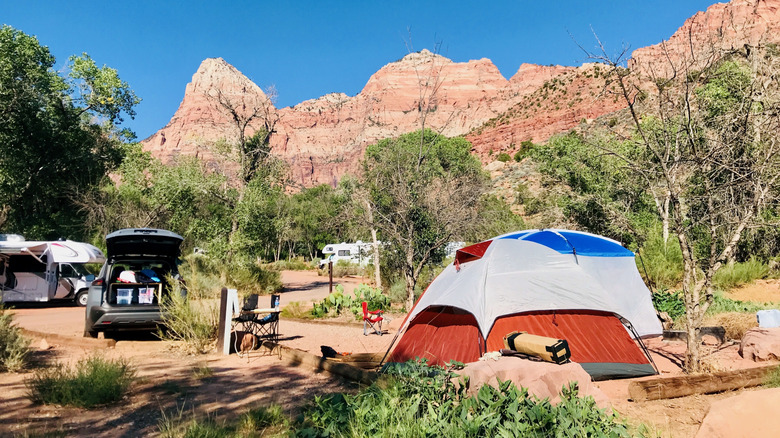
National park camping devotees often are ready to book as soon as the reservation window opens — often six or more months in advance — to get sought-after sites. If you know you're planning a trip to Zion, which is busiest between April and October, book your site as early as possible to avoid disappointment. A total of three fee-based, developed campgrounds are available in the national park, two of which are located near the South Entrance in Zion Canyon and conveniently across from the visitor center.
South Campground underwent a total renovation following the 2025 season, and it's open from mid-March to the end of October annually. Reservations are available up to 14 days before arrival. Watchman Campground is the larger option in the same area, open year-round and with reservations open six months in advance. If you head northwest to Kolob Canyons, the beautiful, more rugged Lava Point Campground is a tent-only escape, also open seasonally with reservations available up to two weeks before arrival. And while there have also been several free dispersed camping options on land managed by the Bureau of Land Management outside the park, big changes could be coming in 2026 that will leave campers with fewer options.
Bring Fido on the Pa'rus Trail
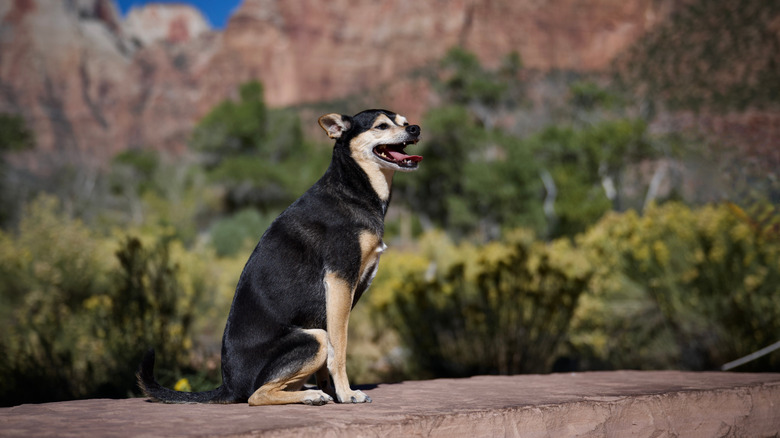
A lot of federal parks are pretty limited when it comes to amenities and access for dogs, except for some dog-friendly national parks and monuments like Shenandoah, which provides a pretty remarkable amount of access for dogs. Others aren't that great, like Yellowstone, which largely limits dogs to campgrounds and roads. Zion is only marginally more accessible. Dogs aren't allowed on shuttles, in buildings, or on any trails other than the paved Pa'rus Trail, where they have to be leashed at all times. Dogs are allowed in campgrounds, but unfortunately, Zion Lodge is off-limits. Service dogs, however, are permitted anywhere.
The Pa'rus Trail is a relatively flat, paved path that stretches along the Virgin River for 1.6 miles one way. With a few benches along the way and scenic views from a number of picturesque bridges over the Virgin River, dogs don't have to be relegated to the car, where there's always the very real danger of overheating. If you plan to do a lot of hiking and exploring, though, consider leaving the pup at home, as you'll be able to enjoy much more of the park.
Don't sleep on Springdale
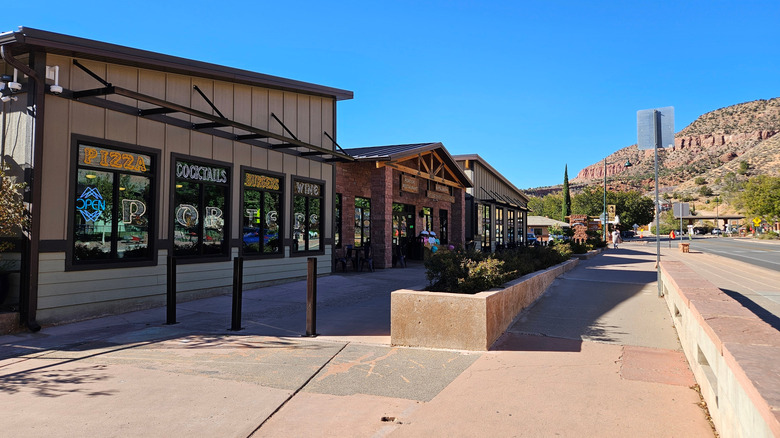
Just outside the South Entrance of Zion National Park sits the inviting gateway town of Springdale, brimming with numerous inns, vacation rentals, cafes, shops, and more. It's a pleasant place to bike through and grab snacks and other items before heading into the park, but it's a worthy place to spend some time in its own right — all within view of Zion's gorgeous cliffs. Get a pick-me-up at one of a handful of great coffee shops like Canyon Coffee, Deep Creek Coffee Company, and FeelLove Coffee, with its charmingly eccentric interior.
See the work of local artists at galleries like Worthington Gallery, Sorella Gallery, Tribal Arts Zion, and David J. West Gallery. When you're ready for lunch, grab a bite at Oscar's Cafe, then find a sweet treat or gift at Bumbleberry Gifts and Bakery, which is known for its pie. Rent a bike from Utah E-Bike Adventures or Zion Peddler to cruise around town or take into the park, then sink into a relaxing treatment at a spa like Five Petals inside Cliffrose Lodge or The Spa at Cable Mountain Lodge.
Be prepared for monsoon season
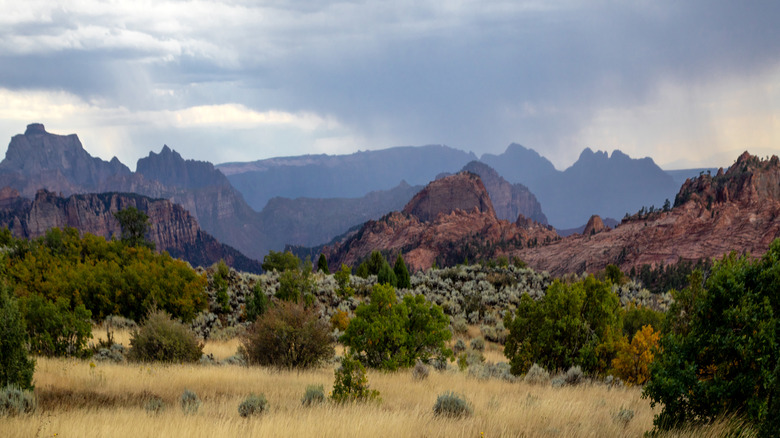
The Colorado Plateau, along the edge of which Zion Canyon is carved, typically sees monsoon season from July to September — when the park is the busiest. That means the potential for major thunderstorms and heavy rain, which can lead to flash floods. The rain can put a damper on outdoor experiences in Zion, but if that's the case, pop on a poncho or grab an umbrella and take a relaxing walk along the Pa'rus Trail, spend some time with exhibits at the visitor center, or peruse the displays at the Zion Human History Museum. Grab a snack from Castle Dome Cafe at Zion Lodge, or head to Springdale to check out the shops.
It's worth noting that just because there isn't a thunderstorm right overhead doesn't mean that there won't be flooding where you are, which is something to be aware of in the backcountry and in canyons. If a lot of rain falls anywhere in a catchment area that leads to a river or wash, a flash flood can come in powerfully and without warning. When there's inclement weather, keep clear of rivers and streams, and know the signs: If water levels start rising or a river gets suddenly muddy, it's time to go.
Make hydration a top priority
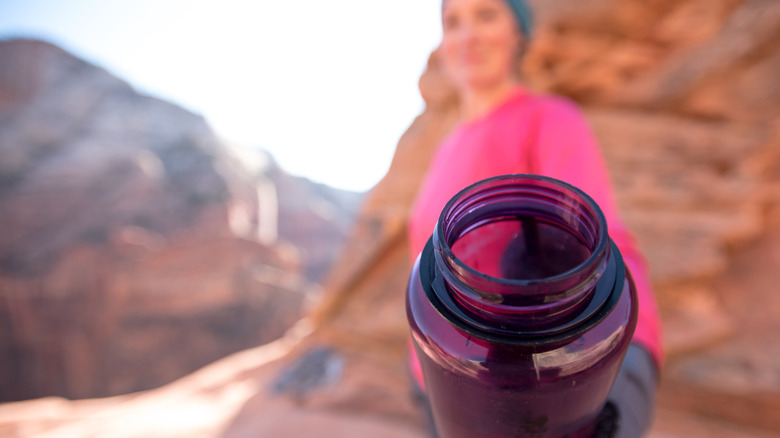
When the clouds have cleared and the sun is shining, Zion can get very hot. Temperatures often exceed 100 degrees Fahrenheit, especially in July and August. Make sure you're keeping enough water with you at all times, which is good practice not only in Zion National Park but in any desert setting.
Dehydration is one of the greatest risks you'll encounter because the arid climate and hot temperatures deplete the body's water much more quickly than many people realize. Make sure you have enough water with you on the trail in a reusable water bottle or hydration pack, such as one by CamelBak. Hattie Dalzell of Zion Guide Hub also mentions how she relies on electrolyte and nutrient packets like Liquid I.V. or Emergen-C, which can be diluted in water. "These packets are a convenient and effective way to replenish fluids and electrolytes on the go, providing me with the energy and vitality I need to tackle challenging trails," she says.
Leave the cairns be
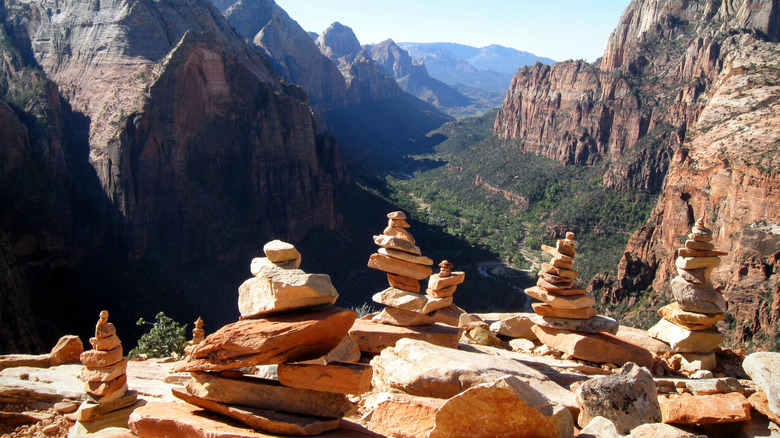
There's been some buzz over the past few years about rock cairns in national parks, especially after rangers at Yosemite National Park said you can knock them down, according to the Los Angeles Times. But they don't mean all cairns, and that's where it helps to know what they're for in the first place. Rock cairns have been in use by wayfinders since prehistoric times, as they're an efficient way to mark a route. But over the years, tourists have also taken collecting rocks and building stacks for no other reason than they make good Instagram photos. Those are the kinds (pictured above) that Yosemite is okay with visitors kicking down. That's because they go against Leave No Trace principles and can even lead to ground erosion and safety issues.
Some rock cairns, however, are important navigational aids, and they've sometimes been in place for decades. At Zion, where large expanses of solid rock mean there's no visible trail, a cairn is a means of letting hikers know where to go. These are important to preserve, so Zion National Park advises that visitors don't mess with any standing cairns. If you notice any that may have been toppled, contact a ranger.
Go off the beaten track (kind of)
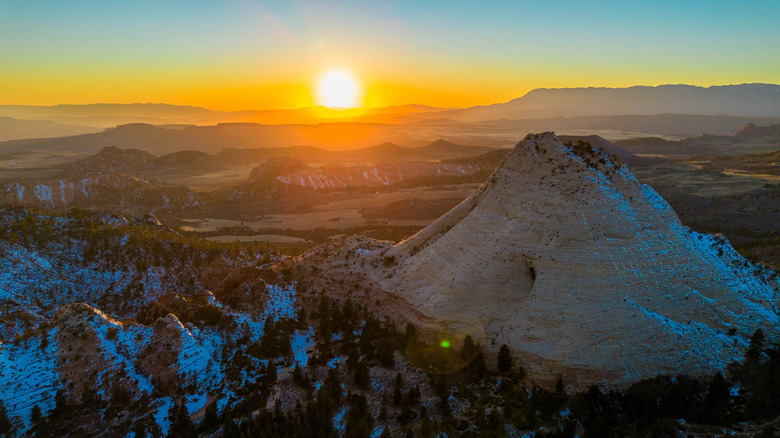
Always stick to formal trails in Zion National Park to avoid damaging habitats and harming wildlife. But when it comes to exploring some of the lesser-known areas — and getting away from the crowds — you have plenty of options to branch out. Adventurous backcountry routes include the aforementioned Hop Valley Trail, the La Verkin Creek Trail, Wildcat Canyon, the Southwest Desert Trails, the West Rim Trail, and the East Rim Trail (currently not connected to Zion Canyon due to a rockfall).
Public lands managed by the Bureau of Land Management also continue across the park's formal boundary, such as Parunuweap Canyon Wilderness Study Area, the trail is known as the Barracks and begins along the Zion-Mount Carmel Highway. It continues for around 10 miles through a box canyon that's much quieter than the Narrows, and there's no permit required.
Give yourself at least two or three days
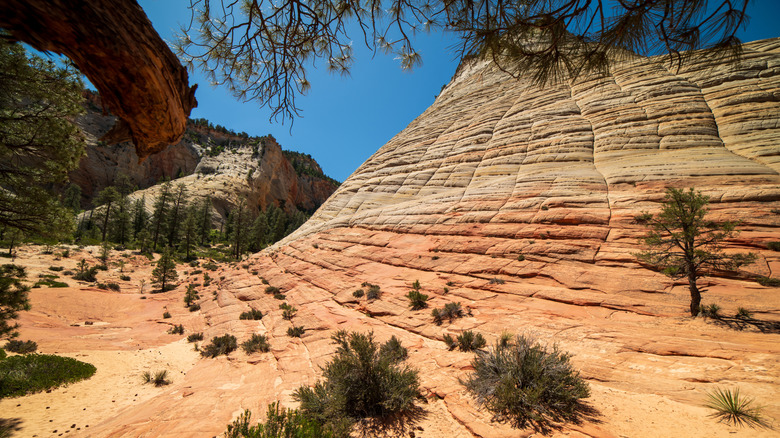
The park's famous Zion Canyon is not enormous, at least if we're comparing it to its northern Arizona counterpart, where the best way to see the Grand Canyon may be by train. There's still a lot to see, though, and the thing is, Zion National Park is so much more than just the one canyon. To really experience it all, you'll need at least a couple of days to check out different areas of the park. Kolob Canyons takes about an hour to reach from the South Entrance, for example, and if you plan to visit exhibits or a number of different viewpoints, let alone embark on an overnight wilderness trip, you'll need some time for that.
Ideally, allow at least three days for good hikes, relaxation, and time to experience different areas that may require some driving to reach. You can camp up to 14 days during the March to November season, plus up to 30 more days during the rest of the year, so if you want to take your time or visit often, go for it.
Don't skip winter
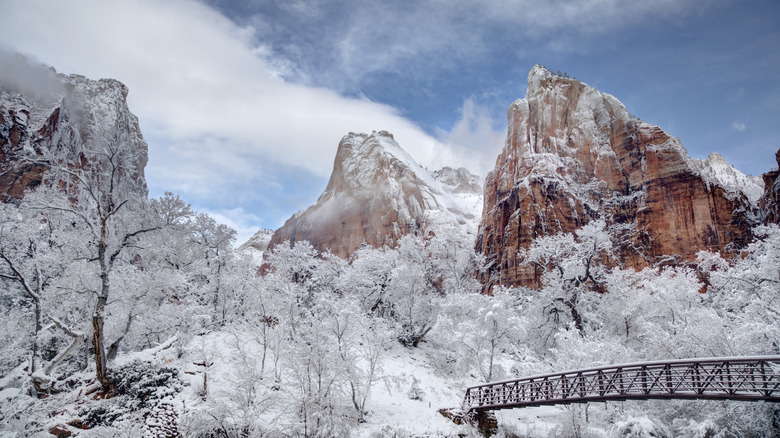
Daytime temperatures from December to February in Zion National Park average in the comfortable mid-50s. Sometimes it's a little warmer, but, of course, it's sometimes colder. This is when you'll encounter a quieter, calmer Zion. Access to some trails and roads may be limited depending on the weather, but it's just as memorable. And outside the shuttle's special holiday service period, cars can access the full length of the Zion Canyon Scenic Drive, too. Make sure to bring your camera, as snow in the canyon is a delight for photographers.
Fortunately for park visitors, because Zion-Mount Carmel Highway in Zion Canyon is an important state route, the National Park Service clears it throughout the winter. And remember that Watchman Campground is open all year — so is Zion Lodge — along with additional lodging options just outside the gate in Springdale. You can still enjoy charming shops and restaurants, just without the throngs.