
11 Tips From Park Rangers For Enjoying Yellowstone National Park
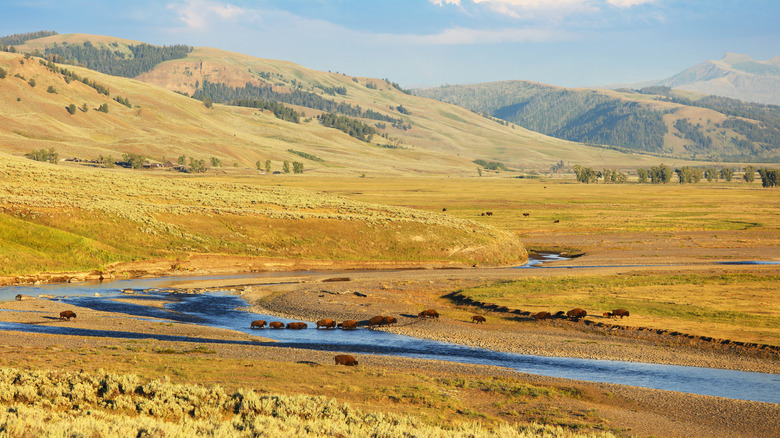
Yellowstone National Park is one of the country's perennially popular parks for good reason, with its iconic geysers, mountains, waterfalls, the most campsites of any U.S. national park, and more. Established in 1872, it was not only the country's first national park, but also the first in the world, and it covers nearly 3,500 square miles — more than 2.2 million acres. Suffice it to say, it's a pretty big place, and there's a wide array of experiences to have, places to go, and things to see.
While there are plenty of rules that you should know before visiting Yellowstone, both written and unwritten, park rangers also have plenty of good tips for how to enjoy the park as safely as possible while getting the most out of your trip. Veteran rangers have seen it all, and they're there to give advice and help to preserve the park for you and future generations to enjoy. They also fulfill a wide range of roles within the park, from interpretive rangers to law enforcement, contributing to the park's daily operations. Some have more public interaction than others, but they sure know the ins and outs.
In addition to the author's experience visiting Yellowstone National Park, we've also drawn from videos and resources published by the National Park Service (NPS) in which rangers share information, plus interviews and other content published by current and former rangers. Additional practical information is sourced from news outlets, expert blogs, NPS.gov, and social media and Reddit discussions. Below, peruse 11 great tips from Yellowstone National Park rangers that will help you make the most of your visit.
Stay on the trail — and away from geysers
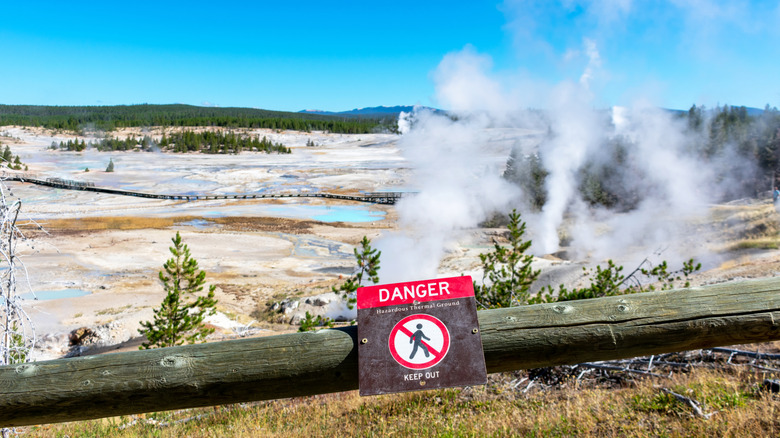
Yellowstone's hydrothermal features are the park's most famous draws, but they're also notoriously dangerous. Daisy Geyser in the Upper Geyser Basin, for example, erupts at around 200 degrees Fahrenheit. That's why there are boardwalks that stretch for miles around popular sites, and it's important to stick to them. Yellowstone district ranger Tara Ross noted in an interview with Xanterra Travel Collection that at the very least, moving off the trail may result in a ticket. If you don't comply, it's the sort of thing that could even get you banned. Ross said, "You'll see a video of people at the Grand Prismatic, one of the most iconic and fragile springs, trampling off the boardwalk. Sometimes that's how we catch people."
Getting a citation is one thing, but it's a means of really driving home to park visitors that the potential for injuries or even death is very real. A fall could land you in the hospital, jail, or worse. By extension, among the many things that rangers wish people knew before visiting a national park, it's the visitors' responsibility to respect where they can hike, camp, and drive. The rule about sticking to formal routes also applies to all kinds of vehicles. Unlike the expansive public lands that extend outside of the Yellowstone boundary, which provide ample space to roam and dry camp for free, ATVs are not allowed anywhere inside the park. "In the park 100% no but on the outskirts of the park are 100s of miles of off road trails." said a former Yellowstone ranger in regards to off-roading on Reddit. "And the rangers know all the best ones so feel free to ask if you ever go."
Reserve your camping or lodging well in advance
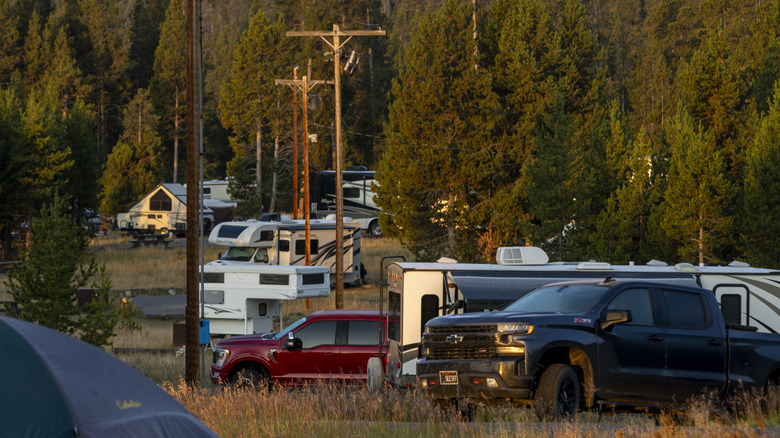
No matter the season, you'll want to make sure you already have a place to stay booked before you arrive at Yellowstone National Park. Every kind of lodging requires a reservation, with the only exception being Mammoth Campground, which has first-come, first-served sites in the winter for the truly adventurous among us. Even with more than 2,000 campsites spread out among 11 campgrounds, spaces fill up fast in the summer. Most sites can be booked up to six months out from the date of your stay, so the sooner you know your plans, the better chance you'll have of selecting the site you want. "If you don't have a reservation, the nearest place to stay could be hours away, so be sure to have a plan before you arrive," shared a ranger in an NPS video.
To head out overnight into the wilderness areas of the park, where you can find a bit more adventure and solitude, you should also make a reservation in advance. Fortunately, these are spaced well apart, which is great for campers but also an added bonus for environmental conservation. "The only thing preventing overuse (in the backcountry) is that campsites are spaced a half mile apart," said district ranger Tara Ross. Three-quarters of the park's dispersed campsites are reservable throughout the summer season via online lottery, which runs for three weeks starting March 1. You'll also need to secure a permit.
Download the NPS App before arriving
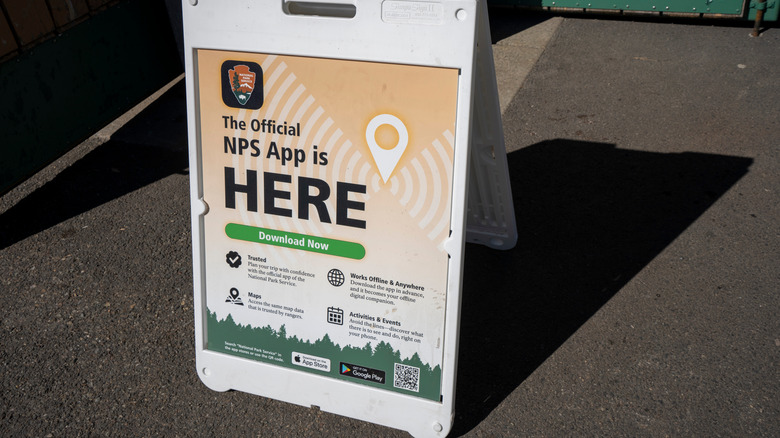
It seems like there's an app for everything these days. Some are more helpful than others, but in the case of the country's national parks, it can make planning and getting around a lot easier. In an exclusive chat, National Parks Service Spokesperson Grace Hassler told Islands about the biggest dangers of visiting national parks in the summer and how to avoid them, and she suggested putting the NPS App to good use. "You can access basic information about the park, what to do, where to stay, upcoming events, contact information, and so much more," she said.
Internet and even cell service is difficult to find (or totally nonexistent) in Yellowstone National Park, especially in more remote areas. If you're in the planning phase, use the app to peruse interactive maps and create personalized lists of places to stop. You can also select content from the app to make available offline or print in advance. And it's a boon for avoiding hectic information desks at visitor centers by having advance access to lots of resources. If you have additional questions, though, rangers are always there to help.
Be smart in the backcountry
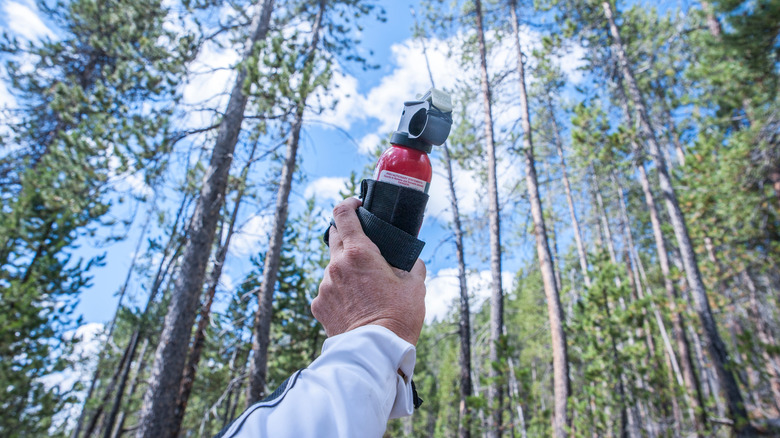
More than 2 million acres — about 90% of the park — is considered to be wilderness, although it has not been federally-designated as a wilderness area. There are several under-the-radar trails known by backcountry legends, such as Slough Creek Trail and Hellroaring Trail, but this mountainous region is teeming with wildlife, and conditions can change quickly due to geological phenomena or weather. Pack appropriately for the amount of time you plan to be on your trek, including layers for changes in temperature. You may even want to pack a satellite tracker or personal locator beacon (PLB), which can be activated to alert search-and-rescue personnel in case of an emergency.
Rangers recommend bringing bear spray with you if you plan to head out on a hike or skiing in the winter, especially in the backcountry. Always keep it strapped to your waistband or in a similar position where it's easy to reach quickly. "Bison, elk, coyote, and cougar are all active in the winter," a ranger says in a YouTube video about visiting during the colder months. "Travel in groups, make noise, carry bear spray, and know how to use it." Always prioritize getting away from animals. And if something goes wrong, another ranger named Jake added in a different video on the NPS website that you should "try to solve problems within your group first, whether that means fixing broken gear or dealing with a minor injury. And don't be afraid to turn around if conditions get worse."
Stash your trash — especially food
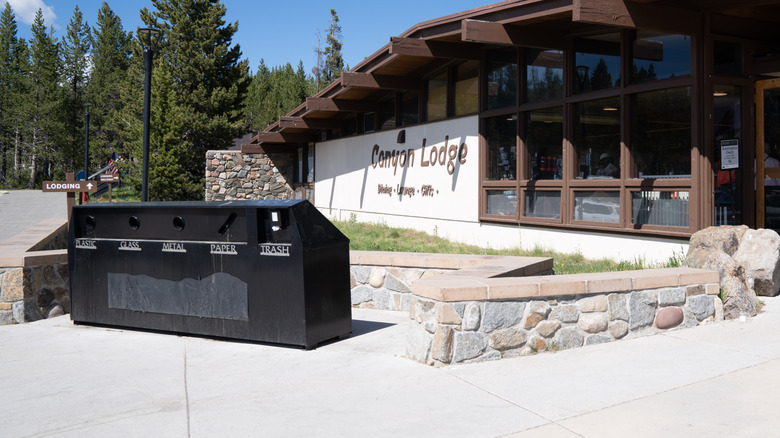
Winnie the Pooh may have a fondness for honey, but real-life bears are attracted to a much wider range of potential snacks. Grizzlies and other wildlife are attracted to the smells of human food, including trash and scented things like soap, deodorant, and shampoo. And while the majestic creatures are wonderful to spot from a distance, no one wants a grizzly wandering through campgrounds or other public areas, posing safety risks to both visitors and itself. That's why you'll find special, latching garbage bins all over the public spaces of Yellowstone. "If a trash can happens to be full, find another," said a ranger in an NPS video on YouTube. A momentary inconvenience can help prevent unwanted issues with wildlife.
At many campgrounds, you'll also find bear-proof storage boxes. These are helpful for preventing bears from physically reaching your food, but you'll still want to make sure everything's packed up tight. If there isn't a box where you're staying, keep your food enclosed in tightly sealed containers and inside your car. Essentially, try as much as possible to prevent attractive smells from dispersing. And in the backcountry, keep bear-resistant food containers at least 100 feet away from you.
Zoom lenses should provide the only wildlife close-ups
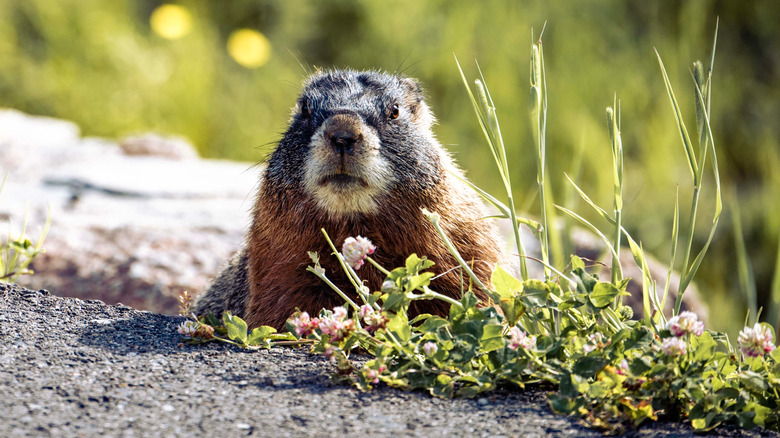
There are some things one really shouldn't do at Yellowstone, not just to protect the park and its denizens but also to protect yourself. Getting close to wildlife, whether big or small, is one of those things. Those big fluffy bison might seem docile and cuddly, but they can charge at up to 35 miles per hour. In July 2026, a man walking in Bridge Bay Campground found this out the hard way when an agitated bison threw him 8 feet into the air, according to The Guardian, and he sustained critical injuries. It may have been a fluke, especially within a campground, but often, visitors don't appreciate the risks. "People post risky behavior on Facebook and make it seem acceptable," said district ranger Tara Ross. The most surprising thing another ranger ever saw was someone attempting "to ride a bison," per a discussion on Reddit. "I'm not kidding, it was really shocking."
The only way one should ever get up-close and personal with wildlife is through the powerful lenses of binoculars or a camera. Keep your distance from wildlife, even when they're blocking the road — "bison jams" and "elk jams" aren't uncommon. And as the aforementioned visitor found out in July, wildlife occasionally wanders into campgrounds, too, so you should always do your best to keep your distance. No matter the fauna, keep clear, and if you're on the road, stay in your car. Additionally, definitely don't send a drone onto the scene like an unknown operator did in spring 2026, when other park visitors captured one of the flying units harassing a well-known bear and her cubs, according to Cowboy State Daily. Drones aren't allowed in any national parks.
Consider boarding your pet
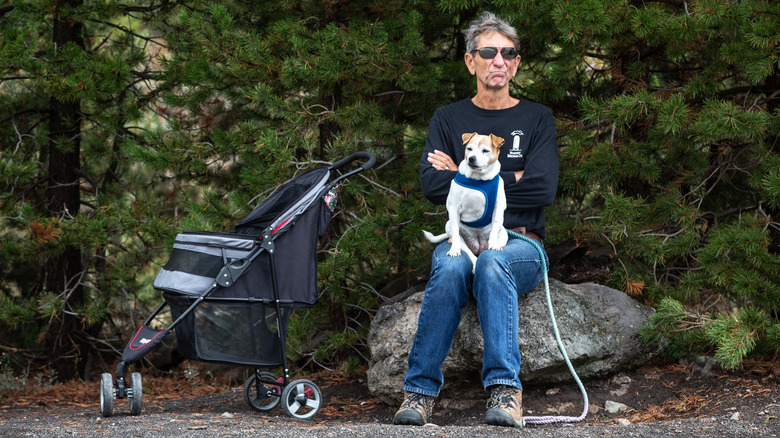
Some national parks are exceedingly pet-friendly, but Yellowstone isn't exactly one of them. "Yellowstone is a wild place, and many pets have been lost, injured, or killed in the park," a ranger says in an official video. In 2021, the BBC reported that a woman suffered severe burns after leaping into a thermal pool after her dog jumped in. Although she survived, her dog, sadly, did not. Some Redditors have noted that rule enforcement around the trails can seem lax sometimes, dogs are never allowed on boardwalks around the thermal features or essentially anywhere that cars can't go — in other words, roads and campgrounds. Since the park is also home to apex predators like wolves and grizzly bears, which can view dogs as prey, our furry friends are not allowed in the wilderness either.
Having a pet along will limit what you can see and do, so consider how you'd like to spend your time on your trip. Even if you just need a break for a couple of days, there are numerous high quality boarding and daycare spots located outside of the park, such as Yellowstone Pet Boarding in Livingston, Montana, or DogJax in Jackson Hole, Wyoming, among many others.
Pack your patience and arrive early
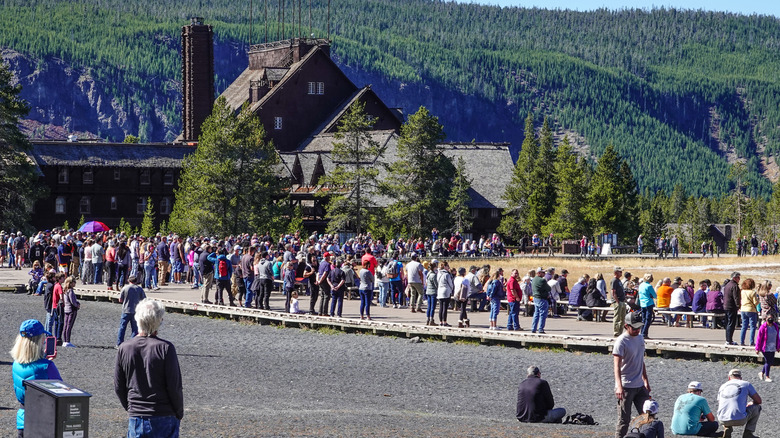
Yellowstone is not only the oldest national park, but it's also one of the most famous. The park gets exceedingly busy during the peak summer season, so if you want to avoid too much crowding at popular sites or bottlenecks at the entrance gates, get to the park before 7 a.m. or wait until the afternoon. Plan to visit the most popular attractions such as Old Faithful well outside of mid-day since they're busiest during that time. "In general, for timing, you're going to want to avoid the hours of 9 [a.m.] to 3 [p.m.] in some of the busiest places," shared former park ranger Ash of Dirt in my Shoes. "Or, if you can get into the entrance stations before 9 a.m., then you won't have to sit in the line for an hour."
"As you load up for the day, don't forget to pack your patience," said a ranger named Julia in an official NPS video. "Expect crowded boardwalks, traffic delays, and limited parking." Patience also goes a long way when those infamous bison jams occur. District ranger Tara Ross added in her interview with Xanterra Travel Collection, "There are even eagle jams. It just takes one animal." Long lines of cars stopped on the road are common when an animal has been spotted, although it's preferable that people don't back up traffic unnecessarily. "It's important that park visitors don't stop in the middle of the road to watch or photograph animals when there is a 5-mile long line of cars behind them," said ranger Peter Mangolds in an interview with Yellowstone Explored. If you get stuck, though, go with the flow, and think of it as a part of the experience.
Be prepared for the high altitude
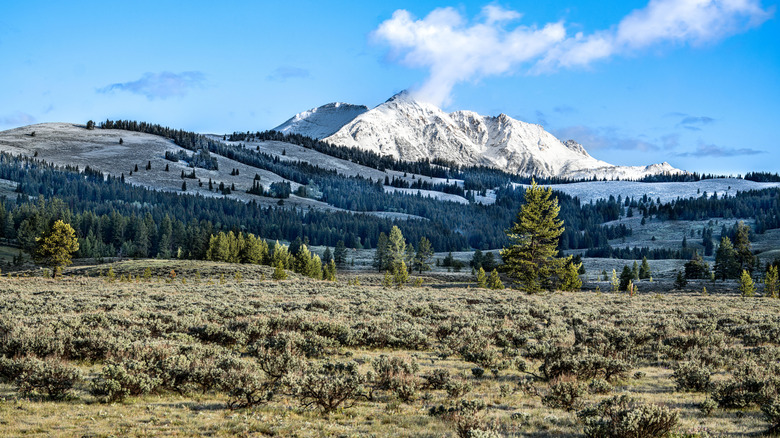
The highest peak in Yellowstone soars to well over 11,000 feet, and the lowest region still clocks in at more than 5,000 feet. Especially if you fly into the local area, you may experience altitude sickness due to the change in elevation, which can evolve dramatically as you move throughout the park. If you're not accustomed to the rarefied air, and you're naturally breathing in less oxygen than when you're closer to sea level, you may experience acute altitude sickness. Symptoms often present as headaches, nausea, fatigue, dizziness, and more.
There are things you can do to minimize the symptoms of altitude sickness, such as bringing supplemental oxygen, resting often, or descending to a lower altitude. Sometimes, more serious complications can occur, such as pulmonary or cerebral edemas. Rangers often respond to visitors experiencing strokes "because of the high altitude," said district ranger Tara Ross. In general, take it easy for the first day or two and listen to your body. "The canyon area is close to 10,000ft, plateau around 7500ft," shared another ranger on Reddit who said they worked at Yellowstone for 10 years. "My advice to combat this, stay hydrated, don't climb any mountains the first couple of days and you should acclimatize just fine."
Don't skip winter, but be prepared for seasonal differences
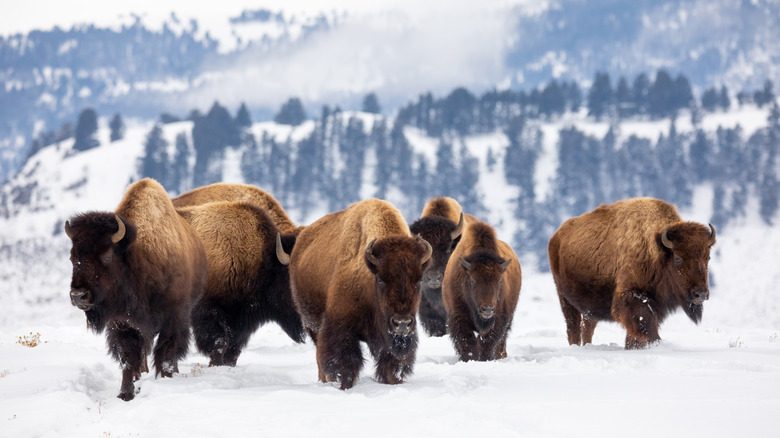
Winter is a wonderful time to visit Yellowstone, when the mountains are cloaked in snow and the crowds are substantially thinner. The geysers remain just as active, and wildlife continue to be a fascinating draw. Be prepared for the temperatures, though, which can be chillier than you imagine, especially at such a high elevation. "People don't realize how cold it is – way more people than it should be and we have to tell them to go back to their cars / cabins like it's 2F out and your in a light jacket and jeans" shared a former Yellowstone ranger on Reddit. In other words: Bundle up!
The road between the Northeast Entrance in near Silver Gate, Montana, and the North Entrance in Gardiner, Montana, is the only route open to private vehicles all year-round — weather permitting. Make sure you know well in advance where you'll be staying when you get to the park because the aforementioned Mammoth Campground is the only one that's open all year. It's the one with first-come, first-served sites between October 15 and April 1. Mammoth Hot Springs Hotel is also open throughout the winter and is the only lodge accessible via personal vehicle throughout the colder months. Old Faithful Snow Lodge can only be reached by park-provided, over-snow transportation, which needs to be reserved ahead of time going both to and from the location.
Respect park rangers and make the most of their services
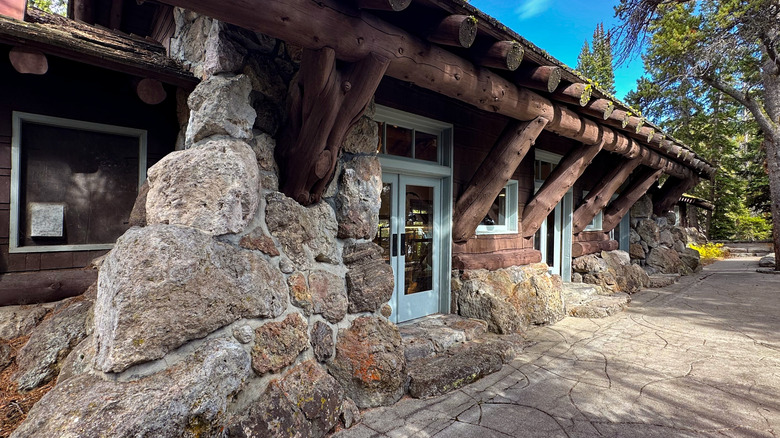
There's so much to see and do at Yellowstone, including catching an Old Faithful eruption, watching the cascade in the Grand Canyon of the Yellowstone, or heading out into the backcountry. If you've never been to the park, it can be a challenge to know where to start. Do your research beforehand with help from the official National Park Service website and NPS App. Even better, check in with rangers at the visitor centers — they're there to help with questions, provide itinerary ideas, sort out permits, and point you in the right direction. "Interpretive rangers are what most people think of when they think of a ranger," said district ranger Tara Ross. "Law enforcement rangers provide emergency services, responding to motor vehicle crashes and emergency medical situations. Visually, what's distinguishable are our badges. But anyone who looks official is going to get questions."
The best way to get your questions answered is by heading to one or more of the park's 10 visitor centers and information stations. Even though it's sometimes tempting to want to chit-chat with the ranger at the entrance station, head to the visitor centers for more thorough information so the line can keep moving. And in that vein, remember to respect rangers just as much as the wildlife and the spectacular landscape. As ranger Peter Mangolds said to Yellowstone Explored, "To the ranger, the park is their home, their sanctuary, their place of work. Just as you would not want anyone to harass your pets, throw garbage onto your yard, harm their neighborhood, or treat any aspect of it with disrespect, so we should be able to receive that same respect and consideration in our home."