
11 Incredible US Parks And Public Lands Where You Can Camp For Free
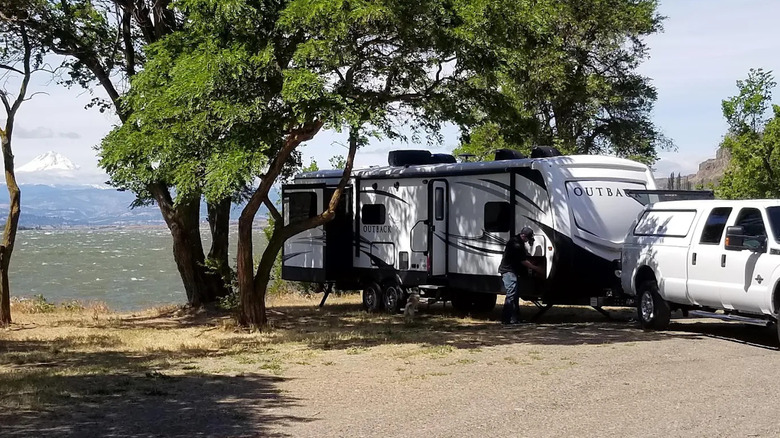
Whether you're heading out on a weeks-long road trip or you've got a single destination in mind, it pays to be frugal. It's certainly one of the reasons camping is so attractive as a pastime, although costs can still add up quickly. And while it's rare to find designated parks in the U.S. that offer free camping — they typically rely on fees to support their work — fortunately, there are still some gems out there to help save you money.
When we say parks and public lands, we're not talking about the expanses managed by the Bureau of Land Management (BLM) or national forests overseen by the U.S. Forest Service. These are well-known areas to look for free, dispersed sites, such as around Utah's "Mighty 5" national parks — no reservation required, but they're often remote and consist of little more than parking spaces. However, if you're up for an adventure, definitely look into them. Resources like FreeCampsites.net, The Dyrt, and Campendium offer searchable maps and reviews by those who have stayed.
For the sake of this list, we're defining "parks" as places managed by federal, state, county, or municipal bodies that have clearly-defined boundaries and an amenity or two, such as pit toilets, fire rings, or picnic tables — sometimes more, sometimes less. All are first-come, first-served, so anticipating that a space may not be open when you get there is part of the process — it's always good to have a plan B. In addition to the author's experience tent camping for months at a time on U.S. road trips, we've consulted reviews published via the above-mentioned resources, plus Tripadvisor, Google, official park websites, municipal and county resources, and more. Below, explore 11 parks of all shapes and sizes, from county parks to recreation areas to sprawling national monuments.
Navajo National Monument (Arizona)
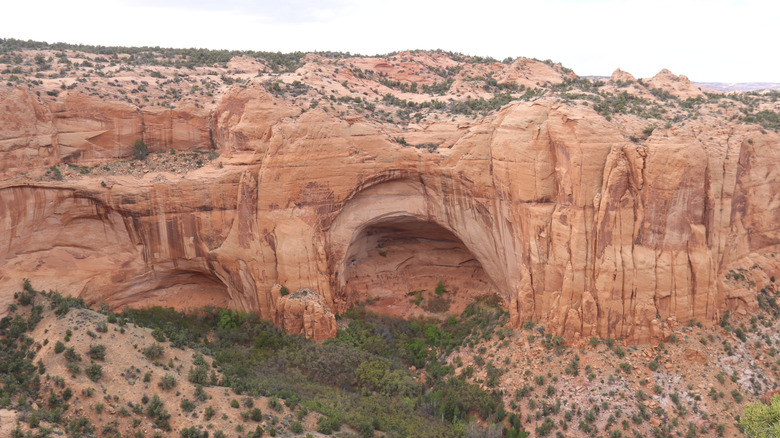
One of the last remaining national monuments where you can camp totally for free in not one, but two developed campgrounds, Navajo National Monument is a treat in way more ways than one. It's located 9 miles north of U.S. Highway 160 — a major thoroughfare for roadtrippers headed to the Grand Canyon — near the community of Shonto. It's located entirely within Navajo Nation, which runs the park in cooperation with the National Park Service, offering a visitor center with museum displays, a small shop, an auditorium, and of course, helpful rangers. There's no entrance fee, either, and the park is open all year-round. Head out on three fairly short self-guided walks, one of which overlooks Ancestral Puebloan cliff dwellings. If you plan your trip accordingly or have some extra time, take a ranger-led tour to get up-close to the ancient stone houses.
Of the park's two campgrounds, Sunset View is the most accessible and equipped. It's located close to the visitor center and has 31 sites, each with a picnic table and a grill. There are often fire hazard warnings in effect during the hottest months due to wind and the arid landscape, so open wood fires are not permitted. Sunset View is open year-round, while Canyon View, located a five-minute drive north, is open typically between spring and early fall. "Great spot for overnight or a couple days," shared a visitor on Campendium who stayed at Canyon View. "Quiet and scenic. Sunset has paved roads and more people, but Canyon is dirt/gravel and a bit remote."
El Morro National Monument (New Mexico)
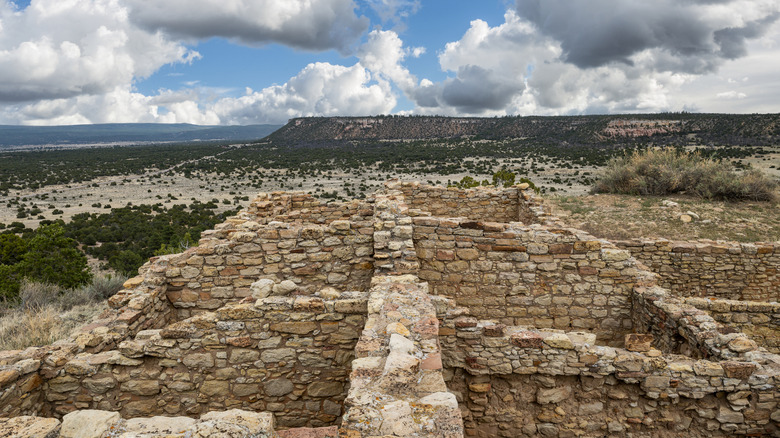
Hundreds of years of history are etched into El Morro National Monument, a standout destination in western New Mexico that borders the Ramah Navajo Indian Reservation. In total, the park encompasses a little over 1,000 acres, so it's not huge, but its towering cliffs and glimpses of the past are true gems in the desert. Visit stunning Atsinna Pueblo, which dates back to the around the 13th century, has more than 350 rooms, and sits atop a hill with gorgeous views over the landscape. The park's also known for its myriad rock-carved messages — what one visitor referred to on Tripadvisor as "the ultimate graffiti site" — which include Ancestral Puebloan petroglyphs, Spanish notes and names, and messages left by early American travelers.
El Morro is also the only national monument besides Navajo that provides free camping, along with free park entry, in a small, developed campground containing nine sites. It's open all year, although potable water is only available during the warmer months, and sites come with a picnic table, grill, and a gravel tent pad. "This campground is a must stay," shared a visitor in a review on The Dyrt. "Between the separated free sites, small number of spots, and ranger programming on-site at the campground every weekend, it was a top 5 favorite spot for us."
Avery Recreation Area (Washington)
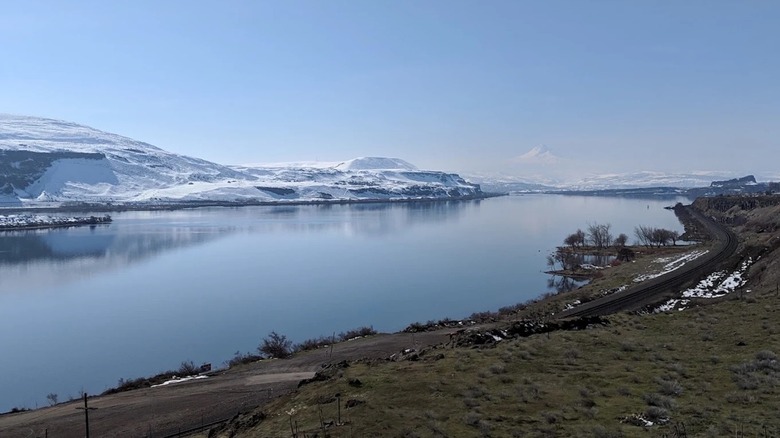
Many free campsites can be found on federal lands, but not all of them are large parks or expanses of protected lands. Some are simply awe-inspiring stopovers along the side of the road, ideal for a quick, free overnight option but a few notches above a standard highway rest area. Avery Recreation Area certainly fits this bill, nestled along the Columbia River west of Wishram, Washington, where it's managed by the U.S. Army Corps of Engineers. It's just a thin strip of a park on the river bank, but it overlooks Brown Island, river-carved hillsides across the way, and, most impressively, Oregon's towering Mount Hood in the distance. And it's only about a 20-minute drive east of the Columbia River Gorge Discovery Center & Museum via The Dalles, Oregon, a sun-drenched town with wineries and scenic trails.
Tree-lined sites include picnic tables near the water at Avery Recreational Area, all of which are fairly grassy. That's great for tents, but due to its open position along this very wide body of water, the wind often kicks up. Stays are limited to seven days within any 30-day period, but the Columbia River does host commercial fishing seasons, during which the campground is closed to the public. If you're not sure if one of these will coincide with your visit, check with the Washington Department of Fish & Wildlife. Another note is the nearby boat landing can lead to a bit of congestion — something to be prepared for. "Beautiful but very windy and many camping spots taken up by people leaving their boats," shared a past visitor on The Dyrt.
White River West Sno-Park (Oregon)
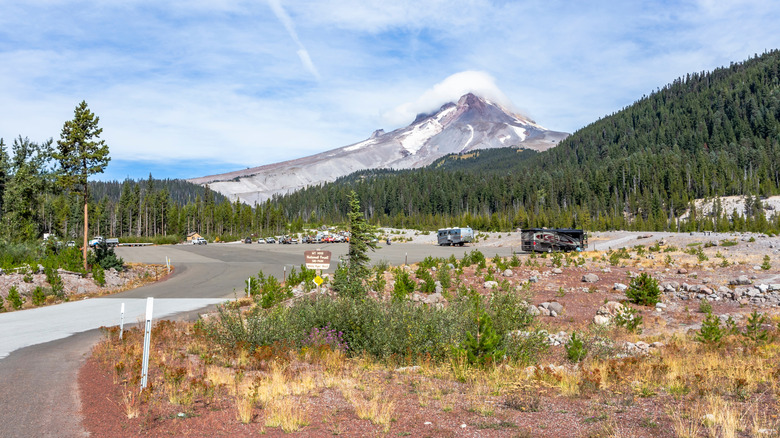
It might not be fancy at first glance, but camping for free in the parking lot of White River West Sno-Park in Mount Hood National Forest offers a convenient way especially for RVs, vans, and truck-top tent campers to take advantage of an overnight stay with amazing views of Mount Hood. Tent campers have made it work, too, though! One traveler shared in a review on The Dyrt that they pitched a tent, with a small caveat: "There are no places to put stakes in the ground unless you set up on the east side of the lot on the little hill," they said. Something to keep in mind if the wind is up.
The area is managed by the U.S. Forest Service as a ski destination in the winter — a permit is required to access the area between November 1 and April 30, when skiers flock here for backcountry slopes — but between May and October, it's open to campers. There's also a pit toilet available. If you arrive when there's still skiable powder, you may have to contend with those heading onto the slopes — sometimes with a bit of a party atmosphere. "Turns out this lot is used by skiers spending the weekend and tailgating with all their friends," shared a visitor on Campendium. "Probably really fun if this is your vibe," they added. In July, for example, that's less of an issue. And if you're up for a hike, head out on the White River Trail, a 3.3-mile out-and-back route.
Balanced Rock Park (Idaho)
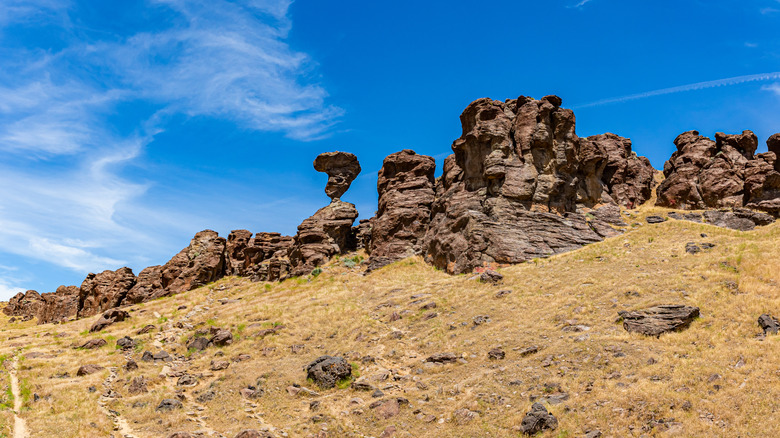
Balanced Rock Park is a remote county park in south-central Idaho that's about a 20-minute drive southwest of U.S. Highway 30 at Buhl. It's so-named because of a particularly distinctive hoodoo, which has been shaped by erosion over the millennia into a 48-foot-tall landform that looks like, well, a huge rock balanced on a pedestal. The park and its campground sit within the gorge carved by Salmon Falls Creek, which is a popular hiking area and is right next to the Lower Salmon Falls Creek Wilderness Study Area, which is managed by the Bureau of Land Management (BLM). Balanced Rock Park is also only a 30-minute drive north to Blue Heart Springs, where you'll find unexpectedly Caribbean-blue waters that are some of the most stunning in the U.S.
Camping here is free, with sites situated right along the creek with views of the dramatic cliffs. The picnic tables along the water are also a draw for people driving through and looking for a picnic spot and a place to stretch their legs, so there's some day use, too. "Excellent free place to stop over for a night or two," shared a visitor in a review on The Dyrt. They added, "There aren't any designated or numbered camp spots, but it seems that each picnic bench and grill sort of counts as an individual spot." One thing to note is that the park runs sprinklers at night on the grass between Monday and Thursday, so keep that in mind if you're tent camping or your car is parked near one — it will get splashed.
Chadron Creek Ranch Wildlife Management Area (Nebraska)
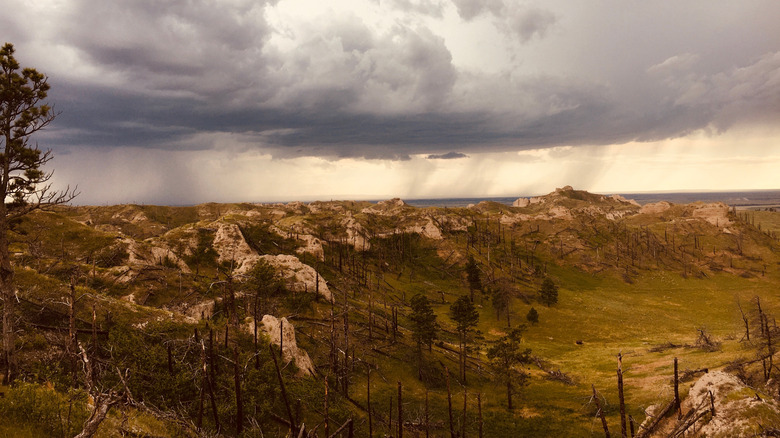
Across a little more than 2,500 acres in northwestern Nebraska, the under-the-radar Chadron Creek Ranch Wildlife Management Area (WMA) is a hidden treasure for free camping. It's so remote — situated near Nebraska National Forest — that it doesn't even register on Google Maps! Rest assured, it sits just about 2 miles south of Chadron State Park, which is Nebraska's oldest with lush, hilly views. However, unlike in the state park, you'll find free entry and free camping in totally primitive sites, with no amenities and simply a gorgeous view of the surrounding grasslands and rock formations.
If you really plan to hunker down and commune with nature in solitude for a little while, you can stay for up to 14 consecutive days within a 30-day period. "It was very comfortable, though the hard ground made tent staking difficult," shared one visitor on Campendium. Hike, bike, and ride on horseback around the property, but just remember that it's not maintained like the state park, where you'll find several groomed trails, disc golf, a pickleball court, a swimming area, an archery range, and more. There is also a daily entrance fee in the park — $7 daily for Nebraska plates; $14 for out-of-state — but it's a worthy tack-on.
Lake Meredith National Recreation Area (Texas)
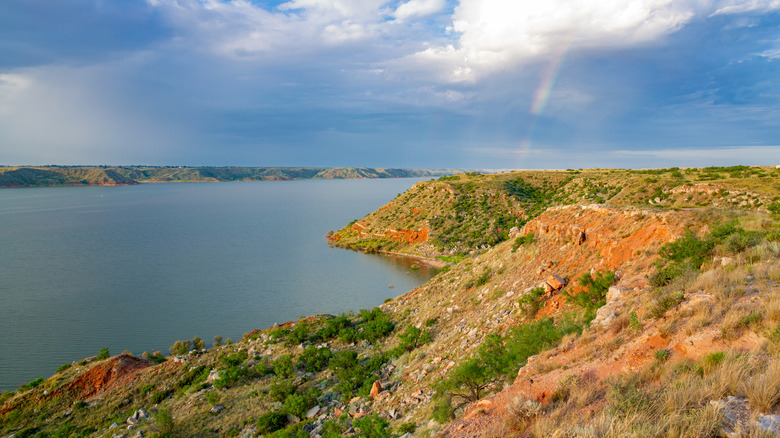
Nestled squarely amid the arid plains of the Texas Panhandle, Lake Meredith National Recreation Area is an unexpected oasis. It's a reservoir along the Canadian River that spans more than 16,000 acres when at its fullest, although lower levels in recent years put it closer to 8,600 acres. Lake Meredith is a great place for hiking, birdwatching, boating, and more. There are a handful of boat ramps, primarily located in the northern half of the lake, plus several picnic areas and a total of 10 camping areas. They vary quite a bit by size, although almost all are primitive. The cottonwood-shaded Cedar Canyon has only two campsites, for example, while the off-road Rosita Flats area has 26 sites.
For more developed options, head to Harbor Bay, where nine sites all have grills, picnic tables, and ramadas for shade. Blue West has shade shelters and picnic tables but no grills and no bathrooms. Fritch Fortress is popular with larger RVs because it has a few pull-through sites, but it's also rather small at only 10 sites with no hookups. Then again, that intimate feel may be what you're after! And Sanford Yake is the most developed, with 51 sites along a paved road with some pull-through spots, plus modern bathrooms with showers, and flush toilets. Incidentally, if you want hookups, there are actually 10 sites at Sanford Yake that offer electricity and water — but there is a fee for these, of course, and reservations need to be made in advance.
Canyons of the Ancients National Monument (Colorado)
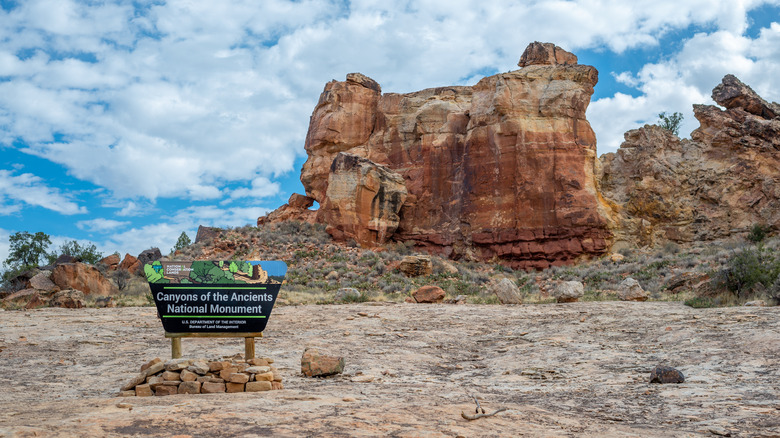
A 176,000-acre, remote national monument in southwestern Colorado, Canyons of the Ancients National Monument allows free dispersed camping virtually anywhere that's not an archaeological site. It's managed by the BLM, so as one might expect, there's less development and more of a spread-out feel, except with a great visitor center to check out in Dolores and well over 8,300 documented Ancestral Puebloan archaeological sites sprinkled within the park's boundary. Some of these are major sites, such as Lowry Pueblo and the Escalante and Dominguez Pueblos.
Canyons of the Ancients is a fantastic alternative to camping at nearby Mesa Verde National Park, one of the most underrated U.S. national parks. It's less than an hour away, so you can easily pop over for a day trip while still avoiding Mesa Verde's $38 nightly fee for its standard campsites ($51 for hookups). Find hiking trails, beautiful canyon views, and opportunities to park or pitch a tent overnight for free throughout the monument. The Sand Canyon Trail is one of the most popular routes, a difficult 12.8-mile out-and-back route that makes for an ideal overnight trip. "Our scout troop camped here last weekend," shared a visitor on The Dyrt who stayed in November 2025. "We saw no one! Plenty of existing fire rings." Camping is allowed in the backcountry areas of the monument as long as you keep your vehicle within 20 feet of the road, and like on most BLM-managed lands, you can stay for up to 14 days within a 30-day period, after which you will need to relocate at least 30 air miles away.
New River Gorge National Park & Preserve (West Virginia)
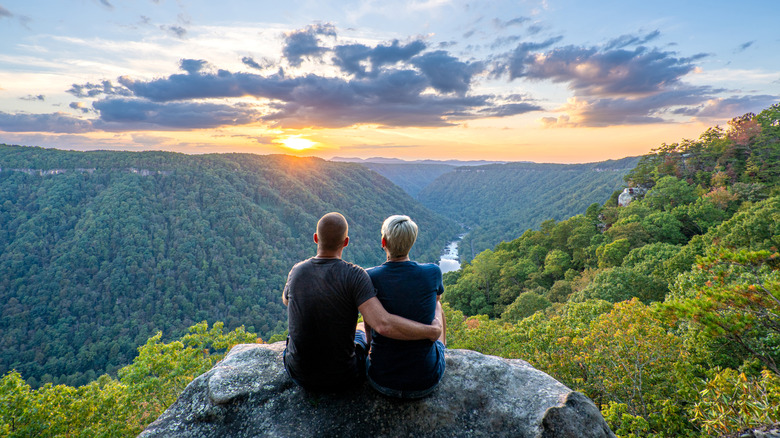
New River Gorge National Park & Preserve offers a total of eight primitive campgrounds that are available all year-round and totally free of charge. An entrance fee is also not required, making it quite unique among the country's other formal national parks. The only other one with a similar system of free camping is Natchez Trace Parkway, a historic byway that runs through Tennessee, Mississippi, and Alabama — which is also well worth checking out. You'll find pretty basic sites with fire rings and picnic tables at New River Gorge, but you'll have to bring in your own water.
"Good sized sites with plenty of space between sites, river access with beach area, so peaceful at night with the roar of the river," shared a visitor on Campendium who spent the night at Army Camp. Some visitors note that the narrow road into the camping area is bumpy, and low-hanging limbs and electrical wires might be hazardous for very high vehicles. Other than that, though, it's one of the park's many secluded areas where visitors can enjoy the river — New River is a haven for whitewater rafters — and explore hiking trails that range from .25 to 7 miles one-way.
Wilderness Landing Park (Florida)
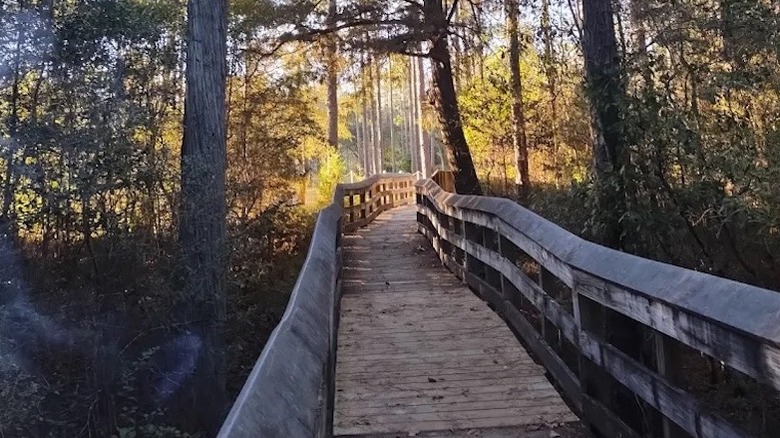
Located just west of the community of Baker in the Florida Panhandle, Wilderness Landing Park is an oasis on the Blackwater River. This beautiful stretch of water is popular for paddling, and it's also ideal for fishing. Wet a line for largemouth, spotted, striped, and sunshine bass, as well as bluegill, catfish, and more. And when you're ready to post up for the night, unwind at one of the 25-acre park's free primitive sites that are situated beneath slender pines. You'll also find hiking access to Blackwater River State Forest, tubing spots, a picturesque boardwalk through the trees, and amenities near the campsites including showers and modern restrooms.
"This campground was a pleasant experience and has well-maintained facilities," shared a visitor on Campendium. "The bathrooms were clean, and the warm showers were fantastic." Another reviewer sharing their experience on The Dyrt added, "It is located right on the Blackwater River and has a boat launch and two pavilions with tables and barbecue grills right on the beach. The river is sand bottom and fairly clear." As an added bonus, the park is also located just a stone's throw downriver — a 4-mile drive — from Cotton Bridge Park, which doesn't have camping but offers additional opportunities for picnicking and swimming the sandbar beach.