
10 Pieces Of Outdated Travel Advice Many Of Us Still Follow
We may receive a commission on purchases made from links.
Everyone and their dog has an opinion on travel, and social media has only exacerbated that fact. And while many of the tips thrown during the planning process are useful and sometimes true game-changers, like Rick Steves' best travel tips, others have lingered on inexplicably through the years, as trends, technology, and culture have rendered them all but useless.
Part of the reason for this is their almost mythological status in our minds. Long before the internet stepped in and our social feeds bombarded us with trendy "go-heres" and "try-thats," we learned from our parents, grandparents, older siblings, and friends, who each had their own fable that meant these travel tips weren't just recommendations — they were scripture.
Whatever Granny told you about travellers' cheques might have rung true in 1995. Your uncle's quirky insistence on wearing a suit to the airport may have grabbed him an upgrade in the '80s. But it's a changed world now, with new rules dictated by technology, company policies, and a more mobile world than ever seen before. It's time to ditch these pieces of outdated travel advice and step into the real world.
Always book flights on a Tuesday

At the top of the list is a piece of travel advice that, technically speaking, could still be true today ... if it had ever been true in the first place. At some point or another, most of us have been advised to book flights on a specific day. Sometimes it's Tuesday; others say Wednesday; and some go as far as saying Tuesday after 2 a.m. While there may be the tiniest sliver of truth in the matter, it's in no way a piece of advice you need to follow to a T. In fact, during the research process for this article, we found multiple articles written by reputable outlets all suggesting a variation of Tuesdays, Fridays, and Sundays as being the cheapest day. Even the stats don't add up.
The myth started years ago, long before the first algorithm or dynamic pricing system ruined our planning process. Airlines would release fares in batches on a Monday night and then make tweaks based on competitor pricing, leading to occasional reduced rates. The legend propagated, and it's still believed today, despite complex algorithms constantly updating prices to match demand, oil prices, and other factors.
What does matter is how far out you book the ticket. Generally, the best practice for booking cheap flights is getting in early. Some swear by grabbing last-minute deals, but that's never a guarantee. Using price tracking tools is a solid option, as it can give you some historical data on when specific routes fluctuate, but overall, it's important not to get tied down by old wives' tales. With that said, Tuesday is a good day to fly, as demand is generally lower.
Reconfirm your flight 72 hours before departure
Younger travelers may not adhere as much to this one, but many older travelers, bound by pre-smartphone limitations, still cling to the idea that they need to reconfirm their flight a few days before departure. In fairness to them, the consequences could be high back when this was relevant, but things have changed so drastically now that it's irrelevant.
In years gone by, reconfirming your ticket, whether by email or phone, was often required by the airlines. It allowed both parties to be covered in the event of an issue: the customer could check the flight was still on schedule, with no cancellations or changes, and the airline could ensure the passenger was still coming. Some airlines still have variations of the 72-hour clauses buried in their contracts, but aren't likely to enforce them.
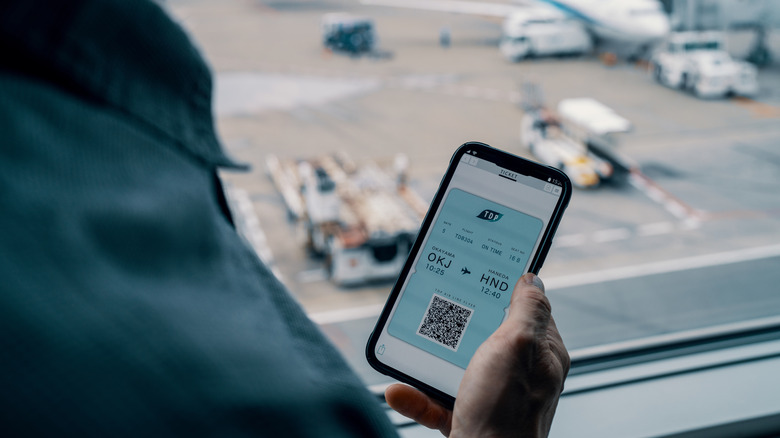
Today, of course, it's a different ball game. Apps and automated systems mean that both customer and carrier can see all details at all times. Any delays or cancellations are automatically updated in-app or online, and there's no need to check in on your details based on any arbitrary number of days or hours. In fact, with most airlines now facilitating online check-ins, it's very possible you won't need to speak to another human being until you're welcomed on board.
Dress smartly, and you might get upgraded

We all wish this one were true. In decades gone by, flight attendants had a little more power when it came to who was being upgraded and who wasn't. If a flight wasn't full, in theory, someone could be given the green light to turn left instead of right at the discretion of whoever was operating the desk that day. This power, now long gone, meant dozens of passengers bought into various hacks for achieving the feat.
From being ridiculously good-looking to slipping gifts to the attendant, everyone had a potential "in," but dressing smartly and looking the part was the one non-negotiable. Today, it's virtually impossible to be upgraded at the gate or check-in by an attendant. Their impact has been reduced to almost nothing, with any upgrades increasingly dictated by loyalty status, ticket type, credit cards, and long waitlists. In fact, it's best you think twice about asking about an upgrade, as they could lose their job by agreeing. In short, no flight attendant is letting you skip the 25 Delta Sky Club members on the flight because you wore a three-piece suit or a designer dress.
Frustratingly, this myth has been carried on in some spaces; even though some mainstream outlets may sometimes tout this advice, people working in the industry have debunked it time and again. Many of them even build articles that garner revenue for clothes that could get you that coveted upgrade. Don't fall for these. The upgrade list has been set well before you even opened your closet and isn't changing because you put your Gucci shoes on that morning. The only way to guarantee an upgrade? Pay for it yourself.
Turn up at the airport and fly standby for a bargain

Standby flights used to be the tool of adventurous flyers, looking to score a thrifty deal on a flight to anywhere. You'd simply turn up at the airport, carry-on luggage in hand, and grab a cheap ticket for an undersold flight. There was an element of risk involved, but it worked pretty regularly and was all part of the fun.
Today, standby ticketing still exists, but it's a vastly different experience, and not a strategy anyone can use to get cheap flights. In fact, to fly standby today, you generally need a fully paid ticket on another same-day flight. It still technically operates the same. You inform the airline that you'd like to fly standby, and you'll be put on a list. If the flight isn't full, you may be able to jump on, assuming no one else has done the same thing. It's used primarily to get on an earlier flight than the one you booked, to fix an itinerary that's been disrupted by a cancellation or a missed connection, or for employees to take advantage of their airline benefits.
Oddly, in many cases today, customers are rewarded for the opposite scenario. Airlines consistently (and frustratingly) overbook flights, leaving gate attendants scrambling to convince passengers to switch to a later flight voluntarily before they pick names at random. In many cases, they'll offer cash incentives or flight vouchers, sometimes soaring into figures over $1,000 on busy routes. Some travelers are happy to take this if they're not in a hurry and often enjoy a night in a hotel on the airline along with the reward.
Take enough cash and carry traveler's checks as emergency money
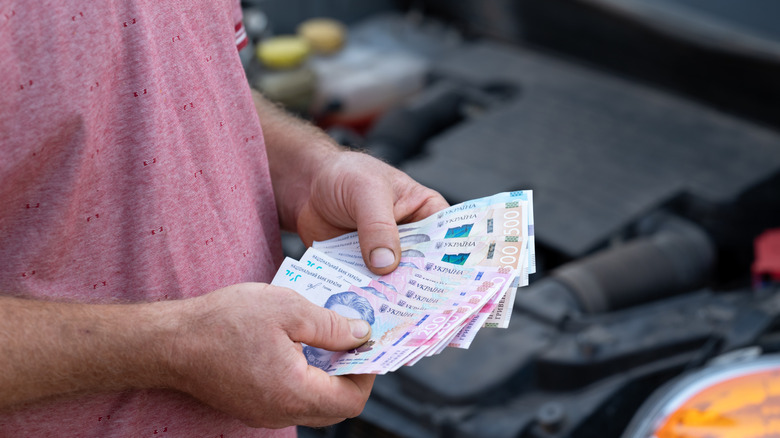
Money remains one of the most misunderstood elements of travel for Americans. It's a regular occurrence to see U.S. tourists in Europe and beyond pulling massive wads of cash from their bags to convert to local currency or, although far less common now, pulling a traveler's check from their wallets. Not only are these extremely outdated ways to operate on a trip, but they're also probably putting travelers at more harm than they would by embracing modern methods.
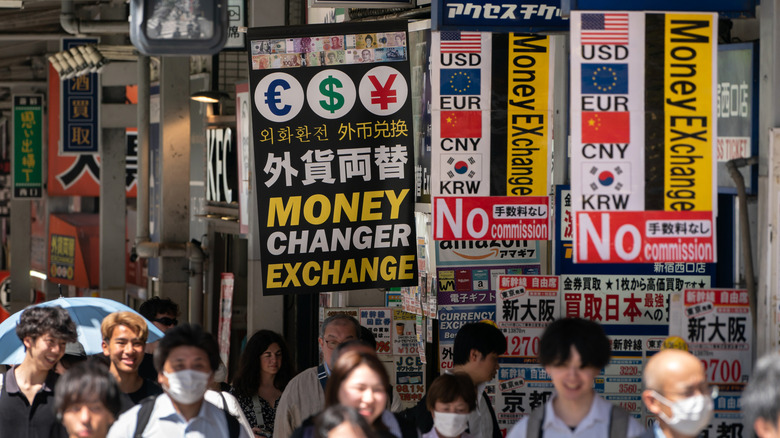
Traveler's checks were once a handy tool for avoiding having too much currency on hand. You'd swing by a bank when you needed more and withdraw some based on the amount attached to the check, assuming you didn't already have enough cash stuffed into your wallet, money belt, or suitcase. But today, there's almost no reason to bring much cash in the first place. It's still possible to get travelers checks today, but most banks have stopped making them, despite a minor resurgence. Currency exchange bureaus, especially at the airport, are often some of the worst ways to grab local currency, with tacked-on fees and rough rates all contributing to what is effectively a financial loss for most tourists. Using a debit card at reliable ATMs at your destination is a far better way to grab cash now. Sure, you still need to be careful of fees — it's best to look at local banks usually — but it's a far better idea than walking in with hundreds or even thousands of dollars in cash.
It's also completely normal now to have no reason to use cash abroad. Many countries around the world are approaching a cashless culture. Of course, this isn't applicable everywhere, and even in the most advanced corners of the world, you shouldn't fully abandon cash for your credit card, but it's by no means the norm. Even in more remote areas of Southeast Asia where you would expect cash to still be king, many of the street food stalls operate using local apps and QR payments.
Never use a credit card abroad

The previous cash-centric point leads easily into the outdated notion that you should never use credit cards abroad. While the idea is generally falling by the wayside, some still find the concept strange and that it puts them at higher risk of scams or other issues.
The reality is that credit cards actually represent one of the safest ways to spend when abroad. At the core of it, credit cards offer protections that debit cards and cash can never emulate. If you do fall foul of something sinister — whether your card was stolen or someone manages to skim your card — you'll often be able to have the charges cancelled, while many other cards come with travel protections for car rentals and tours. Many modern cards are also free of any foreign transaction fees, making it a no-brainer if it's a choice between a wallet-full of cash and a handy card. Throw in the travel perks now available, and the ability to earn points and travel the world for free, and credit card use is looking more and more attractive.
It's worth checking your individual cards' international rules, as some may block themselves when used in foreign countries. But again, instead of having to call a customer service hotline, you'll likely find handy toggles in the app and online to specify which country you'll be in and for how long.
Don't stay at hostels

Hostel culture has remained fairly absent from the U.S. when compared to Europe and Asia. There are a number of reasons for this, some related to Europe's gap-year mentality and the ease with which travelers can bounce around the continent at a young age. Combine this with an intimidating lack of privacy, some word-of-mouth horror stories, and some literal horror movies that could put off even the most intrepid of travelers, and you garner a cultural instinct to avoid hostels like the plague.
But by doing this, many travelers are missing out on one of the most affordable ways to see the world, as well as some incredible experiences. What's more, the modern hostel scene has largely thrown off some of its bare-bones reputation, with hyper-modern spaces, great security, and even some seriously impressive tech. From pod hotels to traditional bunks and private rooms, the fears that kept (and still keep) many Americans away from hostels are usually unfounded.
Now, are they for everyone? Of course not. An older traveler may recoil at the prospect of sharing a room with a dozen 21-year-olds. But the younger travelers, keen on saving a buck and making friends as they go, should do what they can to disregard some of the stories passed down from older friends and make hostels a core piece of their travels going forward.
A travel agent will always find a cheaper trip

Before the likes of Expedia, Skyscanner, and Google Flights emerged, travel agents were the gatekeepers of your travel dreams. Whether in person or over the phone, these vacation professionals had the discount codes, the connections, and the pre-built packages to save you time, money, and stress. While in some places, like the U.K, they still play a significant role in the country's love of a package holiday, in most countries, they've fallen by the wayside.
But some remain loyal, whether through habit or blind belief that agents are the only guaranteed way to find a cheaper trip. The reality today, however, is that savings are slim if they're there at all when using an agent. Travel aggregators are constantly logging thousands of flights and hotel rates, with sites like Skyscanner combining different and unrelated carriers to find even cheaper routes than before, while similar hotel sites can find ultra-cheap last-minute space and predict rises before they happen. For more complex itineraries or package trips, they might scrounge some savings, but on the whole, it's nothing you can't do yourself.
With all that said, travel agents are having a bit of a renaissance. But not because it's saving anyone money, necessarily. Instead, people simply value their own time enough to pay someone else to do the grunt work in travel planning for them. Instead of spending a few hours scanning flights and hotel routes, a quick call with a travel agent to let them know dates, locations, and price points, and they step back until the job's done. Some people are even using travel agents to book their honeymoon, gifting them a little extra time to focus on everything else.
Never eat street food abroad
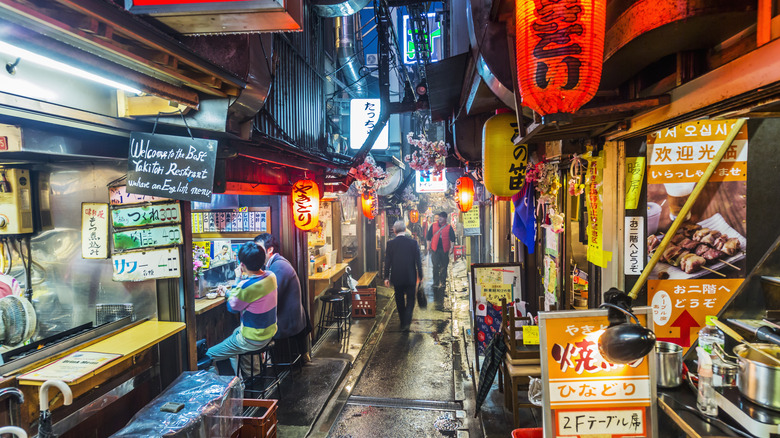
A myth rooted in fear of the unknown, you'll still find tourists arriving in some of the world's greatest food destinations opting to steer clear of the very places that built the reputation. It can be understandable to an extent. Storing, cooking, and eating food on the street can seem like a health issue for many people who haven't experienced it, and when food poisoning stories are passed around like a badge of honor, it can feel like it's a guarantee. But the truth is, common sense will keep you safe almost all the time, and not eating it means you're missing out on a brilliant slice of travel.
If you think about it logically, street food establishments work exactly the same way as traditional restaurants. If people like the food, they come back. If people get sick from the food, they won't come back. A brick-and-mortar establishment can just as easily cut corners on the health front, and you'll never know because you rarely see the food prepared. Street food, in contrast, is cooked right in front of you, with ultra-high heat woks, fryers, and other tools singeing your eyebrows off in the process.
As a good rule of thumb, do a walkthrough of a street food market you visit, and take note of the stalls with the longest lines. They're probably long for a reason — extra points if the line is packed with locals, too. Do a quick check of the stalls for red flags — are they handling money then touching food? Are sauces or stews sitting uncovered? Are there lots of raw ingredients left out? Does the stall look clean? If there's anything that feels a bit off, opt for the cleaner-looking neighbor.
Never drink the tap water in another country

There's an argument for this one not to be on the list. It's a fear that's rooted in an important truth, albeit one that's applied too liberally. Many Americans operate under the assumption that drinking tap water in another country is an almost guaranteed ticket to a ruined trip spent primarily in the bathroom. It's vital to know that this is a real risk in some countries, but nowhere near as many as your parents would have you believe as you catch your first flight abroad.
Water safety varies drastically by destination, and even within regions inside a country. Treating all foreign tap water as a danger is wasteful, expensive, and frankly, a nuisance if you feel obliged to run to the store to buy a dozen bottles of water every time you're thirsty. The U.S. itself doesn't even top most rankings of clean and safe tap water, with European destinations and Asian countries like Singapore often scoring higher. There are many different ranking systems, highlighting how many countries are absolutely safe in this regard.
That doesn't mean you should go in blind. There are some destinations where you should never drink the tap water. Always check the CDC and other sites when you visit a country to ensure you're not stumbling into an outlier. In some regions, while the water is safe to drink, you'll sometimes find an odd taste. This could be to do with old pipes in the area, or extra chlorination. Again, this is totally safe, but knowing this before you go in can help prevent a freak-out when you have your first sip.