
11 Tips From Park Rangers For Enjoying Zion National Park
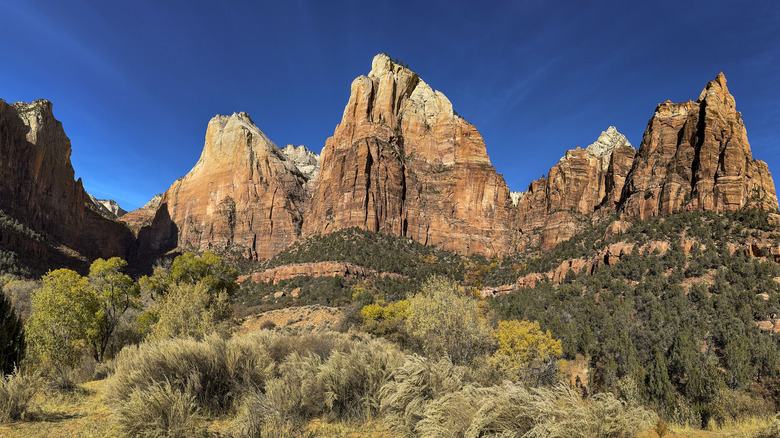
Zion National Park is arguably one of the American West's natural treasures. While smaller in scale than the Grand Canyon, a hiking haven in Arizona with stunning scenery, Utah's Zion Canyon is a much narrower red rock gorge that stretches 15 miles long, carved by the Virgin River. In some places, it's more than 2,600 feet deep, which feels even more dramatic because the walls can be so close together. You'll find more than 90 miles of trails across the park's more than 148,000 acres, much of which is managed as wilderness. You'll also find lots and lots of tourists, especially during the peak summer season.
Amid the desert geography of its location on the edge of the vast Colorado Plateau, Zion has plenty to offer outdoor enthusiasts, whether you love to camp beneath dark skies, hike legendary trails to overlooks, or cycle along historic roads. You'll find the wooded Zion National Park Lodge, plus iconic features like Checkerboard Mesa, Court of the Patriarchs, and the Narrows. Right outside the South Entrance is the artsy town of Springdale, with plenty of shops and eateries, and I love the quieter east side.
You can easily see the park in a day, but to really experience it fully, it's worth at least two or three days to see different areas. Park rangers also have plenty of good advice about how to make the most of your visit, whether it's your first time or you're seeking a new adventure. Below, discover 11 tips from Zion National Park rangers that emphasize how to make your visit to Zion as enjoyable as possible, including avoiding dangers. In addition to my own experience visiting Zion several times, we've also consulted NPS.gov and other national park resources, Reddit discussions, articles, interviews, and more.
Avoid mid-summer visits
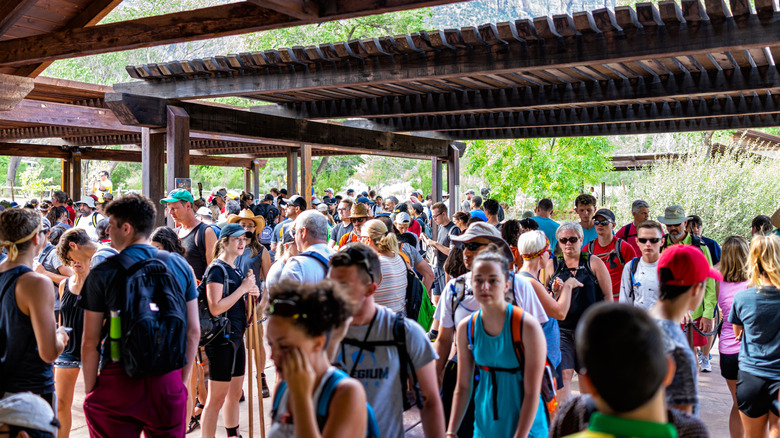
Summer is the perennial peak season for most U.S. national parks, thanks to warmer weather and the fact that summer break from school usually falls between Memorial Day and Labor Day, making family vacations easier. Even though the desert can turn positively sweltering in midsummer, and monsoon season starts around July, it's the busiest time at Zion National Park. Overall, the park has been generally trending busier, reaching up to 5 million visitors annually over the past decade. "If you can avoid coming in late June, July, or early August, you will have better odds of finding parking, campsites, and less congested trails," says Stephanie McCullough in an article on The Ranger Desk.
More broadly, the busiest time of year stretches from March to October. During the shoulder seasons, temperatures are milder, with cooler evenings and days that still get warm. Fall is a beautiful, quieter time to visit, but in a Roadtrippers article published in partnership with the Association of National Park Rangers, a ranger tip advises that "Utah schools have a fall break in mid-October that may not be on your radar when planning a visit." Crowds during this time can be at summertime levels, so consider yourself forewarned. By late fall and winter, the park can feel very quiet, especially during the week. When I visited in January and February, there were times when I felt as if I had the place to myself.
Take advantage of ranger-led programs
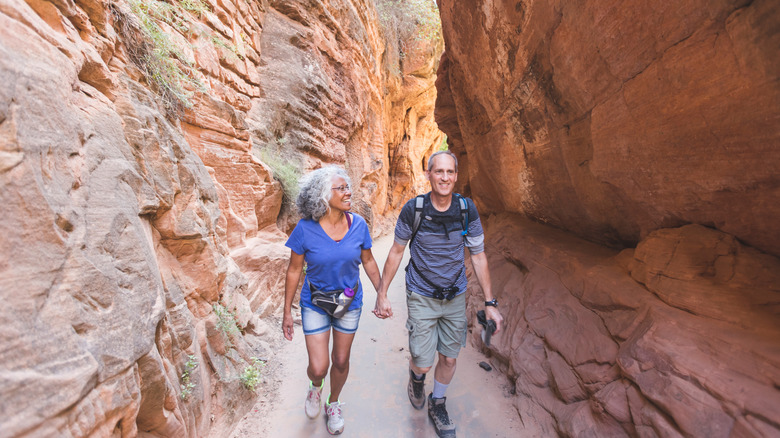
There are so many things you can explore on your own terms in Zion National Park, whether you've gotten a permit to hike Angels Landing, taken an overnight trip through the Narrows, or enjoyed a calm stroll around the exhibits at the visitor center, the Zion Human History Museum, or the Zion Nature Center. There are also plenty of insights to learn from a wide array of ranger-led programs throughout the park. Most programs take place in Zion Canyon, including at Watchman Campground, but there are also occasional opportunities offered in Kolob Canyons. Some are only available in the summer, depending on the location, but you can check at the visitor center or on the NPS App to see what's scheduled during your visit.
"Attending a program gives the opportunity to learn what makes this park special, how to recreate responsibly, and about the hard work it takes to host millions of visits every year," says Zion National Park Superintendent Jeff Bradybaugh. An interpretive ranger who spoke with St. George News also suggests booking the "Ride with a Ranger" event for a fun, informative activity. He says, "The Ride with the Ranger is where we get to go on a shuttle tour with a group of two dozen visitors for a couple of hours, separate from the main shuttle routes and the big crowds. It's really a special time."
Enjoy Zion all year, but note the differences in the winter
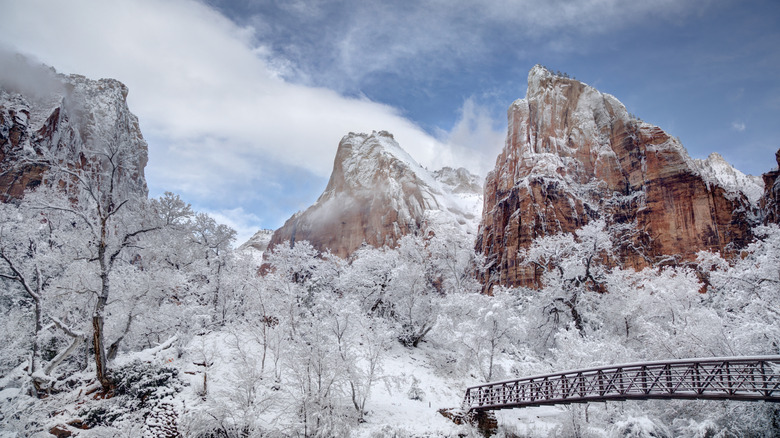
"It can snow as early as November, and as late as May," says a former Zion National Park ranger on Reddit. "Check road closures, cameras, and trip reports before you go!" When you arrive, check with a ranger at the visitor center about current conditions, especially if you're thinking about hiking. Many trails are at higher elevations, where more snow and cold are possible. The same ranger notes: "Parts of the park can close their roads if there has been abundant snowfall. Trails can also disappear entirely when several inches accumulate." In the Kolob Canyons area of the northwest part of the park, the main road may close due to snow. In Zion Canyon, roads are generally plowed because the Zion-Mount Carmel Highway, also known as State Route 9, is an artery connecting Interstate 15 west of Hurricane to U.S. Highway 89 at Mount Carmel Junction.
Midwinter in Zion can be a beautiful time to explore. When I visited several times throughout January and February I enjoyed walks on the sunny, dog-friendly Pa'rus Trail and picnicking by the river. Temperatures can vary during the course of a day, sometimes feeling summerlike at midday before dipping below freezing at night. Watchman Campground is open for reservations all year and can be booked up to six months out, and although services are reduced during the winter, Zion National Park Lodge is also open.
Larger vehicles should plan ahead
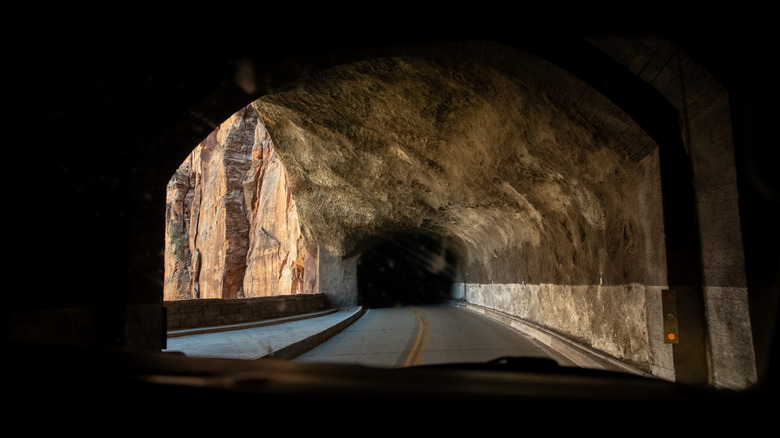
The last time I visited Utah, I stayed near Mount Carmel Junction and drove into the park after lunch at the pit stop-worthy Thunderbird Restaurant, which took me to the East Entrance. Every other time I'd visited, I arrived from the south, so it was interesting to experience this quieter side of the park. But to get to Zion Canyon from here, drivers encounter the daunting Zion-Mount Carmel Tunnel, which stretches for a little more than a mile. The engineering marvel was constructed nearly 100 years ago, when vehicles — especially commercial ones — were smaller. Today, there are restrictions on how large trucks, buses, RVs, and trailers can be.
There used to be a $15 tunnel traffic control fee for oversized vehicles. That's gone as of 2026, replaced with enforced size and weight limits, according to Zion.Travel. You won't be able to drive through the Zion-Mount Carmel Tunnel if your rig exceeds 35 feet, 9 inches for a single vehicle, or 50 feet combined with anything towed. There are also width, height, and weight restrictions that rule out many large RVs, buses, and trailers on the Zion-Mount Carmel Highway, so drivers might want to avoid this scenic canyon route. The ranger I spoke to at the East Entrance Station mentioned that I'd be surprised how many people drive big, rented motorhomes into the park that they clearly aren't accustomed to. Not only should you be aware that there's a long tunnel with size restrictions, but you should feel comfortable driving a large vehicle on narrow roads with lots of switchbacks.
Head to Kolob Canyons and the west rim for a quieter experience
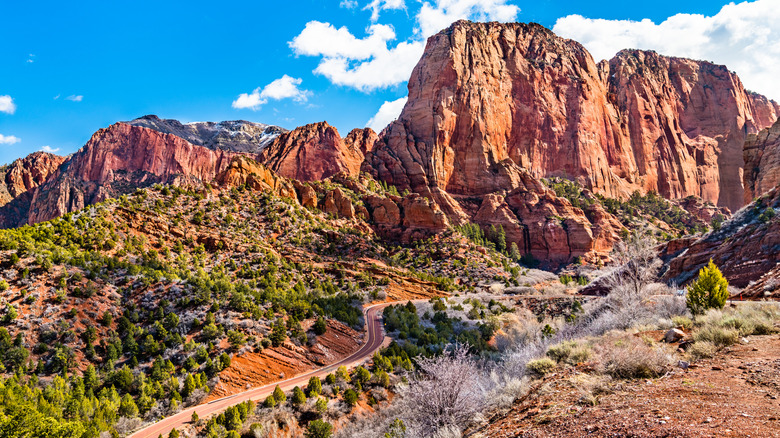
Kolob Canyons is a lesser-visited area in the northwestern region of the park featuring stunning scenic drives and wilderness hiking trails. It's worth a stop at the unit's visitor center, although if you're planning to head into the backcountry overnight from here, you'll still need to go to the main Zion Canyon Visitor Center — about 40 miles away — to pick up permits. In response to a visitor's question about what to do in June, one former ranger shares on Reddit, "I strongly encourage Kolob Terrace Rd. and Kolob Canyons sections of the park that time of year." In early summer, when Zion Canyon gets hot, Kolob Canyons and Kolob Terrace offer a cooler alternative.
Former ranger Stephanie McCullough also suggests a visit to the western rim is worth setting aside extra time for the drive. If you leave the South Entrance and turn north on Kolob Terrace Road from Springdale, follow it to numerous trailheads and overlooks. She recommends checking out Lava Point Overlook for sweeping views. "Here there are sweet-smelling ponderosa pines and other conifers rarely found in the rest of the park," she says in an article on The Ranger Desk.
Check the weather and be aware of flash floods
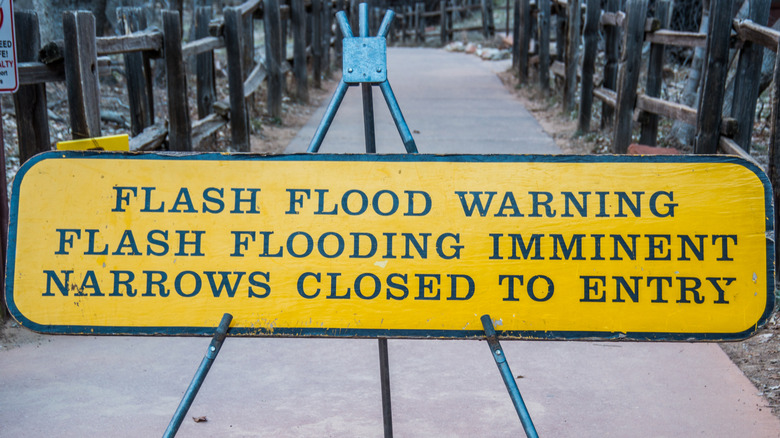
In the desert, monsoon season is a major part of the annual cycle, and among the unwritten rules you should know before visiting Zion is having a plan B when outdoor activities get rained out. I love the drama of a thunderstorm, but that drama can rush right into the canyon. Flash floods can happen at any time of year. This same erosive force helped form some of the best slot canyons, shaping Zion over millions of years. "Everything is always changing here," supervisory interpretive ranger Charlie Reed tells Safe Travels Podcast. "That's what makes it really special. One day it could be hot as blazes, the next day it could be snowing."
Visitors should check conditions published by the National Weather Service before setting out on canyon hikes. In addition to that, trust your gut. If the forecast said one thing, but it's looking like another, trust what the weather is actually doing. One former ranger set out on a hike to Deertrap Mountain and checked beforehand what precipitation to expect. "There was a 20% chance of rain for 1 hour according to the forecast that day," he shares on Reddit. "However, it ended up being the 4th largest rain event in Zion history, complete with hours of hail, six hours of lightning, almost getting my car stuck, and having to drive two additional hours to get home because a boulder the size of a house demolished the only road back into the park from the east." Let that be a lesson.
Beat the shuttles for a tranquil morning bike ride
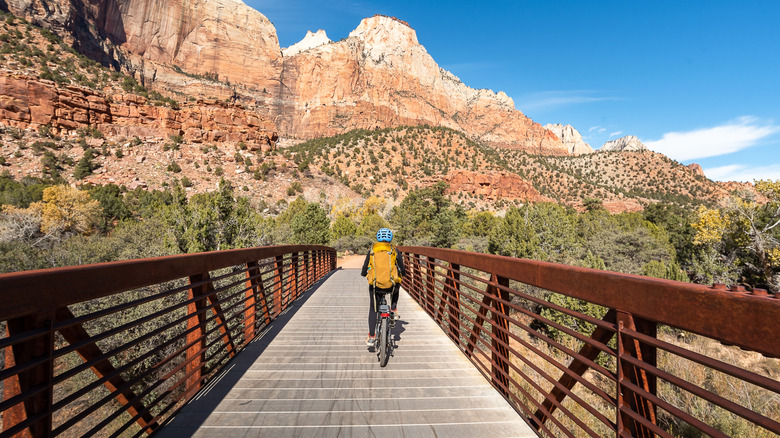
During the summer, Zion National Park closes its Zion Canyon Scenic Drive to private vehicles, providing shuttles as a free and easy way to explore that doesn't require a car. Otherwise, the only way to get into the narrower areas of the canyon is on foot or by bike. Fortunately, there's an opportunity cyclists (and pedestrians) can take advantage of that early risers might find particularly enjoyable. "Get on those bikes, and beat the shuttles!" a former ranger suggests on Reddit. "I think the main canyon is one of the prettiest bike routes in the nation."
Shuttles start running at 7 a.m, and after the last bus departs the Temple of Sinawava at 8:15 p.m. (7:15 p.m. from mid-September until late October), the shuttles are finished for the day. That means if you have your bike and want to take a memorable ride along the park's roads while they're quiet, get in the saddle early in the morning.
Do your research and ask specific questions at the visitor center
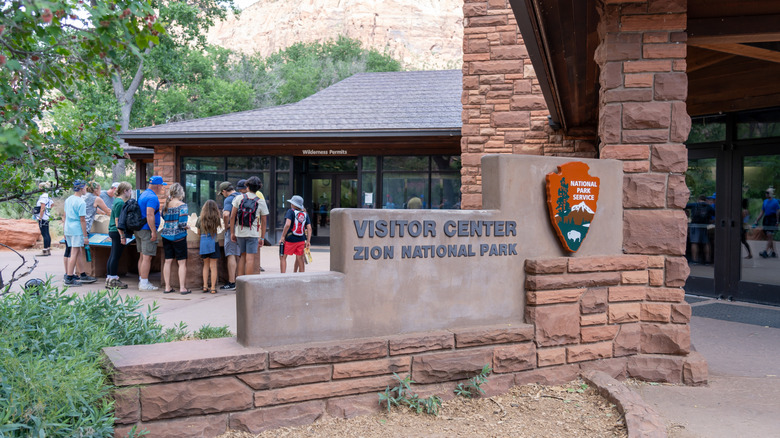
Rangers are there to help, and they're always happy to answer your questions. Have enough water for your hike? Need a permit? Want to know the best hike to take for an afternoon, or with kids along for the adventure? "To get the most out of the visitor center desk, ask specific questions about activities or things you'd like to see, this will enable the ranger to aid you in planning your trip in Zion," says a Zion National Park Facebook post.
Sometimes people ask rangers for advice about where to hike or what to do in the park, but rangers try to be honest about what's safe and enjoyable. In one case, former ranger Stephanie McCullough advised a mother and her children that the midsummer day they were visiting would reach 103 degrees, and a hike would be sweltering. "She had not checked the weather for this July day, or she would have known that today would be disastrously hot, one of the hottest days of the summer," McCullough says in The Ranger Desk. The visitor was disappointed that her plan for the day might not work out, but at least she had the facts. Do yourself a favor and really listen to what rangers have to say. They have the most up-to-date information about the park and can provide realistic ideas about what to expect and how to stay safe.
Don't underestimate preparations for canyoneering and backcountry adventures
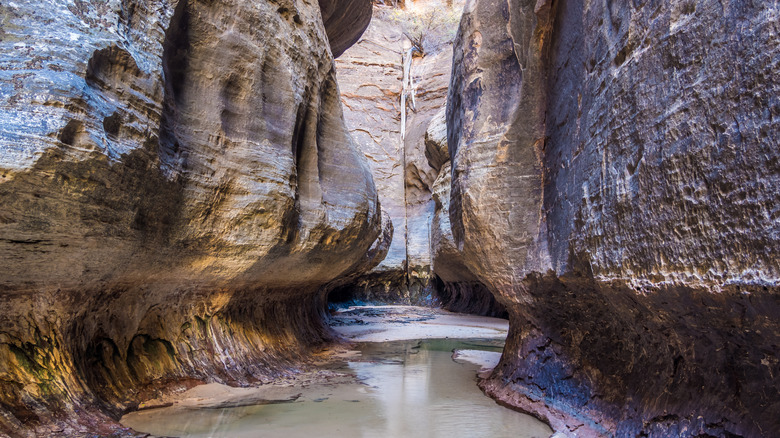
Zion brims with a wide array of hiking opportunities, from the easy Pa'rus Trail to miles-long wilderness treks. Of course, it's also famous for its deep gorges, and canyoneers come from around the world to test their technical skills in slot canyons. A National Park Service video states that planning is crucial for a safe canyoneering trip. "There's no substitute for planning ahead, bringing the right equipment, having the right skills, and using good judgment. Being smart will make the difference between having a wonderful trip, ending up in the hospital, or worse," says a ranger in the same video.
In a Ranger Minute video, the popular Narrows hike prompts special considerations because you'll likely be wading through the river, and the rocks are slippery. "Every hiker in the Narrows should have closed-toed shoes, even just your regular hiking boots, and a walking stick," says a ranger in the video. If you're planning any long hike or canyoneering adventure, the same ranger reiterates: "Every week, canyoneering groups spend unintentional nights camped in the backcountry of Zion. There are many reasons for this, including difficulty finding routes, injuries, and flash floods. If you think these things can't happen to you, you're wrong. So as you pack for your trip, make sure you're prepared to spend the night."
Explore the eastern side of the park
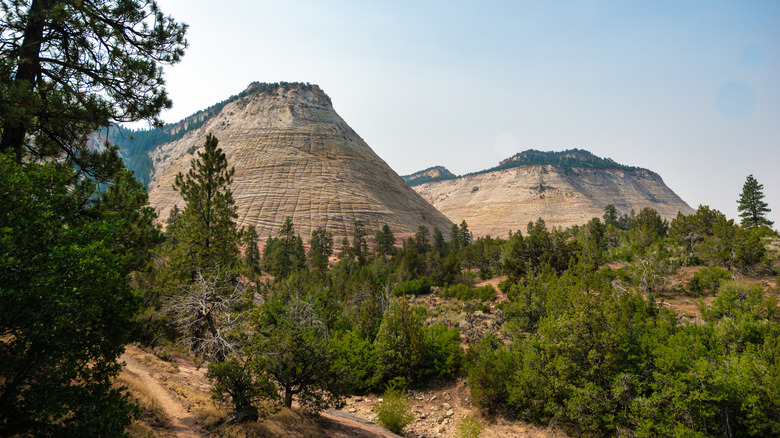
One of my favorite areas of Zion National Park is the east side, which may be less dramatic than Zion Canyon itself but offers a quieter, more "out-there" feel. "Fewer people spend time in the east, which means it's less crowded," says McCullough. "At a higher altitude, the east side is a little cooler than the lower stretches of park and hosts different flora and fauna." Whether you enter from the east or head along the scenic Zion-Mount Carmel Highway, numerous sights and hikes are worth taking in. If you want a quick look and nothing too strenuous, hike out to an incredible viewpoint via the Canyon Overlook Trail, which stretches just 1 mile round-trip and starts near the east end of the Zion-Mount Carmel Tunnel. Just be prepared for limited parking.
Most of the eastern region of the park is designated wilderness. For something more challenging, head out on a historic route originally constructed by Mormon ranchers for livestock herding. Ranger Colton Winder, whose great-grandfather was instrumental in building the route, explains in an NPS Ranger Minute video, "When Zion became a national park, it was among the first trails developed for hiking, and it's now called the East Rim Trail." Because of a long-term rockfall closure between Echo Canyon and the floor of Zion Canyon, Zion Canyon isn't directly accessible from the east via the East Rim Trail, and a reopening date has not been set; however, the accessible portions still offer views of Jolley Gulch and stands of ponderosa pines.
Remember to look up at night
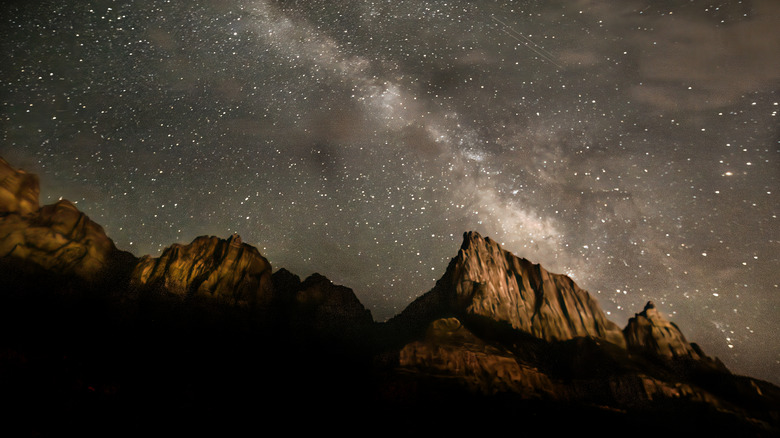
Ranger Charlie Reed tells Safe Travels Podcast that one of his favorite elements of Zion National Park is its designation as an International Dark Sky Park, where the views of the night sky can be memorable. "An International Dark Sky Park has a couple of big qualifications. One is that, quote, 'The Milky Way is readily apparent.' And that's absolutely true here during Milky Way season," he says. If you visit during August and September, you have the best chance to see the galactic streak across the sky.
Stargazing is an incredible experience in the park, and there are several places and times to aim for to get the best views. Arrive during the week before a New Moon to see the darkest skies, and throughout the winter, spot constellations like Orion and the Pleiades. As for where to go, stroll along the Pa'rus Trail, park at the pull-off next to Checkerboard Mesa on the east side of the park, or make your way to Kolob Terrace Road or Kolob Canyons. Just remember that the color of the light you use can affect your experience. Your eyes need up to a half-hour to adjust after seeing white light, so you'll see the night sky better if you use red lights or, as the NPS suggests, cover your headlamps or flashlights with red cellophane.