
9 Cities That Have Changed For Tourists In The Past Decade
Once upon a time, you could climb the Great Pyramids of Giza. Remarkable photos from the early 20th and late 19th centuries show wealthy tourists lounging atop the world's greatest architectural marvel, sipping tea on wicker chairs as the desert sprawls out behind them. Others, later on, see high-heeled, bob-haired women staring out from the same spot. There's barely another soul in sight outside the tour groups, and the same tourists would later be carried down a quiet Nile on dahabiyas, where the rest of Egypt's wonders would be laid out, empty for them to explore.
Visit today, and you're met with a chaotic hive of mass tourism. Climbing the pyramids is (rightly so) banned, and it's virtually impossible to walk more than a few minutes without a barrage of peddlers pulling you to and fro. The Nile, while still peaceful on some stretches, is plagued with unsightly cruise ships, spewing fumes onto the banks and packing tourists in their cabins like wiling sardines. There's good and bad in these changes, but it's taken thousands of years since the first "tourists" arrived in Egypt for it to become the experience it has.
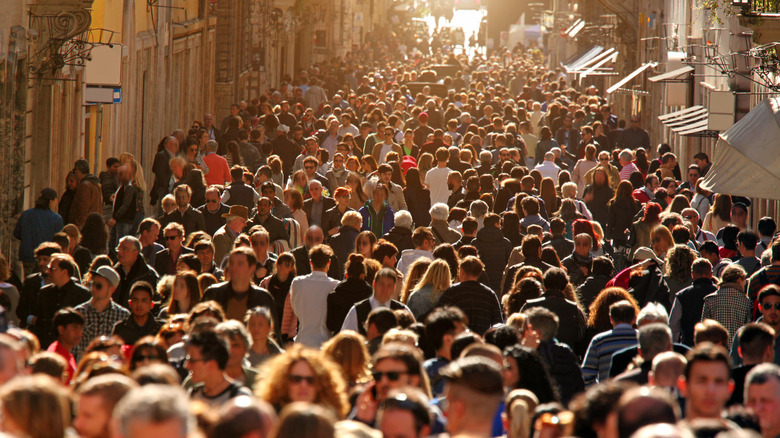
Other places are seeing change in real time. A rising global middle class spanning more than 4 billion people means travel is more accessible than ever, and many destinations, bursting at the seams or shaking off bad reputations, are enacting strict regulations, shifting focus, or limiting visitors to their best-known sites. A visit to some of these cities today could feel drastically different from what it was just a decade ago. Are they all for the better? If you decide not, check out these amazing alternatives to tourist-packed attractions around the world.
Venice, Italy
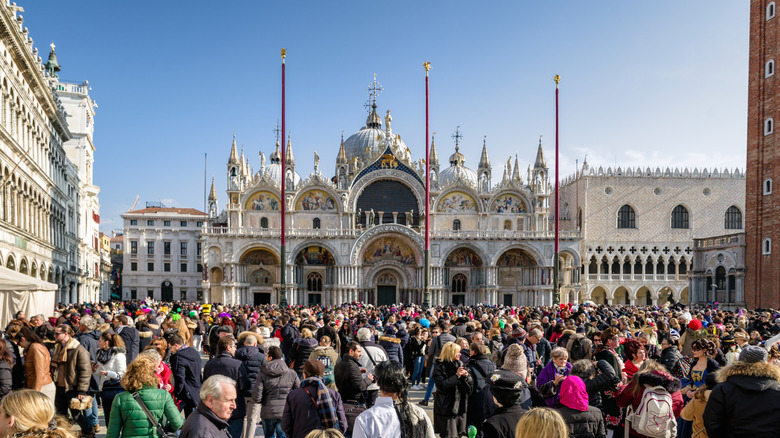
While its history doesn't stretch as far back as Egypt's, Venice has been a focal point of the world's tourist industry for centuries. It was an almost indispensable stop on most "Grand Tours" — hedonistic and drawn-out trips undertaken by wealthy young men in Northern Europe as a final "education" and social rite of passage — and can even stake a fair claim to creating the modern souvenir market.
But Venice became a victim of its own success. The stunning, floating city and its awkward infrastructure have buckled for years under enormous tourist numbers. Large cruise ships were banned from passing through the historic center in 2021, tour groups have been limited in size, and in 2024 Venice introduced a temporary access fee for day-trippers. The scheme has returned since and is likely to continue in some form, although the exact prices and rules may change.
Tourism isn't the city's only problem. Venice is also increasingly vulnerable to flooding and rising sea levels, threats serious enough to drive the construction of the vast MOSE flood-barrier system designed to seal the lagoon during dangerous high tides. Combined with erosion, overcrowding, and the steady loss of permanent residents, it has forced Venice to become far more protective of itself. A decade ago, tourists could essentially pour into the historic center whenever and however they pleased. Today, access is more controlled, the biggest ships are gone, and both tourism and the lagoon itself are being actively managed to protect an increasingly fragile city.
Barcelona, Spain
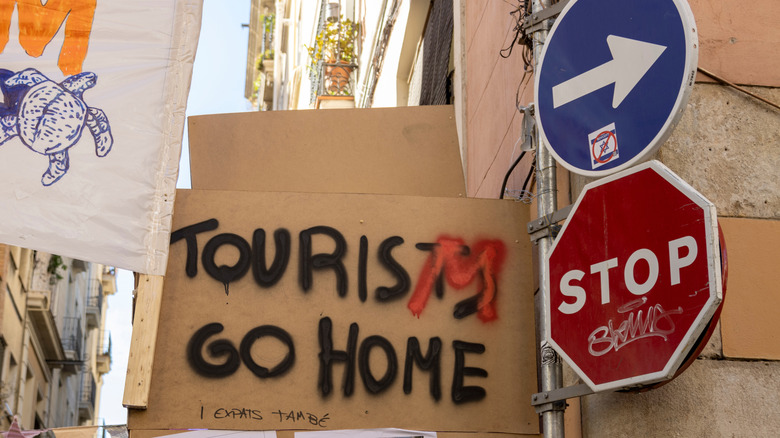
Barcelona has spent a lot of time in the news recently. The city has become the face of overtourism, or at least the most vocal critic of it, leading to mass protests, a tense atmosphere for visitors, and even vicious attacks against tourists ... with water guns (they definitely weren't vicious). The primary qualm of the residents revolves around housing prices, after surges in Airbnb and other rental platforms have forced long-term residents out of neighborhoods they've lived in for years.
Visitors arriving today could be met with some level of animosity, but the real shift is likely to come in the next few years. The appointment of the first "commissioner for sustainable tourism" to lead the fight against Barcelona's tourist woes has led to some new policies that will likely transform at least some aspects of the tourist experience. The largest shift is the revocation of 10,000 legally registered tourist apartments by 2028. The hope is that these newly vacant properties will wind up back in the hands of local renters. Whether this works or not is very much up for debate. New York forced a similar law, banning almost 40,000 Airbnbs, only to find rent still rising two years later. Could Barcelona's own frustrations be misdirected, too? And if so, will the tense atmosphere dissipate?
More immediate shifts are aimed at giving back areas of the city to its own people. La Boqueria, a market with history stretching back almost 900 years, will undergo a renovation and shift in purpose, being mandated to offer at least 50% traditional, fresh produce as opposed to tourist-facing fast food. These changes will be welcomed by cultural tourists, and if the tourist rental rules are successful, visitors may start receiving a warm welcome soon, as well as a more authentic experience.
Amsterdam, Netherlands
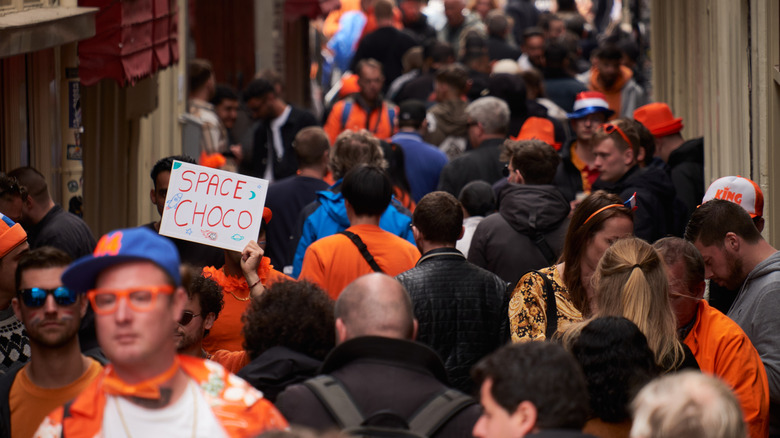
Amsterdam mirrors many of the issues that Venice faces but adds some reputational problems, too. If you'd told its 17th-century architects that in a few centuries' time tens of millions of foreigners a year would descend upon the city's compact, canal-centric infrastructure, crowding the city's narrow streets, they may have planned a little differently. If you'd then let them know that a sizeable chunk of those visitors would pass over the city's immensely impressive museums and other cultural offerings in favor of drugs, partying, and the red-light district, they may have had a full rethink.
Amsterdam's reputation as a party city was always something of a caricature. Since the city legalized cannabis in the 1970s, thousands of young men, primarily Brits on messy weekends, have misread the city's liberal views on marijuana and sex work as code for "anything goes." The city is now actively fighting this. Public drunkenness now comes with an on-the-spot 100 euro fine, and public urination tacks on 50 more on top of that. In 2020, it banned group trips from entering the red light district, then, in 2023, it launched its "Stay Away" campaign, an on-the-nose marketing effort actively discouraging stag dos, cheap booze, pub crawls, and other anti-social behavior, as well as banning cannabis in areas of the Old Town and Red Light District.
Throw in a 12-percentage-point VAT rise on hotel stays, a 12.5% tourist tax, a ban on new hotels unless an older one closes, another on adding extra beds and pods during renovations, halving short-term rental limits to 15 nights, and long-term plans to close the cruise terminal, and you're looking at one of the most transformed tourist landscapes in Europe. The overtourism rules could help with the crowding, but an evening walk down the canals without dodging a drunken groom-to-be and his pals might be the most refreshing change to the Dutch city.
Dubrovnik, Croatia
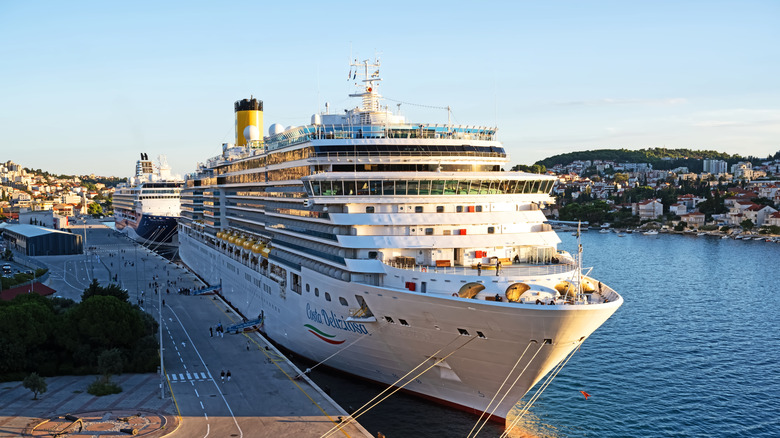
HBO probably couldn't have foreseen the success of its fantasy drama, Game of Thrones. Dubrovnik, the stunning Croatian seaside town, definitely couldn't have anticipated how much the show's success would be tied to its own. To be clear, Dubrovnik was already on the rise by the time the battle for Westeros began thanks to an influx of cruise ships. In 2015, though, the city's mayor told Bloomberg that travel inspired by the show accounted for roughly half of the city's 10% annual growth. That tremendous growth turned it into one of the most overtouristed places in Europe.
The biggest issue the city faced was the rise of "extreme day-tripping," with brutal peak dates seeing as many as six cruise ships docked at once, carrying up to 16,000 day-tripping passengers. For reference, walking across Dubrovnik's Old Town takes less time than it does to walk from the Empire State Building to Times Square. After pressure from UNESCO, the government made significant changes for a more sustainable tourist approach. Cruise ships are now limited to a maximum of two a day, keeping day-tripping visitors to a goal of 4,000 at any one time. The ships also need to stay docked for at least eight hours, helping prevent the mad transactional visits many would be forced into on a short two- or three-hour visit. This also allows them to spread further out, visiting other parts of the city.
Anyone who visited Dubrovnik 10 years ago and was scared off could have a drastically different experience now. One where the rhythm of tourism has been fundamentally altered to benefit everyone. Also, just in case you heard, wheely luggage isn't banned in the Old Town. That was an amusing rumor that was treated like news.
Kyoto, Japan
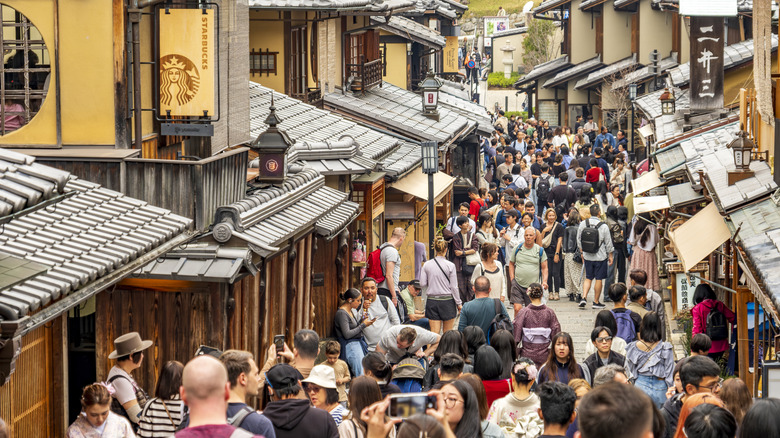
Kyoto is one of the most perfect examples of tourism diluting the very thing it became popular for. A short train ride from Osaka, the city has come to epitomize Japan's ancient and tranquil side. Whether that's true or not is up for interpretation, but for tourists it was a peaceful and historical step away from the urban experience in Osaka. But the actions of some tourists have forced the hand of the local government, forcing them to keep tourists at arm's length — the exact opposite of what truly curious visitors want.
The city clocked over 62 million visitors in 2025. Almost 13 million of them came from abroad, with the bulk of them descending on just a handful of significant tourist spots. Locals complain about poor behavior from tourists and how places like the Arashiyama Bamboo Grove have become too crowded to enjoy, but nowhere has the tension been more obvious than Gion, the city's geisha district. The neighborhood is, above all else, impossibly beautiful. But it's still an active geisha district, and tourists descend on the area in search of maiko and geiko — often intruding on their personal space, taking photos, grabbing clothing, and even trespassing on private property. In response, the government has fully closed many of the small alleyways that peel off of the main thoroughfare. Since 2024, there is a ¥10,000 penalty for entering affected private streets — that's about $62 at the time of writing.
Kyoto is still amazing to visit; there's so much to see, do, and eat that it's possible to avoid the crowds. Don't forget about the new tourism tax, introduced in March 2026, either, making it a little more expensive.
Mexico City, Mexico

Possibly the greatest individual cultural shift on this list, Mexico City has been going through a lot over the past decade. The Mexican capital, often referred to as CDMX, has always been a bit of a chaotic sprawl — in the best way. Its food, architecture, and cultural draws make it one of the greatest cities on the planet. But some of its most famous neighborhoods have changed dramatically, and not always for the better.
Neighborhoods like Roma and Condesa were already gentrifying throughout the 2010s, while short-term rentals had become increasingly concentrated in Roma, Condesa, and Juárez before the pandemic. COVID then threw fuel on the fire. From 2020, remote workers with salaries earned elsewhere arrived in much greater numbers, drawn by lower costs and Mexico's comparatively relaxed entry restrictions. In 2022, the city government even partnered with Airbnb to promote Mexico City to digital nomads.
For some tourists, the results might initially sound convenient. English is increasingly common in the most popular neighborhoods, while speciality coffee shops, wine bars, boutiques and short-term rentals abound. But that's also part of the problem. Traditional businesses and long-term residents have been priced out or displaced, while parts of Roma and Condesa increasingly cater to wealthier foreign visitors rather than the communities that made them desirable in the first place. By 2025, frustration had boiled over into major anti-gentrification protests. The neighborhoods may feel slicker and easier for visitors, but that accessibility has come at a very real cost.
Paris, France
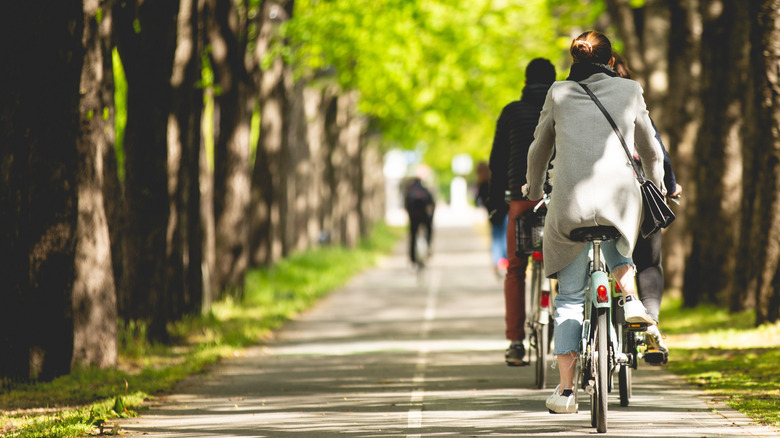
Paris has spent much of the past century building its reputation around its sweeping, grand boulevards, pavement cafés, and romantic walks along the Seine, so it's a bit of an odd concept that by the early 2010s, massive chunks of it were dominated by cars. If you've visited regularly over the past few years, you'll remember noisy intersections and exhaust fumes, with cars piled upon one another at what should be some of the most picturesque parts of the city. Thankfully, that version of Paris is disappearing pretty quickly.
Under Mayor Anne Hidalgo, the city has spent the past decade aggressively reducing the role of cars. Hundreds of miles of bike lanes have appeared (with more planned), huge swathes of the Seine have already been pedestrianized, parking spaces have vanished, and traffic-heavy areas have been completely redesigned to facilitate walkers and cyclists. The changes are particularly obvious around landmarks and central neighborhoods, opening them up into wonderful public spaces. The city used the 2024 Olympics as another excuse to accelerate projects that were already underway, including an extra 37 miles of bike lanes. The event was widely viewed as a huge success, with its legacy still being seen in day-to-day life — not least with public swimming in the river now commonplace once again.
For tourists, it's one of the only cities on this list that isn't restricting them at all. Paris has simply become easier to experience. Walking between neighborhoods is more pleasant, cycling is more practical, and some of the best views are no longer framed by six lanes of traffic. Drivers might have a different opinion, and taxis should be completely avoided, but that's what the bike lanes and metro are for. Get used to it!
Rome, Italy
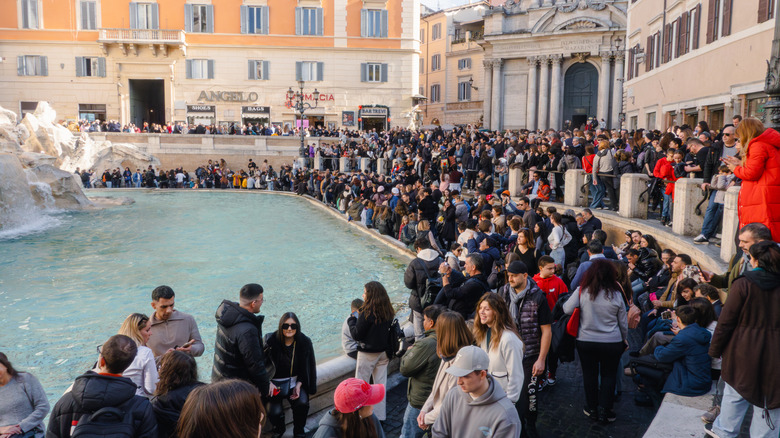
Let's face it: Rome was always going to struggle with tourism, one way or another. Most individual countries would kill to base their entire tourism campaign around the Trevi Fountain, which pulls in around 30,000 visitors a day. But the Eternal City also boasts the Colosseum, the Forum, the Pantheon, the Sistine Chapel, and the Spanish Steps, to name a handful. The food's okay, too, if carbs are your thing.
Part of the magic of Rome, however, is that many of those monuments sit on ordinary streets and squares. When it's quiet, it makes for an unforgettable experience: turning a corner, lunch in hand, to stumble into a 2,000-year-old building is special. But when it's busy — and it's almost always busy these days — those places become brutal choke points. In response, in February 2026, the government imposed a new fee at the Trevi Fountain for getting to the lower steps. This came after it introduced hefty fines in 2019 starting at 250 euros for sitting or lying down on the Spanish Steps. The once-free-to-visit Pantheon costs tourists seven euros to enter as of 2023. In 2019, the Colosseum started limiting visitors to 3,000 mandated time slots at any one moment that must show a name at a time (and it's still crowded). And even tour buses are being limited to 55 vehicles in total.
There is an obvious downside to turning public monuments into managed attractions. Some may call it "Disneyfication," but the sheer volume of visitors has made the old free-for-all model increasingly unsustainable. Rome hasn't become difficult to visit, necessarily, but it is becoming more structured. Ten years ago, seeing its greatest sights mostly meant turning up, or better yet, stumbling upon them. Increasingly, it requires knowing the rules and booking well ahead.
Istanbul, Turkey
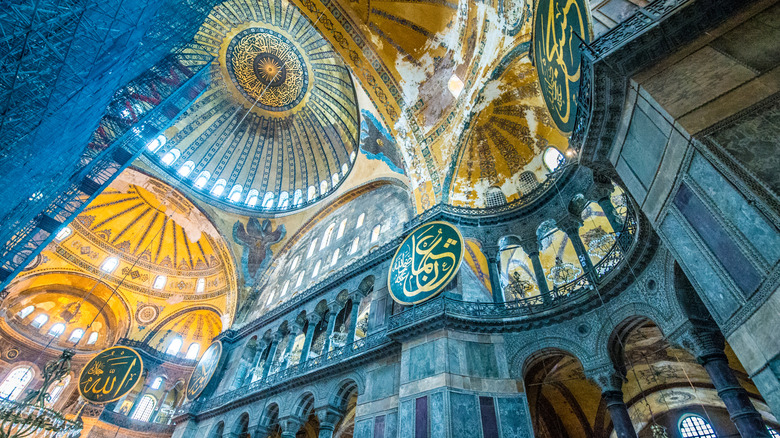
Istanbul's shift is a little more nuanced than the others on this list. For much of Turkey's modern history, Istanbul has embodied the tense push and pull between the secular republic created by Mustafa Kemal Atatürk and the Islamic and Ottoman history that preceded it. Under President Erdoğan, Turkey's government has placed far greater emphasis on the country's Islamic and Ottoman identity, and some of Istanbul's most recognizable landmarks have become physical symbols of that shift.
Nothing demonstrates that better than Hagia Sophia, a historic landmark that used to look completely different. For 86 years, the immense former Byzantine cathedral and Ottoman mosque operated as a museum. It's a status that represented the aggressively secular direction of the early Turkish republic. But in 2020, Erdoğan's government converted it back into a working mosque. Foreign sightseeing visitors now pay to enter through a separate tourist route rather than wandering freely onto the main floor. It wasn't an isolated decision either. The spectacular Chora Church, another former Byzantine church that had operated as a museum for more than 70 years, reopened as a mosque in 2024. Meanwhile, an enormous new mosque opened on Taksim Square in 2021, fulfilling a decades-old ambition of religious conservatives in one of modern Istanbul's most politically symbolic public spaces.
That doesn't mean Istanbul has become a conservative city — far from it, actually. The city is the focal point for most dissent against Erdogan, who, to many, seems to be slowly edging towards a form of autocracy after several of his rivals were jailed. But return visitors may feel a shift in the broader culture. That doesn't undercut the spectacular experience on offer, but it's definitely not the same Istanbul it was a decade ago.