
10 Amazing Alternatives To Tourist-Packed Attractions Around The World
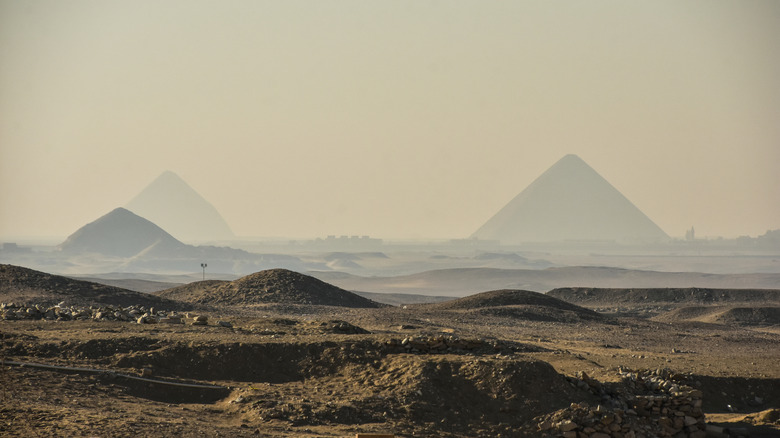
Famous attractions are popular for a reason. The Acropolis, Machu Picchu, Angkor Wat, the Colosseum, and countless others have earned their places on a never-ending supply of bucket lists, serving as immense pillars holding up the travel landscape.
But in a world that's more connected than ever before, that popularity is now a double-edged sword, and the crowds that dominate each site now play a huge role as to whether your experience is a good one or a bad one. Timed-entry scrambles, packed pathways, pushy vendors, tour groups, and queues for the same photograph can make it difficult to appreciate what made an attraction special in the first place.
But skipping the biggest names doesn't necessarily mean settling for an inferior experience — just like opting for visiting the world's best second cities instead of the crowded capitals. There are dozens, if not hundreds, of brilliant sites around the world that can emulate, and in some cases, surpass the experience of the A-list names. If you feel like a fascinating, one-of-a-kind trip that feels a little less intense, opt for one of these 10 amazing alternatives to tourist-packed attractions around the world.
Butrint (Albania) instead of the Acropolis (Athens)
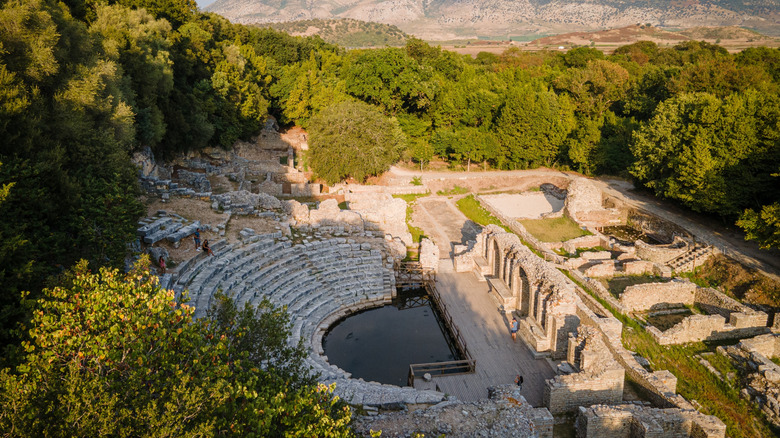
The Acropolis in Athens is one of the most recognizable archaeological sites on the planet. Its ancient temples and city views make it essential for many first-time visitors to Greece — but it can also get brutally clogged with tour groups. This is why Rick Steves thinks the evening is the best time to visit to beat the crowds. Skipping Greece in favor of its northern neighbor, Albania, could prove a memorable alternative. There, you'll find the ancient ruined city of Butrint, arguably one of Europe's most underrated archaeological sites.
The sprawling Butrint National Park covers over 36 square miles and the history of its ruins spans multiple civilizations, including the Greeks, the Romans, the Byzantines, and the Venetians. Each epoch has left its own historic layer that can be explored for hours. Visitors can pass a Greek theater, Roman baths, monumental gateways, a large basilica, and defensive walls while moving through calming woodlands right next to Lake Butrint and the Vivari Channel. While it's been immaculately well preserved, the growing greenery gives it a feeling of being taken back by nature, too.
Butrint sits about 30 minutes south of Sarandë and only 10 minutes south of Ksamil, making it an easy addition to a trip along the Albanian Riviera — which is also criminally underrated as far as beach destinations go. Wearing comfortable shoes and spending at least two hours at the site are advisable if you want to see everything. Get there early, before any coastal excursions arrive from Corfu, then head back to Ksamil or Sarandë for some seafood and wine in the evening. The Acropolis might be the more famous photograph, but Butrint gives you bragging rights for heading somewhere that's lesser-known.
Kotor's Old Town (Montenegro) instead of Dubrovnik's Old Town (Croatia)
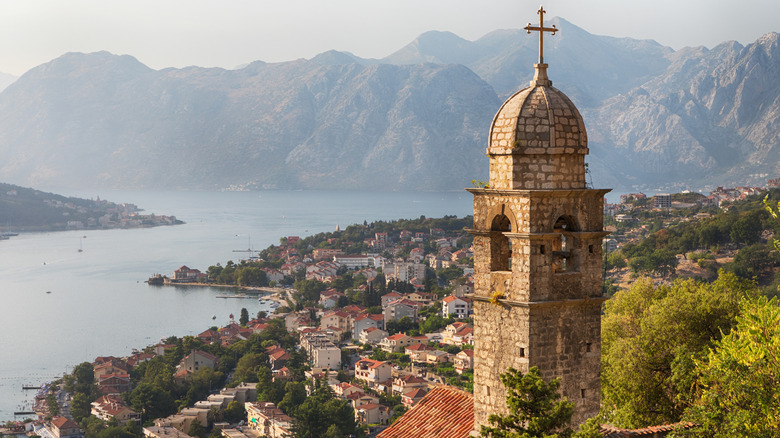
Dubrovnik's stunning Old Town has become one of Europe's most iconic attractions in recent years. Partly fueled by its important role in "Game of Thrones," its polished stone streets, terracotta roofs, and circuit of medieval walls are impossibly photogenic. That fame, however, means those same streets and gateways can be overwhelming during the busiest parts of summer. Kotor, about 2 hours driving down the coast to Montenegro, offers a similarly atmospheric walled town while also cutting some of the crowds and throwing in some stunning natural scenery for good measure.
Kotor's narrow lanes unfold beneath immense mountains at the tip of the Bay of Kotor. Inside the walls are a brilliant hodgepodge of small squares, palaces, churches, cafes, and passages reflecting the town's importance as an Adriatic trading and artistic center. While the architecture is extremely similar (albeit on a smaller scale), Kotor's placement under the mountains set it apart spectacularly. Plus, swimming in the water just beyond the walls is an utter delight first thing in the morning, speaking from experience.
With that said, Kotor isn't completely crowd-free. Cruise ships often dock beside the Old Town, which is your cue to escape. Staying overnight allows visitors to explore early in the morning and in the evening, after day-trippers have returned to their ships. Those prepared for a workout can also climb the fortified walls toward San Giovanni Fortress, following a steep route of about 1,400 steps above the rooftops and bay, or over to the ruined Austro-Hungarian Fort Gorazda.
Herculaneum instead of Pompeii (Italy)
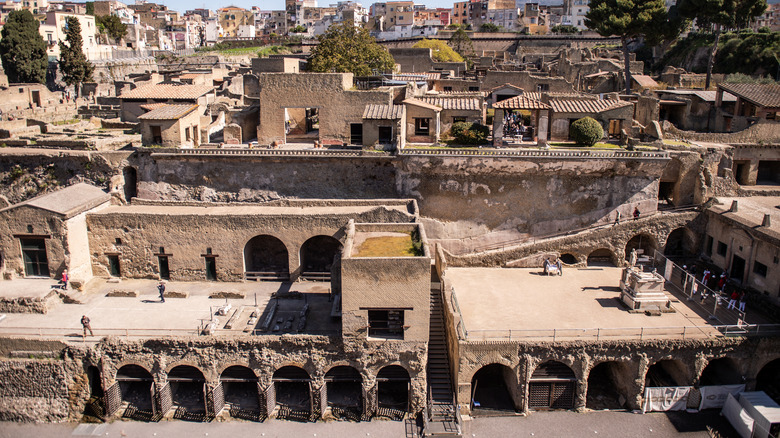
Pompeii doesn't need much of an introduction. Frozen in time nearly 2,000 years ago by the erupting Mount Vesuvius, it represents the best window into everyday life during the Roman Empire. Its fame, understandably, makes it extremely popular, and its significance does make it worth braving the crowds. But in case it all gets too much, the nearby Herculaneum is a more intimate historical gem that's often skipped by tourists. It offers a smaller, and, in several respects, even more vivid account of the same disaster.
Herculaneum suffered a similar fate during the same eruption in 79 C.E., but its position meant it wasn't destroyed until a day later — and in a slightly different manner. The unusual conditions carbonized all the organic materials in the town before it was sealed beneath layers of volcanic mud. As a result, archaeologists discovered not only mosaics, statues, baths, and shops similar to those found in Pompeii, but also wooden furniture, food, textiles, and other fragile objects that rarely stand the test of time. Several buildings even retain upper stories, balconies, decorative interiors, and architectural details that make the town feel complete in a way much of Pompeii doesn't.
The site is located in modern Ercolano, southeast of Naples, and most visitors can cover its principal streets and houses in two or three hours. That makes Herculaneum perfect for travelers with limited time or an aversion to crowds, as well as those intimidated by Pompeii's immense scale. Summer opening hours are longer than in winter, although individual buildings can close temporarily for conservation, so the archaeological park's official information should be checked before visiting. Both are worth visiting, but Herculaneum's unique situation lends even more depth without the crowds.
Ostia Antica instead of the Roman Forum (Italy)
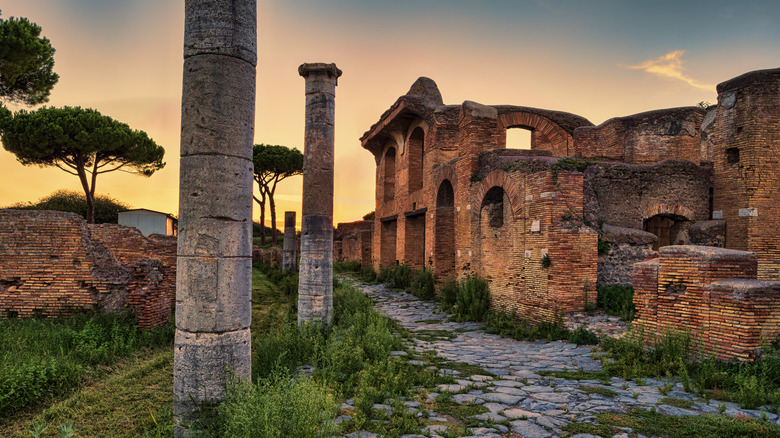
Keeping to Italy but moving to the capital, the Roman Forum occupies the ceremonial heart of ancient Rome. Surrounded by famous temples, arches, and political landmarks within the same area as the Colosseum, it's extraordinarily convenient. However, it also places visitors in arguably one of the busiest sightseeing areas in Italy. While there is a lot to see and do here, those more interested in how Romans actually lived, worked, traded, and socialized should leave the center and head to the far quieter Ostia Antica.
Ostia developed near the mouth of the Tiber and eventually became ancient Rome's primary port city. Today, it's about an hour by train from the Colosseum. The surviving streets lead past warehouses, public baths, temples, guild headquarters, taverns, apartment blocks, and a brilliantly impressive theater. Throughout the site, visitors can step into the infrastructure that supported the enormous capital — something that's only seen in fragments in Rome itself as new generations built upon the old. Similar to Herculaneum, intact mosaics and the remains of multistory residential buildings make it easier to imagine the movement and routines of an ordinary Roman neighborhood.
The archaeological park is perfect for a morning or afternoon trip, but travelers interested in ancient history could spend a full day following its main avenue and diving down its quieter side streets. Ostia Antica is normally open from Tuesday through Sunday, with closing times changing through the year. The ground is rough and the complex is extensive, so sturdy footwear is essential. The Roman Forum contains the empire's greatest symbols, but Ostia Antica is more intimate with way fewer people.
Arena of Nîmes (France) instead of the Colosseum (Italy)
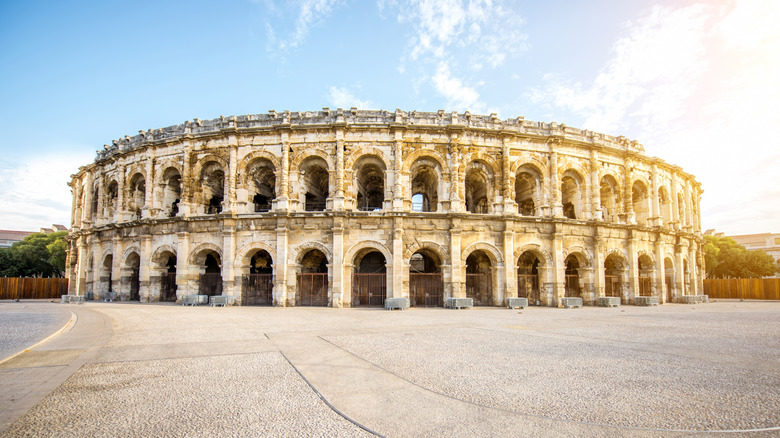
The Colosseum is right up there on the list of history's most recognizable buildings. Your first sight of it is enchanting, as the immense structure emerges from whatever corner of the modern city you're approaching from. But for some, getting inside the ancient amphitheater, as well as getting to grips with the crowds and often slow-moving tours can dilute the experience. While we'd still recommend embracing it, if you want an easier-going Roman amphitheater experience, head to France instead. There, you'll find the Arena of Nîmes.
Built near the end of the first century C.E., the Arena of Nîmes measures approximately 440 feet long, 330 feet wide, and 69 feet high. Its two-story exterior boasts 60 arches, and the internal corridors, staircases, and entrances are excellent reminders of how thousands of spectators were efficiently herded through the building to watch the — well, let's just call it "entertainment." It's in a far better state than the Colosseum, owed mainly to its later use and maintenance as a medieval fortress and residential quarters. Amazingly, it remains an active venue, allowing visitors to see a Roman amphitheater that continues to function as a public gathering place, and to feel even an ounce of the atmosphere these places fostered.
Now, is it as big as The Colosseum? No. Nîmes has a compact layout, making it wonderful for exploring yourself. The experience also pairs beautifully with the Musée de la Romanité, across the road, where archaeological finds add useful context to the monument. The Colosseum is the Colosseum. But Nîmes offers an unusually complete look at how a Roman arena was designed and used — and it's far quieter, too.
Saqqara and Dahshur instead of the Great Pyramids (Egypt)
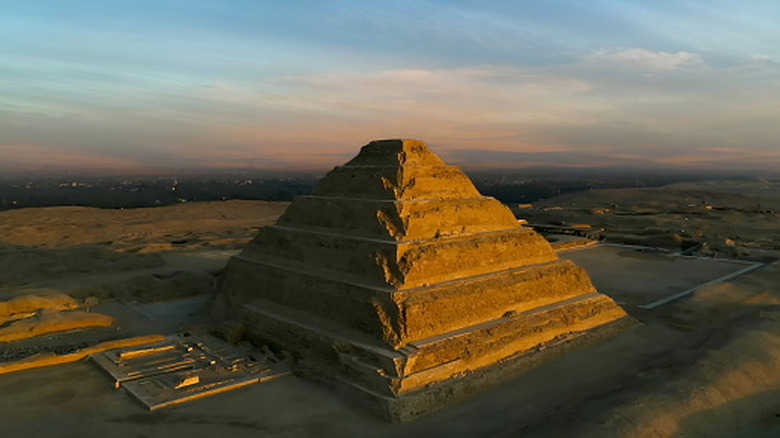
The Great Pyramids are the focal point of almost every Egyptian itinerary. In fact, they're arguably the face of global tourism, with early visits to the sites often viewed as the predecessor of modern leisure travel. The mind-boggling structures, surprising close to a densely-populated area of Cairo, will live long in your mind. But sadly, their popularity can also make for a headache-inducing tourism experience, where traffic, tourist scams, and horrific wait times in the heat can ruin a trip in a matter of hours. Unbeknownst to many, the nearby sites of Saqqara and Dahshur offer an alternative pyramid experience.
Saqqara, located only an hour from Giza, is a vast necropolis connected to the ancient capital of Memphis and contains monuments spanning much of Egyptian history. The centerpiece is the Step Pyramid of Djoser, which is considered Egypt's first pyramid and one of its earliest monumental stone structures. There are even more treasures to behold at this site, like the sacred underground bull tombs of the Serapeum of Saqqara. About 40 minutes south, Dahshur contains two crucial stages in the evolution of the true pyramid. The Bent Pyramid's angled shape records the challenges faced by ancient builders. The nearby Red Pyramid was more successful, achieving smooth, straight sides for the pyramid's walls.
Both sites can be combined on the same day (technically with the Great Pyramids, too, if you're okay rushing) and are best done with an organized guide. You'll likely find yourself with only a handful of other tourists while the masses languish in the shadow of the Great Pyramids. Once you're finished there, check out more of the 12 best places to visit in Egypt after the pyramids.
Stirling Castle instead of Edinburgh Castle (Scotland)
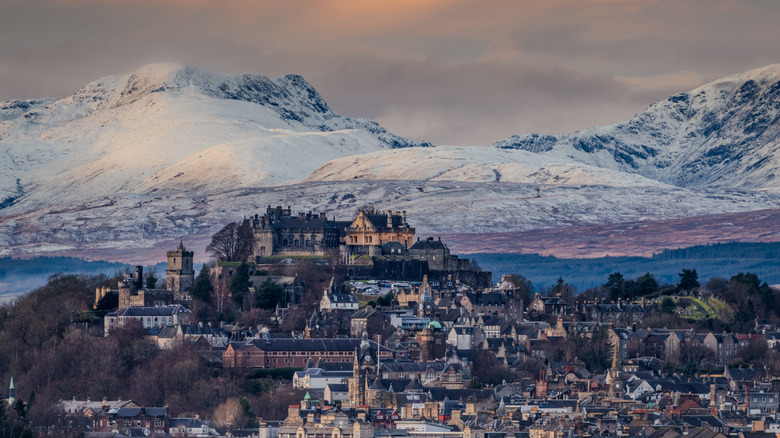
There's no getting around it: Edinburgh Castle, sitting atop its extinct volcano, is beautiful. The fortress, and the city as a whole, has pretty much forged its surging popularity on the back of being gorgeous, and those drawn by pretty Instagram photos are then taken aback by the cultural depth of the place. But there's no getting around its popularity. The old citadel wasn't built for tourist crowds, and on any given weekend, you can count on it being rough up there. Just an hour away, Stirling Castle offers another — some might say better — historic fortress, with more space and far fewer crowds to compete with.
The city of Stirling is far smaller than Edinburgh, but the castle's position is no less dramatic. The hill it sits on explodes from the central lowland belt, slap bang in the middle of the country, and serves as the gateway to the Highlands. It's actually played a more prominent role in Scottish history, with the fate of the country often fought on its doorstep. Inside, you'll find the restored Royal Palace, the enormous Great Hall, defensive ramparts, royal apartments, and spaces associated with generations of Scottish monarchs. In short, it boasts everything Edinburgh does — and more.
Despite the destination pulling you far from the Scottish tourist trail, Stirling is easily reached by train from both Edinburgh and Glasgow, although the final approach to the castle involves a pretty steep uphill walk — all part of the experience, no? Booking online is recommended, and Historic Environment Scotland currently offers incentives for some visitors arriving by public transportation or bicycle.
Royal Palace of Caserta (Italy) instead of Versailles (France)
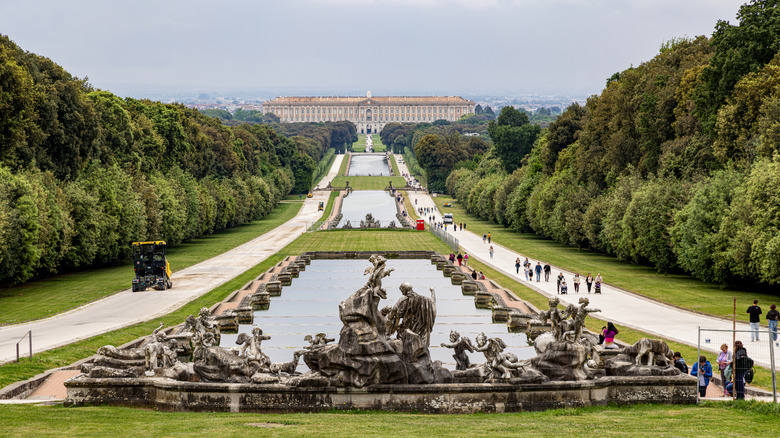
As a bucket-list item in France, the most visited country in the world, Versailles is the ultimate symbol of European royal extravagance. Its famous Hall of Mirrors, the sprawling formal gardens, over-the-top fountains, and sheer scale have attracted travelers for years, resulting in hefty queues and crowded interiors even outside the peak summer months. How influencers have got those empty pictures in the halls, we'll never know. But Versailles wasn't the only mammoth palace in Europe from that era — far from it. Just one example is found just north of Naples, where the Royal Palace of Caserta provides a similarly ambitious display of monarchical power without requiring tourists to hop on the ever-busier day-trip bandwagon in Paris.
Commissioned by the King Charles of Bourbon, the then-ruler of Naples who was also known as Charles III of Spain, Caserta was designed as an enormous palace complex rather than one single lavish residence. Visitors enter through monumental courtyards and a grand staircase before checking out the royal apartments, decorated halls, chapels, and galleries. Behind the palace, you'll find a long sequence of pools and fountains that extends for more than a whopping 1.8 miles toward the Fountain of Diana and Actaeon. The entire estate covers more than 300 acres.
Caserta's railway station is positioned close to the palace, making the complex a super easy day trip from Naples. While it's not as well known as Versailles, it's important not to treat the gardens as an afterthought — give roughly two hours for the palace alone, and as many as four for the park and English Garden. This isn't a get-in-and-get-out attraction. Bicycles, shuttles, and golf carts are available for covering parts of the grounds, which can be valuable during hotter weather.
Banteay Srei instead of Angkor Wat (Cambodia)
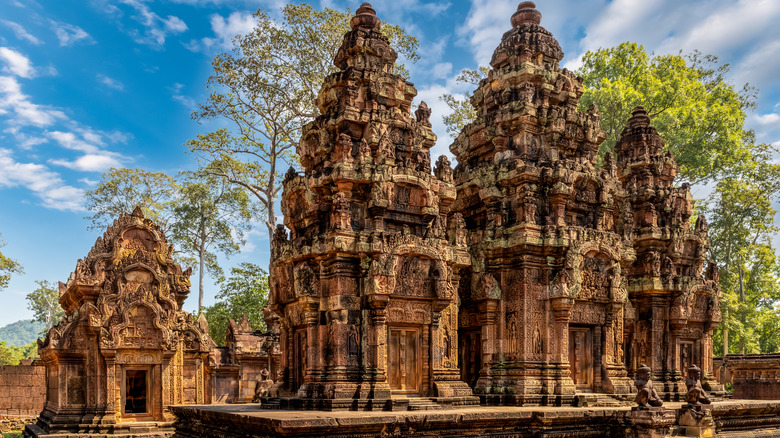
Angkor Wat is one of Cambodia's national symbols and the centerpiece of almost every visit to Siem Reap. Similar to other attractions on this list, don't necessarily skip it. Its architecture defies logic in many ways, and is worthy of hours of your time. But its popularity means you'll often find hundreds, if not thousands of tourists lining its reflecting pool at sunrise. Meanwhile, literally hundreds of other amazing sites sit empty. One of those, Banteay Srei, is quieter (even at peak times), and offers a unique alternative to the crowds you'll find at Angkor Wat.
The 10th-century temple was built mainly from fine-grained sandstone, allowing its sculptors to create unbelievably detailed decorations. Pediments, lintels, doorways, and miniature towers are covered with figures and patterns that remain remarkably crisp over 1,000 years later. Its scale is modest when compared with the sprawling Angkor Wat, but instead of being overwhelmed by a monumental complex, visitors can focus on individual carvings, mythological scenes, and architectural details that might be overlooked at a larger temple.
Banteay Srei lies roughly 18 miles northeast of Angkor's principal group of monuments and is usually reached by tuk-tuk, private car, or as part of a longer countryside circuit. The temple is currently open from 7:30 a.m. until 5:30 p.m. and can still get busy if several tours arrive together — so visiting during the early morning or late afternoon remains a good idea. It won't replace Angkor Wat's sheer scale, but it does demonstrate that Siem Reap's tourist landscape is most definitely not a one-trick pony.
Choquequirao instead of Machu Picchu (Peru)
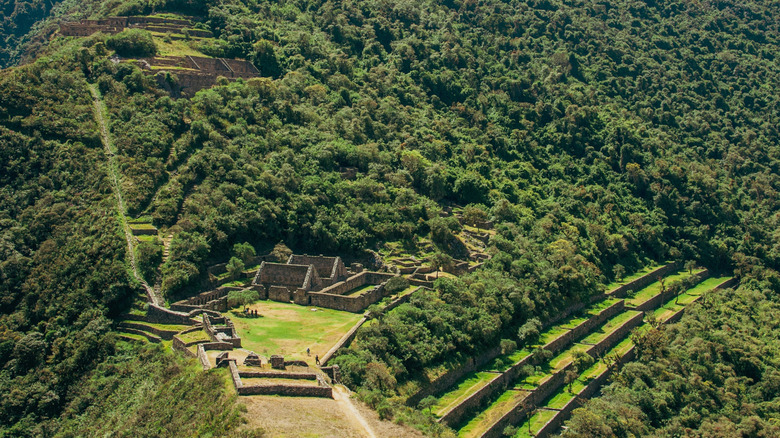
Machu Picchu is a special place. Whether you approach it from the Sun Gate after completing the Inca Trail or head up by bus after one of the most scenic train rides on the planet, it'll take your breath away. But its popularity means controlled routes, timed tickets, and mandates to combat overtourism, which puts a damper on any sense of spontaneous exploration that almost anyone who visits craves. There's no doubling back or improvising your day — you go where you're told to go. Choquequirao, however, offers comparable mountain drama and stunning Inca ruins, but requires travelers to earn the experience on foot.
Choquequirao occupies a remote position above the Apurímac River canyon, surrounded by steep Andean slopes. The complex boasts ceremonial plazas, residential areas, agricultural terraces, temples, and water systems spread across a much larger area than the viewpoints you'll see photos of initially suggest. Its best-known feature is a series of white-stone llama figures built into the terraces.
There is currently no train or bus to the entrance. Most visitors reach Choquequirao on a demanding multi-day trek involving steep descents toward the Apurímac River followed by equally punishing climbs. Make no mistake, this isn't for everyone. It's technically more demanding than the Inca Trail. Machu Picchu is more accessible and immediately recognizable, but Choquequirao delivers the stronger feeling of expedition and discovery.