
The 5 US States To Visit With The Fewest Lakes
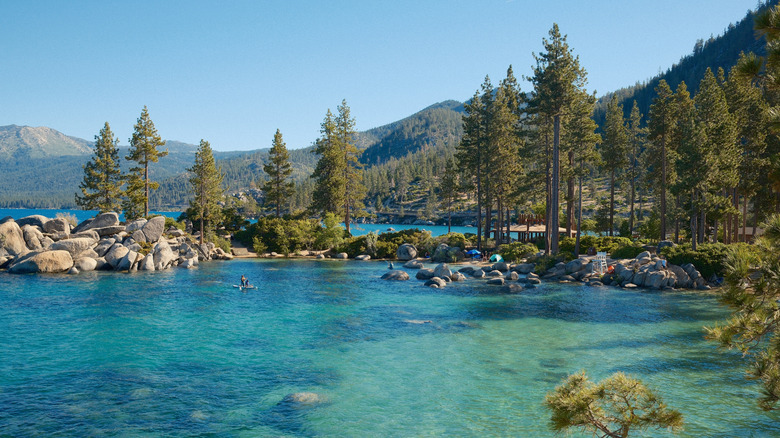
Between the beachy vacation packages and lakeside Airbnbs, it's pretty obvious that water-based activities are in high demand. Most people seeking waterfront adventure head straight to the Great Lakes states or one of the states known for their numerous lakefront offerings. However, the states with the fewest lakes don't disappoint. What they lack in numbers, they make up for in quality.
The U.S. has certainly earned a reputation as a lake-filled country. However, national lake counts range from a few hundred thousand to a few million, because no one can agree on a single definition of a lake. Statewide counts suffer from the same issue — some states only count large lakes, some include smaller ponds in their estimates, some categorize natural lakes and reservoirs separately, and so on.
For this list, World Population Review's Lakes by State 2026 list acted as our starting point for lake counts. World Population Review says it includes natural, man-made, named, and unnamed lakes, but the state-by-state numbers don't strictly follow that model. In some cases, Lakes by State 2026 only includes natural lakes; in others it counts only reservoirs; and in some it includes both. As we discuss each state, we'll cross-reference World Population Review's lake numbers with official counts from peer-reviewed research, articles, or government databases. While we cannot provide a single, exhaustive number of lakes per state, we can give you a rough estimate. However, note that while Lakes by State 2026 ranks the District of Columbia as having the fewest lakes, we're excluding it, as this list only considers the 50 states. This list is arranged in order from the state with the fewest lakes to the most.
Alabama
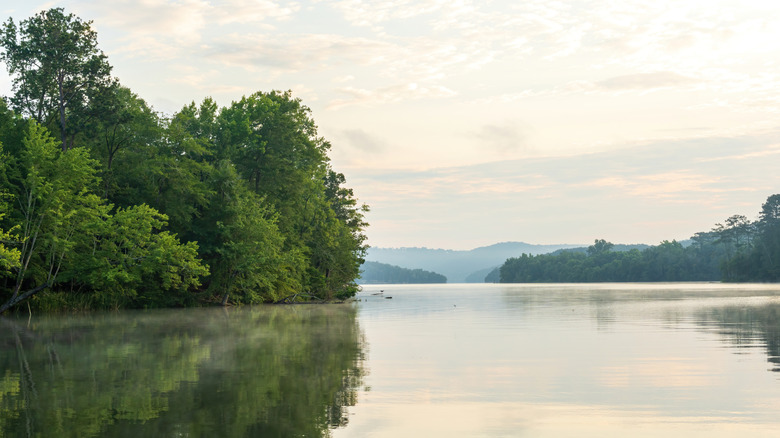
The Lakes by State 2026 list only counts 31 lakes in Alabama, all of which seem to be large public reservoirs. However, other sources put the state's lake count higher. The Alabama Department of Conservation and Natural Resources manages 23 fishing lakes, and the Southeast Aquatic Resources Partnership counts 47 additional reservoirs over 500 acres. While Alabama still doesn't hold a candle to lake-rich states like Alaska or Minnesota, that doesn't make it "dry" by any measure. In fact, the Encyclopedia of Alabama notes the state ranks No. 14 in the U.S. in terms of total area of lakes, ponds, and reservoirs. In other words, Alabama may not have many lakes, but the few it does are a sight to behold.
For example, Lake Guntersville is Alabama's largest lake and is known for its large trophy bass population. It spans 75 miles from Guntersville to Nickajack Dam across the border in southeastern Tennessee, sporting a variety of water-based and other activities along its shoreline. Water enthusiasts can fish, boat, swim, and more in Lake Guntersville. In contrast, landlubbers can golf at the 18-hole championship course at Lake Guntersville State Park, explore the history of the lake and the dam that created it at Guntersville Museum, or embark on a thrilling ziplining course above the lake's forested shores.
Alabama has only one natural lake: Lake Jackson. It lies in the city of Florala, with part of the lake extending into Florida. Visitors can enjoy boating, tubing, fishing, and more on the 500-acre lake. In contrast, those who prefer the stunning backdrop of a lake without actually getting into it can explore the trails in Florala City Park, formerly known as Florala State Park. The park sits within the Alabama Wiregrass Birding Trail, making it a popular spot among birdwatchers.
Nevada
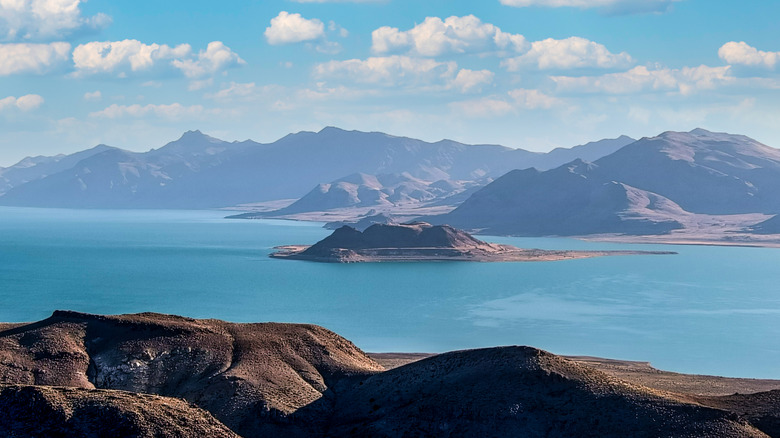
It should come as no surprise to anyone that the arid deserts of Nevada aren't particularly known for extensive lake systems, with the Lakes by State 2026 list noting only 36 lakes in the state — a number that seems to have originated in travel blogs. While the Nevada Department of Wildlife claims the state has over 200 lakes, it also includes reservoirs and smaller fishing ponds in that estimate. Regardless of the actual number, what often takes travelers by surprise is the sheer beauty of the lakes that Nevada does have.
For example, the brilliant blue Pyramid Lake lies near Reno and offers fishing, native history, and stunning alpine views. It's one of the largest natural lakes in Nevada and a remnant of a massive inland sea that once covered most of the state. The lake offers excellent fishing opportunities and is known for Lahontan cutthroat trout — a species that grows to enormous proportions. In fact, the largest Lahontan cutthroat trout recorded was reeled in from this very lake in 1925. Pyramid Lake also has several local legends of water spirits and mysterious disappearances, making it an interesting outing for history fans.
But Pyramid Lake isn't the only Nevada lake with legends. Around 30 miles from Las Vegas, Lake Mead is not just Nevada's largest lake, but also the largest reservoir in the country. It lies within the 1.5 million-acre Lake Mead National Recreation Area and offers some of the best boating, canoeing, and fishing in the state. As water levels drop, the once-submerged ghost town of St. Thomas can be explored by visitors.
Kentucky
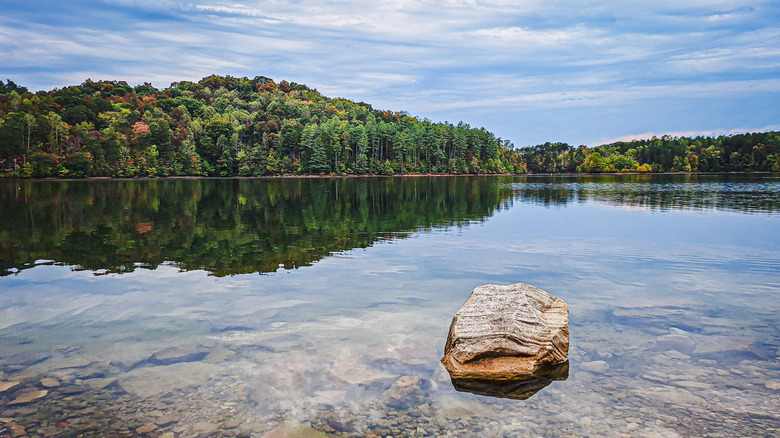
According to the Lakes by State 2026 list, Kentucky has 45 major lakes — a figure corroborated by the Kentucky Geological Survey (via the Kentucky Association of Mitigation Management). However, even though it lands towards the bottom of the list in terms of the number of lakes, Kentucky offers extensive opportunities for water-based activities. According to the Ecological Society of America, Kentucky has more navigable miles of water than any U.S. state other than Alaska, and two of its lakes are the largest lakes east of the Mississippi in water volume (Lake Cumberland) and surface area (Kentucky Lake). Kentucky Tourism also claims the shoreline of Lake Cumberland is approximately the size of the Pacific shoreline of the Continental U.S. Kentucky may fall short in its number of lakes, but it makes up for that in their size, quality, and recreational value.
For those who want pristine water, a scenic shoreline, and thousands of acres for water recreation, check out Cave Run Lake, one of Kentucky's largest lakes. It spans 8,270 acres and allows kayaking, tubing, waterskiing, swimming, and more in crystal-clear water, surrounded by the rugged vistas of the Daniel Boone National Forest. Visitors can also make a weekend out of it by booking a tent or RV site at Twin Knobs or Zilpo campground — each sporting a stunning, sandy swim beach.
For those who want a more secluded, but equally pristine lake, the crystal-clear Paintsville Lake at the foothills of the Appalachians is for you. It's much smaller than Cave Run Lake, at just 1,139 acres, but its intimate size and surrounding landscape offer a quieter, more secluded setting. Paintsville Lake is particularly known for its clear water — allowing visitors a clear line of sight right down to the bottom, according to Kentucky Tourism.
North Carolina
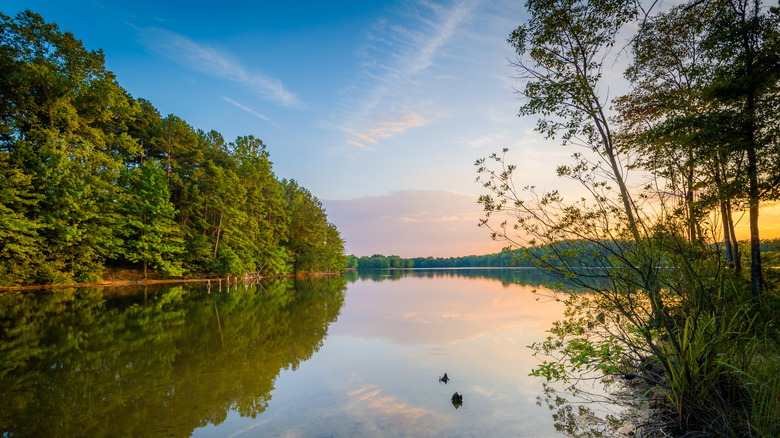
Lakes by State 2026 lists 59 lakes in North Carolina, but the state's coastal habitats, wetlands, and Carolina bays make it harder to quantify the exact number. The North Carolina Wildlife Resources Commission's 2025 State Wildlife Action Plan records 22 natural lakes in the Coastal Plain region, while Snoflo counts 30 major reservoirs within the state. On the higher end, the North Carolina Department of Environmental Quality monitors around 160 lakes in its Ambient Lakes Monitoring Program. Although the exact number is contested, there's nothing inconclusive about the beauty of North Carolina's lakes.
For example, Lake Norman — the state's largest man-made lake — covers a whopping 32,000 acres with over 520 miles of sinewy shoreline. It was formed by one of the most ambitious dam projects in the area and currently serves as a popular recreation site around 30 minutes north of Charlotte. Visitors can go boating, jet-skiing, paddleboarding, and more, while those who prefer to stay out of the water can hike, bike, or golf beside the lake. Interestingly, because local landowners were hesitant to give up their land for the lake's creation, several structures and entire villages still lie under the lake's surface — memories of the communities that once lived there.
For a less crowded and more rustic adventure, head to Lake Glenville, a pristine lake in the Great Smoky Mountains, around three and a half hours from Charlotte. This much smaller lake highlights the best of lakeside vacations, with sandy beaches and crystal-clear waters nestled amidst some of the state's most scenic mountain peaks. Visitors can indulge in water sports or cast a line to catch the lake's well-stocked fishy denizens.
Oklahoma
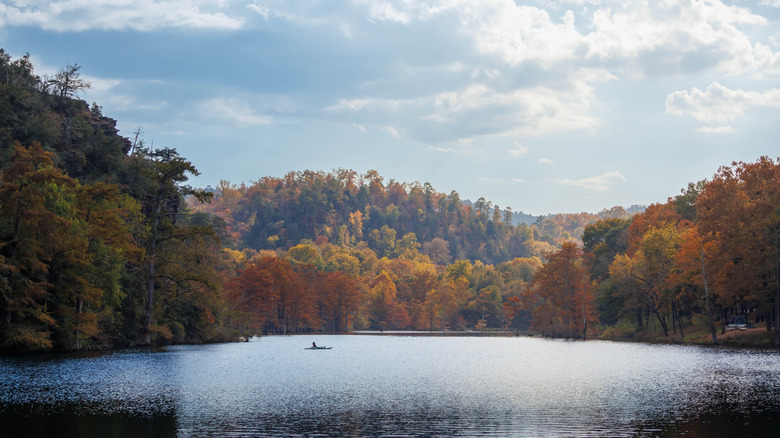
For anyone who's been to Oklahoma, its position on this list is probably a surprise. Lakes by State 2026 lists only 62 lakes in the entire state. Although the Oklahoma Historical Society corroborates this figure, noting that this only applies to the number of natural oxbow lakes larger than 10 acres, the state has well over 200 lakes when including artificial reservoirs in the total count, per Oklahoma Magazine. So, while the number of Oklahoma's large natural lakes is on the lower end, its total count is several times higher than indicated in Lakes by State 2026. Regardless of the actual number, Oklahoma's lakes have earned a reputation for their beauty and recreation opportunities.
For example, Lake Eufaula is the largest lake entirely within Oklahoma's borders, with winding bays and inlets creating a shoreline so long that it rivals some of the Great Lakes. Lake Eufaula's shoreline measures 800 miles by some estimates, making it longer than Lake Ontario's shoreline and only 71 miles shorter than Lake Erie's. Visitors can enjoy activities on the water like boating, swimming, and fishing, or go hiking and mountain biking on the surrounding trails.
Meanwhile, Broken Bow Lake is arguably the state's "most beautiful lake," featuring forested slopes on the surrounding Kiamichi Mountains, pristine blue water, and an unspoiled, rocky shoreline more reminiscent of the Pacific Northwest than the Great Plains, according to the lake's website. It's a popular weekend destination for Oklahoma, Arkansas, and Texas residents — approximately a 3.5-hour drive from Tulsa, Little Rock, and Dallas. Its clear water and scenic views make it particularly well-known for fishing and kayaking. If you don't have a weekend to spare, lakes like Lake Thunderbird and Lake Stanley Draper are located less than an hour from downtown Oklahoma City.