
10 Of The Most Underrated National Parks, Monuments, And Historic Sites In New England
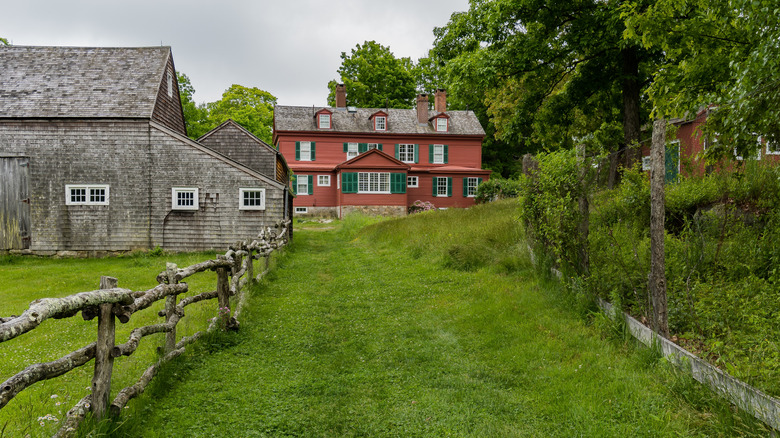
From gardens and artists' homes to mountains and military headquarters, New England boasts an array of federally preserved places. While this northeastern area typically encompasses Maine, New Hampshire, Vermont, Rhode Island, Connecticut, and Massachusetts, the National Park Service also includes New Jersey and New York in its New England Upland province list. In any case, New England is part of the broader Northeast service region, and it's where you'll find iconic places including Cape Cod National Seashore and the region's only formally designated national park, Acadia — both of which draw about 4 million visitors annually. Then there are the smaller sites that see a fraction of that many visitors, yet they have remarkable stories to tell about famous individuals, stunning landscapes, and everyday life hundreds of years ago.
Below, we've listed 10 underrated national monuments, historic sites, and historical parks that see fewer than 100,000 visits on average every year, and often well below that. That said, most are free to visit and worth tacking on to your next road trip or city break. Figures are derived from the National Park Service stats viewer covering recorded visitation between 2015 and 2025, and we primarily focused on official NPS resources, plus foundations and conservancies, in our research about the sites' heritage, natural features, and practical information. Read on to discover some of New England's under-the-radar federal sites that memorialize important places and offer glimpses of trailblazing moments in the nation's past.
Frederick Law Olmsted National Historic Site, Massachusetts
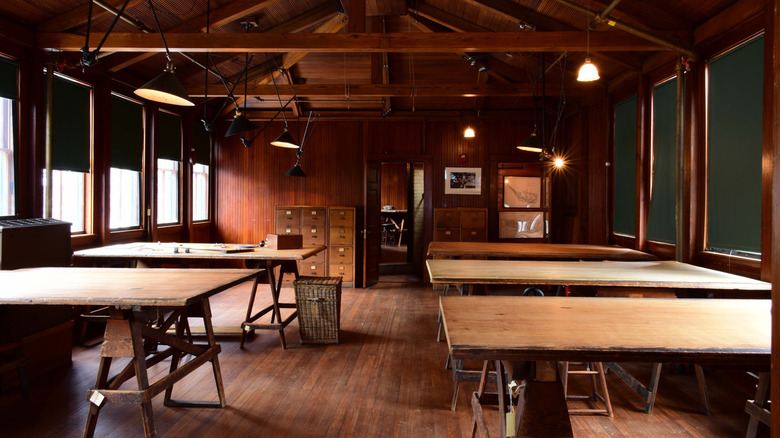
Frederick Law Olmsted National Historic Site is a fitting example to kick off this list (with only an average of 9,100 visits annually), as it represents the creative, entrepreneurial spirit that's often associated with American values, especially in the 19th century. This landmark in Brookline, Massachusetts, is the former home of its namesake, who called the estate Fairsted. Olmsted moved his family here in 1883, but the beautiful farmhouse actually dates to 1810. It served not only as a home but as the heart of his landscape architecture practice — the first full-scale professional office of its kind in the world. He's best known for designing Central Park in New York City and the grounds of the U.S. Capitol, among many other notable projects.
The grounds of Frederick Law Olmsted National Historic Site have been restored to reflect what the designer originally conceived and would have experienced daily. The grounds are open from dawn to dusk every day throughout the year, but the visitor center and ranger-led tours are typically only available Thursday through Sunday between April and December. Tours of the Historic Design Office and the cultural landscape are provided on the hour throughout the day, giving a first-hand look at where Olmsted's firm of architects and designers drafted ambitious designs. Visitors can also peruse exhibits on a self-guided basis. Admission to the historic site is free.
Longfellow House-Washington's Headquarters National Historic Site, Massachusetts
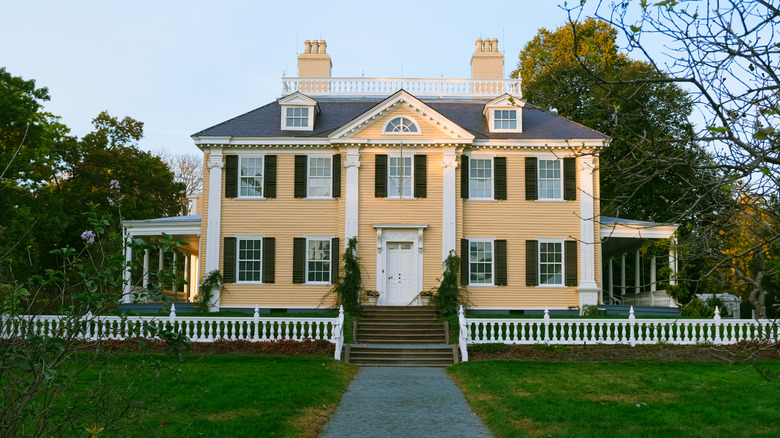
Once you get past the long name, Longfellow House-Washington's Headquarters National Historic Site starts to reveal why it matters: The estate is significant to the story of transatlantic slavery, the Revolutionary War, and American literary history. The Georgian home, originally built in 1759 for a wealthy British sugar plantation owner, is deeply tied to the way vast wealth was achieved through the labor of enslaved people. Less than two decades later, the American Revolution was in full swing, and Gen. George Washington used it as his Continental Army headquarters during the siege of Boston. Fast-forward a few decades more, and it became the home of poet Henry Wadsworth Longfellow and his family.
Longfellow House-Washington's Headquarters is a great place to tack on to a visit to Cambridge, Massachusetts, as it's easily reachable via a walk from Harvard Square. It's free to visit, and the grounds are open all year, but the house is open only between late May and early October. From 2015 to 2025, it saw an average of around 51,700 visits annually. If you plan to see the house, stop by between Friday and Monday, as it's closed midweek. Take a guided tour to see some of the nearly 2,000 pieces of fine art in the site's collection, and check out exhibits that change seasonally. Time your visit for a Sunday afternoon in summer to experience poetry and music during the Longfellow Summer Arts Festival.
Saugus Iron Works National Historic Site, Massachusetts
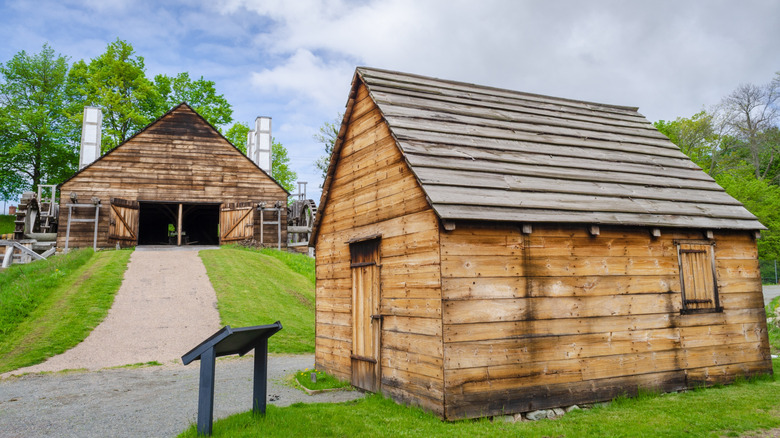
Just outside Boston, the historic town of Saugus is a peaceful gem. But long before it was a settled town, land on the banks of the Saugus River became home to the Saugus Iron Works in the 1640s. Today's national historic site offers a glimpse into the country's 17th-century industrial past, preserving the first sustained, integrated iron works in British Colonial America. The area has gotten a little more popular in recent years but still received an average of only 25,000 visitors annually from 2015 to 2025. The site's location on the Saugus River is ideal for enjoying a sunny day, including along a picturesque, quarter-mile nature trail. The park's main season runs from May 7 to October 31, during which tours and demonstrations are offered Wednesday through Sunday, and admission is free. Arrive early to see the sunrise from the upper lawn — the grounds are open daily from dawn to dusk — where the park has provided Adirondack chairs.
Considering how widely metal products are produced today, elements like the site's reconstructed blast furnace are a reminder of the workers' ingenuity at the time. The historic buildings and machinery of Saugus Iron Works are well cared for, although most have been reconstructed over the years, including three mill buildings housing mechanical equipment powered by a number of water wheels. The Iron Works House still stands from the 1600s, although it's gone through many changes and many owners since. Archaeological evidence also shares insights into the lives of the Indigenous people who called this land home before Europeans arrived. Visit the Broadhearth Visitor Center between Wednesday and Sunday, and take a self-guided tour with an audio guide downloadable from the NPS app.
Adams National Historical Park, Massachusetts
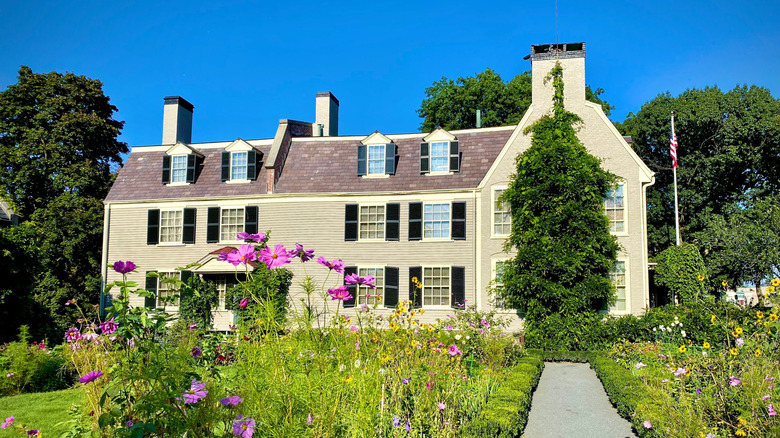
Adams National Historical Park is the first place on our list that's considered a historical park rather than a historic site by NPS' standards. A national historical park differs from a site because it extends beyond a single property or building. In this case, there are three separate places you can visit: the visitor center in downtown Quincy, Massachusetts, the Old House at Peace Field, and the Adams Farm at Penn's Hill. The latter is where Founding Father and America's second president John Adams and his son John Quincy Adams (the nation's sixth president) were born. Overall, the park spans 13 acres with gardens, exhibits, and the beautiful Stone Library, which sits adjacent to the Old House at Peace Field. The clapboard homes and green settings are photogenic, especially in spring and early summer, so bring your camera.
A visit to Adams National Historical Park requires a standard entrance pass of $15 per person to enter the park's historic buildings. Many national parks charge entry fees per vehicle, but this park charges per person. Visit Wednesday through Sunday between May 1 and October 31, and take part in a ranger-led tour of the houses (reservations are required), which covers themes including the American Revolution, family life, and the presidency. It's worth noting that for the remainder of the 2026 season, Adams Farm at Penn's Hill is closed for a major landscape treatment project to restore parts of the surroundings to more closely resemble the historic landscape the Adamses would have known.
Marsh-Billings-Rockefeller National Historical Park, Vermont
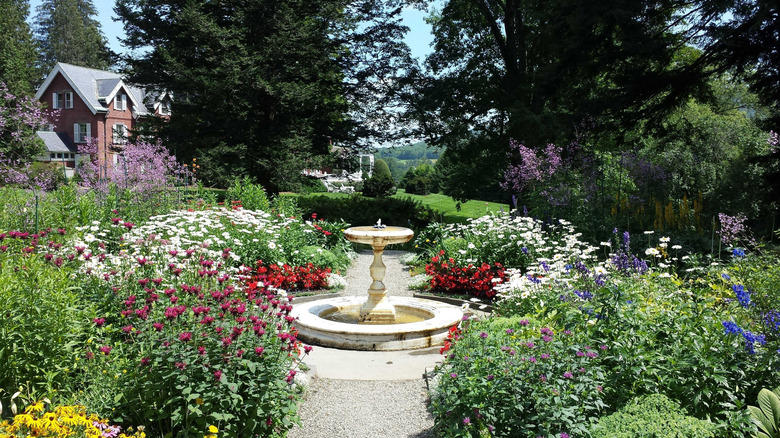
For a larger historical park experience (with low visitation numbers) in Vermont, look no further than the Marsh-Billings-Rockefeller National Historical Park in Woodstock. At more than 640 acres, the estate preserves the Mount Tom Forest, a pond called the Pogue, a mansion, and gardens in a conservation haven with magical forests. Mount Tom Forest is the oldest continuously managed scientific forest in the U.S., where trees are still occasionally harvested. The park offers over 20 miles of trails to explore, including historic carriage roads, and dogs are allowed as long as they're leashed. Several trails continue into adjacent public areas like Billings Park, Faulkner Park, and King Farm. It's also a popular add-on to a visit to the Billings Farm & Museum, which sits just to the east.
Marsh-Billings-Rockefeller is unique because it focuses specifically on conservation and environmental stewardship, as expressed and supported by its influential namesakes: George Perkins Marsh, the Billings family, and Laurance and Mary French Rockefeller. Visitors are able to experience a landscape that has been carefully tended for well over a century, with an emphasis on communing with nature but also understanding how environmentalism developed since the mid-19th century. The park's grounds and trails are open all year for hiking and equestrian use. The grounds are also free to visit, but fees apply for ranger-led tours and self-guided entry to the mansion. Typically, buildings are open, and tours are provided from late May to October 31.
Saint-Gaudens National Historical Park, New Hampshire
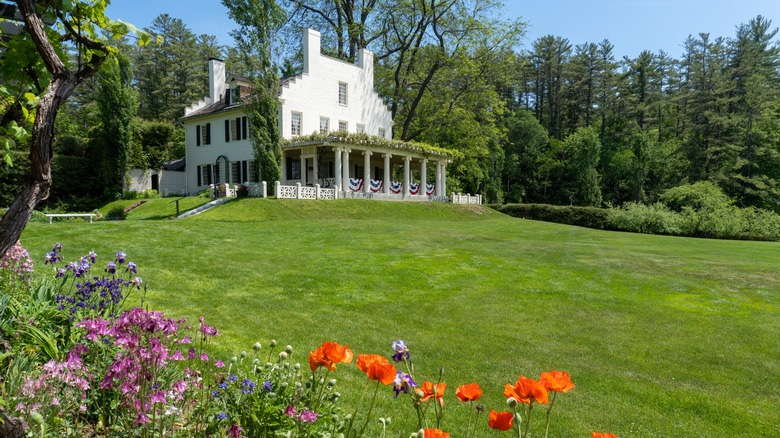
Saint-Gaudens National Historical Park is yet another estate that illuminates the visual heritage of one of the nation's most influential artists: Augustus Saint-Gaudens. The sculptor and educator played what NPS refers to as an "outsized role" in the U.S.' construction of its identity through dozens of bronze monuments, coin designs, and more. He not only had a major influence on the nation's visual culture but also helped establish an art colony in Cornish, New Hampshire, a charming town surrounded by covered bridges. A visit to the historical park is also thanks in large part to the stewardship of Augustus' wife, Augusta, who made it her mission to preserve the estate as a memorial before it was eventually taken under the wing of NPS.
Several monumental bronze sculptures can be found around the property, from a likeness of Abraham Lincoln next to the visitor center to a depiction of an African American Civil War regiment. Visitors can tour the family home, wander through the formal gardens, see more artwork in the Little Studio or New Gallery, or hike along several miles of trails through more than 100 acres of forest. Grounds and trails are open all year, and the lawn near the house is a good place to have a picnic on a sunny day. Buildings are open only between Memorial Day and October 31, and admission is $10 per person for visitors aged 16 and older.
Theodore Roosevelt Birthplace National Historic Site, New York
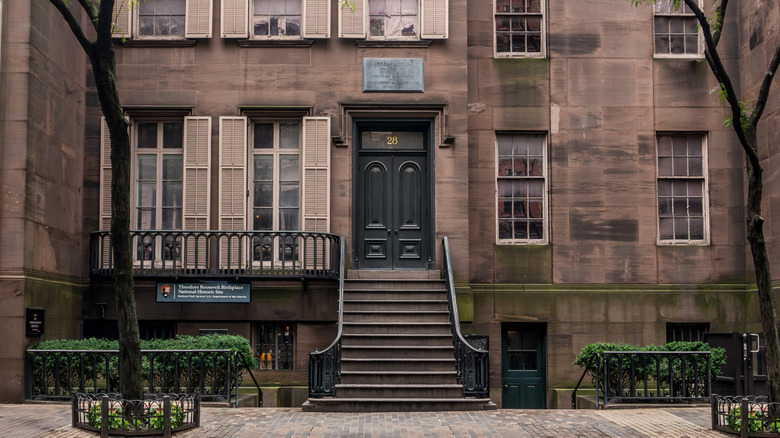
For an urban national historic destination that's easy to tie into other explorations around New York City, the Theodore Roosevelt Birthplace National Historic Site is a trip back in time inside a Manhattan brownstone. It's just a 5-minute walk south of the Flatiron Building on East 20th Street, and the Gramercy Tavern is four doors down. As the name suggests, this house preserves the birthplace of the country's 26th president, a figure who would go on to spearhead national conservation efforts, especially in the West, where he added to the national forest system and established five national parks during his tenure, among other accomplishments. His namesake national park in North Dakota is an underrated destination in the Midwest. But let's get back to the house, where, somewhat ironically, many of the interesting details are indoors.
Theodore Roosevelt Birthplace is open Wednesday through Sunday all year, and the entire experience is free. It only sees an average of 16,700 visitors annually. On the bottom floor, visitors can wander through self-guided exhibits, and this is also where they'll find the shop. The levels above are all period rooms, reconstructed as a museum more than 100 years ago based on photographs, and the furnishings would have been seen in a wealthy home in the mid-19th century. The period rooms can be accessed on a 45-minute ranger-guided tour. Walk-in tours are offered four times each day, but same-day reservations can also be made to ensure you get a spot before arriving.
African Burial Ground National Monument, New York
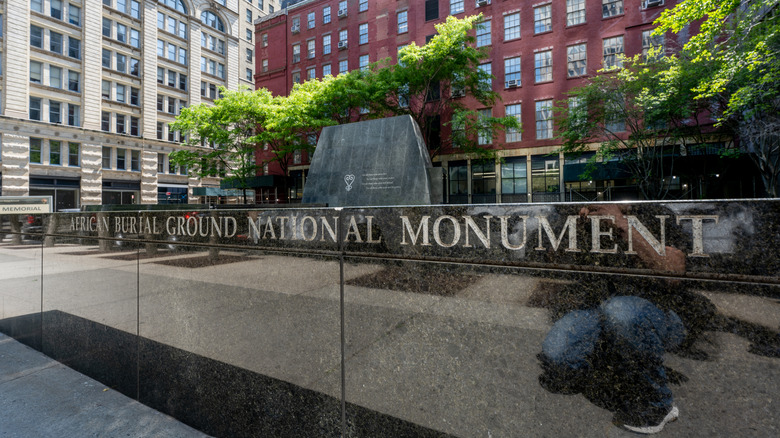
Not all national monuments or historic sites have buildings or expansive properties, strictly speaking. Some honor places and events where there isn't much to physically see, at least on the surface. African Burial Ground National Monument is a good example of a monument with a story that's deeply important to the nation's history, even though its original landscape has been dramatically changed. In Lower Manhattan, just two blocks north of New York City Hall, this spot marks North America's largest and oldest known excavated burial ground for free and enslaved Africans. It was discovered and excavated after construction began on a federal office building in 1991, when workers uncovered remains buried about 30 feet below street level. Its history can be traced back to at least the mid-1630s.
Today, visitors encounter an outdoor memorial and can explore exhibits in the visitor center for free, including archaeological artifacts and a park film. There's also a research library containing archival materials related to African Americans' lives and livelihoods in colonial New York. Ranger-led tours can be reserved in advance on Recreation.gov, providing another way to learn about the site's history, the role of slavery in the establishment of New York, and the National Park Service's memorialization efforts.
Weir Farm National Historical Park, Connecticut
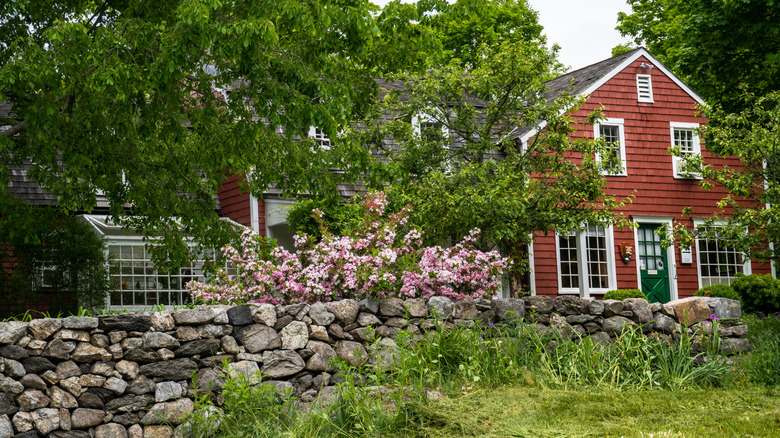
An architectural treasure and the historic home of Impressionist painter Julian Alden Weir, the aptly named Weir Farm National Historical Park in Wilton, Connecticut, is a bucolic, artsy park set on rolling hills. The place tells the story of the Weir family, Julian's artistic legacy, and the individuals and families who helped build and sustain the farm during the 19th and 20th centuries. Works of art by family members and visiting artists can be seen around the property, including in the Burlingham House Visitor Center Gallery. In season, guided tours are offered a handful of times per day, and the warmer months are also ideal for joining a painting workshop, a nature journaling outing, or one of many other events.
At Weir Farm, admission is free, and visitors (who average around 35,000 annually) are encouraged to make their own artwork as part of the "Take Part in Art" program. Between May and October, art supplies are available to borrow and take around the property. Visitors can also interact with artists-in-residence who stay at Weir Farm and use it as inspiration to create their own art. Even during the offseason, the parking lot and trails remain open from dawn to dusk. Take a walk around the Weir Pond and marvel at the barn and outbuildings.
Katahdin Woods and Waters National Monument, Maine
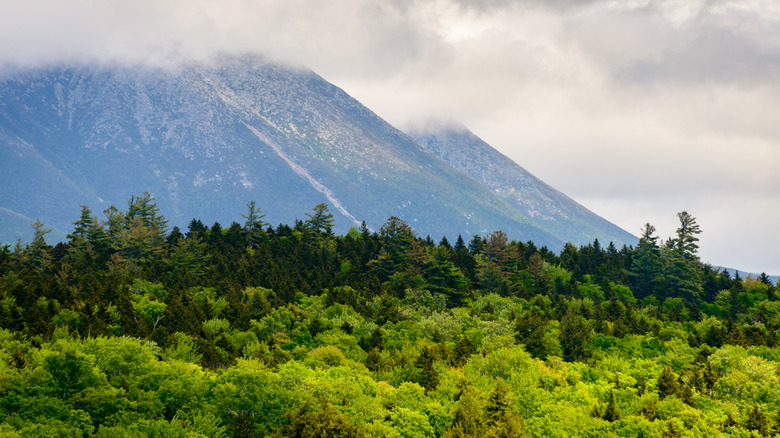
Maine's dark sky sanctuary with stargazing spots and Appalachian hikes is about 80 miles north of Bangor, in the middle of the state amid some of its most dramatic mountains. Katahdin Woods and Waters National Monument is primarily a natural oasis, ideal for outdoor adventurers and photographers. It's also the only park on this list that offers camping, including three small drive-in camping areas and several backcountry sites that can be reached by hiking, biking, or paddling. There are even a few huts that can be reserved in winter. Entry to the monument is free, and camping is also free, but drive-in spots still require reservations between late May and mid-October.
Katahdin Woods and Waters sits just east of Baxter State Park and Mount Katahdin, the northern terminus of the Appalachian Trail. Nearby, you'll find Maine's tallest waterfall and plenty more trails to explore, so it's almost a two-for-one experience. Katahdin Woods and Waters permits fishing in its streams and ponds, and it's known as a spot to catch brook trout. It's also home to endangered Atlantic salmon, so anglers should follow state fishing regulations carefully. If you visit in fall, you'll be in for a treat with vibrant foliage, which is typically best from September to mid-October. Explore more than 50 miles of trails with plenty of spots to gaze up at some of the darkest skies on the East Coast. And during the day, bring binoculars along, as the monument is a good place to watch for the more than 170 bird species that have been documented here.