
11 Of The Most Underrated National Parks And Monuments In The Midwest
The Midwest has long had a reputation as flyover country, especially Great Plains states like the Dakotas and Nebraska, but among the unwritten rules you should know before visiting the Midwest is that there is plenty to see and do in this vast region. One can even delight in the fact that many of its parks are less famous and quieter than big ones like Utah's Mighty 5 or those encompassing millions of acres of de facto wilderness in the Rockies. You'll find spectacular badlands formations, prairies, caves, sacred Indigenous sites, archaeological gems, and more. Some are smaller than others; Theodore Roosevelt National Park, for example, is organized in three separate units across more than 70,000 acres, while the memorialized birthplace of George Washington Carver covers just 240 acres on his family's former farm.
Below, explore 11 national parks and monuments around the Midwest, some of which you may have heard of but likely also a few you have not! Badlands National Park and Scotts Bluff National Monument see relatively large visitation numbers for the region, but have you heard of Pipestone National Monument in Minnesota? Or Iowa's Effigy Mounds National Monument? Each has something totally unique to experience.
For this list, we helped define "underrated" by consulting parks' visitor numbers compared to similar kinds of parks. Indiana Dunes and Cuyahoga Valley National Parks are two we skipped because they're very popular, seeing around 2.65 million and 3 million recreational visits every year, respectively. We also skipped Voyageurs National Park, where you'll find some of the Midwest's most beautiful forests, to emphasize a couple of the smaller monuments in the region. All of these are certainly worth a visit! In addition to the author's experiences visiting several of these parks, we sourced information from NPS.gov, park associations, and regional tourism websites.
Theodore Roosevelt National Park (North Dakota)
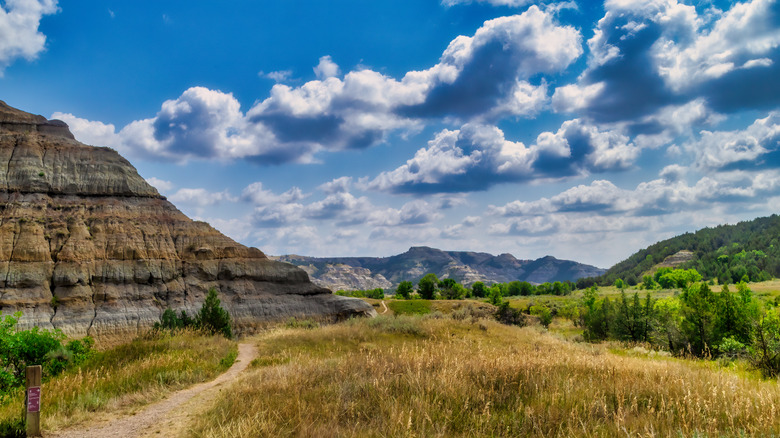
Amid the expansive plains of western North Dakota is the stunning Theodore Roosevelt National Park, named for the 26th President of the United States, who was an avid conservationist. He found wonder and solace in these remote northern badlands, where he also owned a ranch. The park consists of three units, including the approximately 46,000-acre South Unit, which is the most accessible along Interstate 94, plus the 24,000-acre North Unit and the 218-acre historic Elkhorn Ranch.
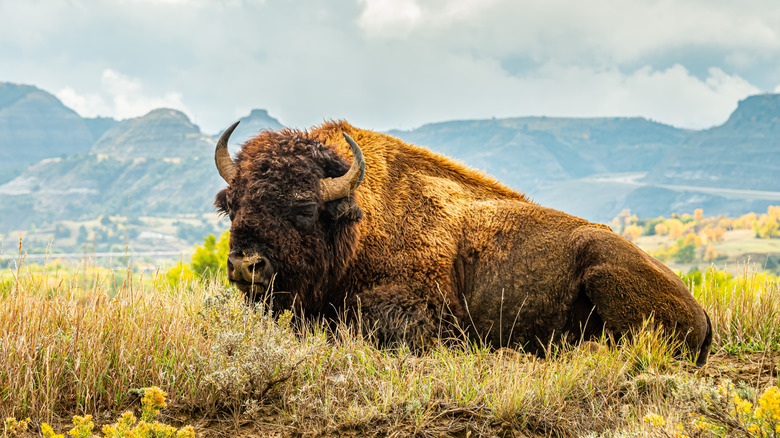
Due to its relatively remote location, Theodore Roosevelt National Park is an underrated gem that fewer than 730,000 visitors see each year. There are three visitor centers total, two of which are also easily accessible near I-94. The South Unit Visitor Center is in Medora, a gateway town with shops and unspoiled nature. Head to the Painted Canyon Visitor Center for panoramic views of the badlands, or get more remote at the North Unit, which is about an hour's drive north of Belfield along U.S. Highway 85. Here, take a hike along the 1.5-mile Buckhorn Trail to see the prairie dog town, and likely some bison, which roam the grasslands. Numerous other hikes throughout the units offer spectacular views of rock formations, riverbeds, sagebrush terraces, and more. In the North Unit, camp in Juniper Campground for a truly remote feel, and in the South Unit, post up at Cottonwood Campground.
Agate Fossil Beds National Monument (Nebraska)
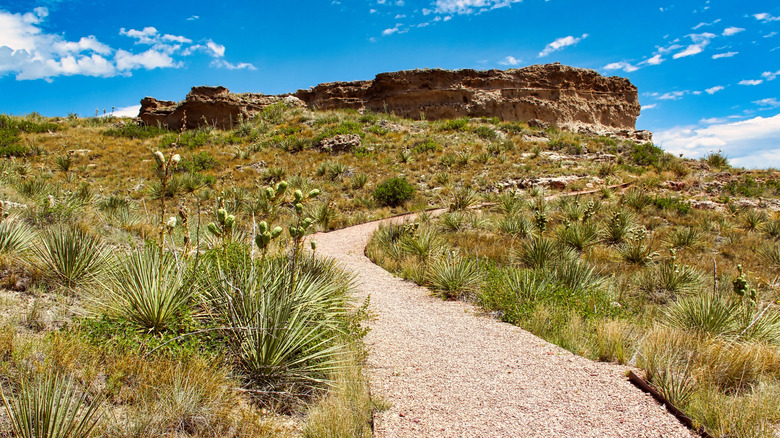
Agate Fossil Beds National Monument preserves two very different but unique events: the discovery of previously unknown ancient mammal fossils and a unique relationship between a rancher named James H. Cook and Chief Red Cloud of the Lakota in the 19th century. At the time, Red Cloud and his traveling party, along with other tribal bands, set up camp along the Niobrara River, and items that they exchanged now comprise a rich historical collection of handmade Lakota artifacts on display in the visitor center's James Cook Gallery. The park is day-use only, and seeing fewer than 20,000 visitors annually, it's an uncrowded place to explore stunning hills and exhibits.
At a little more than 3,000 acres, Agate Fossil Beds encompasses a landscape of short- and tallgrass prairie, and both its paleontological and cultural stories are awe-inspiring. Much of the property consists of what used to be Cook's ranch, and visitors can explore two trails, including the 1-mile Daemonelix Trail that has fossils still embedded in the earth. The most prominent belong to an ancient beaver known as the Paleocastor from the Miocene epoch, 20 million years ago. The area is known for the creature's giant corkscrew-like burrows, plus other animals like a prehistoric "beardog," the bison-sized Daeodon (an early relative of the horse), and more.
Jewel Cave National Monument (South Dakota)
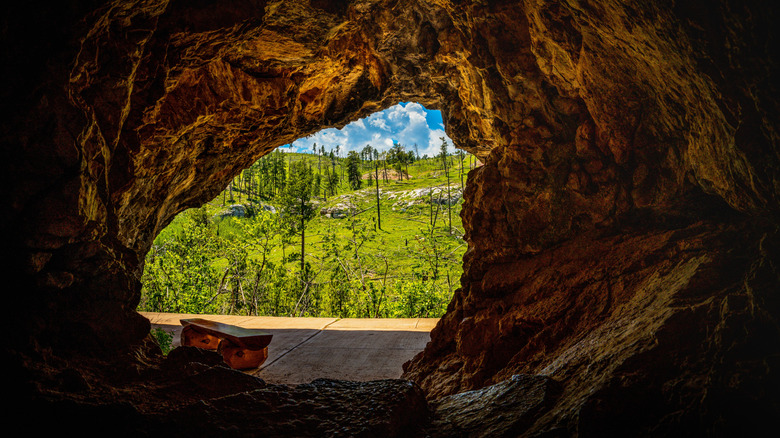
Located in the rugged Black Hills of western South Dakota, Jewel Cave National Monument lives up to its name. So far, more than 220 miles have been mapped of this enormous system, making it one of the world's longest caves. Amazingly, airflow studies suggest that only about 5% may actually be known so far. Descend into the cave on a guided tour, which is the only way to see inside, and admire the structure's unique geology that formed over millions of years. It's known for complex mineral structures and crystals such as gypsum boxwork, dogtooth spar, soda straws, cave popcorn, and more.
Jewel Cave National Monument is visited by fewer than 150,000 visitors each year, who can choose from four guided tours — the only way to see inside. The Discovery Tour is fully accessible and sticks to one room in the cave. The Scenic Tour expands from there on a .5-mile loop with a 734-step climb involved — fortunately, only one-way! Historic Lantern Tours take visitors back in time to the 1930s to relive what early experiences were like for tourists. And the strenuous Wild Caving Tour is for the truly adventurous who don't mind a bit of a scramble or a belly crawl to access lesser-visited areas. There's no camping at Jewel Cave, but it's located only a 20-minute drive from the western edge of Custer State Park, one of the Midwest's most underrated parks, where there are several developed campgrounds to choose from.
Badlands National Park (South Dakota)
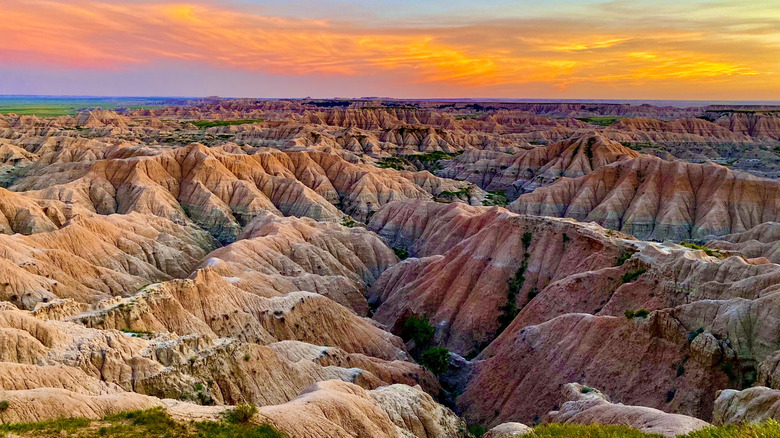
One of America's best road trip destinations is a South Dakota treasure about an hour's drive east of Rapid City. Badlands National Park is far less busy than national parks in the eastern Midwest, with around 1 million visitors annually, and it spans 244,000 acres across north and south units, so it rarely feels crowded. The North Unit is the most popular and developed, where you'll find the Ben Reifel Visitor Center, Cedar Pass Lodge, and a campground that can easily accommodate RVs (a few sites have electricity). Northwest of there, in the remote Sage Creek Wilderness, tent campers or those with smaller vehicles who crave a backcountry experience can camp for free at Sage Creek Campground, which is first-come, first-served.
Badlands National Park is home to grazing bison, bighorn sheep, pronghorns, prairie dogs, and more, and its history is indelibly shaped by the Lakota people who moved through the area for hundreds of years. It's also one of the most spectacular areas in the region to learn about fossils. Millions of years ago, the area was a sea, so the fossilized remains of prehistoric marine reptiles like the Mosasaur, among others, have been discovered amid the ever-evolving landscape. Visit the Fossil Preparation Lab at the Ben Reifel Visitor Center, then take a scenic drive to a number of overlooks. The most popular route in the North Unit is the Badlands Loop Road, or in the South Unit, the perimeter drive is less busy. It's also a spectacular place to get out on the trails — and further afield. Badlands National Park has a rare open hike policy, which means visitors can responsibly hike virtually anywhere.
Effigy Mounds National Monument (Iowa)
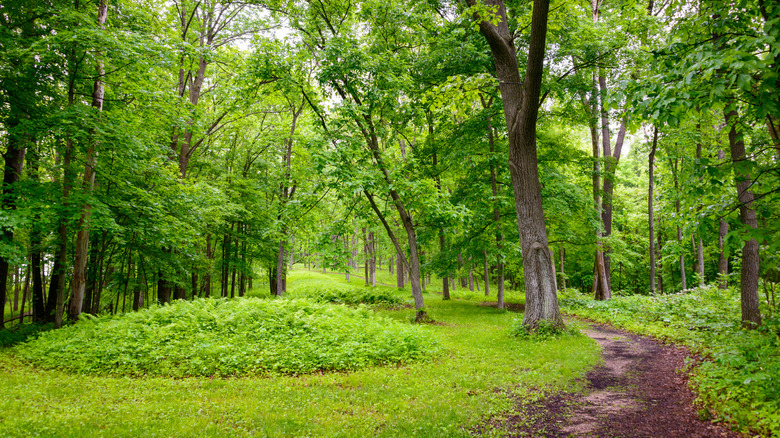
Iowa's only national monument, Effigy Mounds, is located in Harper's Ferry on the mighty Mississippi River. It's both a Midwest archaeological treasure and a sacred site to Native Americans, and the park continues to maintain ties with 20 local tribes. So, what exactly are effigy mounds? These earthen domes, which are often shaped like animals such as deer, bison, and even panthers, are thought to be ceremonial sites. Most were built during the Late Woodland period, around C.E. 550 to 1200, by the ancestors of the area's modern tribal nations, although some are even older. They often contain human burials, but their exact purpose remains a mystery to archaeologists.
At Effigy Mounds National Monument, which sees around 60,000 visits per year, a striking concentration of more than 200 of the hand-built landforms is preserved, and visitors can explore them on beautiful, even meditative hikes across three units that are criss-crossed with hiking trails. The Sny Magill Unit has the most, with more than half the park's mounds sprinkled across a 141-acre area. The North and South Units are larger and boast round-trip trails between 1 and 7miles long. If you visit during the summer, join a ranger-guided tour to learn more about the history of the area.
Grand Portage National Monument (Minnesota)
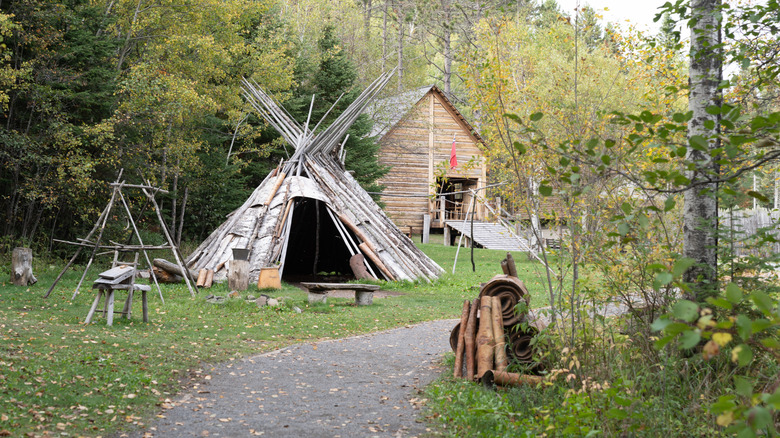
A stunning and deeply historic northern park at the tip of Minnesota's Arrowhead Region, Grand Portage National Monument is a leap back in time to the era of the fur trade. It's adjacent to Grand Portage, an underrated Minnesota town with outdoor thrills and beauty, and encompasses two historic sites that were once depots for the North West Company, a Canadian fur trading outfit that ran from 1779 to 1821. One depot sits on the shoreline of Lake Superior, and the other, Fort Charlotte, is inland 8.5 miles and sits on the Pigeon River. The two are connected by the Grand Portage Trail, which is a popular hiking destination. Adventurers who want to do the entire thing out-and-back can grab a backcountry permit and camp at Fort Charlotte.
For those who prefer a more relaxed visit to the monument, which sees around 90,000 visitors each year, a great place to start is the Heritage Center. The building overlooks Grand Portage Bay and features museum displays about both the fur trade and the Indigenous Anishinaabe culture, communities of which have made their home around the Great Lakes and southern Canada for centuries. In fact, the park is managed in partnership with the Grand Portage Band of Lake Superior Chippewa — the first national monument to do so. Visit the 18th-century kitchen that would have fed the fur traders in the historic stockade, and even plan your visit for Rendezvous Days, which transports visitors back to the 1790s when traders and Native Americans gathered for exchange.
Pipestone National Monument (Minnesota)
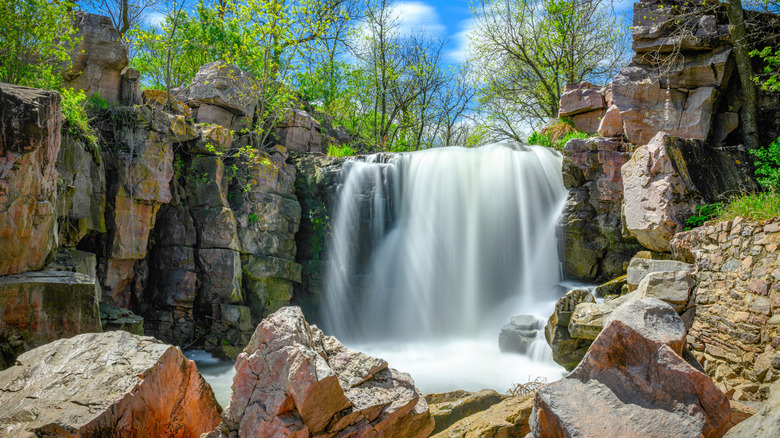
Located in the far southwest region of Minnesota, Pipestone National Monument is a tribute to ancient ingenuity. This out-of-the-way park boasts a splendid waterfall, wildlife-filled prairies, and ancient quarries where Indigenous people have excavated the red stone they've used to make ceremonial pipes for more than 3,000 years. At 301 acres, it's not a huge destination, but 56 of its quarry sites are still actively used for extracting stone, so it provides a unique insight into an ancient cultural custom that continues to this day. Only enrolled members are eligible to quarry the stone, and it's illegal to remove the unworked material from the park. That said, you can find objects available for purchase in the park's gift shop that have been made from the red rock.
Around the quarries, you'll find beautiful tallgrass prairie featuring hundreds of native plants, including more than 70 species of grass. See how many different kinds you can spot along the .75-mile paved Circle Trail, and during the warmer months, engage with a ranger-led tour or event that provides an enlightening glimpse into the area's history and ecology. Different opportunities are offered throughout the season, and you can check at the visitor center to see what may be happening during your visit.
Isle Royale National Park (Michigan)
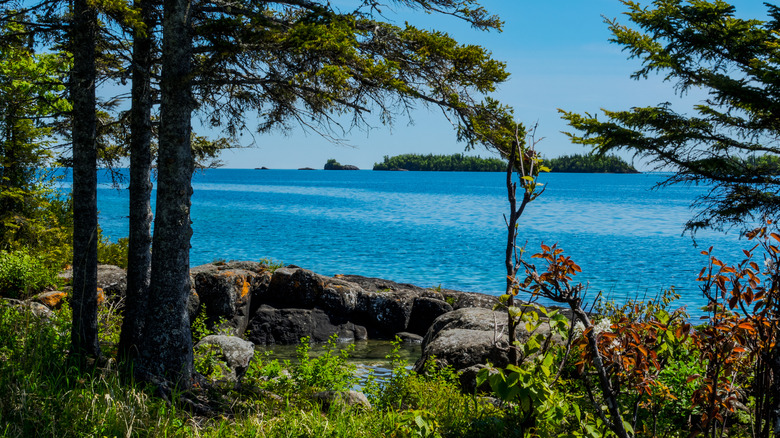
Isle Royale is one of the more isolated national parks in the country, seeing fewer than 30,000 visitors each year. It's located in Lake Superior, offshore from Grand Portage National Monument. You'll encounter a rugged wilderness consisting of more than 400 islands, with the largest one hosting two visitor centers across an area about 50 miles long and 9 miles wide. And while the park is eminently attractive for camping, paddling, hiking, fishing, and more, there is full-service lodging, too, which can be found on the eastern end of the island at Rock Harbor. That's where you'll find ranger-led programs, and the ferries come in here first before continuing around to the western side of the island at Windigo. For another memorable way to stay, book ahead for an overnight in one of the two rustic Windigo camper cabins.
Even just getting to Isle Royale is a notable part of the experience. Escape it all at this remote national park in the Midwest by starting in Houghton in Michigan's Upper Peninsula, where there's a mainland visitor center adjacent to the ferry terminal for the Ranger III, aboard which it takes six hours to reach the park. Alternatively, reserve a 40-minute seaplane ride. You can also hop a ferry in Copper Harbor, an underrated Michigan town for an affordable mountain escape, or launch from Grand Portage, Minnesota. And it's worth noting that, unlike most national parks, Isle Royale is only open to the public from April 15 to the end of October.
George Washington Carver National Monument (Missouri)
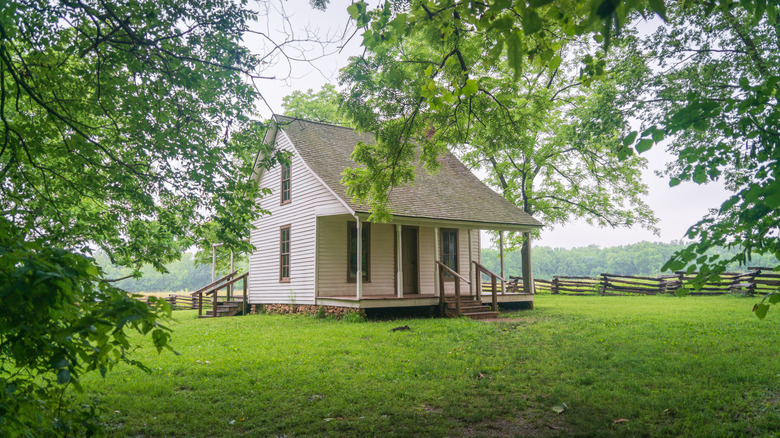
Born into enslavement in Missouri in 1864 — a year before the end of the Civil War and the official end of slavery in the U.S. — George Washington Carver was orphaned at only 6 months old. Until he was old enough to go to school, he was cared for by Moses Carver, who had owned George's parents as slaves. Then, in his pursuit of an education, he eventually earned an advanced degree from Iowa State University and began teaching and researching at the Tuskegee Institute in Alabama — also a national historical site — where he remained for his entire career.
One of the most prominent Black scientists of his time, Carver's education really began at the Missouri home where he was raised. He explored the farm and gardens and was even nicknamed "the plant doctor." Today, this 240-acre farm lives on as the George Washington Carver National Monument, the first National Park Service unit established to honor the accomplishments of an African American. It's toured by between 30,000 and 40,000 visitors each year, and it's a great place to stop to break up the drive between Springfield, Missouri, and Tulsa, Oklahoma. Orient yourself in the visitor center, visit Carver's birthplace, or take a guided tour — offered twice daily — along the Carver Trail to learn about his childhood and career. At the end of the trail, take a moment to hear an audio recording of Carver reciting a poem by Edgar A. Guest, which emanates from a carved stone bust.
Wind Cave National Park (South Dakota)
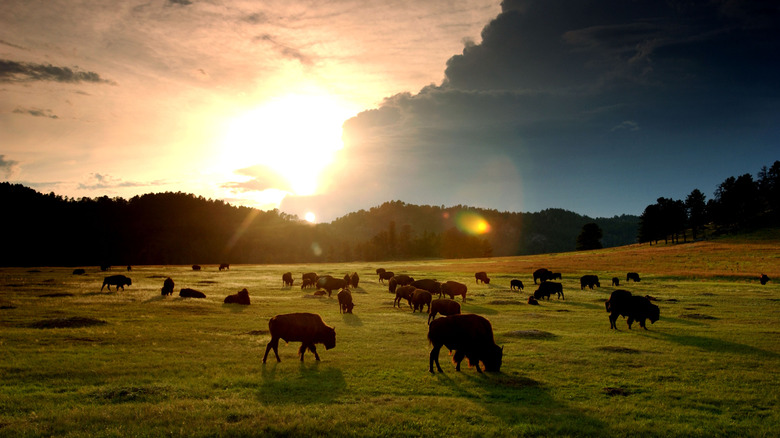
One of America's oldest national parks is a Midwest gem that's another must-see in South Dakota for cave enthusiasts. Wind Cave National Park is about four times busier than Jewel Cave National Monument, but it's also substantially larger and boasts two primary features: a spectacular 34,000-acre area of prairie and, beneath that, a cave that has so far been mapped to at least 167 miles, according to South Dakota Searchlight. Back when the park was established in 1903, fewer than 10 miles had been explored! Visitors can take a ranger-guided tour, which is necessary to step foot inside, and it's recommended to book in advance. There are several guided experiences to choose from, ranging in length and difficulty. The Garden of Eden tour, for example, involves 150 steps and takes about an hour. The Fairgrounds Tour is more strenuous with 450 steps, but you're treated to both the upper and middle levels of the cave. And a fully accessible tour is only a half-hour and requires no steps.
Above ground, the hiking opportunities are exceptional along more than 30 miles of trails — no advance booking required. Take in expansive, panoramic vistas of rolling plains framed by ponderosa pines. Bring your binoculars to spot prairie dogs, bison, elk, a huge array of birds, and more. And it's well worth it to stay a little while, as Wind Cave has a 64-site campground called Elk Mountain, which has flush toilets. It's open all year-round, but water only runs during the warmer months, so it's half-price the rest of the time.
Scotts Bluff National Monument (Nebraska)
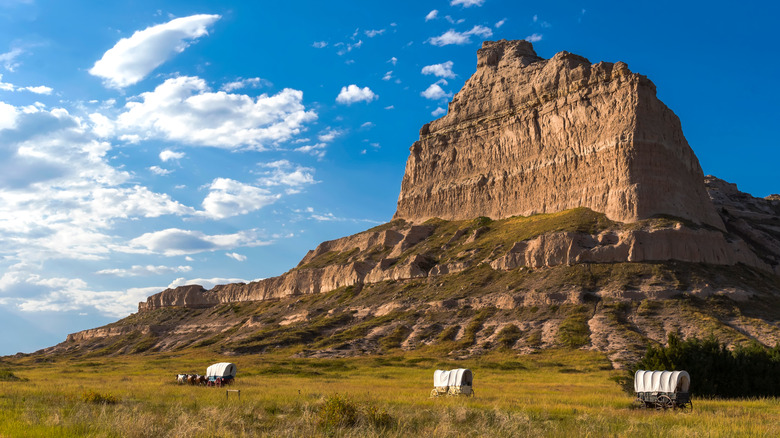
If the only area of The Cornhusker State you've ever seen is the corridor along Interstate 80, you're missing so much of the natural beauty this Great Plains state has to offer, and a massive national monument towering above Nebraska beckons in the northwest. Scotts Bluff National Monument sees fewer than 185,000 visitors each year, which is a pretty good number for a relatively remote national monument; however, there's more to this 800-foot landform than it might first appear. Plains Native Americans called it "Me-a-pa-te," or "the hill that is hard to go around," and it served as a waypoint for their travels along with hundreds of thousands of westbound settlers who moved through the area on the legendary Oregon and California Trails during the mid-19th-century.
See replica covered wagons along the mostly paved, .5-mile Oregon Trail Pathway, which traces a short segment of the original trail, or find views via the Saddle Rock Trail or the North and South Overlook Trails, where you can see for miles over the prairie and the town of Scotts Bluff, an underrated Nebraska city with plenty of history and more to do outdoors nearby. You can also access the bluff by car via the Summit Road, which climbs 1.6 miles through three tunnels, leading to a couple of overlooks. It's also worthwhile to stop into the visitor center to browse exhibition displays about the Native American heritage of the region, plus the fur traders and settlers that shaped how we view this landscape today.