
The Oldest Wineries In The World That Are Still Worth Visiting
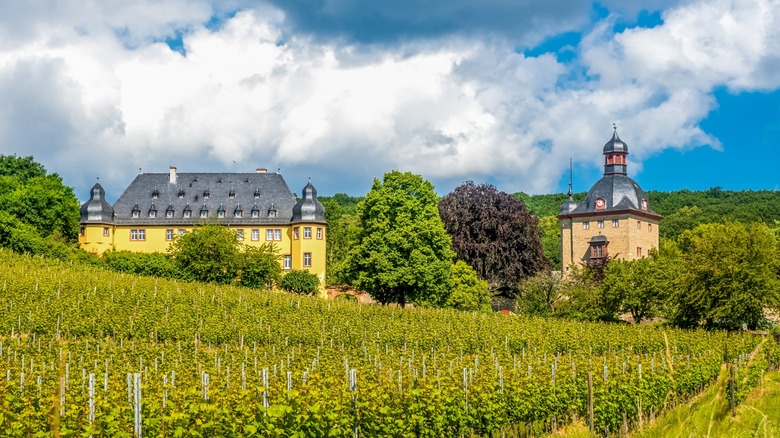
There's nothing like kicking back at a beautiful winery and sipping on a glass of that dry or sweet goodness made from the soil beneath your feet. But sorry, you're not the first person to realize that — not by a long shot. Winemaking dates back at least 8,000 years; there is evidence that vineyards once thrived in the country of Georgia, where pottery adorned with grapes was discovered.
Although our Stone Age brethren weren't taking cellar tours and giving the glass a swoosh before diving in (at least we don't think so), many wineries operating today were actually thriving centuries ago. Islands rounded them up — just like we rounded up the oldest wineries in America that are still worth visiting — so you know where to head for a bottle that's not only delicious, but historic.
To determine the oldest international wineries that are still worth visiting today, we first determined which wineries still in existence date back the longest in the history books, with their vines planted as far back as 777. Then, we evaluated each winery's reviews, only including wineries with at least 4.4 stars on Google, so you know that a visit is worth the trek for wine aficionados.
Nikolaihof, Wachau, Austria
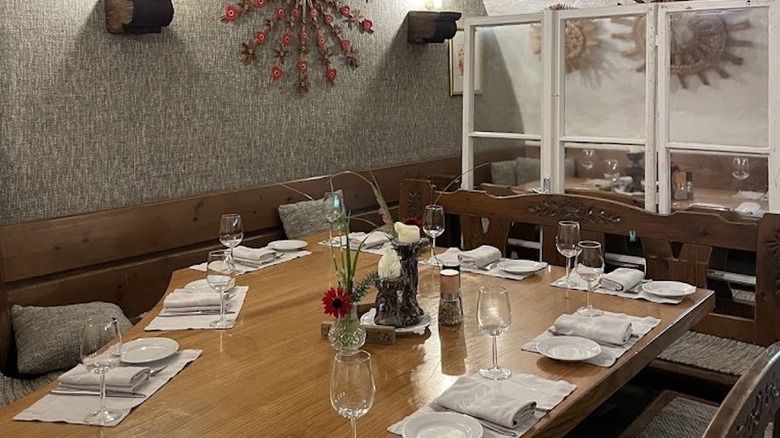
With a winemaking history dating back to 777 at the latest — which was before Austria was even a country — it's doubtless that Nikolaihof in Wachau has seen a lot of pours. It got its start as a Roman Empire army base, when soldiers were entitled to what would equate to nearly three bottles of wine per day. To maximize that generous amount, the soldiers planted vineyards, which were later sold to the Kremsmünster monastery. After being owned by churches for centuries, Nikolaihof was bought by the Saahs family in the late 19th century, and now the fruits of its labors can be enjoyed by all.
Plus, those fruits are entirely organic. Besides following organic farming practices, Nikolaihof also adheres to biodynamic farming principles across its nearly 55 acres of vineyards. It grows grüner veltliner, chardonnay, and riesling grapes, among others, before naturally fermenting them in Austrian oak vessels and aging them for up to more than a dozen years.
The best way to taste what that thoughtfulness has resulted in is to head to the winery for a tasting, which is only available Fridays and Saturdays. However, it's worth planning for, according to previous visitors. "I was thrilled to have the opportunity to visit this historic and world-renowned winery, and the experience did not disappoint," wrote one past visitor on Google. "Everyone we met, from wine tasting to the restaurant, was so warm, welcoming and kind. The wine and food was just as great!!!"
Schloss Johannisberg, Geisenheim, Germany
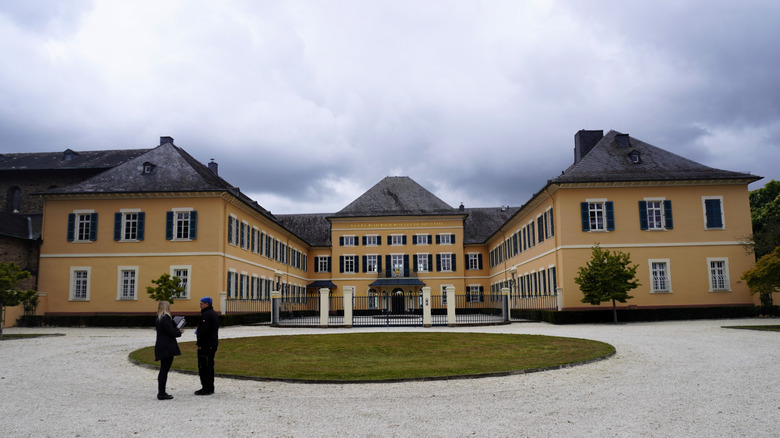
If you're looking for a winery that is as storied as it is beautiful, then there is perhaps no better place to relax with a glass than Schloss Johannisberg in Geisenheim, Germany. Its first mention dates back to 817, when the winery was obtained by Emperor Ludwig the Pious from a monastery. Schloss Johannisberg features a historic castle as well as a 741-acre forest. The oak from the forest is used to make barrels, which the winery's riesling is aged in.
Riesling is the only wine that Schloss Johannisberg makes, as it became the planet's first riesling-only winery in 1720. That hyper focus paid off for Schloss Johannisberg, which was named Europe's best winery in 2025. To find out why, visit Schloss Johannisberg for a tour and tasting, which range from tastings in the 25,000-bottle wine cellar that was part of the property's original abbey to outdoor tastings with a lush view.
"Schloss Johannisberg is one of Germany's most iconic wine estates, and the visit delivered a strong end-to-end guest experience," wrote a visitor on Google. "The setting alone is a differentiator—elevated views over the Rheingau, a historic property, and a well-managed flow from arrival to tasting."
Staffelter Hof, Mosel, Germany
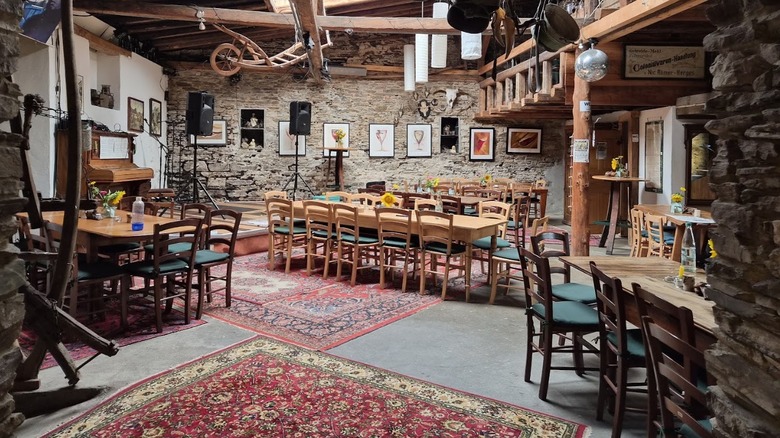
Dating back to 862, when it was founded by Benedictine monks, Staffelter Hof in Mosel, Germany, isn't just one of the oldest wineries in the world. It's also one of the oldest businesses in the world. In some ways, it continues its traditions of yesteryear, since its wines are hand-bottled and unfiltered. Its label also features the image of a wolf named Magnus, who, according to legend, after eating the donkey who tended to the vineyards, was forced to do the donkey's former work at the winery.
However, Staffelter Hof is cutting-edge in all the ways that count. It follows organic farming practices and also grows grapes unique to the area. Plus, always with an eye on tomorrow, it uses sustainable water management and energy practices. That care is evident in its wide array of high-quality wines such as Magnus Riesling, Krover Steffensberg Gege, and Three Colors Red.
Visitors can try these wines while seeing where they have been made for centuries by visiting Staffelter Hof, which offers tastings and guided tours starting at about $23 per person. It also offers a unique sensory tasting, which is held by candlelight in the wine cellar among sound bowls operated by a sound massage practitioner. "We booked a wine tasting on Saturday and the setting is just great," wrote someone on Google. "The natural wines are beautiful and Jan is one of the most interesting winemakers we've met."
Château de Goulaine, Haute-Goulaine, France
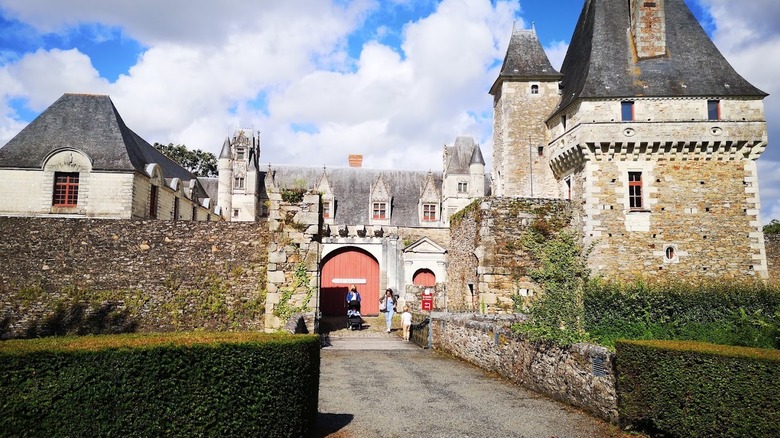
The tale of Château de Goulaine in Haute-Goulaine, France, is something of a phoenix. After being established as the oldest family-operated business in the country in 1000, the estate was sold outside the family in 1788. But in 1858, the Goulaine family bought back their beloved estate, and they continue to operate it today as a winery, museum, and event venue. Guided and self-guided tours of the property can include wine tastings and lunch in one of the chateau's ancient rooms.
Although it's unknown what year Château de Goulaine began selling its wine to the public, it's still one of the last winemaking estates in the area. It produces three types of wine: a chinon, a rosé, and a sauvignon blanc.
"A wonderful bottle of Chardony for only €6," wrote a pleased guest on Google. "We will be calling in again on our way home. The chateau itself is simple with a large garden and views of the surrounding marshes." Continue your French wine venture on this immersive seven-day journey by train to France's most iconic wine regions.
Schloss Vollrads, Oestrich-Winkel, Germany
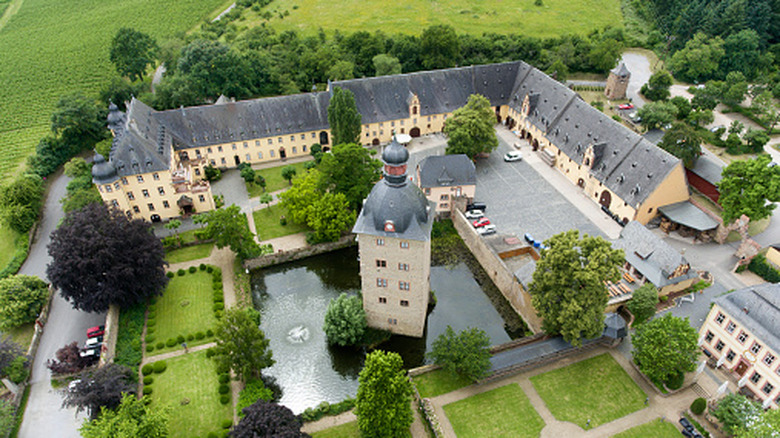
You won't find the same variety of grapes at Schloss Vollrads in Oestrich-Winkel, Germany, as you do at some of the other wineries on this list. But that's because Schloss Vollrads has been hard at work perfecting its riesling — its only grape — since the founding Greiffenclau family sold its first bottle in 1211. That makes it both one of the oldest commercially run and continuously operated wineries on the planet. It's also known for making some of the best Rieslings in the region. Its wines include the Goethewein Gutsriesling, the Riesling-Schorle, and the Schlossberg Riesling.
Schloss Vollrads raises riesling grapes across more than 170 acres of vineyards. It offers a wide array of ways to sample its wines, as the historic winery hosts walking wine tastings, wine lunches, cellar tours, and more. It also has an onsite restaurant so visitors can sample fare to complement their wine, with menu items like grilled sausage with horseradish mustard and potato cucumber salad, and tagliatelle with truffle cream sauce.
"A magnificent castle with its own wine shop and tasting, the perfect place to enjoy their wines right where they're made," praised one person on Tripadvisor. "I highly recommend spending an afternoon here; it's a wonderful experience for wine lovers and anyone interested in local history and scenery."
Ricasoli 1141, Chianti, Italy
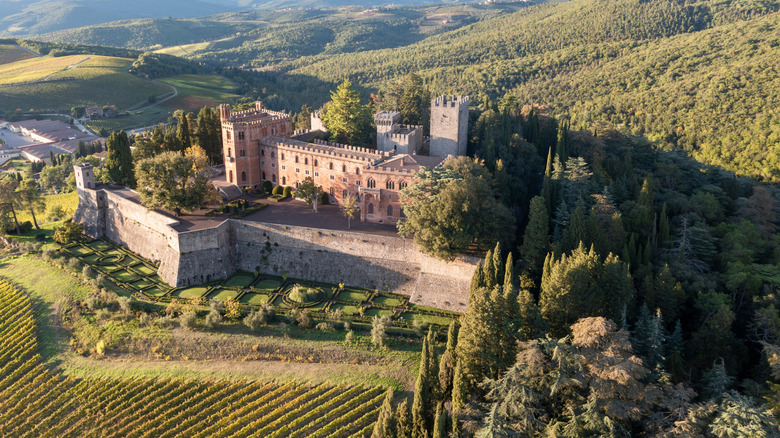
The Ricasoli family has been involved in wine since 1141, when they were living at Brolio Castle in Chianti, Italy. In the coming centuries, that endeavor became more ambitious as their wines were requested as far away as the Netherlands. But that reached new heights when the Ricasolis developed Chianti Classico with a combination of sangiovese, canaiolo, and malvasia bianca grapes in 1872. These days, Ricasoli harvests grapes across more than 345 acres of vineyards surrounding Brolio Castle, making it the prominent winery in the Chianti Classico region, as well as the oldest winery in Italy. To keep their wines as delicious as they are, Ricasoli 1141 is always looking to improve, as it even has its own laboratory and technical department. It also zones its property to identify the specific differences of its terroir.
Visitors can try Chianti Classico where it got its start by visiting the winery and embarking on its plethora of experiences, ranging from a wine tasting with light bites at sunset for about $46 to a private guided tour and lunch with a wine tasting for about $197. "The wines from the castle's vineyards are exquisite, and sampling them in such a beautiful setting was a real treat," wrote one past visitor on Google. "The staff were friendly and knowledgeable, making the experience even more enjoyable." Or, if you don't want to get on a plane, check out these New England wineries that feel straight out of Italy instead.
Kutjevo, Slavonia, Croatia
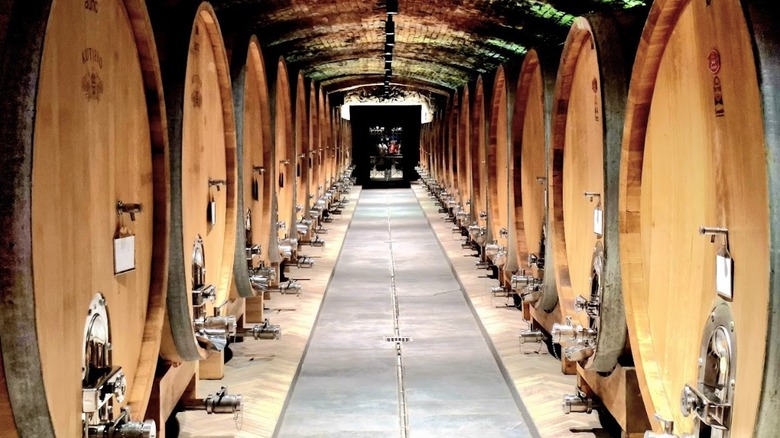
In 1232, Cistercian monks built the wine cellar that still stands at Kutjevo in Slavonia, Croatia. That winemaking tradition continues to blossom at Kutjevo due to the area's distinctive terroir that includes sunny skies and cool winds. Thanks to that terroir, Kutjevo makes award-winning wines including the muscat chardonnay, Rhine riesling, pinot blanc, and Kutjevo traminer, some of which are stored in a 65,000-bottle wine archive. Their wines make up half of all exported Croatian wine.
But you can also taste these wines right where they're made. Kutjevo offers wine tastings and tours for $17-$21 per person. It also has an on-site restaurant where visitors can try the wines and eat food that complements the wines, all while gazing at Kutjevo's rolling hills of vineyards. "Beautiful winery and wine cellars," wrote one past visitor on Google. "A must visit with a tasting of Grasevin wine from the De Gotho line."
Ptujska Klet, Štajerska, Slovenia
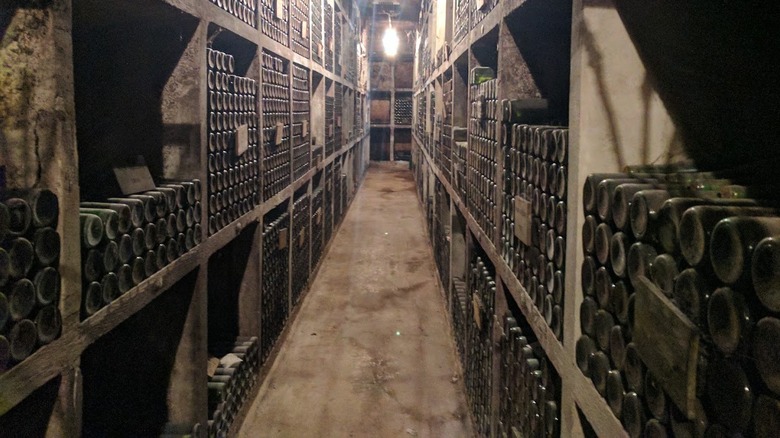
With its high heights, cool, windy weather, and limestone soil, the Slovenian winemaking region of Štajerska is best known for its crisp and fragrant wines. And that's what Ptujska Klet has delivered since the winery was established, according to some sources, in 1239 by monks.
Ptujska Klet is the oldest continuously running winery in the country, now with more than 740 acres of vineyards. Some of its wines have plenty of history, too, as Ptujska Klet is home to the most storied preserved Slovenian wine in existence in its famed wine cellar, which is the more than century-old Zlata trta. But even with distinguished bottles such as that, Ptujska Klet still excels at producing known and loved table wines like the Haložan White 1L. Some of the varieties it produces include pinot grigio, blaufrankisch, and yellow muscat, which have won hundreds of awards at international wine competitions. With its modern and sustainable farming practices, it hopes to continue winemaking for the coming generations, too.
Visitors can try Ptujska Klet's creations by booking a guided tasting and tour. "Excellent tour with Nina," wrote one past visitor on Google. "She was very engaged and informative. The wines we tasted were delicious and we ended up buying half a case." To try more Slovenian wine, check out Brda, which is dubbed "the Tuscany of Slovenia."
Codorníu, Catalonia, Spain
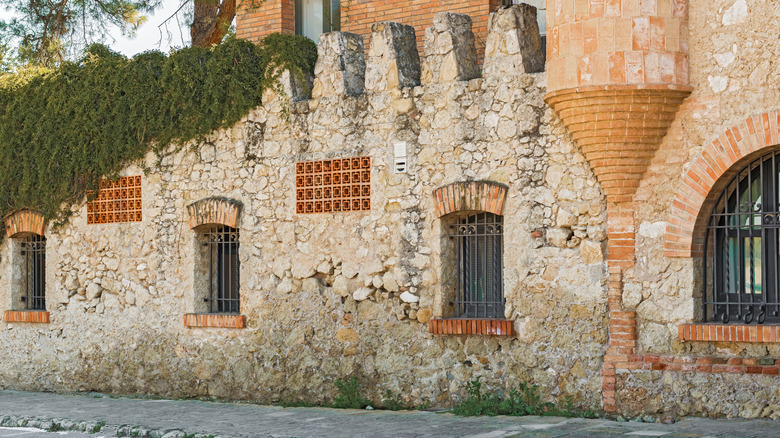
Dating back to 1551, Codorníu in Catalonia, Spain, is the oldest family-owned business as well as the oldest winery in the country. But as if that wasn't impressive enough, Codorníu also created cava in 1872 using macabeo, xarello, and parellada grapes. Josep Raventós Fatjó had the idea to combine the three grapes after visiting France and following the same method that the French use to make Champagne. Cava is the Catalan word meaning "cave," which is where Fatjó stored his new creation.
Codorníu continues to be one of the largest makers of cava in the country, with some of its wines including Codorníu Cuvée Original Brut Ecológico, Anna de Codorníu Blanc de Noirs, and Ars Collecta Grand Rosé Reserve. All of its grapes are farmed sustainably and then double-fermented by winemaker Bruno Colomer.
Wines are stored in Codorníu's cellar, which was designed by Catalan modernist architect Josep Puig i Cadafalch in 1895. The cellars are now a national historic monument. Visitors can see the cellars by taking a tour, which ranges from $29-$100 per person and can also include cava tastings and a meal at the on-site restaurant. "The oldest and most historic bodegas in Spain, with impressive architecture, beautiful underground cellars, and a rich winemaking heritage," wrote one past visitor on Google. "The tour was excellent, and the cava tasting was the perfect ending. A must-visit near Barcelona."
Casa Madero, Parras Valley, Mexico
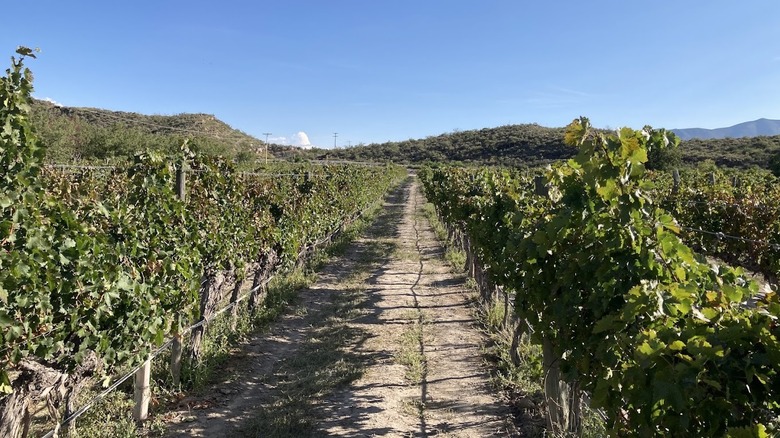
When Spaniards headed to what's now known as Parras Valley in Mexico in 1567, they hoped to strike it big by finding gold and silver. Although they didn't find it, they found something that, in some ways, was even better. Wild grapevines filled the area, which formed the foundation of what later became Casa Madero, which is the oldest winery in the Americas as well as the most awarded winery in the country. It traces its founding back to 1597 to Don Lorenzo Garcia a Merced. Although the property was abandoned by the end of the 18th century, the Madero family later purchased it and restored everything from the on-site church to the production facility.
Thanks to their efforts, Casa Madero is alive and well, making wines such as malbec, merlot, shiraz, and chardonnay, which have garnered a whopping 1,300 international awards. All of the wines are made from organic grapes that are farmed sustainably, and only include vegan products. To taste what a difference that makes, visit Casa Madero and book a wine tasting and tour or the Signature Experience, which includes a tour, tasting, and lunch.
"Visiting Casa Madero was an elegant and unforgettable experience for any wine lover," wrote one past visitor on Google. "The vineyard is absolutely beautiful, surrounded by peaceful landscapes and a historic atmosphere that reflects the rich tradition of Mexican winemaking."
Rustenberg Wines, Stellenbosch, South Africa
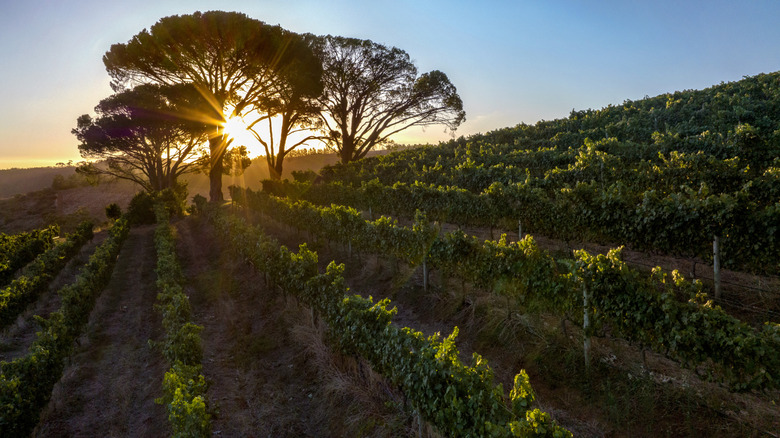
When German-born Rustenberg Wines founder Roelof Pasman arrived in Stellenbosch, South Africa, one thing was obvious to him — the area, with its bay breeze, sunny skies, and cool temperature, was a lot like the vineyard-rich Rhine Valley near where he was from. So, in 1682, he named his new land Rustenburg after his hometown and later planted 5,000 grapevines there; the area continues to be an underrated wine region. Today, those grapevines continue to outdo themselves under the stewardship of the Barlow family, who bought the property in 1941 and have continued to perfect its winemaking ability. As the longest-running owning family of the winery, the Barlows produce wines like chardonnay, sauvignon blanc, malbec, and merlot.
Tastings cost about $4-$9 and are held every day of the week. "The wines are incredible and extremely good quality for money, especially for locals who knows how expensive wine in Stellenbosch can get," wrote one past visitor on Google. "I still talk about Rustenburg to anyone who asks where to go for a wine tasting and it's been 2 months since I was there."
Achaia Clauss, Petroto, Greece
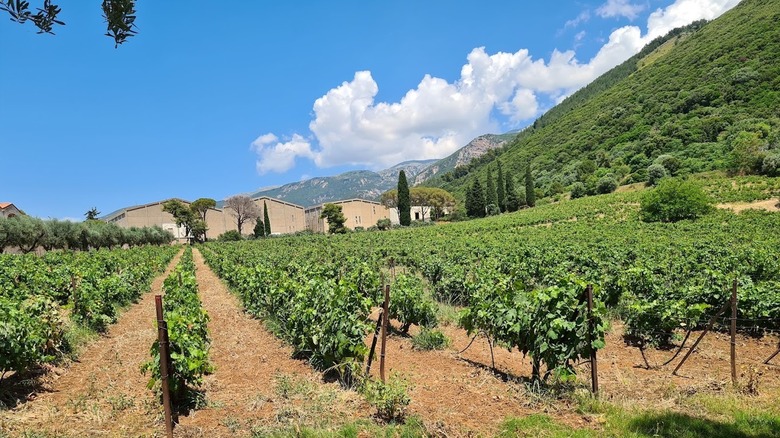
As a winery since 1861, Achaia Clauss in Petroto, Greece doesn't have the centuries that some of the other historic wineries on this list have. However, it's made the years that it has count. Throughout the decades, it's attracted notable visitors including Empress Elisabeth of Austria, pioneer of penicillin Alexander Fleming, and composer Franz Liszt. They were likely attracted to Achaia Clauss's most renowned wines such as the rich red mavrodafni and demestiha, which have been a staple of the winery nearly since its beginning.
To see Achaia Clauss's stunning property and try these wines for yourself, book anything starting from the family-friendly sightseeing tour for about $6, which offers a wine tasting and ventures through the property's two churches, museum, wine cellar, and castle courtyard. "Was like we was in a fairy tale walking through the big wooden doors and beautiful estate," wrote one past visitor on Google. "The history is very rich and the museum with the wine barrels is amazing the smell of the old wine is addictive."