
Unexpected Traits Australians Always Notice About American Tourists
Bucket-list status doesn't come easy. Only the most remarkable destinations with that elusive touch of magic that makes a place unforgettable reach those heights. From all indications, Australia has that 'it' factor. Melbourne was crowned one of the world's top food destinations in 2025, the Great Barrier Reef is one of the Seven Natural Wonders of the World, and those looking for beach escapes will find plenty of options for island and coastal getaways. No wonder the country consistently makes the bucket lists of experienced travelers. With all these destinations, it wouldn't be a surprise if you've planned the trip of a lifetime to the continent. If one of your worries is how you'll be received as an American, there is some good news. You'll fit right in when it comes to a similar standard of living and a shared language — although the accent may sound unfamiliar. But there'll also be marked differences, often rooted in culture.
While you'll share a common language, Americans have differences in their speech that Aussies notice immediately. Acceptable ways of engaging with service staff in the U.S. are sometimes against Australian etiquette and may cause you to stick out. Unexpected things like using an Amex card can cause you to stand out as an American tourist in some instances.
These traits, and the others on this list, are the ones Australians may notice most about Americans. We know because we scoured Reddit for threads where Australians told stories about encounters that made them associate particular traits and behaviors with American visitors or gave advice to Americans about to visit. Pay attention to these behaviors and adjust where you can, and your trip will go much more smoothly.
Speaking loudly

When everybody around you speaks at the same volume, the question of whether or not you speak loudly hardly comes up. While you may be an individual in many ways, there are some things you unconsciously share with others from your culture. How loudly you speak is one of these. Japanese people and Scandinavians are examples on the quieter end, while Spaniards and Italians land on the louder end. According to Psychologs Magazine, more expressive and extroverted people speak louder, while people from more introverted cultures may prefer quieter conversations. Americans are largely an extroverted group, which may make them speak louder (via World Population Review).
"The thing that often immediately lets us know people are American is the unnecessarily loud volume of their speaking voice. If you are addressing a person standing next to you, there is no reason to talk so loudly that everyone else in the room (or building) can hear you," explained one local on Reddit.
Luckily, this habit is easy to fix if you pay attention to your voice in social situations. "Whatever your natural speaking volume is, please reduce it," recommended another Redditor, and we think that's good advice.
A perceived arrogance

The typical American would not consider celebrating a raise or promotion to be arrogant. This is understandable, especially when you consider that self-promotion is embedded in popular culture. Whether it's our music or athletes (like Muhammad Ali, who famously said he was the greatest in his iconic 1964 sting like a bee quote), the U.S. is known as a culture that is comfortable vocally celebrating achievement. If you bring these habits to Australia, you may find yourself sticking out.
"I would be mindful about bragging about accomplishment or any American exceptionalism kind of talk. It is a lot less socially acceptable in Australia ... Many people in Australia instead play their accomplishments down," explained one Aussie on Reddit. And another Redditor cautioned: "Loud talking and discussing one's own financial successes ... are gauche here."
Given U.S. culture, this reaction may be surprising. But there's an explanation. According to Psychology Today, some cultures align with the belief that anyone who succeeds above the group is a threat to cohesiveness and should be knocked back down to the same level as everyone else. This phenomenon, called "tall poppy syndrome," is popularly associated with Australia and is why some habits may be perceived as boastful. Locals even admit to this on Reddit: "There is a bit of a tall poppy culture ... people don't respond well to arrogance." It may be difficult, but while socializing on your trip, consider avoiding excessive discussion of professional achievements or anything else that may be construed as arrogant, even if boasting isn't your intention.
Answering with your home state when asked where you're from
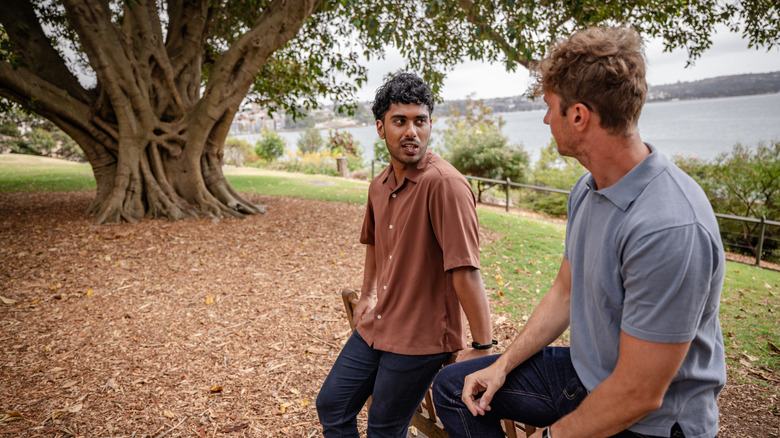
You probably wouldn't find it unusual that a fellow citizen would lead with the state they're from in introductions, but Australians find this habit very strange. "When asked where you're from just say the U.S. ... No other country in the world announces which part they're from without saying the country first," said one local on Reddit. "Don't say what state you come from we don't care it's a real American trope that is really annoying ... If we continue the conversation we may ask what part of America, then you can say the state," explained another.
One reason for this habit is the U.S.'s sheer size. The massive country hides many destinations that are worth a visit and Americans often play tourists back home because of this. In fact, according to a 2025 Squaremouth study, 90% of all travel inside the U.S. is domestic. When traveling nationally, it makes sense to introduce yourself by state as an explanation of where you're from in relation to the vast nation. One American explained it like this on Facebook: "We're so used to answering the question from within the US ... Many also travel within the states with far more frequency than internationally (generally). So that response really is a habit."
With this in mind, it's no surprise that Americans default to giving their state when asked where they're from. On the other hand, it's also understandable that this can fall flat to some Aussies. One explained it perfectly on Reddit. "When people ask you where you're from, just say the US – most of us Aussies have little knowledge of the actual states." We know it's hard to fight natural inclination but if you want to make a good first impression, follow this local's advice as best you can.
Using the wrong side of the road
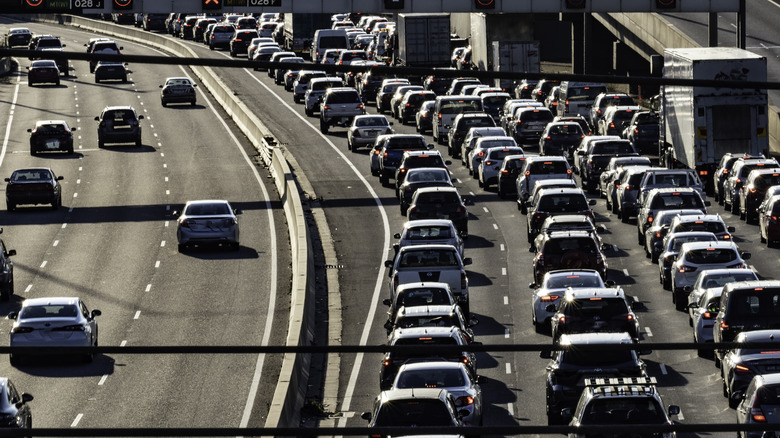
If you've been on a road trip through Scotland or gone on a day trip through the hot springs and waterfalls of Japan's secluded Yakushima island, you know that many nations drive on the left. In Japan's case, the practice dates back to medieval times, when samurai would walk on the left, so their right hands would be free to draw a sword if they were suddenly attacked. For most of the rest of the left-hand-driving world, the practice was inherited from England — which is why former British colonies like New Zealand and India drive on the left. Australia was also once a British colony and maintains the tradition. Although tourists from other nations that drive on the right visit Australia, for some reason, those who use the wrong side of the road are often branded American. And this isn't confined to driving.
It turns out being used to driving on the right can translate to other behaviors that can be frustrating, at best, and downright dangerous, at worst. "I saw an American guy trying to hitch hike on the right side of the road. It did not go well," said one local on Reddit. Another outlined a more dangerous instance: "Americans tend to walk on the right side of the street and can also expect traffic to be coming from the wrong side," they explained on Reddit. "When crossing the road don't forget to look both ways – the traffic will be coming from the opposite direction than you're used to."
While staying on the left side of streets will help you fit in, the stakes can be much higher. Pay strict attention to the road when driving or walking so you don't unwittingly put yourself in a dangerous situation. In particular, always pay attention to where traffic is coming from.
Tipping too much (or at all)
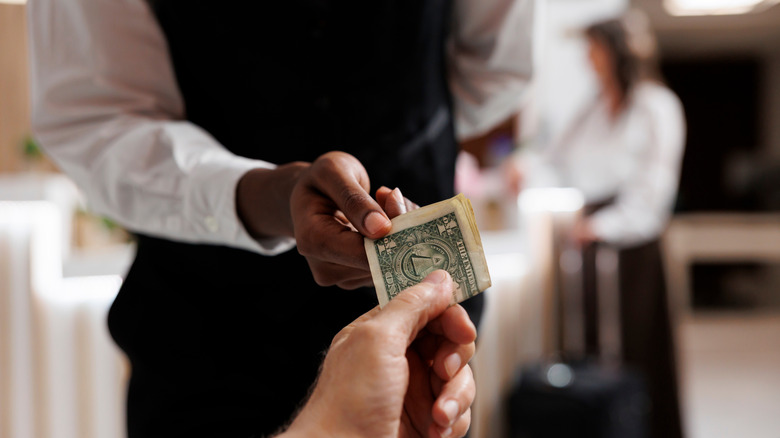
There's hardly any controversy about tipping in the U.S. Overall, Americans don't mind tipping. In fact, a 2024 Bankrate study found that 67% of people who dine out in sit-down restaurants usually leave something extra. Not tipping is often frowned on, especially when dining out. In Australia, the opposite is true.
You wouldn't expect it, but if you leave a tip in Australia, you may get noticed as an American tourist immediately. And it may not be the good kind of attention. One American was actually warned against it, according to this story on Reddit: "I'm an American and I recently gave a generous tip to a bartender in Perth. My Aussie buddies promptly told me to never do that again." To understand this stance on tipping, you have to understand the reasoning behind it. You may even agree when you see how tipping can affect quality of life.
Unless it's for above-and-beyond service, Australians don't want tipping to become part of their culture. Sean Callery, a local finance expert, said in an article on Nine.com that Australians "expect hospitality staff to be paid fairly by their employer for providing a service, not subsidized by the customers." One Redditor reiterated how strongly Aussies held to these views: "You look them in the eyes, and slowly and firmly press the "None" button. And you ABSOLUTELY don't tip anyone else ... Most of us Australians don't want tipping culture here."
Interacting with service staff in ways that can sometimes seem rude
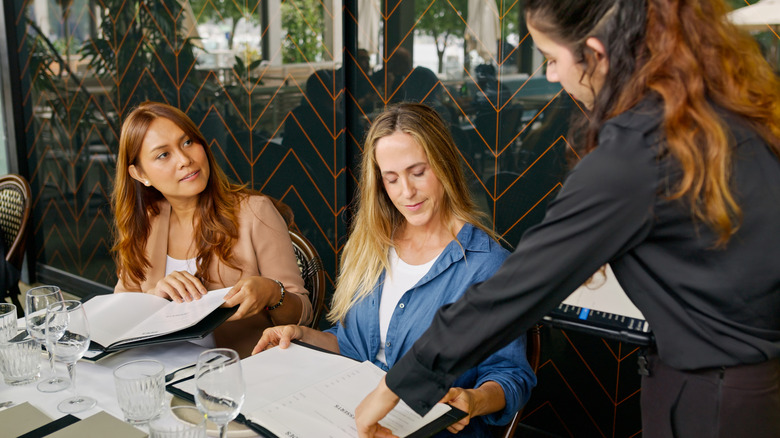
Because Australia doesn't have the same tipping culture, service staff aren't as performatively nice in the hope of getting a tip. Snapping fingers or waving money at your waiter, shaking your glass at a server to signal a refill, making requests without adding a "please," and being condescending are all unacceptable in Australia.
This isn't to suggest that all Americans act in these ways. But there are a few bad apples. And according to Teófilo Reyes, research director with Restaurant Opportunities Centers United, tipping culture is partially to blame. He made it clear in an article on Eater that when employees depend on gratuities, the tipper is in a position of power that can lead waitstaff to think "the customer is always right." But these kinds of behaviors won't gain you brownie points in Australia. "The quid pro quo for not tipping is you do not speak down to service workers – Australian culture is one of (at least) feigned equality," advised a local on Reddit.
To reiterate, the majority of Americans do not behave like this. But it only takes a few for Redditors to tell stories like this: "I've been in coffee shops for example where an American asks for a regular coffee and gets mad when the barista doesn't know since drip coffee isn't really big here." When interacting with waitstaff, try to extend the same grace and kindness you would back home, and you should have a good trip, whether your plans include the foodie-friendly town of Dookie in Victoria or Port Lincoln, Australia's seafood capital, nestled in South Australia.
Using an American Express card in some places
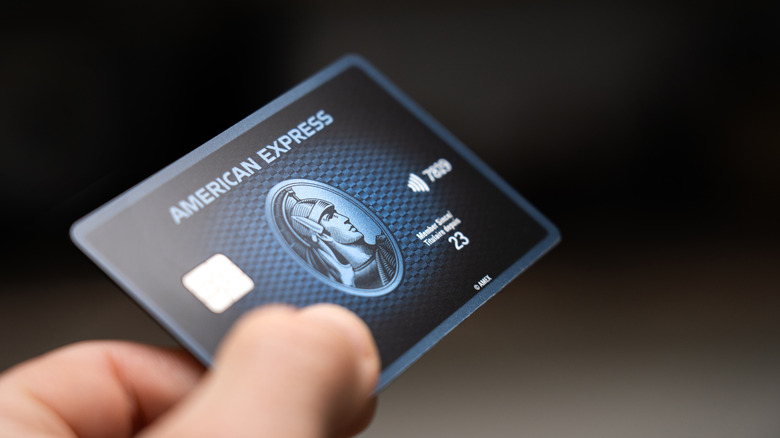
Seeing an Amex card swiped at cash registers as you go about your day probably doesn't raise an eyebrow in the U.S. The distinctive cards are commonly accepted around the U.S. and many other nations, but quite a few destinations don't accept them. From all indications, Australia has quite a few places that don't accept Amex. Since locals know not to use an Amex card in these locations, they often notice when Americans do.
One Aussie told this story on Reddit: "In the queue at Aldi last week, the person in front of me asked if they could pay by Amex. The poor kid at the checkout didn't know what she was talking about so she rephrased as American Express. So the guy serving then asked if she was an American Tourist." While it's not embarrassing when your card isn't accepted in cases like this, it can be inconvenient. This is why another local gave this advice in a Reddit thread: "Make sure you're sorted for how you're going to pay for things – a lot of our card machines don't take Amex. Some service businesses like tattooers and beauticians don't take card payments, only bank transfer or cash."
The main issues with Amex are that merchants are charged higher fees compared with Visa and Mastercard and may need different payment processing equipment to accept the cards. The company is taking steps to address both issues, but until it's more widely accepted in Australia, you'll want to have a plan. Consider carrying a backup card and cash. Amex also has a locator tool that you may want to check before heading out.
Engaging strangers in conversation on public transportation
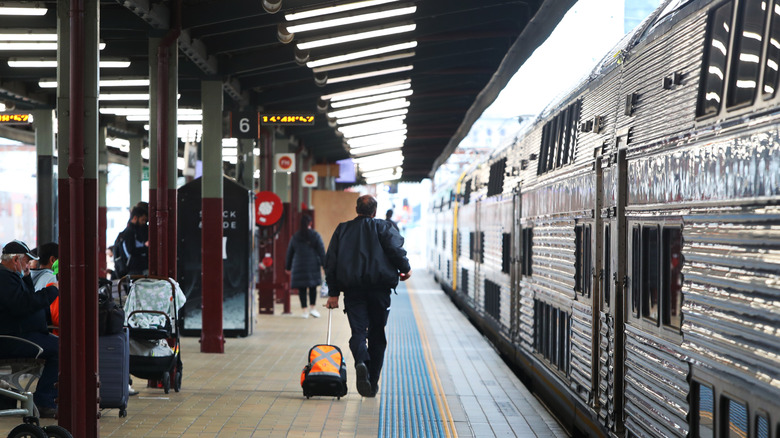
Australians pride themselves on their friendly and welcoming culture. Many visitors agree, noting that locals are a laid-back, sociable bunch. They're also known to be approachable and humorous in conversation. Yet, as this story from Reddit suggests, there's one place where they don't want social interaction: "One time I was on the tram and it was approaching a stop. An American girl spotted a guy racing to get to the tram and she started cheering him on ... The American girl tried chatting to him but he just didn't want to engage. I kind of felt bad for her because she seemed very good natured but Aussies really are not into chatting on PT (public transportation)."
Trying to strike up a conversation on public transportation may come naturally to you, but if you do, you may stand out as an American. Given Australia's welcoming culture, it's unclear why this is the case. The closest explanation we found came from another Redditor: "Don't strike up conversations with strangers on public transport. I've seen so many Americans do this. Generally that's a bit of a quiet meditation time for us going to and from work ... Happy to have a good chin wag at the pub. But leave us alone on the train." It seems Aussies just like their quiet time while commuting.