
Unwritten Rules You Should Know Before Visiting Grand Teton National Park
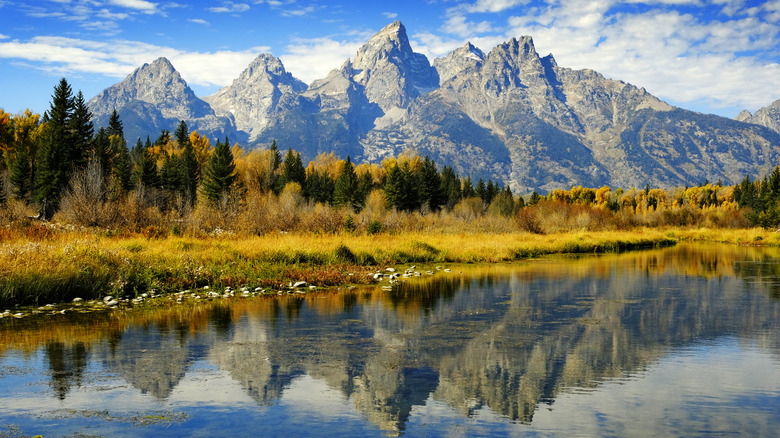
Maybe it's the 310,000 acres of gorgeous mountains, meadows, rivers, and lakes. Perhaps it's the grizzly bears, moose, bison, marmots, and dozens of other creatures found throughout the rugged landscape. Or maybe it's the log cabin-style lodging, scenic drives, and hikes that make Grand Teton National Park a must-visit in northwestern Wyoming. You're not alone if it all seems like a lot. Especially on a first visit, everything there is to see, do, and learn about can feel overwhelming. We've rounded up 11 tips and tricks to help you prepare for your visit.
There are a lot of written rules and regulations at national parks, which range from Leave No Trace principles to keeping a safe distance from wildlife — including not feeding the animals — and being aware of permits you need if you head into the backcountry overnight. But travelers and the park itself also share plenty of nuggets of wisdom on how to enjoy your visit to the fullest while staying safe and responsible.
The list below includes "don'ts" and "dos," from where and when to drive to how to save a little extra cash in one of the most expensive national park regions in the country. You'll find that some notes are very Grand Teton-specific, while others are often applicable in other parks as well, especially those in the Rocky Mountains. To arrive at this roundup, we've consulted a number of blogs, Reddit threads, and regional businesses to highlight the best ways to approach a visit to the park. For practical information and data, we primarily consulted NPS.gov and related foundations, and one special thing to note is that ongoing construction projects, which are slated to continue until 2029, may affect accessibility, so check updates before you go.
Don't miss out on the best times for wildlife sightings
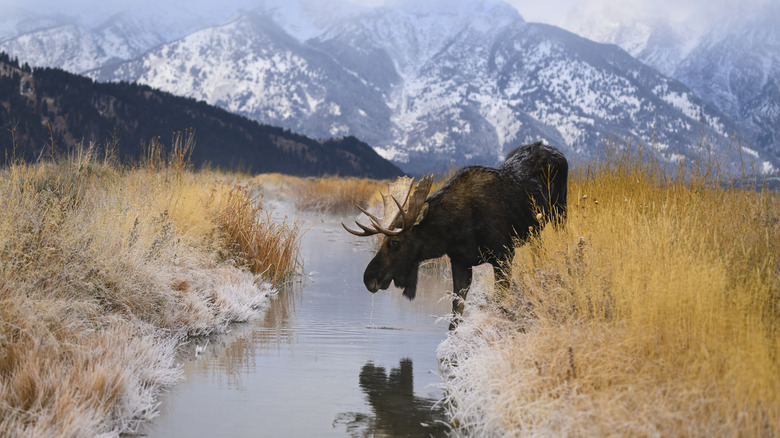
Nestled within the Greater Yellowstone Ecosystem, Grand Teton National Park is but a fraction of this uniquely vast environment, home to more than 60 mammal species and 300 kinds of birds. You can spot elk, coyotes, bald eagles, marmots, grizzly and black bears, and much more. It's often a matter of luck whether you cross the path of an elusive mountain lion or a wolf in the park, but you can maximize your chances by heading out at certain times of day when many of these animals are more active — at your own risk!
There are both seasonal and daily elements at play when it comes to animals' routines and when you can best spot them. In the summer, when the park sees most of its visitors, wildlife is most often spotted in the early morning and evening, when the temperatures are cooler. Photographers often refer to these periods as the "golden hour" because the light is warm and atmospheric. Along with your camera, bring a pair of binoculars to get the best view, and remember to keep a good distance from the wild denizens.
Visitors often recommend heading to Gros Ventre Road, which parallels the Gros Ventre River between U.S. Highway 191 and Gros Ventre Campground, to see moose. "Go early. We've been seeing them between 6:30 – 7:30 am," shares a visitor on Facebook during a visit in summer 2026. Outfits like BrushBuck Wildlife Tours and Jackson Hole Wildlife Safaris offer guided viewing tours both in the summer and winter.
Renting canisters of bear spray saves money
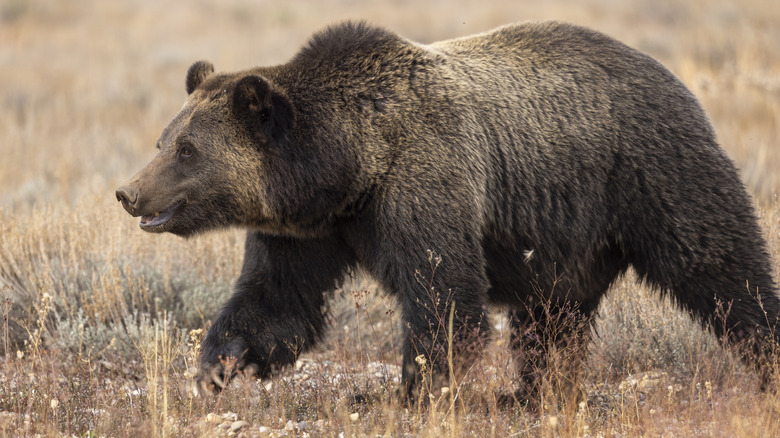
Visitors to the Rockies should respect Ursus arctos horriblis — the grizzly bear. Males can weigh more than 600 pounds, and females can weigh upwards of 350 pounds. Throw a case of the munchies into the mix, or a mama bear who thinks you're too close to her cubs, and you could be in for some real trouble. According to Jackson Hole News & Guide, grizzly bear attacks are exceedingly rare, and there hasn't been a single human fatality due to an attack in the park's history. (The same unfortunately can't be said for the bears, like the beloved, 28-year-old Grizzly Bear 399, known as the "Queen of the Tetons," who was killed by a vehicle in October 2024.)
Attacks may be rare, but it pays to be prepared so you don't become a statistic. Understanding bear safety is a good start, including carrying bear spray and knowing how to use it. It's highly recommended for those heading out on the trails, especially in the wilderness, but it should only be used if you encounter a bear that's actually aggressive toward you. EPA-approved brands can run $40 to $60 or more for a canister, but Bear Spray Shack and Bear Aware offer rentals for use in the park.
A rental from Bear Spray Shack, for example, starts at $10 per day or up to $30 for five or more days. Bear Aware caps its rental cost — granted the canister is unsprayed — at $28, and has quite a few more pickup/return locations. If the product is sprayed, though, there's usually a surcharge, which is about the cost of a full can. You'll get the best deal if you're just heading out for one or two days; otherwise, for longer treks, bring your own.
Don't discount a winter visit, even though it's very different
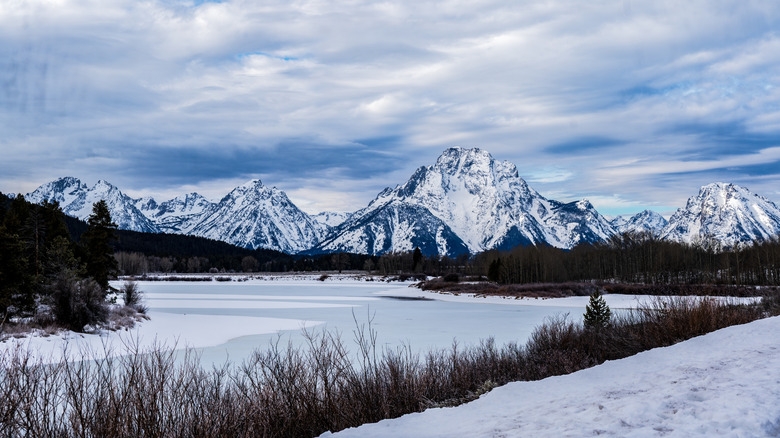
Grand Teton National Park might seem like it closes up shop in the winter, which is partly true, but the wild draws of this remarkable park don't stop just because many of its buildings and roads are closed. It's one of the best national parks to visit in the winter for hiking, partly because much of the tourist hustle and bustle is over for the year. Snowshoers and cross-country skiers are welcome to meander along part of the Teton Park Road between November 1 and April 30 when it's closed to all other vehicles. Snowmobilers are also welcome to motor along the John D. Rockefeller, Jr. Memorial Parkway, just north of the park, plus Grand Teton National Park itself, but only if you have a newer vehicle and you're headed to Jackson Lake, where ice fishing is permitted.
It probably goes without saying that winter is also one of the best times to see the mountains on dramatic display with their snow-capped peaks. Local tour operators like BrushBuck, Jackson Hole Wildlife Safaris, and Teton Science Schools offer winter excursions to view wildlife like bighorn sheep, moose, and wolves. These tours often involve traveling by sleigh or "snowcoach" in order to access places regular vehicles can't go. Alternatively, the park's own "Snowshoe with a Ranger" program is free, takes about two hours, and runs a couple of times each week between January and March.
Go past where most tourists stop
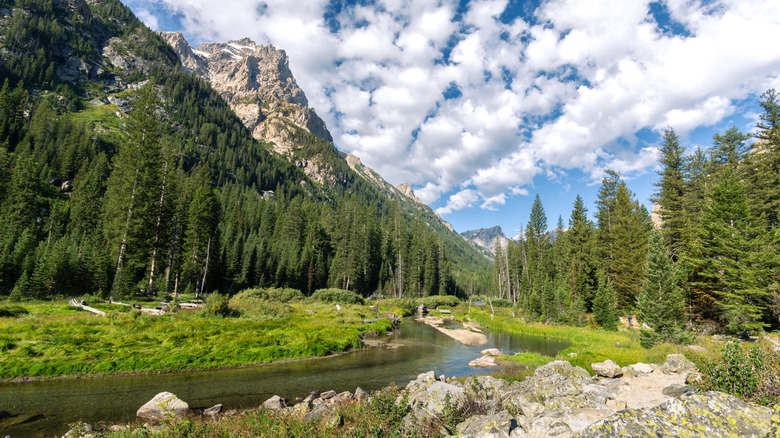
Catching the sunrise against the towering mountains will be one of the best things you'll experience during your trip to the Grand Tetons, but of course, it means getting up extra early, throwing on some layers, and heading to a scenic spot. There are a handful of prime spots for catching the sunrise, such as Schwabacher Landing near Moose, with its glorious mountain views and wildlife. Other top destinations include the Blacktail Ponds Overlook, the Snake River Overlook, and Oxbow Bend, but there are many more worth discovering on your own. These areas can get pretty busy, and parking is limited. More generally, other popular spots include Mormon Row, a historic homesteader settlement, and Inspiration Point above Jenny Lake, which is reachable on a well-trodden 5.7-mile round-trip hike.
Do a little digging ahead of time if you're headed out on the trails, as there may be more than meets the eye. "Most people stop at inspiration point which is the least inspiring view in all of the Tetons so definitely keep going," shares a Redditor who suggests continuing the hike into Cascade Canyon. It's an idyllic valley with a postcard-worthy stream and a great chance to see wildlife. On Reddit, the visitor adds: "The funny thing is-all of the elevation gain ends at inspiration point (sorta) so most people do all the work for none of the payout. Don't be them." And if you're seeking a quieter experience, aim for an early start wherever you go.
Don't just stick to the park boundaries
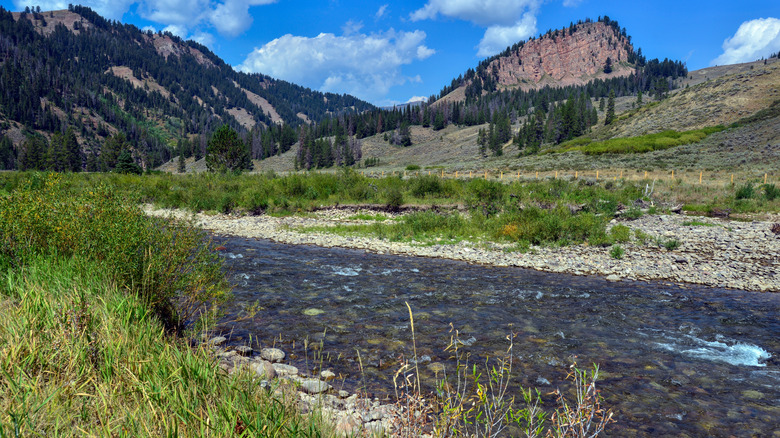
Maybe you're wondering whether Yellowstone or Grand Teton is the best for your first visit to Wyoming, but if you have the time, why stick to just one? The Greater Yellowstone Ecosystem encompasses two major national parks and numerous interconnected national forests. Knowing a bit more about the surrounding public lands may help you find free, first-come, first-served camping if the (somewhat pricey) campgrounds within the park are all filled up — which they often are. "The parks are surrounded by national forest lands that allow dispersed camping," share Perri and Dan of Crazy/Brave Adventure. "But to snag a spot, you'll need to arrive early in the day and (preferably) mid week."
Comprising the northernmost border of the park is the John D. Rockefeller, Jr. Memorial Parkway, which spans 24,000 acres for wildlife to move through, with secluded stays and hidden hikes. It connects to Yellowstone National Park, which many visitors plan to visit in addition to Grand Teton—but don't assume it'll be quick to get around. Cheryl of We're In the Rockies says that the map can be deceiving, mostly because "you can't drive 70 out there; you're driving 45, you're going over hills, and it takes a long time." Yellowstone National Park is also massive — the second largest in the contiguous U.S. at a whopping 2.2 million acres — so it's not really possible to see it properly in a single day anyway. Plan ahead; don't wing it.
Saddle up!
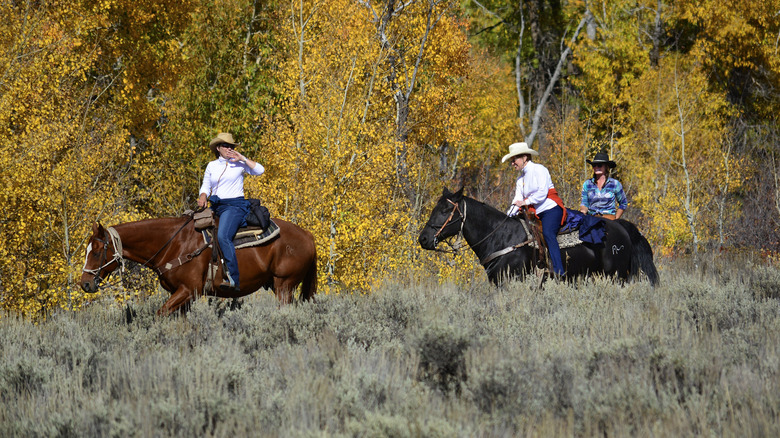
Exploring by car or on foot isn't the only way to see Grand Teton National Park, although they're certainly the most common. For a memorable way to explore the area, consider saddling up on horseback. Take your pick from jaunts led by the concessioner that operates Grand Teton Lodge Company, which depart from various popular spots like Colter Bay Corral, Jackson Lake Lodge, or Headwaters Lodge at Flagg Ranch. Triangle X Ranch, located outside the park in Jackson Hole, also offers rides as part of a vacation package. And although they don't enter the park proper, a historical experience called the Teton Wagon Train leads a convoy of covered wagons through the nearby wilderness for a camping trip redolent of homesteaders traveling in the 19th century.
Then there's the other kind of saddle — on two wheels. The Grand Teton Pathway is a paved bike trail that runs for 16 miles within the park (it's also open to pedestrians) and connects to a further network of Jackson Hole "Pathways" amounting to nearly 70 miles altogether. You can also bike right in from a bike rental spot in Jackson, such as Hoback Sports or Teton Mountain Bike Tours, which also offers guided excursions. All paved roads in the park are open to bicyclists, plus any dirt roads open to vehicles.
Stock up on all the essentials before arriving
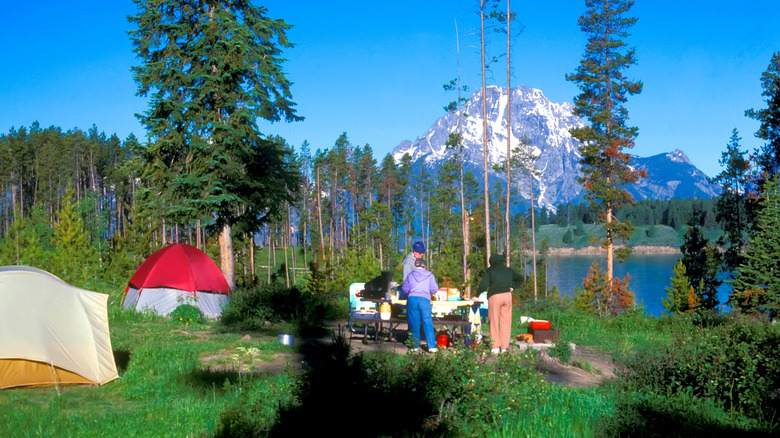
While Grand Teton National Park does have a couple of small convenience stores, including a shop in the Dornans complex — a family-owned business that's been running inside the park for more than 100 years — and the General Store at Colter Bay Village, they're not really designed to be the places to get everything you need. From Dornans, it's 13 miles south to Jackson, where you'll find the most options for supermarkets and big box stores with larger selections and lower prices. The drive from Colter Bay Village is 40 miles. In Jackson, there's an Albertson's, Target, Whole Foods, and Smith's west of downtown, with the smaller Creekside Market on the north side. The latter is a great little stop for snacks before heading into the park.
"There are a few lodges and general stores in the park where you can purchase a few things, but you will pay a premium, and the selection can be hit or miss," says Mark Wolters of Wolters World. Do yourself a favor if you know you'll need certain things: stop at a larger supermarket for better value and pack in the essentials. You can save trips to the in-park stores for special treats and avoid wasting time driving back and forth to town just to get groceries.
Give uphill hikers the right of way
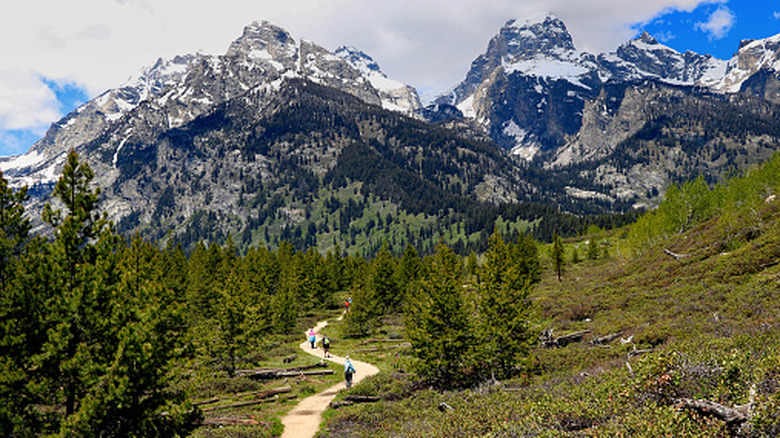
Grand Teton National Park is named for the highest peak of the Teton Range, which rises 13,770 feet above sea level. Unsurprisingly, there are a lot of high-elevation hikes in the park, and especially in the backcountry, trails can be narrow and steep. "Uphill hikers are already working against gravity, so help them out by giving them extra space on the trail," the park says, as Buckrail reported. Hikers heading downhill should always yield to those heading up the slope. And no matter the direction, remember to yield to horses, too, which always have the right of way.
Some of the most beautiful hikes in the park are also the hardest, but the views at altitude will blow you away. The 14-mile Cascade Canyon Trail to Solitude Lake is one of the most popular, featuring waterfalls and wildlife. For a slightly shorter route with stunning high-elevation views, check out the Garnet Canyon Trail to Cleft Falls, which stretches 8.4 miles out-and-back.
Bring ample layers, and avoid high-altitude sunburn
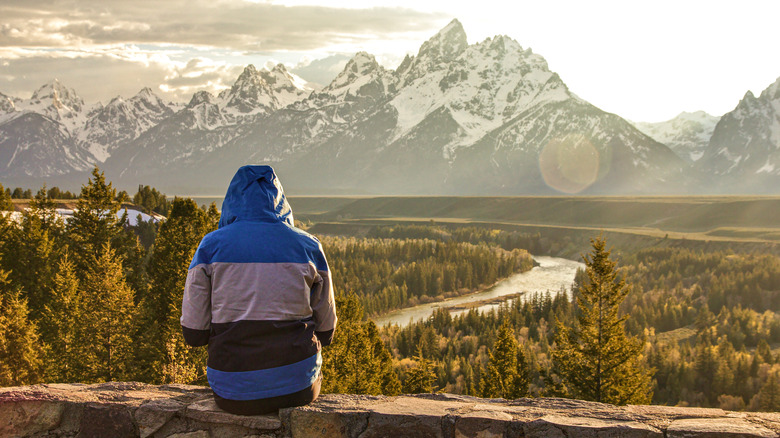
We often associate cooler places with a lower risk of sunburn, when in fact the temperature has little to do with it. The park's lowest elevation is still over 6,300 feet, and the mountains rise thousands of feet higher than that. That telltale burn comes on surprisingly quickly without as much atmosphere to block the sun's UV rays, so remember to add sunscreen to your list of must-pack items and apply regularly, especially if out on the trail during the middle of the day. You can also double up the protection with a brimmed hat and long-sleeved shirt.
On the note of layers, weather also changes quickly in the mountains — sometimes drastically — so it's a good idea to plan for changeable conditions. Even in the middle of summer, a dry, high-altitude climate means average highs in the upper 70s but nighttime temperatures that can dip into the 30s. Pack layers so you stay dry, cool, or warm enough depending on the day. "Mornings can be chilly until the sun comes up. Lots of lightweight layers are best, so you can take on and off as needed," says a visitor on Reddit.
Don't just drive by on U.S. 191
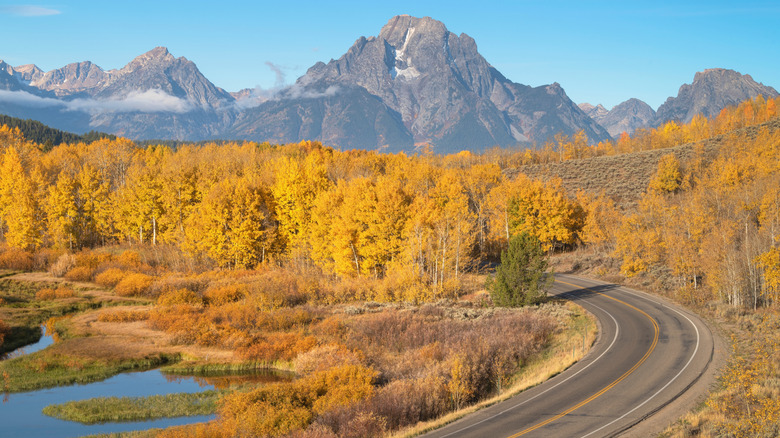
Most national parks require an entrance fee, and Grand Teton is certainly one of them, charging a $35 standard vehicle fee ($30 for motorcycles or $20 for bikes) that's good for up to seven consecutive days. That said, it is technically free to just drive through it on major federal highways, but you won't really be entering the best areas of the park. If you drive through on U.S. Highway 191/26/89, you can essentially stay on the main highway and bypass entrance stations into the fee areas of the park, but you'll miss a lot of the most spectacular views.
"You certainly enter the park boundaries driving on 191 without going through a pay station," shares a Redditor. "There are even turnouts along 191 where you could park and explore the immediate area." Go any further, though, and you'll be subject to the fees. Even if all you have time for is the whistle-stop tour as you're driving through the area, do yourself a favor and go into the park for a scenic drive past Jenny Lake and Jackson Lake via Teton Park Road, which is the western half of the Scenic Park Loop Road brimming with mountain views and the chance to see roaming bison.
Keep track of your spending
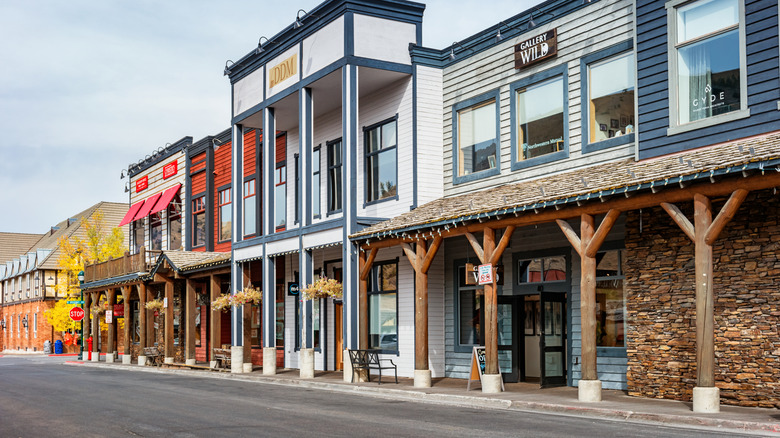
Jackson Hole — the valley around the city of Jackson — is famously affluent, brimming with big homes and mainstay ski resorts like Jackson Hole Mountain Resort and Snow King Mountain. Wyoming's year-round tourist haven, complete with national park access, fly fishing, hot springs, luxury hotels, and much more, has global appeal. In that vein, prices can lead to sticker shock. According to LendingTree, Jackson is among the nation's top three most expensive towns. Even in Grand Teton National Park, campsites cost a pretty penny. As of this writing, Colter Bay Campground's non-electric sites are $61 per night, and electric sites are $89. Gros Ventre Campground runs just $2 to $3 less.
Bring a little extra cash if you plan to spend much time in the surrounding towns or buy souvenirs or groceries in the middle of the park. Linda from Mini Luxe Travelers says the single most important decision they made to save money on a visit was arriving in April, which is shoulder season. "Ski season is winding down, summer hasn't started, and the valley sits in a quiet window that most families don't know about," she says. You can also save a lot right up front by flying into Salt Lake City and driving to Jackson rather than flying into the much smaller local airport in Jackson Hole. "Flights are cheaper and rental cars are way cheaper," a visitor says on Reddit. "Plus it's a scenic drive, and there are various routes so you can go a different way driving back to SLC."