
How To Experience Greece On A $2,000 Budget
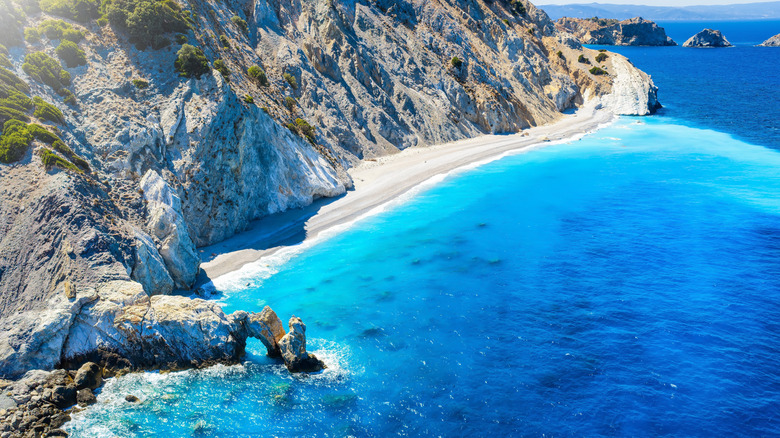
The ancient allure of the Parthenon; the idyllic beaches of Kos and Zante; the picture-perfect, white-washed slopes of Mykonos and Santorini; and we haven't even got to the food yet. Greece is a traveler's dream on so many levels, and belongs in some shape or form on almost everyone's bucket list.
But there's no denying it can get pricey very quickly. From expensive resorts and overpriced restaurants to rough airfares and overpacked itineraries, a skyrocketing bill can put the "hell" in Hellenic.
But it doesn't need to be that way. We've put together this guide to help you build an amazing Greek adventure with a paltry budget of just $2,000. We're not building an itinerary for you, though. Instead, we'll look at all the ways you can cut costs at every stage in your trip planning, while still leaving enough room to take in the magic of Greece. Of course, some things will fluctuate — from flight prices to the Euro conversion rate — but we'll do what we can to cover all the bases and ensure the logic will still apply. Budget sheet at the ready — here's how to experience Greece for just $2,000.
Visit Greece when summer isn't in full swing

One of the simplest ways to avoid blowing your budget early is to avoid peak tourist season. Of course, this should apply to virtually any destination, but Greece — particularly the islands — can get expensive very quickly. While the country may seem a world away for Americans, it's only a three- or four-hour flight at most for many European countries, making the resort-heavy islands akin to Cancun, Puerto Vallarta, or the Dominican Republic for Americans.
Opting to visit Greece in shoulder season, when the weather is still warm but the tourists have thinned out, can save you big time. Some estimates suggest booking in late September instead of July can save you around 30% on hotel costs. The logic sticks with flights, too. At the time of this writing, a Skyscanner search shows a solid return flight in September from NYC to Athens costs around $942, while a similar route in late July 2027 clocks in at around $1,300. Rates in late May mirror the shoulder season trend, with average rates sitting around $912. If the beach isn't a focus, pushing into October and November can bring prices as low as $676. That's a huge difference.
Of course, the elephant in the room is the trade-off. If you're seeking a sun-drenched week in the Cyclades, late October won't do you any good, and you may even find yourself with a few chillier days in late September. You'll also find fewer ferries the later you go. But if you're comfortable with the slight risk, it's a surefire way to save money and stress.
How to keep airfare costs down

That said, you can whittle down airfare itself a little more if you're careful. You can plan and pay for an entire trip to Europe with points, if you're clever with your credit cards — leaving your $2,000 budget almost unscathed. But if that's not in the cards for you, don't be afraid to get creative.
If you're not locked down to a specific destination, use a broader search like Skyscanner's country search. You can plug in the whole country and sift through every potential destination, from the major airport in Athens through to more obscure options like Chania. It's often tempting to fly into Athens, particularly because the city is connected nonstop to nine U.S. destinations in 2026, giving you far more transatlantic options than the islands. But if you're using it solely as a stepping stone, it's vital you consider the costs of a night there or the extra flights and ferries you'll need to reach your final destination.
Airlines like Norse Atlantic Airways are now plugging incredibly low rates for flights to Athens from New York. These drop as low as $126 one-way, but won't include checked luggage. That's low enough that it could be worth buying a separate flight from a nearby city. On the whole, though, you should be looking at anywhere between $500 and $1,200 for a round-trip flight from the U.S., depending on where you're flying from. The best advice, where possible, is to be as flexible as possible and follow the low rates — don't be bound by a specific (and pricey) date. One sneaky way to save a ton would be to find a cheap flight to the U.K. and look at their package holidays, but we'll cover that in the hotels section.
Choose the right Greece for a $2,000 trip
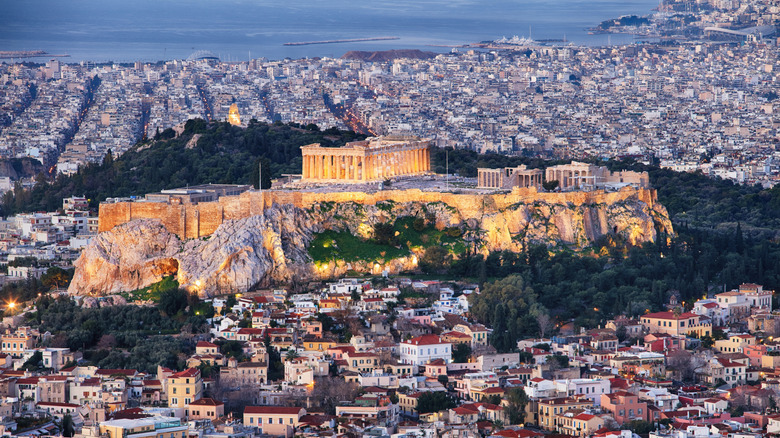
Greece isn't a one-trick pony. There are countless types of trips to be enjoyed both on the peninsula and across its many islands. History buffs may home in on Athens or the Peloponnese Peninsula, while all-out beach bums may be perfectly content to plonk themselves down on one of the 10 best beaches in Greece. Crete could scratch both itches. But if your goal is keeping costs down, you need to be even more selective.
Mykonos and Santorini are some of the best-known spots for tourists, but that fame means they're also some of the priciest. Opting for a lesser-known or less popular part can save money in just about every aspect of the experience. One of the cheapest Greek Islands, Amorgos, is a great example, offering many of the charms of Santorini at almost half the price. Tripbase ranks both destinations almost equally on the experiential front, while allotting an average of around $110 a day in Amorgos to Santorini's $200. Crete is an interesting choice for hitting as many facets of Greece as possible in one place. Despite its relative popularity, the sheer size of the island and breadth of its natural, historical, and beach-centric attractions give you plenty to work with in one destination, while Crete remains one of the more affordable options among Greece's best-known islands. TripBase's estimate of $120 a day in Crete would take you to $840 for seven days, leaving you plenty of room for your flights and even a splurge on a nicer hotel one day.
Finding the right balance of attractions and experiences to work alongside your budget is so important. The higher-end spots might be top of your bucket list, but if you can't enjoy them the way you'd hope to at this stage in your life, isn't it better to find an alternative until you can? You can make the expensive places work, but just know there will need to be sacrifices — most likely in the hotel department.
Spend your hotel budget where it buys more
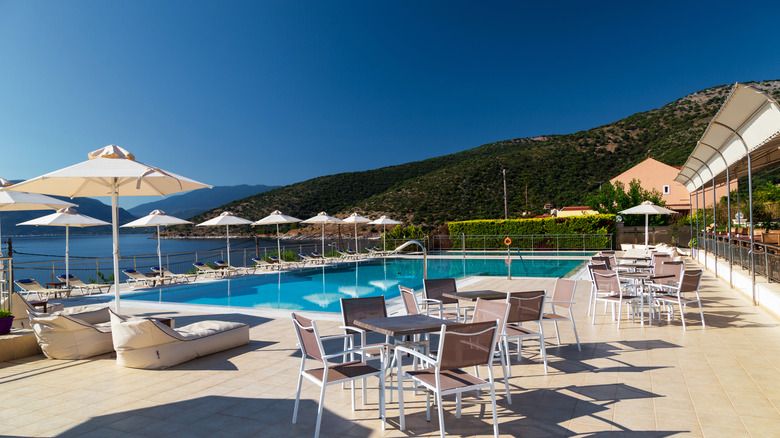
If you're on a $2,000 budget, you shouldn't be looking at The Four Seasons. Close the tab now. Hotels can blow a budget quickly, so if you're focused on the overall experience, this is where to cut some serious costs. Again, if you're on top of your credit cards, one of these five loyalty programs is worth checking out, as they could remove the bill completely.
But if you're sticking to your cash budget, you've got an incredibly broad range of hotels to choose from. In the center of Athens, you can find super-simple 1-star places for as low as $31 a night and dorm beds in hostels dropping to $15, making it incredibly easy to spend a week. The trade-off, of course, is comfort and privacy. Going as low as this means sharing bathrooms or bedrooms, and it won't come with any little luxuries. For a little more, you'll find two- and three-star places running from around $65 to $350. Compare this to Mykonos, where a tiny pod in a hostel starts at $35 in the off-season. Crete, once again, does a tremendous job of offering value, with 3-star hotels with pools starting at just $27 a night. Using broad searches for 3-star hotels, your best bet for an affordable week would be places like Athens, Naxos, Andros, and Crete, with 2026 accommodation comparisons generally placing Santorini and Mykonos at the expensive end and Crete and Andros among the more affordable options.
If you're set on the beach more than anything, a sneaky way to really cover costs is to have a look at some British package holiday deals. You'll find some incredibly cheap all-inclusive trips, like this one in Crete that's just $802 for seven nights, including flights from the U.K., your room, your food, and your alcohol. Of course, you'd need to find a cheap flight to the U.K. first, but for all-out value and simplicity, this cheeky workaround can keep your out-of-pocket expenses incredibly low.
Don't turn your vacation into an island-hopping marathon
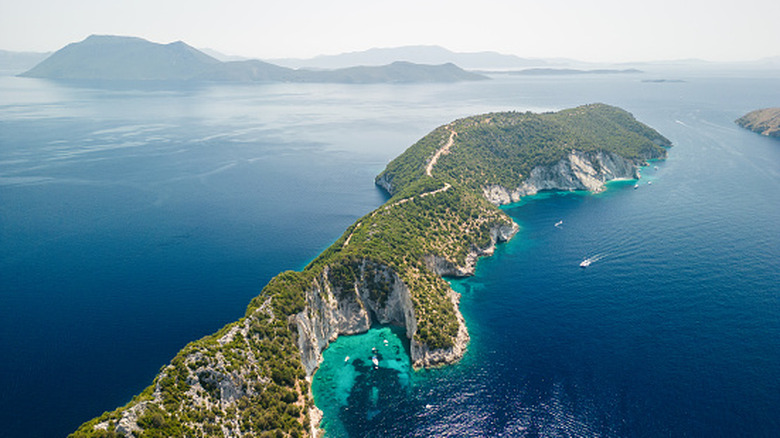
Squeezing Athens and four islands into a single Greece trip is tempting, but on a tight budget, you may be asking for some serious financial gymnastics. Assuming you're sticking to a week a most, a multi-destination trip is already a logistical nightmare. But you'll also need to factor in the cost of getting to each place.
For example, a ferry from Athens to Crete, depending on the port and the time it takes, can start at around $38 for a foot passenger and climb considerably depending on the sailing and ticket type. Not only is that taking up to 10 hours of your trip, but it's also setting you back the cost of a cheapish hotel. If you move on from there to Santorini, the fast ferry can cost around $107 for the roughly 90-minute trip, and it's around $37 to $81 to get from Santorini to Naxos, depending on the operator — and then you still need to get back to Athens for your flight. Flying can sometimes work out cheaper, but fares from smaller island airports can still push well past €100, particularly on less flexible dates. That's all money you could have spent on tours, food, experiences, or a slightly better hotel. It's a far better plan to pick one or two spots and spend a little more time getting to grips with it. It'll be far better from an experiential point of view and will keep a few hundred bucks in the budget for something special.
That doesn't even factor in taxis or buses that you'll need to get to the port in some cases. It takes around an hour to drive from Kalamaki in southern Crete to Heraklion, while the direct bus between Chania and Heraklion takes around two hours and 45 minutes. That's public transport, time, and money that could be far better spent in one or two distinct places.
Take the slow boat when it makes sense (even on land)
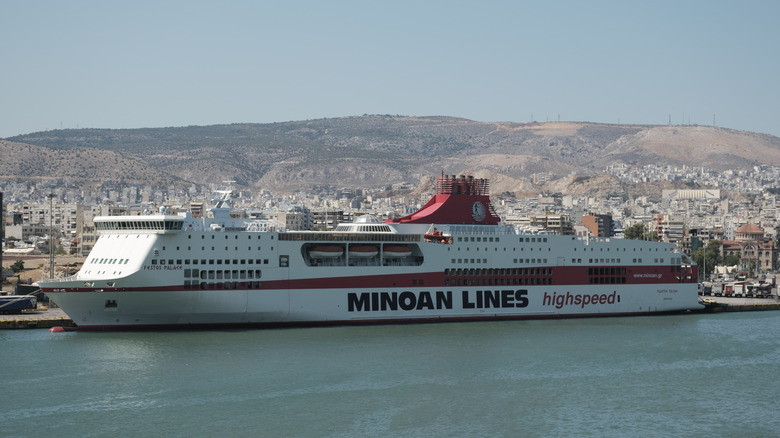
If you are intent on doing a little jumping around within the country — even just between one or two places — there are some things to consider that could save you money in the long run and make the experience a little more exciting. Most of this centers around using the different forms of public transport in Greece.
Ferries remain one of the most popular ways to get between the country's many spectacular islands. These vary drastically in price and speed, and as such will impact your budget or time. Generally, the faster the boat, the bigger the bill. The fast ferry between Santorini and Heraklion costs around $112 and takes just over 90 minutes, while the slow ferry, taking around 4.5 hours, costs about $20 depending on the date. That's a significant enough gap in price for someone on a budget to opt for the cheaper ferry without eating into their trip too much. A more extreme example is the Athens to Heraklion route, which takes almost eight hours on the fast ferry. A daytime ticket hovers around $109, but an overnight ticket on the slow boat can be as low as $40. Not only are you saving over $60, but you're not paying for a hotel room and not missing a significant portion of an already limited time frame. That's a true money-saving hack on every front. The same concept applies to buses throughout different regions, too.
Getting around your chosen destination can have a drastic effect on your budget, too. In Athens, the minimum taxi fare is 4 euros, but it rises by 90 cents for every kilometer you drive during the day, and 1.25 euros between midnight and 5 a.m. A single metro ticket with unlimited transfers for 90 minutes is just 1.80 euros, or 4.10 euros for a full 24 hours. It may not seem like a lot in isolation, but even 12 euros a day on taxis is cutting out $84 worth of great food or an excellent tour.
Eat like you're in Greece, not at a Greek resort
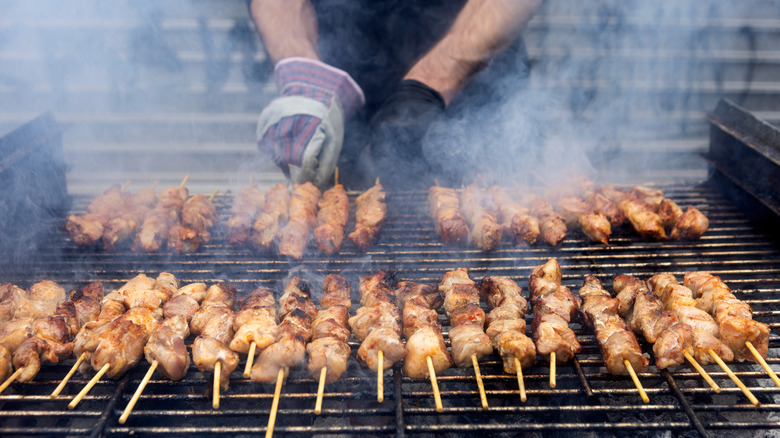
Greek food is one of the easiest places to cut costs without making the trip feel remotely budget-conscious. You absolutely do not need to spend your week eating supermarket sandwiches. A brilliant Greek bakery can sort breakfast for next to nothing, with a koulouri costing around €1 and slices of spanakopita or tyropita generally hovering around €2 to €3. Even if you throw a coffee in, you'll comfortably get yourself fed for under €5 before heading out for the day.
Lunch can be just as cheap. A souvlaki or gyros in Athens generally costs around €3.50 to €5, and unless you're blessed with an outrageously large appetite, one or two should keep you going for a few hours. Then you can save your pennies for dinner. A simple taverna or one of Greece's traditional mageireia serving homestyle cooked dishes can give you a proper sit-down meal for around €15 to €25. For context, the average inexpensive restaurant meal in Athens currently sits at around €15. Of course, the biggest mistake here is eating every meal in the obvious tourist strips or resort areas where you'll be paying brutally inflated prices for often inferior food.
With a little common sense, you can budget for around €30 to €35 a day for food. That's roughly €210 to €245 over a week and still leaves room for a bakery breakfast, street-food lunch, and a proper Greek dinner, as well as the occasional coffee, beer, or slab of something dripping in honey. Obviously, you can spend considerably more if food is one of the main reasons you're visiting, but the important thing is that it's possible to eat authentically in Greece without blowing your budget in high-end restaurants. In fact, getting away from the polished resort restaurants and eating somewhere simpler may well improve the experience.
Build your days around Greece's cheap and free highlights

There's no reason to be handing money over every two hours in Greece. Beaches, old towns, village streets, churches, markets, hiking trails, and viewpoints — to name but a handful of the unbelievable facets of the country — can fill huge chunks of a trip for absolutely nothing. Even in Athens, you can wander through Anafiotika, browse the Varvakios Central Market, walk through the National Garden, or climb Philopappou or Lycabettus Hill without paying an entry fee. On the islands, entire days can disappear blissfully between a beach, a coastal walk, a village, and a ridiculously long, rakia-soaked lunch.
This is good news because Greece's blockbuster attractions can quickly eat into your budget. The Acropolis now costs €30 to enter, while the Acropolis Museum is another €20. Greece does have several national free-admission days, including April 18, May 18, the last weekend of September, and the first and third Sundays of each month between November and March, so it's worth checking whether your dates line up with one of them.
Tours and dedicated guides should be treated as splurges rather than the default. A basic paid walking tour in Athens can run around €15 to €35, while food tours can soar to €60 to €100 and private half-day guides can cost €100 to €250 per group. Even a day trip to somewhere like Delphi — home to Greece's best and underrated ancient sites — can easily run €60 or more after transport and entry are accounted for. You'll need to decide which experiences will genuinely benefit from a guide and pay for those. Be honest with yourself, too. If you want to see the Acropolis but really don't care that deeply about history, don't blow money on a guide. Build the rest of your time around Greece's excellent supply of free scenery and atmosphere. Spending €80 on one truly brilliant tour won't hurt nearly as much when your entertainment the day before was a beach, a hilltop sunset, and wandering around an old town for free.
The Potential Outlook

Obviously, we've avoided offering a full itinerary, purely because everyone's idea of Greece is vastly different. But just from what we've gathered, a $2,000 budget is more than enough to cover a week in multiple parts of Greece, with no real loss of enjoyment or experience unless you're searching for high-end luxury.
Flights will remain the biggest hurdle, but by opting for budget choices and sticking to shoulder or off-season flights, you should be aiming toward the lower end of the typical $500 to $1,200 round-trip range from the U.S. — East Coast hubs like JFK can be extremely cheap, with low-cost airlines such as Norse flying nonstop to Athens. From there, sticking to guesthouses, hostels, and cheap hotels in affordable spots like Athens and Crete means keeping your hotel budget below $500 is entirely realistic, leaving you around $600 to do with as you will. Slow overnight ferries are affordable, a 24-hour Athens public transport ticket costs €4.10, and an inexpensive restaurant meal in Athens averages around €15, leaving a little wiggle room for a cool tour or maybe to splash out on a fancier meal, a beach club, or a hotel for the night.
That budget can stretch as far as your comfort and flexibility can take you — the latter of which is the most important in regard to dates and the former as it applies to accommodation. If you can cope with a 16-bed dorm for a week, you'll have a lot of cash kicking around to play with. Good luck planning!