
10 Best Beaches In Greece
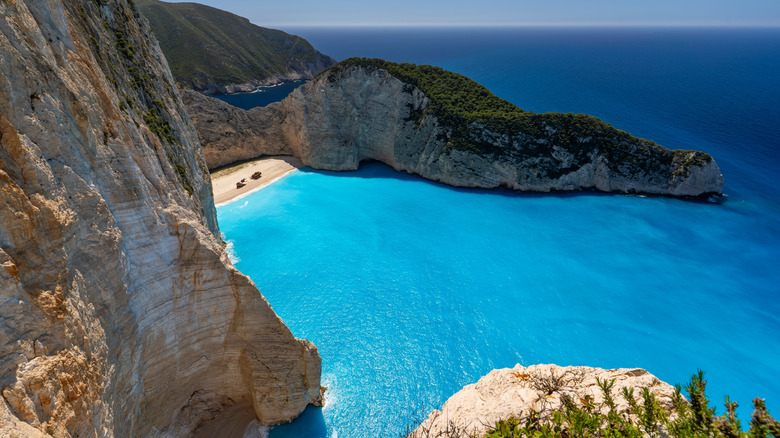
The weight of 3,000 years of civilization presses in from every direction on a visit to Greece. The Acropolis rises above in the early morning light. Minoan cities tell of a sophistication that feels impossible for their time. Byzantine churches, Venetian fortresses, Ottoman mosques — its layer upon layer of history occupying the hillsides, streets, and harbors. Greece is, in the most wonderful sense, exhausting. It demands your attention at every turn, and the traveler who attempts to see it all will soon arrive at a point where the columns and temples begin to blur. This is when a visit to the beach becomes essential.
Luckily, Greece has thousands, with well over 600 of them designated as Blue Flag beaches, a prestigious award for beach quality. However, Greek beaches are not just places to lie down and recover. Of course, you can do that, but they offer so much more. Many of them are just as dramatic as the country's history. Water so clear that you could read an open book on the seabed. Volcanic landscapes worn smooth by millennia of wind and water. Lagoons where the water turns a shade of milky turquoise. Spend a few days on any of the beaches on this list, and you'll be restored and eager for whatever the country is readying next.
We've consulted travel publications, specialist websites, and firsthand travel blogs to find the beaches with the strongest endorsements. We then assessed each against water clarity, sand quality, surrounding scenery, and swimming conditions. Following that, we cross-referenced them against Google and Tripdavisor scores to ensure editorial opinion matches visitor experience. So here are 10 of the finest beaches in Greece.
Voutoumi Beach, Antipaxos
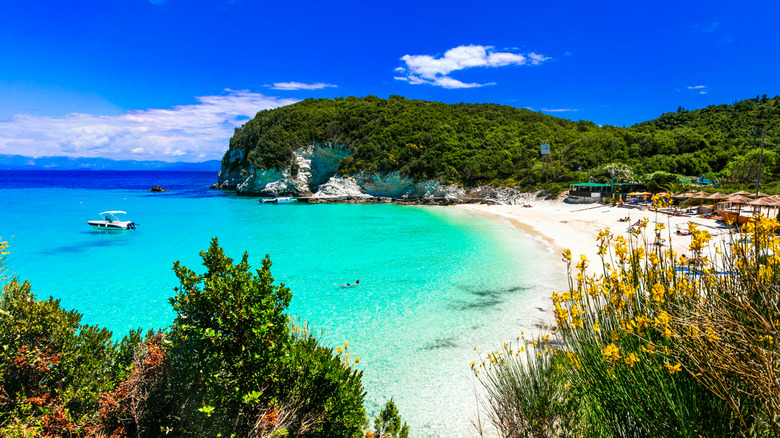
You can't fly into the island of Antipaxos, where you'll find Voutoumi Beach. You can't reach it by ferry, either. In fact, the island is the permanent home to a population you could fit around a large dinner table, and the only way to reach it is by water taxi from Paxos. But once that taxi pulls into the cove where Voutoumi hides, you're greeted by a secret paradise with enchanting waters. The bay is an almost unreal electric turquoise color, lined with a blinding-white pebble beach. White limestone rises straight out of the water, and behind the beach, cypress trees crowd the gentle slopes and wrap Voutoumi in a warm green embrace that keeps the outside world at bay.
The water itself is calm, shallow, and safe for all, while the shoreline is pebbly. The stones are worn fine enough that barefoot is manageable, though you might prefer footwear. You'll need that for the path that winds its way up the slopes behind to a vantage point above that takes in the whole area. From there, you'll see the water in all its deep, glassy-blue glory. It's transparent and looks right through to the seabed, and the view is arguably the finest in the Ionian Sea. Early morning is when the light does something remarkable to the water. It pulls through shades of pale aquamarine before turning almost sapphire in the depths. At this time, you'll have the place almost to yourself, especially outside the peak July/August season.
Elafonisi Beach, Crete
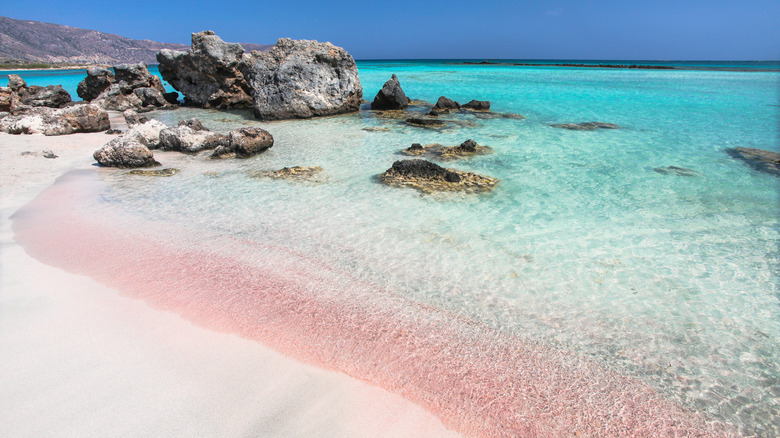
The road from the atmospheric and ancient city of Chania winds for almost 50 miles through some of the most dramatic mountain scenery on Crete. Dry gorges, sheer drops, and tiny villages clinging to the hillsides are all part of the landscape. It then descends down to the coast and delivers a sight that makes the journey there seem like nothing more than a build-up. Elafonisi Beach is a sweep of rose-pink shore with complementary bright turquoise water that looks so unreal. Tripadvisor named it the world's best beach in 2025 (as per CNN). It's part of the EU's Natura 2000 program, Europe's framework for protecting its most ecologically fragile places. Around the Elafonisi area, you'll find a plant count that tops 100 and loggerhead sea turtles nesting ashore.
From the main beach, a sandbar stretches out to a small uninhabited island of scattered cedar and juniper trees, wildflowers, and sand dunes. It's easy to wade through the shallow water at low tide, and the sandbar is rarely submerged more than one meter deep. It's safe for children. There are no currents or unexpected drops, but you might want to make the wade when the beach is quiet. The July/August peak time is when to avoid if you don't want crowds. It's so busy that queues of cars are common, which can make this breathtaking beach a wildly disappointing experience. So, arrive early morning or late afternoon. Alternatively, come in May to early June or September through October for a quieter experience when the water is still warm.
Plaka Beach, Naxos
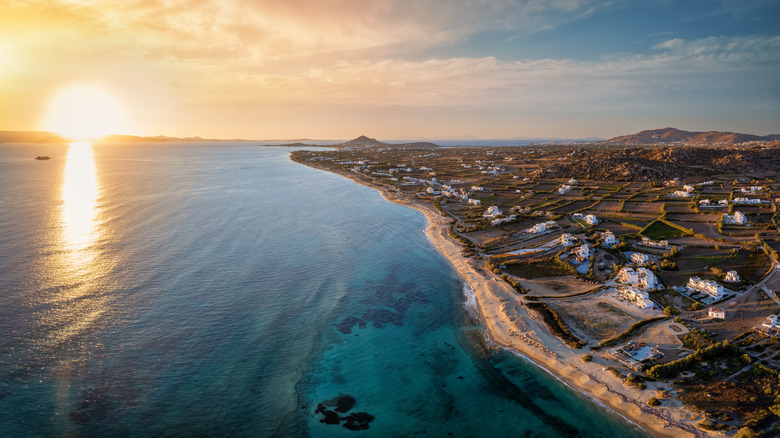
Plaka Beach is such a rarity in Greece. It's a beautiful 2.5-mile stretch of powder-soft, golden sand that is quiet and largely undeveloped. It remains peaceful even when the island of Naxos is at its busiest. Dense tamarisk trees line the dunes behind and press right down to the sand, providing intermittent shade when you need it. Further south, working farmland sits directly behind, which tells you everything you need to know about this serene corner of the island. It has yet to surrender to tourism. Yet it easily could do if it so wished. The water is equally unspoiled and beautiful. The seabed just beyond the shoreline is alive with reef. When the wind drops, it reads like a map below. You can see every rock and fish clearly contrasting against the sand. At the southern end in the early morning, you might even spot sea turtles drifting through the shallows.
However, it still pays to time your visit well. While comparatively quiet, July and August are the least tranquil times. Not only that — the meltemi arrives at this time, too. It's a wind that builds through these months and batters the exposed northern end of the beach. Further south, you're out of it, but May or September is still quieter if it's true solitude you seek. Plaka is not completely devoid of commercial pleasures, either. Tortuga has been a fixture on the beach since the start of the century and is widely considered the best beach club on Naxos. It's a natural spot for a long seafood lunch or sunset cocktails when you'll see the island of Paros on the western horizon catching the last light.
Navagio Beach, Zakynthos
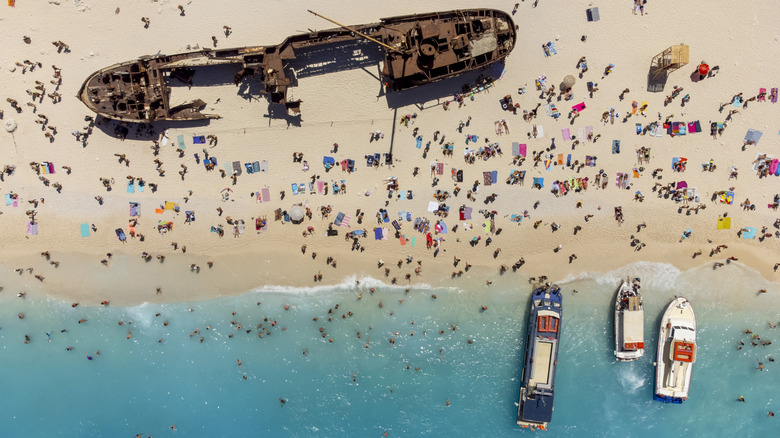
The story goes that the MV Panagiotis ran aground before dawn on a stormy October night in 1980, officially the victim of bad weather. In reality, it was a smuggling run carrying cigarettes to the Italian mafia and was heading back to Greek waters when the engine failed. A storm drove it onto the sand, and the cove that swallowed it whole keeps the ship hidden from the outside world to this day. Navagio is only reachable by sea, and you'll only begin to take in the drama once you clear the headland.
The water shimmers in a shade of blue so intense it seems like it's illuminated from below. The sand radiates in a brilliant white against the deep rust-red of the shipwreck that dominates the shore. Pale, golden cliffs tower 650 feet above. They are the guardians that were tasked with ensuring this sanctuary remained hidden. But the secret is out, and "Shipwreck Beach" is now among the world's most photographed.
If you want an aerial view of the drama, you can drive to a viewing platform atop the cliffs from the village of Volimes. It looks straight down into the bay, but it can get crowded in the summer months. Queues taking as long as two hours are entirely possible, so make the drive early or late in the evening during this time. But none of this matters for the 2026 peak season, as the cove is closed and scheduled to reopen at the very end of October. In the meantime, boat tours from Cape Skinari or Porto Vromi continue to run, but on a view-only basis.
Myrtos Beach, Kefalonia
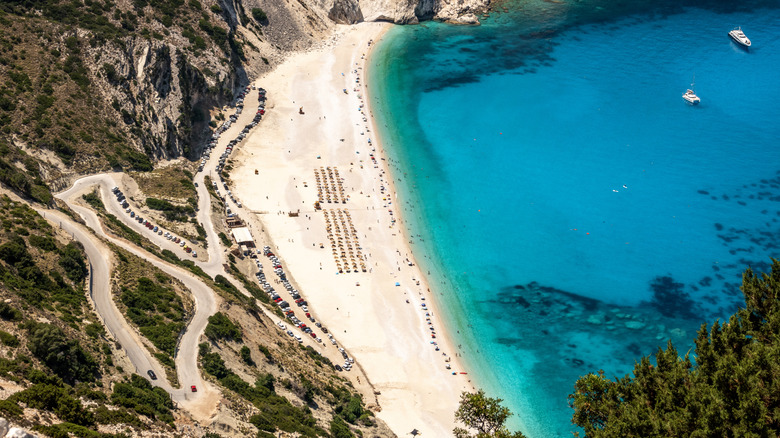
While you can lounge around on Myrtos Beach, it's more like a landscape you experience. The road down is your first indication of this. It winds through hairpin bends cut into the cliff, unguarded on the seaward side. You'll see the bay growing in your windscreen as you descend. A 750-yard stretch of dazzling white pebbles set between the cradling peaks of Agia Dynati and Kalon Oros. The wooded slopes drop steeply to the shore, creating a setting more akin to a natural cathedral. In the right light, the water shifts from pale and glassy near the shore to a vivid cyan running to an inky cobalt as it deepens.
Instead of driving down to the coastline, operators offer paragliding opportunities above it all. You can absorb the whole scene laid out below in a single view that no road perspective can match. Down at the shore, arriving early in high season avoids the crowds and secures parking. However, sun worshippers should know the bay stays in shadow for much of the morning, with sunlight only fully reaching the water later in the day. But it's worth the wait as the cyan color it transforms into barely seems real.
The shore itself is made up of smooth white pebbles that are stunning to look at but demanding on the feet. Water shoes are essential. The sea demands even more caution. When the wind picks up, it conceals currents that have caught out even the strongest swimmers. The seabed also drops sharply within just a few strides, underlining the beach's reputation as more of a visual experience for many people.
Porto Katsiki, Lefkada
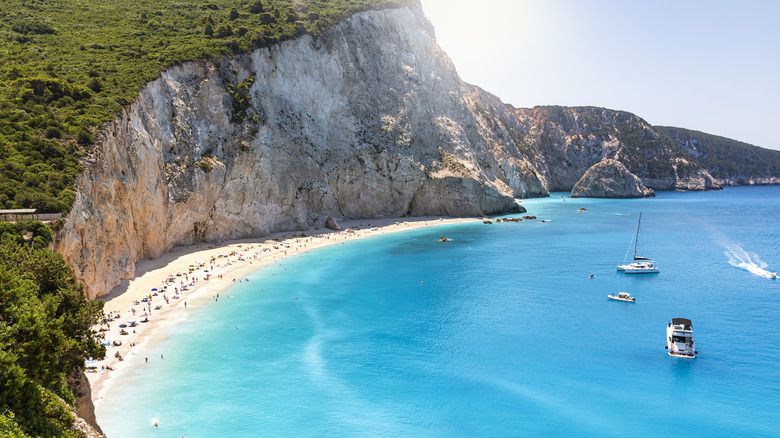
The road to Porto Katsiki cuts through pine-covered mountains on Lefkada, an accessible yet off-the-beaten-path island. It's narrow, winding, and remote, and when you drive it, you soon realize why the beach was named Porto Katsiki, which means Goat Port in English. At one time, they were the only creatures who could navigate the terrain. As you approach the parking lot and the steep stairs that lead down to the beach, you'll see cantinas overlooking the bay. It's well worth pausing here for a drink, but get there by mid-morning in peak season if you want a guaranteed parking spot. While sipping that drink, make sure to take a deep breath and smell the wild white thyme mixing with the saltwater air for a distinctive Mediterranean aroma.
The descent to the beach involves navigating 100 or so narrow steps cut into the cliff face. It's steep but manageable for most, and the shore that awaits is well worth the effort. Small white pebbles and patches of coarse sand gleam brilliantly against the vivid turquoise Ionian Sea. There are currents beneath the surface and sometimes big waves, so it's not always suitable for less confident swimmers. Another caution concerns falling rocks. Take care near the cliff faces. They can fall down the enormous, pale rock walls that drop sheer to the shore, dwarfing everything below. But when the sun dips behind the horizon here, you'll often see the sky turn deep orange and gold. The cliffs glow amber with the last light, and the water shifts from turquoise to molten lava, reflecting the fiery sky.
Balos, Crete
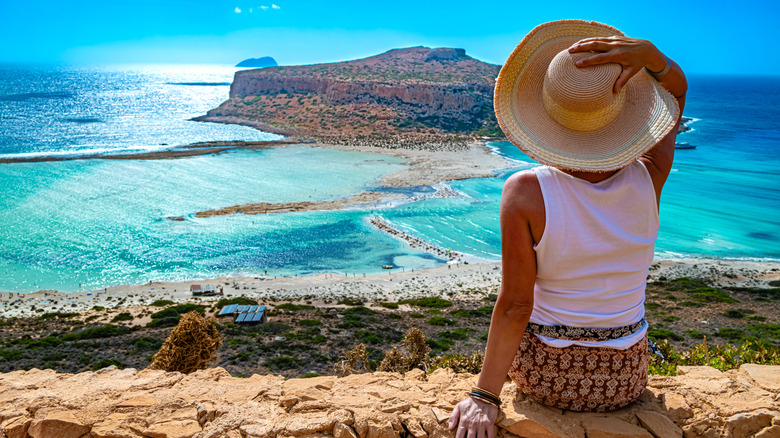
At the tip of one of Crete's most remote peninsulas, shallow, milky, almost glacial-like water and pink-tinged sand are what greet you at Balos. The powder consists of ground-down shell and marine organisms that give it that faint rose blush at the waterline. And a sandbar leading to the rocky islet of Tigani creates a lagoon that barely rises above knee depth. The best way to take in the full scale of the landscape is from the viewpoint above. The collage of the sandbar, the lagoon, the island, and the color gradient feels like a dream you can walk through. This is a protected Natura 2000 site. From the vantage point, you might also catch sight of falcons and seabirds nesting, monk seals passing through, and the loggerhead turtles that have made this place their refuge.
The easiest way to reach Balos is by ferry from the nearby port of Kissamos. However, sailing has been scaled back in 2026 as part of an effort to manage visitor numbers. Balos is, understandably, one of the most visited beaches in Crete. So try to arrive in the early morning to experience the lagoon at its most serene. Better yet, visit in the shoulder months either side of summer. Whenever you visit, be sure to bring water, food, and sun protection. There are few facilities here and no natural shade.
Sarakiniko, Milos
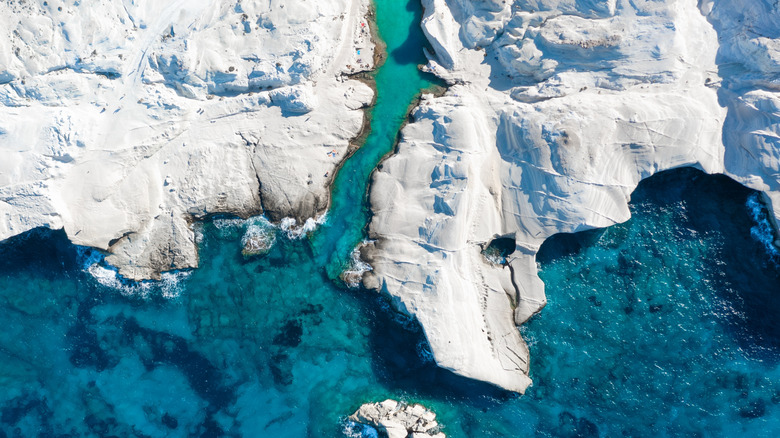
On the northern coast of Milos, within easy reach of the port at Adamas, is Sarakiniko. There's no sand there. No sunbeds, no beach bars. What there is is a one-of-a-kind bucket list beach: smooth, white volcanic rock of pumice, tuff, ash, and lava shaped for thousands of years by wind and sea into the worn, flat moonscape we see today. It's so white and bright that it throws the spearmint-blue waters of the Aegean into sharp relief. In the early morning, it glows softly. By midday, it's that white fire, but by sunset it flushes to a subtle pink. It's a landscape that has long attracted those looking to hide away in some form or other. For example, the pirates the beach is named after, the Saracens, found the rocky inlets to be exactly what was needed to anchor a fleet they didn't want found.
The deep, saturated blue of the water is so clear you can see the bottom while swimming. There are sheltered, natural pools between the formations that are perfect for this. Just offshore, you can see the hull of an oil tanker that ran aground in 2003. Over the years, algae, barnacles, sponges, and other organisms have attached themselves to the metal, and Sarakiniko is now one of the finest snorkeling spots on Milos. If you want a quieter experience, arrive before 9 a.m. or around sunset. But remember, there are few facilities. Bring footwear, water, and sunscreen, and take your rubbish with you when you leave.
Koukounaries, Skiathos
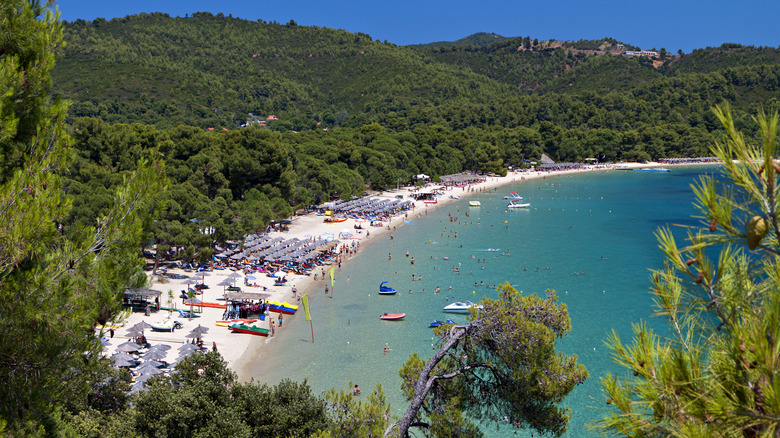
Most beaches offer sand and sea, and most people are happy with that. But Koukounaries offers a little bit more. On top of exceptionally fine golden sand and water that shifts from vivid emerald-green to a deep blue, this beach on the southwestern coast of Skiathos throws in a pine forest and a protected lagoon. At Koukounaries, you get four distinct landscapes stacked one behind the other for the price of two. It's a great beach for families to explore, particularly as the water is shallow, calm, and sheltered.
Behind the sand, the forest crowds right up to the shore. It gives the air the sharp, clean smell of koukounaries pine, the tree the beach is named after. Follow the path that threads between the trees, and the beach noise is muffled within minutes. Behind the forest is Strofylia, a protected wetland of almost 350 acres that draws in herons, cormorants, and turtles — and on lucky days, a flamingo or two. Other daytime activities include water sports such as scuba diving.
Two daily boats shuttle tourists throughout the July/August peak season. The numbers are consistently high at this time, but late afternoon sees them mostly depart. This is when the beach settles down and prepares for its famous sunsets. The light turns the water gold and the forest amber, and you can watch it dip behind the horizon from the sand or any of the beach bars lining the shore.
Vai Beach, Crete
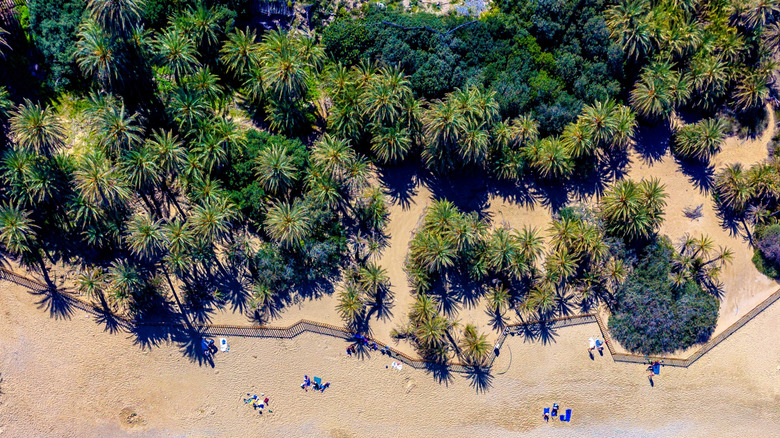
Back in the '80s, Vai Palm Beach was put firmly on the map when an ad for Bounty chocolate was shot there. But that's not all this beach is famous for. The palm forest that sits directly behind is the largest natural palm forest in Europe. It's dense and genuinely tropical, and there are around 5,000 of them rising behind. On both sides of the forest, dry rocky hills push down toward the water with arid surfaces throwing up a stark contrast to the lushness of the palms. A short walk takes you up to a viewpoint where you can take in the full picture: a dreamy stretch of sand and a paradise of turquoise water.
Back down at the shore, the beach is part pale sand, part smooth white pebble. It's soft underfoot, and the horseshoe bay's curve keeps the water calm. It's clear, shallow, and safe for children to swim in. The seabed is sandy, and lifeguards are on duty during the peak season. Sunbeds, umbrellas, and water sports are all available for regular beach activities, but because Vai is at the end of a long road in Crete's remote northeast, visitor numbers are more manageable. That's not to say the crowds don't come. They do. Particularly in the July/August peak season. The May/early June or September/October shoulder seasons are significantly quieter. But an off-season visit might mean you have it all to yourself.