
9 Places Americans Visit For The Wrong Reasons
We'll level with you: The only truly wrong way to visit a place is to never visit at all. Getting out into the world, whether you're sitting on a beach, stuck in a ticket line, or overpaying at a tourist-trap restaurant, is still traveling, and we're definitely not trying to bash your own style.
But some destinations are flooded with tourists seeking a specific experience, when what should be the real draw is waiting unseen just around the corner. Some destinations are defined for American tourists by one incredibly narrow version of what they offer. Jamaica becomes an all-inclusive resort, Mexico becomes Cancún, and Bali becomes beach clubs and infinity pools.
None of those are bad reasons to visit. In most cases, they're popular because they're genuinely brilliant. The problem comes when they become the entire trip, leaving you with an experience that could easily miss the culture, food, history, neighborhoods, and landscapes that make the destination distinctive in the first place. So, these aren't nine places you shouldn't visit. They're nine places where the obvious reason for going is only the beginning, and where widening your lens can turn a good vacation into a much better one.
Jamaica
Americans, on the whole, experience Jamaica behind the walls of massive beachfront resorts. And why not? It's an easy sell. Seemingly endless sunshine, rum in your cup and toes in the sand, unlimited food, and very little planning sound great, but what draws the bulk of Jamaica's tourists, one could argue, is the wrong way to experience such an eclectic island.
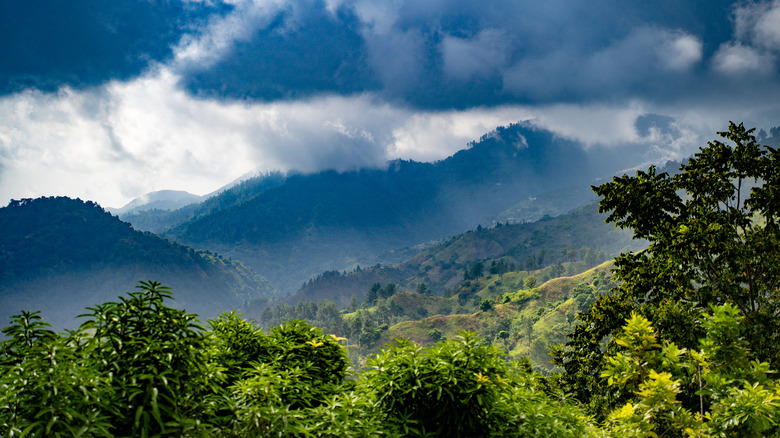
The country's cultural identity and the bones of a truly spectacular Jamaican trip are tied to its iconic music, food, language, and incomparable communities. While you might find some resort entertainment tied to reggae or other aspects of Jamaican culture, it can feel a little removed from the authentic Jamaican world out there. Kingston is one of the epicenters of that culture. A UNESCO Creative City of Music, the Bob Marley Museum, the many music-themed murals, and the exciting dancehall scene are all ways to get to grips with the city's most famous export. For a complete shift in what you'd expect from Jamaica, the Blue Mountains offer some of the best hiking in the Caribbean, and hide coffee farms and estates amongst their forest-blanketed slopes. Beyond the range, you'll find the stunning town of Port Antonio, once the banana capital of the world.
Again, it would be wrong of us to suggest you reject the resorts completely — Jamaica is home to some of the best resorts for a luxurious getaway — but experiencing the island in such a singular way makes it almost indistinguishable from many other beach destinations. The island's culture, music, history, food, and extraordinary outdoor opportunities make it an unforgettable place that shouldn't be ignored. Of course, safety needs to be considered in this (Jamaica does have a reputation for crime), but with smart preparation, it can be an incredible trip.
Dominican Republic
The Dominican Republic is another island that suffers from the success of its resort-heavy destinations — in particular, Punta Cana. Over 3.7 million Americans visited the island in 2025 (as reported by Business Wire), with many enjoying the trappings of an all-inclusive resort and only venturing out on guided excursions. As the nation has become a hub for all-inclusives at almost every price point, it's easy to understand why many wouldn't leave to spend money on things they already have covered, but again, it means missing much of what makes the Dominican Republic distinctive.
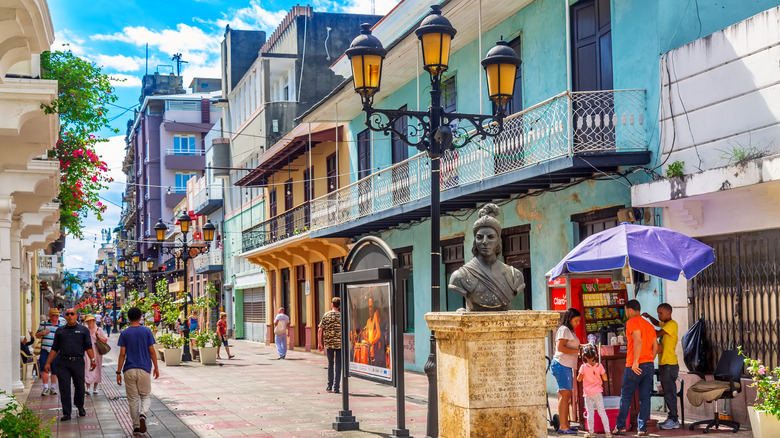
Interestingly, modern Punta Cana's resort development only began in 1969, when local and North American investors decided to build on the previously undeveloped area. That means the Punta Cana most visitors know is overwhelmingly a product of modern tourism, so a little adventure is required to find the Dominican Republic's deeper history and culture. Santo Domingo is an obvious option for those looking to broaden their experience. The colorful streets, museums, churches, fortresses, and restaurants of the colonial zone can take days to fully appreciate, while historic marvels further out, like the Cueva de las Maravillas — a spectacular cave system containing hundreds of well-preserved Taíno pictographs and petroglyphs dating back thousands of years — give some historical context and reminder that the island's history stretches back further than your resort.
As with Jamaica, advising you to never use a resort isn't necessarily the play (although Punta Cana was just voted one of the world's worst cities for tourists), but staying somewhere like the Zona Colonial in Santo Domingo will almost always make for a more memorable trip. Many tourists in this Reddit thread agree that, despite requiring a higher degree of awareness to combat crime, it's a far better experience.
Mexico

Mexico is a big place — it's the 13th-largest country in the world by area — yet most of its international visitors stick to sun-drenched fringes of the country like Cancun, Tulum, and Cabo, with most of the rest arriving in Mexico City. However, that figure doesn't account for business travelers or those then hopping to another beach destination. That's a huge portion of the country's history, cuisine, and culture being left untouched by the vast majority of tourists, content to sit with their feet in the sand.
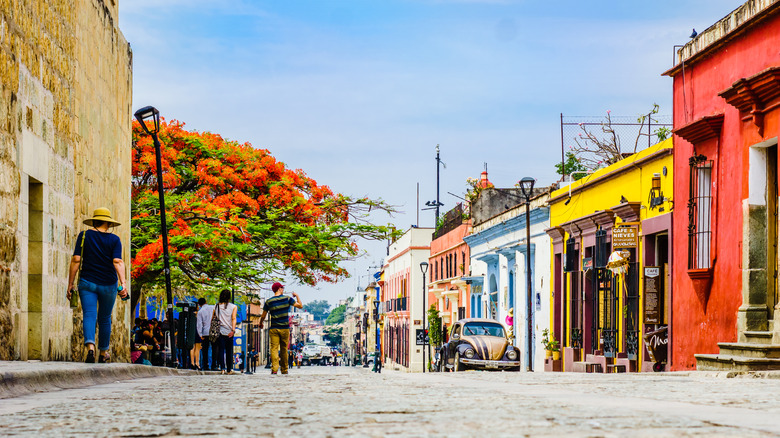
It is easy to see why. The Riviera Maya and surrounding Caribbean coast have some of the world's best all-inclusive resorts, but when a country with as rich a culture as Mexico is being reduced to a weekend beach splurge, it's a bit of a travesty. Places like Oaxaca are among the strongest contrasts to the commercialized images of Mexico's beach resorts. The ancient Zapotec capital of Monte Alban scratches the history itch, extraordinary Día de Muertos celebrations make it a cultural highlight, and the food, well, it's hard to quantify, but it's regarded as the culinary capital of Mexico, which says a lot. Oh, and it's the country's great Mezcal heartland, too. But the reality is that Oaxaca is just one of many outstanding destinations. Mexico City, the thriving capital, is one of the great cities in the Americas, while Mérida (not far from Cancún) is a laid-back historical delight and the gateway to a remarkable collection of ancient ruins.
If you haven't experienced Mexico beyond the resorts, you're only experiencing the tip of the iceberg. Leave the resort smoothie bowls and familiar beach-town fare behind, and get yourself out to one of the country's vibrant cities showcasing the extraordinary diversity of Mexican culture.
Bali, Indonesia
Bali has been a bit of a controversial destination in recent years, as its once-sleepy seaside towns transformed into inexpensive lifestyle hubs for international tourists and digital nomads. Despite those concerns, it still draws millions of visitors every year (according to BPS-Statistics Indonesia), many intent on taking full advantage of its villas, beach clubs, and increasingly international culinary scene. But once again, by doing so, you've flown to the other side of the planet, for an experience that could be replicated at plenty of other beach destinations.
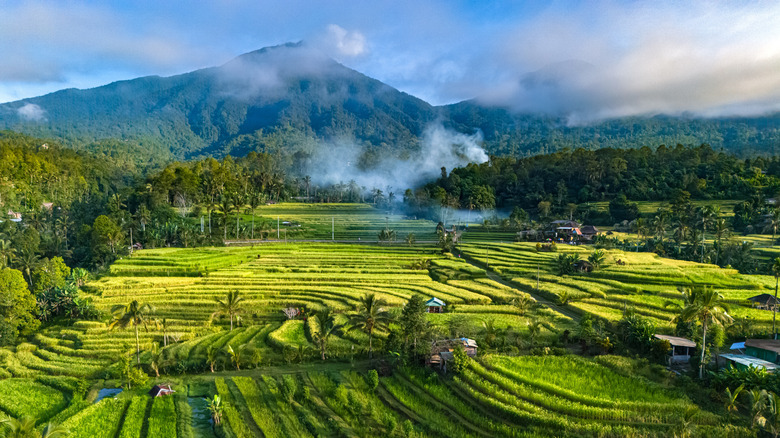
Bali's identity is heavily shaped by Balinese Hinduism, with its look and rhythms all working in beat with traditions that have existed for hundreds of years. Stunning temples and daily offerings, ceremonies, and processions are somewhat overshadowed by the busy corners of Canggu and Seminyak, requiring visitors to venture well beyond to get a taste of the island at its most authentic. Even for those who do venture outside the main hubs, temples can often become little more than backdrops for photos, like the Gates of Heaven, which many now see as a huge tourist trap.
Sure, it's nice to hang out at a world-class beach club, but visiting solely for a bottle of champagne on the beach is the wrong move when you have an entire remarkable island at your disposal, waiting to be explored — especially the far sides, which see a tiny number of tourists compared to southern Bali. Instead of spending your entire trip in a villa, spend at least a few days venturing into the quieter corners of the island, where the traffic thins, the beach clubs disappear, and Bali's temples, villages, landscapes, and traditions come into much sharper focus. There's nothing wrong with enjoying the polished side of Bali, but it should complement the island rather than replace it.
Thailand
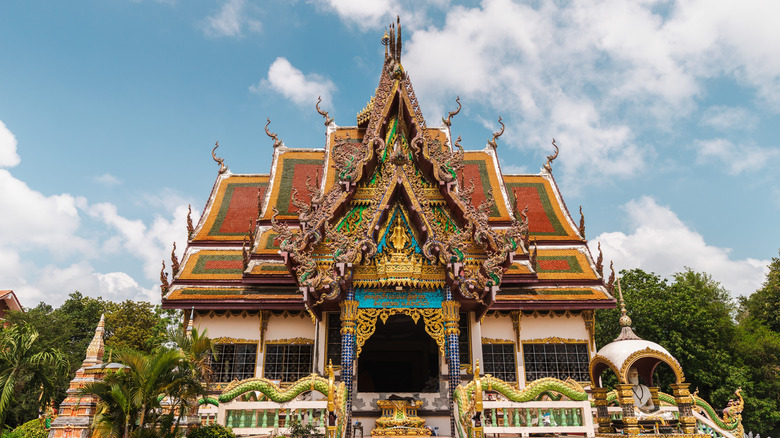
Considering the popularity and adoration Thailand enjoys, it's hard to imagine that people could visit the Southeast Asian country for the wrong reasons. But for a lot of travelers, Thailand is treated primarily as somewhere cheap to drink, party, lie on a beach, and behave in ways they probably wouldn't at home. Phuket, Koh Samui, Phi Phi, and the famous Full Moon Party dominate the image, and the low prices only make the temptation stronger; even Bangkok, a city bursting with unbelievable experiences, can be treated as a seedy stopover.
There's nothing inherently wrong with any of that — well, maybe some of it. Thailand has brilliant beaches and world-class nightlife, but the mistake is reducing the country to that experience when the food, religious traditions, markets, temples, neighborhoods, and everyday culture are often sitting right outside the hostel. You can spend a week in Thailand eating Western food, drinking Chang, and bouncing between hostel-led parties, and never learn anything more about the country than the price of a bucket cocktail. Besides, places like Phuket are among the most overcrowded destinations in the world; do you really want to be rubbing shoulders with so many people when there are empty beaches elsewhere in the country?
Thailand is better when the party is part of the trip rather than the entire point. Eat somewhere without an English menu and spend time in a market without treating it like a photo stop. Visit a temple because you're interested in its history and significance, not because you need another picture. Try regional dishes instead of ordering the same pad thai every night (yes, we know it's still good). You don't even need to change destination. You just need to stop treating Thailand like one giant, inexpensive playground.
Greece
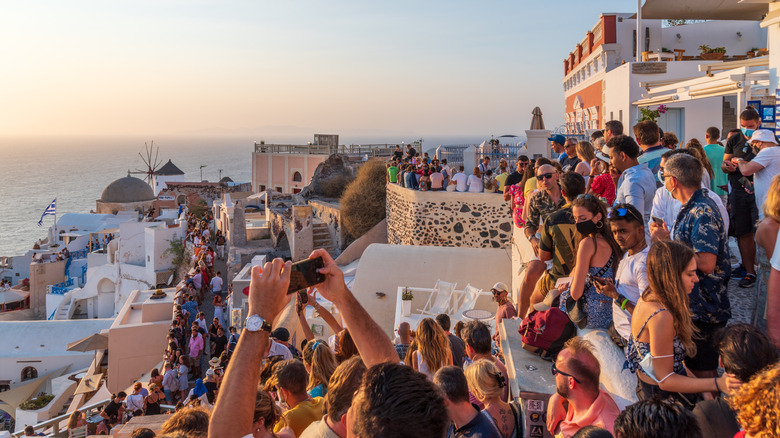
Whitewashed walls, blue domes, an infinity pool, sunset dinners, and of course, a linen shirt. You already know we're talking about Santorini — or at least someone's Instagram projection of it. Check out the videos of hundreds-strong lines of people waiting to take the same photo, and you'll see that it has practically become a photo set; and Mykonos is developing a similar reputation. The sad irony is that people can spend thousands of dollars chasing the perfect Greek aesthetic while barely engaging with Greece itself.
It's a particularly sad one, as places like Santorini aren't big, and when the demand is driven by surface-level experiences, restaurants, hotels, and tour operators can lower standards, pandering to this kind of tourism. Meanwhile, the things that make Greece so magical — from its food and unbelievable history to the spectacular natural scenery — are often left ignored, or worse, eroded. With over 3 million people visiting Santorini alone each year (according to Greek Trip Planner), there is definitely room to spread out those crowds.
To be clear, there's absolutely nothing wrong with Santorini or Mykonos. They're spectacular. But if your trip is dictated entirely by what looks good on Instagram, you're doing Greece a serious disservice. Spend longer over a sprawling Greek lunch, go somewhere because the food is good rather than the pretty balcony, and visit the archaeological sites and wander through villages without rushing toward the photo checkpoints. Greece is much more rewarding once you stop treating it like a collection of backdrops. What's just as vital right now, though, as Santorini and Mykonos get more crowded, is that we don't simply export the same high-volume tourist model to quieter islands, such as the secluded paradise of Lipsi.
Amsterdam, Netherlands
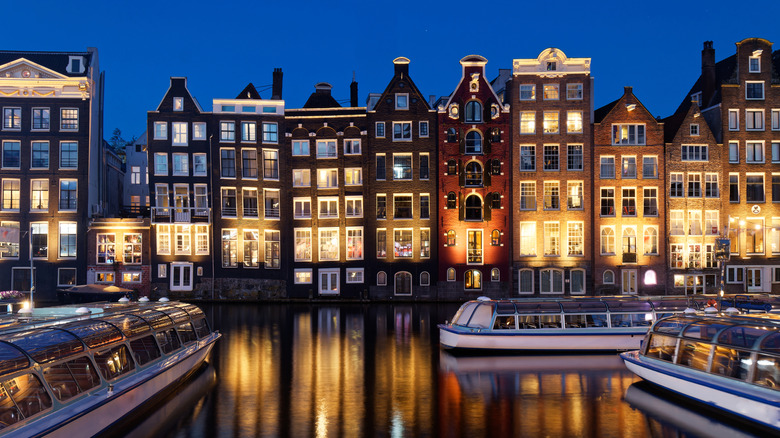
Amsterdam has spent the past few years fighting one of the most persistent stereotypes in European tourism. For many visitors, it's less of a beautiful, historic capital, and more of an "anything goes" kind of place. The city's comparatively relaxed stance on cannabis and the Red Light District means many view it as the playground of Europe, and have for decades. But, as with the other places on this list, those tourists aren't just missing the point; they're missing out on one of the continent's great capitals, and might even get themselves in trouble.
On the lighter end of these experiences, someone might spend two or three days in Amsterdam bouncing between cannabis cafés, bars, and De Wallen without ever paying much attention to the fact that they're surrounded by some of Europe's finest museums, outstanding architecture, and neighborhoods that offer a different side to the party vision of the city. At the rougher end of the spectrum, visitors can end up in serious trouble by assuming that Amsterdam's permissiveness has no limits. The reality is that there are strict rules on public intoxication and active campaigns to discourage this kind of tourism.
The better way to experience Amsterdam is simply to stop treating its apparent permissiveness as the attraction. By all means, visit the Red Light District if you're curious, as it represents a historically significant part of the city. But if that and getting stoned are the two things you remember most clearly, there's a good chance you've completely skimmed over the museums, the art galleries, the canals, and the wonderful straight-talking humor of the Dutch.
Japan
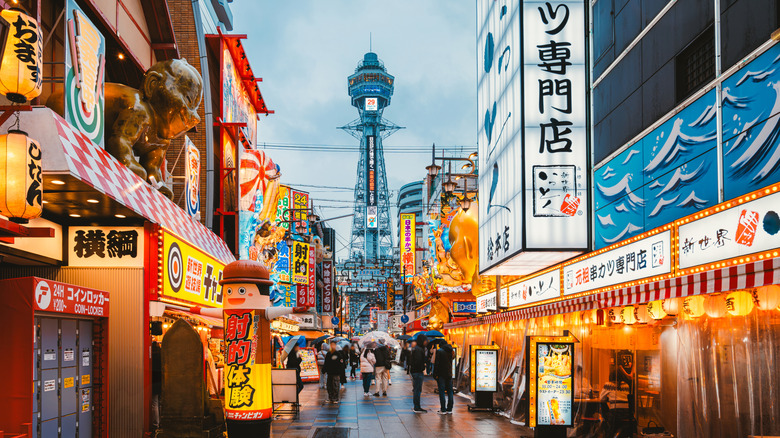
It has always been up there, but in recent years Japan has become a definitive bucket-list destination. It's not hard to see why. The food, cultures (old and modern), high-tech lifestyle, ancient castles and temples, and the feeling of being somewhere so utterly foreign combine to make an unforgettable trip. But that can create a strange problem, as visitors try to cram absolutely everything into one trip. Tokyo, Kyoto, Osaka, Hiroshima, Mount Fuji, temples, shrines, bullet trains, anime stores, sushi counters, and robot toilets are all squished into an itinerary so tight that half the trip is spent in train stations, food becomes an endless blur of conveyor-belt sushi, and temples blend into one.
And that frantic pace is often completely at odds with some of Japan's greatest pleasures. Wandering through a neighborhood with nowhere to be or sitting too many beers and plates of yakitori deep at a tiny izakaya, soaking in an onsen, staying in a ryokan, stumbling across a shrine that wasn't on your list, or just watching everyday life unfold are all parts of the experience that disappear when you've crammed six cities into a 10-day itinerary.
You don't need to see all of Japan on your first visit, and frankly, you couldn't even if you tried. Drop a city and spend longer somewhere. Leave gaps in your plans and stop assuming every famous temple needs to be ticked off because TikTok told you it does. It's a country that rewards curiosity and patience far more than a relentless pursuit of efficiency, and the last thing you want is to come home with a thousand cool photos but no real feeling for the places you took them.
Egypt
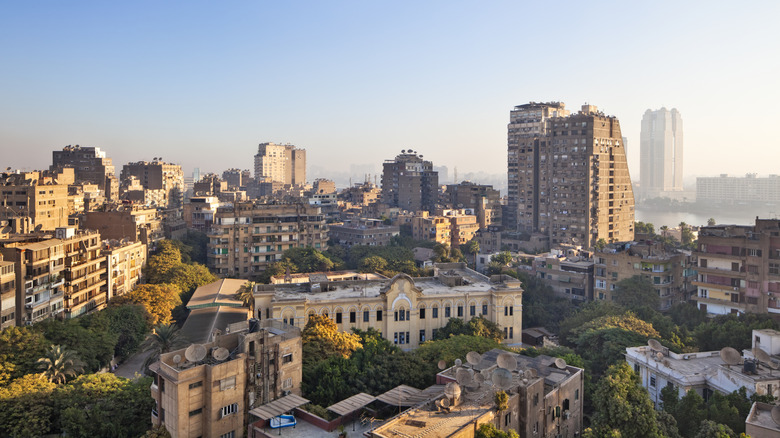
We'll concede, if there's one country that you could focus solely on the big-name attractions and leave feeling satisfied, it's Egypt. With some of the greatest archaeological offerings on the planet — the Great Pyramids, Karnak and Luxor temples, Abu Simbel and the newly opened Grand Egyptian Museum, to name a few — it's easy to be locked inside the tourist bubble. But while these attractions can, and will, validate a trip in themselves, it's the rest of Egypt that can make the longest-lasting impression.
One of the biggest criticisms of Egypt is the intensity of vendors and scammers at these sites. In many of them, visitors need to run a gauntlet of persistent touts hell-bent on making a sale. Other moments are dedicated to shaking off chancers offering unsolicited advice in exchange for "bakshish" or tips. For some tourists, this becomes the perception of the country, but that picture tells you very little about everyday life in the cities and towns that sit apart from the historic sites. Modern Cairo is a delight, and its inhabitants are welcoming. Avoiding this completely is sad, and it's an odd way to experience a country with more than 100 million people living in it today. Egypt's history didn't end with the pharaohs, and neither did its culture.
Keep every ancient site on your list, as well as these places to visit in Egypt after the Pyramids. They deserve the hype. But make room for the Egypt that exists now. Walk through Islamic Cairo and eat Egyptian food somewhere that isn't attached to a hotel, check out a market that isn't tailored to tourists, and put yourself in a position to talk to people who aren't peddling cheap souvenirs. If you leave Egypt knowing everything about Tutankhamun but almost nothing about Egyptians, you've only really experienced a little piece of the country.