
10 Gorgeous Asian Islands For Vacationing That Won't Break The Bank
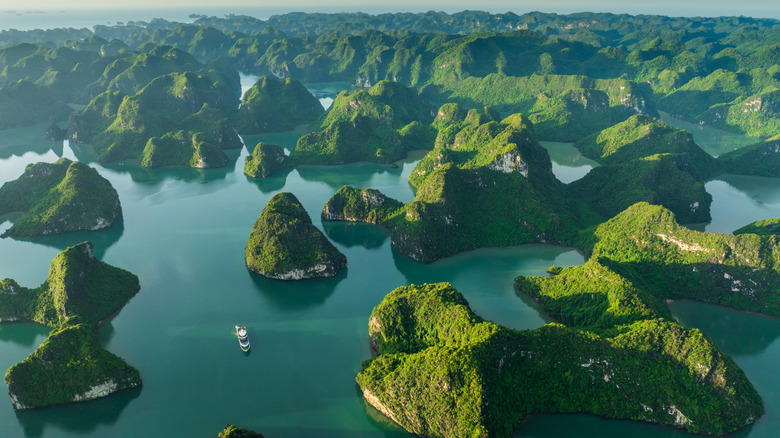
Asian islands wear their beauty in layers. Waters shift through so many shades, jungles push down to palm-lined shores or spill over cliffs into the sea below, while under the waves, coral formations have developed over millennia into structures comparable to the most intricate lacework, attracting marine life. Colorful, strange marine life, at that, from seahorses and nudibranchs in the shallows to whale sharks and manta rays in deeper waters.
The islands scattered around Asia offer many different versions of paradise. Some of them might be considered paradise lost, but others still wait to be discovered. Beauty aside, the best thing about visiting islands in this part of the world is that your trip can be very affordable. Flights to Asia might cost more than staying closer to home, but once you're there, things can get remarkably inexpensive. Even a trip to one of the continent's more expensive destinations — Singapore — can cost significantly less than a vacation to somewhere like Venice or New York.
We've used Budget Your Trip to provide average prices for Asian islands and set the projections to budget and mid-range levels. For the travel experience, we've drawn on the author's own experiences as well as information from reputable travel publications and local tourism authorities. With that in mind, here are 10 beautiful Asian islands where you can enjoy a vacation without spending a fortune.
Palawan, the Philippines
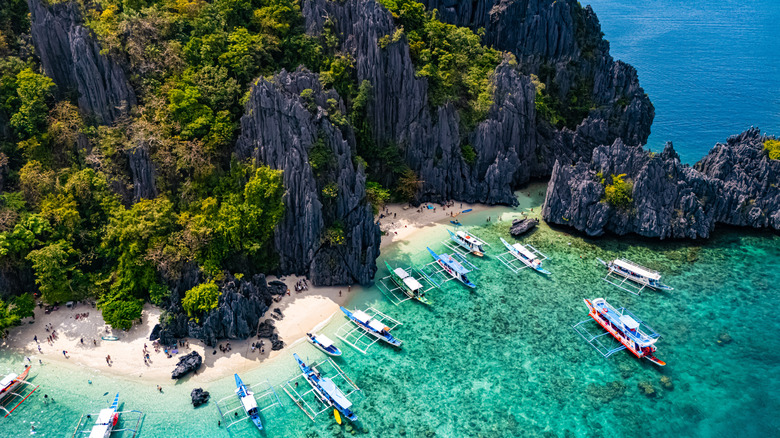
There aren't many places in the world that can match Palawan for beauty. The multi-colored waters of this western Philippine island are complemented by brilliant white sand sitting against a backdrop of soaring limestone peaks draped in jungle. The island sits within the Coral Triangle, a roughly 2.3 million-square-mile marine region spanning the waters of six countries. Beneath is a technicolor world of coral and marine life ranging from reef fish and rays to hammerheads and the biggest fish on the planet, the whale shark.
The municipality of El Nido, in the north of the island, is one of Palawan's premier draws, especially Bacuit Bay, where slender passages wind between limestone islands, opening into concealed lagoons. But Palawan isn't just about the coast. Further south, the Puerto Princesa Underground River is recognized as one of the New 7 Wonders of Nature. It's widely regarded as the planet's longest navigable subterranean waterway, flowing through a vast, cathedral-like limestone cave with immense chambers, soaring rock formations, and a darkness that stretches deep into the mountain.
You can balance costs and weather by arriving in either November or May. June to October brings some rain, but it is the overall cheapest time to arrive, and the weather isn't usually bad enough to ruin a vacation. Daily expenses can be as little as $20 per day for room-sharing budget travelers and dorm-dwelling backpackers. Even at mid-range, you could be looking at as little as $40 a day. December to April is peak season, as these months experience the driest weather. But this draws high visitor numbers, which, in turn, drives up accommodation and flight prices.
Sri Lanka
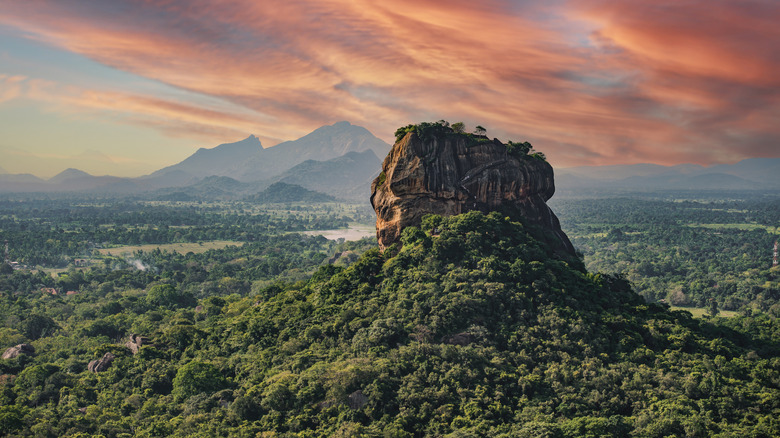
The island nation of Sri Lanka sits just southeast of India. Among its premier attractions is the towering Sigiriya, also known as "Lion Rock." This ancient fortress rises dramatically from forested plains for more than 650 feet, and the climb up takes you past ancient frescoes and the enormous stone paws of a giant lion that once formed the entrance. At the summit, you'll find the ruins of an ancient palace overlooking an expanse of endless green and distant peaks.
Founded by the Portuguese in the 16thcentury, Galle is a fortified city on the southwest coast that will take your breath away. Its imposing stone ramparts rise above the sparkling Indian Ocean, framing a maze of colonial buildings, colorful streets, and atmospheric old lanes and alleys. Ella is another town well worth visiting, especially if you want to escape the heat. It's a small hill station set amid some of the country's most beautiful scenery. The mountains fall away beneath you here, and the surrounding countryside unfolds in more verdant vistas. Beach lovers can hit Mirissa Beach on the southern coast. It's a picture-perfect place of coconut palms leaning over golden sand and turquoise waters that are frequented by sperm whales. Bottlenose dolphins and the occasional humpback add even more allure to this once-secret tropical retreat. Wildlife lovers can also visit Yala National Park, where elephants, leopards, and a remarkable array of birdlife thrive.
For a place that offers so much, Sri Lanka is remarkably inexpensive. Budget travelers can get by on around $20 a day when staying in hostels and eating street food. Mid-range travelers don't need to spend a fortune, either. Staying in nicer hotels and eating at more upscale restaurants can be done for less than $60 per day.
Gili Islands, Indonesia
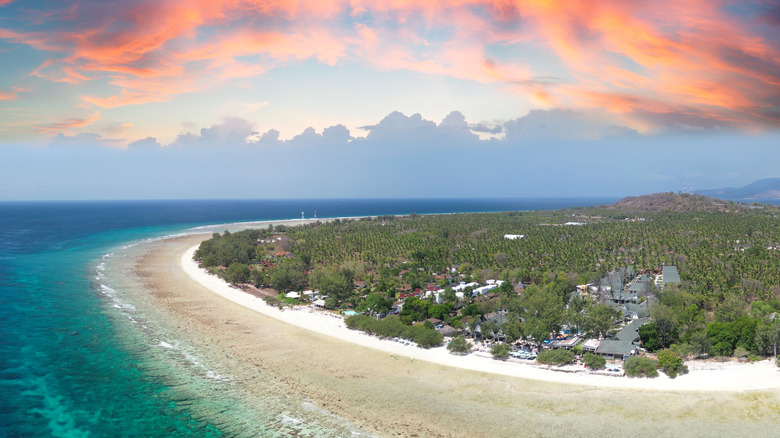
Bali has received innumerable accolades over the years. But many who visit will tell you it's a different story now, thanks to throngs of tourists and overdevelopment trying their best to spoil the island's charm. Just a short boat ride from Bali, the Gili Islands are a quieter alternative with serene, sandy beaches. It's an idyllic paradise where swinging lazily in a hammock over crystal-clear water or dining barefoot in the sand at dusk is the daily norm. This car-free archipelago of three tiny islands sits just off Lombok, Indonesia, and those specks of ocean green are ringed by reefs and fine white-sand beaches.
The islands are famed for their marine life. But another underwater attraction is sculptor Jason deCaires Taylor's "Nest," just off Gili Meno. Snorkel here, and you'll see his ring of weathered figures standing in a circle on the seabed. It's just one compelling discovery that caught the attention of internet users in 2024, when the Gili Islands were the number one trending travel destination on Google in the U.S., as reported by Indonesia Expat.
The largest and liveliest island is Gili Trawangan, commonly considered the party island for backpackers. Bars and restaurants cluster along the sand here in anticipation of its legendary sunsets, while the volcanic views toward Lombok and Bali are incredible. It's the least expensive of the three islands. Gili Air, on the other hand, moves at its own pace, with quieter, more chilled beaches, while Gili Meno is arguably the romantic island. Prices are a bit higher on Meno, but it has the best snorkeling, with turtles a common sight offshore. Overall, daily costs across the islands run somewhere between $30 and $50 per person. Hostels are the cheapest option for singles, while a budget hotel for two should cost somewhere in the region of $20.
Borneo
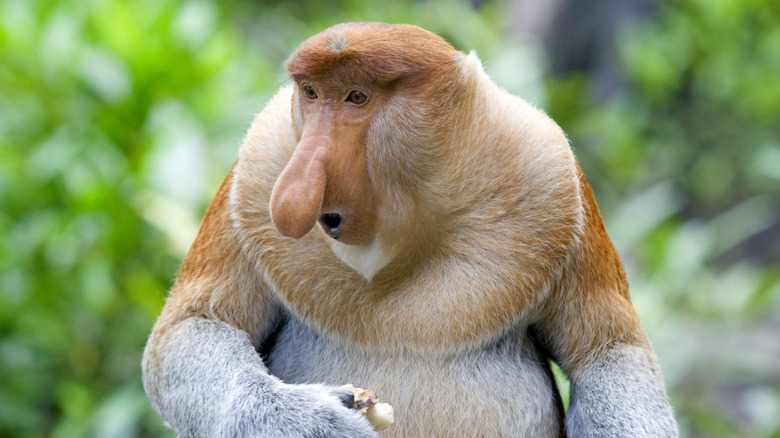
The largest island in Asia is Borneo, a multinational territory home to some of the planet's most ancient tropical rainforests. The Indonesian region of Kalimantan is a mysterious land of dense emerald forests and mighty rivers, while Brunei is a small country teeming with wildlife. The Malaysian states of Sarawak and Sabah are arguably the most accessible. The capital of Sarawak, Kuching, is a place where budget travelers can get by on $40 a day. Midrange travel is also reasonably affordable at less than $100. It serves as the gateway to the rest of the state, where travelers can admire the beauty of places like Bako National Park. Here, jungle trails snake through clusters of ancient sandstone formations while a rich array of wildlife hides in the trees. Further east, Niah Caves is one of Southeast Asia's most extraordinary natural and archaeological sites, with its ancient wall paintings and burial sites dating back at least 40,000 years.
Sabah is similarly affordable. Budget travelers can survive on around $30 per day, while midrange spenders are looking at around $70. The capital, Kota Kinabalu, gives you access to Mount Kinabalu, one of Asia's highest peaks. While not the cheapest attraction, you can avoid unnecessary intermediary costs by booking directly through Sabah Parks, and you'll be rewarded with extraordinary views from its jagged summit at dawn (after a two-day hike). Other places of beauty in Sabah include the Kinabatangan River, where boat trips offer wildlife encounters with pygmy elephants, orangutans, and the odd-looking proboscis monkey. Scuba divers can head southeast to Sipadan, where an underwater world of turtles, sharks, barracuda, and incredible coral awaits. It is a splurge, but you can keep costs down by staying in Semporna rather than on the islands of Mabul or Kapalai, where divers often base themselves.
Cat Ba, Vietnam
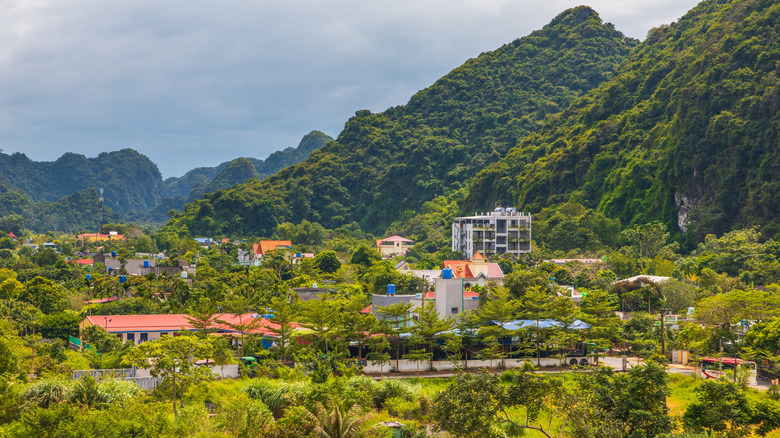
After visiting the designated UNESCO World Heritage Site and New 7 Wonders of Nature winner, Ha Long Bay, many travelers turn back to Hanoi. This means Lan Ha Bay and Cat Ba Island can still slip under the radar. While Lan Ha is separate, it feels like an extension of Ha Long Bay, and much of Cat Ba doubles as a national park. The area shares the same dramatic limestone karsts and emerald waters but limits boat traffic to just 135 cruise vessels daily, meaning it is much quieter. Once upon a time, it was difficult to combine the two, but a cruise route established in 2026 now connects Ha Long Bay and Cat Ba.
The waters around Cat Ba are dotted with ancient landscapes of vegetation-topped limestone rocks and hidden coves. They are punctuated by arches and grottoes carved out by millennia of tidal erosion, and the island offers unbeatable excursions at affordable prices. A two-day, one-night cruise covers activities like kayaking through caves and squid fishing, and will cost in the region of $80 to $255 per person. For daily costs, frugal travelers can get by on just $20 per day. Step up to the mid-range if your budget allows, and you're looking at around $45.
Staying on the island gives you access to golden-sand beaches, and you can rent a motorbike to ride the national park's roads through karst peaks. The routes are extraordinarily scenic, taking in tiny hamlets and farming communities of fruit orchards and eucalyptus plantations, all topped up with dramatic views of the sea. It's gorgeously quiet, and you might even catch a glimpse of the critically endangered primate, the Cat Ba langur.
Taiwan
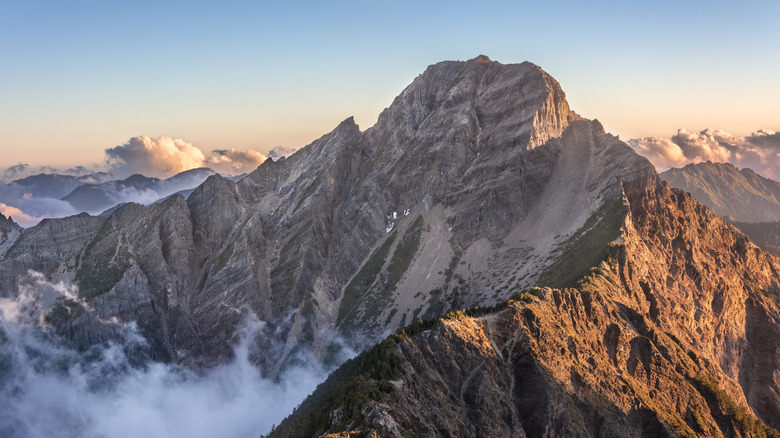
Despite being a high-income economy with a highly developed infrastructure, the East Asian island of Taiwan is surprisingly affordable. It's considered a moderately priced destination, but thrifty travelers can get by on under $50 per day. Mid-range comfort can be quite a bit more, even if you consider $125 per day to be affordable. Tucking into street food for dinner can cost as little as $4, and with the island being one of the best Asian destinations for foodies, you'll want to take full advantage.
It's also extremely beautiful. With nine national parks, it's a nature lover's dream. Among them is Taroko National Park, which features one of the continent's most breathtaking landscapes — the narrow, roughly 10.5-mile-long Taroko Gorge. Here, immense walls of rock rise high above the Liwu River far below, and vertiginous trails and sweeping high-altitude panoramas await those eager to venture deeper into the park. However, many trails remained closed following the 2024 earthquake.
Other stunning spots include Yushan National Park, home to Taiwan's highest peak. Thirty summits soar past 9,800 feet here, with Yushan, or "Jade Mountain," towering over them all. You can also see the mountain from afar in Alishan National Scenic Area, where ancient forests give way to peaks that emerge dramatically above the clouds. Finally, beauty lovers will also want to visit Sun Moon Lake, the largest and most celebrated lake on the island, and visitors are drawn to its serene forested hills and temple-dotted shoreline.
Koh Rong, Cambodia
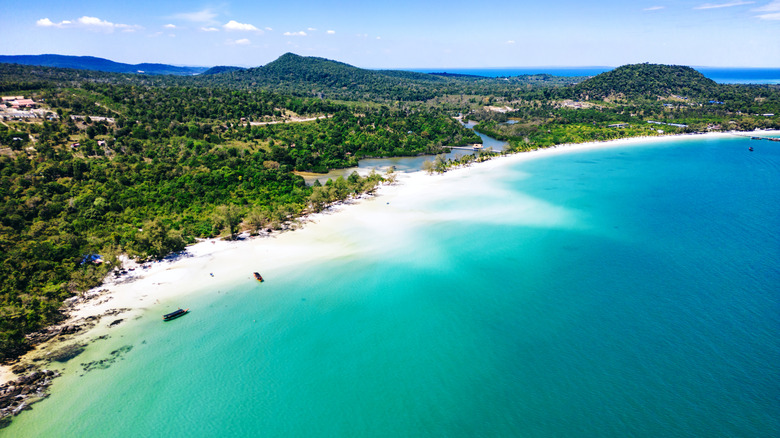
The 30-square-mile Koh Rong is possibly one of the world's most underrated tropical escapes. It sits off the west coast in the Gulf of Thailand, where lush jungle tumbles down hills to meet long stretches of white sand and turquoise and green waters. Beneath the surface is a rich ecosystem of coral and marine life safeguarded by the country's first large-scale protected marine area. You'll see an abundance of tropical fish, while sea fans sway against walls of soft coral. Dive deeper to see moray eels coiling in crevices and schools of snapper wheeling through the blue expanse, while barracuda and maybe even a whale shark are possible sightings further offshore.
Koh Touch is the main village. Its narrow, sand-dusted streets are lined with guesthouses and beach bars, and the atmosphere is chilled. It's the main backpacker village and a hub for budget travelers. You can generally live on around $30 a day here, but while it does offer soft white sand and inviting water, it isn't the most stunning beach on the island, and evenings can get noisy. The unspoiled sands of Long Set Beach are a big draw for those seeking a quieter alternative. It's a sweeping curve that hugs a bay of vivid emerald and turquoise. The reef at the southern end is accessible from shore, so there's no need to pay for a snorkeling trip. After dark, the water can turn into a cascade of neon-blue lights, alive with tiny glowing bioluminescent plankton that mirror the star-filled skies above.
Jeju Island, South Korea
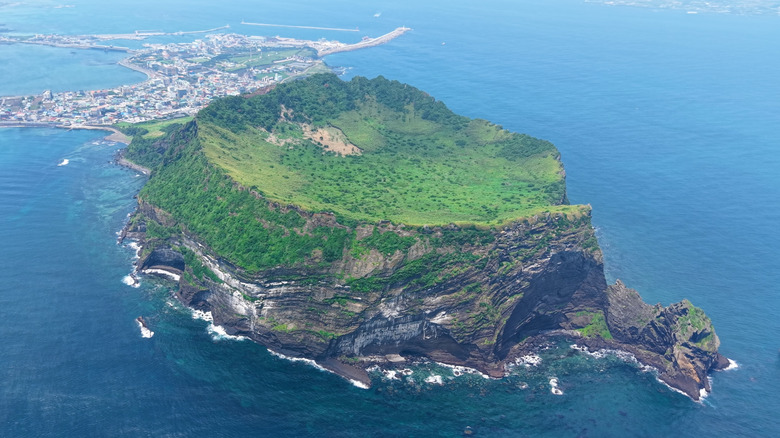
Jeju Island goes by a variety of different names and monikers. You can refer to it by its Korean name, Jejudo, while Cheju or even the "Island of the Gods" are also used. It's sometimes even dubbed the "Little Hawaii of Korea," thanks to its volcanic landscapes, coastal trails, and deep cultural traditions. It's a mesmerizing destination and arguably South Korea's most beautiful island. Those geological wonders include lava tubes, basalt formations, and hundreds of volcanic cones, which led to it receiving a New 7 Wonders of Nature award in 2011. Despite that international recognition and the country's strong economic development, the island is surprisingly affordable. Budget travelers to Jeju are looking at under $40 per day, but mid-range travelers might spend something closer to $85.
Hallasan dominates the island. This broad, flat-topped peak is Korea's tallest mountain and sits within a UNESCO Biosphere Reserve. In fall, it's ringed by trees of extraordinary autumnal color that you can admire while walking the many hiking trails. But the island's most dramatic peak is Seongsan Ilchulbong, a towering tuff cone that rises from the eastern coastline. Its broad crater contains a verdant inner bowl, and its sheer black cliffs plunge down to the deep blue ocean below. It has stood guard over the Korean coastline for millennia and is one of the country's most celebrated spots to watch the sunrise.
Koh Lipe, Thailand
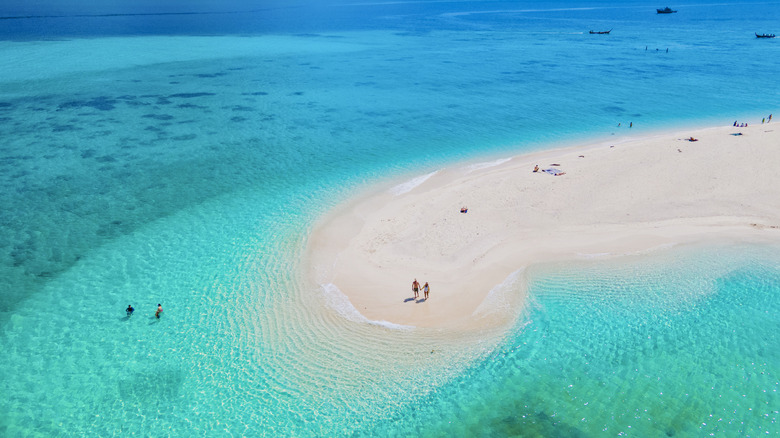
The tiny island of Koh Lipe is a place of white beaches and shimmering waters so beautiful it's often compared to the Maldives. In fact, its nickname, "the Maldives of Thailand," is well-deserved. And while it isn't as cheap as other Thai islands, it certainly doesn't reach the costs of its inspiration. In general, a budget traveler can expect to pay around $50 per day. Dormitories and budget rooms are always available, but visiting outside the November to April peak season is the least expensive time. It's also much quieter. In fact, the island's beaches are practically empty at that time. The trade-off, however, is more rain, potentially rough sea crossings, and the seasonal closure of around half the bars and restaurants.
For some, the wet season is the best time to visit Thailand, Ko Lipe included. The surrounding Andaman Sea still shimmers, and it's packed with marine life. The reefs are among the healthiest in the country, which is most apparent at Stonehenge, one of the area's top dive sites. It's a spot where rock formations rise from the seabed in a cathedral of stone, alive with sharks threading silently through the gaps and turtles drifting overhead.
The beaches are equally stunning. Pattaya Beach has those famed longtail boats bobbing on water that shifts from deep turquoise to pale jade, and the crescent of brilliant white sand is fringed by lush tropical vegetation. A short walk through the interior takes you to Sunrise Beach, the island's main hub for accommodation and beach bars. Walk along the sand to North Point Beach, and you'll see Koh Lipe's most photogenic scene: a boot-shaped, bone-white sandbar extending into stunning tropical waters. It's a spot you'll love dearly and one of the many paradise-to-yourself moments you can capture in the low season.
Koh Tao, Thailand
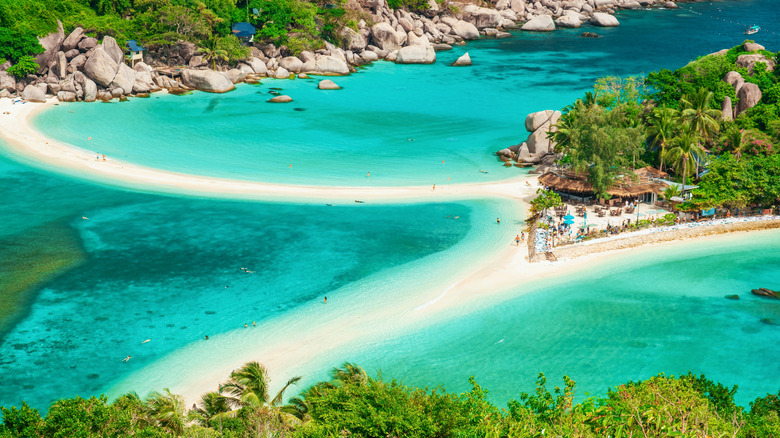
The tiny island of Koh Tao is often overlooked because it competes with its more developed neighbor, Koh Samui, and the party scene on Koh Phangan. However, if you seek a less developed beauty paired with an underwater paradise, this is the Gulf of Thailand island for you. Its coastline is stunning, too. Sairee Beach is the main stretch. It unfolds along the west coast for over a mile and is the place to be for incredible sunsets.
But it's Koh Nang Yuan that gets shutterbugs busy. This tiny group of three islands sits about a half-mile off Koh Tao's shores, and a viewpoint above the sandbar is the perfect spot to get that shot. The three islands of different scales are connected by a pale sandbar at low tide, curving just above the shallow jade-colored water. Another stunning spot is Ao Hinwong on Koh Tao's remote east coast. It's a secluded bay surrounded by enormous boulders and exceptionally clear water. Snorkeling here offers incredible marine life, with the chance to spot stingrays and hawksbill turtles.
In fact, Koh Tao is one of the cheapest places in the world to get scuba certified. Open water courses are available for less than $350 in 2026. But that's not all that's affordable. Budget travelers can get by on around $20 per day, while mid-range tourists are looking at less than $50 per day. These prices are pushed up if you're there for the scuba, but a snorkel mask costs next to nothing, and lazing around on the beach is free.