
These 10 States Have The Absolute Worst Roads That Drivers Hate
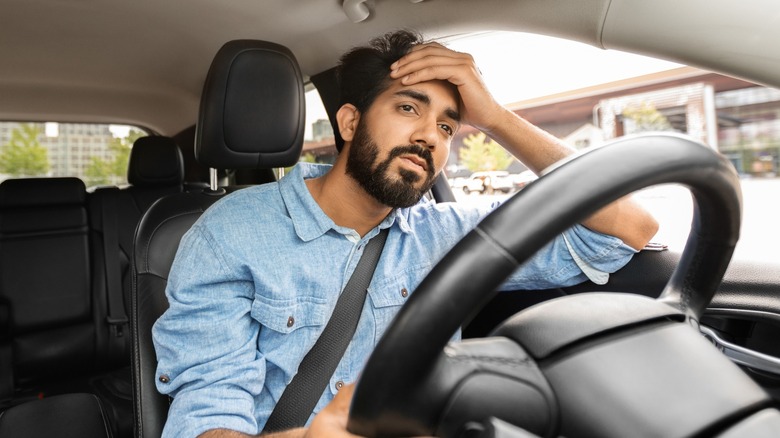
No matter where you're heading on a road trip, the United States road and highway system is essential part of the travel experience. But as travelers explore this great nation, they realize that some roads are a whole lot nicer than others. According to Construction Coverage, 13.1% of the United States' major roads are in poor condition as of 2026.
Issues related to transportation engineering, population growth, and infrastructure management can all play a part in a roadway's condition. As states struggle to navigate serious issues like rising costs, climate change, and soil erosion, many of the roads and highways central to the U.S. infrastructure have seen better days. Factor in regions known for their toll roads, high-traffic roadways, and constant construction, and it's easy to see why some states have a reputation for less-than-smooth sailing. Still, some of America's best travel destinations — especially hidden gems and delightful small towns that are perfect for summer getaways — require a bumpy ride to get there.
To compile this list, I drew on my experience as a travel writer who road tripped through 30 U.S. states from Oklahoma, a state where asphalt jackhammers are the song of our people. I started by examining information from the U.S. Bureau of Transportation, the 2025 Report Card for America's Infrastructure, ConsumerAffairs, and Construction Coverage insights. It should be noted that each study came with its own criteria for measurement. For example, Construction Coverage's study only took into account only major roadways in each state, whereas the 2025 Infrastructure Report Card is based on an assessment of all roadways. I also looked for firsthand commentary from drivers expressing their frustrations with these roads online to create this unranked list of states with the worst roads that drivers hate.
New Mexico
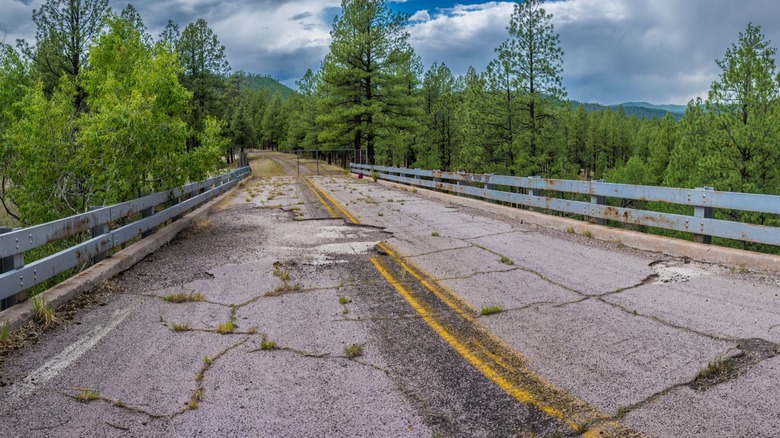
Ranked as having the worst road conditions for the second year running by ConsumerAffairs, New Mexico suffers from a number of challenges facing its road and highway system. According to the study, 49.8% of the state's urban roads and 31.2% of its rural roads are in poor condition. The state also ranked high for its traffic fatalities. Plus, according to Source NM, New Mexico's roads are the worst they've been in "recent history" thanks in part to the state's ongoing revenue problems.
What's it like living in the state with the worst roads in America? As one New Mexico local, a Dashing Delivery driver named Alberto Gurule, told the Santa Fe New Mexican, it can get a little bit scary when you're driving a Fiat. "Some of these potholes are big enough to almost swallow that car, so I got to really pay attention and keep my wits about me," Gurule said. Echoing this frustration, Santa Fe County Sheriff's Office Lt. Oliver McCartney remarked in the same story that one Santa Fe road is so torn up "it'll rattle your car apart if you continually drive on it." Factor in problems with roadway lighting and bad bridges, and it's a recipe for disaster.
Funding for road repairs is impacted by the state's gas tax, the third lowest in the country. There hasn't been an increase in the last three decades within the state, and it's expected to see further reductions over the next few years. On the flip side, the New Mexico's Department of Transportation is responding to the crisis, setting aside at least $100.4 million to spend on 70 projects starting in September 2025, according to ConsumerAffairs.
Rhode Island
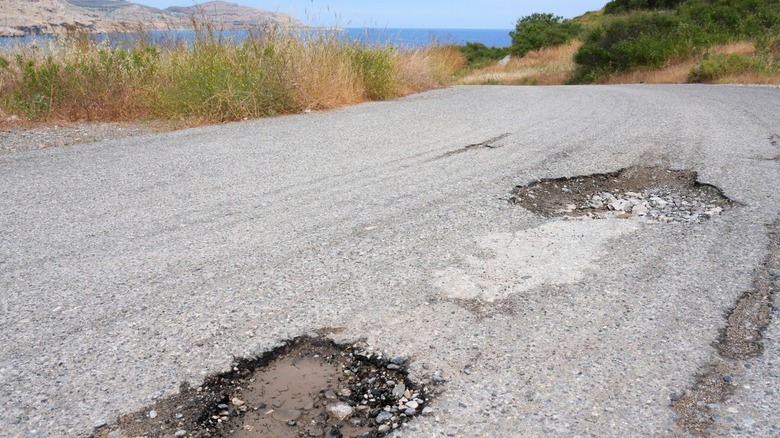
If you're traveling through Rhode Island, make sure you've got a spare tire. Dubbed the "pothole capital of the U.S." by The Providence Journal and ranked worst in the nation for bad roadways in 2026 by Construction Coverage, Rhode Island is a little state with a big pavement problem. According to this study, 36.2% of the state's major roads were in poor condition even after seeing incremental improvements over the past few years. Speaking to Rhode Island news station WPRI 12, a handful of locals all echoed a familiar refrain: frustration with the state's ongoing pothole crisis. As one Redditor wrote, "It's ALWAYS pothole season in Rhode Island."
The roads in some areas are so rough they've caused conspiracy theorists on r/RhodeIsland to suspect the poor construction is intentional so pavers can keep their contracts active. But the real problem is much more complex thanks to its oceanside challenges. With the state's 400 miles of coastline impacted by storms and sand erosion, some of Rhode Island's community roads are prone to sand washouts that interfere with service delivery, leave them unsafe to drive, cause cars to get stuck, and can even make them unpassable.
The state also faces some of the highest roadway infrastructure costs in the nation. As RIDOT spokesperson Lisbeth Pettengill told WPRI 12, "Decades of neglect have taken their toll." While typical road maintenance would just require repaving, the agent emphasized, Rhode Island's long-overlooked roads now require more extensive work. "We have to dig down to the sub-pavement, address drainage and other stormwater abatement issues, and make sure the new road is ADA compliant," Pettengill added.
Massachusetts
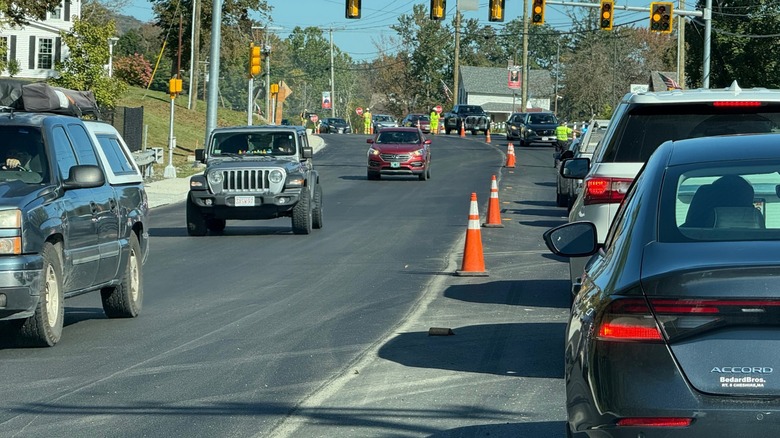
Ranked a D+ on the 2025 Report Card for America's Infrastructure and ranked second-worst on Construction Coverage's study, Massachusetts' extensive roadway problems have been further exacerbated by climate change over the past few years. Construction Coverage found that, among the state's major roadways, 29.3% are in poor condition. Residents say the roads are so uniformly bad there's almost no need for a map in some areas. Summing up the local sentiment, one Reddit user wrote, "Western Mass: 'Roads? Where we're going we don't need roads.'" And when roads finally see a repair team, locals on Reddit say those repairs tend not to last long.
Once again, this is a problem that appears to be intensified by an overall lack of funding amid rising construction costs. Faced with year after year of difficult winters, Massachusetts' aging road system has continued to decline. At the same time, workforce shortages have added to significant maintenance backlogs, further exacerbating the state's road problems.
And Massachusetts' relatively large population coupled with an average increase in commute times certainly aren't helping its bumpy roads. As one local opined on r/Massachusetts, "We are so highly populated it's hard to shut down entire swarths of road for as much time as it takes." Since roads in some areas can date back for hundreds of years and were never designed for today's large modern vehicles, mere pothole patchwork simply isn't enough. While the Massachusetts Department of Transportation recently set aside $11.26 million to upgrade the state's many still-unpaved roads, which should greatly improve life in some rural communities, the state's major roads still need a lot of work.
Mississippi
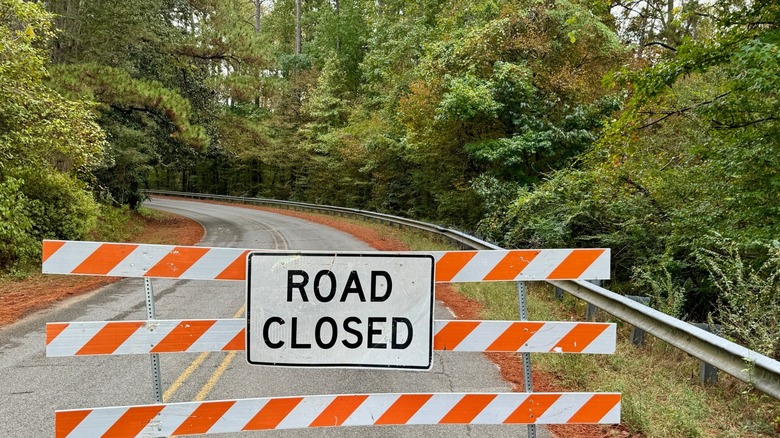
Mississippi's roadways alone earned a dismal D-minus on the 2024 Infrastructure Report Card, although the state earned a C-minus for its infrastructure overall. The report card found 56% of all the state's roads to be in poor condition. And ConsumerAffairs ranked Mississippi second worst in the country for its roads, emphasizing that 28.2% the state's rural roads and 49.3% of its urban roads are in disrepair, according to their criteria. The state also ranked worst on Consumer Affairs' traffic fatality ranking despite the state ranking as one of three lowest for instances of road rage. "At least once a week, I swerve to miss a pothole and my soul leaves my body," shared YouTube user PapaMississippi. Locals writing on r/Mississippi also suggest there can be a socioeconomic component to the problem, with wealthier communities frequently benefiting from nicer roads while other communities suffer.
Intensifying Mississippi's road problems is its plentiful Yazoo clay, a type of water-absorbent sediment that expands and contracts over time. As the clay's volume inevitably changes, this can causes the roads to crack, buckle, and pit — all very expensive problems. Funding is another major issue in yet another state where the gas tax hasn't seen an increase in about 30 years. A Mississippi Today investigation found that millions of the state's infrastructure funds had also been redirected to repair the country club and surrounding roads near the home of Mississippi House of Representatives Ways and Means Chairman Trey Lamar.
Despite these funding challenges, Mississippi's recent innovations aimed at increasing roadway efficiency could prove promising over the next few years. Widening the I-10 Harrison-Hancock corridor over the next few years will also markedly improve travel.
California
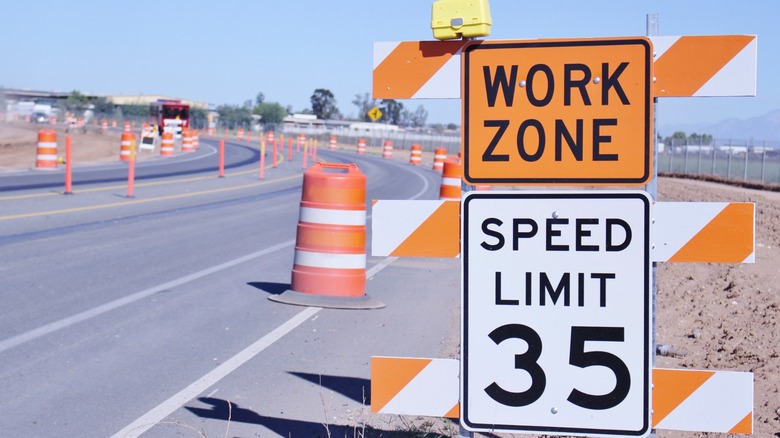
You don't have to have visited California to know this state's reputation for traffic problems. Take it from one recent California transplant complaining on r/WhatCarShouldIBuy, "The roads are bumpy, rough and dreadful. Every ride is shaky and full of cracks and potholes in the way."
A major destination for tourists seeking the ultimate California road trip, the sprawling state has over 177,000 miles of roadways. One of the nation's most vibrant west coast cities, Los Angeles, is the most traffic-congested hub in the country. Per Construction Coverage, the state's "large, car-dependent population" has helped put California on their list of states with the worst roads, noting that 28.4% of the state's major roadways are in poor condition. California also joined Oklahoma as one of the states that saw the most dramatic deterioration over the past few years, according to LendingTree. While Hearst Television Data ranks California's road conditions as fairly average based on federal figures, many roads in metro areas like Los Angeles and Sacramento remain in poor condition. While resurfacing is often the fastest and easiest solution, some Californians on Reddit insist many roads are long overdue for more extensive repair or even replacement. While the state receives the most federal infrastructure subsidies overall, its roads still scored a D on the Infrastructure Report Card (C-minus overall).
Things may soon be looking up for the Golden State, however. To turn things around, California recently approved nearly $5 billion in tax funding, but that money comes with a fairly strict set of caveats. Designed to reduce highway congestion, the plan is set to improve the highway system while providing commuters with a range of other options. "We're not just rebuilding transportation — we're reimagining it," said California Governor Gavin Newsom in an announcement from the governor's office.
Hawaii
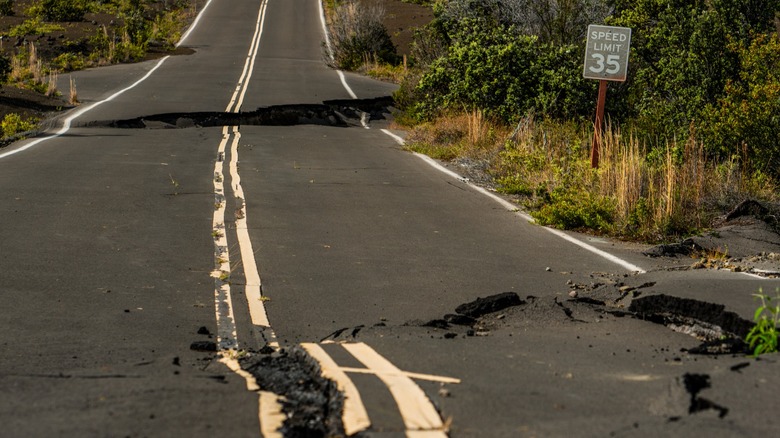
As the home state of the Road to Hāna, a world-renowned highway full of twists, turns, waterfalls, and tropical charm, Hawaii is a beautiful state to drive in. But severe weather, soil erosion, and flooding have all taken their toll on this island state's road systems, which already tend to be fairly congested due to natural constraints of the state's rugged topography.
The state came in fourth on Construction Coverage's ranking of worst states for roads, with 26.5% of Hawaii's major roadways in poor condition. But for a state with such a small geographical footprint, every roadway counts. And according to the Infrastructure Report Card, 65% of the state's overall road system is in fair or poor condition.
As with many other states, aging infrastructure will continue to be a problem until many roads are replaced. But unlike many other U.S. communities, Hawaii doesn't have the luxury of widening its roads to help reduce congestion in most areas despite frequently experiencing some of the worst bottlenecks in the nation. As one Reddit user emphasized on r/Hawaii, "The city is old, and widening roads in urban Honolulu would require a lot of eminent domain from the City and State, and would be wildly unpopular. Not to mention it would destroy several historic properties and defeat the purpose of moving the City towards a reduced dependency on cars (because we'd narrow the sidewalks or get rid of bike lanes)." In other words, improvements are easier said than done. It's probably just best to just enjoy the view and go with the flow while you're stuck in traffic. You're going to be there a while.
Oklahoma
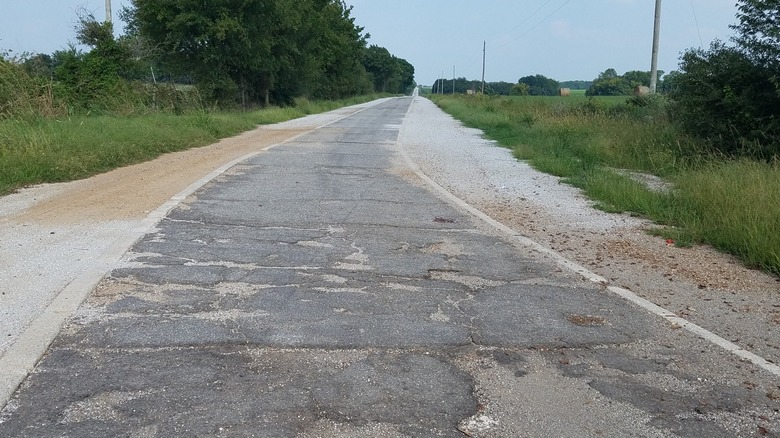
The Sooner State is typically known for two things: tornadoes and its incredibly high number of toll roads. According to Fox 25 out of Oklahoma City, 14% of Oklahoma's roads feature tolls — and there's not much to show for it. In April 2025, the same news outlet also shared a report from transportation non-profit TRIP warning that nearly half of Oklahoma's roads were in "poor or mediocre condition." In addition, ConsumerAffairs ranked Oklahoma fifth worst in the nation, noting 37.5% of Oklahoma's urban roads and nearly 1 of 4 rural roads were in poor condition. Responding to one frustrated traveler's Oklahoma road woes on Facebook, one user compared them to "washboards" while another lamented, "Oklahoma roads are in a state of constant repair." This is partly because decades of running with a flat gas tax has contributed to a growing backlog of deferred highway improvements to the tune of $10.5 billion, according to the Oklahoma Department of Transportation (ODOT).
Oklahoma's aging roadway infrastructure is worsened by the state's extreme winters and summers. Situated in the Great Plains, the state can experience some of the nation's most dramatic temperature swings of as much as 50 degrees Fahrenheit in a single day. Wild temperature swings like this have the potential to create a freeze-and-thaw cycle that can wreak havoc on asphalt and concrete roads alike — and this kind of weather can run from fall all the way through late spring in Oklahoma.
According to ODOT, thousands of miles of Oklahoma's two-lane highway shoulders also remain deficient. Oklahomans also fear a repeat of the 2002 I-40 bridge disaster that claimed 14 lives. Today, more than 1,100 miles of the state's bridges are over 80 years old — the same number of highway miles ODOT says are in poor condition.
Washington
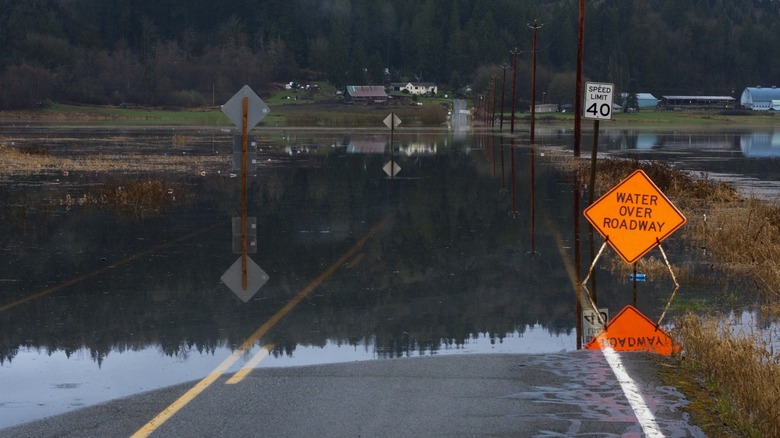
Washington boasts some of the nation's most striking roads and overlooks — even if some of those roads can get a bit bumpy. Construction Coverage ranked the Evergreen State sixth for its worst roads, citing that 22.1% of the state's major roadways were found to be in poor condition. And it's not just Washington's major roadways: The 2019 Infrastructure Report Card found a whopping 61% of Washington's roads overall were in poor or fair condition. And, as seems to be the case everywhere these days, many of the state's road maintenance challenges have been worsened by population growth, fueling traffic delays and putting wear and tear on the roads.
While drivers on Reddit agreed the highways tend to be smooth, many smaller roadways are in rough shape. "WA has unusually bad road design and upkeep, and the rock issue does stand out," one Redditor shared, referencing the all-too-common roadway debris problem. "The only place that even approaches it on flying debris in the west is Utah."
Speaking to a state panel in 2025 (per Washington State Standard), Washington State Department of Transportation (DOT) representative Troy Suing said, "We are in the early stages of critical failure due to lack of funding," Reflecting a theme seen across the United States, Suing emphasized the current focus on reactive repairs simply isn't enough. He went on to share that, in 2024, merely a fraction of the roads due for repaving saw the work they needed. Although the state's highway pavement overall ranked high against the state's benchmarks for fair or better condition, grants from the Washington State Transportation Improvement Board grant program have aided improvements on the local level within some communities.
New York
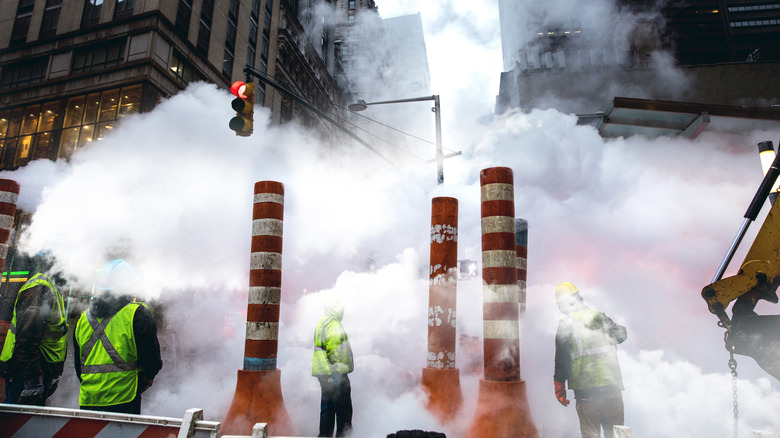
The good news is that New York's 2022 Infrastructure Report Card found that 55% of the state's roads were either "good" or "excellent." The bad news is that the other near-half the state's roads are either considered "poor" or "fair," largely due to congestion and maintenance backlogs — and that's still a big chunk of the roads New Yorkers have to face. The report also found 1 of every 10 New York bridges to be in poor condition. Echoing these findings, TRIP found that traffic congestion and poorly maintained roads and bridges cost drivers thousands each year, particularly within urban communities.
As is the case across the U.S., rising costs due to inflation have continued to fuel the fire as the backlog slowly increases over time. In an effort to combat these challenges, New York Governor Kathy Hochul unveiled her plan to attack the state's pothole crisis in April 2026, a plan that involves paving over at least 44,000 of them by the project's end.
The backlog of the number of roads requiring reconstruction rather than just repairs has grown over the years, reflecting problems faced by other struggling states. As one local opined on r/NewYork, "It's not pothole repair that's needed any more. It's full repaving." Emphasizing that most of these roads had gone far too long without maintenance, they concluded, "The state blew off maintenance and repairs for so long that now the roads' bases are coming apart. Not just the asphalt on top."
Louisiana
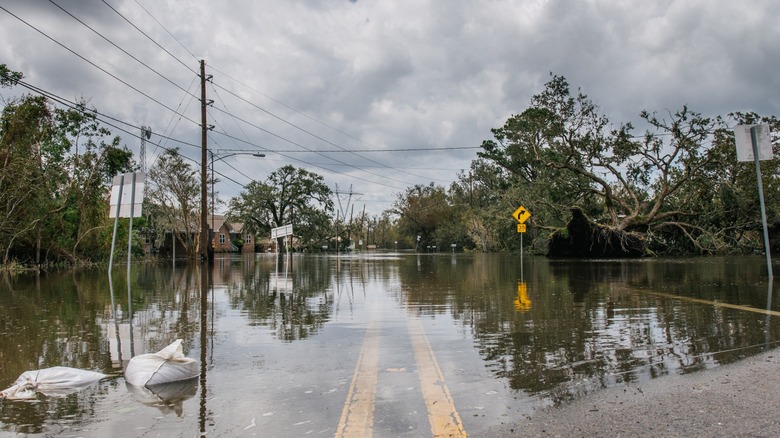
Ranked eighth on Construction Coverage's study on the worst states for bad roads, researchers found 21.3% of Louisiana's roads to be in poor condition. Going further, as broken down by ConsumerAffairs, 20.9% of Louisiana's rural roads and 43.6% of the state's urban roads were found in poor condition. Complaining on r/Acadiana, one Louisianan lamented, "I thought Baton Rouge infrastructure was bad then I moved to Lafayette and holyyy I can't wait to move. I think Lafayette roads and the mechanics have some type of contract going on."
One of this state's most significant challenges comes from subsidence, a natural phenomena that causes the earth's soil, particularly in Louisiana, to shift and sink. Subsidence presents an ongoing challenge in the state and can obviously cause serious damage to roadways and other infrastructure.
On Louisiana's 2025 Infrastructure Report Card, the state's deteriorating roads alone scored a D (C-minus overall). The study also revealed that 50% of roads were found to be in poor condition. As traffic has continued to increase, leading to congestion and rising costs, the state's roads have seen a continued decline. And with more than three decades passed since any increase in the state's fuel tax, the state sees a serious and growing need for funding.