
The 6 Worst National Parks To Visit With Seniors Or Young Children

President Ulysses S. Grant signed the Yellowstone National Park Protection Act in 1872, establishing Yellowstone as the United States' first national park and stating that it would exist "for the benefit and enjoyment of the people." This ideal that national parks should be accessible to everyone has since become rooted in many Americans' expectations of who their parks should serve. Many of the country's 63 national parks can accommodate a wide range of ages and abilities, with adaptive equipment, accessible trails, interpreters, and youth programming. But no amount of accommodations can change the fact that some parks are better suited to certain travelers than to others. For seniors and families with young children, parks with rough trails or high elevations can add unnecessary stress.
Of course, age alone doesn't determine what travelers can handle. Afterall, the oldest person to complete the more-than-2,000-mile Appalachian Trail was 91 years old, and the youngest was just 4. However, for the following six parks, certain characteristics can make them challenging for kids and older adults. While families shouldn't necessarily avoid these parks, they should understand what they're getting into, so that they can come prepared and have a safe and enjoyable experience.
Accessibility and safety were the main criteria used to select the parks on this list. Small children and seniors often experience mobility issues and can be susceptible to altitude sickness. Thus, parks whose main attractions involve climbing hazardous rope ladders, hiking narrow cliffside trails, or driving up to high elevations where the air is thin were included. Other factors considered were the availability of medical services and the amount of hiking required to see the parks' highlights.
Denali National Park in Alaska

Denali National Park & Preserve contains North America's highest peak and covers about 6 million acres of interior Alaskan wilderness. The park is intentionally wild and remote, with few developed facilities or maintained trails and only one road — the 92-mile Denali Park Road. Most of the road can only be explored via a shuttle, tour bus, bicycle, or on foot. This means that in order to explore beyond the first 15 miles of the park, visitors must ride a bus for 4-5 hours or longer, which might be an uncomfortable experience for some kids and seniors. What's more, many of the park's trails are uneven and gravel-strewn, with grades as steep as 25%, which can be tough to navigate for older hikers who are unsteady on their feet. Should someone fall or become stranded when the weather changes quickly — which it does frequently at the park — seeking help can be complicated, as medical services in the area are limited.
Young children may struggle with being cooped up on a bus for half a day, and while the park is home to some exciting wildlife, including grizzly bears, moose, and wolves, sightings aren't guaranteed. The weather in Alaska can be cold and wet, which might elicit tantrums and complaining as kids slog through the mud or freezing rain. Plus, the park's remoteness means the area doesn't have many restaurants or other kid-friendly attractions.
On the other hand, Denali has several features going for it that seniors and families may appreciate, including wheelchair-accessible buses, ADA-compliant trails, and an expansive visitor center that includes a Junior Ranger program. Multiple parents on Facebook who survived the bus ride with toddlers report that it wasn't as bad as they'd feared, with one mentioning that their toddlers napped for much of the ride.
Mesa Verde National Park in Colorado
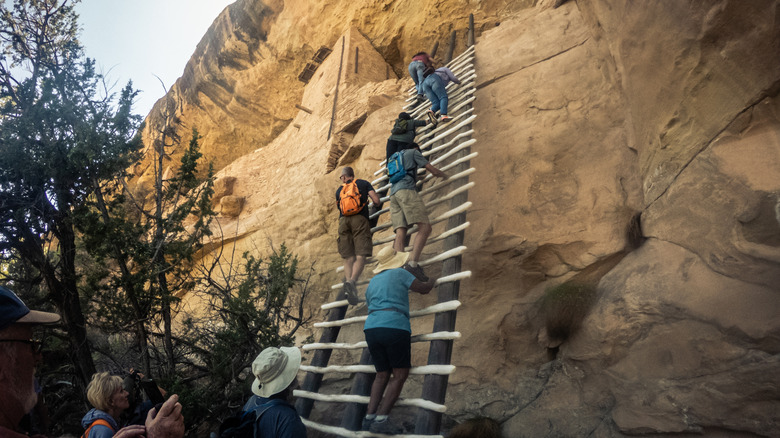
Mesa Verde National Park may be an archaeological wonder, but the high altitude and steep trails mean that it may not be the best choice for young children or the elderly. The park is located in southwestern Colorado, and though it covers 52,000 acres and 30 miles of trails, its main attractions are the preserved homes and villages of the Ancestral Pueblo people, some of which can only be reached by navigating steep, uneven trails, stairs, and even ladders. For example, the Long House tour involves 2.25 miles of walking and a steep staircase with two 15-foot ladders. This might be tough for some older hikers to manage, especially given the park's high elevation, which is above 7,000 feet. The National Park Service (NPS) specifically warns that visiting the cliff dwellings and hiking in Mesa Verde National Park may not be suitable for those with heart or respiratory issues.
Several of the park's most famous cliff dwellings, including Cliff Palace, Balcony House, and Long House, can only be visited up close on reserved, ranger-led tours. While children are allowed on the tours, they must be able to walk the entire trail and be able to climb steps and ladders independently or else ride in a carrier. The NPS advises parents to supervise children carefully around cliff edges to avoid a tumble over a canyon rim. One parent on Reddit, who toured with her six and eight-year-old children, said "it was terrifying" and not something they'd recommend.
However, for active seniors and families with older kids or teenagers, Mesa Verde's fascinating history, status as a World Heritage Site, and scenic overlooks could make this park worth visiting. Some older travelers and those with limitations report completing the tours with no issues and point out that the cliff dwellings can also be enjoyed from several overlooks that are reachable by car. Mesa Verde is also an International Dark Sky Park, making it an ideal place to visit for stargazers.
Dry Tortugas National Park in Florida
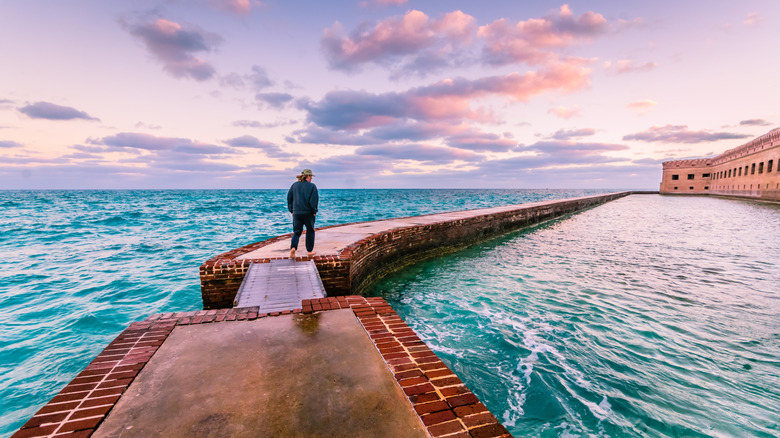
Located nearly 70 miles west of Key West in Florida, Dry Tortugas National Park is a paradise of coral reefs and beaches. Reaching the park's seven islands can be quite the journey, as the lack of bridges or roads means that visitors must arrive by boat or seaplane. The ferry ride across open ocean can be a struggle for seniors, with the NPS warning travelers to be prepared for rough seas. The park's remote location and limited facilities also mean visitors must bring everything with them that they might need for a day of exploring under the tropical Florida sun, including food, water, sun protection, and medications. While the park's main attraction, the 19th-century coastal Fort Jefferson, has some areas that are wheelchair accessible, those in wheelchairs will not be able to reach the second and third tier. The park's other biggest draw is its water activities, but snorkeling or kayaking in the strong currents may be physically taxing for some seniors.
For families with young children, the journey to Dry Tortugas may be the biggest challenge. Young kids vulnerable to seasickness may not enjoy the long and bumpy boat ride over, which can take an estimated 2.5 hours each way. Once there, families will need to keep watch over the little ones, as there are no lifeguards posted on the beaches, and Fort Jefferson has walkways that butt up against the ocean. Dry Tortugas also has no restaurants, stores, or even drinking water.
On the upside, hiking is not required to experience Dry Tortugas National Park. Seniors and small children also don't have to snorkel to enjoy the clear, turquoise water and diversity of wildlife, which includes sea turtles and approximately 300 species of birds. The park has several beaches, ideal for walking, sandcastle making, or wading in the shallow water. Plus, young kids and young-at-heart seniors will enjoy exploring what is essentially an old, abandoned fort.
Canyonlands National Park in Utah
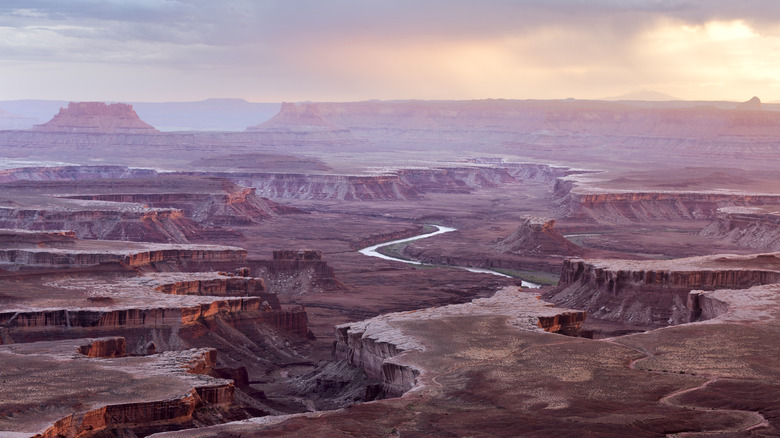
Canyonlands National Park is located in southeastern Utah, and with 337,598 acres, it is the state's largest national park. The park spans four major land sections, which include Island in the Sky and The Maze, a bucket list hike that is considered dangerous due to its remote location, shifting extremes in weather, and few water resources. This national park may be challenging for older travelers who can be more susceptible to heat stroke or who may lack the ability (or desire) to navigate the park's winding, narrow, and rocky backcountry roads, many of which require a high-clearance vehicle. "This Park is geared more to challenging hikes and 4x4 [offroad] adventures," writes a reviewer on Facebook. "But the scenery was pretty. Kind of like a small version of the Grand Canyon." Seniors who visit will need to bring physical maps and a compass, as cell service is spotty, and trails may not always be marked.
Young children with low attention spans may not enjoy Canyonlands National Park as much as other destinations, due to the long drives between the attractions. Driving from one district of the park to another can take anywhere between two and six hours. Plus, while the enormous park offers a lot to see and do, most of the attractions are more scenic than interactive.
However, families with older children, active seniors, or those content to trade hiking for driving from scenic overlook to scenic overlook may enjoy Canyonlands. Several commenters on Facebook have reported that you don't need to hike to enjoy the park, as the scenic drive offers pullouts and stunning views from the road. "You can see a lot of amazing things from the car in the Island in the Sky," reports one commenter.
Isle Royale National Park in Michigan
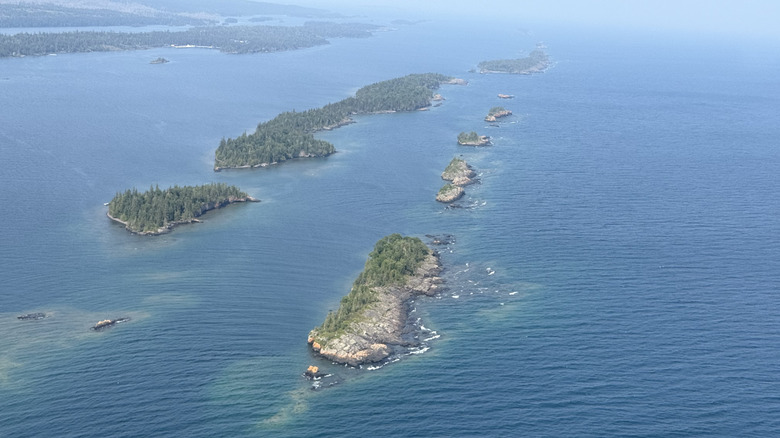
With its turquoise waters and unique rock formations, Isle Royale National Park is one of the U.S. national parks that could pass for a Caribbean island. Scenic though the park may be, it's also incredibly remote. Isle Royale is an island in Lake Superior which can generally only be reached by ferry, seaplane, or private boat. Because of its remote location, medical services are limited. Seniors who become injured or fall ill while visiting will need to be evacuated, and this can become complicated, given that travel to and from the island is weather dependent. Getting around the island might be less than ideal for older visitors with mobility issues, as the island does not allow cars, which means seniors who can't hike may be limited to seeing the park via boat tours. Many of the park's attractions require hiking on rugged trails, which can be difficult for both older travelers and small children alike.
Finding a place to stay might also be a challenge. While the park offers camping and cabins, it has only one full-service lodging option. "I would find Isle Royale challenging with little ones. There are very few places to stay, and they often fill up at least a year in advance, so make reservations early or expect to camp," reports a commenter on Facebook. Furthermore, the weather on Lake Superior can change quickly, making for a bumpy and unpleasant boat ride for kids or seniors prone to motion sickness.
Of course, you don't need to hike or camp to enjoy Isle Royale's scenery. The island's forests and wildlife, which includes moose, beavers, foxes, and loons, can be enjoyed from Rock Harbor. Plus, there are a few boat tours that include short nature walks to lighthouses and shipwreck sites. However, in general, this park might be best visited with older kids and seniors who relish the idea of strapping on the hiking boots for some rugged outdoor adventuring.
Carlsbad Caverns National Park
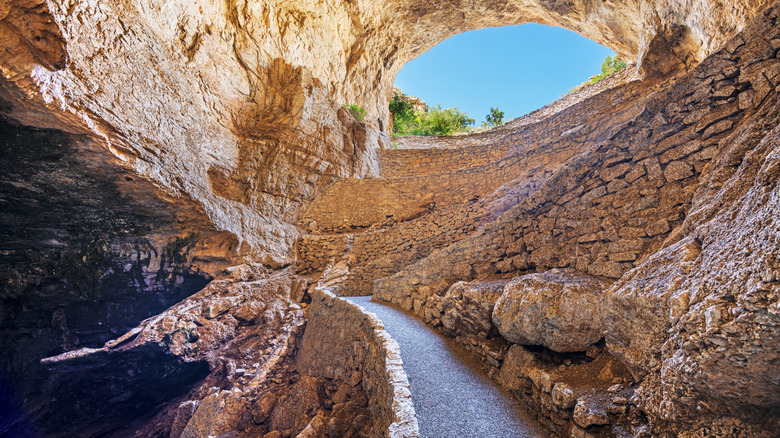
Carlsbad Caverns National Park is located in southeastern New Mexico, in the Chihuahuan Desert near the city of Carlsbad. As the name suggests, the park is best known for its massive underground cave system, which includes several caves that can be quite physically demanding to access, particularly for seniors, small children, or those with mobility issues. Some of the caverns require hikers to use ladders and navigate undeveloped sections of trail and uneven terrain. The Natural Entrance Trail, for example, descends a steep 750 feet over 1.25 miles, which the NPS warns those with heart or respiratory issues should avoid. While visitors have the option of taking an elevator down into the cavern, bypassing the steep descent, they'll still need to be prepared to walk for another mile on a bumpy, wet path if they'd like to visit the Big Room, North America's largest cave chamber (by volume). Hiking is also required for exploring the park's other caves, including Lower Cave and Slaughter Canyon Cave, which can show you a side of the park few visitors get to see.
Young children may struggle with the many switchbacks, and with strollers prohibited in the caverns, parents may end up with the stressful job of carrying squirming toddlers down steep, slick paths. "When our son was two, we went to Carlsbad Caverns. He had to ride on my husband's shoulders so he wouldn't fall into an abyss," says a commenter on Facebook. Because the trails can be wet and slippery, children will need to be supervised closely, and some ranger-guided cave tours have age minimums.
That said, some active seniors and families with older children may enjoy exploring the caverns and hiking through the many trails that wind above the caverns through the Chihuahuan Desert and the Guadalupe Mountains. In the warmer months, visitors can watch thousands of Brazilian free-tailed bats flying out of the canyon at dusk.