
11 Things That Will Get Confiscated If You Bring Them Into A National Park
U.S. national parks vary immensely in size, landscapes, history, and culture. From underrated gems like Biscayne Bay National Park in Florida that's composed almost entirely of water to world-famous destinations like Yellowstone and Yosemite, each possesses its own unique characteristics. When visiting, however, there are some things to keep in mind, including what may not be allowed in the park in the first place. Numerous items are prohibited at the Statue of Liberty and Ellis Island, for example, where security is very strict, and visitors are required to walk through screening checkpoints and metal detectors. In some of the more nature-focused national parks, there's no official security checkpoint — just what rangers or law enforcement notice — but you'll still want to be prepared.
Below, learn about 11 items that are strictly prohibited at many National Park Service (NPS) properties. Depending on the type of park you visit, certain items may be confiscated immediately. In other cases, simply possessing some of these items may not result in seizure, but operating or using them might. Also, not all parks have the same rules; some are site-specific or state-specific for legal reasons. Avoid citations, fines, jail time, or being barred from entering parks by double-checking what you pack in the first place.
Our list of prohibited items comes directly from the NPS itself, especially from parks like the Statue of Liberty that are very intent on security. Some items are banned across all NPS properties, but we also delve into many items that are only partially banned or have some caveats — and why. In addition to the author's experience visiting many national parks, we've also consulted articles from Outside, The Travel, and various news outlets. Read on to help you prepare thoroughly for your next national park visit.
Weapons
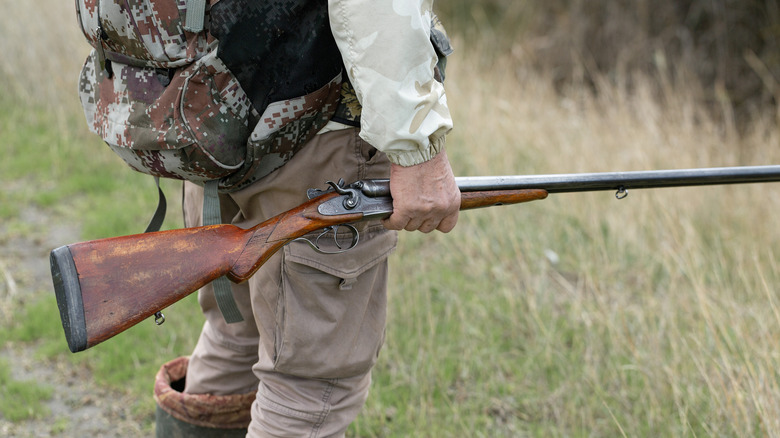
The definition of what the National Park Service considers to be a dangerous weapon can vary from park to park. The Statue of Liberty is an example of a federal NPS monument where the definition of a weapon is broad and includes everything from guns and tasers to replica firearms and martial arts weapons. This high-security park is located in densely populated New York City, so due to the number of people visiting and its international significance, the NPS takes no chances. There aren't any lockers available, and security will seize any illegal items.
What about the other parks' rules? It depends. When it comes to firearms, visitors are permitted to bring them into many parks if they have a legal right to carry, including any required permits, and they're otherwise complying with state laws about firearm possession. This usually means restrictions on the type of gun. For example, federal law prohibits anyone from possessing fully automatic weapons and short-barreled shotguns. In many states, including California, New York, New Jersey, and Massachusetts, assault weapons like AR-15s are also banned. If you roll up with any of these, you may face fines, a ban from national parks, or even jail time.
No matter what, firearms can never be brought inside federal buildings, which include visitor centers and ranger stations, among others, and they may not be discharged at any time. "Visitors should not consider firearms as protection from wildlife," the NPS points out — more on that in a bit. The exception to this is that some federal recreation areas, national seashores, and wilderness monuments may allow hunting during designated seasons, but each place has its own system for permits. Each state also facilitates its own hunting licenses, so do your research.
Drones
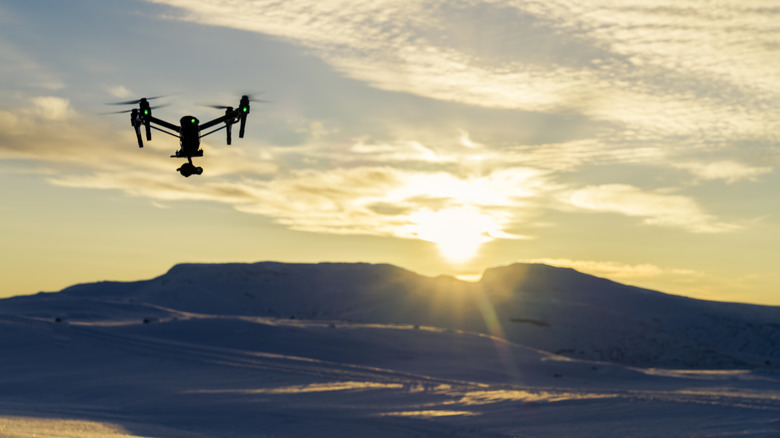
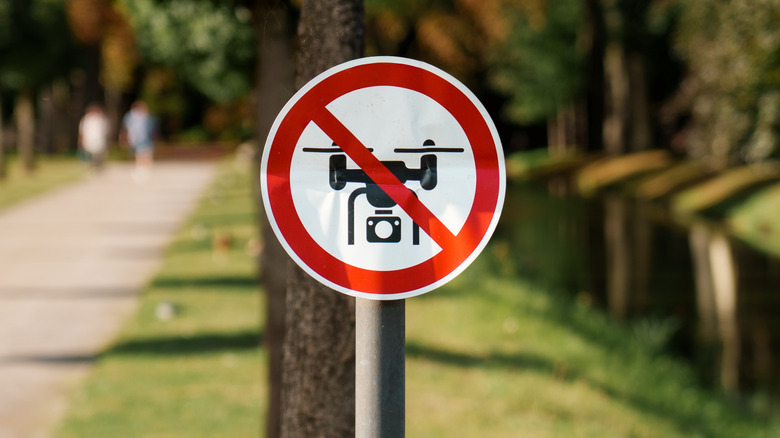
Those beautiful aerial videos you see on your Instagram or TikTok feed can be so alluring, and photographers increasingly use drones to capture beautiful shots of landscapes from above. But among the top things that tourists should avoid bringing into national parks are drones. The NPS expressly prohibits the operation of any kind of uncrewed aircraft within the boundaries of its properties, whether on land or over water. Essentially, there are three reasons for this.
Firstly, drones may be used to harass wildlife or disturb where they sleep or forage. In summer 2026, an operator got way too close to a grizzly and her cubs in Yellowstone, outraging other visitors. Drones also sometimes crash, such as one that landed in Yellowstone's Grand Prismatic Spring, which you can see from some of the park's most breathtaking overlooks. Secondly, the noise these things create is not pleasant; they sound like high-pitched bees. The unexpected, electronic noise can be alarming to other visitors or cause a nuisance that's at odds with nature and the spirit of conservation. Finally, the NPS prohibits devices operated by motor in developed areas, period. (Sorry, that means you can't use your remote-controlled cars either).
If you're on a longer road trip and you have your drone along, make sure to keep it stored in your vehicle; possession of a drone in a national park isn't against the rules. But if a ranger finds you using it or it causes an accident of some kind, you could be cited, fined, or jailed depending on the severity of the incident.
Balloons and (sometimes) kites

Like drones, flying a kite or letting balloons loose can also get you into trouble. At Saguaro National Park, a Ph.D. student named Erin Zylstra conducted a study to look for tortoises across the park's approximately 105 square miles, only to find way more balloons stuck on cacti and rocks than the animals she was looking for. In fact, she estimated that there were the remnants of nearly 17,000 downed balloons throughout the park. That's solid data showing how helium-filled balloons can so easily get stuck on plants, in nests, or accidentally ingested by animals. All national parks prohibit releasing balloons. And Joshua Tree National Park specifically bans inflated balloons of any kind; other parks just warn you to be careful and considerate so they don't endanger wildlife.
Kite-flying is a beloved pastime and something that's wonderful to take advantage of when conditions are right in wide-open areas. They're not frowned upon in quite the same way as balloons, but they will get confiscated if you're flying one in an area where they're not allowed. The Statue of Liberty and Ellis Island prohibit them entirely. Acadia National Park, for example, allows kite-flying as long as it doesn't interfere with others or the environment. The Statue of Liberty and Ellis Island prohibit them entirely. And some wildlife preserves and national seashores may allow kites most of the time but temporarily prohibit them during specific times of the year in order to protect vulnerable wildlife. Essentially, kites won't be confiscated just because you bring them in, but if you cause distress to other visitors or animals, it'll be a different story.
Drugs, including marijuana
Many drugs are illegal everywhere in the U.S., including cocaine, heroin, methamphetamine, and others, and if found on your person in a national park — like anywhere else — you may face serious charges. This probably isn't surprising, but just like in airports, where passengers have tried to sneak drugs past TSA in bizarre ways, people try to covertly bring all manner of things onto NPS property. You may not have your car searched, but if you're reported or caught using — or worse, dealing — an illegal substance, the park's law enforcement will demonstrate the consequences.
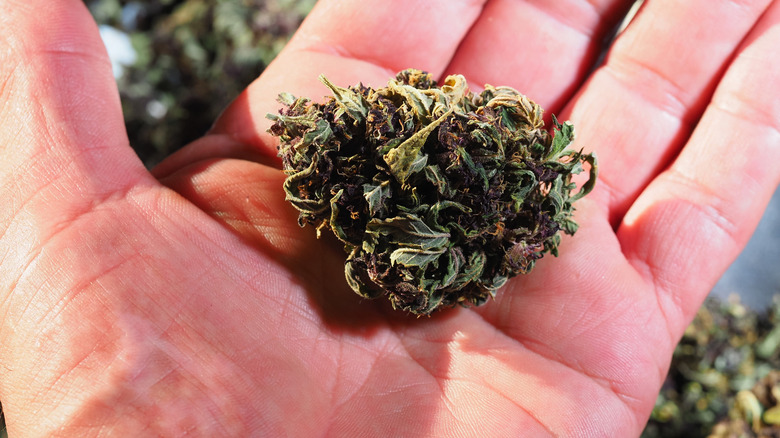
Marijuana is the trickier example, though, and worth pointing out separately. It's been legalized in a growing number of states, including Colorado and New Mexico, but the federal government still classifies it — specifically because of its mind-altering THC compound — as a Schedule I drug. Since national parks are federal entities — and the same goes for national forests, recreation areas, conservation areas, and others — marijuana is illegal in these places, even in states where it's otherwise permitted for recreational or medicinal use. It's important to remember that federal law prohibits not only the use of marijuana, but also the possession of it in the first place. Anything with THC — edibles, beverages, homemade snacks, etc. — is prohibited.
Fireworks and explosives
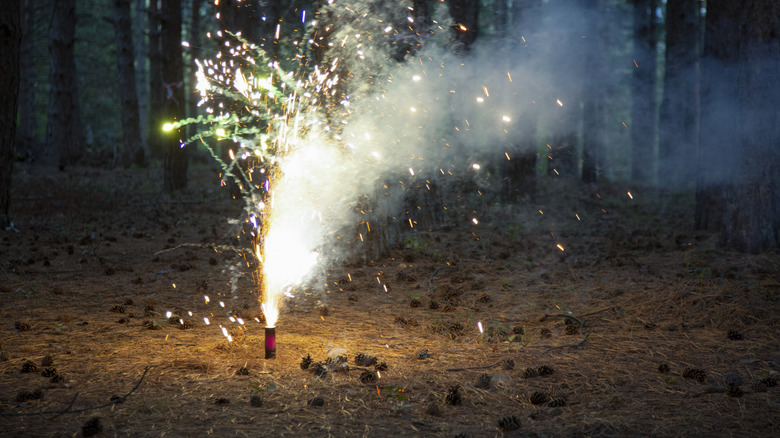
Every July, Americans rev up their love for their country on Independence Day, and one of the most time-honored traditions around the celebrations is fireworks. Sure, it may seem like harmless fun to set off a couple of fun firecrackers, sparklers, or little fountains at the campground, right? Wrong. Fireworks and any other pyrotechnic or explosive devices are prohibited at all NPS properties. This is for visitor safety as much as it is to prevent the risk of wildfires and brush fires, depending on the area. Not only are you not allowed to detonate any of these types of devices, but it's illegal to possess them at all within park boundaries. If you're seen with them, they'll likely be immediately confiscated.
During the big July 4 holiday weekend, park rangers become extra diligent about enforcing the law. Even a sanctioned, official fireworks show at Mount Rushmore National Memorial for the America 250 celebration in 2026 sparked fears that the event could ignite a wildfire in the arid Black Hills (fortunately, that didn't happen). The NPS reports data gathered by the National Fire Protection Association (NFPA) that demonstrates how, in 2023 alone, fireworks caused more than 27,000 outdoor fires around the country, not to mention more than 3,700 structure fires and over 800 in vehicles. With so many visitors, campsites, buildings, animals, and trees in our national parks, one errant spark could mean disaster. That's why you'll also often experience strict campfire regulations in many parks during the hottest months.
Bear spray
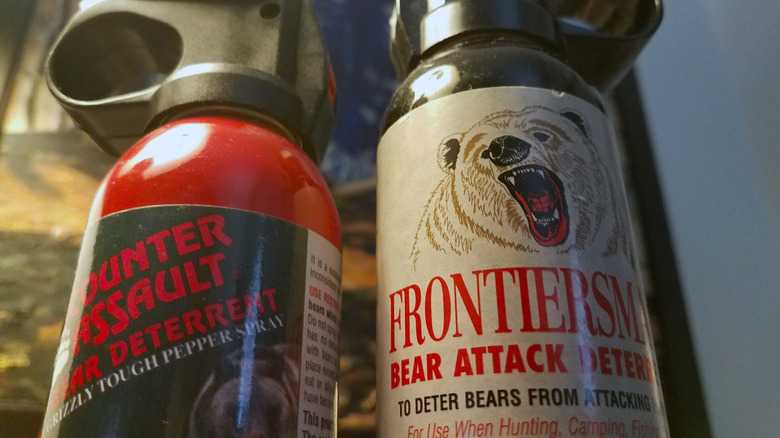
Here's an item with a real caveat: some national parks really want you to have bear spray. Others really don't. It comes down to the type of bears that live in the area and whether the state considers bear spray a weapon. That's the case in California, where national parks have banned bear spray. Per state law, bear spray is technically legal to possess and use — just not in national parks, where it's classified as a weapon. That's because the black bears that inhabit the Sierra Nevada are more skittish than grizzly bears, also known as brown bears, and can be pretty easily deterred by getting big and being very loud to scare them away. Essentially, don't even bother bringing a canister to any NPS property in California, as rangers will likely relieve you of it.
In Rocky Mountain parks where grizzlies roam, such as Glacier, Yellowstone, and Grand Teton, bear spray is highly recommended and has been proven effective as a deterrent against aggressive bears. It doesn't harm the animals; it's a powerful pepper spray that temporarily inflames a grizzly's eyes and upper respiratory system, prompting it to back down. When heading to a park that has any type of bear, from Appalachia to the Rockies to the High Sierra, check the specific regulations for the park you're going to. Rule of thumb: If there are only black bears where you're heading, leave the bear spray behind.
Firewood from home
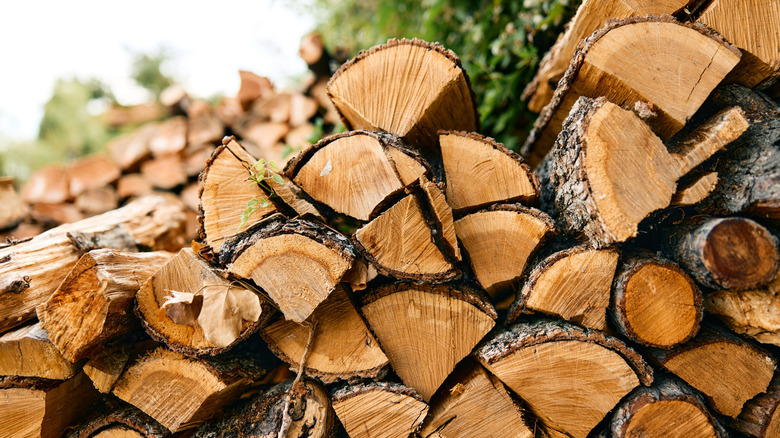
We all love to make a campfire (when permitted) at our sites, and national parks offer a timeless setting to do so. But there are some serious things to consider about fire safety, and it's not just about keeping flames at bay. Firewood brought from home is a no-no at many national parks that are trying to keep invasive, tree-killing insects out of their forests. Emerald ash-borer, spotted lanternfly, spongy moth, and the goldspotted oak borer are just a handful of invasive insects — not to mention fungi and diseases — that threaten U.S. forests. Because these pests bore or spread into the internal parts of the organism, eventually killing the tree, they can be spread to other locations if that wood is then turned into kindling for campfires.
Any firewood you bring into a national park needs to be heat-treated, ideally USDA certified, and purchased in the park or within a certain radius. Every park has its own rules, which reflect its particular geography and environment, so check the specific park for information before arriving. In addition to Great Smoky Mountains National Park, the most biodiverse in the entire NPS system, Shenandoah and Cuyahoga Valley National Parks, plus several other national recreation areas and sites, formally ban imported firewood.
Marking instruments

Not many national parks have security screening checkpoints, but some located within urban contexts do, such as the Gateway Arch in St. Louis. Some things rangers and security personnel may be looking out for include items that could be used to vandalize the site, such as spray paint, chisels, or knives (which also count as weapons), ink or paint markers, or containers of liquid paint. If you try to bring in items that look likely to be used to deface federal property, chances are, you'll not be permitted to enter, or your items will be seized. Marking instruments are officially off-limits at the Statue of Liberty, but most parks won't take things away from you unless you're caught using them.
The NPS is very serious about conservation and protecting its parks, especially where it stewards irreplaceable petroglyphs and other archaeological treasures. There are some awe-inspiring places to see rock art in the U.S. — other visitors just don't want to see your modern creative additions. Vandalism, including but not limited to graffiti, is illegal across NPS properties. It's also illegal to try to take anything from the park, including artifacts and natural specimens. A pictograph of a bighorn sheep at Death Valley National Park almost went missing when a visitor tried to carve it right out of the face of a boulder. The offender didn't manage to leave with it, but the site is forever marred. "Defacing any part of the national park or other public land you visit hurts, and it degrades the experience of other visitors," says a statement. Leave carving or marking supplies at home.
ATVs
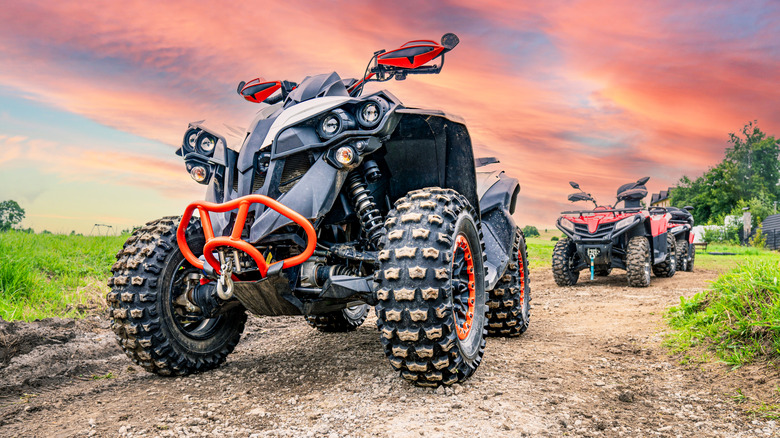
For those of us who love to enjoy nature on wheels, there's nothing more enticing than a wide-open space with trails and great views. Unfortunately, ATVing in formal national parks like Zion, Canyonlands, and others is generally a no-go — the vast majority of formal parks don't allow all-terrain vehicles at all, partly because they're not legal on highways, so if you turn up at an entrance gate in one, you'll be asked to turn around. If you're caught operating one inside a national park, you may be cited, and the vehicle could be seized.
In many places, adjacent public lands allow you to see similar landscapes right outside the formal park boundaries. The federal government does manage some areas that allow ATVs — sometimes referred to as OHVs (off-highway vehicles) or UTVs (utility terrain vehicles). Rural access and forest roads that are overseen by the Bureau of Land Management (BLM) or the U.S. Forest Service are a good place to start. You'll also find opportunities at many national recreation areas, such as Glen Canyon. National Monuments run the gamut of rules, partly because some are managed by the NPS and others by BLM, but even this isn't a deal breaker. Grand Canyon-Parashant National Monument is an NPS-managed property that allows — even encourages — ATVs on some rugged roads, while Dinosaur National Monument in Colorado bans them altogether. Make sure to do your research before heading to any federally managed lands.
Metal detectors
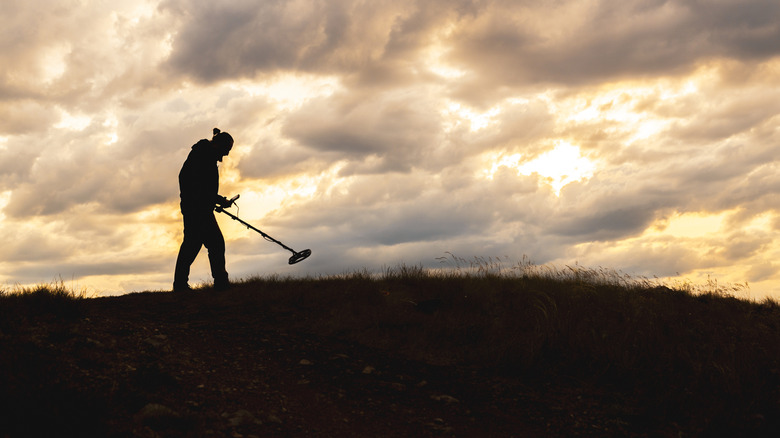
Looting anything from federal lands is illegal, which brings us to another unexpected electronic device banned in U.S. national parks: metal detectors. Metal detecting is prohibited in all national parks; even having one in your car in a national park is illegal. And hunting for treasure underground without a metal detector isn't allowed either; digging on federal lands is illegal.
The consequences for disturbing protected federal land can be steep: if you're caught excavating archaeological objects, you could be subject to up to two years in prison and a fine of up to $20,000. Even harsher is the penalty for depredating property, which could include destroying a hoodoo or plundering an ancient cliff dwelling, for example. The maximum prison sentence for grievous examples of that activity is 10 years, and the fine may be as high as $250,000 depending on the circumstances.
There may still be a way to get your hands dirty in a national park, though. Professional archaeologists often lead excavations that need helping hands. Depending on the park and the occasion, the public may have the opportunity to volunteer on digs. The NPS suggests reaching out to specific parks to learn about volunteer opportunities.
Spotlights and laser pointers
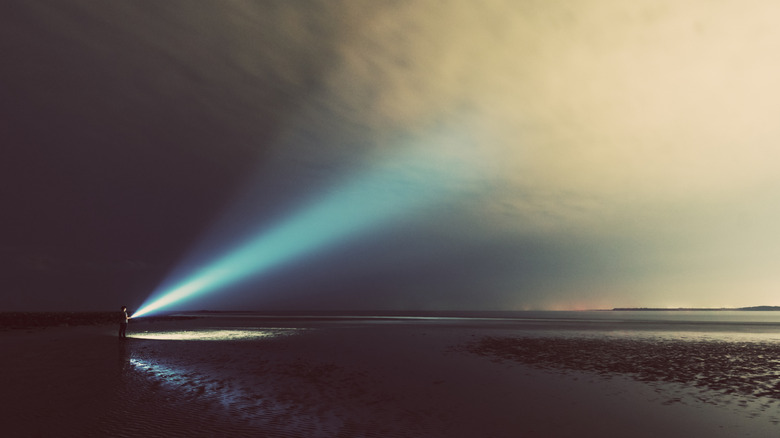
Even if you're excited about spotting rare and endangered wildlife in a national park, remember to leave the spotlight at home — or at least in your vehicle. Anything that could be used to harass or frighten wildlife is off-limits in national parks, so spotlighting animals is generally prohibited. Flashlights and headlamps are recommended for your own safety — you need to find your way to the campground's vault toilet in the dark somehow — but these smaller tools usually have a brightness up to 1,000 lumens. For reference, a standard LED household light bulb usually has around 800 lumens. That's definitely enough to see by.
Hand-held spotlights, which are usually marketed to hunters, run the gamut from 1,000 to 10,000 lumens or more. Simply put, it's overkill; you'll end up scaring animals and irritating other visitors instead. While it may not be confiscated immediately if a ranger sees it in your vehicle, a spotlight could be seized if you're caught using it. And on the note of lights, don't bother with a laser pointer either. Sure, they look cool, but they're also disruptive to wildlife, and there just isn't really a need to have one in nature.